How to make your PhD seem like a holiday

This post is my homework this week from the How to Survive Your PhD MOOC in which we have been asked to illuminate an area of confusion through a ‘how to’ guide. While one of the things I found most difficult in my PhD was the discussion chapter (which I’ve talked about here), I thought I’d take a more light hearted approach to this task. One reason for that is that this week – in two sleeps! – I’ll be printing my thesis to be sent to the examiners. So I’m feeling all out of words and fairly brain fried.

I’ve previously asked the question: Can you love your PhD? Here I look at whether your PhD can seem like a holiday. So here’s my ‘how to’ for enjoying your PhD as though it’s an island getaway (more than a little tongue in cheek, but not entirely!).

*              *              *

a romantic night in with the thesis

a romantic night in with the thesis

Step 1: Make sure you’re over committed. This includes parenting, working, having a partner, caring for pets, dealing with life’s surprises. This way, whenever you steal time away to spend time with your PhD, it’ll feel special. Time, just the two of you, feels wonderful when it’s in the eye of a crazy life storm. Ah, special romantic PhD moments!

my kiddoes

my kiddoes

Step 2: Do your work in lovely places and comfy spaces. While a functional office might be great for productivity, there’s nothing like a gorgeous café for some academic writing or a sunny daybed for some literature reading. Cafés, as well as providing ambience for writing, have the bonus of caffeine and people, making you both energetic in your work and surrounded by fellow humans, a great antidote to feeling as though you’re working alone.

my fave #acwri daybed, with coffee

my fave #acwri daybed, with coffee

Step 3: Take a writing retreat. Take a LOT of writing retreats. While you don’t have to ‘retreat’ far (these can be close to home), they need to be in slightly unfamiliar places, preferably with great scenery and some outdoorsyness to get amongst when you’re taking breaks from the writing or revising.

#acwri in the sun by the beach

#acwri in the sun by the beach

Step 4: Choose to research something you’re passionate about, and stay true to yourself in your method and writing. This way you’re following your own research dream and digging into a part of the knowledge landscape that sustains and inspires you. Take off your shoes and curl your toes in the rich earth!

glittery inspiration & your own special randomness

glittery inspiration & your own special randomness

Et voilà! The PhD seems like a holiday, not a torment. 🙂


Preparing the thesis for examination: Days until submission

A work is never completed except by some accident such as weariness, satisfaction, the need to deliver, or death: for, in relation to who or what is making it, it can only be one stage in a series of inner transformations.. ~ Paul Valery

by @debsnet

I have reached that point of the PhD which every candidate feels might never come … only days until submission. While I have been pushing to the end, it has not been a manic panic to a firm deadline. I will be submitting within three years from enrolling but there was no real reason to work to this submission date except that I had a personal goal of completing within three years, and the thesis played along so it became possible (yay!). I did have Plans B and C in the back of my mind in case it didn’t happen as I hoped it would. I considered pushing out my self-imposed deadline, or if I was really struggling, taking six months off work and applying for a completion scholarship. As it happened, I’ve managed to achieve my personal deadline while working, so I didn’t need to activate alternate plans.

In this last week, I’ll have no more meetings with supervisors. They have a new electronic copy of the thesis and will be giving me their final feedback by phone two days before I finalise the document. Then I will be sending the final copy electronically to my principal supervisor for sighting, before we both sign off on it, after which point I’ll walk my usb stick ceremoniously to the print shop, and ask for four copies of the thesis to be printed. Whenever the printing is done (I’m told it might be same-day, or up to two working days) I’ll submit it and receive … glory? champagne? fanfare? the sound of angels singing and unicorns galloping over shimmery rainbows? … a receipt of submission.

In this post, I’d like to share a couple of tech tools that I’ve found useful in this last few weeks to submission.

While I decided not to use a professional editor for my thesis (I’ll let you know how that goes!), I was so pleased when a comment on this blog led me to PerfectIt editing software, which has a 30 day free trial – just in time for me in the month before submission. PerfectIt checks for consistency of language such as hyphenated words, use of numerals and abbreviations. Just like a spell check, you need to consider each individual case rather than clicking ‘Fix All’. Finding this software was brilliant because it helped me look at what is a really big document with a view to ensuring my word choice was consistent from start to finish.

I was also delighted to discover, just yesterday, the free online tool Recite, which checks references, including between the reference list and the body of the document. So helpful for someone like me who has done manual referencing throughout!

So the thesis is feeling, not finished, but ready for examination. The above quote by Paul Valery is often misquoted as “art is never finished; it is abandoned”. The thesis is never finished, it is submitted. I think that’s different because I could keep reading (and reading and reading). I could keep editing over and over, although I’m finding mostly minor errors now. But it’s a little like renovating a house. Just as you improve one thing (replace the curtains!) you realise the next thing to be done (the walls need to be painted!). The layers of final thesis refinement go on and on as small iterations and improvements are made. The final formatting makes it feel like the real deal; a document coming together in readiness for a home open. Yet despite my best efforts, the observer-examiner coming through might think it needs a new bathroom or a different kind of flooring, no matter how much I’ve painted or polished.

As Valery says, it is finished because of the need to deliver. And it is one in a series of small transformations; not an end-of-the-road magnum opus but a beginning-of-being-a-researcher moment of identity formation. So it feels finished enough to take flight to be judged by those outside of myself and my supervisors. We think the thesis is at doctoral examinable quality, but I’ll be interested in what three external experts, each with their own lens, think about it. Perhaps they’ll have questions about theory or method. Perhaps corrections will be minor. Maybe there’ll be no corrections at all! Isn’t that the PhD dream?

I’m trying to look at examination through the rose-coloured lens that it is a process to improve and strengthen my work, so that, as one examiner in the Mullins and Kiley (2002) paper said, it ‘glows more brightly’ on the library shelf. Surely, I think, the examiners have agreed to examine my thesis because the abstract piqued their interest in some way? And surely they will approach it with a view to both recognising my work and giving feedback to make the thesis a better product. Right?

Risky business: Living on the PhD edge

The doctoral requirement for the candidate to produce a significant and original piece of work … indicates that the most significant and original ideas can be those that are most likely to challenge the status quo or the scholarly paradigm within which they are examined. … the ‘best’ doctoral research is likely to be much riskier than modest research. ~ Professor Terry Evans

WRONG WAY GO BACK

WRONG WAY GO BACK

As I inch towards the thesis submission finish line, I have been pointed towards Terry Evans’ 2004 AARE paper, ‘Risky doctorates: Managing doctoral studies in Australia as managing risk’ by the How to Survive Your PhD MOOC. The above quote is from this paper and surfaces the interesting point that the pursuit of knowledge and science is perhaps better served by research which is willing to take risks and challenge accepted knowledge and paradigms. Yet Evans goes on to note that the performative measures imposed on academics and universities encourage modest paradigm-following research, rather than that which is risky, status-quo-challenging and paradigm-bending. That is, PhD researchers are most likely to play within the established rules of the game, in order to complete within time and assure a pass. Evans argues that this results in the loss of “unknown and incalculable benefits” to science and scholarship.

This makes me feel better and worse about the PhD thesis which I’m hoping to submit in the next few weeks. Better, because I think my research is risky; at least the bricolaged – that is, bespoke and woven-together from a number of traditions – paradigm and the way I’ve chosen to communicate my findings. I haven’t totally smashed through academic norms; my thesis is still recognisable as such. But I have pushed at the edges of what is accepted. I’ve been ok with embracing my discomfort and doing things that seem, within the traditional schema of the academe, ‘out there’. My work proposes slightly new ways to go about protecting participant anonymity and communicating participant stories. It is these things about which I am presenting at the AARE conference in November.

While I am feeling proud of my research and my writing (despite having chosen not to employ a professional editor), Evans’ paper also makes me feel nervous because I am getting ready to send my thesis off to three external experts who are to examine my thesis. In the USA and the UK PhD examination usually involves a viva voce, or oral defense, of the thesis, followed by questions. Examiners are then able to deliberate before deciding on the result. In the USA the committee is made up primarily of professors from the candidate’s university, including their supervisor (who hopefully supports the work). Under the Australian system, my thesis will be sent off to three different individuals, including one external Australian examiner and two international examiners, who don’t know me or the work at all. These three people will read my thesis and send in their (potentially conflicting reports), without any discussion between them. At least if examiners’ reports disagree about the quality of thesis, there is a majority one way or another.

While I hope that my thesis is one in which the examiners think the work is interesting an original, and the text worth reading, there’s a lot riding on the opinions of three people, coming from different places, different perspectives and different paradigms. That’s part of the challenge of a bricolaged thesis which weaves together multiple phenomena and methodological threads; there isn’t a clear box in which it fits. Risky.

writing retreat collage, by @debsnet

Having just come back from a mini revision retreat in Sydney (read: 2 nights solo, away from work and family commitments – a PhD-working-parent’s dream), I am so deep ‘in’ my text that I can’t see the wood from the trees. As I have worked at the various levels of editing, I’ve been in the forest, sometimes looking at the whole lot together, sometimes at patches in between and sometimes at teeny micro details. Undergrowth. Canopy. Bark. Branches. Veins of leaves. Reflections in dewdrops. The feel of earth and sound of sticks underfoot. Birdsong. I’m so immersed at this point that I’ve lost direction. Time to take a brief step back to regain perspective. A helicopter ride to survey the scene wouldn’t go astray.

A couple of iterations ago, my primary supervisor said, ‘You could hand it in like this,’ which gives me hope that if the text is better now, it can only be more submittable. I’ll have to see what my supervisors say tomorrow about the most recent version of my thesis. Is it good? Is it good enough? Is it risky? Is it finished? Is it finished enough? Are there mistakes? Will the examiners be sympathetic to my approach? It’s so hard to know because, while I can read other dissertations, the PhD process for me has been in isolation from other students; I don’t know where my work sits on a continuum of doctoral standards.

I guess at some point, it’s time to trust, print, send, and see.

The neverending story of the PhD

Rhymes that keep their secrets / Will unfold behind the clouds / And there upon the rainbow / Is the answer to a neverending story ~ Lyrics to ‘Neverending Story’ by Limahl. Watch the song here: https://www.youtube.com/watch?v=7Vf2sDgeu7k

Bastian atop Falkor; just like PhD-finishing triumph Source: http://thephobia.com/post/58187104333/the-neverending-story

Bastian atop Falkor the luckdragon in the film; just like PhD-finishing triumph
Source: http://thephobia.com/post/58187104333/the-neverending-story

Children of the 80s like myself will remember The Neverending Story, a quest narrative in which the protagonist escapes into a fantastical world through the pages of a magical book. What started as a 1979 German fantasy novel by Michael Ende became a 1984 film directed by Wolfgang Peterson with a deliciously-80s theme song by Limahl. When I’ve been asked what the song of my PhD would be, I often answer ‘The Neverending Story’ as it just goes on and on!

Recently, I’ve been reflecting on the seeming neverendingness of the PhD. I’ve had people in life and on Twitter congratulating me on the completion of my PhD … despite the fact I have not submitted! I think it is because I announced with glee that I had finished my full thesis draft in July. People seem to think that I surely MUST be done by now.

But no.

While the first full draft means that all the chapters are written, it does not mean that the document is (anywhere near) finished. There are some great online resources to help doctoral students with long and laborious revision and editing. Pat Thomson talks about the process of revision, as opposed to editing. Rachel Cayley’s great piece outlines the stages and layers of editing. Katherine Firth’s post on editing gives thorough and accessible strategies. And Tara Brabazon penned this Times Higher Education article which includes ten editing cycles, including ‘read every sentence underlined with a ruler’ (I have tried this). A finished first draft is 3-6 months from a finished final draft.

I kicked off my full-draft revision with a writing retreat, in which I spent about two full days and nights on the first 40 pages. This wasn’t editing. It was Frankensteinesque dismemberment and radical textual surgery, as Pat Thomson puts it. After making it through my first lot of revisions, I talked about my willingness to chop chop chop, to improve the text’s argument by streamlining it closer to its essence. I have now managed to cut what was a 110,000 word draft to 95,000 words. And the text is stronger for it, reflecting Katherine Firth’s comments on the pruning required of verbose texts:

Like a haircut when your tresses are damaged, or like a diseased rose bush, cutting a lot of stuff off can give the rest of your work a space to breathe, and promote healthy growth for that last little bit.

But still, I didn’t think that I’d be making such big changes this close to the end of the game. Just when I think I’m an Oxford comma away from being done, a new ‘a-ha’ moment or a feedback curveball comes my way.

Last week I met with my secondary supervisor who posed a question about a ten-page section of my literature review: How did it fit with the threads of argument in my thesis? On reflection, I realised that this ten pages was relevant but not central. It was something I had been strongly driven by at the beginning of my PhD, but which had become a distraction from my main argument. I was so close to the document that I hadn’t been able to question it in this way. I was attached to something that had been in my thesis from the beginning, but which no longer fit. Luckily, I was attached but not precious about this section, so when its inclusion was interrogated, I was able to say, “Ok, maybe this doesn’t fit. I’ll try lifting it out and see how it works.” I’ve cut the offending section and pasted it into another document, with the intention of reworking the material into a paper. A little of the material I’ve added into my rationale and context sections, in very small bits. The literature review now feels stronger, punchier, less bogged down, leaving the main threads of my argument to breathe.

With less than a month to go, on and on I go. Read, revise, edit, proof, receive feedback, add literature (I can’t stop myself from reading!), apply feedback, read again.

Yet despite what can feel like the dizzying highs, terrifying lows, almost-finisheds and never-finisheds of the PhD, the doctoral experience is a great example of what good learning can look like. The candidate gets to work on a project of personal passion and importance. They are invested in the work and own its purpose. They work over a long period of time, getting (hopefully) regular feedback from their Falkor-luckdragonesque supervisors which (hopefully) helps them to develop their research and writing into the best it can be within PhD parameters.

Even at submission my PhD story won’t end. Then it will be waiting for three examiners’ reports, making corrections, resubmitting. It’s a long road to ‘Dr Deb’. It’s “the neverending storrrrr-yyyyyyy! Ahh-aa-ahh! Ahh-aa-ahh! Ahh-aa-ahhhhhh!” It’s not over yet!

Recipe of a good reference list: Ingredients for PhD success

The doctoral researcher invites to the table the scholars she would like to join her for a conversation over the evening meal. … As host to this party, she makes space for the guests to talk about their work, but in relation to her own work. ~ Barbara Kamler and Pat Thomson, Helping Doctoral Students Write: Pedagogies for Supervision

Who's coming to dinner? by @debsnet

Who’s coming to dinner?

The reference list of a doctoral thesis is the summary of years of reading and developing ways to critically and respectfully talk about reading in an academic voice. It’s also a list of the ingredients of the thesis, of what was collected and selected from which to create our work.

With over 300 references, my PhD thesis reference list runs to 19 pages and almost 8000 words. As I (check and check and check and) consider that list, I ponder what makes a ‘good’ reference list.

Barbara Kamler and Pat Thomson, in their book Helping Doctoral Students Write: Pedagogies for Supervision, talk about using literatures to ‘establish the territory’ or ‘assemble the dinner party guests’. In their dinner party metaphor, which they attribute originally to John Smyth, they discuss the choosing of what literature to include as hosting a dinner party, in which the thesis writer invites to the table those scholars with which their work engages. This gets the candidate to think about what academic conversation/s their thesis inserts itself into, and with which scholarly groups they belong.

I have also read and heard that examiners sometimes read the thesis from the back (urban PhD legend or real deal?). That is, they flick straight to the references, then perhaps to the introduction, the conclusion, then … the findings? Who knows?

Tara Brabazon, for instance, in her 2010 article in the Times, writes:

Doctoral students need to be told that most examiners start marking from the back of the script. Just as cooks are judged by their ingredients and implements, we judge doctoral students by the calibre of their sources.

The moment examiners see incomplete references or find that key theorists in the topic are absent, they worry. This concern intensifies when in-text citations with no match in the bibliography are located. …

If the most basic academic protocols are not in place, the credibility of a script wavers. A bibliography is not just a bibliography: it is a canary in the doctoral mine.

If my reference list was the first thing my examiners looked at I wonder what they would be looking for or what they might think. If I’m being judged on the calibre of my sources, I wonder how my reference list reflects the quality of my scholarship.

I wonder about the ratio of old and new references. My list includes some of the godfathers and matriarchs of the areas of my research; the early works. But when it comes to texts cited from the 1990s, will the reader be wondering why I’m citing not-foundational-but-not-recent texts? Do these texts help to show that I know the field or do they call the relevancy of my list into question? I have also included recent references, including a number published this year. I’m hoping that this shows that my work draws on the very newest thinking in my field. So, I’m hopeful that this combination of old/foundational, middle (some of which are seminal texts for their field), and brand-spanking-new will create a portrait of literatures well canvassed. As Pat Thomson notes in this blog post, examiners know the field, and so will know ‘the originals’. It’s the doctoral candidate’s job to show that they know where their field came from, as well as where it is now.

I have also been thinking about the kinds of texts expected to make up the doctoral reference list. My Voxer doctoral group has thrown up the question about whether blogs and social media can be included in the reference list of a dissertation. My own understanding is that they can be – each style has guidelines for how to cite blog posts and tweets – but that the accepted norm is that a reference list is made up of academic texts, articles from peer-reviewed journals, a few doctoral dissertations and some reports from large organisations. The doctoral dissertations give me hope that mine may get cited on day too! While I’ve seen blogs and tweets used as data, I don’t see them as being considered appropriate references in most PhD theses, unless that medium is central to the field. I haven’t cited any in my own thesis.

Both Pat Thomson and Tara Brabazon mentioned the perils of sloppy or lazy scholarship, which can be revealed through an inaccurate or incomplete (according to the reader) reference list. How is the candidate to know what is enough and when is enough? I am in my final revisions, planning to submit within a month, and still I am reading and inserting citations and references! A recent post on the Thesis Whisperer blog talked about academic FOMO (fear of missing out). I have reading FOMO: the overwhelming fear that if I don’t keep reading, I will miss a seminal paper or a text of importance to my work. And as my thesis uses a bricolaged methodology (different traditions woven together), as well as three phenomena, plus some important contextual factors, there’s plenty to know and plenty to read.

So how, to use Kamler and Thomson’s metaphor, do I know when I’ve invited enough people to my dinner party? Or if they are the right guests?

I found that I started relaxing about the scope of my reference list when I began seeing the same names appearing and reappearing in the texts I was reading. ‘Oh yes,’ I could finally say, ‘I’m familiar with the key names cited here; reading this hasn’t led me to hunt down ten new references.’ But I’m pretty sure I’ll know that the reference-list-litmus-test will only be finished when I press ‘print’ on the final copy.

Professional editing for the PhD thesis?

An editor is like a priest or a psychiatrist; if you get the wrong one then you are better off alone. ~ Toni Morrison

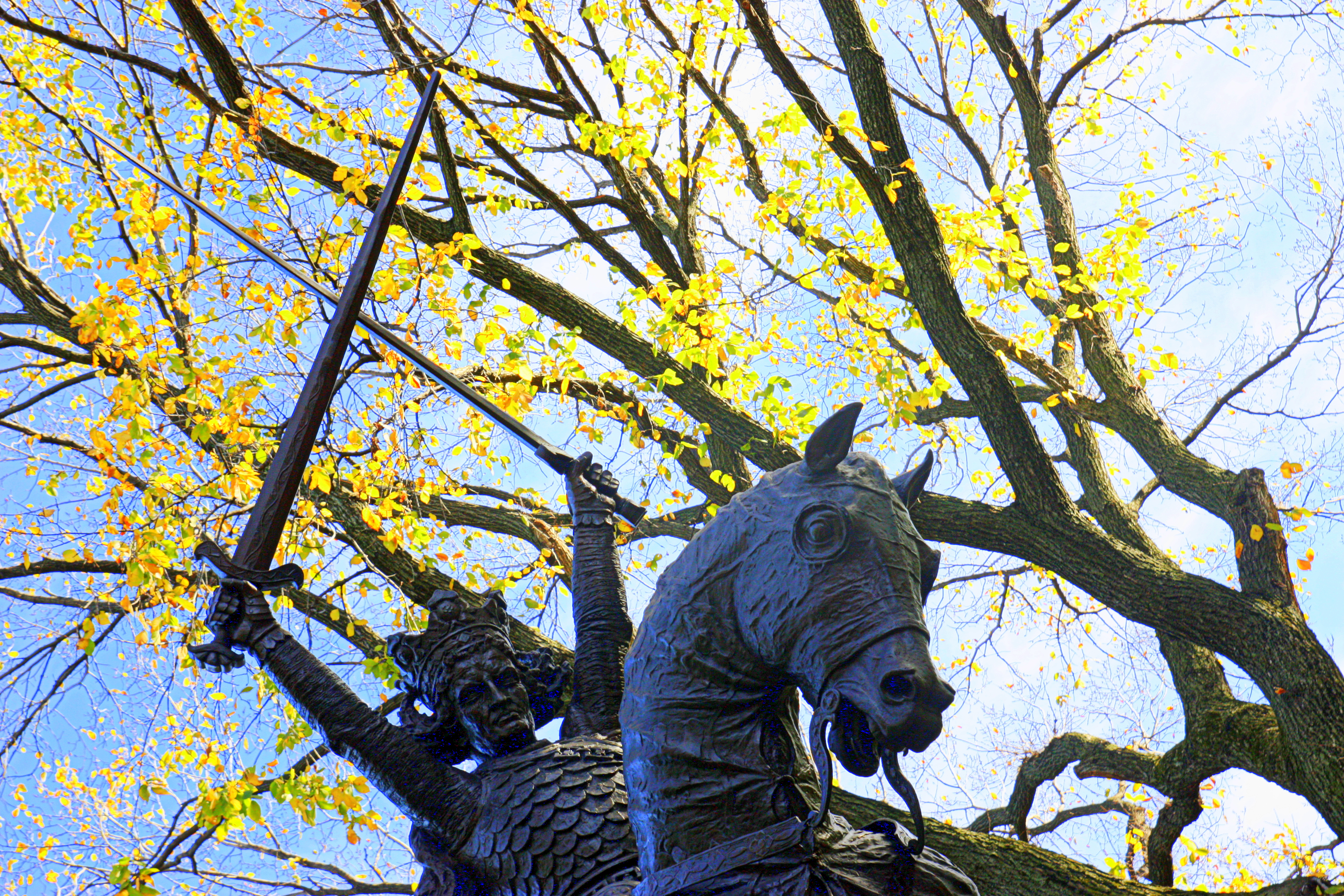
NYC Central Park statue, by @debsnet

I am at the pointy end of thesis revision. I’ve had some lessons in revising, and even a brief local writing retreat. I’m intending to submit my PhD dissertation next month, 3 years after I enrolled. Can I get a ‘Woooot!’?

And as I quadruple cross-check my references, re-read for APA comma use, and re-re-re-re-re-read each chapter, I’m wondering if I should get an editor or proof-reader for my thesis. Of course my thesis has been read by others – my two supervisors and my mum (hooray for mums!) – but for now, despite knowing that being so close to my text might mean I’m not seeing its problems, I’m not intending to employ an editor.

I know people who have paid in the vicinity of AUD$2000, tax deductible, to have their thesis copy-edited by a freelance academic-slash-editor or an academic editing company. It costs marginally less for a simpler copy check which refines accuracy, rather than also ‘improving’ the quality of the writing.

While this post on the Thesis Whisperer blog is written by an editing company (and look at that – it’s pro editing!), there are some interesting comments there from those who have used editors and proof-readers to varying degrees.

I can see the argument for getting a thesis professionally edited. If I was writing a novel or a book through a publisher, it would be professionally edited. This would ensure that any typos or errors I am missing would be picked up. It might streamline, strengthen or dilute my writing, according to the editor’s discretion. I know of one post-PhD person who swears by her editor, saying that he made her writing better, stronger and more accurate. I know of another who used the same editor, who was annoyed at him for trying to change the voice of her writing and disagreed with many of his edits.

From my personal perspective, a few things are influencing my decision. English is my first language, I’m an English and Literature teacher, and a writer of sorts (if you consider my amateur attempts at blogging, copy writing, dissertating and the occasional dabble in poetry to be writing). So I feel like I should be capable of this task. And I want the thesis to be a work that is totally mine. Maybe it’s because, as Pat Thomson wrote yesterday, and as I mused in this post about writing the discussion chapter, writing is more than writing a text, it is writing ourselves into scholarly being. I’ve been writing myself into my researcher/academic-writer identity. I feel as though I don’t want that being-becoming-researcher ‘me’ to be shaped by an editor’s hand or moulded by a both-proverbial-and-tangible red pen, externally poised to correct and erase.

I’ve been very deliberate about the way I’ve written my thesis, and I know my style of academic writing might be considered idiosyncratic. I’m simultaneously proud of what I’ve produced, and aware that it is very ‘me’, which might be seen by examiners and readers as positive or questionable. My work might be seen as operating at the edges of PhD scholarship, of pushing against those edges a bit in an attempt to see if they move, just a little. Maybe it’s the non-conformist anti-authoritarian in me who doesn’t want to invest in this opportunity. Perhaps I see it as having my writing, and therefore my researcher-self, boxed in by the expectations and rules of someone else (even thought I know that of course a PhD conforms to rules of style). I don’t want an editor to change the voice of the text, and while a proof reader might pick up some un-picked-up typographical errors, I want to own the text, typos and all (while at the same time hoping that there aren’t any errors).

It’s perhaps ironic that I would expect my students to consider my writing advice or suggested corrections, and that I listen attentively my supervisors’ comments. Perhaps this is about relationships and trust; the unknown faceless editor, as opposed to someone who knows me and my work. And yet I know that this is precisely why the editor is able to see the text anew and without the bias which comes from being the deep-in-the-thesis-cave candidate or the have-worked-with-the-student-for-years-and-know-the-project-inside-out supervisor.

What do you think? Can you make sense of my confused and contradictory thinking around having or not having a doctoral thesis edited or proof-read professionally? Is choosing not to use an editor’s services honourable purism or deluded idiocy?

Happy birthday to the édu flâneuse: Reflections on a year of blogging

I don’t think there is any truth. There are only points of view. ~ Allen Ginsberg

happy 1st birthday

happy 1st birthday to me

Over the weekend the édu flâneuse blog had its first birthday, and so I’ve been reflecting about what a year’s worth of blogging has meant for me.

As a blogger, I am small fry. But with 15,000 views in over 100 countries in a year, this blog is being read. That’s many more views in many more places than I am sure my PhD thesis will receive! When I see my analytics I wonder how those people in Libya or Uzbekistan or Iceland have stumbled across my words. What drew them in? In what surroundings and on what device did they read? What did they take away?

The blog’s top 5 most-viewed posts have been:

  1. Teacher Growth: Helping teachers open their gates from the inside. A post about the beliefs underpinning my school’s teacher-growth-focused coaching model.
  2. Can and should teachers be (viewed as) researchers? The first post where I dared to say something which might be considered controversial.
  3. Work-family fulfilment: The elusive sweet spot. In which I attempted to explain my approach to making the family-work-study-self ecosystem work for me.
  4. No grades? No marks? No worries. An explanation of a term of Year 10 English with no marks and no grades, and its surprising outcomes.
  5. 2015: The Year of Writing Boldly, Abundantly & Dangerously. Where I set myself the challenge of being deliberately writerly in 2015, in my blog, my thesis and elsewhere.

Blogging has allowed me the opportunity to reflect, to work through my thinking, to share snippets of those things about which I am passionate, and most importantly to connect with others. It is an antidote to isolation (for me this is so important in my PhD, where I am largely without a face-to-face community of peers). Sometimes it just feels good to throw some thoughts out into the ether in the hope that they might resonate with someone else who comes across them, a kind of blogging message-in-a-bottle tossed out to sea.

Matt Esterman has written about the separate-together-ness of our offline and online identities. This blog allows me to explore parts of myself online which would be mind-yawningly dull to many in my offline life. It has allowed me to find a tribe of like-minded (lovable) weirdoes who want to engage with me around passions, interests and experiences.

Blogging has allowed me to make real connections, with real people, some of whom I chat to on Voxer, and some who I’ve since met with in real actual life. It has expanded the depth of my participation in the online world in a way which isn’t possible in even a long line of 140-character tweets. While Twitter forces us to haiku-ise our ideas (therapy for my verbosity), blogging allows longer-but-still-focused explorations of thought. And it is a free form of writing which provides reflection on, and escape from, the constraints of academic and thesis writing. I find that the more rigid my thesis schedule and the more rigorous my PhD work, the more lyrical and creative my blog posts become.

My favourite posts have been those which opened up online and offline discussion, in which I responded to someone else’s thinking or writing, or from which I was responded to. These posts, connected as they are to other people and other posts in the intricate spider-web network of the blogosphere, add layers to blogversation or lenses to well-worn issues.

Today, Naomi Barnes published a post in direct reply to one of mine, about the knowledge-building nature of blogging in a kind of collaborative parallel dialogue. She writes:

We stop being experts and start being co-learners. We have part of the knowledge. Not all of it and not necessarily true. We break the teacher-student archetype and become networked learners. Use the Web, the network, the connections, to create new knowledge. Crowd sourced, collaborative knowledge. Wikipedia on steroids. ~ Naomi Barnes

Naomi’s post challenges us to consider what the blogosphere and online knowledge might look like if we spoke more collectively, rather than as a cacophony of voices speaking in our disparate shadows or on our disconnected milk crates. She is daring us to harness blogging, the web, social media and technology for what they could do, for what they have the potential to be.

Thank you to my édu flâneuse readership so far, for indulging my pursuit of flânerial being and blogging, and especially to those who take the time to comment, retweet, respond and connect. This blogging thing is a vehicle for personal learning and global communitification. I’m in for another year.

Is your PhD a love affair or a war story?

I think I can. I think I can. I know I can. ~ The Little Engine that Could
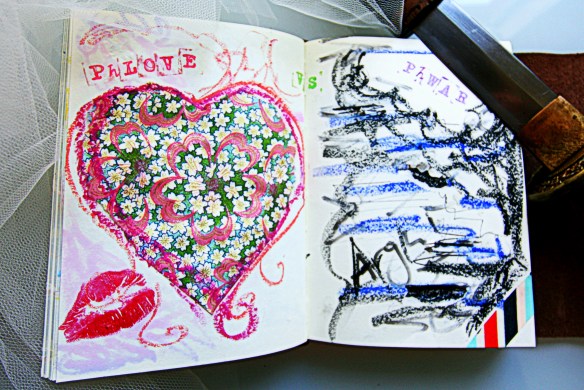
Are you in a PhD romance or a PhD battle?

Are you in a PhD romance or a PhD battle?

What do we tell ourselves about our lives, work and research? In particular what is the private self talk and dominant public discourse around doctoral study?

Helen Kara points out this week that, while there are some positive stories about the doctoral experience, much of what is ‘out there,’ especially in the blogosphere, has a negative bent. She notes that her own experience was positive, and cause for celebration.

A quick scan of research also shows the doctoral experience as fraught with issues of identity uncertainty, imposter syndrome, dissatisfaction, and a mismatch between understandings of students and the actual experience.

The Thesis Whisperer’s – Inger Mewburn’s – upcoming MOOC on surviving the PhD will explore the emotions of the PhD, including confidence, frustration, fear, confusion, curiosity, loneliness, boredom and love. Helen Kara suggests that it’s possible not just to survive a PhD but to enjoy or even love your PhD.

Certainly, that’s been my experience. I’d go as far as to say that my PhD is a love and a privilege. Last year I wrote a guest post for the PhD Talk blog about how passion and purpose drive my PhD. In it, I wrote that ‘I love my thesis’ and that at times I found it joyful. It felt like ‘me time’ in which I could luxuriate in my intellectual passions and development. It was personalised professional learning.

I’ve wondered, is it ok to share my good PhD experience? Does it upset those who have had a hard time or come up against extra obstacles in the PhDverse? Below, I reflect on why my experience has been a positive one, a love affair rather than a war story. It seems to have been partly due to choices I’ve made, and partly due to luck. For me, reading others’ narratives has helped demystify the PhD, so while mine is only one story, it may useful to others. I encourage those with PhD experiences, good and bad, to share their stories, too.

My supervisory relationships, seemingly the subject of much PhD-candidate teeth gnashing, have been positive and without drama. Before enrolling in my research degree I went ‘supervisor shopping’ via email and phone. When considering the responses of university professors, I avoided those professors who seemed interested in controlling my research or ideas, and those who, while willing to take me on, seemed ambivalent about what I was thinking about doing. I found one supervisor who showed generosity, genuine interest in me and my research idea, and seemed to think I was potentially capable of what the degree entailed. Winner! My primary supervisor then helped me to find a complementary secondary supervisor.

So, I did make clear choices in how I went about finding a supervisor, but I have also been lucky that my supervisors have been consistently and equally involved in my PhD work, that they both always come to meetings unless one is away, and that they have been supportive of my ideas, even when those ideas seem a bit on the side of academic crazy. Rather than telling me I can’t do something, they challenge me to provide a rationale or supporting theory. Rather than criticising my work, they push me into a space of nurtured discomfort in which I can struggle into growth. There’s nothing better than the feeling of a PhD break down which turns into a PhD break through!

Choosing a local university rather than one at long distance has turned out to be a good choice for me. I wasn’t sure when I started my degree if I really needed to be in the same city as my supervisors. In fact, at the beginning we used technology such as Skype to hold some meetings, as at times I struggled to get time out from my very small children to get to uni. I remember at least one supervisory meeting at the university during which I had my two kids in a pram. It has turned out to be in face to face meetings where I have made the most progress and gained the most understanding, so I’m glad I chose a local university.

I’ve also chosen to take responsibility for my study and actively manage my PhD. While my supervisors are there to guide me, I figured out pretty quickly that I was the one who needed to not only do the work, but also suggest or set the deadlines, milestones, meeting times, chase up paperwork, and ask clearly for what I needed.

The other choice I made which seems to have worked for me is the topic of my thesis. I chose something do-able and something about which I was passionate. My sometimes obsessive passion for my topic has meant that I am happy to be immersed in it. The do-ability of my project has meant that it’s been a realistic project within the PhD time frame. I didn’t try to wrestle with too much. I have found interesting tangents and managed to put them to one side. For the most part. I had a clear idea for my project going in, which meant I was able to present my research proposal within two months of enrolling. My progress since then has been pretty linear, although I have had some times of particular personal difficulty across my candidature, and peaks and troughs of productivity.

I agree with Helen Kara that self care is a vital part of the PhD. Sometimes you need to give yourself permission to take a break. Sometimes you need a writing retreat. Sometimes you need to say no to study and yes to you.

I have signed up for the Thesis Whisperer’s EdX MOOC, not because I feel I need it to complete my PhD journey, as I’m looking to submit in October, about three years since I began. Rather, it’s because I see that being part of a MOOC community around the PhD experience is, like engaging on Twitter and social media, an antidote to PhD isolation. (Isolation is certainly something I’ve experienced, as a student who is also working almost full time and parenting two young kids. I’m lucky if I have time to get a takeaway coffee when I duck into uni for a supervisory meeting or a quick trip to the library. I haven’t connected with a single other student at my university due to my work schedule.) I also wonder if I might be able to help others at an earlier stage in their PhD journey by being involved in the MOOC.

While I have found the PhD to be hard work, it has been deliciously, brain-bendingly so. I think it has to be if it is to be something which transforms us and the way we think, read and write. Of course, no PhD is without tough times, difficult problems to solve and moments of being overwhelmed. I have had my identity crises, but I have loved my PhD experience thus far, and now I can taste the end! (If you are at the beginning and want to see my thoughts on what to consider when starting your doctoral journey, they are here.)

I wonder if we can associate the following quote with PhD study as well as travel. For me, the PhD has allowed me to both lose and find myself, to reimagine and reinvigorate my learning, and to contribute to global academic conversations. Is your PhD a love affair or a war story?

We travel [research?], initially, to lose ourselves; and we travel, next, to find ourselves. We travel to open our hearts and eyes and learn more about the world than our newspapers will accommodate. We travel to bring what little we can, in our ignorance and knowledge, to those parts of the world whose riches are differently dispersed. And we travel, in essence, to become young fools again – to slow time down and be taken in, and fall in love once more. ~ Pico Iyer
Balance, not division. Compassion, not attack. Conversation, not war.

Compassion is not a relationship between the healer and the wounded. It’s a relationship between equals. Only when we know our own darkness well can we be present with the darkness of others. Compassion becomes real when we recognize our shared humanity. ~ Pema Chödrön

by @debsnet

Often I am struck by argumentative battles in traditional media, on social media and around the blogosphere. I appreciate those writers, commentators and educators who share their musings, experiences, readings, and perspectives, without using divisive loaded language or attack. I think the rantiest I have gotten was this post on the APPR reforms in New York and this one around whether teachers can be researchers, but I attempted to frame my criticism through making transparent my perspective and asking clarifying questions. Balance.

I have written a lot about my school’s coaching model, as it is kind of my baby and it’s something which I think is worth sharing; others might gain from hearing our story. Yet this coaching model is not stand alone. It is not as though teachers at my school are only coached by teacher-coaches in a non-evaluative, non-hierarchical model. In their first year at the school, teachers participate in a rigorous evaluative permanency process. Every year they have a conversation with their line manager, who touches base with them on their work, goals and classroom practice. Every third year, teachers have their coaching cycle with their manager. This is more evaluative and performative by its nature, and by the nature of the relationship. Teachers additionally work with instructional consultants. Leaders work with coaches. Professional learning community teams and action research projects work alongside. Growth and evaluation. Balance.

I have written about the creative things I trial in my classroom like a term without grades and genius hour for students and teachers. These are things at the experimental end of the spectrum of what happens in my lessons, so I share them as stories of experience and part of a conversation. I do these things to develop engagement of my often-reluctant high school English students, to build their self-efficacy and to help them learn to rely on themselves as drivers of learning, rather than entirely on me as Teacher with a capital T.

Does that mean I don’t use explicit instruction? Of course not! I explicitly teach concepts, skills and texts, although I temper this with encouraging students to do their own thinking and to trust their own thinking, rather than expecting that I can fill them, as vessels, with the answers. What are the ideas of the text? What interpretations might be drawn? Answers can come from me or from Spark Notes, but if I do my job properly, students will have the skills, understandings, language and cognitive capacity to draw their own interpretations, from their own contexts, and justify these using logic and evidence. The best student responses comprise original thinking, not regurgitated knowledge. The best teachers focus not just on effective learning (our core business, of course!) but developing learners and passion for consuming, curating and creating knowledge.

In my Head of English roles at three schools I have ensured a balance between explicit instruction and those strategies which propel love of reading, power in writing and deep intellectual engagement in ideas and discussion. Interestingly, Charlotte Danielson’s heavily-researched Framework for Teaching has its ‘proficient’ descriptors describing teaching which is expertly directed by the teacher, and its ‘distinguished’ teaching descriptors outlining lessons in which students are taking responsibility for their own learning and behaviour. Creative and explicit. Balance.

I have written about lyrical metaphors for PhD study, and only occasionally about the unsexy logistics of what the graft actually looks like. My conceptual framework draws in part from fictional literature. Does this mean my PhD is devoid of hard, critical, scientific work? No. My PhD is of course the result of the logical, systematic working through of literature, data and research problems. When writing the Limitations section in the conclusion of my thesis I was highly aware that all research has its limitations. Extensive quantitative data can show us patterns and effects, but these may be faceless. Qualitative data can drill down deep into the messy humanness of lived experience which may be unrepresentative of wider groups and therefore not generalizable. Yet each study adds its tiny piece of understanding to the layers of what is known. Research is conversation. Imaginative and systematic. Broad and deep. Balance.

I would love to use the line ‘I’m a lover not a fighter’ but I think I’m both. I believe in sharing and celebrating our stories, but I will advocate fiercely for my students, fight for what I believe is right and argue for my research. Balance.

From a history of my posts, it is probably clear that I am seduced by the lyrical, by storytelling, by creative approaches and by metaphor. Yet I am not one dimensional. Nor is my teaching, my thinking, my researching or my living. Balance.

I came across this excellent recent TED talk from Jon Ronson on the way social media has moved from giving voices to the voiceless, to an angry mob mentality of shaming and abuse, in which people seem to forget compassion and morality.

While I love robust discussions which take us out of the echo chamber of we-all-agree-high-fiving, I also think we need to approach these with compassion, thoughtfulness and a view of each other as human beings. We can disrupt with respect. We can disagree gracefully. We can advocate with civility. (And if you throw in a metaphor, you’ll totally have me!)

by @debsnet

Revising writing: Lessons from the PhD thesis

The more you leave out, the more you highlight what you leave in. ~ Henry Green

Musée d’Orsay clock - the neverending tick tick of the PhD

Musée d’Orsay clock – the neverending tick tick of the PhD

The PhD is a long journey which seemingly goes on infinitely. Just as the doctoral researcher reaches one summit or one horizon, another appears. It’s easy to feel like there is little time to stop at each point, take a breath, enjoy the view, and look at how far we’ve come. Usually the researcher straightens her shoulders beneath her rucksack and begins trudging up the next slope. (Or is it skipping up the slope? Storming the incline? I don’t want my language to be too negative. I love my PhD but its hard work is part of its transformativity.)

This weekend I hit a point in my PhD which I decided warranted celebration. 2 years and 9 months after enrolling, I sent my revised full thesis draft to my principal supervisor.

There are still revisions to go and work to do (of course) but making my way through the full text to the point where I felt it hung together as a whole, felt like a summit worth stopping at. Sitting on a rock, taking a peanut butter sandwich out of my pack and reflecting on the path I’ve traversed so far. (Ok, peanut butter sandwiches are not my culinary celebratory choice; I went out with friends for lychee martinis.)

Gullfoss waterfall ~ take time to pause, reflect & see how far you've come

Gullfoss waterfall after a blizzard ~ take time to pause, reflect & see how far you’ve come

So, how did the revisions go?

To give some context, my qualitative PhD has 10 chapters which roughly cover: 1) Introduction; 2) Literature Review; 3) Research Question; 4) Methodology; 5) Method; 6) Data/Story/Findings #1; 7) Data/Story/Findings #2; 8) Data/Story/Findings #3; 9) Discussion; and 10) Conclusion. The review of literature covers my three studied phenomena, plus a contextual issue. The narrative data chapters are split into three chapters, one story for each group of participants.

When I finished the first full unrevised draft, I sent my supervisors Chapters 9 and 10. After the consequent supervision meeting, I revised these. That way, I had the end in mind when I went back to the Introduction. I could see the beginning and end as matching book ends to be viewed together.

Revision from the start of the text began on my PhD writing (well, revision) retreat, which got me into a revision routine and mindset.

My revision system was: take a hard copy chapter and make annotated revisions -> go back to the Word document and make revisions, highlighting any sections of text that still felt rough, or that I hadn’t yet ‘solved’ -> go to next chapter. I worked through from chapters 1 to 10 like this. Then I revisited my highlighted sections. Then I went over the Introduction again, which needed the most work. I always tell my students that the introduction is your reader’s first impression, and your conclusion is what you leave your reader with. Spend time on them.

Other revision bits and pieces included checking references, checking for APA comma use, and the most desperate of phdcrastination techniques: changing the font! (I chose Garamond for its classic serif 16th century gorgeousness).

I found that the first half of the thesis needed more work than the second half. Luckily, as I got towards the end and felt like I was lumbering through wet cement, the text was better, the meaning was clearer, the writing was more assured.

One thing that helped me at the end of this full draft revision was the support of the Twitter community. Curled up on the couch with my Surface on my lap, I tweeted out an academic SOS and had a number of people reply. Not only that, but they followed up in the next days to see how I was travelling. I was so grateful to these doctoral candidates and scholars who took the time to make me feel as though I wasn’t isolated in my struggle deep in the shadows of the PhD cave. Solidarity. Inspiration. Advice. Thank you #phdchat community and others who responded to my despondence when I was fighting to my deadline!

So, what might be my advice for the full draft revision stage of the PhD?

1. Don’t underestimate the time it takes to revise your text. The first three chapters, about 40 pages, took me my entire writing retreat weekend. There are many layers of revision. Revision for continuity of argument, consistency of language use, for paragraph sequence and structure, for accuracy of language, consistency of referencing and compliance to style. The earlier your writing, the more work it is likely to need.

2. Be open to really changing your text. This revision stage isn’t as much for moving punctuation around as it is for thinking about the essence and elegance of argument. What is necessary? What is superlative? What belongs or doesn’t belong? How is the argument hanging together? Is it consistent from beginning to end? Am I dropping the flags for the reader to follow?

3. Don’t be afraid to chop chop chop. I cut 8000 words from my bloated thesis in this first round of revision. It was great to be at a stage where I didn’t feel sentimentally attached to my words, where I was able to consider their purpose and let them go if they weren’t strengthening the narrative. As the quote at the beginning of this post says, what we leave out serves to highlight what we leave in. I knew my argument would benefit from being strengthened through streamlining (and my readers would rejoice – less words!).

As I edited, I was thinking of this post by Pat Thomson in which she writes “Pat is in the lounge room reading a thesis. She is finding it hard going and wants to go back to bed.” This put me in the frame of mind to think about my reader. I don’t want reading my thesis to be hard going or painful or ‘when will she just get to the point?’ I want the reader to be propelled through the text, with enough detail and a sense of excitement of what is to come.

I’m excited to hear my supervisor’s feedback in a few weeks. My supervisors have seen the chapters bit by bit over time, but not the whole text together. And I’ve left a couple of flourishes as a surprise.

The draft is at a stage that has me feeling pleased and proud that my study has resulted in a thesis document which makes an exciting contribution to my area in a way that is systematic, creative, full of powerful authentic stories, and maybe slightly subversive in the realm of traditional academic writing.

While there is more work to go, it felt right to pause and celebrate a PhD moment.