When we reflect on happiness, we often think about big feelings like joy and excitement, quieter emotions like optimism and hope, or satisfying experiences. Social media feeds are full of apparent evidence that our lives can be a series of easy, enjoyable moments and positive emotions.
In the pursuit of what we deem to be ‘happiness’, we might focus on feeling good rather than on a deeper sense of contentment and fulfilment. We may avoid conflict because it requires us to face discomfort. Yet it is often through disagreement that we reach better decisions and more effective outcomes. We may look forward to vacations because being on holiday lends itself to feeling relaxed and unburdened by daily pressures. Yet it is often from coping with challenges, overcoming adversity, or moving through difficulty that we feel most proud. We felt nervous about doing something, but we did it anyway. We experienced setbacks, but we persisted. Our capacity to achieve something was questioned, but we prevailed. We worried about how it would go, but we grew from the experience.
Beyond feeling happy and seeking pleasure is an Aristotelian concept called ‘eudaimonia’ – the sense of meaning and purpose derived from living a well-lived life of growth, fulfillment and contribution. Focusing on happiness can make us feel less content, whereas focusing on connection and purpose can lead to feelings of happiness. The eudaimoniac notion of living a fulfilled and principled life of service is central to ways in which schools intentionally build communities where the many challenges of childhood and adolescence can be weathered, and through which young people and families can flourish through the complexities and adversities that life inevitably brings.
Last week, the 2025 World Happiness Reportwas published, ranking Australia 11th after countries such as Finland, Sweden and Mexico. The report unpacks what happiness might mean beyond feeling cheerful and enjoying ourselves. The report points to generosity, connection, kindness and community—or what it calls ‘caring and sharing’—as those things that can buffer us, and our children, from disconnection, loneliness and stress. These findings–including the positive impacts of shared living, shared meals, and social connections–reminded me of my takeaways from my immersion in Yolŋu culture in East Arnhem Land last year, where I experienced a community of relationality, acceptance, reciprocal support, and deep belonging in which members’ identities were enmeshed with people and place.
Communities are glued together by trust, which is built slowly over time. As the Dutch proverb says: ‘trust arrives on foot and leaves on horseback’. Schools are fundamentally communities, supporting the holistic development of young people. There is a focus on learning and cognitive development, as well as emotional, physical, social, moral, and spiritual development. Community is not peripheral to learning. Rather, community enables and strengthens students’ capacity to learn, connect and play. Students who feel connected to their school community (who feel accepted, valued, and part of the school) report higher life satisfaction and self-esteem. Schools, at their best, remind us daily of our shared humanity and of who we can be and what we can do, together.
Community is not an idea, but a practice lived daily through micro-interactions of genuine care, open-hearted acceptance, kindness and respect. It is each decision made by each person, in each conversation and each response. In this way, happiness is collective and fostered through shared experiences. It is the connections we make and communities we build that support all of us in moving through the world. Schools are tasked, not just with facilitating learning, but with supporting students to carry kindness, resilience and hope forward into the world as resilient, principled people who make their own positive contribution.
Community in schools are seen and felt every day in the interactions between students, parents and staff. I remember how gratefully students returned to the physical sites of schools after periods of lockdown during the pandemic (as much to see their friends as to learn in classrooms). In a world where much of a young person’s community can be experienced online, and influenced by social media, schools can provide opportunities for fostering resilience, modelling healthy relationships, and developing emotional self-awareness. The findings of the World Happiness Report suggest that schools can be protective ecosystems of happiness-building, where happiness is not about constant positivity or artificial cheerfulness, but about deep and authentic human connection.
With over 5 billion people using social media worldwide, it is embedded in our everyday lives, bringing us connection, collaboration and opportunities for sharing our voice. Being connected online can have benefits such as facilitating social connections with others, reducing loneliness and providing easy access to helpful resources. Social media can help us to connect and to cope. As someone who has lived across different states of Australia and overseas, social media has been a way to remain connected to friends and family who live elsewhere. I have also enjoyed productive professional collaborations that have been borne of social media connections such as the early days of Twitter (now X) and LinkedIn. I have written academic articles about the ways in which digital and social media can offer collaborative platforms, identity testbeds, productive spheres and empowering spaces.
As a teenager in the early 1990s, I bought a corded push-button phone for my bedroom, so I could connect with my friends (spending hours talking on the landline, thereby preventing anyone else in the family from making or receiving phone calls). Now, however, phone calls are out, and social media and messaging apps are in. A recent Uswitch survey revealed that a quarter of people aged 18-34 never answer the phone and that young people are increasingly choosing to communicate via social media (48%) and voice messages (37%). 98% of Year 10 and 11 students in Australia reported regularly using at least one social media platform, with 18% actively posting or sharing on social media at least once a day.
For teenagers, who have grown up in a digitally connected world, social media is a seemingly non-negotiable and inescapable part of life. It is often through devices, including messaging and social media platforms, that young people connect and communicate. For marginalised young people, the digital world can be a place in which they feel in control of their identity, expand their social and cultural circles, and engage with others. Young people also use social media for creating and innovating. My teenage son, for instance, manages social media accounts for his local businesses.
Social media as a source of stress
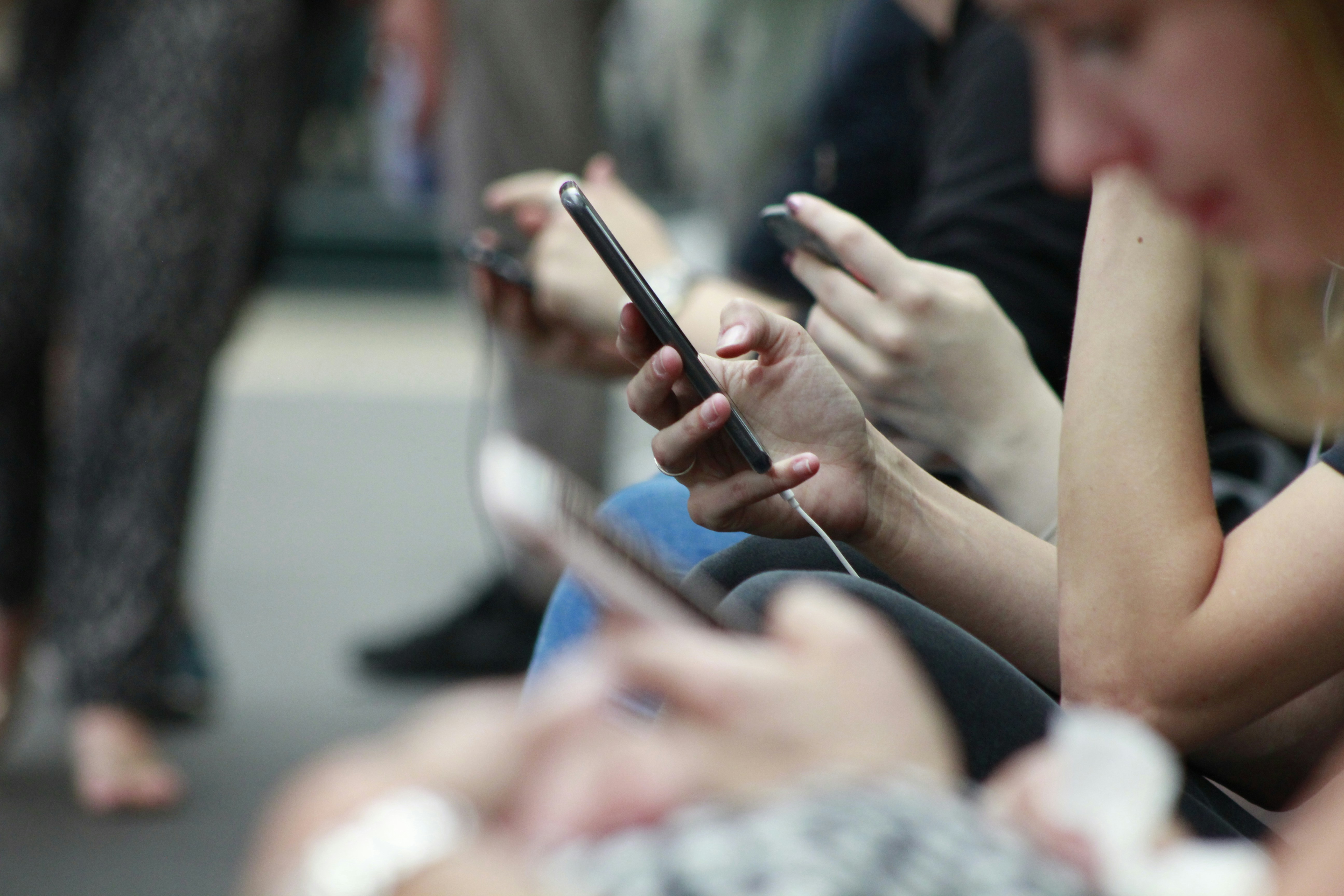
The ‘always on’ world of social media and messaging means that there is no escape from social connection, comparison and communication, including that which can be negative in nature. There are growing concerns about the impacts of engaging with social media, especially for prolonged periods, on mental health and self-esteem.
Use of social media, especially high daily use, has been associated with negative mental health, including anxiety, depression and social media addiction. Social media induced stresses include approval anxiety, fear of missing out, availability stress (the demand to be permanently available), connection overload (the perception of not being able to process all information) and online vigilance (constant awareness of the online environment). Visiting social media sites has been found to create psychological stress from information overload, and to activate a physiological stress response that contributes to elevated anxiety symptoms and related impairment, especially in emerging adults.
Young people are worried about their online safety, including catfishing, fake accounts, contact from unknown people, the privacy of their personal information, cyberbullying, deepfakes, being exposed to inappropriate content, misinformation, fake news, receiving judgement from peers about their opinions online, and vulnerability of particular groups.
The highlight reel and social comparison
Through social media, we often present a highlight reel of our experience that leaves out more reality than it includes. Through their engagement with social media, teens are constantly bombarded with content that shows apparently aspirational ways of looking, being and living. This includes unrealistic, highly edited, retouched and AI-generated social media content from friends and influencers.
UNESCO’s Technology on Her Terms report warns that algorithm-driven, image-based content, especially on social media, exposes girls in particular to material that glorifies unhealthy behaviours and perpetuates unrealistic body standards, thereby having a detrimental impact on girls’ self-esteem, body image and mental health. The report points out that the TikTok algorithm targets teenagers with body image and mental health content every 39 seconds, and with content related to eating disorders every eight minutes.
Social media has been found to expediate social comparisons and negatively impact young people’s self-image when they compare themselves to what they see online. Recently-released data from Australian National University show that the use of social media platforms is associated with poorer life satisfaction for Australian young people, especially the use of TikTok use for girls and Discord for boys.
How can we support young people to manage social media?
So, if social media can lead to heightened body image concerns, materialism, addictive use, and mental health issues, how can we support young people to be responsible, safe and kind navigators of the online and digital world? Healthy boundaries, targeted education and open communication are key to supporting young people in this age of relentless connectivity, firehoses of carefully curated communication, and privacy concerns.
Healthy boundaries
The South Australian government recently released a proposed bill which sets out a legislative framework to ban social media for children under 14 and require social media companies to establish parental consent before allowing children aged 14 and 15 to use their platforms. Australian Prime Minister, Anthony Albanese, has outlined plans to introduce legislation to impose a minimum age for teenagers accessing social media and gaming platforms. Last Thursday, at the Social Media Summit in Sydney, Australia’s eSafety Commisssioner, Julie Inman Grant, indicated that for many parents and children “that horse has already bolted”. She revealed that approximately 1.34 million Australian children (out of roughly 1.6 million 8-12-year-old Australians) have used an app such as Snapchat, TikTok and WhatsApp since the beginning of 2024, noting that recent research has shown that 82% of Australian 10-year olds and 93% of Australian 12-year-olds are using apps before reaching the current official age of social media entry at 13. This indicates that bans and age limits may not have the desired impact of keeping young people from social media.
As parents and educators, we can help teens by removing mobile technologies from classrooms and bedrooms, and by using apps and programs that help us monitor and control when teenagers can access social media. We can help teens to set boundaries and regulate their technology use and engagement with social media by banning or limiting phone use at certain times (such as in school yards and overnight) and setting screen time limits, app time limits, and downtime schedules. At my school, mobile phones must be kept in lockers during school hours and notifications switched off on all devices (watches, iPads, laptops, phones) to allow the focus in classrooms to be on learning, and the focus at break times to be on in-person relationships.
We can sit alongside our teens, engage in their online worlds with them, and reflect together on their feeds. We can discuss with our children and students how to improve their digital experiences. This might include by muting and blocking accounts or turning off notifications. It might mean supporting them to remove apps for a time or permanently, and to reflect on how their experience, mental health and sense of self change when they take a break from social media.
We can and should additionally monitor our own social media and device use, and role model healthy boundaries and behaviours.
Targeted education
As parents and educators, we need to openly discuss and explicitly teach our children about the benefits, risks and potential consequences of engaging in the digital world, as well as strategies for keeping themselves safe online, and for seeking help.
In Australia, the Keeping Safe: Child Protection Curriculum explicitly teaches children about safety, respectful relationships, recognising and reporting abuse, and protective strategies. Additionally, schools develop and deliver tailored and responsive wellbeing curricula that teach knowledge, awareness and safe practices, and respond to the needs of the students as they arise. Schools partner with parents in focusing on responsible use of technologies, and working together to support teens.
Open communication
Open communication with trusted adults is crucial in protecting and supporting young people navigating the digital world. Teenagers with a clear and stable sense of self, high levels of emotional self-confidence, and open communication channels with their parents, are better able to cope with social media stressors on mental health.
It is in our ‘real lives’, in person, in the non-online world, that parents and educators can explore, build and co-design protective factors for and with young people. Australian research for the eSafety Commissioner indicates that young people prefer to seek help from trusted adults in the first instance, and that positive reinforcement, support and reassurance of confidentiality from family, friends and services are what encourages them to seek support. Young people may be discouraged from seeking help if they fear being punished, are concerned that adults may not have adequate information or experience to assist them, feel their personal boundaries are being invaded, or fear stigmatisation or victim-blaming. These fears indicate that the most essential thing adults can do for the young people in their lives is to create and hold a safe and non-judgemental space for them to raise and explore their concerns.
Building positive relationships with teens, maintaining open communication, discussing their worries and aspirations without fear of judgement, and workshopping potential strategies with them, helps us to help young people become savvy, self-aware users of social media and flourishing, resilient individuals.
References
Auf, A. I. A. A. I., Alblowi, Y. H., Alkhaldi, R. O., Thabet, S. A., Alabdali, A. A. H., Binshalhoub, F. H., … & Alzahrani, R. A. I. (2023). Social comparison and body image in teenage users of the TikTok app. Cureus, 15(11).
Barnes, N., & Netolicky, D. M. (2019). Cutting apart together: A diffracted spatial history of an online scholarly relationship. International Journal of Qualitative Studies in Education, 32(4), 380-393.
Constant, I., Tsibolane, P., Budree, A., & Oosterwyk, G. (2024). Analysing Coping Strategies of Teenage Girls Towards Instagram’s Algorithmic Bias. In International Conference on Human-Computer Interaction (pp. 146-160). Cham: Springer Nature Switzerland.
Doery, K. (2024, 10 September). Young People’s Social Media use-What impact does it have?
Ozimek, P., Brailovskaia, J., Bierhoff, H. W., & Rohmann, E. (2024). Materialism in social media–More social media addiction and stress symptoms, less satisfaction with life. Telematics and Informatics Reports, 13, 100117.
Maftei, A., & Pătrăușanu, A. M. (2024). Digital reflections: narcissism, stress, social media addiction, and nomophobia. The Journal of Psychology, 158(2), 147-160.
Moody, L., Marsden, L., Nguyen., B. & Third, A. .2021. Consultations with young people to inform the eSafety Commissioner’s Engagement Strategy for Young People, Young and Resilient Research Centre, Western Sydney University: Sydney
Netolicky, D. M., & Barnes, N. (2018). Scholarship of the cyborg: Productivities and undercurrents. In Education Research and the Media (pp. 165-179). Routledge.
Vannucci, A., Flannery, K. M., & Ohannessian, C. M. (2017). Social media use and anxiety in emerging adults. Journal of affective disorders, 207, 163-166.
Wolfers, L. N., & Utz, S. (2022). Social media use, stress, and coping. Current Opinion in Psychology, 45, 101305.

 the édu flâneuse