
Supporting young people to navigate social media

Photo by ROBIN WORRALL on Unsplash

Social media is everywhere

With over 5 billion people using social media worldwide, it is embedded in our everyday lives, bringing us connection, collaboration and opportunities for sharing our voice. Being connected online can have benefits such as facilitating social connections with others, reducing loneliness and providing easy access to helpful resources. Social media can help us to connect and to cope. As someone who has lived across different states of Australia and overseas, social media has been a way to remain connected to friends and family who live elsewhere. I have also enjoyed productive professional collaborations that have been borne of social media connections such as the early days of Twitter (now X) and LinkedIn. I have written academic articles about the ways in which digital and social media can offer collaborative platforms, identity testbeds, productive spheres and empowering spaces.

As a teenager in the early 1990s, I bought a corded push-button phone for my bedroom, so I could connect with my friends (spending hours talking on the landline, thereby preventing anyone else in the family from making or receiving phone calls). Now, however, phone calls are out, and social media and messaging apps are in. A recent Uswitch survey revealed that a quarter of people aged 18-34 never answer the phone and that young people are increasingly choosing to communicate via social media (48%) and voice messages (37%). 98% of Year 10 and 11 students in Australia reported regularly using at least one social media platform, with 18% actively posting or sharing on social media at least once a day. 

For teenagers, who have grown up in a digitally connected world, social media is a seemingly non-negotiable and inescapable part of life. It is often through devices, including messaging and social media platforms, that young people connect and communicate. For marginalised young people, the digital world can be a place in which they feel in control of their identity, expand their social and cultural circles, and engage with others. Young people also use social media for creating and innovating. My teenage son, for instance, manages social media accounts for his local businesses.

Social media as a source of stress

The ‘always on’ world of social media and messaging means that there is no escape from social connection, comparison and communication, including that which can be negative in nature. There are growing concerns about the impacts of engaging with social media, especially for prolonged periods, on mental health and self-esteem.

Use of social media, especially high daily use, has been associated with negative mental health, including anxiety, depression and social media addiction. Social media induced stresses include approval anxiety, fear of missing out, availability stress (the demand to be permanently available), connection overload (the perception of not being able to process all information) and online vigilance (constant awareness of the online environment). Visiting social media sites has been found to create psychological stress from information overload, and to activate a physiological stress response that contributes to elevated anxiety symptoms and related impairment, especially in emerging adults.

Young people are worried about their online safety, including catfishing, fake accounts, contact from unknown people, the privacy of their personal information, cyberbullying, deepfakes, being exposed to inappropriate content, misinformation, fake news, receiving judgement from peers about their opinions online, and vulnerability of particular groups.

The highlight reel and social comparison

Through social media, we often present a highlight reel of our experience that leaves out more reality than it includes. Through their engagement with social media, teens are constantly bombarded with content that shows apparently aspirational ways of looking, being and living. This includes unrealistic, highly edited, retouched and AI-generated social media content from friends and influencers.

UNESCO’s Technology on Her Terms report warns that algorithm-driven, image-based content, especially on social media, exposes girls in particular to material that glorifies unhealthy behaviours and perpetuates unrealistic body standards, thereby having a detrimental impact on girls’ self-esteem, body image and mental health. The report points out that the TikTok algorithm targets teenagers with body image and mental health content every 39 seconds, and with content related to eating disorders every eight minutes.

Social media has been found to expediate social comparisons and negatively impact young people’s self-image when they compare themselves to what they see online. Recently-released data from Australian National University show that the use of social media platforms is associated with poorer life satisfaction for Australian young people, especially the use of TikTok use for girls and Discord for boys.

How can we support young people to manage social media?

So, if social media can lead to heightened body image concerns, materialism, addictive use, and mental health issues, how can we support young people to be responsible, safe and kind navigators of the online and digital world? Healthy boundaries, targeted education and open communication are key to supporting young people in this age of relentless connectivity, firehoses of carefully curated communication, and privacy concerns.

Healthy boundaries

The South Australian government recently released a proposed bill which sets out a legislative framework to ban social media for children under 14 and require social media companies to establish parental consent before allowing children aged 14 and 15 to use their platforms. Australian Prime Minister, Anthony Albanese, has outlined plans to introduce legislation to impose a minimum age for teenagers accessing social media and gaming platforms. Last Thursday, at the Social Media Summit in Sydney, Australia’s eSafety Commisssioner, Julie Inman Grant, indicated that for many parents and children “that horse has already bolted”. She revealed that approximately 1.34 million Australian children (out of roughly 1.6 million 8-12-year-old Australians) have used an app such as Snapchat, TikTok and WhatsApp since the beginning of 2024, noting that recent research has shown that 82% of Australian 10-year olds and 93% of Australian 12-year-olds are using apps before reaching the current official age of social media entry at 13. This indicates that bans and age limits may not have the desired impact of keeping young people from social media.

As parents and educators, we can help teens by removing mobile technologies from classrooms and bedrooms, and by using apps and programs that help us monitor and control when teenagers can access social media. We can help teens to set boundaries and regulate their technology use and engagement with social media by banning or limiting phone use at certain times (such as in school yards and overnight) and setting screen time limits, app time limits, and downtime schedules. At my school, mobile phones must be kept in lockers during school hours and notifications switched off on all devices (watches, iPads, laptops, phones) to allow the focus in classrooms to be on learning, and the focus at break times to be on in-person relationships.

We can sit alongside our teens, engage in their online worlds with them, and reflect together on their feeds. We can discuss with our children and students how to improve their digital experiences. This might include by muting and blocking accounts or turning off notifications. It might mean supporting them to remove apps for a time or permanently, and to reflect on how their experience, mental health and sense of self change when they take a break from social media.

We can and should additionally monitor our own social media and device use, and role model healthy boundaries and behaviours.

Targeted education

As parents and educators, we need to openly discuss and explicitly teach our children about the benefits, risks and potential consequences of engaging in the digital world, as well as strategies for keeping themselves safe online, and for seeking help.

In Australia, the Keeping Safe: Child Protection Curriculum explicitly teaches children about safety, respectful relationships, recognising and reporting abuse​, and protective strategies. Additionally, schools develop and deliver tailored and responsive wellbeing curricula that teach knowledge, awareness and safe practices, and respond to the needs of the students as they arise. Schools partner with parents in focusing on responsible use of technologies, and working together to support teens.

Open communication

Open communication with trusted adults is crucial in protecting and supporting young people navigating the digital world. Teenagers with a clear and stable sense of self, high levels of emotional self-confidence, and open communication channels with their parents, are better able to cope with social media stressors on mental health.

It is in our ‘real lives’, in person, in the non-online world, that parents and educators can explore, build and co-design protective factors for and with young people. Australian research for the eSafety Commissioner indicates that young people prefer to seek help from trusted adults in the first instance, and that positive reinforcement, support and reassurance of confidentiality from family, friends and services are what encourages them to seek support. Young people may be discouraged from seeking help if they fear being punished, are concerned that adults may not have adequate information or experience to assist them, feel their personal boundaries are being invaded, or fear stigmatisation or victim-blaming. These fears indicate that the most essential thing adults can do for the young people in their lives is to create and hold a safe and non-judgemental space for them to raise and explore their concerns.

Building positive relationships with teens, maintaining open communication, discussing their worries and aspirations without fear of judgement, and workshopping potential strategies with them, helps us to help young people become savvy, self-aware users of social media and flourishing, resilient individuals.

References

Auf, A. I. A. A. I., Alblowi, Y. H., Alkhaldi, R. O., Thabet, S. A., Alabdali, A. A. H., Binshalhoub, F. H., … & Alzahrani, R. A. I. (2023). Social comparison and body image in teenage users of the TikTok app. Cureus15(11).

Barnes, N., & Netolicky, D. M. (2019). Cutting apart together: A diffracted spatial history of an online scholarly relationship. International Journal of Qualitative Studies in Education32(4), 380-393.

Constant, I., Tsibolane, P., Budree, A., & Oosterwyk, G. (2024). Analysing Coping Strategies of Teenage Girls Towards Instagram’s Algorithmic Bias. In International Conference on Human-Computer Interaction (pp. 146-160). Cham: Springer Nature Switzerland.

Doery, K. (2024, 10 September). Young People’s Social Media use-What impact does it have?

Inman Grant, J. (2024, October 10). Learning from the past to safeguard children’s online future. https://www.esafety.gov.au/newsroom/blogs/learning-from-the-past-to-safeguard-childrens-online-future

Ozimek, P., Brailovskaia, J., Bierhoff, H. W., & Rohmann, E. (2024). Materialism in social media–More social media addiction and stress symptoms, less satisfaction with life. Telematics and Informatics Reports13, 100117.

Maftei, A., & Pătrăușanu, A. M. (2024). Digital reflections: narcissism, stress, social media addiction, and nomophobia. The Journal of Psychology158(2), 147-160.

Moody, L., Marsden, L., Nguyen., B. & Third, A. .2021. Consultations with young people to inform the eSafety Commissioner’s Engagement Strategy for Young People, Young and Resilient Research Centre, Western Sydney University: Sydney

Netolicky, D. M., & Barnes, N. (2018). Scholarship of the cyborg: Productivities and undercurrents. In Education Research and the Media (pp. 165-179). Routledge.

Vannucci, A., Flannery, K. M., & Ohannessian, C. M. (2017). Social media use and anxiety in emerging adults. Journal of affective disorders207, 163-166.

Wolfers, L. N., & Utz, S. (2022). Social media use, stress, and coping. Current Opinion in Psychology45, 101305.

Doing even better things

My word for 2018 is metamorphosis, which for me is a lot about letting go. I’ve been thinking about what ingrained habits, automatic behaviours, and stale dreams, I can shed this year as I move towards my next zero birthday and my anniversary of ten years since I returned to Australia from the UK. To move into metamorphosis right now feels like I need endings before I can think about any butterfly-esque new beginnings.

I’ve been thinking on what Professor Dylan Wiliam often says:

We need to prevent people from doing good things, to give them time to do even better things.

It’s not that I am filling my days and nights with wasteful things. I do many fun, productive, worthwhile things. In fact, perhaps part of my problem is my constant feeling that every minute I spend must be worthwhile, as though an unproductive minute is a wasted minute. It was my personal trainer who challenged me to reconsider my downtime. He said my health is being affected by an unceasing stress response cycle and that my body is constantly overloaded with adrenaline, cortisol, and norepinephrine.

I have gotten into some not-so-helpful habits, probably ones that working or studying parents often get into. It started in 2011 when I returned to work part-time after my first period of parental leave. My first child was 6 months old. I felt anxious that I might be perceived not to be working hard or long enough, or that I might be late responding to something, so I put my work email on my phone and responded to emails in the playground, in the supermarket queue, and in life’s cracks where I might previously have been daydreaming or looking around. Then in 2012, after having my second child, I returned to work again. I also enrolled full-time in my PhD (because: nerd bucket list!) and so I spent all my spare time (between work and parenting 2 children under 2) working on my doctorate. I managed to submit my thesis within 3 years of enrolling, and completed shortly afterwards, but I had set in motion a dangerous pattern. Once my PhD was done, I presented at more national and international conferences, and ramped up my academic and blog writing. I went from part-time work back to full-time work.

My downtime had become a different kind of work. I wasn’t having breaks. I was switching from teaching work to leadership work to domestic work to research work. Or I was using my non-work non-productive time to prepare for the next bout of work or productivity. Or I was so tired that in the evenings I would halfheartedly watch bad tv or trawl social media in the name of ‘time to myself’. I continued with all of this through some very rough personal patches and did my utmost not to let work, home, or doctorate, be affected. I had some good tricks, like seeing my PhD as intellectual ‘me time’, using calendars and to-do lists with military precision, and switching off from the rest of the world when I was playing with my kids. But is checking social media or writing a blog after the kids have gone to bed the best way to spend my time? Is it helping me to wind down for a good night’s sleep? Multiple work trips and conference presentations can be rewarding and invigorating, but can also negatively impact family time and lead to more stressful work weeks before and after. Is moving from the paid work of my days to the unpaid writing of my nights and weekends stoking my internal fire, or just exhausting me in a relentless cycle of Doing The Things.

What Things am I doing, and why?

I have begun to pare back my obligations. I have turned my email and social media notifications off and buried Facebook in the back of my phone. I’ve withdrawn from my Book Club. I’m reconsidering how often to post on this blog and am thinking perhaps ‘when it takes my fancy’ would be ok, rather than keeping myself to a schedule. I am figuring out how to protect my most productive time for my most important projects and how I might schedule in regular silence and stillness. My trainer has recommended flotation tank therapy.

I’m hoping that lightening my load will help me to stop doing some good things in order to do even better things. Some of those even better things are those I am passionate about (like writing what I’m burning to say, editing an important book, or serving the community via board-member type positions) and some are in the name of self-care, like getting a good night’s sleep, protecting a regular exercise schedule, and working out how to properly stop.

Viva la boredom? A #blimage challenge post.

This blog post is part of the #blimage (blog-from-image) challenge recently set by Steve Wheeler and Amy Burvall. You can learn more about it on this video https://youtu.be/-7K8cA-Iub8. This particular image was set by Steve in this post.

*         *         *

The past is for learning and letting go. You can’t revisit it. It vanishes. ~ Adele Parks

photo by Steve Wheeler

photo by Steve Wheeler

At first this image, provided by Steve Wheeler, sparked thoughts of learning environments. Here is a graveyard of old wooden desks. Scratched. Graffitied. All bunched together in some kind of storage space. Left. Forgotten. Abandoned. Past their used by date. The sad scrawled face in the bottom right corner, a symbol of the kind of soul-crushing 50s -industrialist schooling that Sir Ken Robinson champions against.

I thought about how the classroom of today has changed, and was reminded of my thoughts around flexible, comfortable learning spaces.

But when I look at this image what I really get is a rocket back to my own schooling. Wooden desks engraved by compasses and ball point pens, with lift-up tops revealing stationary and lunch boxes and gum and whole pieces of fruit.

I’m reminded of how my fellow students and I would sit, listen, mess around, or tackle boredom. There were no smart phones, no apps, no laptops, no Smart screens, no texting. We passed notes on actual paper. We looked out of the window. We scribbled onto or carved into the rough wooden surfaces of our desks which lay in rows, etching them with our individual markings, evidence of our existence.

Recently my husband and I drove more than 800km in one day to this spectacular place, with Mr 3 and Mr then-4 in the car. We could have taken a dvd player. We could have hooked them up to please-keep-quiet digital devices most of the way. But we chose not to. We made a conscious decision that the very very long car trip (about 9 hours) was to be spent mostly old school. We sang songs. Listened to music. Talked. Played ‘eye spy’ (for the 3 year old we mostly played by colour instead of letter). Snacks, notebooks, a couple of monster trucks. C-o-n-v-e-r-s-a-t-i-o-n. It was a retro road trip.

There were 2 occasions in each car trip (we had to do the return 9-hour journey, too!) when we let them have an iPad. For 20 minutes they were able to have 5-minutely turns, so 10 minutes each; 20 minutes each all up per session. Sharing. Waiting. Practicing patience. Being grateful.

Parents might ask: Why would we do this to ourselves? Teachers might ask: Why aren’t we immersing our children in available technologies?

The answer is that we think it is good to be bored. Or rather, to have the self-capacity to figure out what to do with our selves or our brains when we are bored. Without a screen.

While I am a literature nerd who loves to read and smell books, and use old school tactile technologies, I’m also an educator who uses BYOD, the back channel, OneNote, virtual classrooms, discussion forums, Voxer, Twitter, personal and student blogging, podcasts, vodcasts, student created content, online surveys.

So when I look at Steve’s desk-graveyard image with its tactile wooden shapes and the student-made markings, I’m taken back to a classroom where a student’s main technology is their brain. With maybe some paper, ball point pens, and a compass.

It makes me think about letting the learning, not the tech, guide us. And ensuring that our children and our students see their brains as the best tech at their disposal.

Viva la boredom? Or at least viva la ability to use our brains and our character in ways that allow us to be still, be grateful, be learning, be creative. Like a blog post written around an image chosen by someone else, parameters can push us to creativity.

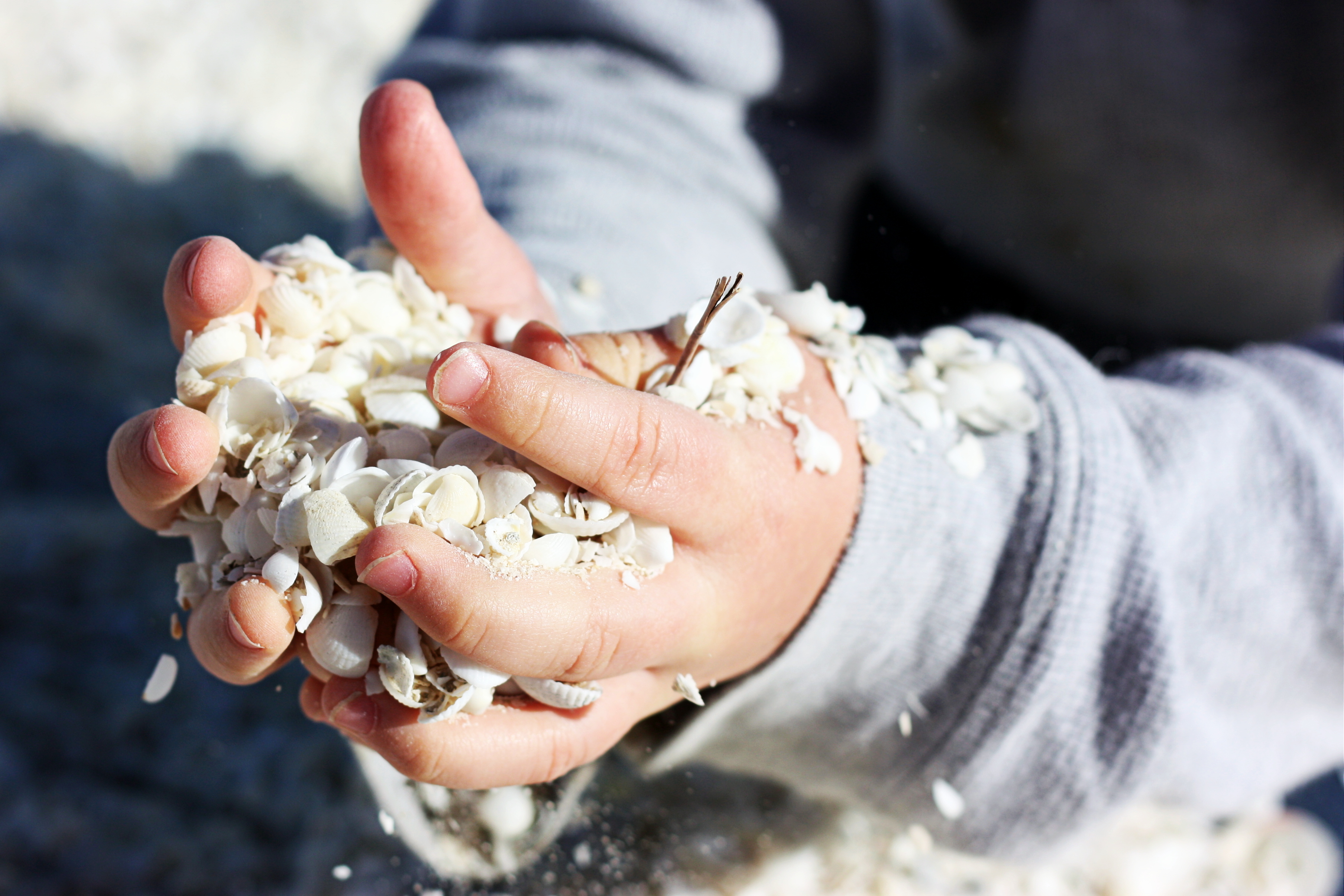
I love the idea of #blimage, so to end this post I’m throwing out another image, to ‘pay forward’ the challenge. So, bloggers, do your worst with this pic (just attribute the image back to me :)):

Shell Beach, by @debsnet

Work-family fulfilment: The elusive sweet spot

I have never met a woman, or man, who stated emphatically, “Yes, I have it all.” Because no matter what any of us has—and how grateful we are for what we have—no one has it all. ~ Sheryl Sandberg, Lean In

Usually this édu flâneuse blog is focused on teaching, education, school leadership and research, although I have written about self, travel and gratitude. This post, which was incited by reading Annabel Crabb’s 2014 book The Wife Drought, is about partners, parents and families grappling to find collective fulfilment. What does it mean to be a partner and parent in a world where everyone is leaning in?

my two boys adventuring

my two boys adventuring

Recently, as the mother of a two and a four year old, I went on a work trip, my first solo travel since the birth of my eldest. Apart from the very occasional overnight (drop-off-at-bedtime pick-up-at-breakfast) sleepover, I had never been away from my children. My husband had travelled consistently since they were born, but this experience was new to me. As I strode at a grown-up pace through the airport, wheeling a single teeny carry-on, it struck me: this was the first time in five years, since first falling pregnant, that I had conceived of myself as a singular entity, a human being in my own right. Of course, there was still the invisible umbilical pull, but this experience of thinking-only-of-myself was both foreign and like slipping on my softest old comfies.

It got me thinking: What makes our lives whole? How do we prioritise family time, husband-wife time, career time, self-care time and home time? Can we be whole or can we only be compartmentalised parts? Is there a work-life-family-self sweet spot?

lean in to sandcastle building

lean in to sandcastle building

I like Jennifer Dulski’s concept of the Work-Life Mashup. Be with people you love and do the work that matters, she says. Focus on what’s important. I also resonated with Rosa Brooks’s response to Sheryl Sandberg’s Lean In: lean out! More is not always better. How about also leaning in to family, happiness and wellbeing?

A good friend recently leant me Annabel Crabb’s The Wife Drought: Why Women Need Wives and Men Need Lives. Crabb’s message is that, in order to achieve any semblance of work-family happiness, women need support in the home and men need more flexibility to step out of a traditional work model.

Men: supercharged by wives but missing out on lives

“Men’s careers rattle along uninterrupted,” says Crabb. Their wives are the “invisible power-pellet” which makes them more able to succeed in their own careers. “For fathers, having a family gave them a competitive edge,” while for women children make her, “less likely to be employed.” Men don’t tend to take time out from their careers when they have a family. As their children are born and grow, their work lives rocket forward on unbroken trajectories.

The downside of man as breadwinner and woman as homemaker is that fathers are excluded from “a universe of experience … and that’s a sad thing.” Why is a dad looking after his own children called being “Mr Mum” or “Daddy Daycare”, instead of just ‘being a parent’?

My husband recently went to the weekday parent induction for our eldest son’s new school, and he was one of three dads there; the other forty-plus parents were mums. Hopefully he was seen as neither a hero nor a novelty; just a proud, interested and loving parent.

Half-crazed superwomen: doing it all not having it all

Crabb cites studies and statistics which show that women are the ones who tend to adjust their schedules and take on the lioness’s share of the caring and housework responsibilities. She describes this as the age of the “half crazed ‘superwoman’” who attempts to ‘do’ work and family in equal measure, all while having “that feeling that one ought to work as if one did not have children, while raising one’s children as if one does not have a job. To do any less feels like failing at both.” Women tend to step back, step out, or figure out acrobatically-flexible ways to scratch together a work life while their children are small, or pay others to care for their kids.

I have heard an employer say, “if you want efficiency, hire a part-time mum” and Crabb asserts that she uses “every scrap of the day like an Italian farmer uses all of the pig.” We all have our multi-tasking, time-saving routines. I wrote here about the way I approach my PhD schedule. And there are always circumstances under which the delicate ecosystem of childcare, work, family and self, tips on its axis and sends us sprawling.

Social media: help or hindrance?

Social media allows us all to connect to others and share our lives. While my professional social media is focused on my intellectual interests and cultivating professional conversations, I use my personal social media to share moments of beauty or delight which I’ve carved out or stumbled upon: a sunrise at the beach, my children playing happily, a wonky birthday cake I made from scratch. My aim is not to craft an image of work-life-mashup perfection, or to suggest that this social media output is my complete reality. This is the highlights reel, not the whole picture! Crabb warns, though, that women who try to make work-family-life juggling appear easy can’t complain when the world doesn’t notice how much they are struggling to maintain their appearance of effortless togetherness.

For some, social media posts are an additional pressure. Apparently there is a thing called ‘Facebook life envy’. The mother who sees others’ decontextualised posts might wonder: How will I assemble a perfect outfit, while making grain-free dairy-free sugar-free recipes from whole foods grown in my own garden, mixing my own eco-organic-fairtrade face scrub, engineering creative craft activities, hand making personalised Christmas cards, and take a ‘no filter’ photo of a house sparklingly clean from all-natural chemical-free cleaning products?

We need to remember that social media is not life. And our lives are our own to live. 

social media is not reality

the highlight reel: social media is not reality

Finding the Work-Family Fulfilment sweet spot

Crabb concludes The Wife Drought by suggesting that we become accepting of men taking time for family or working more flexibly to achieve their own work-life-family contentment. Men should be able to lean out, she says, without being the subject of ridicule or novelty.

I’m lucky enough to have the kind of mutually supportive relationship that Tanya Plibersek talks about in Crabb’s The Wife Drought. My husband and I support each other professionally and share what we do at home. My husband believes in me as a mother, a wife, a researcher and a professional. He supports me in my dreams: to nurture a happy, connected family; earn a PhD; build a satisfying career; have a love-filled joyful adventurous life. And I support him in his: to be a present, treasured father to our boys; build a family legacy with them; grow his own businesses; develop his reach and impact; nurture professional connections and make a difference to the industries in which he is immersed.

We need to believe in each other’s capacities for awesome, and in each other’s dreams.

It may not be easy or perfect, and my husband and I may live our weekday lives by the ding of an Outlook calendar, but we both want to actively parent our children and be – really be – in their lives. We both work a semi-flexible working week. We share housework. We both have times when one of us is parenting our children and the other is working or traveling. We have lots of time when we are all together. Our boys see us, I think, as equally their parents. They experience us as a whole family unit in which we all work together to support each other as we seek individual and collective happiness. These choices are based on our beliefs. I know many happy families who make different, equally fulfilling choices for their own circumstances and principles. Each family needs to find its own changing recipe for the sweet spot of ‘this works for us, for now’ and ‘this makes us happy’.

Perhaps discussions about work-family-life fulfilment should be less debates in which we tally the percentage of housework done or hours worked or dollars earned by each partner. Can we focus more on talking with our partners and our employers about how we can support each other in our dreams for our selves and our families? What might that look like for our particular family, based on our visions, dreams, opportunities and resources?

There is no “invisible power pellet” or perfect one-size-fits-all recipe for finding the work-family-life-happiness sweet spot. We can only make choices which work for each family at any given time, riding the ebb and flow of life’s messy randomness together, and with a view to serving each individual (parents and children) and the whole.

carve out time & space for joy & simple pleasures

carve out time & space for joy & simple pleasures