“It’s not down in any map; true places never are.” Henry Melville
I’ve returned from the Association of Heads of Independent Schools of Australia, held in Aotearoa New Zealand, where the theme of the conference was the Māori proverb Ka mua, ka muri: Walking backwards into the future. This proverb reminds us that we move forward by knowing and facing what is behind us, by understanding and accepting our stories and histories, and by drawing on wisdom learned through challenge.
Dame Farah Palmer’s keynote invited leaders to think like wayfinders, being guided by a range of values and knowledges. I was reminded of the chapter I wrote with Claire Golledge, published in 2021 – ‘Wayfinding: Navigating complexity for sustainable school leadership‘. In the chapter, we explore wayfinding as a way to conceptualise the complex, nuanced work of the leader.
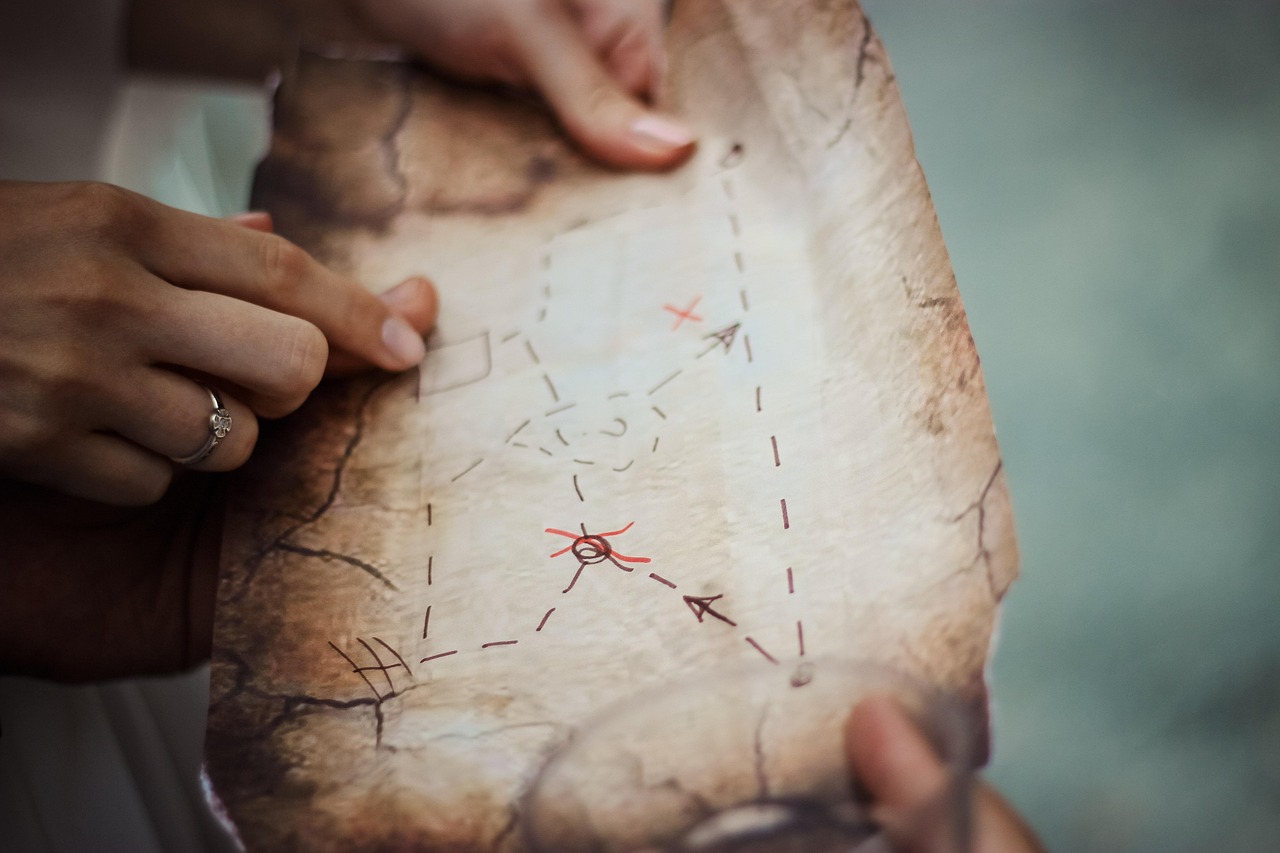
School leaders are faced with a role in which there is often no map for the complex challenges they face, as they tackle a multiplicity of factors and expectations within dynamic environments. School leaders lead their schools through constant flux, heightened accountabilities, curriculum change, harmful media narratives, and education policy reform, not to mention climate crises, economic disruption, political unrest, pandemics, and social inequity. Over time, leaders build a map of sorts, of tried-and-tested routes for the various circumstances they face. However, there are times when well-worn paths have not been trodden in the direction in which a leader needs to go.
The metaphor of wayfinding shifts attention from the singular leader hero to an ongoing practice of leading that is purposeful, relational, iterative, and anchored in context. Drawing on Indigenous oceanic navigation as a discipline of presence, discernment, and collective endeavour, in our chapter Claire and I explore how leaders might find their way amid uncertainty and complexity. Below, I provide a quick tour of our reflections.
Orienting ourselves
Wayfinding begins with orientation. A ‘you are here’ dot on a map provides us with a sense of where we are in the bigger picture, and of the various environs we need to be aware of as we navigate our way. Our orientation can be enriched by recognising the past. Leaders need both the bird’s-eye map and the ground view, holding the wider context and network of possible routes in mind while noticing the small markers that matter today (a parent’s email, a child’s expression, a teacher’s hesitation).
Simultaneous path-following and free-ranging
There are times in leadership that feel like route following: enacting policy, upholding procedures, attending to scheduled activities. But leadership constantly throws us into free-ranging navigation: emergent dilemmas, contradictory demands, storms that arrive unforecast. Wayfinding accepts this duality. We have our charts and our maps. We are steadied by our values. And we adapt to the unknown and unpredictable ethically and judiciously.
Knowing self, knowing context
Wayfinders learn the environment and themselves. Tuning into context and conditions is essential when we are leading and finding our way to the best decision. Knowing ourselves means knowing our values, understanding our non-negotiables, and reflecting on our past to lead with identity-awareness and vulnerability.
Navigating roadblocks
The best laid plans and the most detailed maps are no match for unexpected conditions. No Through Road. Wrong Way Go Back. Slippery Surface. Falling Rocks. Kangaroos Ahead. Navigating the unexpected means applying decisiveness when required alongside intuition and reponsiveness, in order to course correct as an when divergence is required.
Instruments fit for purpose
Like traditional navigators, school leaders need to carry and deploy a plurality of instruments fit for a range of possible purposes. In our chapter, Claire and I argue for both/and instruments: data and narratives; policy and ethics; consultation and clarity of decision; shared language and careful messaging. We need to be sense-led, evidence-informed, attuned to the limitation of our tools and alert to the human impacts.
Walking backwards into the future
Much of the work of the leader requires courage, creativity, a strong network of trusted colleagues, and a constant state of responding to circumstance, honouring the past while looking to the future, considering the needs of individual and of the collective, and overseeing structures and operations while being responsive to changing circumstance and human complexity.
A wayfinding approach to leading balances intuition with strategy, the human with the operational. If we consider ka mua, ka muri in our leadership, we remember to look back as we move forward. We hold the past gently while we step into the future, honing our judgement and allowing it to be informed by past, present and future time and place.
Reference:
Netolicky, D. M., & Golledge, C. (2021). Wayfinding: Navigating complexity for sustainable school leadership. In Future alternatives for educational leadership (pp. 38-53). Routledge.
 the édu flâneuse
Pingback: Small actions matter: Rhizomes, butterflies and flywheels | the édu flâneuse