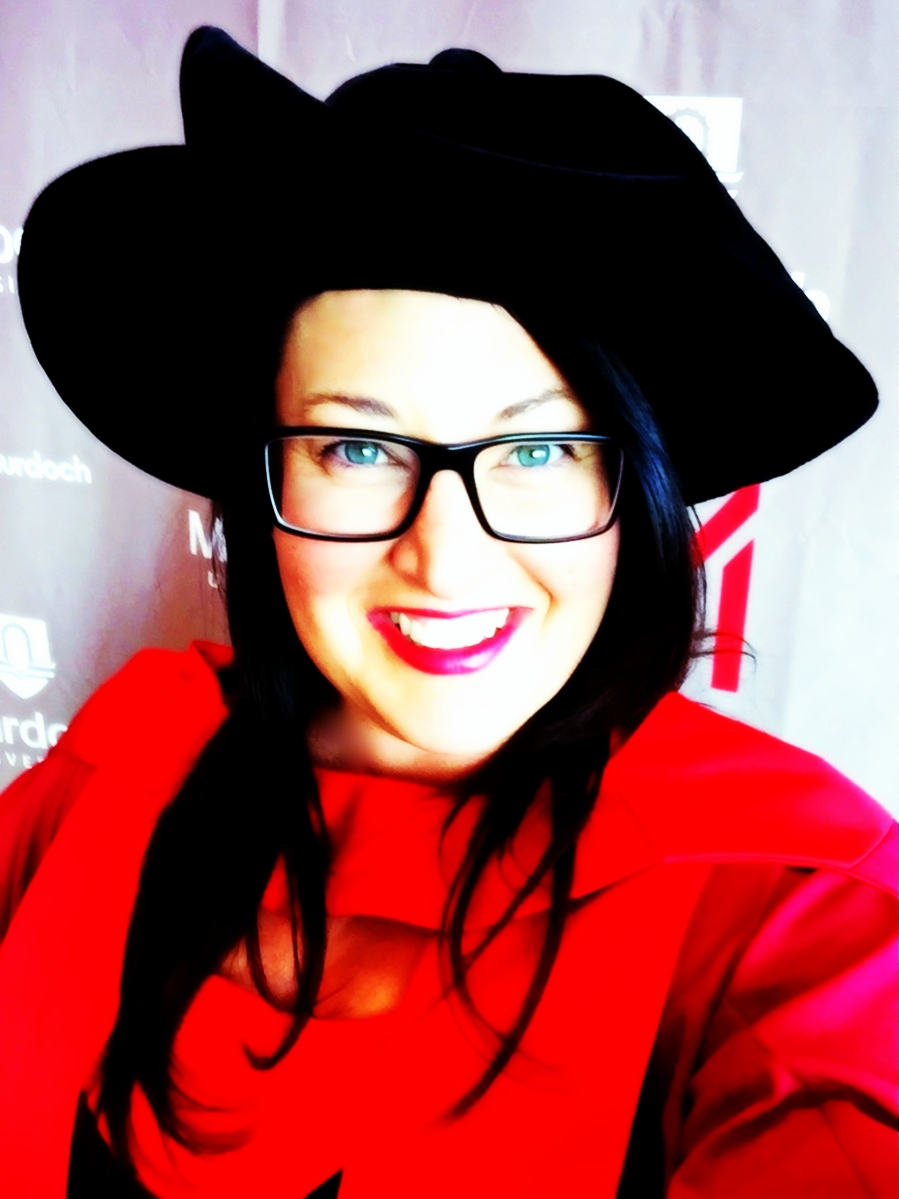
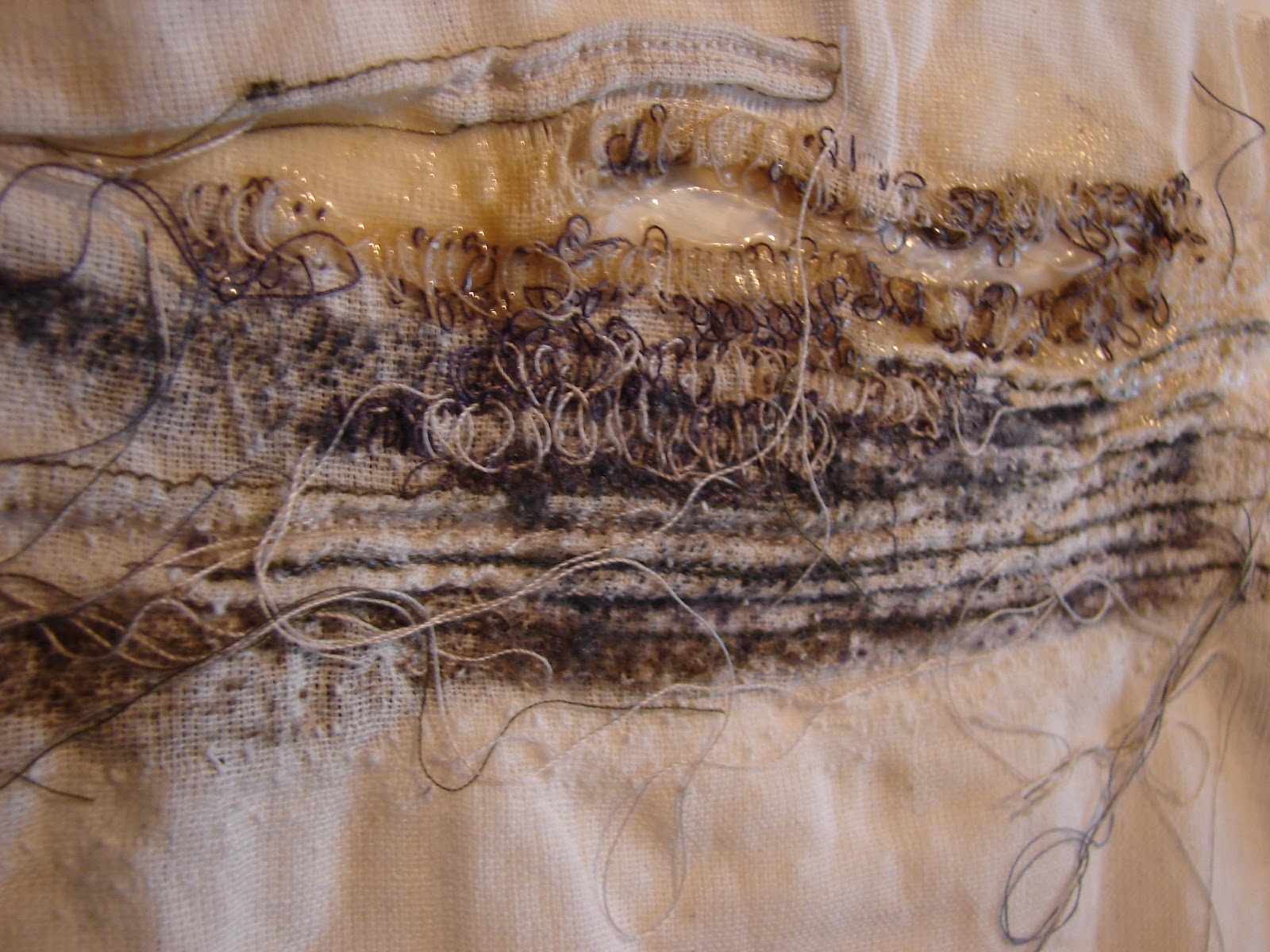
Power of a nerd herd: Ode to my people

Nerd Face Emoji

It seemed Liv had spent the last eighteen years in search of her people, and in one sudden explosion of fate, they’d all been brought together in this place in time. Her eyes filled with tears as a sudden awareness filled her. They were all nerds.” ~ Danika Stone, All the Feels

The word ‘nerd’ is often given a bad name, being associated with relational ineptitude and being socially outcast. But for me nerdiness is about finding joy in knowledge: attaining it, interrogating it, producing it. Immersion in it. Consuming, curating and creating.

I love it when a nerd is positioned as a central figure of a story. One example is astronaut and botanist Mark Watney, the protagonist in Andy Weir’s 2011 novel The Martian. At one point Watney, stranded on Mars alone, yells, “Hell yeah! I’m a botanist! Fear my botany powers!” Watney embraces his nerdiness, calling himself a “space pirate” and invoking the metaphor of Iron Man when he catapults himself into space near the novel’s end. The story arc of the novel, and the Ridley Scott film in which Matt Damon plays Watney, is carried by this nerd-hero and his melding of science knowledge and affable humour. Watney is the epitome of the lovable nerd.

Recently, I’ve been reflecting on those people in my professional and personal spheres who make me feel like I’m at home when I’m with them. Many of these are fellow nerds. That is, we connect over our mutual love of something geeky (reading, writing, teaching, research, literature, coaching, art, science, story). We have a shared joy in finding things out and in doing purposeful work.

These are family and friends who, while I was completing my PhD, asked me about my research and listened to my responses. They are colleagues who get excited about a project we’re working on. Who co-plan courses, lessons, cross-curricular opportunities and assessments with a fervent enthusiasm and a twinkle in their eye. Who understand, or at least watch with knowing amusement, when I get excited about a new academic text or education book arriving on my desk (O, Book Depository, my faithful friend!), or about a paper being published. Who smile patiently when I cyclone into their office full of ideas busting to get out of my head or words tumbling out of my mouth. They are the past or present principal who continues to show an interest in and support of my work. Who sometimes says ‘yes’ and sometimes challenges me to think and do more.

They are the mentor or coach who waits while I work through my messy thoughts and helps me to arrive at cleaner ones. They are the colleague and bloggers who trust me enough to listen to their unformed thoughts or read their still-emerging ideas.
They are the professional friend who coaches me on Voxer or takes a phone call to help me work through a professional problem or issue. They are my PhD supervisors who gave me the space to explore some off-the-wall ideas, while challenging me to construct airtight rationales for non-traditional approaches. They are the well-known academic who shares their expertise via social media, flattening hierarchies and transgressing time zones. They are the conference-goer who stops me in the corridor after my presentation to talk for an hour, before moving our conversation to the long lunch it deserves. They are the co-author I’ve never met face to face, or spoken to on the phone, but with whom I’ve collaborated, co-written, and whose thinking and writing has pushed mine into new crevices.

They are my kind PLN who engage thoughtfully with me on Twitter, respond to my blog posts and meet up with me in cities around the world. Twitter is full of generosity. In my PhD acknowledgements, I thanked family and friends who had shown an interest and those in the social media world who had provided an antidote to isolation when I felt alone in my own head in the PhD wilderness.

Those people who feel like my tribe provide a space that is at once safe and challenging, celebratory and questioning, inspiring and industrious. It’s a place I can be excited about an idea, a text or a possibility. I can geek out and nerd it up without risking an eye roll or a snigger. I can share narrow interests and pursue broad passions.

In a world in which we are more connected than ever, we can be buoyed, empowered and supported by our connections, our people, our herd, our tribe, our squad. We can pay forward and give back. We can support each other’s nerdy excitement. In the karmic circle of knowing, learning, doing, being, leading and caring, we can share our knowledge, contribute our time to help others on their journeys, listen to others’ stories and celebrate others’ milestones.

Thank you to my fellow nerds who give me a sense of belonging and allow me the luxury of knowing that my personal brand of nerd has plenty of places to call home.

Achievement unlocked: I think I am Nerd Face Emoji.

Achievement unlocked: I think I am Nerd Face Emoji.


Multiple ways of being: Teacher, researcher, coach, vegetable, fruit.

this post's peer review comment, memefied on the advice of Rachel Buchanan

this post’s comment on peer review, memefied on the advice of Rachel Buchanan

Part of what I love about the work of research and academic writing is that it is brain-bendingly hard. There is always more reading to be done. There is always more writing. It can always be better. It can always be improved. Scholarly thinking requires a constant state of being open to critique from self and others, to finding new ways of knowing, understanding and communicating. This week I’ve received two first round lots of peer review comments. Receiving peer review feels to me like getting a high five and a punch in the face simultaneously. There is always something good, to be celebrated, and something that is mercilessly criticised. It’s both encouraging and brutal.

My thus-far-neophyte experience of academic work, is reflected in Inger Mewburn’s post today. She points out that a scholarly identity is a critical and questioning one. It is one in which the academic or researcher becomes someone always in progress, always learning, always working towards a never-finished goal. Becoming a scholar, Inger suggests, is an acceptance (or at least understanding) that the work is never done.

Pat Thomson this week blogged about research as embodied practices and awarenesses. Pat describes her research practice as being an ingrained part of her. Not grafted on or carried around, but deeply etched into the core of who she is and how she operates. An automatic-pilot way of being. This reminds me of my experiences of the internalisation of teaching, coaching and research, which I notice becoming a part of the ways I operate. Through deliberate practice, I find that I am internally transformed.

As someone who bestrides—and intends to continue to straddle—the dual worlds of teaching and research, not to mention the world of coaching, I am interested in discussions about and expressions of professional identity. (Professional identity was also part of my PhD thesis.) A few months ago, Greg Ashman wondered what it would mean if a person who teaches at a university level identified themselves as a teacher, a potato or Napoleon. Stewart Riddle, school-teacher-turned-academic, who identifies as both teacher and scholar, responded with this satirical one-act play. I also had a go, at that time, at exploring identities and who gets to decide who and what we ‘are’; my conclusion was that we get to shape and define our own identities. I do think, however, that when the voices of teachers are sought, the definition of what ‘teacher’ means, in that context for that purpose, needs to be made clear.

Fascinatingly, to my English teacher self, the word ‘potato’, originally used (flippantly, I think) in Greg’s blog post, gained momentum, taking on a life of its own. Linda Graham used it in this post about who might engage with debates in education, and Naomi Barnes used it in this post about what it means to be a teacher. Naomi proposes that “Who are teachers?” has become a radical question. Then, today, a Twitter conversation, in which one person attempted to attach a label to another, turned into a string of potato wisecracks accompanied by potato GIFs, all relating to the notion of identity. This humorous exchange seemed to engage with the question of who gets to attach labels to who.

I wonder about the humble potato amid this flurry of attention. It’s a staple food, seen as part of the tuber and nightshade families. It’s a reliable, fundamental ingredient in many households and restaurants, and can be prepared in many ways. There are over 100 varieties of potato (personally, I lean towards buying the Royal Blue). Yet despite its ubiquity and versatility, it has become an insult and a joke. (And not just on edu-Twitter. This month the Google car was called an ‘ugly potato’.)

If a potato is shorthand for an academic who works and teaches in a university, I don’t qualify. I’m pretty sure I wouldn’t be accepted as this kind of potato, should I choose to identify as one. While I do some academic writing, have recently completed a PhD and have an affiliation with a university, I cannot claim potato-academic status. Insert sad face emoji.

Perhaps I could adopt as my identity totem another member of the nightshade family. I love the nightshades for their glorious variety. From toxic to medicinal, from ornamentals to weeds, from fruits to vegetables, from spicy to delicious, this family of flowering plants (including the under-appreciated potato) displays the phantasmagoric splendour of the natural world. Perhaps I am an aubergine. Glossy, slightly bitter, smoky and a teeny bit addictive.

The aubergine can be seen as a boundary spanner (a term recently introduced to me by Marten Koomen). It’s often seen as and cooked with vegetables, but is actually a fruit. It has a fancy French name as well as a number of alter egos (eggplant, guinea squash, melongene, garden egg). A vegetable-like fruit that is also called a squash, a plant and an egg! As a teacher-leader-coach-researcher-writer I feel an affinity with the aubergine, its multiple identities and its many labels. My boundary-spanning auberguine-esque self, sitting both astride and between worlds, wonders about my ways of being. Is it possible to embody multiple practices that belong to multiple roles?

If, as Will Durant said (in a quote often attributed to Aristotle),

“we are what we repeatedly do”

then what are we when we do multiple things as we move between multiple roles? How long does it take us to ‘become’ something in the first place? How long does it take for a researcher to stop being a researcher after they stop doing formal research? How long after a teacher’s last class, or coach’s last coaching conversation, or leader’s last formal moment of leading, before they are no longer teacher, coach or leader?

Or do some of our beliefs about the world, and ways of being in the world, become so much a part of us that we continue to embody them? Can we morph from one vegetable-fruit metaphor to another, shedding our potato-aubergine skins? Or do we carry them within us, always?

Textiles & academic writing: Material, process, product


This post, which could also be titled ‘remembering my 1990s feminist self’ is a re-emergence of some thinking I did a long time ago in my early years at university. After leaving school, I completed a Fine Art degree, followed by an Honours year. I’m writing this post as a way into self-inquiry, a way to write myself towards my hunch that my early days as a feminist-textile-artist-writer have underscored my more recent PhD work and academic writing. Big thanks to Katie Collins whose wonderful blog post on subversive material metaphors in academic writing sparked my thinking.

I was a painter from a young age, thanks to my artist mother, but I chose to study textiles as a major in my undergraduate Fine Art degree, rather than painting. This choice was due to the meanings inherent in textile materials, processes and products. A textile artist can weave in metal or print on latex. They can make work in the blacksmith forge or the sculpture studio. They can work with cardboard or furniture or paint or dye or thread or canvas or wire or plastic or found objects. The visceral and sensory experience of working with materials is central to the artistic process.

The materials a textile artist chooses, and the scale at which they magnify or miniaturise those materials, are deliberate meaning-making choices. The artist can choose needlework and hand-dying, or industrial Warhol-esque mass printing. They can applique or cut away. They can build or melt. They can assemble or destroy. They can stitch or slice. They can focus on the macro or the micro, staggering their viewer with enormous size or encouraging the viewer to come in, up close and personal.

Textiles is personal and political. It is also a subversive arena for artists, and often a feminist one. It pushes or rails against the stratification of ‘Art’, which has often meant the dichotomising of cerebral, thinking highbrow Art (upper-case ‘A’, often seen as done by men), and functional or decorative art (lower-case ‘a’, often associated with women and femininity). Historically, women were objects of art: she the body to be gazed at and sculpted. Or objects of art were personified as women: she the landscape to be scrutinised and painted.

The art historical devaluing of textiles pivots on its early treatment by critics, galleries and institutions. Aesthetic disciplines depend on recognised ‘powers that be’ to promote and uphold them. Early galleries and history books excluded textiles. Unlike painting and sculpture, textiles was historically seen as an unimportant discipline, undeserving of discussion, not worth deconstructing for message or meaning. The association of textiles with the devalued domestic space of the home, the opposite of the glorified public space of the art gallery, contributes to its dismissal.

So, why am I back here, thinking about textiles as feminist discourse or subversive act? Because Katie Collins’ post brought memories of my past self bubbling to the surface. And I am wondering to what extent my long-ago thinking and artistic practice, around the meanings inherent in working in and writing about textiles, has influenced my current and recent research and academic writing. On reflection, my PhD incorporated disruptive elements. While fitting largely within an accepted academic paradigm, it quietly challenged the ways that knowledge is traditionally written about. I used narrative method, literary metaphor and created three multimedia illustrations for the thesis, corporeal expressions of my thinking.

Now that I’m back in the eye of this needle, I need to think further about how textiles might provide a metaphor for research and academic writing.

In the meantime, below I will type an extract from a paper that won me the Allport Writing Award in 1998, and was published in Textile Fibre Forum. It was an analysis of Vivienne Binns’ artwork Mrs Cook’s Waistcoat. The piece gives a sense of where my thinking was around textiles as feminist activism in the late 1990s. I have deliberately omitted an image of the artwork as I’m wondering if the text itself can paint the picture for you.

(For non-Australian readers, Captain James Cook was a British explorer who claimed to ‘discover’ the south eastern coast of Australia in 1770.)

_________________________________________

Extract from ‘Mrs Cook’s Waistcoat: Rewriting history through cloth’

by Deborah M. Netolicky (1998), Textile Fibre Forum, Volume 53.

Mrs Cook’s Waistcoat may be read as one woman’s attempt to rewrite and reinterpret human history. Here Vivienne Binns contributes to the discourse on journey, adventure, and historical significance, telling the pain-filled woman’s story of discovery and adventure—the burden of waiting and worrying, as opposed to doing and dying. Through this work she questions platitudes of the day, such as “men work and women weep”. Binns demonstrates that women were not passive, but were actively working contributing, storytelling, and recording their own histories, written in needlework.

Binns uses journey as metaphor, identifying with Mrs Cook’s expedition as expressed through the waistcoat for Mr Cook. She challenges the value placed on women’s histories and women’s work by challenging the notion that Mrs Cook’s journey was insignificant in terms of human history. She has chosen to elevate its significance, giving it voice, implanting it in the discourse of high art.

… Captain Cook’s wife is the “Mrs Cook” referred to by the title of the work which tells the story of her laboring over a waistcoat for her husband while he is away on a long voyage. The waistcoat mapnel is larger-than-life, describing the legendary reputation of Captain Cook in Australian myth-making, and the amplified importance that Binns intends to give to the making of the waistcoat.

Binns connects the historical representation and exploration of Cook’s journey with issues of women’s value, women’s history, and the construction of gender. In her version of this story, the ocean water is a metaphor for a bewitching, intoxicating vacillating, unpredictable femininity and female identity … Cook, the white, middle-class male, is discovering, navigating, defining, and fixing the limits of the Pacific Ocean. He is writing the experiences, histories, and memories of and for the water, which has no voice. It is formless, restless, intuitive, irrational, and passive, in need of taming, subjugating, explaining and defining by the rational, scientific logic of male discourse.

Nature is tamed by culture. Binns places herself in the middle ground. She associates herself as water, as a woman employing subconscious, intuitive processes – her own emotions, remembrances, and ideas about certain colours, materials, and ways of working. On the other hand, she calmly calculates, selects, and constructs her images, associating herself with the heroic explorer, just as the artist does on a continuous intellectual journey to discover new meanings. This marriage of antithetical metaphors reflects Binns’ concerns with shaping perceptions of women’s ways of knowing, living, researching, remembering, experiencing, and making. By yoking the two ways of working, she gives equal value to each.

…The waistcoat can be seen as a woman’s way of writing and recording history. Women write history in fabric, men write history in text. Binns makes Mrs Cook’s journey of waiting, sewing, and weeping, as valid as Captain Cook’s journey. The labour and time involved in making this waistcoat explain the wife’s dedication and devotion to her far-away husband. Binns questions the trivialisation of women’s roles surrounding issues of the domestic and ‘crafty’. … She uses the processes, materials, and experiences of women—traditional metaphors of women’s work—to weave a myth about women’s forgotten places in history.

Penetrated openings are created by slicing, cutting, and scarring the fabric, fabric that represents flesh as well a material. … Rolled up papers (the stuff of men’s work) penetrate exposed fabric (the stuff of women’s work); paper penetrates fabric; men’s work penetrates women’s work; culture penetrates nature. The slits in the fabric are peeled back like open sores, mirroring the multiple stab wounds that were the cause of Cook’s death. The ultimate satire of the story is that while Mrs Cook is lovingly creating the waistcoat for her husband, he is already dead, his stab wounds mirrored in her handiwork. This is reflected in the typed and hand-written text, which permeates through a layer of white paint: “Mrs Cook embroidered… this time the Captain did not return and the waistcoat remains unfinished”. This irony elevates her personal anguish, and points to the difference in men’s discourses and women’s ways of speaking through needlework.

…Binns … uses traditionally female and domestic techniques of women’s work: embroidery, pattern-cutting, and sewing. There is a sense of Mrs Cook’s physical involvement in this garment, her time, effort, and care. It is stitched, cut, glued. Elements, images, textures, and metaphors are exposed, denied, revealed, concealed, constructed, deconstructed, veiled, disguised, patterned, decorated slashed, sliced, torn, ripped, reconstructed. The piece is layered with the corporeal stuff of memory.

… Binns does not create a new reality, but reflects and reinterprets the existing one in a way that gives it new meaning. She puts one moment in one woman’s life under the microscope until it boils, making her audience reconsider women’s lives, women’s history and women’s art.
Harvesting good work: Reap what you sow

I’m not a farmer, not even a green thumb really. While I quite enjoy gardening and have a composter, I’ve learned to populate my garden with plants that survive on a healthy dose of neglect. (Side note on the composter: there is something joyful about shredding old copies of my PhD thesis drafts and feeding them to the worms.) Despite my lack of horticultural know-how, I’ve recently been considering the farming—and biblical—metaphor that you reap what you sow.

I often see others I admire reaping the rewards of their work. These people aren’t slaves to the performative measures of a neoliberal system, or narcissists seeking the spotlight of social media celebrity. They are humans–professionals, thinkers, theorists and practitioners–dedicated to work they believe is important. To doing it, sharing it, making a difference.

Since the final throes of my PhD in March, things have been happening in seemingly organic ways. Of course the PhD got done-and-fairy-dusted, and the thesis published online. The first paper from my PhD has since been published: ‘Coaching for professional growth in one Australian school: “oil in water”’, in the International Journal of Mentoring and Coaching in Education. I have another paper in press, due out next month. Two more are sitting on editors’ or reviewers’ desks. Two drafts are on the desk of a co-author. I have been interviewed on the Teachers’ Education Review podcast and on 2SER Sydney community radio. I had a piece published in The Conversation this week, about the dangers of pursuing performance pay for teachers. I am in discussions about bookish things, too.

And I’ve been on some kind of accidental-on-purpose conference circuit. AERA in DC in April. researchED in Melbourne in May. The International Symposium for Coaching and Positive Psychology in Education in Sydney in June (this Thursday and Friday). Heroism Science in Perth in July. For (little old) me, alongside my work at my school, all this seems like armfuls of hand-picked produce.

I’m not sure why I’m surprised at the pace of my recent schedule of outside-of-work commitments (also known as the unpaid-but-rewarding work that is academic writing and presenting), and the fact that I’ve started to be approached, rather than doing the approaching myself. But I am quietly bemused that I seem to be in a harvesting part of a cycle, even though I know that this is actually the result of hard and persistent work. The seeds for the current abundance were selected, sown and tended a while ago. Papers were written and reviewed (and reviewed and reviewed). Abstracts were drafted and submitted. Relationships were formed and cultivated. Presentations were prepared. Work was done. A lot of it. In my evenings and on my weekends and in my down time, and in all the little nooks and crannies of my life where I could fit reading, writing, collaborating, learning and connecting. Thank goodness for the wonderful people who support me, from my family and friends, to my colleagues and professional learning network, the Twitterati and my Voxer Squad.

I believe in doing good work. For me this is enacted in ways that are without a linear frame. I’m never quite sure where I’ll end up, or even where exactly I’m intending to go. It’s about doing work that I’m passionate about and feel is important, whether in service of my students, my coachees, my school, or knowledge in the world. In my writing, too, I often try things out, head down trails unsure of where they lead, double back, try again.

So, for now I continue to sow seeds I think are worth sowing. Write and research those things I think are worth writing and researching. Say things I think are worth saying. Teach what I think is worth teaching, in ways I think are most worth doing. Seek to learn those things I think are most worth learning.

The fun thing about this kind of sowing is that it’s like planting mystery seeds. I never quite know what influences or impacts something I do now might have in the future. It’s why the reaping feels like Christmas morning.

The best bit is how rewarding all the persistent and consistent hard work is. I like the work itself. I love the struggle and the triumph. I love the connections and the relationships that bubble up and take form. I love the unexpected rhizomatic results. A failed planting. A teeny green seedling reaching up from damp dark earth. A basketful of glossy fruit. A knotted beanstalk reaching up to the clouds.

Professional identity & professional learning: Reflections on my TER podcast interview

identity is liquid (aka Little Lagoon, Shark Bay)

identity is liquid (aka Little Lagoon, Shark Bay)

Recently I was interviewed by Cameron Malcher for the TER podcast about my PhD. You can listen to the interview, which was released on Sunday (it kicks in at the 35 minute mark). My favourite part of the podcast was Cameron’s concluding thoughts that were sparked by the interview. Below is not a blow by blow account, but a reflection on what we discussed.

What is professional identity?

In my PhD I defined identity as “ongoing sense-making process of contextually-embedded perceived-selves-in-flux”. It is a process rather than a product, a constant state of becoming. It is fluid rather than fixed. It is constantly shifting, as suggested by Fred Dervin’s notion of identity as liquid. It is socially constructed and contextual; that is, identities are co-constructed with others, and we are different versions of ourselves in different situations, with different people.

Factors that make up our professional identities include our beliefs, values and assumptions. Our identities are created and rewritten through language, through the ways we tell the stories of ourselves, to ourselves.

On the blogosphere and the Twitterverse there have been arguments about the disconnect between who owns identity and labels, suggesting that some think that identity is superimposed on us by others’ perceptions, while some believe that we own and make our own identities. The socially constructed nature of identities suggests that both have merit. We write ourselves for ourselves, and our self-perceptions rely on how others perceive and interact with us (although this interactions can be rejection of others’ perceptions, as well as acceptance).

Why consider professional identity in education?

Teaching is deeply personal. Part of the reason I brought professional identity together with learning, leading, and school change is that I think they are inseparable. Looking at education reform through the lived experiences and identities of those in schools is key to understanding its impacts. Professional learning and the leading of schools need to take teachers’ and leaders’ senses of selves into account, and engage with them.

Focus of my research

I conducted research within my own school and examined the stories of 14 teachers and leaders, including myself. The background context was a school-based teacher growth initiative.

I used narrative research to explore how these educators’ professional identities interacted with their learning and with school change. I was interested in what it is that shapes and shifts educators’ professional identity perceptions and in what ways schools and systems might work with a greater understanding of educator identities when designing and implementing education reform.

My narrative approach involved interviewing participants in ways that encouraged storytelling, including using coaching protocols, and then storying those data. It required me to be reflexive as the researcher. The experience of my PhD was personally and professionally transformative for me. I loved it, and it was incredible professional learning. In particular, the luxury of listening to educators’ stories was a joy and a privilege. I presented at AARE last year on my creative, literary approach to storying data, and this Saturday I’m presenting on my ethical decision making at the researchED conference in Melbourne.

Research findings

My research found that:

  • We professionally learn throughout our lives. Our professional learning encompasses life moments that are professional and personal, formal and informal, in schools and out of schools, singular and collaborative. Professional are shaped by good and bad experiences, by role models and anti-models.
  • Learning which taps into who educators see and feel they are, has the most impact on their beliefs, thoughts, behaviours, and practices.
  • Coaching and being coached is identity shaping, shifting teachers’ and leaders’ beliefs about learning and teaching.
  • The Danielson Framework for Teaching can be a useful tool for teacher self-reflection when used by teachers for their own growth.
  • School reform and school cultures which trust the capacities of teachers to reflect and improve is empowering and capacity building.

Implications of my research

With the caveat that my PhD was highly contexualised (considering the nature of the school and individuals I studied) the findings have something to offer the education world.

Firstly, there is a need to broaden the definition of professional learning, to allow teachers and schools to think more broadly about what it is that transforms educators, and who drives the professional learning of teachers. In my own leadership practice I am wondering how professional learning might be more autonomous and individualised. About how professionals might choose and follow, with support and opportunity, their own growth trajectories. About how schools and systems might acknowledge and encourage heutagogical (self-determined) learning.

Secondly, schools and systems can work from their own contexts to design and slowly iterate models of professional learning, from the bottom up and the middle out. As many scholars point out, effective education reforms are contextual. They cannot be lifted from one school or nation and dropped on another. Change in schools should be at a slow evolution-not-revolution pace, and based in assessing available evidence and current context.

As a result of my reading and research, I advocate for distributed and empowering leadership in schools, and school systems that trust teachers. I am a card-carrying, flag-waving fan of the Flip the System movement, which champions the agency and voice of teachers within their own systems. Teachers and school leaders have the internal capacity for analysis, reflection and growth. The individual should be honoured, valued and supported, within the holistic collective of the organisation and the system.

Liquid becoming: Reflections on post-PhD identity and momentum

Reflections on how

things can change across a year.

Liquid becoming.


Identities like

ice floes. Shifting. Writing self

into being. Flux.


Mutable quicksand

liquefying, swallowing.

Consumed or dissolved.


What does it mean to

be doctor me? One foot in

front of the other.

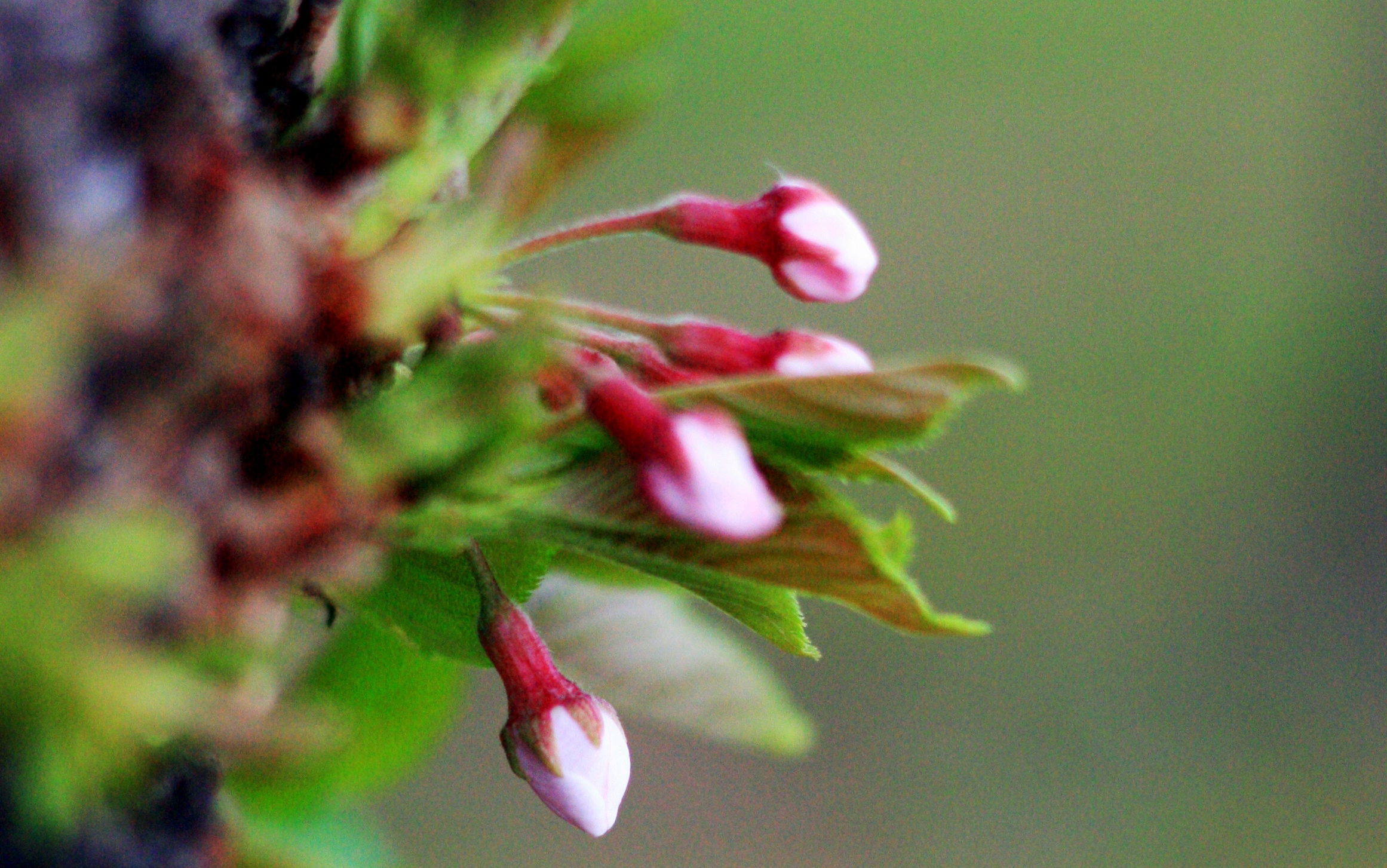
cherry tree trunk, Tidal Basin, DC

cherry tree trunk, Tidal Basin, DC

I’m finding myself in a moment of reflection, hence the above haiku-ification of my thoughts.

If I look back one year ago, I was blogging about blogging anonymously. I was introducing myself to people at conferences who knew my Twitter profile but would not have recognised my avatar, or my online name. Recently I have been letting go of that anonymity and this month updated my avatar and my name on my social media accounts, making myself identifiable and searchable. Although I’m still not sure entirely how I feel about that.

A year ago I was in the throes of struggling with my PhD thesis discussion chapter. Since then, the PhD is done. I am doctored. But my ‘doctor’ identity has yet to catch up with me. In changing my Twitter name and the title on my frequent flyer account (in-flight medical emergencies, here I come!) I’m hoping that my doctor-ness might start to feel like a part of who I am.

one of my favourite PhD memes

one of my favourite PhD memes

In the last year, wonderful unexpected things have happened in rhizomatic ways. I have been invited to speak at events. This blog was nominated for the Edublog Awards, and came fourth in the Best Individual Blog category. It was recommended by the likes of Professor Tara Brabazon, in this keynote podcast. I have had two peer-reviewed papers accepted for publication. My paper submission to the AERA conference was accepted, and so I went to Washington DC to present it and attend the conference. In the last eight months I have been involved in founding and co-moderating the monthly #educoachOC Twitter chat. The Times Higher Education blog asked to publish one of my blog posts (interestingly, one I would never have put forward). I’ve developed collegial, thinkerly and writerly relationships with people on Twitter and WordPress, many of whom I haven’t met in person. I’m in discussions with scholars about writing book chapters and co-authoring papers. These unforeseeable delights have shaped my year into something rewarding, interesting and surprising.

I write these things down partly to marvel at their coming into being, and partly to wonder about how it is that they have happened while I have quietly (or perhaps not so quietly) gone about my life and work.

In January I focused on a personal ‘one word’ for this year: ‘momentum’. The word ‘momentum’ continues to resonate with me. While I’m sure things will continue to happen and evolve, I have no Grand Plan. I continue to work at my Australian school. I continue to write papers from my doctoral dissertation. I continue to think about possibilities for work, research, presenting and writing that might serve my students, colleagues, school and the education community, while fuelling my own passion and inner nerd heart. I’m hoping that this one-foot-in-front-of-the-other approach (the same approach I used to get through the PhD) will build momentum, and that rewarding partnerships and important work will continue to bubble up and come into being.

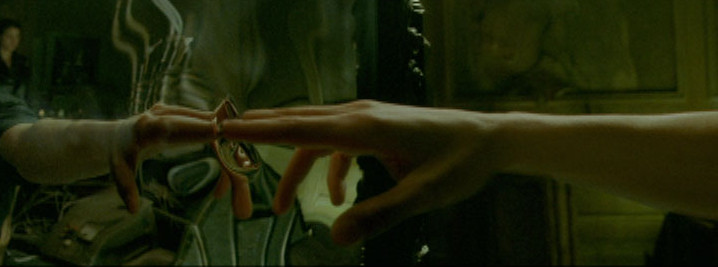
It is Fred Dervin who writes about identities as liquid. I imagine the liquid mirror in the film The Matrix, which I also talked about in this post on reflexivity. But that liquid mirror was one that consumed the person, rather than the person themselves being liquid, which is, I think, a more uncomfortable concept. To be always shifting, always fluid, always becoming and even unbecoming.

As I simultaneously feel myself unravelling and re-forming, attempting to take some shape, I’m waiting for more stable internal identity ground for myself, post-PhD. In the meantime, I guess I can surf the shifting ice floes or try to luxuriate in the quicksand instability of feeling more inner liquidity than usual?

cherry tree trunk, Tidal Basin, DC

cherry tree trunk, Tidal Basin, DC

Through the Fresnel lens, and what Alice found there: Reflecting on reflexivity

Source: https://s3-us-west-2.amazonaws.com/images.hellogiggles.com/uploads/2016/02/15035435/gif-of-alice-falling-through-the-looking-glass-gif.gif

How nice it would be if we could only get through into Looking-Glass House! I’m sure it’s got, oh! such beautiful things in it! Let’s pretend there’s a way of getting through into it, somehow, Kitty. Let’s pretend the glass has got all soft like gauze, so that we can get through. Why, it’s turning into a sort of mist now, I declare! It’ll be easy enough to get through—’ … And certainly the glass was beginning to melt away, just like a bright silvery mist. In another moment Alice was through the glass, and had jumped lightly down into the Looking-glass room. ~ Lewis Carroll, Through the Looking-Glass, and What Alice Found There

In qualitative inquiry the researcher is often trying to find systematic and ethical ways into their research, and once immersed in that world, they are working out and applying ways to navigate it. The interrelationships between self, participants, methods, data and field of study are messy, web-like and complex.

This blog post is a response to one by Naomi Barnes, in which she explored her thinking around diffraction as an alternative to reflection and reflexivity. Here I pour out my own stream-of-consciousness which was incited by that post, in an attempt to make meaning through writing, and in doing so maybe open up some possibilities or provocations about ways of thinking about how researchers interact with, and conceptualize their interactions with, their research.

Naomi (channeling Karen Barad) talks about reflection as being like looking into a mirror, and reflexivity about looking into a mirror of mirrors. She begins to frame diffraction as a more complex way of looking at the self. She writes:

The moment you pass to the other side of that yellow line your life could go in any direction because new people, materials and environments wait for you there. Those things will transform you as a person every step you take and you will transform those things.

This relates beautifully to Alice’s experience of passing through the Looking-Glass, into the world beyond the mirror, in which things are different, backwards or transformed. Diffraction, though, does not reflect, but provides a tiny hole for light to pass through.

In a related example, the film The Matrix directly references Alice and Wonderland in quotes such as “Follow the White Rabbit” and “see how deep the rabbit hole goes.” In the film, a mirror is Neo’s portal into his new consciousness about his reality. Rather than travel through the mirror, he finds the mirror overtaking his body, travelling over and into him. In this scene it seems the fluid mirror, which could represent a reflection of world and self, infects Neo. He becomes distressed as the reflective surface encroaches over his body and eventually into his mouth. Does this reflect how uncomfortable we can be with reflection? How reflection can be internalized?

Source: http://obhs12ll.wikispaces.com/file/view/Neo_hand_closeup_warp_mirror_still.jpg/227407694/Neo_hand_closeup_warp_mirror_still.jpgI’m not familiar with Barad’s work but this notion of how researchers might think differently about reflexivity got me thinking about Alice and the Fresnel lens as a metaphor for thinking about the ways we approach thinking about our positionality.

A Fresnel lens is one in which concentric circles etched onto the surface provide a multiplicity of refractive surfaces. This makes the profile of the lens look jagged, but from above the lens is symmetrical, with those hypnotic circular grooves. This means that the lens can be used to collect, gather, focus or change the direction of light. It can take non-uniform light and evenly distribute it. It can additionally magnify and project images. (Please take my understanding of the Fresnel lens with a bucket of salt. I’m not a physicist, and my introduction to the Fresnel lens was a hand drawn illustration on a napkin in a London pub. There is more information about it here and here.)

I wonder how this lens, which refracts, re-shapes and re-focuses light and images, might provide researchers with a metaphor for thinking about themselves in their work. The Fresnel lens allows us to consider ourselves as one lens, but with multiple refractions. It is at once whole and made up of elements, circular and angular, drawing in and reflecting out. What lens do we use when we consider ourselves and our places within our work, our contexts and our texts? What do we refract? How and what do we collect? What is omitted?

Any lens, the Frensel included, has those things for which it is useful and those applications for which it is not. What are the limitations of ourselves, and the ontological, epistemological and methodological lenses we apply? What is eclipsed by the instruments we use? What is magnified, projected or gathered together?

Does the mirror or lens overtake and control us, or do we control it? If our realities and our research texts can only ever re-present or present partial accounts of reality, what might we gain (or lose) from moving through the mirror, instead of looking into it? Or through the lens? Which lens should we use? In which direction should we point it? How does our choice limit or expand the possibilities? How might this align with our purpose? Focusing vs. magnifying. Collecting vs. projecting. Diluting vs. intensifying.

Meanwhile, if our identities are contextual and fluid, what might we refract, reflect, consider or ignore at different times and in different places? As active instruments of inquiry, how do researchers channel their own selves through a particular lens and to what extent does this need to be explicit or teased out in detail?

Some might argue that the researcher’s positionality be explored and made transparent. Others may criticize this as navel-gazing work which takes away from the pursuit of scientific Truth through more objective methods. As someone who embraces truths as plural, subjective and shifting, the notions of reflexivity, diffraction or the Fresnel-lensification of the researcher self and context can be a key to teasing out both the limitations and benefits of research.

Being an insider participant in my PhD research context meant that my embeddedness gave me an inside-outside view. I stood on both sides of the Looking-Glass. If I was a Fresnel lens instrument, I could be seen as having pointed in a particular direction, or perhaps in simultaneously multiple directions, collecting particular light in particular ways, and refracting it in ways influenced by my multiplicitous, liquid and etched-across-time self.

To what extent are we even important in our research? To what extent does our metaphor for looking or self or data matter? Mirror? Mirror of mirrors? Diffractor? Fresnel lens? Telescope? Microscope? Looking-Glass? Muddy puddle? Hole in the wall?

Life, what is it but a dream? ~ Lewis Carroll, Through the Looking-Glass, and What Alice Found There

2008 Paris puddle, Jardin des Tuileries

2008 Paris puddle, Jardin des Tuileries

On (teacherly) identities: Who am I and who gets to decide?

Know thyself.

my multiple selves reflected back at me

my multiple selves reflected back at me

In policy, research and practice, the teacher voice is a vulnerable and vital one, but other perspectives (student, school leader, academic, parent) are also important in educational discourses. What or who is a teacher in terms of identity? I don’t mean job description, the kind of thing you’d find on a curriculum vitae or Twitter bio where people often label their current professional role. Teacher. Principal. Consultant. Advisor. Coach. Lecturer. Professor. Some might quibble over whether a teacher of teachers who used to teach in schools is in fact a teacher, as Stewart Riddle recently found. Yet labels don’t explain the complexities of self in terms of being a living human in the world.

The field of identity is sometimes lamented as being confused, contested and slippery, with different definitions meaning different things in different contexts. Theorisation of the self has a long history, appearing as early as 1902. At times identity has been seen as fixed and singular, but now more often it is seen as shifting and plural.

My PhD thesis defined identity as the “ongoing sense-making process of contextually-embedded perceived-selves-in-flux”. I see identity as process rather than product, as shifting rather than fixed, and as constructed and operated by the individual. It is a constant process of being and becoming. We are never finished. We don’t foreclose on an identity, but fluidly negotiate a variety of self-perceptions in a variety of contexts. We imagine and enact our identities by looking at past, present and potential future selves.

Additionally, identities are individual and collaborative. We construct our versions of ourselves based, not only on our perceptions and imaginings of self, but on our relationships with others, organisations and contexts. Costa and Garmston’s concept of holonomy is based on Koestler’s ‘holon’ which describes something which is simultaneously part and whole. Holonomy can be used to conceptualise the symbiotic interrelationship between individual and group or organisation.

My PhD looked at professional identity, in conjunction with professional learning and school change, in order to explore what it is that shapes educators’ development of professional identity perceptions, what shifts those self-perceptions, and in what ways schools and systems might work with a greater understanding of educator identities when designing and implementing education reform. My doctoral study found that professional learning deeply involves senses of self. Learning which taps into who educators see and feel they are, has the most impact on beliefs, thoughts, behaviours, and practices.

I often write on this blog about identity (look! there’s a tab for that). Writerly identity, doctorly identity, teacherly identity, researcherly identity, experty identity, parenty identity, coachy identity. I create stuff. I teach stuff. I tell stories. I learn stuff. I write stuff. I coach people. I lead teams and projects. I read. I am coached. I am led. I am a learner, a parent, a teacher, a researcher, a coach, a flâneuse.

So, as we are selves in action and in motion, can we decide when someone starts or stops being or becoming a teacher? I wonder about what makes a teacher identity. Surely it’s not something that enters a person as they set foot in their first school classroom and leaves them the moment they step out of their last taught lesson at a school. If I left the classroom for academia, would I no longer be a teacher? Well, maybe not a ‘current school teacher’, but I wouldn’t shed my teacherly-ness or my years of identity-forming teacherly-experiences. What about teachers who teach for decades and then retire? I guess those wanting labels might call them former teachers or retired teachers, but might they still identify as teachers? Many school leaders in my PhD study saw themselves as teachers first and foremost, and leaders/teachers of teachers second; for all, serving the student was at the centre of their senses of self.

Who gets to tell us what roles we can and cannot identify with? Who is the keeper of the labels? I’d argue that we are the constructors, operators and refiners of our own identities. Who am I and who gets to decide? Me.

Doing PhD revisions: The last thesis embrace

Gustav Klimt's 'Der Kuss', 1908 http://www.klimt.com/en/gallery/women.html

Gustav Klimt’s ‘Der Kuss’, 1908 http://www.klimt.com/en/gallery/women.html

This week I received news that my PhD will be awarded, subject to changes to my thesis. Wahoo! What a relief after months of examination limbo.

The requirement to address examiner comments is interchangeably referred to as doing corrections, amendments or revisions to the thesis. The actual process from receiving the official letter and examiners’ reports goes like this at my Australian university. Under the direction of my supervisors, I am to address the recommendations suggested in the examiners’ reports. When my supervisors and I are happy that all comments have been considered and any relevant changes made, we can sign off that it’s been done. This needs to be documented in the kind of table sent to journal editors outlining recommendation, response, and any resulting change to the text. Our response to the examiners’ reports then goes to the Dean, for sign off at that level. Then I’ll be notified that I can print my thesis and lodge it at the library for binding (one for me, one for the university library, one for each of my supervisors, and any more I fancy). I also need to submit to the library a digital copy of the thesis for the online repository of university theses. At this point my degree can be tabled at the university’s appropriate council (when they next meet after all these steps) at which I will be conferred the degree: PhD me!

While it is tempting to feel like getting revisions recommended in the examiners’ reports is some kind of failure, I am grateful to my examiners for their advice. I thought I wanted the ‘Gold star! Perfect work! Here, have a PhD without as much as a corrected typo!’ response (hey, who wouldn’t?), but of course it turns out that drawing on the expertise of three experienced academics will help me to strengthen my work before it goes out into the world and onto the interweb plastered with my name.

Some examiner comments were glowing (yay!). Others confirmed what was original about my work (phew!). There were some comments which were a delight to read and a wonderful affirmation of my thinking, researching and writing. There were no referencing errors and only a couple of typos in the 300 odd pages, despite me choosing to edit the work myself rather than employ a copy editor to check it for me.

Some of the examiners’ comments pointed towards the need for me to clarify areas of the thesis. These comments showed me the importance of the first chapter in setting up the readers’ expectations for the thesis. My thesis takes a novel approach (no doubt not to everyone’s taste and probably unexpected to many thesis readers) so I am doing some work on the first page of the introduction and elsewhere to make my approach clear. I can see that I need to help the reader know what to expect – or as one examiner said, ‘pre-imagine’ – the journey on which my thesis will take them.

Other examiner comments were around the need to cite less and take on the role of expert more in my closing chapters. I have struggled with that before (you can read about it here and here) and it seems I can move my closing chapters more convincingly towards authority and, as one examiner put it, audaciousness. This is all part of the PhD as identity work; becoming a researcher, becoming a writer, becoming a scholar. This seems to me an ongoing process of self reimagining. As we rework our scholarly texts, we rewrite our scholarly identities. We write ourselves through our work. I write myself into being.

Thesis corrections are an exercise in considering feedback. It requires being open to seeing our work through others’ eyes and working to apply that understanding to strengthen the text, and to our writing of future academic texts. If someone has misunderstood something, how can I make it clearer? If someone has suggested a new direction or additional layer of analysis, how might I consider that for now, or for the future? If someone has a criticism, how might I present a response or strengthen my case? It’s important to (do our best to) put any emotion or attachment aside and consider how expertise, and even criticism, from others might help us to develop our scholarly thinking, our research method and our academic writing.

Responding to reviewer comments for academic journals has given me some practice at applying professional distance to revisions, but thesis corrections are different. While a journal article often goes back to the reviewers for re-reading, the PhD thesis (unless required to be re-examined) does not go back to examiners for another look. The PhD candidate awarded amendments without re-examination needs to engage with, consider and respond to all examiner recommendations. But the candidate, as soon-to-be-doctored researcher and expert in their own research, can make decisions (under the advisement of their supervisors) on what is appropriate for their thesis. As Thesis Whisperer Inger Mewburn says in her post about doing thesis amendments, the examiner reports are suggestions, not a shopping list.

Personally, I have found this opportunity to get back into my thesis (albeit, briefly!) as a moment to luxuriate for the last time in an experience which I have found so personally rewarding. While, as wishcrys (Crystal Abidin) writes recently, it can be a lonely and seemingly neverending road, I resonate too with this post by almost-double-doctored Carloyn Ee on feeling misty-eyed fondness for the PhD experience. As a working mother of small children who has been doing a PhD in the ‘spare’ moments of my life, it has been an indulgence and a pleasure. That’s not to say it has been easy (it hasn’t) or that life hasn’t gotten in the way (it has). But my PhD has been an artistic endeavour and a love affair. This is my last embrace and I am enjoying it!


Traditional Progressivity or Progressive Traditionalism: Ditch the dichotomy

Do we need to butt heads? It's not all black & white. Source: https://www.pexels.com/photo/black-and-white-africa-animals-wilderness-3158/

Do we need to butt heads? It’s not all black & white.
Source: https://www.pexels.com/photo/black-and-white-africa-animals-wilderness-3158/

I’ve never liked labels and boxes. I remember in high school when another student frustratedly asked me, “What ARE you?” I was bemused that this student was seemingly angered that my varied wardrobe (surfie t-shirts, black jeans, hippie skirts) didn’t fit one high school mould. Similarly, I’ve been a bit perplexed with the ongoing social media flurry around the ‘traditional vs. progressive’ debate, which is often positioned as being an ‘us vs. them’ or ‘right vs. wrong’ dichotomy.

I get uncomfortable when things get dichotomised as I think it increases unproductive antagonism and shuts down nuances and possibilities. Even Star Wars recognises the light in the darkness and the darkness in the light. My sentiments are similar to those of David Rogers who describes himself as a prog-trad continuum slider, and of Stephen Tierney who argues that traditional vs. progressive is a false dichotomy. I agree that traditional and progressive approaches in education aren’t warring factions. We don’t need a hard black line drawn between them. They can co-exist in schools and classrooms, with approaches moving along the continuum depending on teacher, students and the purpose of a lesson. We can attempt balance and compassion in debate and in teaching.

The trad-prog debate is often seen as rooted in ideology. As an educator I am a product of my own childhood, education, previous teachers, teaching experience and life. In order to tease out my perspective on the trad-prog sliding scale, I’ll try here to be transparent about my own beliefs about education, in order to perhaps illuminate the decisions I make about my teaching practice and my perception that we should consider traditional and progressive, rather than traditional or progressive.

I have core beliefs about what teaching should be, including that it is about empowering young people with the knowledge, skills and capacities to be critical (questioning! skeptical! even subversive!) consumers, creators and challengers of knowledge. As an English and Literature teacher I believe in the power of language, and that an ability to decode, interpret and wield language is part of empowering students to be people who can successfully navigate their worlds. I believe that students should learn the literary and artistic canon, the classics, philosophy, history, but also that these are shaped by their contexts (who wrote them? who had power? whose story is told? whose story is absent? who was unable, within that context, to share their [hi]story?). Students also need to navigate popular, multimedia and new media texts and discourses.

I teach English, a compulsory subject, to sometimes reluctant students who are studying English because they have to, not because they enjoy it or see its value. Many students struggle to find success in the English classroom, yet they have to attend. So my approaches to teaching English (as opposed to Literature, where students have chosen to do the course and are often enthusiastic and motivated) are influenced by this. I use Understanding by Design to backward plan curricula, starting with what it is that students need to know and be able to do – KNOWLEDGE. SKILLS. – as well as overarching essential questions.

Students need to be able to read, analyse, critique and develop evidenced arguments. But first they must know the content. The texts. The concepts. What a good argument looks like; what it doesn’t. I use diagnostic tools and pre-testing and rigorous assessment. I instruct, a sage-on-the-stage passionate about the content. I model analysis and argument. I provide exemplars. Texts are chosen for their merit and for their likelihood of being engaging for students. We read texts together and independently. I write. We write. They write. I work with small groups and with individuals to push them to the next phase of knowledge and understanding. I work hard on my questioning technique. I use regular formative assessments to gauge students’ understandings so that I might address pace, or go back or forward a few steps.

Yet I also on occasion – gasp – let students, to some extent, choose their own edventure, personalise their learning and have some autonomy about how they communicate their understanding. I’ve played with genius hour. I’ve negotiated tasks from an adjusted Bloomgard matrix. I use online discussion forums to develop students’ engagement with each other, and with me, around texts and concepts. I use the debate-promoting tool of the ‘human continuum’ in which students choose and defend a position along a classroom wall on a topic (To what extent is Macbeth a villain? To what extent is Frankenstein’s creature a monster?). My creative writing group has a blog in which they add to a collective story. When I’ve taught Romantic poetry, students have spent a lesson channelling their inner Romantic, taking a notebook and pen to a quiet spot around the school to write poetry which embodies Romantic ideals (a task which needs a knowledge of Romanticism and skills to control and manipulate language for effect). My creative writing lessons at the river and the cafe strip aren’t going to win any awards for knowledge-transmission. I don’t set up my desks in rows like isolated islands, but incorporate comfort and flexibility into learning spaces. I don’t see my students as vessels to be filled with knowledge. I expect students to do the work set, but I encourage them to intelligently question and challenge rather than mindlessly comply.

The thing is, I want my students to know that English is entrenched in life and ideas and society. Language is about knowledge and rules, and knowing when you’re accepting the knowledge and rules, and when you might challenge them. It can be about fun and satire and aesthetics and critique and expression and enjoyment. It can challenge the status quo or celebrate the way things are. It’s not black and white; knowledge or process; fun or seriousness; acceptance or opposition. This isn’t about my whims as the teacher or an ideal of free thinking do-what-you-like-preneurship. It’s about making deliberate practitioner decisions based on a knowledge of students, context, teaching, learning and the classroom, without feeling the need to conform to an extreme or singular view.

Students need knowledge. Students need skills. In English, they need to know and remember and synthesise and read and write and speak and listen and question and argue and persuade and create. They also need to play, experiment and develop their capacities for engaging thoughtfully, reflectively and critically with texts, ideas and … people.

Classrooms are more than effect sizes. They involve a combination of knowing and doing and feeling and being and learning and listening and thinking and wondering and working. Trust and vulnerability and relationships and identity formation. Let’s not reduce all that to a dichotomy of good vs. evil in education.