The PhD as collaborative work not lone journey

light at the end of the tunnel

light at the end of the tunnel (taken with an iPhone & Olloclip in an old train tunnel)

though the road is rocky / sure feels good to me ~ Bob Marley

Sometimes my PhD has felt like a solitary slog, with long isolated times deep in the subterranean thesis cave. At times of intellectual and emotional struggle, the embers of self-belief and persistence can seem to be dying in the darkness and enormity of the work at hand. The sounds of keystrokes and the scratching of pen on paper echo through seemingly empty caverns. Hands knead and brows furrow in the silence. Fist-pump moments of success swirl in a vortex of separateness. The occasional tweet is sent out as a kind of SOS, with hashtags punctuating the despair or grim solitude; #amwriting #sendhelp #needcoffee #phdchat.

The feeling of isolation is partly why I am so grateful when anyone asks about my PhD. I know that others don’t like being asked about their progress on what is a long process seemingly without an end. But for me, “How’s it going?” becomes an invitation to bring my experiences out from inside my head and make them real through talk. Sharing with someone who seems interested is a relief. I am awash with gratefulness for those who have been willing to hear about my PhD work.

In fact the PhD is not a solo effort, but collaborative, work. It is shaped by personal and supervisory relationships, by reading, by feedback, and by the examination process. As I do my post-examination thesis revisions, I’m aware that the final document, while stamped with my name, only exists in its final form because of the fluid interactions, over years, with others.

I have been influenced by the words and work of scholars (there are 376 references in my reference list at last count). In this way, my work emerges out of, situates itself alongside, or reacts against, the work of others. Research is academic conversation.

I have read the blogged experiences of others and the advice of online academics, which have shaped my understanding of my own experiences. People I know through social media have shown support and engaged me in conversation.

My supervisors have read my work, given feedback, and coached me through challenges. My mum read my work, especially early on, and helped me to talk about and think through my ideas. My research proposal panel provided advice and feedback on the direction I intended to take. Editors and peer reviewers, from journals and conferences, have commented on the ways in which I have shared my doctoral work through the writing of academic papers. Conference goers have listened to me present and engaged me in conversation about my work, or asked questions which have helped me think it through. My examiners have provided feedback to which I am currently responding.

So whose work is the PhD? Mine, all mine? Not really. The words are those I have written but on which others have made comment. The sweat and tears on the page are mine, but informed and supported by the words and actions of others. A PhD thesis is indelibly shaped by webs of influence. As Pat Thomson points out, the PhD is not a wholly individualistic journey, but a social and relational one. Even a political one. Whose is the responsibility for a candidate’s progress, success or failure, and the quality of the final thesis?

As I finish up my post-examination amendments, I’m aware that the text I’m presenting to the world is what it is because of the messy web of influences on me, my work and my writing. The one page of acknowledgements seems to be hardly enough to communicate the social networked nature of a dissertation.
 

Embrace mess and imperfection?

the gray Sunflower poised against the sunset, / crackly bleak and dusty with the smut and smog / and smoke of olden locomotives in its eye– / corolla of bleary spikes pushed down and broken like / a battered crown, seeds fallen out of its face, / soon-to-be-toothless mouth of sunny air, sunrays / obliterated on its hairy head like a dried wire spiderweb, / leaves stuck out like arms out of the stem, gestures / from the sawdust root, broke pieces of plaster / fallen out of the black twigs, a dead fly in its ear, / Unholy battered old thing you were, my sunflower O / my soul, I loved you then! … / A perfect beauty of a sunflower! a perfect excellent / lovely sunflower existence! ~ ‘Sunflower Sutra’, Allen Ginsberg

Allen Ginsberg’s poem ‘Sunflower Sutra’ celebrates beauty in decay. Ginsberg laments the way technology can destroy creativity and crush inner beauty. He reminds us, though, that “we are not our skin of grime”; “we’re all beautiful golden sunflowers inside.” Ginsberg suggests that if we stay true to ourselves, celebrate our humanity, our uniqueness, our creativity and our connection to the natural world, we can retain our souls and rediscover our glorious selves.

The poem, published in 1956, still resonates today, 60 years on. How many people in our current world feel like they are weighed down by the “grime” of pressure, technology, work, external expectations or life events? How many are influenced by the “soot” of the social media highlight reel, the constant always-on-ness of devices, the weight of online trolls? How many feel they aren’t accepted, let alone celebrated, for their authentic selves? How many make life choices out of freedom rather than fear?

This post has come about because today’s post by Naomi Barnes has me thinking about mess and imperfection, and the ways in which we impose structure on the magnificent chaos of human experience. I agree with Naomi that Twitter is an example of a wonderful, lovable mess. I like her notion of trusting the mess; that messiness is ok, even diffractively productive. It allows meaning to be made and connections to entangle and untangle. Her metaphor of tangled webs of yarn as webs of learning and connection resonates with me. It feels to me like an extension of our blogversation around the web-ness of learning, research and relationships (my webby musings are here, here and here). Naomi has reflected on webs of research as messy. While Pat Thomson talks here about why it can be good to follow intuition and live with mess in research.

I wonder what we dismiss or try to control, which, left alone, might be beautifully imperfect or gloriously creative. Or is it the job of teachers, writers, researchers, artists and scientists to work to make sense of the mess, for themselves and others?

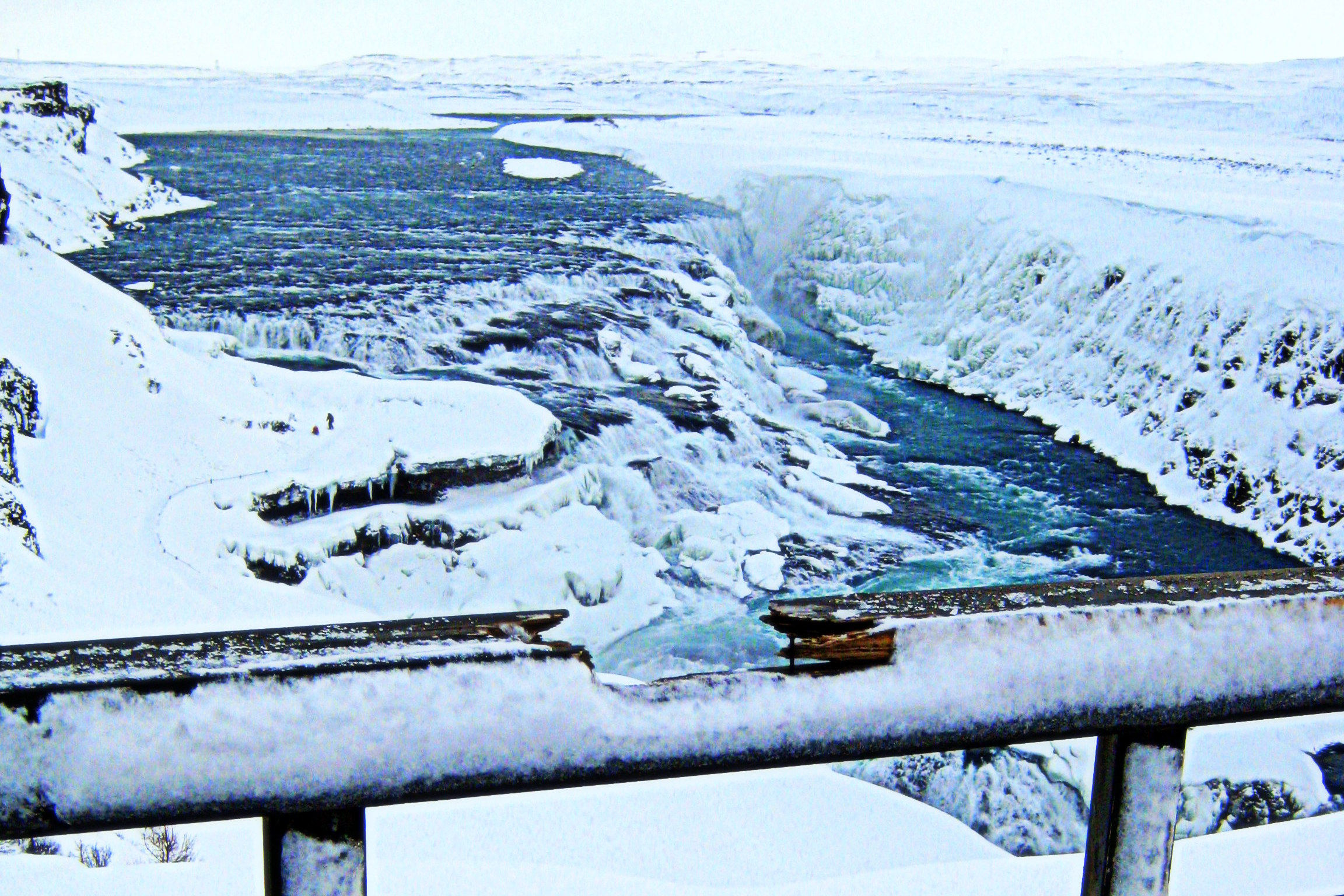
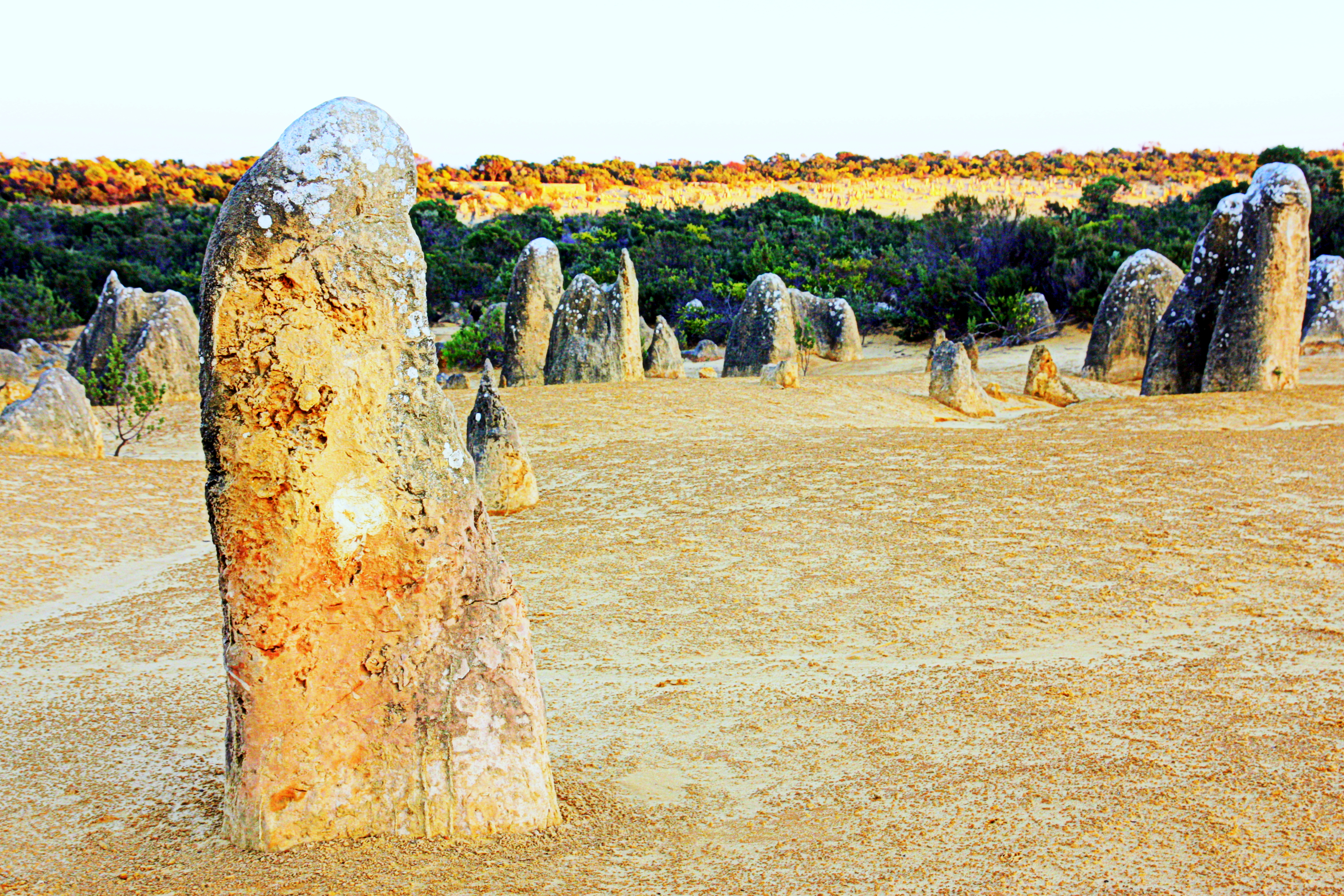
I’ve chosen some of my own images, below, which explore the beauty of the messy or the broken.

Do we look closely enough, at people, situations, places and possibilities, in an effort to appreciate, accept and celebrate them for what they are? Do we see people, not for how we think they can be fixed, improved or developed, but what they offer and how they are their own wonderful selves doing their own authentic things? To what extent do people and organisations feel they need to conform, to organise, to fix or to judge?

Can we trust mess and idiosyncrasy? What happens when we do?

We’re not our skin of grime, we’re not our dread / bleak dusty imageless locomotive, we’re all / beautiful golden sunflowers inside. ~ ‘Sunflower Sutra’, Allen Ginsberg


broken or beautiful? rail at Gullfoss

broken or beautiful? rail at Gullfoss

irregular or extraordinary? Pinnacles at dawn

irregular or extraordinary? Pinnacles at dawn

imperfect or interesting? wire at Shark Bay

imperfect or interesting? wire at Shark Bay

misshapen or unique? NY Halloween pumpkin

misshapen or unique? NY Halloween pumpkin

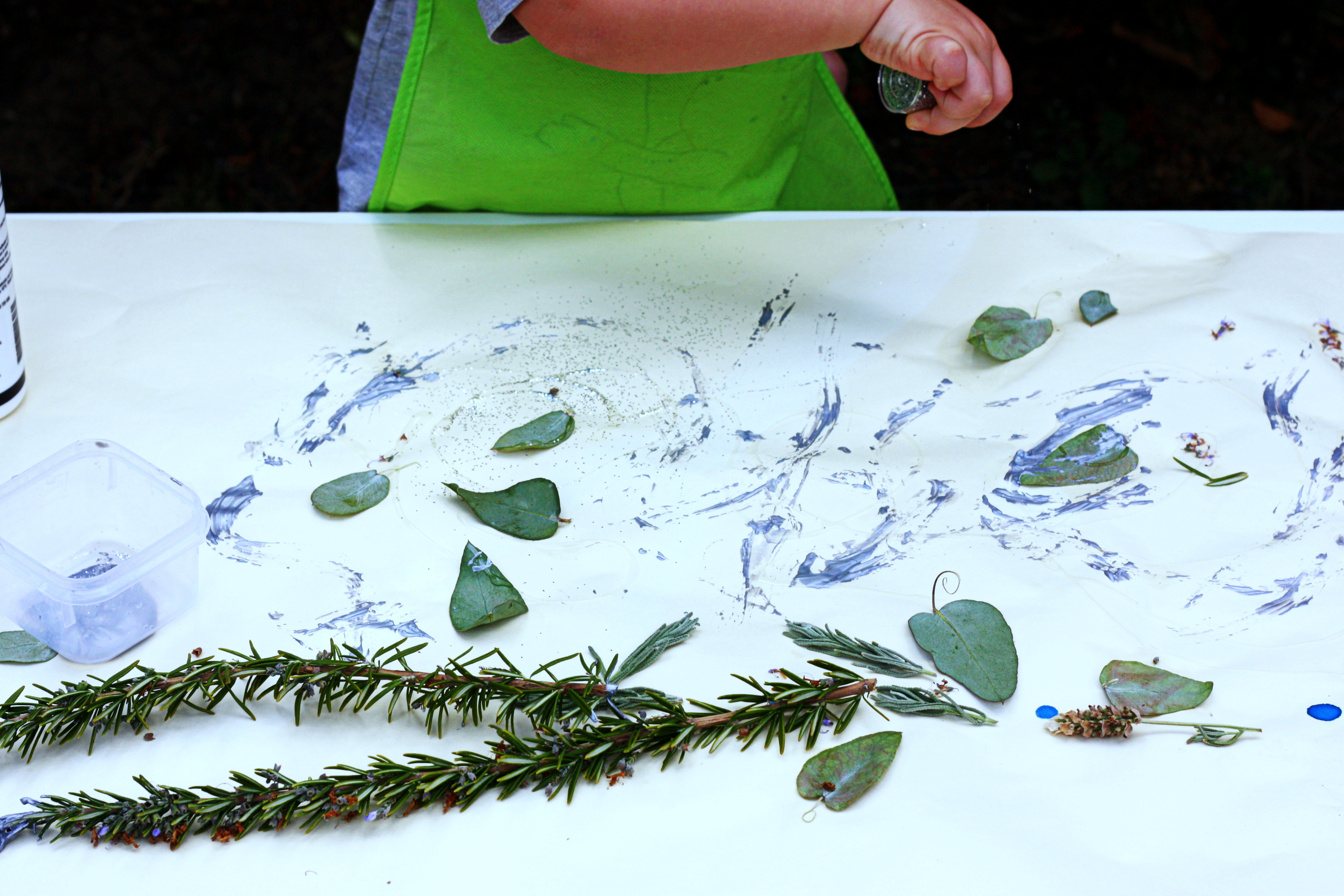
mess or creativity? painting with nature

mess or creativity? painting with nature

One word 2016: MOMENTUM

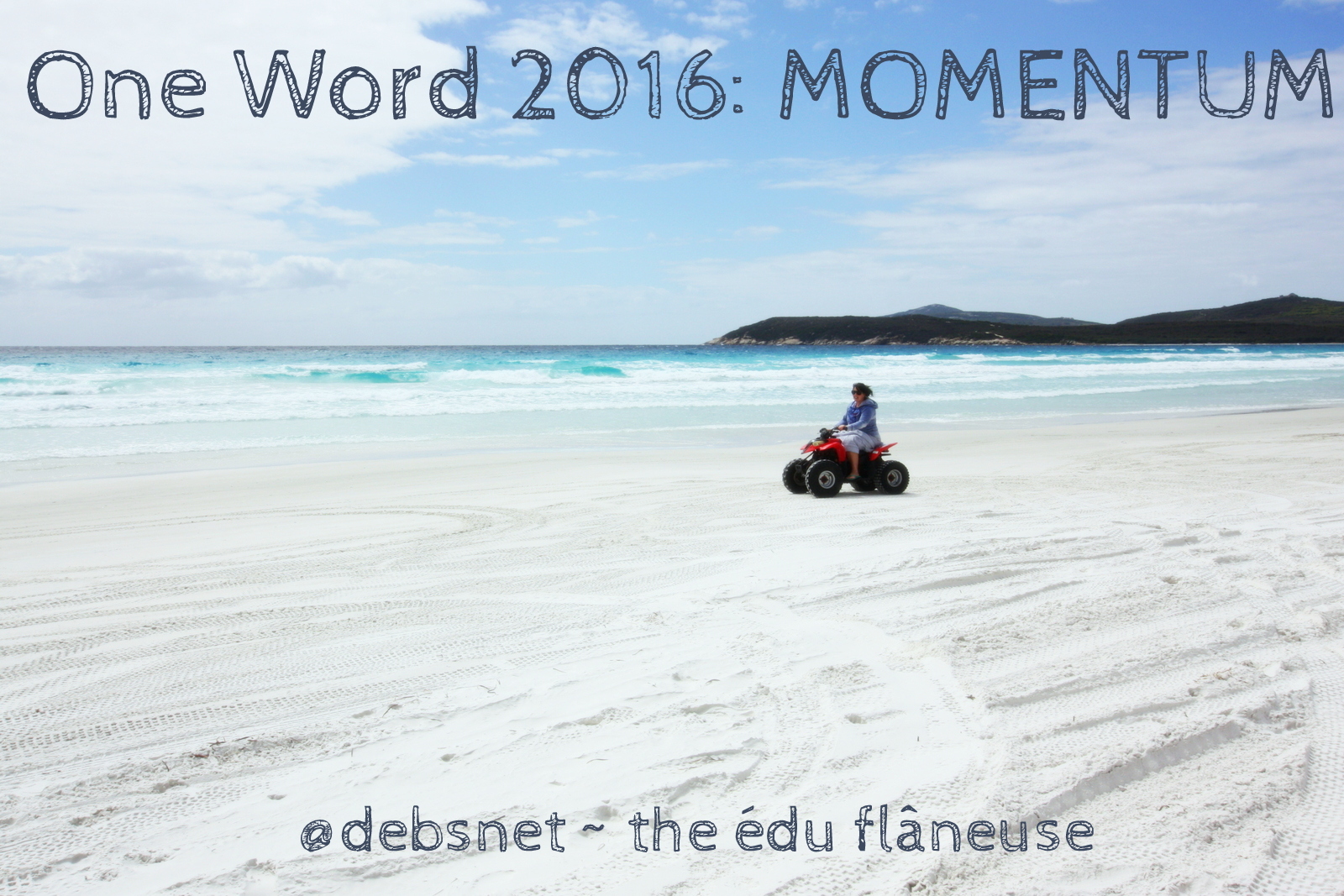
I spent the last day of 2015 in motion, quad biking along a beach.

I spent the last day of 2015 in motion, quad biking along a beach.

Last year, in the new year, I focused my attention on three words: presence, sharing and strength. I was focused on being present in each life aspect and relationship, sharing and storytelling, and building my strength in body, knowledge, connection and conviction. My 2015 ended up being focused around lots of writing, and on the one word we had written on our chalkboard at home: CONQUER. I was focused mainly on conquering my PhD thesis (and I got it submitted), but also conquering some academic papers and conferences, conquering fitness and strength goals. Seeing a daily reminder of that one word gave me a laser-like focus on finishing, completing, conquering. I pushed hard, remained motivated and hit milestones. But it also left me exhausted!

This year I was looking for a “one word” (sometimes called one little word or one word 365) which was more yin and less yang, more reflective and less explosive, more about regeneration than domination. While I was still attracted to active words like inspire, ignite and create, I considered gentler words like refine, renew and play. But none of these cover what I think my 2016 will be about. Maybe I’m not so ready for stillness or space or quiet just yet. I don’t want to be conquering in 2016, but one of my big lessons of 2015 was to put one foot in front of the other and just keep moving.

I spent my last day of 2015 quad biking with friends and family on a long pristine stretch of white beach. Snaking, quickening, turning, moving, the wind whipping around and against us. Speeding up. Slowing down. Driving away and towards and around. Playing with speed and direction, throttle and velocity, movement and pace. Feeling the terrain beneath the bike: sometimes flat, sometimes bumpy, sometimes hard, sometimes cushioned by peaks of white sand. Concentration. Adrenalin. Acceleration. The word I have come to for 2016 is MOMENTUM, from the Latin movere, meaning “to move”. This will be a year of being in motion or on the move.

my son, dressed as an angel, in motion

my son, dressed as an angel, in motion

I’m not starting 2016 from a stagnant place. I am already moving. My PhD is being examined, and will hopefully be done, dusted and doctored some time in 2016. I have some academic papers in the pipeline. The coaching professional learning model at my school is implemented and in an iterative refinement phase, and I’m in conversations about what my role might look like in 2017 and beyond. So what I want to do in 2016 is keep the momentum going, capitalise on what I’ve achieved so far and push ahead. Move.

The idea of momentum in the sense of a rolling snowball isn’t quite right for me, as that kind of momentum is quite linear. I’m thinking of something more fluid. Kayaking through rushing river water. The momentum of paintbrush over canvas. Skis slicing through snow. Music building to crescendo. Feet running off a mountain to begin a paraglide. Quad biking on a beach. This kind of momentum requires a combination of knowledge, precision, creativity and mastery. It can be messy and lead to the unexpected.

I’m not sure about the end point of my momentum. People have asked me what I’ll do after the PhD and the answer is, I don’t know. I have some ideas of what might be similar or different from what I’m doing now, but I’m not set on one course. I’m happy where I am, doing what I’m doing. But I’m open to alternative directions and possibilities. I figure if I set my intention for 2016 on being in motion – forward, diagonally, in, out, reflectively, critically, creatively – my path with open up before me. Or I’ll find that I’m already travelling along it.

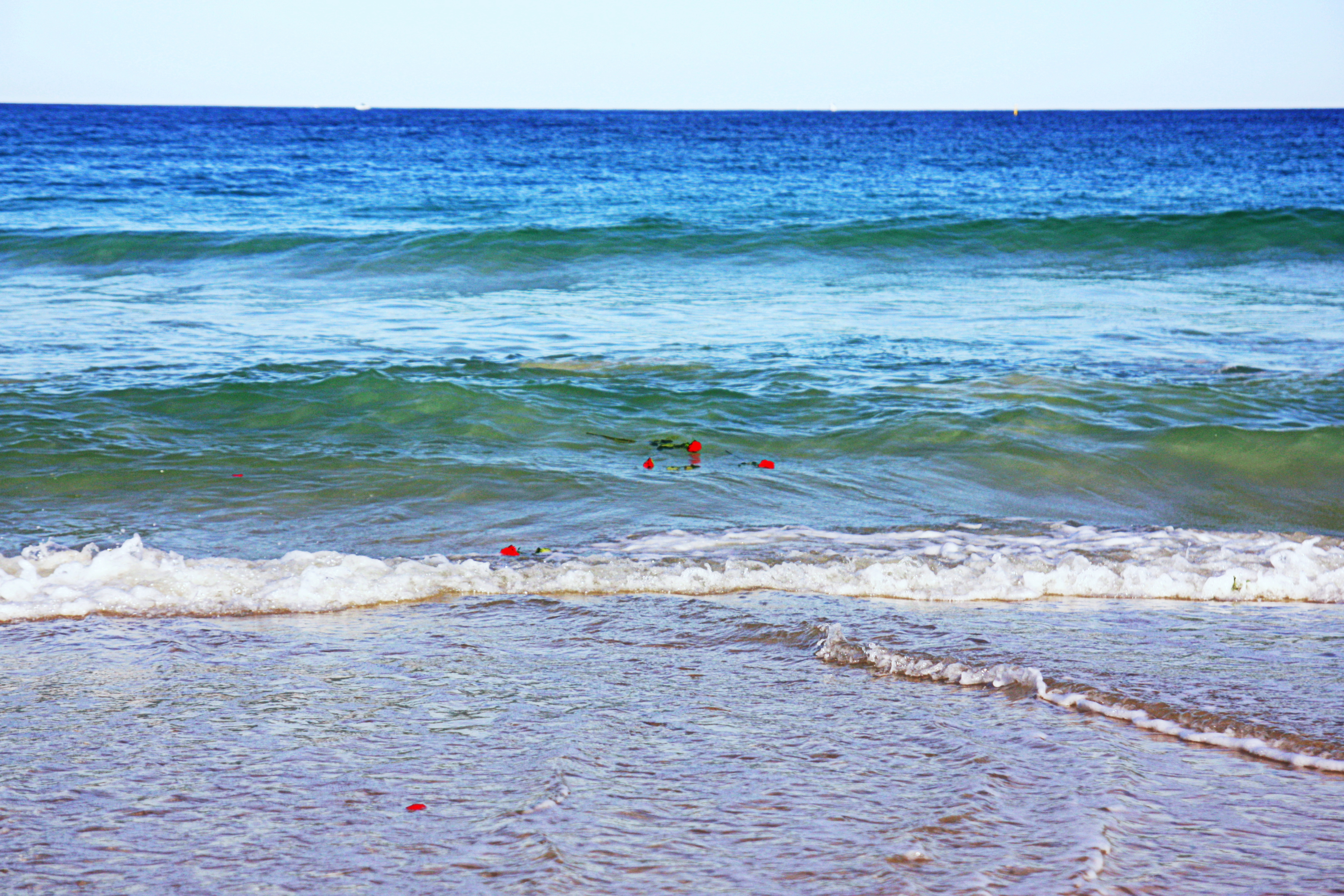
roses in the ocean, in motion carried by the waves

roses in the ocean, in motion carried by the waves

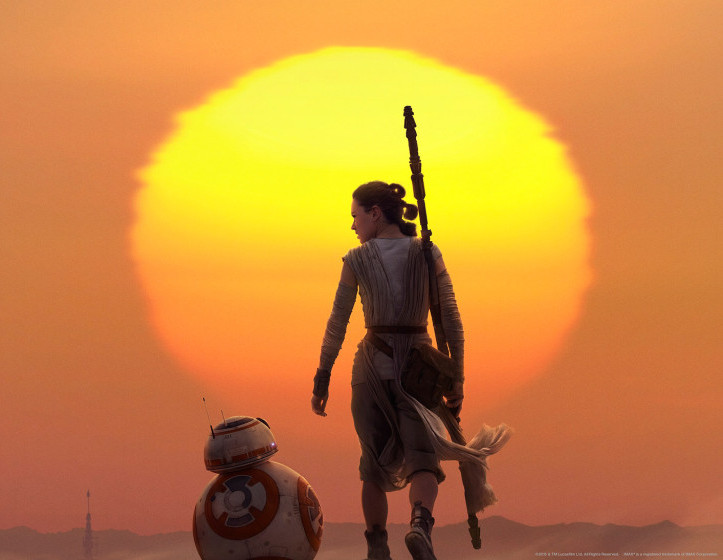
Light in the darkness & darkness in the light: Yin & yang in The Force Awakens

How many Star Wars blog posts is too many? This is my second about The Force Awakens. If you want my spoiler-free review it’s here, written the day the film was released. The following post does contain spoilers.

Woodblock print from WoodcutEmporium on Etsy. Source: https://www.etsy.com/listing/130958015/star-wars-yin-yang-woodblock-print

Woodblock print from WoodcutEmporium on Etsy.
Source: https://www.etsy.com/listing/130958015/star-wars-yin-yang-woodblock-print

I wrote in my previous post that Star Wars shows its audiences the complexity of people’s capacities for good and evil, kindness and cruelty, bravery and cowardice, zen calm and uncontrollable rage. Episode VII builds on the idea that there is both light and darkness within and around us all.

The stormtroopers are one example of how The Force Awakens teases out the complexity of our inner worlds. The First Order stormtroopers are, like their Galactic Empire predecessors, dressed in yin-yang colours of both black and white, with their white armour over black body-glove suits. I’ve always wondered why the characters who are the living arsenal of the Star Wars ‘bad guys’ wear white armour, when white is so often used in the franchise to symbolise goodness. Rather than being identical clones, the new stormtroopers are shown to have humanity and individuality, even though they are programmed henchmen of the dark organisation within the world of Star Wars.

There is ambiguity in the stormtroopers and the potential for alternate readings of them. A dominant reading might be: fascist ruling government = power-hungry murderous baddies / resistance = goodies fighting for peace and good (and power?). In a more resistant reading, within our current socio-political climate, we might ask what groups we consider to be well-armed governments with supreme power, who are hunting down groups of resistance and rebellion? What does Star Wars have to offer our world about the ways in which we view power and those who resist or challenge it, when the rebels and resistors are presented as the heroes?

In the Star Wars world presented to us in The Force Awakens, stormtroopers might be seen as victims of a dictatorship, loyal foot soldiers protecting order, or well-trained weapons of evil. The character of Finn, or FN-2187 (for fellow nerds, 2187 is the number of Leia’s cell on the Death Star in Episode IV), shows the most human side of the stormtrooper, by showing someone who, like the protagonists of the Bourne movies, despite his mental and physical programming to become a devoted warrior-soldier, rebels against conformity and embraces individuality. Is the message here that goodness can triumph? Or that the instinct for self-preservation trumps all? The first exchange between Finn and Poe is telling. When asked why he’s helping Poe, Finn replies: “Because it’s the right thing to do.” But Poe realises: “You need a pilot.” And Finn admits: “I need a pilot.” Finn wants to run, and to save himself, but, later reflects Han Solo’s reluctant heroism in the original episodes, when he returns and puts his life on the line to save his friend.

In another example of the entanglement of light and dark, in Episode VII we see Kylo Ren, while desperate to embrace his inner darkness, feeling “the pull of the light” and feeling “torn apart” by the struggle within him on his journey to villainhood. Adding to Kylo’s inner good, his real name, we discover, was ‘Ben’, the name that Obi-Wan Kenobi took on when he was in exile on Tatooine. Kylo’s choice to kill his father, to strengthen his dark powers, is reminiscent of Luke’s battle with his father and the Emperor, when the Emperor challenges Luke to strike him down, to give in to anger in order to become a servant to the dark side. In The Force Awakens, Kylo seems to struggle with his decision, but is committed to becoming like Darth Vader, his grandfather, who we know had his final moments as a good man-cyborg. Will Kylo’s fate be similar? (And will the next two movies in the trilogy be as derivative of the originals as The Force Awakens was of A New Hope? Or will there be narrative surprises along the way?)

In the lightsaber battle between Kylo and Rey, Luke’s blue lightsaber is like the sword Excalibur; it won’t budge for Kylo but flies violently past him to Rey. Kylo cannot control his anger (as we are also shown in his lightsaber slashing tantrums), while Rey, an untrained novice, closes her eyes mid-fight to “feel the Force” and strike Kylo. Here, the film sets up our main villain-hero pair, with a villain who has turned away from his family towards a powerful dark master, and a hero who is only beginning to know her own power. Kylo is set up as a baddie-in-training who might yet be saved, despite his murderous decision in Episode VII. The audience is left with the question: Is there enough yang in Kylo’s yin to bring him back to the light?

(An aside: What is Rey’s parentage? Is she Luke’s daughter? -“Rey, I am your father” – Is that why her power is so strong and why Luke’s lightsaber calls to her? Perhaps her mother was also a Jedi, which might explain why she is so intuitively powerful? Was she hidden on Jakku to protect her, as Luke was hidden on Tatooine? So is she related to Kylo? Are they cousins? Could they be brother and sister, somehow? What’s with the hug Leia gives Rey? It’s a familial kind of an embrace, complete with Skywalker family music.)

So the characters of Star Wars continue to show us the power of both the individual and the collective, and remind us that we all have choices to make about the paths we choose for ourselves. About whether we embrace darkness or light, but that both exist within us and around us. About whether, in times of stress and conflict, we choose to search for calm and goodness (the light side, the bright side, kindness, compassion, forgiveness), or we give in to negative feelings. Roll on Episode VIII.

The Force Awakens: What Star Wars tells us about humanity

This post doesn’t contain spoilers regarding what happens in Star Wars Episode VII. I promise!

I could have titled this post ‘Why I’m a big Star Wars nerd’, but it emerges from my reflections around the pro- and anti- Episode VII hype. As the film was released today, social and traditional media are filled with cries of ‘I can’t wait to see it’, ‘I’ve got no interest in seeing it’ or ‘I’d rather scratch out my eyeballs than see it’.

Why is Star Wars a franchise that people either love or dismiss? What is it about the series of films (especially Episodes IV, V and VI, and now VII) which drew so many of us in and continues to capture imaginations, 38 years after Episode IV was released? Why did I choose to go alone to the cinema (for the first time ever) to watch Episode VII today (apart from that my children were in school and I was on holidays, so I could)? Why did I watch the new episode with simultaneous anticipation, nostalgic joy, emotional investment and white-knuckle excitement?

One answer is that Star Wars films, like Shakespeare’s plays or Orwell’s novels, communicate the universality of humanity; the essence of what it is to be a person in the world. The films talk of the light and darkness within us all; our capacities for good and bad, kindness and cruelty, bravery and fear. In Star Wars, these struggles are internal and external; they happen within characters and across galaxies. Within the action-packed, emotion-charged fantasy world of Star Wars, we see the complexities of being human. We are shown the power of looking out for others, and of gaining self-control and self-awareness. We see people’s capacities for good and evil, quests for power, journeys of identity-becoming or identity-unravelling. The ethics of technology and the use and abuse of power are questioned.

Star Wars creates a universe in which heroes, male and female, ‘feel the Force’ and ‘search their feelings’. They are sensitive to the shared energies of the world around them, as well as a having a keen awareness of inner self and deeply felt emotion. It’s a world where heroes can be small, green creatures which speak in confused syntax, tall furry ones, or robots. Where mentorship and courage are found in unlikely places and anyone can save the galaxy, as long as they’re in touch with their senses and their feelings, and they have friends to support them on their journey.

At the beating heart of Star Wars is not the special effects, which have often been cutting edge for their time, but the relationships. We see the connections, compassion and conflict between friends, strangers, enemies, lovers and family, and combinations of these. These are underlined by the movies’ familiar scores, recognisable leitmotifs and iconic costumes which help to embed viewers in, and propel viewers along with, characters’ story arcs.

This time around, in Episode VII, The Force Awakens, battles for power re-emerge, but there is a little more 21st century diversity of gender and race. There is a female villain, a female heroine, a female general and a black hero, as well as the usual array of characters of various species, languages, sizes and levels of machination. While the film can be seen as an escape from reality, the universal themes of goodness, family, friendship and courage to do what is right or fight for those about whom you care, continue to resonate and have something to say about the world in which we live.

Fans of the original trilogy will be satisfied by Episode VII. It’s a fan’s film, a reawakening of the original spirit of the series, with plenty of recognisable hat-tip references. The movie brings together familiar Star Wars characters with new characters and modern special effects. It is funny and emotional. Fast paced and with enough unanswered questions to leave the audience intrigued for Episodes VIII and IX. The film doesn’t carve a new path for the Star Wars brand, but it does take its audience forward by embracing its past. My nerdy child-of-the-80s heart was bursting with old-school-meets-new-school Star Wars love.

Postscript: This post, written after a second viewing of the film, DOES contain spoilers.

5 things I learned in 2015

Beware the barrenness of a busy life. ~ Socrates

Epiphanies and moments of clarity can be simple and, on reflection, obvious. The following list of ‘5 things I learned in 2015’ may seem like statements of the bleeding obvious. They are nothing new, and yet this year I’ve seen new refractions from, and noticed more minute details of, these simple truths. They have been affirmed for me this year through my experiences of being and becoming. Of teaching, leading, parenting, coaching, being coached, researching and writing.

local café wisdom

local café wisdom

1. Doing many things at once can work, but it’s also important to take breaks.

In the last few years I’ve been working 0.8 of a teaching and leadership job at a school, parenting two pre-schoolers and working on my PhD (now submitted – woot!). While I always had a sense that this was working for me in its strange busy way, it wasn’t until my first writing retreat this year that I understood how much. On my retreat, I found it difficult to stay on my one task – editing the PhD thesis draft – for a full weekend. I realised that my routine of intense short bursts of PhD, in among the other many things in my life, worked for me. These short, regular, time-constrained bursts of energetic PhD work were intensive and focused. They felt like an indulgence, some intellectual ‘me-time’ in which I could luxuriate, a brain-bending haven from my other responsibilities. It helped me to love my PhD, while also appreciating the specialness of my teaching, leading and parenting roles.

Yet, as I discovered, relentless busyness is not sustainable. Breaks are required. Real, curl-your-toes-in-the-sand, unplug, breathe deeply and love abundantly kind of breaks. Nourishment for wellbeing. Care for self and others. Time to breathe.

2. Welcome resistance & engage in respectful disagreement.

On my blog, which is now 16 months old, as in Twitter and in my professional life, I have been becoming more comfortable with, and encouraging of, disagreement, although I prefer dissent to be served in a respectful, articulate and reasoned manner. And I prefer disruption which emerges from deep purpose, rather than trendy buzzwordification. Last year I completed the Adaptive Schools Foundation course, which champions graceful disagreement as a key element of high-performing groups. I’ve written a few blog posts which err on the side of controversial. I’ve engaged in Twitter debate. I’ve experienced my first peer review comments from academic journals, and attempted to take critique as an opportunity to strengthen my work. And in my role leading and implementing a school coaching initiative for teachers, I have welcomed the contributions of those who are resistant to the change.

I’ve found those individuals who might be dismissed as ‘resistors’ or negative voices, to be important ones worthy of close listening. I find myself asking those who disagree to take the time to explain their view to me. I listen intently, wondering, ‘What can I learn here? How might this help me to make what we’re doing better, stronger, and meaningful for a wider range of people?’

I am reminded of this line of Richard Bach’s from his novella Illusions:

There is no such thing as a problem without a gift for you in its hands. You seek problems because you need their gifts.

It is often in engaging with those who disagree with us, that we are taken to new places in our own thinking, helped to consider alternate perspectives, or are able to find solutions which we may otherwise not have reached.

3. Trust individuals. Believe in their capacity. Choose empowerment.

Punitive accountability measures which promote fear and compliance can only undermine teachers’ and school leaders’ professions, identities and practices. Through my experiences of coaching, my PhD research into school leadership and organisational change, and my observations of systems of teacher evaluation around the world, I have become increasingly convinced of the need to focus on empowerment and growth, through support and trust. It’s the belief upon which my school’s coaching model is based.

4. Connections with others are powerful.

We know that connecting with others is powerful. One of my ‘three words’ for 2015 was ‘sharing’ and another was ‘presence’, both words which speak of connecting with others and being present in relationships.

This year, not only have my personal and face-to-face professional relationships been impactful, but so have connections I have made online. For the first time this year, I began to meet ‘in real life’ individuals I’ve connected with on Twitter and through my blog. Catching up over drinks, breakfast or the conference room had been a seamless transition from tweet, blog post or Voxer message, to in-person banter, support and inspiration. I’ve engaged in wonderful blogging conversations. I’ve become bewitched with the potential of our interconnectedness and the ways in which technology might help us grow support networks and knowledge webs.

5. Teeny regular steps add up to a long journey.

My PhD was the thing that brought home this truth to me. Over three years I plugged away with little step after little step, finding stolen moments of doctoral time in the cracks in my days and nights. Regular, persistent effort. Sometimes forward; sometimes back; but maintaining forward momentum. And then I looked back along the path I’d walked and found that it added up to a thesis. So my big lesson was, just put one foot in front of the other. Keep going!

sunset, Gnarabup

sunset, Gnarabup

Indra’s Net: We are all connected

There is an endless net of threads throughout the universe … At every crossing of the threads there is an individual. And every individual is a crystal bead. And every crystal bead reflects. Not only the light from every other crystal in the net but also every other reflection throughout the entire universe. ~ Anne Adams

This post itself is a tangling of threads. It is in part a reflection on the first day of the national Australian Association of Research for Education (AARE) conference, which I am attending and at which I am presenting a paper. It is also part of a wider conversation I’ve been having through blogging. It was incited today by Robyn Collard’s Welcome to Country in which she used the above Anne Adams quote which refers to Indra’s Net, a Hindu and Buddhist concept that articulates the interconnectedness of the universe. It imagines each individual as a dew drop, jewel or pearl: reflective and distinctive, but also interconnected with all the other dew drops via the threads of the web. Parts and whole. Dazzling individualism within collective network.

This quote and concept added a layer to an already-layered conversation I’ve been having in the blogonet with Helen Kara and Naomi Barnes. It started with Steve Wheeler’s #blimage (blog + image) challenge. When Helen shared a photograph of tangled dew-bejeweled spiders’ webs in her garden, both Naomi and I responded to the image. Naomi wrote about the messiness of research. I wrote about how technology connects people to one another. I’ve since also written about the web-weaving spider as a metaphor for the researcher. And today I was connecting at AARE, in person, with a web of academics who I know mostly through their work and through Twitter.

So here I am again. Contemplating the web. And the dew drop jewels. And their infinite reflections and refractions. Their beauty and fragility and separateness and togetherness.

I spent much of this first day of the AARE conference in a four hour symposium in which scholars brought diverse perspectives to the same general topic of leadership in education. They agreed and disputed. They converged and diverged. It was a great example of respectful, well-considered and articulate debate. Graceful disagreement. Elegant contestation. Research as conversation.

For instance, in conceptualising leadership as artistry, Fenwick English noted the webbed connections between research, art, leadership and creativity. Scott Eacott discussed the relational aspects of leadership and of research, asking scholars to consider how their work relates to that of others. Christina Gowlett approached school leadership from a perspective of challenge and critique, agitating against dominant approaches, norms and expectations by embracing alternate theories of uncertainty and transgression.

Additionally, Gabriele Lakomski and Colin Evers discussed thinking in schools as a wide cognitive net. They define cognition as a dynamic system, comprising reciprocal interactions between people, artefacts, resources and environments. They noted that thinking is not just computationally logical-deductive; it is interpretive, intuitive, behind consciousness and beyond awareness. They explored the notion of the extended or supersized mind which distributes cognition. Our tech is our selves. Our communities and social networks are change collectives. Gabriele and Colin noted that cognition occurs “beyond skin and skull”, challenging the myths of the stand alone thinker, the heroic leader and the change agent. Individuals influence and are influenced by each other. Thinking and being is connectivity. Web not hierarchy.

These ideas resonate with the perspective I will be presenting at the Heroism Science conference in 2016, which suggests a reimagining of heroism in school leadership. That is, that school leader ‘heroes’ can work subtly, fluidly and invisibly in the service of their school communities. In education there needs to be shared vision and individual purpose, collective and individual capacity. Strengthening the web while protecting and nurturing the dew drops.

Like Costa and Garmston’s (2006) notion of holonomy (which is based on Koestler’s 1972 conceptualisation of the ‘holon’), Indra’s Net shows the dual importance of the individual and the collective. The jewel and the net. All are simultaneously together and separate. A change in one is reflected in a change in all.

So as I reflect (like the dew drop), I imagine webs of learning, webs of emotion, webs of relationships, webs of identity. I wonder: What influences the symbiosis between individual and collective? In what ways might we shape others? In what ways might others shape us? These could be questions for families, friendships, organisations, communities, nations, the world. What about our selves can we control and what choices are we making about what our own self-jewel reflects onto those around us and onto the universal web? In what ways could we harness the global mind, the universal self and the interconnectedness of humanity?

Imagine a multidimensional spider’s web in the early morning, covered with dew drops. And every dew drop contains the reflection of all the other dew drops. And in each reflected dew drop, the reflections of all the other dew drops in that reflection. And so ad infinitum. ~ Alan Watts

PhD thesis S. U. B. M. I. T. T. E. D.

thesis submission gift to self: my favourite bubbles

thesis submission gift to self: my favourite bubbles

 Yay. Yay. And yay.

Right now I have very few words left in me to write a blog post, which says in itself a lot about what the final days of the PhD are like.

But here I am.

2 years and 359 days after enrolling.

I have 95,777 words (not including front matter, references or appendices).

355 cited references.

3 illustrations.

1 figure.

4 appendices.

Exhaustion gratitude excitement pride.

Delirium relief disbelief happiness.

It is Ph.inishe.D.

For now.

Until the examiners’ reports arrive.

by @debsnet

3 spiral bound copies, ready to be posted to examiners

As predicted, submission didn’t bring with it ceremonious trumpeting, thunderous cheers, or a blessing of unicorns galloping over a shimmering rainbow. But I did get hugs from my supervisors and heartfelt congratulations from the staff in the Graduate Research Office, as well as a signed congratulations card, a Polaroid photograph of me holding my thesis and a Freddo frog chocolate.

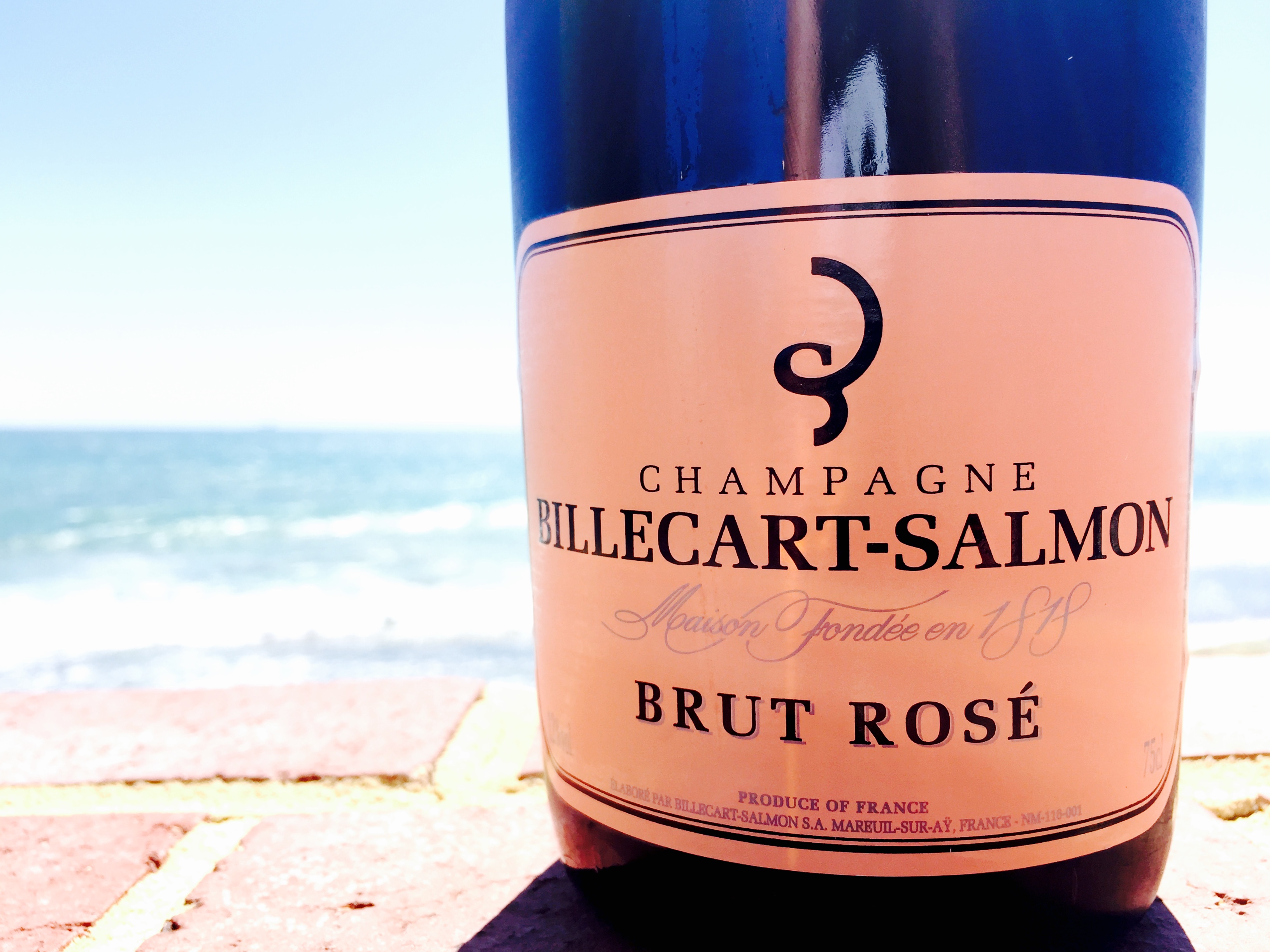
And on the way home I gifted myself a bottle of my favourite champagne, because if you can’t do that when you’ve submitted a PhD thesis, when can you?

Tonight I’m off to my school’s valedictory dinner for our Year 12 students, a big milestone for them. So I’ll get to relax and celebrate with colleagues and my Year 12s. Then I’ll celebrate with my husband and children over the weekend.

I’ve loved the PhD journey so far, but I’m looking forward to taking a break from the obsession and luxuriating in some family time and self care.

Thanks to all who supported me thus far in my PhD narrative. Your support has been so important to me.

It’s a wonderful milestone, but it’s not over! I’ve yet to see what the examiners make of my work, or the extent of recommended revisions.

To be continued … 


Balance, not division. Compassion, not attack. Conversation, not war.

Compassion is not a relationship between the healer and the wounded. It’s a relationship between equals. Only when we know our own darkness well can we be present with the darkness of others. Compassion becomes real when we recognize our shared humanity. ~ Pema Chödrön

by @debsnet

Often I am struck by argumentative battles in traditional media, on social media and around the blogosphere. I appreciate those writers, commentators and educators who share their musings, experiences, readings, and perspectives, without using divisive loaded language or attack. I think the rantiest I have gotten was this post on the APPR reforms in New York and this one around whether teachers can be researchers, but I attempted to frame my criticism through making transparent my perspective and asking clarifying questions. Balance.

I have written a lot about my school’s coaching model, as it is kind of my baby and it’s something which I think is worth sharing; others might gain from hearing our story. Yet this coaching model is not stand alone. It is not as though teachers at my school are only coached by teacher-coaches in a non-evaluative, non-hierarchical model. In their first year at the school, teachers participate in a rigorous evaluative permanency process. Every year they have a conversation with their line manager, who touches base with them on their work, goals and classroom practice. Every third year, teachers have their coaching cycle with their manager. This is more evaluative and performative by its nature, and by the nature of the relationship. Teachers additionally work with instructional consultants. Leaders work with coaches. Professional learning community teams and action research projects work alongside. Growth and evaluation. Balance.

I have written about the creative things I trial in my classroom like a term without grades and genius hour for students and teachers. These are things at the experimental end of the spectrum of what happens in my lessons, so I share them as stories of experience and part of a conversation. I do these things to develop engagement of my often-reluctant high school English students, to build their self-efficacy and to help them learn to rely on themselves as drivers of learning, rather than entirely on me as Teacher with a capital T.

Does that mean I don’t use explicit instruction? Of course not! I explicitly teach concepts, skills and texts, although I temper this with encouraging students to do their own thinking and to trust their own thinking, rather than expecting that I can fill them, as vessels, with the answers. What are the ideas of the text? What interpretations might be drawn? Answers can come from me or from Spark Notes, but if I do my job properly, students will have the skills, understandings, language and cognitive capacity to draw their own interpretations, from their own contexts, and justify these using logic and evidence. The best student responses comprise original thinking, not regurgitated knowledge. The best teachers focus not just on effective learning (our core business, of course!) but developing learners and passion for consuming, curating and creating knowledge.

In my Head of English roles at three schools I have ensured a balance between explicit instruction and those strategies which propel love of reading, power in writing and deep intellectual engagement in ideas and discussion. Interestingly, Charlotte Danielson’s heavily-researched Framework for Teaching has its ‘proficient’ descriptors describing teaching which is expertly directed by the teacher, and its ‘distinguished’ teaching descriptors outlining lessons in which students are taking responsibility for their own learning and behaviour. Creative and explicit. Balance.

I have written about lyrical metaphors for PhD study, and only occasionally about the unsexy logistics of what the graft actually looks like. My conceptual framework draws in part from fictional literature. Does this mean my PhD is devoid of hard, critical, scientific work? No. My PhD is of course the result of the logical, systematic working through of literature, data and research problems. When writing the Limitations section in the conclusion of my thesis I was highly aware that all research has its limitations. Extensive quantitative data can show us patterns and effects, but these may be faceless. Qualitative data can drill down deep into the messy humanness of lived experience which may be unrepresentative of wider groups and therefore not generalizable. Yet each study adds its tiny piece of understanding to the layers of what is known. Research is conversation. Imaginative and systematic. Broad and deep. Balance.

I would love to use the line ‘I’m a lover not a fighter’ but I think I’m both. I believe in sharing and celebrating our stories, but I will advocate fiercely for my students, fight for what I believe is right and argue for my research. Balance.

From a history of my posts, it is probably clear that I am seduced by the lyrical, by storytelling, by creative approaches and by metaphor. Yet I am not one dimensional. Nor is my teaching, my thinking, my researching or my living. Balance.

I came across this excellent recent TED talk from Jon Ronson on the way social media has moved from giving voices to the voiceless, to an angry mob mentality of shaming and abuse, in which people seem to forget compassion and morality.

While I love robust discussions which take us out of the echo chamber of we-all-agree-high-fiving, I also think we need to approach these with compassion, thoughtfulness and a view of each other as human beings. We can disrupt with respect. We can disagree gracefully. We can advocate with civility. (And if you throw in a metaphor, you’ll totally have me!)

by @debsnet

Easy as pie? How a PhD, & other complex work, is like a cake

Metaphors have a way of holding the most truth in the least space. ~ Orson Scott Card

Number 3 racetrack cake by @debsnet

Number 3 racetrack cake, with handmade bunting & teeny cars

As an English and Literature teacher, I love a metaphor, especially an extended one. I have spoken about one of my PhD metaphors before: thesis as a stone sculpture. Metaphors even bubbled up unexpectedly in my PhD data as participants searched for meaningful language to explore their identities.

In some ways this post is a response to, or extension of, Anitra Nottingham’s Thesis Whisperer post ‘My thesis is a cupcake, not a dragon.’ In it, she talks about making novelty birthday cakes for her children. She goes on to use the metaphor of cupcake for her Masters thesis and cake for a PhD thesis.

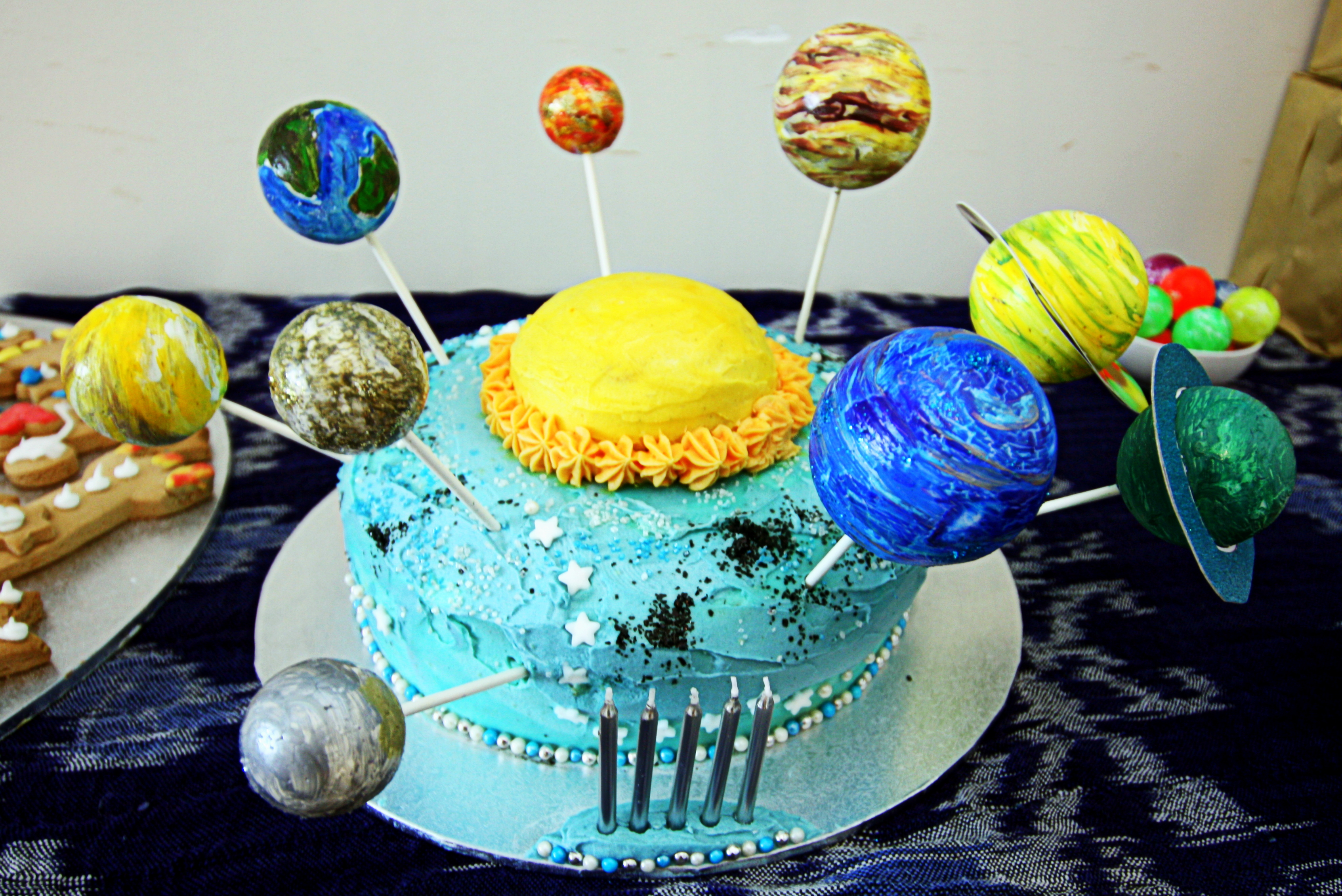
I was reminded of Anitra’s post over the weekend as I prepared for my eldest child’s 5th birthday. A novelty birthday cake is a lot like a thesis, I thought, as I pierced the galaxy outer-space solar-system cake with the planets I had hand-painted (cake decorating makes for great phdcrastinating).

the weekend's outer space solar system cake

the weekend’s outer space solar system cake; I am a child of the 80s so Pluto, beautiful dwarf planet, is there

I love to make my children’s birthday cakes from scratch, not that I find it easy or that I have an aptitude for it! I rarely bake; it’s not something I’m great at, and often my baking is asymmetrical and (goofily? lovingly?) imperfect. But I feel like a cake is more than the sum of its ingredients. I am convinced that my children and their guests can taste the love and trying-to-make-it-wonderful effort that goes into a homemade birthday cake.

Tootle cake, the Golden Book train who likes to play in meadows rather than stay on the rails

Tootle cake, the Golden Book train who likes to play in meadows rather than stay on the rails

A thesis, too, is more than the sum of its parts, more than the words on its pages. As I revise the full draft of my thesis, I am reading with the reader in mind (and trying to avoid boring or annoying them – see Pat Thomson’s post from an examiner perspective). I am hoping that examiners and other readers will ‘taste’ the passion, the challenges overcome, the obsessive dedication, and the satisfaction and enjoyment that comes with taking a PhD project to completion.

Both cake and thesis start with a problem. How am I going to embody the essence of this? Both cake and thesis require a balance of systematisation and creativity, recipe-following and individuality. What tools and ingredients will I need? What methodological processes will I follow to ensure a sturdy finished product which stands up? How might I make this original and my own interpretation?

Like a thesis, sometimes a cake doesn’t work at first and the creator needs to start again, or find creative solutions (usually involving using icing as glue or camouflage).

Octonauts cake

Octonauts cake, complete with sunken figurine (note to self: add heavy bits at the last minute)

It might seem trivial to compare the PhD thesis to making a cake (and of course there are many many differences between a thesis and a cake!), but I find that metaphors, in distilling meaning down to its simplest and yet most poetic form, help me to make sense of complex work. Their simplicity helps to keep me going.

The quote at the beginning of this post resonates: a metaphor can hold the most truth in the least space.

What are your metaphors for your complex work?