On Educational Writing

Last night, I had the remarkable privilege of receiving the ACEL Hedley Beare Award for Educational Writing from the Australian Council for Educational Leaders at the National Awards Ceremony.

Educational writing has been something I have done to give back to the education space, to connect with others, and to encourage others in schools to be part of the narrative about schools. My Google Scholar profile summarises much of this work.

Below I share my acceptance speech.
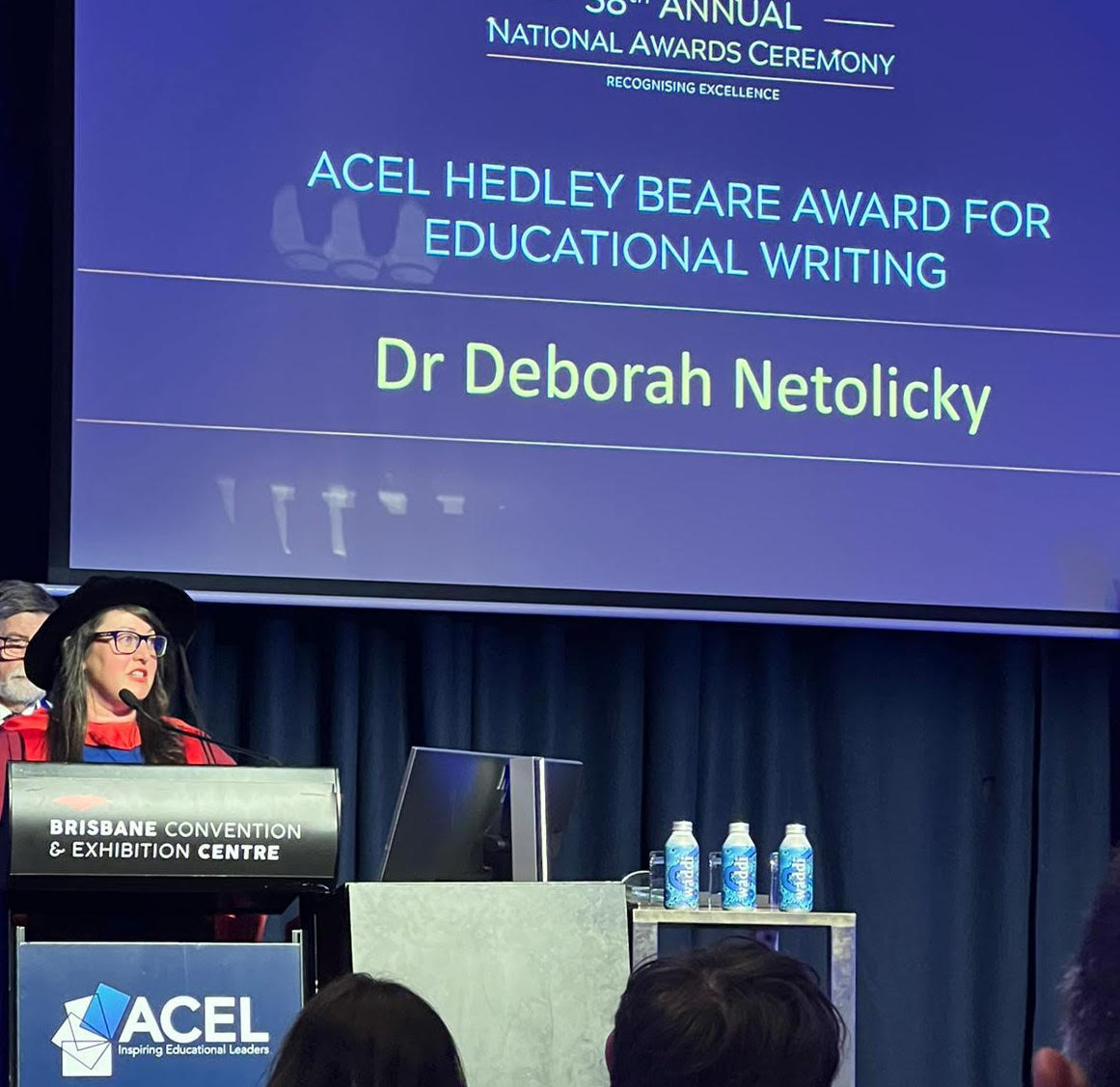
 I am incredibly honoured by the distinct privilege of receiving this award tonight.

As I think about Professor Hedley Beare, after whom this award is named, and his significant writing and contribution to education, I am in awe of his 18 books, 40 book chapters and hundreds of journal articles. I look at the list of previous awardees, including those that are incredibly well-known in education, such as Robert Marzano, John Hattie, Pasi Sahlberg, and Viviane Robinson. I feel humbled that my name has now been added to this list.

Receiving this award has me reflecting on why I write and what I have written. As a child I wanted to be an author, and I tried to write my first novel at around 8 years old. I think I got to about 30 pages and 3 chapters before I gave up that novel, but I still remember the main character, Lesley, and her Nancy-Drewe style adventures.

My educational writing has been borne out of a commitment to the teaching and school leadership profession, a desire to speak out into and help to shape education narratives, and the sense of nourishment I get from reading the writing of others, being informed by it in my thinking and practice, and from collaborating with others in writing projects.

I have been reflecting on what I like to think of as the ‘family tree’ of educational leadership and educational writing in Australia. Of the educational leaders who have supported me through my career, of the educational writers and researchers who have engaged me in conversation, in the colleagues in schools and the academy who have worked alongside me, engaged me in robust debate, and encouraged me.

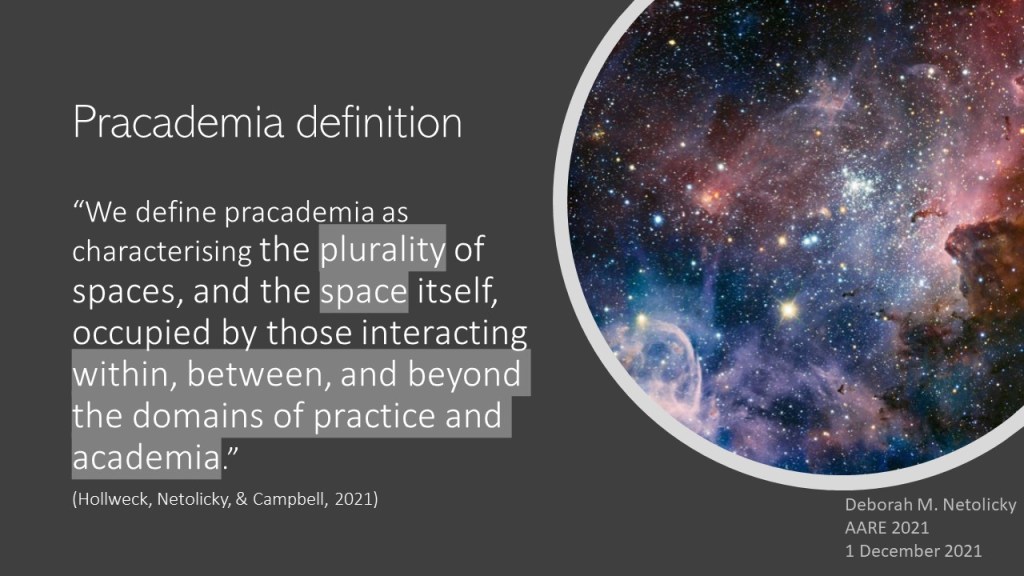
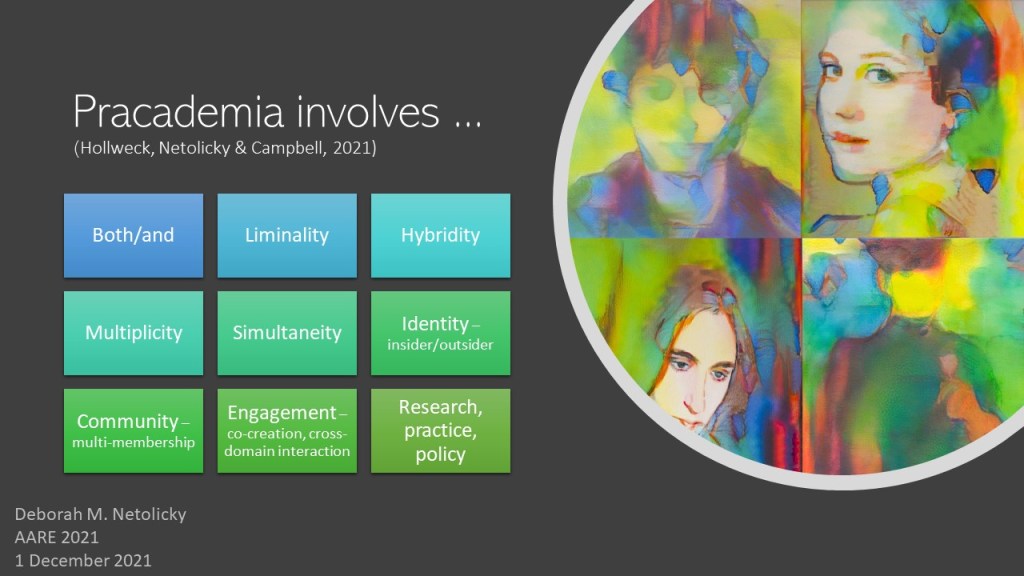
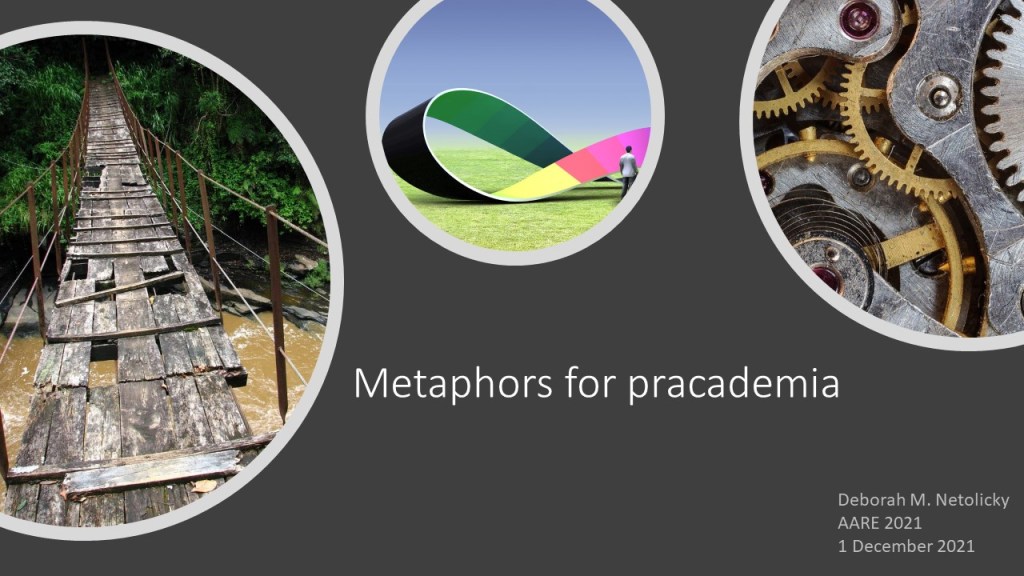
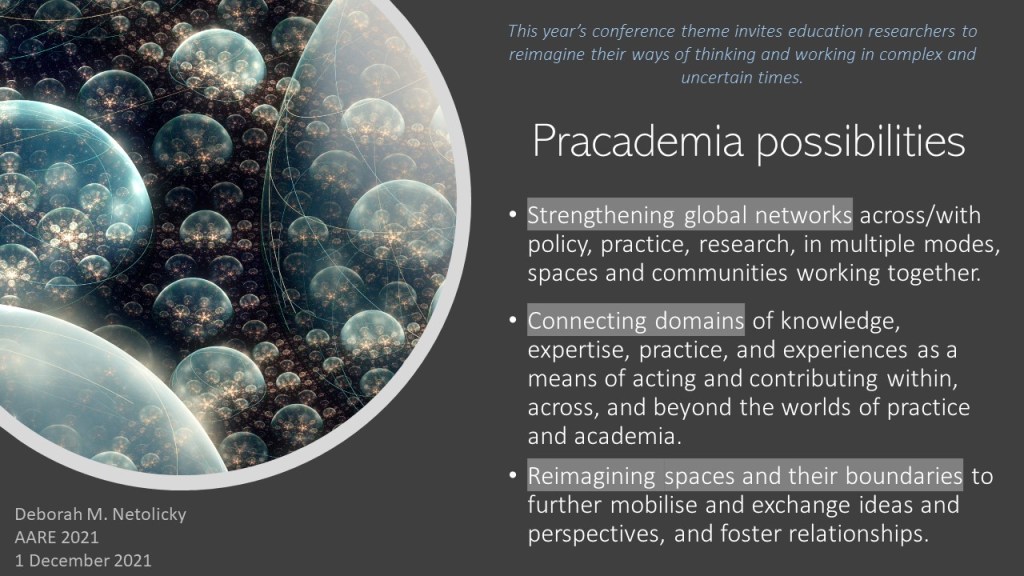
Writing about education has been something I have done while working full time in schools. Some of my recent writing has been around the still-fairly-emerging concept in education of ‘pracademia’ – a concept that thinks of practice and research as both/and rather than either/or. Trista Hollweck, Paul Campbell and I define pracademia as the plurality of spaces, and the space itself, occupied by those interacting within, between, and beyond the domains of practice and academia, and involving the components of identity, community and engagement. For me, pracademia as a concept encapsulates the valuable networks and constructive collaboration between educators across and between education spaces. This is a space I feel I have inhabited as I have written from my work inside schools and sought to contribute beyond the walls of the schools in which I have worked.

This year’s ACEL conference theme—Learning from the past, Leading for the future—encapsulates what we need in education: to honour and seek to understand our past, while working to serve our students and communities into the future.

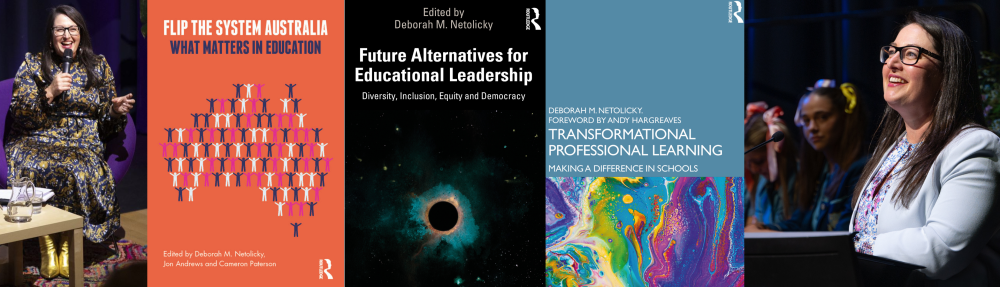
Some of the takeaways of the edited book, Future Alternatives for Educational Leadership, are that leadership requires intuition, adaptive responsiveness, and continuous learning, combined with systematic, critical, and intentional work. That educational leaders need to be reflexive in their practice, actively seeking to examine, interrogate, and challenge our beliefs, practices, and the norms and structures operating in our schools and systems. That leadership should work to balance the needs and care for each individual with the needs and care of the whole. It is about knowing our contexts and communities and responding to their needs. About openly addressing complex or difficult issues and looking for ways forward, even if these turn out to be unsuccessful. About making space for diversity of perspectives and knowledge systems, including those of Indigenous and culturally marginalised groups. Doing good, not looking good. Doing the right thing, not the popular thing. Serving others and focusing on the humanity of our work. Leading from the past and for the future requires creative, critical, and novel approaches, balanced with appreciation for, understanding of, and learning from history and tradition.

Writing for me has been sustaining, and it is wonderful to think that my contribution to educational writing is something that might support and positively influence others. Really, though, it is the ecosystem of educational writing, in which we connect with others and build upon the work of others, that is most valuable. We are better together. We are better because of who has come before, and we are better when we support those who will come next.

As I reflected on accepting this award tonight, I thought back to my PhD thesis, which used Alice’s Adventures in Wonderland as a metaphor for education, professional identity, professional learning, and school change.

The last lines of my thesis explore the hope I have for educational writing – that listening to the stories of others and sharing a range of perspectives might transform us individually, collectively, and as a profession. I will finish by reading some lines from the final passage:

Alice remembered how she had fallen slowly down the strange and marvellous rabbit hole, touching the creased spines of books and the smooth wood of ornaments as she fell down, down, down. She thought of those she had met and whose stories she had heard along her curious journey.

She had known who she was when she got up that morning, but Alice had changed so many times since then! The process of adventuring down the rabbit hole and through all the tangled paths of Wonderland had been a cocoon in which she had been transformed, and from which she had emerged ablaze with new colours and fresh insights.

CONNECTION: 2022 #oneword

Source: @geralt pixabay

In 2021, I chose ‘excelsior’ as one word to help nudge incremental progress through the pandemic we all hoped might be a memory rather than a reality by 2022.

As I reflect on the past couple of years, it has been my networks, collaborations and connections with others that have buoyed and energised me. This includes checking in on friends and finding ways to regularly connect with my family. It involves collaborating with staff at my school, and working with educators from around the globe, often through co-writing or co-presenting. While some collaborations have resulted in products and achievements, conversations are often a reward in themselves.

I want to deepen my focus on being connected, and so my word for 2022 is CONNECTION.

A getaway has been a perfect way to start the year connecting with family, and I have begun to use a meditation app at night to connect with self. In the last week, I have connected with national and global colleagues during the ICSEI (International Congress for School Effectiveness and Improvement) congress, including by being part of two symposia:

  • ‘Educational Leadership Policy and Practice for Diversity and Equity’ with Christine Grice, Claire Golledge, Santiago Rincón-Gallardo and Beatriz Pont. This symposium drew from the work of Future Alternatives for Educational Leadership, specifically the Foreword (Pont) and Chapters 2 (Grice), 3 (Netolicky & Golledge) and 14 (Rincón-Gallardo). It explored new conceptions of sustainable educational leadership through the metaphors of wayfinding, salvaging and social movement. Common threads included the leading as practice, care, learning, wellbeing and hope, as well as tensions between education systems and the realities of schools. Beatriz noted in her discussion that we need to shape and define the future of education as a collective. Video below.
‘Educational Leadership Policy and Practice for Diversity and Equity’ symposium
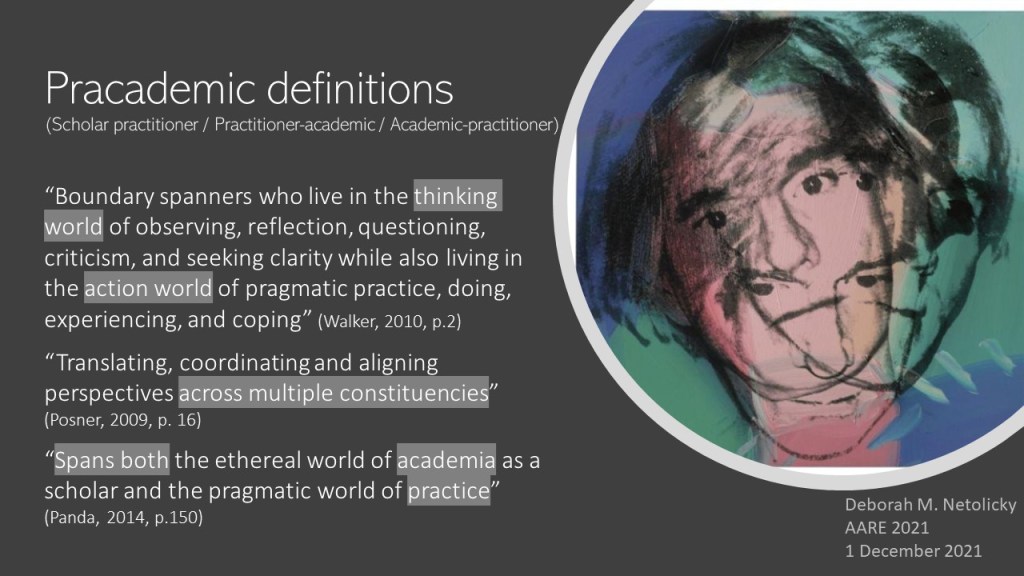
  • ‘Pracademia: Exploring the possibilities, power and politics of boundary-spanners straddling the worlds of practice and scholarship’ with Trista Hollweck, Paul Campbell, John Mynott, Michaela Zimmatore, Steven Kolber, Keith Heggart and Scott Eacott. In this symposium we explored the tensions and possibilities of the concept of pracademia, ideas and research published in a Special Issue of the Journal of Professional Capital and Community (guest edited by Hollweck, Netolicky & Campbell). A video can be found here.

While there is much to miss about in-person conferences, and challenges to online versions (like presenting at 4am or in a busy household), virtual opportunities continue to provide ways to support and connect with one another.

In thinking about channeling connection, I have additionally decided to finally launch the podcast I have been thinking about for two years: The Edu Salon. I am excited about sharing rich conversations with inspiring educators, and contributing to the networked hive mind of the global education community. We are better when we connect with and learn alongside one another, and engage in talking about (and then doing) what matters.

Here’s to connecting in 2022.

2021 Year in Review

Source: Pixabay @Bildschirmaffe

In many ways 2021 has gone by in a flash. Milestones and special moments have come and gone in a maelstrom of work, a firehose of information, and a tumult of pandemic rules and restrictions. As the year winds down, and as I try to do the same, I want to take a moment to reflect on my professional highlights of 2021.

This year my school launched a new strategic plan, and in my role as Head of Teaching and Learning (K-12), I have been engaged in important work bringing that plan to fruition. We have developed our work in what we call ‘learning diversity and inclusion’, including professional learning for and collaboration among staff, adjusting for students with diverse learning needs, developing our shared understanding and practice of differentiation, and improving our reporting on individual learning outcomes. We have continued our focus on effective feedback, assessment, student action on feedback, student goal setting, and student self-reflection and self-regulation, as key ways to develop a learning culture of continual improvement and resilience.

My school aims to support our students to become good people – lifelong learners and leaders of rounded character, able to experience their best success and find their most appropriate pathway through school and beyond school. This year it is wonderful that our Year 12s achieved the best ATAR results in our school’s history, but we know that success is not measured by a number or a test. We will continue to do the work we know matters for the range of students in our care, providing opportunities for agency, voice and accomplishment appropriate to each individual, honouring each person’s story, goals, and gifts.

An exciting challenge has been collating and distilling years of consultation and feedback to inform redesigning the Secondary timetable for 2022 and beyond. In doing so we have made room for a heightened focus on wellbeing and child safety, and for teaching those things that will continue to set our students up for their best future success through our Future Ready programs.

While my role title names ‘teaching’ and ‘learning’, much of my work is immersed in recruiting, inducting, supporting, coaching, mentoring, and developing staff. It is my pleasure to work with staff new to our school, with graduate teachers, with Heads of Department, with cross-school strategic project groups, with middle and aspirant leaders, with classroom teachers, with the Executive team, and with administrative, IT, facilities and support staff. I especially enjoy my one-on-one chats in which I support staff to find learning opportunities relevant to them, position themselves for their next steps, win promotional roles, and make decisions about their futures that best serve them. This year’s launch of our Staff Development Suite, co-designed by a staff steering committee in 2020, allows staff to be supported in ways appropriate and individualised to them. Supporting our staff to thrive and to be their best, in turn supports our students.

A range of initiatives designed to support wellbeing for all staff include: ensuring predictable and well-in-advance calendar dates, timelines and deadlines; morning teas; soup in winter; meditation; seated massage; free flu vaccinations; COVID-19 vaccination leave; some early finishes to accommodate parent-teacher interviews during part of the school day where possible; investment in staff professional learning; support of staff professional goals; leadership development opportunities; a Distance Learning Plan that embeds planning time and realistic expectations of staff and students; supporting staff through life’s hardships; working to make part-time teachers’ timetables as life-friendly as possible; negotiating flexible working arrangements where possible and appropriate; and teacher recognition. I was pleased this year to spend time nominating colleagues for awards, and delighted that they were recognised for the outstanding contribution they make to the lives of the young people in our school and beyond. While teachers constantly navigate professional responsibilities, marking loads, and administration, schools can continue to consider their role in creating cultures of trust and empathy. This of course involves more than tokens of appreciation and needs to be part of a whole-school culture of organisational, collective and individual care and responsibility, in which the school works to support staff, and staff work to support themselves and each other.

I am incredibly grateful to those who nominated me for awards this year. I was thrilled to receive three awards: the 2021 American Educational Research Association Educational Change Emerging Scholar Award, the 2021 Michael Fullan Emerging Scholar in Professional Capital and Community Award, and the 2021 Australian Council of Educational Leaders WA Certificate of Excellence in Educational Leadership.

I enjoyed presenting to national and international audiences this year (online thanks to the pandemic and travel restrictions) including:

I have seen my 2020 article on school leadership in pandemic downloaded 12,000 times, and two big publication collaborations have come to life this year:

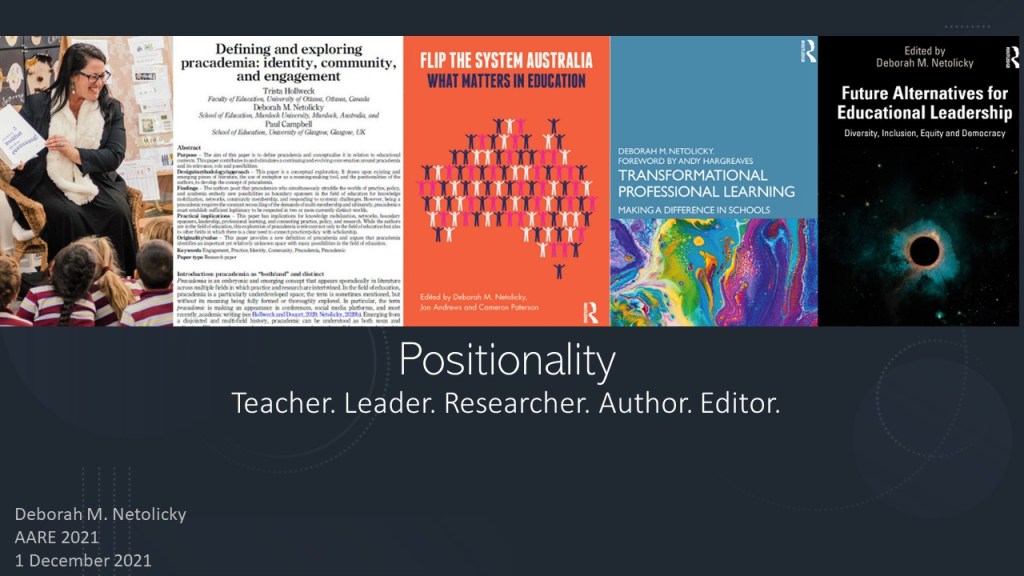
  • A Special Issue of the Journal of Professional Capital and Community ‘Pracademia: Exploring the possibilities, power and politics of boundary-spanners straddling the worlds of practice and scholarship’, which I co-edited with Trista Hollweck and Paul Campbell. Its six papers include our paper Defining and exploring pracademia: Identity, community, and engagement.
  • The edited book Future Alternatives for Educational Leadership: Diversity, Inclusion, Equity, and Democracy. Written mainly during 2020, but released this year, it is edited by me and includes 15 outstanding chapter contributions from 25 authors from the UK, USA, South America, Canada, Europe, Australia, and the Middle East: Asmaa Al-Fadala, Cecilia Azorín, Carol Campbell, Christine Corso, Karen Edge, Michael Fullan, Claire Golledge, Christine Grice Suraiya Hameed, Andy Hargreaves, Alma Harris, Michelle Jones, Annie Kidder, Jodie Miller, Richard Paquin Morel, Liliana Mularczyk, me, Viviennne Porritt, Santiago Rincón-Gallardo, Eugenie Samier, Marnee Shay, Dennis Shirley, James Spillane, Eloise Tan, and Pat Thomson, with a Foreword by Beatriz Pont. In my view, this is an incredibly important and forward-thinking book by some of the world’s best education thinkers, researchers and practitioners.

In the introduction to Future Alternatives for Educational Leadership, penned in January this year, I wrote:

It was late in January 2020 that I invited authors to contribute to a book exploring what leadership in education needs now and into the future. … Bringing this book’s authors together in that moment was about considering educational leadership in a time of climate crises, grave global humanitarian need, political unrest, displacement of peoples, and inequities affecting the education, safety, and success of young people around the world. On 30 January, the World Health Organization declared a public health emergency. … Between March, when authors conceptualised their abstracts, and later months when they wrote their chapters, much changed for individuals, for schools, for universities, and for the world. …

As I write this Introduction in January 2021, more than two million people have reportedly died from COVID-19 as second and third waves of infections continue around the world. Violent pro-Trump rioters have stormed the US Capitol in Washington DC, numerous countries are in lockdown, hospitals around the world are overwhelmed, and schools in 17 countries are closed to all but essential workers as remote learning is again enacted for millions of students. History may or may not show the COVID-19 pandemic as a watershed event in socioeconomic and educational change. At the moment of writing this book, however, the opportunity to reconsider and reimagine the future of education and educational leadership seems imperative. The need for all of us to work for diversity, inclusion, equity, and democracy is more urgent than ever.

I wondered, as I sent the book to production, if COVID-19 would be a barely-relevant memory by the time the book was published. As it turns out, the pandemic continues to transform the way we live, lead and learn, with connectedness and meaning keeping us all going during these unusual times. The need for all of us to work for diversity, inclusion, equity, and democracy is indeed more urgent than ever. As we enter 2022, I will continue to be buoyed in professional spaces by collaboration with others, and the feeling of working together for a common, moral purpose.

Who cares about pracademia?

Today I was part of an Educational Leadership Special Interest Group panel at the Australian Association of Education Research (AARE) 2021 conference, entitled, ‘Do we need pracademics?’ Fiona Longmuir was the moderator, and guest panellists were Scott Eacott, Virginia Moller, Dorothy Andrews and me.

The panel addressed questions such as:

  • Do we need pracademics?
  • Is labelling people ‘pracademics’ divisive and reductive, or full of productive possibility?
  • Do we care about pracademia?
  • To what extent might pracademia develop or dilute the rigour of scholarship and practice?
  • What role might pracademia play in the field of educational leadership specifically?

There was general agreement that the terms ‘pracademia’ and ‘pracademic’ require definitional clarity, and that a conversation about pracademia is worth having and worth continuing.

Scott challenged the motivations of those who might self-identify as pracademics, and suggested a focus on the inclusion of voices.

I explored the work I have done with Trista Hollweck and Paul Campbell (Hollweck et al., 2021, as our most thorough example) in defining and exploring the space of pracademia and the notion of an individual as a pracademic. For me, pracademia is about doing good work and about valuable networks and constructive collaboration between educators across and between education spaces.

Virginia described her role as ambiguous, complex and frowned upon, and explained that she was trying the identity of ‘pracademic’ on for size, to see if it fits. This notion of identity work, outsider-ness, and the nature of pracademic community is something I have heard from others who feel that their boundary spanning work is not valued or acknowledged in their professional contexts.

Dorothy challenged us to consider we needed to ‘just get over it’, and—as David Gurr suggested in the chat bar—do good work regardless of in what sphere someone works or what professional label is attached to them.

I asked the question about whether our systems and structures might be reimagined to allow for the valuing of work in multiple spaces.

Virginia and Scott discussed the notion of co-design between those in the academe and those in practice spaces. I mentioned the gap that Trista, Paul and I have noted around the need for policy to be explored more fully in the space of pracademia.

As in the other pracademia-focused conference panels and symposia of which I have been a part, the discussion was rich, energising, and resulted in calls from panellists and the audience for further exploration.

I will leave you with an excerpt from the final paragraph of our paper for the Journal of Professional Capacity and Community Special Issue (‘Pracademia: Exploring the possibilities, power and politics of boundary-spanners straddling the worlds of practice and scholarship’) we co-edited, that is mostly available via EarlyCite:

“The pandemic showed the possibilities of what collaboration between and working across multiple spaces in a field can accomplish. The concept of pracademia, and of working as a pracademic across and between spaces, suggests that we may be able to reimagine boundaries, fields, and roles in education and in other fields. For the work of pracademia to be sustainable, the space between practice and academia needs to be valued in terms of legitimacy, credibility, and even paid work. … Embracing the concept of pracademia may go some way to dissolving traditional dualisms of spaces that educators operate within, and increasingly across. It may be part of liquefying boundaries, so that rather than boundary spanning or boundary crossing, educators move back and forth along the Möbius-strip-style  continuum  comprising  the  multiplicities  of  research, practice, and policy. It may be engaging in multiple modes, spaces, and communities that open up learning, knowledge exchange, and mobilization of ideas and practices. It may be structural affordances from schools, universities, and policy bodies such as time, resources, avenues for recognition, and institutional support. For we authors, exploring and embedding ourselves in the identities and communities of pracademia is about making a positive difference in education; advocating for empowerment beyond the often-rigid structures, expectations and silos; and encouraging a valuing of alternate networks, contributions, and influences.” (Hollweck, Netolicky, & Campbell, 2021)