Teacher efficacy, agency & leadership #aera16

iconic Abe

iconic Abe

This afternoon I spent 3 hours at two round table sessions at AERA in Washington DC, hearing about and talking about teacher leadership and agency. Then on the way home from drinks with Sarah Thomas, who I know through Twitter and Voxer, I stumbled across the #satchatOZ chat on Twitter which was talking about teacher leadership. So whilst I’m jetlagged and brain-exhausted from a day of conferencing, I want to get my raw thoughts down before they’re overrun with tomorrow’s thoughts (with some of my photos, because: DC).

Three terms that came up today in the two roundtable sessions I attended were: efficacy, agency and leadership. Self-efficacy is about how well someone thinks they can do something; a self-belief in their own capacity. Agency is the capacity to act as well as the acting itself; to be an agent is not just to have the internal capability to do, but to actually do the doing. I wonder, can someone be an active agent, capable of action and change, without the self-belief in their capacity to do so? Possibly. Can someone have a sense of self-efficacy, but without the agency to be effective? Probably.

Leadership, meanwhile, is a slippery word. People can be leaders by name or position, but this doesn’t guarantee that people are led by them. Leadership and agency are not just individual, but also collective. Can someone be a leader without a followership? A leader can be defined by their title, but more often they are defined by their influence on others, their organization or the system in which they operate. Teachers without official positions of responsibility can be, and are, leaders in their fields. They are active agents who effectively translate their beliefs and purpose into reality through deliberate and effective action.

In leadership and agency in schools, context is a key consideration. The holonomous* environment of a school is one in which the sum and the parts are inseparable. If schools want teachers to be reflective, growth-focused and agentic, they need to trust in their teachers and provide an environment in which risks and exposing one’s vulnerability are ok. In a culture of teacher-scoring and fear, teachers are less likely to be agents of positive growth and more likely to be compliant servants to a punitive system. Movements like #flipthesystem, which are explored in Jelmer Evers and René Kneyber’s book, advocate for further teacher voice and action in education reform. Localised reforms like my school’s teacher growth model are practice-based examples of in-school teacher leadership in action.

In the introduction to Linda Darling-Hammond’s presidential AERA address this afternoon, she was described as identifying as a teacher, but having become a researcher so that she could be a strong voice listened to by policy makers and powers that be. She saw research as a way enact and propel change.

DC daffodil cityscape

DC daffodil cityscape

While I didn’t frame my PhD research through the lens of teacher leadership and agency, it could be seen through that lens. I explored teachers and school leaders’ perceptions of identity, learning and school change, within a particular context. That context was the coaching intervention I was leading at my school, a formative growth-based model of teacher growth and development.

What emerged from my study, when looked at in terms of teacher leadership and agency, was that teachers are deeply tied to their senses of self within their senses of their context. That is, teacher self-efficacy and agency develop when teachers feel an individual purpose, an alignment with context and that they are empowered with voice and influence in their own organization. In this case, the school empowered teachers to be active agents with a voice in school reform. Additionally, the formative aspect of the coaching model for growth was fiercely protected; teachers are not scored and judged, but are able to collect lesson data and participate in coaching conversations in order to grow themselves. This kind of trust requires some relinquishing of power from those at the traditional hierarchical apex.

As someone who connects with others on Twitter and writes on this blog, I think that technology and social media give us tools to develop our teacher voice and engage in conversations about education. I know of teachers who would be considered leaders both in their schools, and in the wider land of education, due to their public thinking, writing and advocacy. I also know those who are known more for their leadership in the social media or conference arenas, than in their own day-to-day school contexts.

As others have noted, Twitter flattens hierarchies and empowers users. Bonnie Stewart’s research into academic Twitter found that there are different spheres of, and criteria for, influence on Twitter than in higher education institutions. The same is true in other educational contexts. Government ministers are drawn into public conversation with teachers on the ground. Social media and blogging can be leveraged by teachers to allow them voice and agency, to advocate or agitate. As Greg Ashman and Rory Gribbell note in their recent blog posts, bloggers can and have been agents of political and educational change, a pluralistic chorus of voices to which people are listening.

Teachers can and should be advocates for their students and their schools. They can and should pursue research and opportunities to understand, revise and reimagine what is known in education. Those leading schools and systems in official roles can encourage teachers’ growth and leadership by questioning traditionally hierarchical power structures and considering more distributed and inclusive ones. In this way, teachers can be encouraged to lead within their contexts, instead of feeling as though they are fighting against the system or preserving their survival within it.


* Check out Costa & Garmston’s 2006 Cognitive Coaching text or my PhD dissertation for discussion of holonomy.

mural at the Library of Congress
mural at the Library of Congress

Using coaching in qualitative research interviews

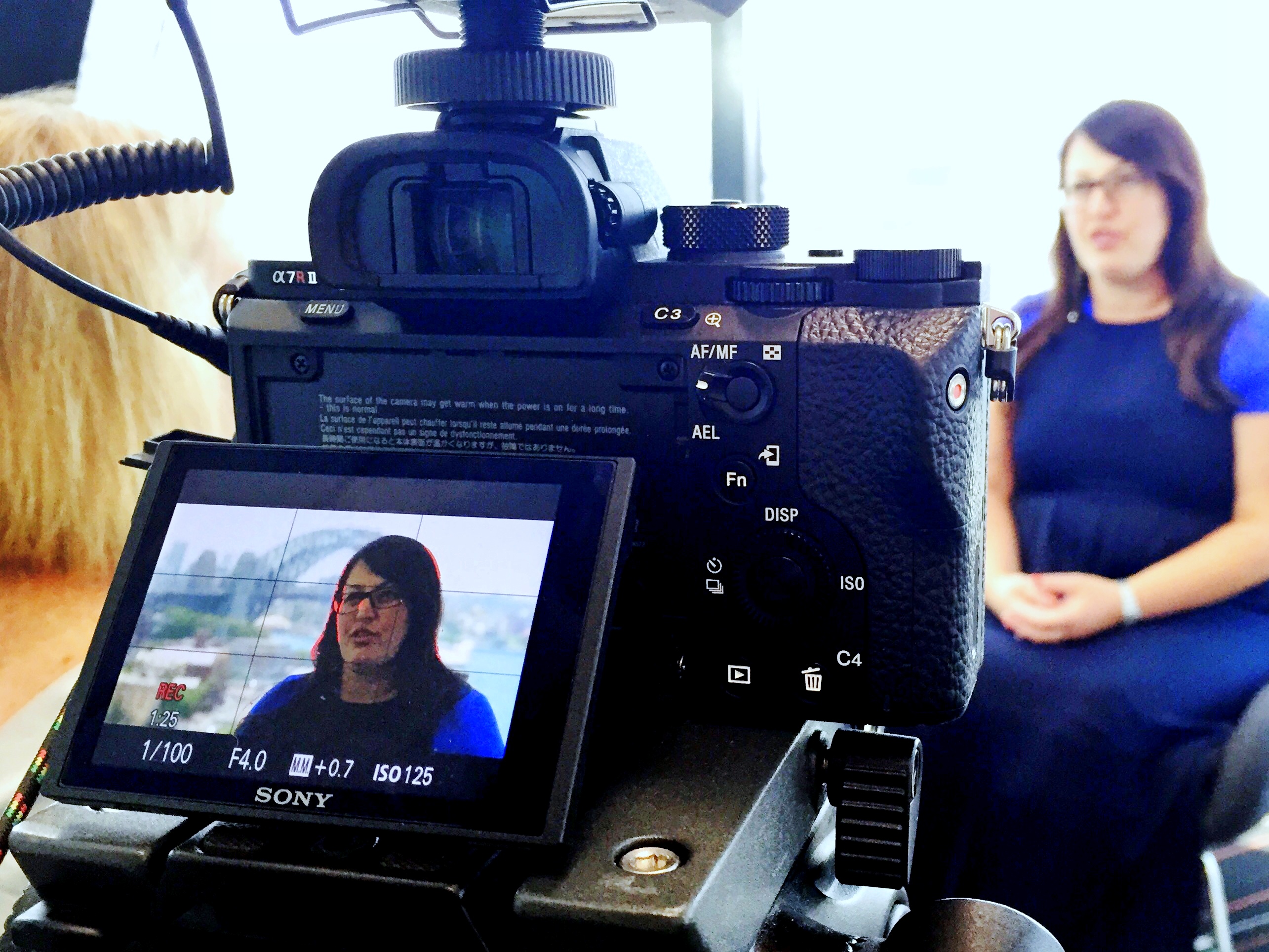
being interviewed about my research

being interviewed about my research, in front of Sydney Harbour

In my last post, I tried to illuminate some of the internal dialogue and thinking that goes on in the coach’s mind during a coaching conversation. On Twitter, in response to that post, Avril Nicholl reminded me that being deliberate about interaction, and explicit about role, is applicable to qualitative interviewing. So in this post I’ll explain how I used my coaching toolbox when I was conducting qualitative interviews for my PhD.

My PhD experience of the qualitative interview comes from both participant and researcher perspectives. I interviewed one group of participants for my study, as interviewer and researcher. But ethical issues resulted in another group, and me, being interviewed by an independent interviewer. So I was interviewer, designer of protocols and questions for someone else to interview some participants, and an interviewed participant in my research.

Interview is a widely used way of generating data, especially when the researcher is seeking to explore feelings, relationships, beliefs, identities, and insights about people in action in their social worlds. As I discussed here, the creation of meaning is a complex interaction dependent on meaning-maker and context. Narrative researchers often agree that participant stories are not fully formed, waiting to be drawn from the person. Rather, meanings are made on the spot; shaped by the questions asked, the interview structure, the interview environment and the interviewer themselves. Interviews do not just recall knowledge; they produce it, in the moment.

Anecdotally, I experienced this myself in being interviewed for my study by the independent interviewer, who I had briefed on interviewing me and other participants. I had written the questions and the protocols, so I was surprised by the experience of being interviewed for my own study. In thinking aloud, or being probed to think further or differently, my own thinking was not only illuminated, but deepened, extended and re-shaped, even though I knew what the questions and foci beforehand.

The interviews for my PhD sat somewhere between semi-structured and un-structured, designed to elicit storytelling from participants. I wanted to, as narrative research doyenne Catherine Riessman suggests, “follow participants down their diverse trails” (in ‘Analysis of personal narratives’, 2002). I wanted interviews to be less about my agenda (although of course my study had its foci) and more about surfacing participant stories in all their messiness and humanness.

Planned questions were sparing; there were only a few. These were based on the phenomena on which the study focused. Mostly, these anchor questions started with, “Tell me about …” There were also suggestions for probing questions. The interviews were designed to be broadly consistent for each participant (in question order and focus) but the structure of the interview was flexible enough to explore tangents which emerged from each participant’s responses.

When interviewing, I was explicit about my role as researcher and interviewer, especially because I was interviewing people from within my own professional context. I used my coaching toolbox to give me a structure and approach for research interviewing. I applied an interviewer listening pattern of ‘pause, paraphrase, ask question’ (borrowed from Costa & Garmston’s 2006 Cognitive Coaching). This interview structure encouraged participant storytelling, while allowing patterns and idiosyncracies to emerge.

I was aware of leaving space in conversation for pausing and thinking, rather than jumping in when there was silence (as I mentioned in my previous post, restraint and pausing are areas of personal mindfulness for me). My coaching training on eye movement (see visual representation above for more on how to recognise eye cues) allowed me to see what sort of thinking the interviewee was doing, which helped me to wait while that thinking happened; I knew if I jumped in with another question I would be interrupting the person’s internal dialogue or their recollection of an experience. Usually the silence in the interviews didn’t last long but instead was a jumping off point for the participant to speak further; it was a space in which the interviewee was thinking and after which their story would continue.

I found that, rather than asking questions, I was attempting to distil, clarify, or abstract the person’s thinking with a well-considered paraphrase. While the focusing questions were necessary to direct responses onto the research foci, a Cognitive Coaching approach allowed me to ‘get out of the way’ of participants, following them along their own stories as they directed and developed their own responses. After the interviews I had feedback from a number of participants who said that for them the interview was useful, a great conversation, and a luxurious space in which to reflect on their own professional selves and practices. The research interview was valued by participants as an opportunity which provided the space and structure for learning and reflection.

My Cognitive Coaching training also helped to bring to my awareness, during the interviews, to the importance of trust, rapport, body language mirroring, pausing and paraphrasing. Conscious of maintaining rapport, I did not take notes, but allowed a Dictaphone to capture the audio. I watched the conversation body language in a kind of meta out-of-body looking-in-from-outside experience, and often found myself mirroring the interviewee’s body language. I was mindful of how participants used their bodies and hands to express their ideas and their relationships to things. This allowed me to pick up on the nuances of their thinking. Were they sequencing points on their fingers or in the air in a linear pattern? Were they expanding themselves and their ideas out into abstraction or magnitude, or bringing them close to their chests, showing something was dear to them? Non-verbal cues helped me to paraphrase participants’ responses.

For me, coaching and being coached has influenced the way I have conversations in all sorts of arenas. As a parent, as a partner, as a friend, as a teacher and as an interviewer. As a PhD candidate and neophyte researcher, the coach’s toolbox was helpful in developing my approach to qualitative interviews. As interviewer and coach, my PhD interview transcripts and audio provided data for reflection on my practices.

While the role and purpose of a research interviewer is different to the role and purpose of a coach, the principles and skills are transferrable: belief in the capacity of the individual, active listening, paraphrasing, asking questions which mediate thinking, and keeping oneself (coach/interviewer) out of the conversation. Both kinds of conversation – coaching and research interviewing – should be primarily about the person doing the thinking, talking, sharing, storytelling. Although the coach or interviewer of course influences the words and thoughts generated, they should aim to be almost-invisible catalyst, mirror and conduit.

Indra’s Net: We are all connected

There is an endless net of threads throughout the universe … At every crossing of the threads there is an individual. And every individual is a crystal bead. And every crystal bead reflects. Not only the light from every other crystal in the net but also every other reflection throughout the entire universe. ~ Anne Adams

This post itself is a tangling of threads. It is in part a reflection on the first day of the national Australian Association of Research for Education (AARE) conference, which I am attending and at which I am presenting a paper. It is also part of a wider conversation I’ve been having through blogging. It was incited today by Robyn Collard’s Welcome to Country in which she used the above Anne Adams quote which refers to Indra’s Net, a Hindu and Buddhist concept that articulates the interconnectedness of the universe. It imagines each individual as a dew drop, jewel or pearl: reflective and distinctive, but also interconnected with all the other dew drops via the threads of the web. Parts and whole. Dazzling individualism within collective network.

This quote and concept added a layer to an already-layered conversation I’ve been having in the blogonet with Helen Kara and Naomi Barnes. It started with Steve Wheeler’s #blimage (blog + image) challenge. When Helen shared a photograph of tangled dew-bejeweled spiders’ webs in her garden, both Naomi and I responded to the image. Naomi wrote about the messiness of research. I wrote about how technology connects people to one another. I’ve since also written about the web-weaving spider as a metaphor for the researcher. And today I was connecting at AARE, in person, with a web of academics who I know mostly through their work and through Twitter.

So here I am again. Contemplating the web. And the dew drop jewels. And their infinite reflections and refractions. Their beauty and fragility and separateness and togetherness.

I spent much of this first day of the AARE conference in a four hour symposium in which scholars brought diverse perspectives to the same general topic of leadership in education. They agreed and disputed. They converged and diverged. It was a great example of respectful, well-considered and articulate debate. Graceful disagreement. Elegant contestation. Research as conversation.

For instance, in conceptualising leadership as artistry, Fenwick English noted the webbed connections between research, art, leadership and creativity. Scott Eacott discussed the relational aspects of leadership and of research, asking scholars to consider how their work relates to that of others. Christina Gowlett approached school leadership from a perspective of challenge and critique, agitating against dominant approaches, norms and expectations by embracing alternate theories of uncertainty and transgression.

Additionally, Gabriele Lakomski and Colin Evers discussed thinking in schools as a wide cognitive net. They define cognition as a dynamic system, comprising reciprocal interactions between people, artefacts, resources and environments. They noted that thinking is not just computationally logical-deductive; it is interpretive, intuitive, behind consciousness and beyond awareness. They explored the notion of the extended or supersized mind which distributes cognition. Our tech is our selves. Our communities and social networks are change collectives. Gabriele and Colin noted that cognition occurs “beyond skin and skull”, challenging the myths of the stand alone thinker, the heroic leader and the change agent. Individuals influence and are influenced by each other. Thinking and being is connectivity. Web not hierarchy.

These ideas resonate with the perspective I will be presenting at the Heroism Science conference in 2016, which suggests a reimagining of heroism in school leadership. That is, that school leader ‘heroes’ can work subtly, fluidly and invisibly in the service of their school communities. In education there needs to be shared vision and individual purpose, collective and individual capacity. Strengthening the web while protecting and nurturing the dew drops.

Like Costa and Garmston’s (2006) notion of holonomy (which is based on Koestler’s 1972 conceptualisation of the ‘holon’), Indra’s Net shows the dual importance of the individual and the collective. The jewel and the net. All are simultaneously together and separate. A change in one is reflected in a change in all.

So as I reflect (like the dew drop), I imagine webs of learning, webs of emotion, webs of relationships, webs of identity. I wonder: What influences the symbiosis between individual and collective? In what ways might we shape others? In what ways might others shape us? These could be questions for families, friendships, organisations, communities, nations, the world. What about our selves can we control and what choices are we making about what our own self-jewel reflects onto those around us and onto the universal web? In what ways could we harness the global mind, the universal self and the interconnectedness of humanity?

Imagine a multidimensional spider’s web in the early morning, covered with dew drops. And every dew drop contains the reflection of all the other dew drops. And in each reflected dew drop, the reflections of all the other dew drops in that reflection. And so ad infinitum. ~ Alan Watts

‘WRITE ME’: Writing to be, writing to know, writing to connect

Round the keyboard was a paper label, with the words ‘WRITE ME’ beautifully printed on it in large letters. Alice ventured to touch the keys, and, finding the sensation to be addictive and quite wonderful in its staccato rhythm, very soon found she had written a page! Three pages! “What a curious feeling!” said Alice, “I must be becoming a writer.” And so it was indeed, for there were words on the screen and the pads of her fingers were singing with a kind of joy.

~ adapted from Lewis Carroll’s Alice’s Adventures in Wonderland

'WRITE ME'

‘WRITE ME’

It is coming to the end of #AcWriMo, ‘Academic Writing Month’, when, for the duration of November, academic writers take to social media with valiant goals of words written and writing tasks completed. I know how good it feels to watch the words grow. But writing is more than increasing words. It is reading. It is cutting out words. It is drafting words upon words that don’t work; words which are the evidence of problem-solving processes, etched onto white screens or into notebooks; for erasure or storage in shadowy places, not for publication.

In my PhD, and in this blog, I use writing as a medium of reflective and analytic thinking. ‘Writing aloud’ or ‘free writing’ is one way in which I sometimes see where the words take me and which surprising and non-linear burrows I might be catapulted through.

This post emerges out of a blog and Twitter conversation with three academics around writing and autoethnography: Helen Kara (who writes here about ‘showing her workings’ and revealing the personal), Naomi Barnes (who muses here about autoethnography as a vehicle between the personal and theoretical) and Katie Collins (who responds here with her thoughts about writing as thinking, as filter on reality and as power). Here, I offer my own thoughts to this conversation.

I was ushered into this conversation by Helen, but was already familiar with Katie’s work. Once Alice’s Adventures in Wonderland was enmeshed into the fibres of my PhD thesis, I went looking for someone else who had done something similar (because surely I couldn’t be the first), and came across Katie’s then-recently-published dissertation. We had done different things with Alice, but the novel clearly resonated for both of us.

While I didn’t use Deleuzian theory in my PhD, Deleuze’s 1990 Logic of Sense reflects some of my thinking of Alice as a novel of identity contestation, fluid becoming and un-becoming, through language. Carroll’s fantastical, imaginative world questions adult realities and plays with the power and (non)sense of words. Deleuze positions Alice at the borders. As a neophyte researcher who has made some non-traditional choices, I have felt that I have operated in some ways at the borders, questioning and pushing at the edge of where I am expected to be, what I’m expected to do and how I’m expected to do it. Being at once curious about, filled with wonder for, and at odds with, the world is an affinity I feel with Alice. (This week I will present on my use of the Alice metaphor in my PhD, at the Australian Association for Research in Education conference.)

crudely sketching Alice

crudely sketching Alice in my notebook

While for my PhD I didn’t adopt autoethnography per se, I did use the autoethnographer’s lens as part of my conceptual bricolage. That is, I saw myself as research instrument, self-conscious participant and immersed, self-identified insider member of my study. Michael Schwalbe’s 1996 metaphor resonated: reflections on my self were both door and mirror; a way in to others and a way back to self.

My PhD thesis self-story (I was interviewed as one of my own participants; but that’s another tale) had the purpose of making transparent my own worldview (along the lines of Helen’s ‘showing my workings’), but it also had another function: to help me know myself. As I worked to find the words to explore and articulate my own lived experiences of the phenomena I was studying, I found, as others have, that I wrote my way into knowing, wrote my world into a version of its reality and constructed my own story in new ways, through the talk-aloud experience of the interviews and the process of forming and finding the words to frame my narrative.

I wrote at one point about writing a PhD as like freeing a sculpture from stone, but I wonder if the process of writing is one in which we free what already exists within, or if it is more than this. Creation? Collage? Weaving? Moulding? None of these seems to adequately embody the process of writing which seems to come simultaneously from within and without; from past, present and future; from materials tangible and intangible. It is deliberate and intuitive; visible and invisible.

And so, I continue to welcome opportunities to write my way into being, to write my way into understanding and to connect my words and thoughts with those of others.

I came across this 'Pour Me' cocktail the night of this Twitter conversation. Coincidence?

I came across this ‘Pour Me’ cocktail the night of this Twitter conversation. Coincidence?

Recipe of a good reference list: Ingredients for PhD success

The doctoral researcher invites to the table the scholars she would like to join her for a conversation over the evening meal. … As host to this party, she makes space for the guests to talk about their work, but in relation to her own work. ~ Barbara Kamler and Pat Thomson, Helping Doctoral Students Write: Pedagogies for Supervision

Who's coming to dinner? by @debsnet

Who’s coming to dinner?

The reference list of a doctoral thesis is the summary of years of reading and developing ways to critically and respectfully talk about reading in an academic voice. It’s also a list of the ingredients of the thesis, of what was collected and selected from which to create our work.

With over 300 references, my PhD thesis reference list runs to 19 pages and almost 8000 words. As I (check and check and check and) consider that list, I ponder what makes a ‘good’ reference list.

Barbara Kamler and Pat Thomson, in their book Helping Doctoral Students Write: Pedagogies for Supervision, talk about using literatures to ‘establish the territory’ or ‘assemble the dinner party guests’. In their dinner party metaphor, which they attribute originally to John Smyth, they discuss the choosing of what literature to include as hosting a dinner party, in which the thesis writer invites to the table those scholars with which their work engages. This gets the candidate to think about what academic conversation/s their thesis inserts itself into, and with which scholarly groups they belong.

I have also read and heard that examiners sometimes read the thesis from the back (urban PhD legend or real deal?). That is, they flick straight to the references, then perhaps to the introduction, the conclusion, then … the findings? Who knows?

Tara Brabazon, for instance, in her 2010 article in the Times, writes:

Doctoral students need to be told that most examiners start marking from the back of the script. Just as cooks are judged by their ingredients and implements, we judge doctoral students by the calibre of their sources.

The moment examiners see incomplete references or find that key theorists in the topic are absent, they worry. This concern intensifies when in-text citations with no match in the bibliography are located. …

If the most basic academic protocols are not in place, the credibility of a script wavers. A bibliography is not just a bibliography: it is a canary in the doctoral mine.

If my reference list was the first thing my examiners looked at I wonder what they would be looking for or what they might think. If I’m being judged on the calibre of my sources, I wonder how my reference list reflects the quality of my scholarship.

I wonder about the ratio of old and new references. My list includes some of the godfathers and matriarchs of the areas of my research; the early works. But when it comes to texts cited from the 1990s, will the reader be wondering why I’m citing not-foundational-but-not-recent texts? Do these texts help to show that I know the field or do they call the relevancy of my list into question? I have also included recent references, including a number published this year. I’m hoping that this shows that my work draws on the very newest thinking in my field. So, I’m hopeful that this combination of old/foundational, middle (some of which are seminal texts for their field), and brand-spanking-new will create a portrait of literatures well canvassed. As Pat Thomson notes in this blog post, examiners know the field, and so will know ‘the originals’. It’s the doctoral candidate’s job to show that they know where their field came from, as well as where it is now.

I have also been thinking about the kinds of texts expected to make up the doctoral reference list. My Voxer doctoral group has thrown up the question about whether blogs and social media can be included in the reference list of a dissertation. My own understanding is that they can be – each style has guidelines for how to cite blog posts and tweets – but that the accepted norm is that a reference list is made up of academic texts, articles from peer-reviewed journals, a few doctoral dissertations and some reports from large organisations. The doctoral dissertations give me hope that mine may get cited on day too! While I’ve seen blogs and tweets used as data, I don’t see them as being considered appropriate references in most PhD theses, unless that medium is central to the field. I haven’t cited any in my own thesis.

Both Pat Thomson and Tara Brabazon mentioned the perils of sloppy or lazy scholarship, which can be revealed through an inaccurate or incomplete (according to the reader) reference list. How is the candidate to know what is enough and when is enough? I am in my final revisions, planning to submit within a month, and still I am reading and inserting citations and references! A recent post on the Thesis Whisperer blog talked about academic FOMO (fear of missing out). I have reading FOMO: the overwhelming fear that if I don’t keep reading, I will miss a seminal paper or a text of importance to my work. And as my thesis uses a bricolaged methodology (different traditions woven together), as well as three phenomena, plus some important contextual factors, there’s plenty to know and plenty to read.

So how, to use Kamler and Thomson’s metaphor, do I know when I’ve invited enough people to my dinner party? Or if they are the right guests?

I found that I started relaxing about the scope of my reference list when I began seeing the same names appearing and reappearing in the texts I was reading. ‘Oh yes,’ I could finally say, ‘I’m familiar with the key names cited here; reading this hasn’t led me to hunt down ten new references.’ But I’m pretty sure I’ll know that the reference-list-litmus-test will only be finished when I press ‘print’ on the final copy.

(Disrupting) disruption in business, academia & education

disruption: dis·rup′tion n. ~ from the Latin disruptionem ~ “a breaking asunder”; to break apart, split, shatter.

While the dictionary definition of disruption points to breaking apart, in fact now disruption often means to make anew. In business, disruption is about creating new markets and discovering undiscovered needs. Traditional products and modes are replaced by new business models, new technologies and new ways of appropriating the old. Google’s now-defunct ‘20% time’, which instigated ‘genius hour’ in classrooms around the world, was designed to nurture disruptive, moon-shot thinking. Often Uber, Airbnb and Apple are touted as examples of businesses which have displaced other services with their innovative thinking. Businesses and entrepreneurs like to see themselves as ‘disruptive’ because this means they are radical, ground-breaking and on-the-bleeding-edge of innovation.

As an English and Literature teacher, I am drawn to teaching texts which were either disruptive in their context, challenging socio-political status quos, or which feature disruptive characters. William Golding’s Lord of the Flies, George Orwell’s 1984 or Animal Farm, Margaret Atwood’s The Handmaid’s Tale and Oryx and Crake, feature films like The Matrix and The Hurt Locker. These texts allow me to challenge and extend students’ thinking, inciting discussion about humanity, history and ethics. They allow us to interrogate dominant belief systems and representations, and dig into our own values, attitudes and assumptions. Being a critical questioner of everything, including ourselves, is a key to disruption.

Tootle the disruptor-train goes off-track

Tootle the disruptor-train goes off-track

One of the books I read my own small children is Tootle, Gertrude Crampton and Tibor Gergely’s 1945 children’s book (you can see the Tootle birthday cake I made in this post on PhD-as-cake). In it, the young engine called Tootle breaks the firm rule ‘Staying on the Rails No Matter What’. Instead, he frolics through fields, making daisy chains, racing horses, talking to frogs and crushing buttercups. I continue to be dismayed that, unsurprisingly for a 1945 text, Tootle ends up complying with the rules. Rather than celebrating his individualism and his new way of being a train, he tows the line like every other locomotive. Each time I read the story, I want to shout through the pages: ‘Go your own way, little train! It’s ok to be different and subversive and joyful and live a life off the subscribed journey!‘ Clearly this says more about me than it does about the story.

In the blogosphere, I follow traditional academics, as well as independent off-centre researchers who are questioning, through action, what being an academic might look like. My PhD research uses a bricolaged paradigm and a fairly unconventional approach to writing up participant data. Bricolage refers to a kind of drawing together of a range of traditions to make a bespoke, rather than off-the-rack, approach, tailored to the particular research problem. This might be considered disruptive in the sense that it rethinks well-worn traditions and stitches them back together in a new form. Perhaps my inability to conform to one research approach is a bit like my inability to follow a recipe in the kitchen, where I’m always using recipes as a kind of springboard-guide, if I use them at all. But disruption isn’t just failing to conform, it’s finding new ways, forging new paths, building new possibilities. It’s providing alternatives to accepted ways of doing things. I think it’s so important that we define what terms mean for ourselves and our sectors, before we begin bandying and bandwagoning them about with reckless, jubilant abandon.

Some educators see the job of education as to nurture the innovative thinking of students, to prepare them for uncertain futures. In education, words like ‘edu-preneur’, ‘edu-innovation’ and ‘disruptive education’ have become popular. In my Twitter bio, I’ve used the word ‘disruptor’, to suggest that I am someone who questions and pushes at the boundaries of what is known and what is accepted, but I have questions around the thinking and behaviours of some self-professed disruptors. The irony is not lost on me; perhaps I should rethink my Twitter bio, but I like delicious words like ‘disruptor’ and ‘flâneuse’. Therein lies part of the problem. Trendy-sounding words are seductive. We like to roll them around in our mouths and social media feeds. 

On the one hand, I know business owners, writers, academics and educators who thoughtfully question the status quo, pushing the boundaries of practice and questioning accepted ways of thinking and acting. These people and their organisations are taking risks and building alternative ways of being in the world. Yet I’ve also noticed that some others bristle when their pithy, jargonistic talk of ‘being disruptive’ is questioned. Sometimes self-professed disruptors don’t take well to being challenged, or disrupted. Sometimes advocates of more traditional approaches or technologies attempt to disrupt the disruptors, but are shot down for being old-hat, stuck-in-the-past or not-on-the-bleeding-edge. Sometimes the whole discussion breaks down into paradigm-war name-slinging. I’ve spoken before about the importance of robust, respectful discussions in which we are ok with graceful disagreement and are able to listen to opposing viewpoints with compassion. I think if disruption is embraced, those doing the disruption should embrace deeper interrogation of their ideas than slick presentations or 140-character tweets might allow. This is why I love blogging and podcasts; they deepen conversation.

So, I approach the idea of disruption with both fascination and healthy scepticism. I do think we should ask what it is that might need disrupting, and why. Or perhaps what might need reconsidering, or consolidating, or investigating, or researching, or rebuilding. When buzzword-saturated talk of disruption becomes the unquestioned norm, perhaps it is those who question the dominant discourse of disruptors who are the most truly disruptive. Let’s not forget to be questioning, critical thinkers, especially within echo chambers of (disruptive, or other) discourse.

Advances are made by answering questions. Discoveries are made by questioning answers. ~ Bernhard Haisch

'Wave 1' by Annette Thas

‘Wave 1’ by Annette Thas

Thinking about doctoral study? How to get started.

The possession of knowledge does not kill the sense of wonder and mystery. There is always more mystery. ~ Anaïs Nin

thinking of opening the PhD door? ~ Oia, Santorini

thinking of opening the doctoral door? ~ Oia, Santorini

In response to a number of questions from friends and colleagues about how to get started on a doctorate, I’ve written this blog post. It deals with what to consider when starting on your doctoral journey, and a bit about my story and how I went about it.

Remember that each person who is doing or has done a doctorate (including your supervisors!) has only done one. We will each base our recommendations on our singular experience, although supervisors have the additional experiences of guiding and examining doctoral students. My experience is not your experience, but it has been positive, and I would wish that for anyone taking on the doctoral thesis beast.

PhD or EdD?

The boundaries between doctoral degrees seem blurry to me, but my understanding is that the PhD is seen as the more academic qualification and the EdD is seen as the more professional qualification. The EdD is apparently about knowledge for and in practice, of more relevance to practitioners in the world of schools, whereas the PhD is seen as focused on the theoretical, of more relevance to those in the academe.

It seems, though, in Education, that many PhDs are undertaken by practitioners, around their own practice, and with practical implications. And I can’t imagine a school leadership appointment being affected by the Ed/Ph difference. So I’m not entirely sure why the distinction is necessary (apart from that Harvard started the professional doctorate trend and everyone else got on board). Please, someone, enlighten me!

From a course-content viewpoint, in universities local to me, the EdD has both coursework and (smaller than PhD) dissertation, while the PhD is a pure research degree with no coursework components. This means that an EdD candidate is required to turn up at courses, intended to help them prepare for the scholarly work of the dissertation, while a PhD candidate is not. In this way, the EdD candidate is provided with more formal support, as their coursework is usually done in preparation for their research project/s.

When I enrolled in my degree, I had a 6 month old and a 2 year old, and shortly after enrolling I went back to work, so coursework for which I needed to be in a particular place at a particular time did not work for me. My circumstances were more suited to doing my research in flexi times, often late at night or while children slept. While I was an educator not thinking about a job in the academy, as a book-and-writing-loving nerd I happily committed to the Doctor of Philosophy.

From a financial perspective, Australian citizens or permanent residents studying their doctorate (professional or PhD) in Australia are currently not required to pay fees (except the usual university student fees). These higher degrees are subsidised by the Research Training Scheme (RTS), although this may change from 2016. A funded RTS place is granted for four years’ full-time study equivalent, so it doesn’t go on forever!

The Doctor of Philosophy / Doctor of Education choice is worth thinking about from your own perspective. Where are you coming from? What are your circumstances? Where do you want your study to take you? Would you benefit from some coursework to kick start your degree, and a smaller thesis to manage?

Talk to people who’ve done both options. Talk to academics and university offices. Talk to school leaders. Talk to potential supervisors. Ask the Twitterverse or the blogosphere. Figure out your best option.

PhD by ‘big book’ or ‘publication’

If undertaking a PhD, it is worth thinking from the outset about whether you want to prepare a ‘big book’ thesis, or take the option of ‘thesis by publication’ in which your thesis includes a series of papers, some of which are published and which can be co-authored. These papers would stand alone, but also be tied together in the thesis by an introduction and conclusion in which you explain how they work together for your research purposes.

While the ‘by paper’ option is increasingly popular, I chose the big book variety as I conceptualised my study as a whole narrative. While I have been writing conference papers and journal articles from my thesis material, I did not want my thesis to be a collection of papers, which felt disjointed to me. I envisaged (I had a dream!) my thesis as a holistic magnum opus which would bend my mind and test the limits of my researcherly readerly writerly thinkerly muscles. A little theatrical, but it was my choice, and it has suited me. I’m sure it would be some people’s idea of a nightmare!

To help you make your decision about the big book vs. the publications, you might find these blog posts useful:

How to get started? Local university or the perfect supervisor at a remote campus?

Apart from you, I think the most important thing to help you complete your doctorate is a good supervisory relationship. It’s worth thinking about who and where your supervisors might be. My university required me to have two supervisors before I enrolled so this was an early decision; you forge this relationship before you begin.

You might know some academics who can steer you towards appropriate supervisors. I didn’t, so performed a combination of cyber stalking and cold calling. I looked at academics’ profiles and publications at local universities, and sent emails to the Deans of Education and HDR officers, and/or to individual professors. My email included an introduction and a brief outline of my idea for my study, as well as an attached curriculum vitae.

After receiving a number of positive replies, I ended up going with the person who showed the most genuine interest and excitement in me and my project. That supervisor then helped to find a second supervisor who was complementary. These two individuals have been wonderful for me. I have no dramatic personal stories of supervisory angst or neglect. My supervisors have provided me with a thoughtful combination of encouragement and critique, comfort and discomfort. They have allowed me to walk my own path and shape my research into something in which I believe. When I have suggested left-of-field ideas they have provided challenge, but also the space for me to argue my case and provide a rationale that will stand up to the academy, and then cheered as I carved out my space as a researcher.

Amber Davis has recently penned some good tips for being supervised. I agree with her that supervisors are very busy academics, often under many pressures. As a PhD candidate I see the responsibility for managing my project as up to me. They help me through it as advisors, mentors and colleagues (there is a point in the PhD when supervision starts to feel more like a peer-to-peer process), but I need to have ownership and drive my own study as researcher.

My experience of supervision at a local university is that the face-to-face meetings have been an important aspect of my PhD experience and have often propelled me forward. While we have used Skype, Google Docs, Dropbox and email to supplement face to face interaction, I am glad I chose to be supervised at a university in my own city, as the person-to-person interaction has borne the most powerful feedback and progress.

Choose your path

So I chose to study a PhD via a big book thesis at a local university. Mine is one set of choices and experiences. I would love to hear other stories and other perspectives.

Good luck with your doctoral travels, however they may begin and wherever they may lead you!

traversing the PhD road? ~ London in the snow

traversing the doctoral road? ~ London in the snow

Writing retreat: Dedicated time away to write and revise

Writing is an escape from a world that crowds me. I like being alone in a room. It’s almost a form of meditation. ~ Neil Simon

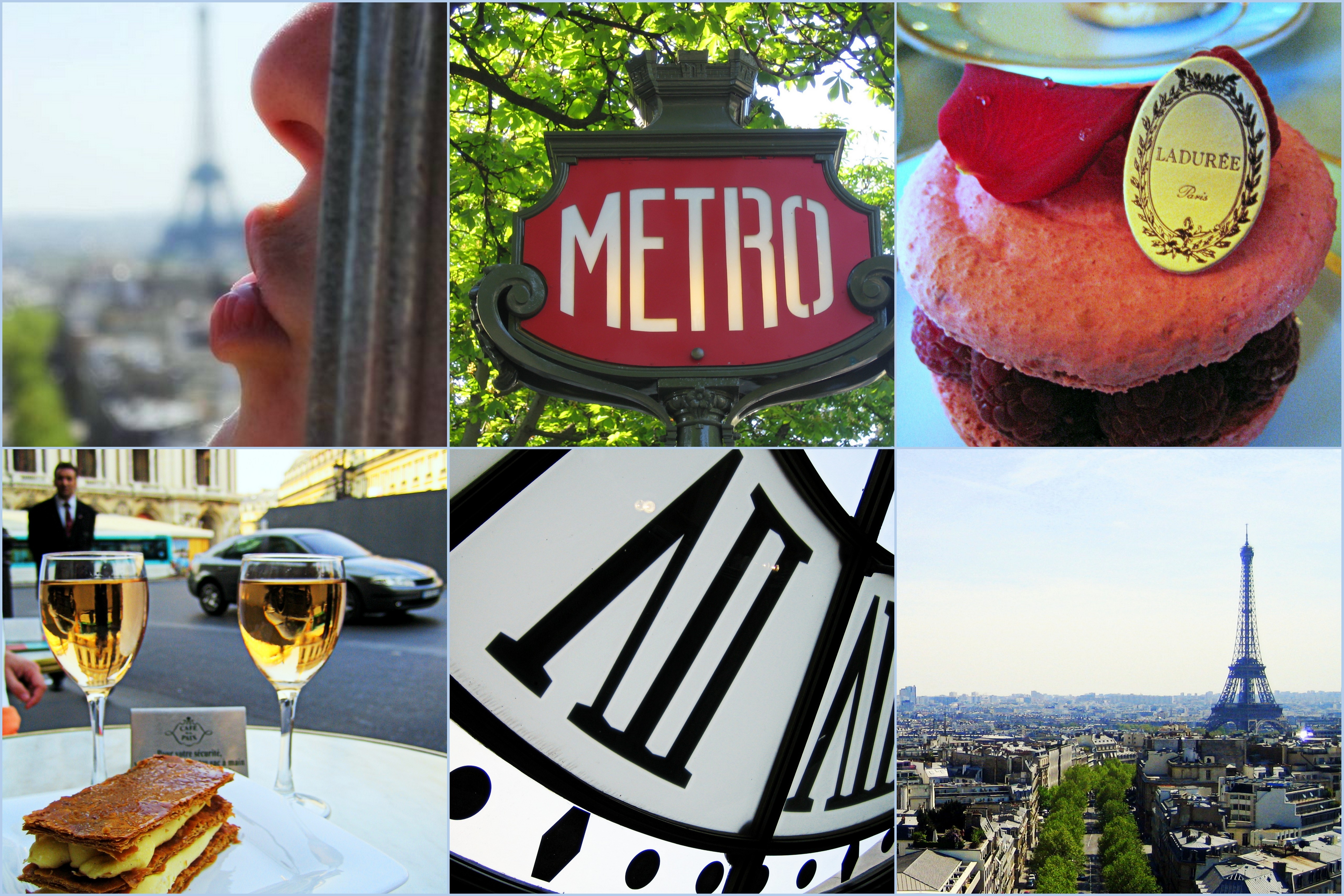
Where I imagined my retreat would be (photos from previous trips)

Where I imagined my retreat would be (photos from previous trips).

The idea for a PhD writing retreat came to me in a dream. While I live in Australia, I dreamt that I wrote up my PhD thesis in Paris. I imagined myself pensively working at Café de Flore or Les Deux Magots in Saint-Germain-des-Prés. Or editing on a soft patch of grass at the foot of a sculpture in the gardens of Musée Rodin (Le Penseur?). Or typing away beneath the huge train station clock at the Musée d’Orsay. I would take breaks to stroll Parisian streets or to savour Ladurée macarons, foie gras from Fauchon, or ice-cream from Berthillon on the Île Saint-Louis.

This dream was no doubt influenced by the at-that-time steady stream of tweets coming from the ANU Thesis Boot Camp during which doctoral writers were given celebratory LEGO-style bricks as they hit various word-count milestones. The academic focus and collaboration zoomed through social media to my device. Oooh, I thought, how wonderful it would be to have some dedicated time to work on my thesis. But with work and two children under five, a long luxuriant Parisian getaway wasn’t on my list. And my university doesn’t offer a boot camp.

by @debsnet

Where my writing retreat actually was.

Writing retreats have been called a ‘scholastic nirvana’ away from the walls-closing-in pressures of academia. Dr Helen Kara, blogging about her recent solo writing retreat, talks about the simultaneous self-indulgence and productivity that finding dedicated time and space for writing can bring. In Dr Kylie Budge’s post about her PhD writing retreat to NYC, she cites research which claims that physical and psychological distance from the norm can increase creativity and productivity.

Casey, Barron and Gordon (2013) note that writing retreats provide protected space for the practice of writing, allowing continuity as opposed to fragmentation. They emphasise the importance of carving out time away from normal activity, and finding space separate from usual settings. This certainly resonated with me, as much of my writing happens in fragmented, stolen, in-between moments.

cycles of revision: read, annotate, make changes, repeat

cycles of revision: read, annotate, make changes, repeat

While many boot camps, ‘shut up and write’ sessions and writing retreats are about producing words, this was to be more a revision retreat. Having recently finished the first draft of my conclusion, I had a first full draft of my thesis and wanted to use retreat time to look at my thesis as a whole document. In fact, my thesis is over its word limit, so this retreat was about streamlining and strengthening the content, not producing more. I’d reached a point where I needed to burrow down into my PhD cave’s subterranean depths and sit there for a while. Present. Focused. Submerged.

Like Helen and Kylie, this retreat would be solo: just me and my thesis having some quality time together. Romantic, right? When I floated the idea with my husband, he said, ‘Go for it.’

A bit of an expert at making my PhD feel like a holiday, I often choose writing spaces that feel more like luxe and less like work. So, for my retreat, I considered exotic, non-home places with varying degrees of faraway-ness. I was aware of the aforementioned research about productivity and creativity being heightened by the feeling of being away from home and somewhere new. But I didn’t need exoticism, or a vibrant distracting location. I was going for a weekend, so it needed to be close and affordable, just not home. In the end, I rented a studio apartment via airbnb only a few suburbs from home. I was hoping that being not-home would give me enough separation from my everyday world to provide the laser-like focus and conceptual creativity I was after.

Writing retreat Day 1

Writing retreat Day 1

While not as poetic as retreating to somewhere far from home, there were some great things about doing a retreat this way. In giving myself only two nights away, I had to be productive. I had a short time; I needed to use it. I didn’t waste time travelling to and from the retreat (it was a 20 minute drive); this was an escape in my own city. It turned out to feel just new enough to set my nerve filaments tingling with an awareness of difference of environment.

Going into the writing retreat I planned on using my most productive times of the day for writing, working in 2-3 hour blocks of time followed by breaks (walking, showering, eating, changing location, taking some photos). I wanted to be clear about my intention before I began. My main purpose was revising for coherence and story. Here was time to look at the document as a whole. I kept in mind Pat Thomson’s advice to attend to the underlying argument. I was looking for consistency of language and idea development across the thesis. Having just finished the Conclusion, it was important to go back to the Introduction and make these bookends work together.

Writing retreat Day 2

Writing retreat Day 2

During my retreat the first 30-40 pages took me the longest, because there was so much of what Pat in her post calls ‘where the writing is poor because we are struggling to express an idea, to put into words something that we can barely get our head around.’ The beginning of the document contained my earliest writing and earliest thinking. I needed to delete or rewrite much of it in a way I can only do now that I have reached the end.

What surprised me about the retreat was how challenging it was to maintain a consistent focus on one task. It made me realise how much my usual fragmented way of PhDing works for me, doing a little all the time in prized, highly-focused chunks. Fitting in PhD time in and around other commitments has meant that normally I am itching to get to my PhD work, not having to psych myself into doing it.

Writing retreat Day 3

Writing retreat Day 3

Yet, the time and space to dedicate a couple of days to my thesis, and giving it careful, continuous attention, allowed me to make substantial progress and identify those areas in need of further attention. While in this time I only got through the Introduction and Literature Review, these were the sections in need of the most serious revision (and they will need more). I also managed to cut 3000 words out of those two chapters, which, considering I was also adding words where required, is a good start to streamlining my argument.

The retreat embodied my 3 words for 2015: presence (in the moment), sharing (through writing and now blogging), and strength (of argument and academic voice). It helped to set up my approach to my thesis revision, kickstarting this push-to-the-end-process and propelling me forward into the rest of the document. It felt a bit like kicking off the swimming pool wall, getting some initial speed and feeling the water before settling into the lap ahead.

Local retreats: not so bad.

Local retreats: not so bad!

Research as conversation: contemplating Wicked and the Mona Lisa

Something has changed within me. Something is not the same. I’m through with playing by the rules of someone else’s game. … It’s time to trust my instincts, close my eyes, and leap. ~ Elphaba, Wicked

This week I took my mum to Wicked the musical. It was the third time I’ve seen it, the first being in London’s West End in 2007. I still remember the goose bumps that raced up my arms as Elphaba rose into the darkness singing that she was “defying gravity”. After seeing the show with my mum, our talk turned to art, research, and my thesis. Yep, that’s how my mum and I roll. So how did Wicked prompt talk about research?

Wicked is an example of a literary and artistic work which inserts itself into a discussion. It adds to a conversation started by the 1900 L. Frank Baum novel The Wonderful Wizard of Oz and the 1939 film The Wizard of Oz. Loosely based on the 1995 Gregory Maguire novel Wicked: The Life and Times of the Wicked Witch of the West, it refers to the original story, reinventing, reimagining and conferring new meaning. It takes the Oz-Dorothy-Witches narrative from one of the value of journey, the longing for home and good triumphing over evil. It transforms the well known children’s story into a tale of the Other, accepting difference, embracing our authentic selves and fighting for what is right in the face of corrupt political systems. It takes the imagery of the written story and the film interpretation and recreates these in fresh ways through music, set design, costume (the shoes! the millinery!) and dialogue. Clever references to Dorothy’s story are woven into this back story about witches Elphaba and Glinda. In this way Wicked is a creative product which adds layers of meaning and injects new insights and perspectives into an existing story.

Artists also ‘speak’ to each other through their work. The long history of reimaginings of the Mona Lisa, a few of which I have juxtaposed below, illustrates how artists comment on each other’s work through their creations, adding to a dialogue about what art might be, how art might be created and what art might have to say about the world it inhabits.

art is conversation

art is conversation

Commenting on Da Vinci’s 1517 painting, Mona Lisa, or La Gioconda, in 1919 Marcel Duchamp drew a moustache and goatee on a cheap postcard reproduction, labelled it L.H.O.O.Q. (a pun) and exhibited it in a gallery. Duchamp’s appropriation and reinterpretation of one of the world’s most famous paintings brought into question its value and challenged the then-definition of fine art. In 1954, Salvador Dali produced a work in which he added his own eyes, moustache and hands filled with coins in Self Portrait as Mona Lisa, in a kind of artistic high five to Duchamp. Pop artist Andy Warhol used the Mona Lisa image in his 60s screen prints, blurring lines between high art and popular culture. In Warhol’s work, Mona is reproduced through the then-controversial-in-the-art-context screen printing process. She is repeated in primary colours to reflect assembly-line mass production, questioning the place of art in an increasingly mass-produced consumerist world. These artworks show how artists use their processes and subjects to talk to each other across time. Each uses subject and method to add a new layer of meaning, present a critique or pose a challenge to what has come before.

Research, too, is part of a conversation. Like writers and artists, theorists communicate with each other through their work over time. A literature review places research within the historic conversation. Where and with whom does it fit? Whom or what might it challenge? Research methods draw from what has come before. The approaches of old masters and contemporary talent become models to emulate, springboards from which to adapt or materials with which to weave new forms. Discussions and conclusions are places in which researchers form reimaginings and state contributions to the greater conversation, to existing knowledge.

Research writing, too, is steeped in academic tradition, in a conversation of form and language. Some choose to adhere strictly to the expectations of academic or dissertation genres, and some choose to push and challenge those boundaries. My thesis, while not a creative work in the sense that an arts thesis with exegesis might be, draws on literary as well as academic traditions. It uses a literary work as a conceptual frame in order to draw metaphorical meaning.

Some might not agree with seeing research as creative-product-in-historic-conversation, perceiving it as a lyrical idea which undercuts the systematic science of research. Of course research is logical and systematic. It can be viewed as science but it can also be seen as story, as creative work and even as sculpture. A recent post by Lara Corr on the thesis whisperer blog talks about the creative elements of research. She plays with the ideas of being a master builder and colouring outside the lines. Pat Thomson’s post on discussion chapter as flight influenced my posts about starting the discussion chapter and building a researcher identity through it.

In Wicked, Elphaba comes to a place in which she chooses a new path and embraces a new identity. Have you found a place in your research or work where you were able to defy gravity and fly? To add your layer to the conversation in which you are engaging?

As somebody told me lately, everyone deserves the chance to fly! And if I’m flying solo, at least I’m flying free. To those who ground me, take a message back from me. Tell them how I am defying gravity! ~ Elphaba, Wicked

Can and should teachers be (viewed as) researchers?

Sarajevo bullets, by @debsnetWhen we respect teaching as an intellectual activity and give teachers the opportunities to raise serious questions about what they teach, how they teach and the larger goals for which they are striving, they can play a dramatic role in transforming their institutions. ~ Peter Senge, Schools that Learn: A Fifth Discipline Fieldbook for Educators, Parents, and Everyone who Cares about Education

This month – April 2015 – is the month in which Dylan Wiliam argued in the TES magazine that teaching cannot and will not be a research-led profession, in which Tom Bennett responded that evidence-based education is dead (but that evidence-informed education lives), and in which John Hattie was quoted in a TES article as saying that teachers should not try to be researchers and that ‘I don’t have any time for making teachers researchers.’ In response to his own question, ‘Asking teachers to be researchers?’ he replies, ‘They are not.’

In this article Hattie is also quoted as saying that teachers should use the “literacy and sensibility of research to inform their practice” and that the worlds of research (by academics, not teachers) and teaching should “orbit together”. This resonates with Tom Bennett’s assertion that teaching be evidence-informed (but not evidence-based) and with the mandate of researchED which is to raise research literacy in the teaching profession and promote conversations between teaching and academic communities (my post about researchED Sydney 2014 is here).

As someone whose identity straddles ‘teacher’ and novice ‘researcher’ (as a PhD candidate coming towards the end of my PhD journey) I agree that research should inform teaching, leading and educational practice, and that worlds of education and the academy should work in collaboration. I am not sure, however, that we should draw a divisive line with ‘teacher’ on one side and ‘researcher’ on the other.

When I read the TES article which presented quotes from Hattie, a number of questions arose for me. What does Hattie mean when he says that teachers are not (and perhaps cannot be) researchers? What is his definition of ‘researcher’?

Is he discouraging teachers from reading academic literature and collecting data to inform their practice? Is he telling teachers they cannot be (taught to be) systematic thinkers who investigate, trial, collaborate, communicate and utilise scholarly literature and evidence to inform their practice?

Many teachers have been involved in action research projects, or Masters or PhD dissertations. Are these teachers, too, incapable of conducting and applying research thinking and methods? For me this is an issue of identity, of sense of self. Am I a teacher who researches? A researcher who teaches? A teacher and a researcher? Is Hattie suggesting that these identities are unavailable to me?

Is research in a real educational context by a real educator less valid than that of an academic from a university?

Many have responded to this conversation. Kevan Collins, chief executive of the Education Endowment Foundation, warns against encouraging teachers not to pursue evidence, as he articulates in this TES article.

Teacher Chris Parsons explores how the teaching profession might strategically develop its use of evidence to inform practice.

PhD candidate Charlotte Pezaro, writing for the Australian Association of Educational Research, explores ways in which academics and teachers might interact.

Policy analyst Patrick Watson in this post argues that we need to identify research which is worthwhile for informing practice, build the research-literacy of teachers and encourage action research to facilitate reflection and deeper understanding.

The 2012 Grattan Institute report ‘Catching Up: Learning from the best school systems in East Asia’ asserts that high-performing school systems view teachers as researchers, continually developing their knowledge base through practices such as professional reading and action research. My PhD cites examples of literatures which promotes participatory action research as transformative for individual practice and collaborative cultures. All research and all researchers have limitations. I wonder what the impact is of viewing teachers as researchers and of encouraging teachers to think of themselves as researchers. How does it shape teachers’ identities, self-perceptions and practices if they are encouraged to be consumers, curators, engagers and creators of research? Perhaps it is partly a question (to reflect Dweck’s work) of developing a research mindset.

One of Wiliam’s points is that research cannot tell us what could be only what we already know. If we are always basing our practice on what has been done, we aren’t innovating or trialling new possibilities. Teaching and schools should be about more than doing what has been done and what is known; it should be about moving forward and even about innovation and creativity.

Perhaps teachers who see themselves as researchers could call themselves ‘teachers as innovative, research-literate, reflective, evidence-informed, systematically-thinking, data-using-and-interrogating practitioners who drive their own learning and improvement in regards to what benefits their students.’ Or maybe that’s a bit long.

While I understand that the issue of whether teachers can or should be researchers is nuanced, complex and riddled with semantic argument, I (as someone who identifies as teacher and researcher) would like to think we can view teachers as researchers, by my definition, if not by Hattie’s.