Reclaiming joy in academic rigour

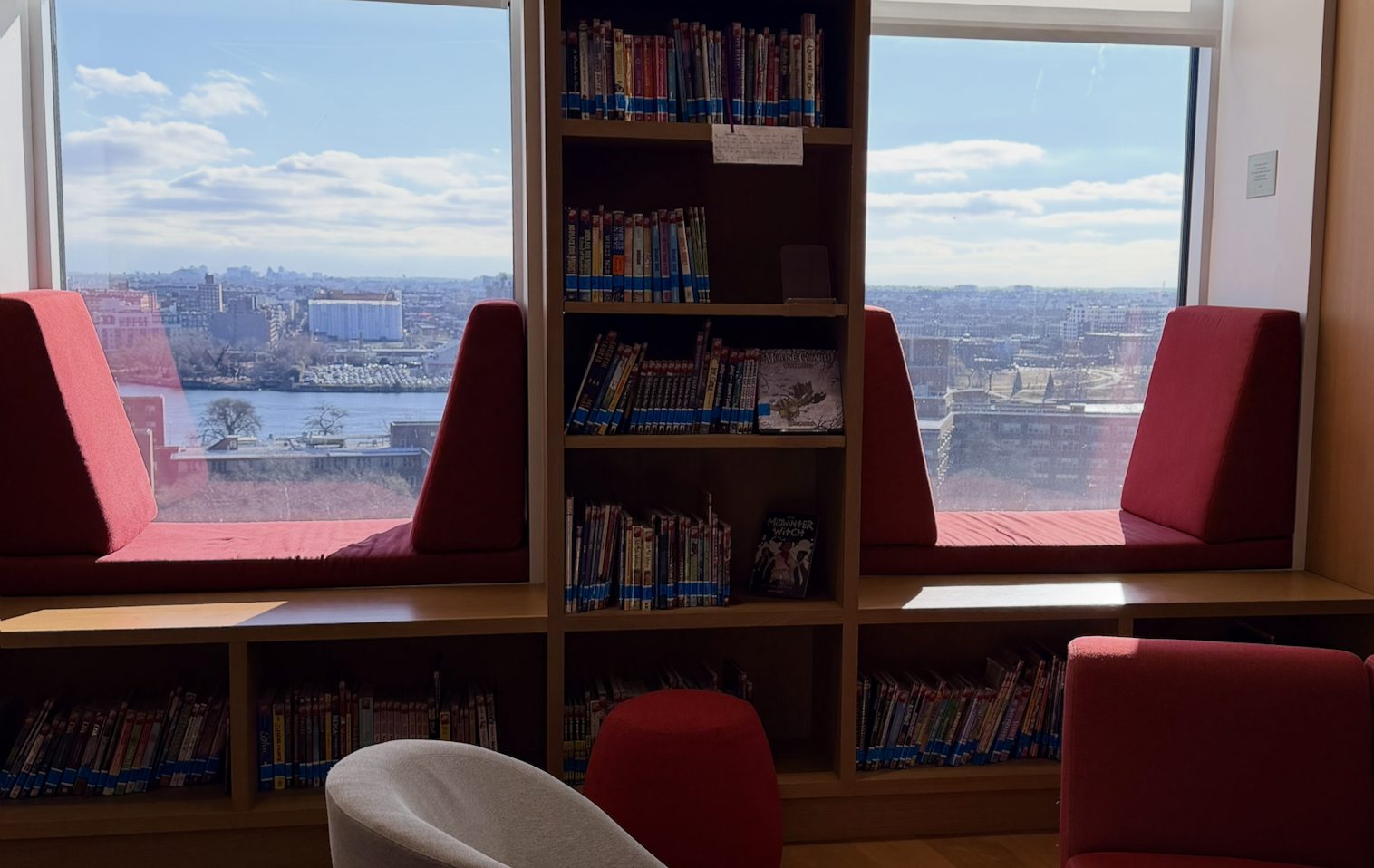
Nooks in the Library at Brearley School

I have always enjoyed learning and intellectual challenge – whether wrestling my way to understanding through writing, dismantling challenging texts, engaging in robust argument, or working to understand patterns in data. Perhaps that is why I have loved teaching as a profession, because I get to engage constantly in knowledge, learning and growth.

In schools, we rightly attend to wellbeing to support young people navigate complex terrain around anxiety, social media, identity and expectation. Yet there is a risk that in our desire to care, we inadvertently soften the intellectual core of schooling, mistaking ease for kindness. In some contexts, the language of care has drifted toward the minimisation of difficulty. Struggle can come to be seen as something to be eliminated rather than intrinsic to learning.

In fact, a sense of competence and mastery is foundational to wellbeing. Students who experience themselves as capable thinkers, who are trusted with complexity and supported to persevere, develop academic self-efficacy that buffers stress and builds resilience. Cognitive challenge can be a source of meaning and reward.

In a conversation with Professor Erica McWilliam on The Edu Salon podcast, Erica pointed out “the pleasure of the rigour” – that there is satisfaction in tussling with ideas and learning new things, despite, or perhaps because of, the hard cognitive work that may be required. There is enjoyment in grappling with complexity, in the stretch of learning, in the play of ideas. The work is hard, but the hardness is part of the appeal.

In January I visited schools in London and New York City to examine how leading independent schools are navigating contemporary challenges while remaining anchored to purpose and academic excellence. Some schools were unapologetic about the centrality of intellectual rigour to the schooling experience, seeing joy and rigour as companions rather than opposites.

For example, St Paul’s Girls’ School focuses on intellectual seriousness and teacher autonomy to inspire a culture of learning. Student-run clubs ranged from the Dissection Society to student-led groups on niche academic interests. A noticeboard advertised a lunchtime lecture on the ‘Feminism of Board Games’. Down the corridor, students were presenting on the history of silent letters to the Linguistics Society. In a classroom, students were arguing energetically about a historical interpretation, their exercise books open, pens moving, highlighters deployed. There was a steady hum of intellectual absorption. Teachers spoke with genuine delight about being able to indulge subject passions alongside students.

Wimbledon High School has introduced explicit expectations around digital restraint: students’ time on devices should not exceed roughly a quarter to a third of their learning time. The result is palpable, with classrooms reminding me of teaching 20 years ago – full of rich discussion, meaningful collaboration and considered analogue methodologies. In the lessons I visited, discussion was robust, students worked things out on mini- or wall-mounted whiteboards, and teachers described renewed energy in their teaching.

At Brearley School, a self-described ‘school for the intellectually adventurous’, one student told me that she had chosen that school because she could ‘be a nerd’ about her academic interests without apology. Teachers described their pleasure in going down academic ‘rabbit holes’ with students when classes veered off course in a kind of intellectual off-roading.

Back home, at my school, this year I have recommitted to classroom walk-throughs or sit-ins. It is filling my cup to experience classes in which teachers are passionate about their subjects, intentionally drawing students along a journey of curiosity, knowing, doing and understanding. While students are immersed as learners, as an observer I can see the expert and deliberate enactment of pedagogy as teachers lead students from where they are to what and how they might know next.

In each of these contexts, academic rigour is a form of respect – for disciplines, for students’ capacities, and for the work of teaching. These schools, including my own, work deliberately at culture design, ensuring that high expectations are accompanied by strong pastoral ecosystems. Counsellors, advisory groups, student voice forums, and explicit conversations about belonging and equity sit alongside demanding academic programs that sing with knowledge and zing with challenge.

The core business of teaching and learning can be set alight by a culture in which teachers are excited and energised by the work they do, and where students are supported to think deeply and expected to do the cognitive work. In schools we can remember to share in the growth enabled by getting things wrong in pursuit of understanding, and the delight of figuring something out. In schools we can normalise intellectual enthusiasm, celebrate effortful thinking, and reclaim joy in rigour.
Valuing growth

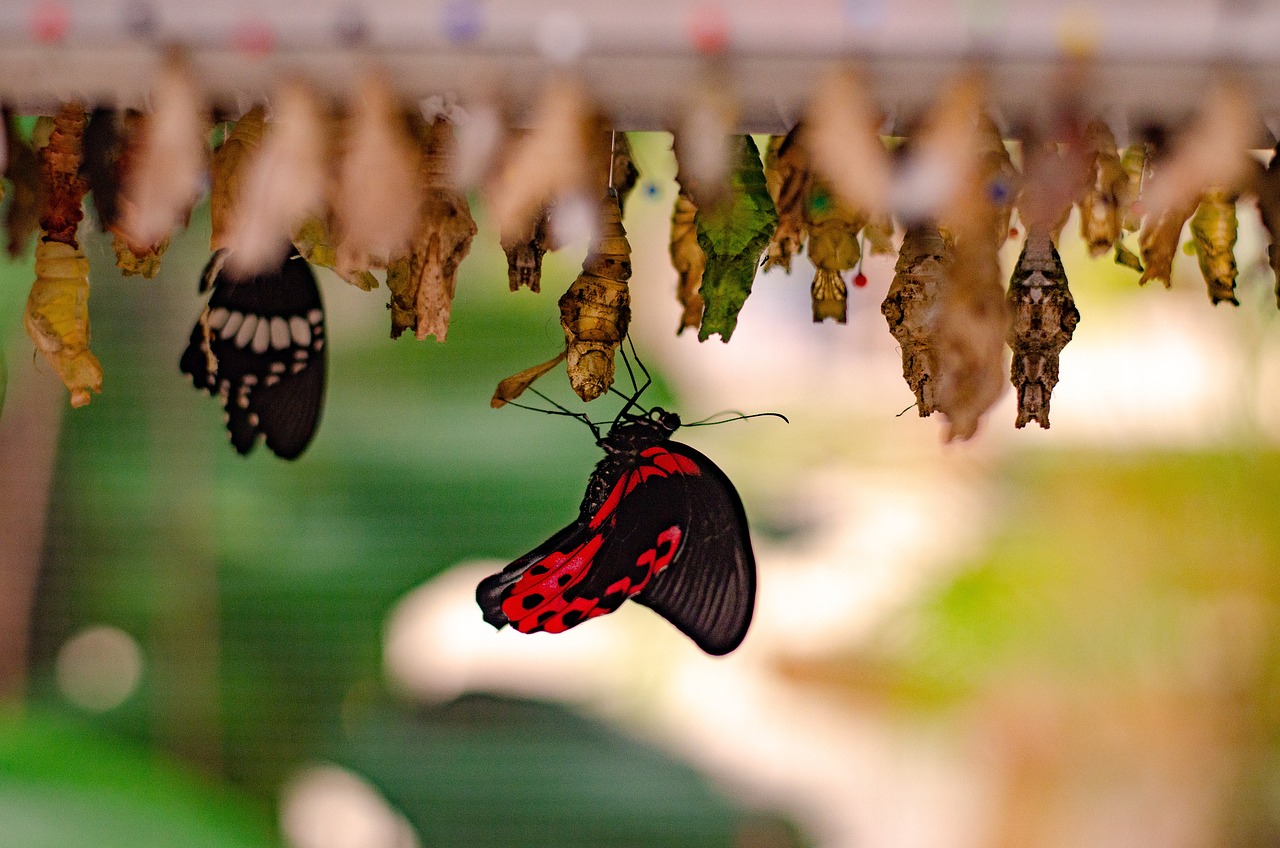
Source: @sannebaan via pixabay

At my school we recently undertook a review of our school values. Students and staff generated values, which were synthesised into themes, and then voted on by the students and staff. One of the values that emerged from this process was ‘Growth’. Despite recent years bringing the importance of wellbeing, and the connection between learning and wellbeing, into sharp focus, this value reminds us of the need to continue to strive and to grow. Being well is about more than comfort and ease of existence. It encompasses physical, emotional, social, cognitive and spiritual wellbeing. It includes purpose, belonging, sense of self, and and feelings of happiness, joy, hope and satisfaction. Being well means living well, and of living a life of positive contribution.

Valuing growth reminds us that those experiences that transform us are often those that require some struggle. My PhD research into professional learning, and my experience of the PhD journey, revealed the power of experiences of discomfort to create a shift within us, to change our beliefs and practices, to develop our resilience, and to see challenge as an opportunity to grow with grace and humility. Wellbeing can be built on a foundation of challenges faced and overcome. ‘I did it!’ realisations can lead to future thoughts of ‘I can’t do it yet, but I will persevere’. We learn over time that working through problems (cognitive, emotional, social, or physical) reaps rewards.

I recently attended a session by Adjunct Professor Erica McWilliam AM in which she quoted Michael Foley from his book The Age of Absurdity (2010):

“Difficulty has become repugnant because it denies entitlement, disenchants potential, limits mobility and flexibility, delays gratification, distracts from distraction and demands responsibility, commitment, attention and thought.” (p.113)

McWilliam observes that parents and teachers can, with good intentions, rush in and rescue young people too soon, and that doing so deprives them of the pleasure of rigour and the satisfaction of wrestling with complexity. Young people do not thrive when protected from difficulty. Rather, they benefit from being given the space and opportunity to be challenged. McWilliam asserts that our young people need to learn ‘strategic independence’, and she argues that schools and teachers should avoid the seduction of providing environments which are low challenge and low threat, with too many opportunities to retreat from what feels hard or uncomfortable.

The notion of a high challenge, high support environment, as optimal for learning and wellbeing, resonates with the concept from developmental psychology of a ‘holding environment’. Each individual benefits from being ‘well held’ in a nurturing and safe environment, and simultaneously supported to rise to challenges and to take risks.

Grit and a growth mindset appear in the recent World Economic Forum (WEF) white paper on ‘The Education 4.0 Taxonomy’, which outlines those abilities, skills attitudes, values, knowledge and information that students need for their futures. The WEF calls Education 4.0 an approach to reimagining education in a way that is inclusive, focuses on a broad range of skills to prepare learners for the Fourth Industrial Revolution, and leverages technological and pedagogical innovation to put learners at the centre of learning. This last part is key: learners at the centre of learning.

The Taxonomy identifies the following elements as essential for future life, learning and work: Creativity; Critical thinking; Digital skills and programming; Problem solving; Systems analysis; Collaboration; Communication; Negotiation; Socio-emotional awareness; Physical balance, coordination, positional awareness, strength; Adaptability; Conscientiousness; Curiosity; Grit; Growth mindset; Initiative; Civic responsibility; Environmental stewardship; Empathy and kindness; Global citizenship; and Discipline-specific knowledge. These elements bring together knowledge, skills, dispositions, and a focus on compassion, inclusion, citizenship, social justice, technology and the environment.

The WEF identifies four teaching and learning domains on which schools and education systems can focus to develop the above elements. These are:

  • personalised and self-paced learning that engages each individual student’s context and interests, elicits engagement, and promotes active learning;
  • accessible and inclusive learning that embraces multilingual and multicultural learning opportunities, teaches the values of cultural competence, and enables access to learners across abilities and backgrounds;
  • problem-based and collaborative learning including experiential learning and service-based learning, which connects students with their communities, fosters awareness of political issues and social needs, cultivates the attitudes and values pertaining to global citizenship and civic responsibility, and promotes an understanding of interdependence in a group setting and personal accountability to the group; and
  • lifelong and student-driven learning within, and beyond, the formal classroom setting.

Being a lifelong learner who values growth mans being open to, and excited about, continuous growth and incremental improvement. It can mean working hard, being curious, sitting with discomfort, seeking to enjoy working through complexity, and seeing mistakes as learning moments. Parents and teachers can set an example of what growth throughout our lives can look like. We can give the young people in our care the space and support to grow enough so that we are increasingly redundant, and they fly on their own as independent, self-authoring people committed to their own journeys of growth.