Workload and anxiety

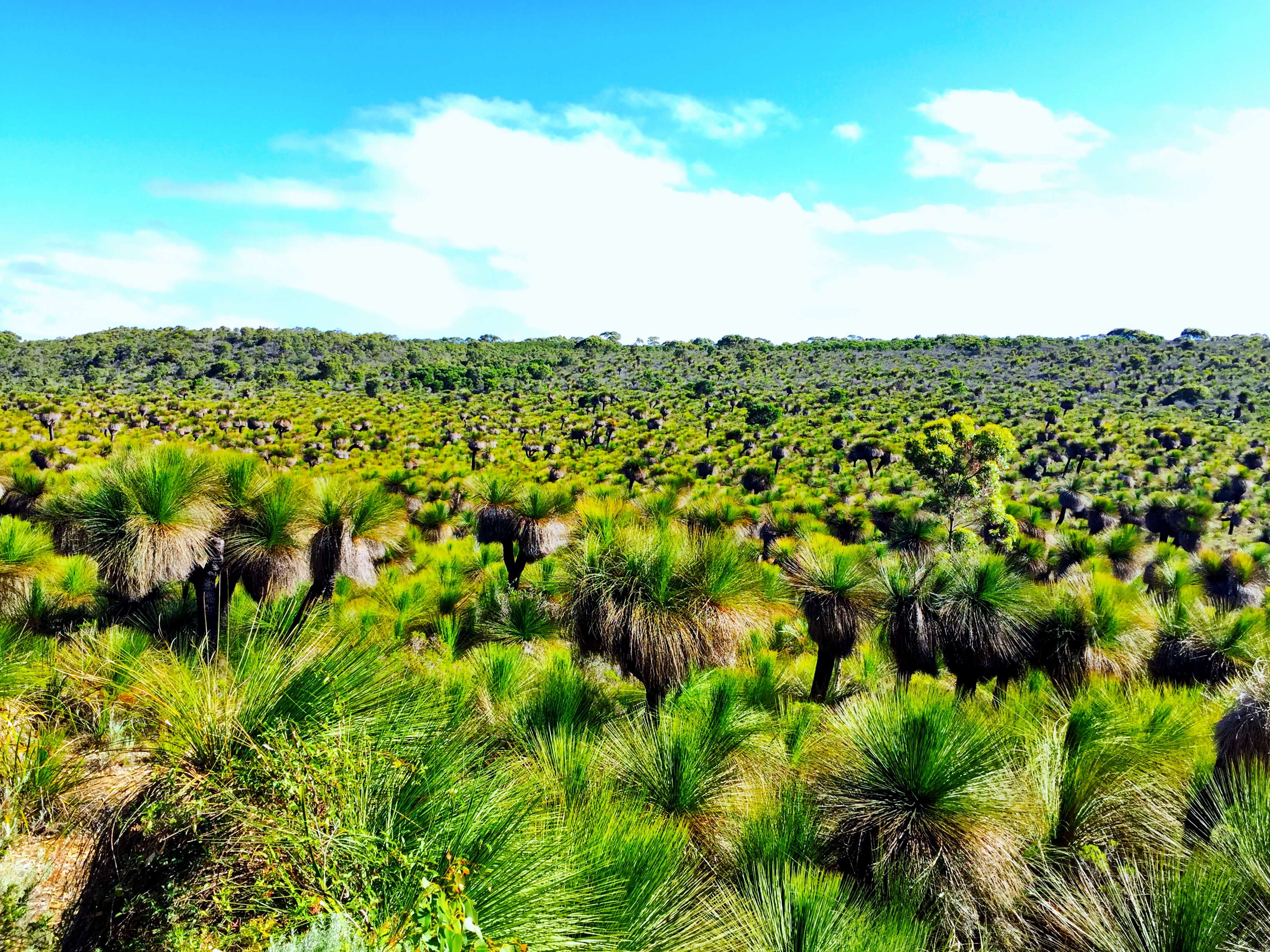
grass tree panorama

grass tree panorama

I have tonight breezed in the door to home with dirt caked in my nostrils and shoes, smelling of sweat and the Australian bush, utterly dishevelled after five days of Year 9 camp. Going on camp was important; it was an opportunity for me to get to know more closely my pastoral group, the class I’ll be travelling with on their high school journey for the next four years.

The group built cohesion and relationships across the week. Individuals and the team were challenged by everything from expedition hiking, camping, eating and toileting, to abseiling over cliff faces into caves, surfing big Margaret River swell, and completing a high ropes course.

I recognise the significance of the week of camping for my students, while simultaneously trying to quell the rising panic that comes from a week away, ‘out of the office’. Not only was it a lot of work to prepare to be away—planning a week’s worth of lessons and resources, shopping and packing for camp, making sure the things required for our house sale-and-purchase were in order before I left, getting through the Famous Five novel I’ve been reading with my kids—but I’m returning to being (at least) a week behind my work.

Yes, lessons will have been taught while I’ve been away, but the double pile of marking I left behind wasn’t marked by marking fairies while I was away (darn those marking fairies; never there for you when you really need them!). Deadlines remain as they were, despite me being unable to make progress for a week (although I did take a notebook on which to scribble ideas). I feel in debit with my family, like I need to spend extra time with my kids and husband, like I somehow owe ‘extra’ because I left them for five days.

So I am feeling behind in my work and behind at home. I am pulled between the tension of wanting to do the right thing at home by immersing myself in time with my family; to do the right thing by work by catching up on marking, policy-writing and strategic project implementation plans; and to do the right thing by myself by painting my chipped toenails, exercising my aching body and finding time for solitude and seeing friends.

Workload and homeload as a working parent are always a tricky balance that can easily tip on their delicate axes. While I currently feel sucked into a vortex of mild anxiety, I know rationally that I will catch up. Sometime, I will catch up. In the meantime, I’ll breathe, do my best with the time I have available, and remember some of the stunning vistas I enjoyed while on camp in the West Aussie great outdoors.

my home for the week

my home for the week

Redgate Beach

Redgate Beach

abseiling into Brides Cave

abseiling into Brides Cave

Karri forrest

Why selling a house is like finishing a doctorate

Sold! Now what?

Sold! Now what?

This week my husband and I sold our house and bought another one, so it’s been a week filled with terrifying leaps of faith, trembling uncertainty, and dizzying highs that have involved actual whooping and jumping up and down. During this selling-buying-a-home experience, I was viscerally reminded of what it feels like at the end stages of a PhD.

Firstly, no matter how much work you have put in to getting your home ready for sale (or getting your PhD ready for examination), you don’t know how it’s going to go in the marketplace (or examiners’ eyes). There’s nail-biting insecurity that you won’t get the result you want. The waiting is insomnia-inducing. What if there is a low offer or no offer (a major revisions or a revise and resubmit)?

Secondly, there is no clear ending to the process, and no clear-cut moment to celebrate. We put our house on the market in January, like submitting a PhD to examiners, and then we have waited for results to come in. On Sunday night we received an offer, but it didn’t seem time to open the champagne. Nor did it the next night when we accepted that offer. Yes, we had sold our house, but celebrating the possibility of being without a home for our family didn’t seem appropriate. We put an offer on another house, but until it was accepted we didn’t feel we could celebrate. Even then (and we did celebrate) we are still faced with small milestones to complete and dominoes to fall, before we know that both sales are unconditional (finance, inspections, settlement).

Similarly, the end of the PhD seems to go on and on. There’s thesis submission. There’s the waiting game for examiners’ reports. Often, there’re the revisions. There is acceptance of those corrections and conferral of the degree and the title of ‘Doctor’ (which for me, was marked by having just presented at the AERA conference in DC). The printing of the bound PhD thesis that will luxuriate on the library shelf. The rollercoaster of completion emotions. There is graduation. Then there’s the first aeroplane boarding pass with ‘Dr’ on it, and the first post-graduation event when you get to wear the floppy hat and doctoral robes. There’s even the identity tussle as you come to terms with your doctorness, just as I’m sure my husband and I will need to transition from our current home, which we love and in which we have raised two young boys, to a new home which offers up the stage for the next chapter in our story.

It was interesting for me to note the way that an unrelated life event could bring my memories of the tail end of my PhD rushing back so vividly. Perhaps some of life’s most rewarding experiences are those which test our mental toughness, give us sleepless nights, and which don’t have clear cut endings.

The Research Lead Down Under

candle at the Emu Plains Market

candle at the Emu Plains Market

Schools, school leaders and teachers are increasingly expected to be research literate, to be informed by evidence in their decisions and practices, and to be assessed against a range of high-stakes measures. In this kind of education world, schools need to be able to make sense of the measures against which they are being assessed, and have the capacity to generate counter-narratives or alternative data to measure those things that are important for them.

As I’ve alluded to, I have this year begun a new role at my school, which encompasses overseeing professional learning, staff development, innovation and pedagogy. But it also encompasses the kinds of work associated with what UK schools call a ‘Research Lead’: developing the research base and systematic methodologies of the organisation; data generation and analytics; executing evidence-based strategic initiatives; overseeing and developing research and innovation frameworks.

As Hargreaves and Fullan (in Professional Capital, 2012) point out, leading evidence-based school practices and change is a complex process. Having a person dedicated to the curation, generation and communication of research supports everyone from the classroom to the boardroom in making better decisions. A role dedicated to raising the profile and practice of research helps a school to remain agile in response to current educational research; evidence-informed and systematic in its methods; proactive in its processes and communications; and keenly focused on its strategic impacts within the wider context of the global education world.

The Research Lead role has been around in UK schools for a few years, and now there are Research Schools. See, for instance, the Wellington Learning and Research Centre and the Huntington Research School.

As the UK’s College of Teaching noted yesterday, teachers need access to evidence, strategies for understanding it, and opportunities to conduct their own research, not to mention the desire to engage with research in the first place. Access is a real issue, and while there are open access journals, the occasional free paper, and popular dissemination sites like The Conversation and the AARE blog, many teachers do not have the library privileges, money or time to access pay walled journals and expensive books. The Research Lead can be a conduit between research and staff at the school.

The role of Research Lead is explained in this Education Development Trust report, by Tom Bennett. The report positions the Research Lead as gatekeeper, consigliere, devil’s advocate, auditor and project manager. Interestingly, the report notes that schools where Research Leads had made the biggest impact were frequently schools where the role was part of the brief of a senior member of the leadership team. It lists authentic buy-in from senior leadership and a ‘place at the table’ of school life as necessary conditions of the role; the Executive needs to support the role and give it authority, autonomy, time (for the Lead to manage projects and for staff to engage with research) and commitment. The autonomy is partly important for projects and getting work done, but also because the Research Lead might have to sometimes take an unpopular position, or suggest a pause during a time of rapid change; they need to be free to do so.

Elsewhere in the world, the American School of Bombay has a Research and Development Centre. In Australia, examples such as the St Stephens Institute in Perth, the Barker Institute in Sydney, the Crowther Centre at Brighton Grammar School in Melbourne, the Centre for Learning, Research and Innovation at Geelong College, and the Centre for Research, Innovation and Future Development at St Paul’s in Brisbane, show how Australian schools are focusing on centralising and developing research. Just last year, my own role and others local to me were created, incorporating ‘research’ in the title. Some of these roles incorporate learning technologies. Others incorporate student academic achievement and staff learning and development. The research focus is based around the strategic vision and learning principles of each school. In Australia, there is often a focus on generation and innovation (finding out what might work in what context) rather than on prescribing ‘what works’. Teachers are seen by many schools as potential researchers.

So the Research Lead, or equivalent, is advisor, instigator, filter, conduit, provocateur, disseminator, critical questioner, sceptic, creator of partnerships, and builder of a professional culture in which rigorously considering evidence, research literature, and how to measure impacts are an accepted part of the way things are done. The Lead is across and through the organisation, an influence and an advocate for systematic thinking through. As Gary Jones’ blog often explores, evidence-based practice is nuanced and rife with challenges. The Research Lead needs to move beyond lip-service to research and hat-tips to evidence-based practice. They need to be aware of their own preferences, biases, blind spots and deficiencies, as well as the research-and-evidence temperature of the organisation, and how to evaluate and generate evidence and research.

I’m looking forward to shaping the Research Lead part of my own role. As a boundary-spanning PhD-universityadjunct-schoolleader-teacher it is something to which I am deeply committed and about which endlessly fascinated. My nerdery will be put to good use!
The power of clear messaging

Cervantes sign

Cervantes sign

While professional learning is the internal process of knowing, learning and becoming, professional development tends to refer to activities, courses, sessions, talks or conferences that teachers attend, voluntarily or otherwise. While it’s more trendy now to say ‘CPD’ (continuing professional development) than ‘PD’, one-off rather than sustained learning continues to pepper the lives of teachers as they and their schools attempt to improve themselves, keep up to date with the profession and meet legal and professional requirements.

The Australian school year has begun, which means that teachers have been given the opportunity to enjoy or endure staff days. Staff days prior to the commencement of the academic year tend to include time for planning, collaboration and setting up classrooms, as well as guest speakers, seminars or the kind of scattergun PD that hopes to land somewhere in the audience and maybe make a difference.

How do schools make decisions as to what kinds of development, collaboration and individual growth they facilitate for their staff? Especially in light of provocative reports like that from the TNTP (2015), The mirage: Confronting the hard truth about our quest for teacher development, which suggested that we do not yet know what helps teachers to improve the quality of their instruction? The TNTP report (of a two year study into teacher professional learning of over 10,000 teachers and 500 school leaders in three USA public school districts) found that, despite schools and systems investing time and money into professional learning of teachers, no clear patterns emerged to suggest which deliberate efforts improved teacher performance, as measured by teacher evaluation scores (using the education district’s final evaluation score, calculated using the district’s official methodology).

The TNTP report did note one school system whose teachers and students consistently performed better and improved more than the three public school districts. The report states that this better-performing, teacher-developing system had a more disciplined and coherent system for teacher development, a clear vision of success, and a network-wide culture of high expectations and continuous growth. Coherent system. Clear vision. Cohesive culture.

This year, my school decided not to invite a dizzyingly inspirational guest speaker or enlist the services of an external expert to run PD with our staff on those days. Instead our focus was on honouring, respecting and utilising internal expertise, and on communicating clear messaging around the school’s strategic priorities for the year. Valuing tacit knowledge and lived professional experience was important, as the strategic priorities were not new, either for the school or in education. The message, from the school executive and senior leadership team, to teachers, psychologists, education assistants and non-teaching staff, was that there are three key priorities for the year, summarised as three simple words. And that none of these was new, but rather things that teachers and other staff engage in every day, in and out of their classrooms.

What we aimed to do on our staff days was what Hargreaves and Shirley describe in their book The fourth way: The inspirational future for educational change as “explore the nitty gritty challenges of their practice through thoughtful exchanges with colleagues and in relation to relevant research” (2009, p. 93). We provided presentations from internal experts and leaders, including a panel of community members, as well as accessible readings and time for colleagues to collaborate with one another, both in their teams and with others from across the school.

The sense I got from our staff days was that staff were:

  • Relieved at the lack of new initiatives and the deliberate slowness in rolling out current projects; we continue to move forward, but in a measured way.
  • Comfortable with the clarity, simplicity and consistency of the messaging.
  • Grateful to be informed of and included in the strategic direction of the school.
  • Energised by the opportunity to work in a structured way with colleagues, around how the school’s strategic priorities would come alive in their own contexts.

I am often inspired by Ellie Drago-Severson’s work on adult learning, and the notion of the ‘holding environment’ as one of high support and high challenge, where people feel both ‘held’ and encouraged to be their best. Additionally, plenty of literature around school change talks about the need for shared vision, as does the 2016 ACER Professional Learning Community Framework for Australian schools. It is worth considering at length how to share school vision with the community so that it is lived, breathed, understood and propelled by those across the organisation. Everyone from the principal to parents and students have a part to play in knitting a community together around a common purpose. This year, those three words communicated from the executive down are helping to bind our community more closely together with common vision and shared purpose.