On writing: Is it dense to be complex?

writing is power (my image, of course!)

writing is power (my image, of course!)

Writing can be bold and dangerous and disruptive. It can be quiet and still and sneaky. It can be melodious and rhythmic and beautiful. It can be subversive and challenging and difficult to read. As a reader and a teacher of English and Literature, I am a believer in the power of language, of words, of literature, of story and of writing. To educate and to soothe. To challenge and to change. It’s why writing is so important for everyone. Writing – and being able to enact authorial intent, to release thought and emotion through words on a page or screen or device – is power.

I teach my students of English to write for audience and purpose. For whom are they writing? What is their purpose? To persuade, to shock, to inform, to inspire, to call to action, to explain, to intrigue? As authors, once they have identified for whom and why they are writing, they can make choices of form, structure and language. I teach them the ‘rules’ of various genres and forms so that they know how to use them, and how to deliberately break them. The same goes for any writer: know your game, how to play and conform, and how to challenge or subvert.

I find blogging an interesting form in the sense that the audience is sometimes unclear. In some ways I write it for myself – as a web log of reflections. Yet I write around particular topics, and I know that I have a readership of individuals and groups who are (it seems!) interested in what I have to say. In some ways I write to share my story so that others might glean something from it, in part because I get so much from others blogging their journeys or writing ‘aloud’ their thoughts and theories as they form. I like even more the collaborative nature of blogging; when it opens up conversation, in comments, on social media or in new blog posts. As Pat Thomson writes, writing can be identity work; it can be a way into being and into connection. And as author and self-publisher, a blogger is free to write how and about what they choose. It’s a kind of free writing.

Academic writing is a different beast. Some academic writers work to make their writing accessible to a broader audience than the academe or a narrow field of scholars. Sometimes I use my thesaurus in reverse (‘What’s a simpler way of saying this?’). But often, as Greg Thompson and Linda Graham have suggested recently, academese can be complex, esoteric and hard to decode precisely because of the densities and intricacies of the ideas being tussled with. Readers and writers of academic prose need to work hard, grappling with words and concepts. Sometimes it seems that every third academic writer invents a new word just to sound more obtuse and scholarly than the next. Yet these discourse-specific terms can be the result of the sweat and tears of theorisation; ‘How do I best communicate this theory?’ Like literature, often celebrated for its multi-levelled complexity, academic texts often need to be read and re-read in order to be understood, and on different levels. Academic allegory. A journey into knowing.

One’s own writing, too, can involve struggle. Using big words isn’t necessarily gratuitous chest-beating in order to show off or project cleverness; it can be the result of ideas and words wrestled with, toiled over, written and re-written. Boundaries pushed at persistently. Knowledge formed or reimagined. I am a neophyte in the world of academia, but my PhD has taught me that writing in academia can mean taking one step forward to take ten steps back. Often I write my way into understanding, like Naomi Barnes who sees writing as inquiry and blogging as process.
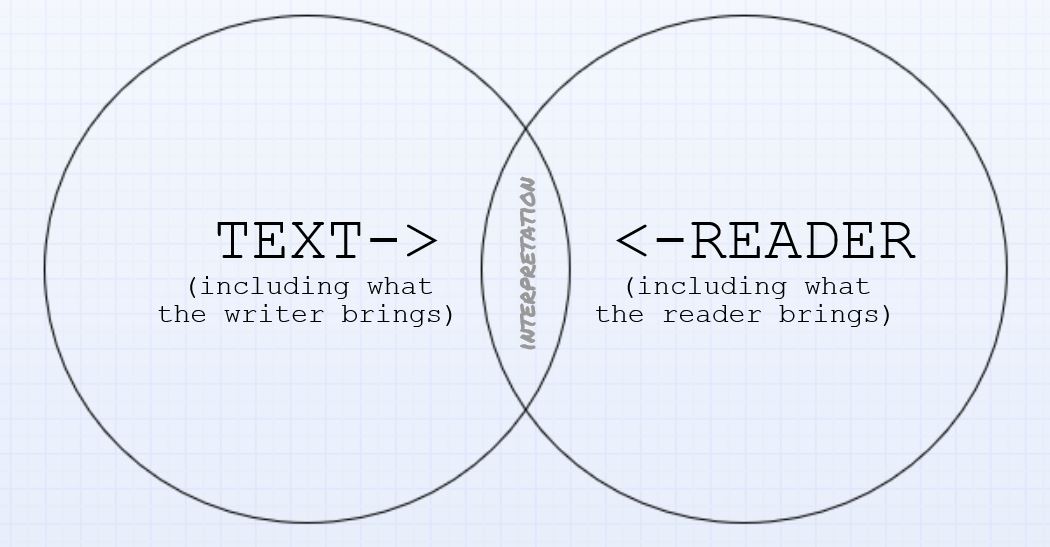
my crude Venn diagram of the writing-reading process

my crude Venn diagram of the writing-reading process

Meaning is made at the junction between text (as performed by the writer) and reader. The writer brings themselves to the text, with all their own context, authorial processes, beliefs, assumptions, knowledge, gaps in knowledge and writerly decisions. The reader, too brings their self, context, beliefs, values, and skills of interpretation to the written piece. It’s in that zinging middle space – like in the tension between the fingers of Adam and God on the Sistine Chapel ceiling – that meaning is made. It’s why no reading of a text is ever the same, and why there can never be a ‘right’ interpretation, only perhaps a dominant one.

In today’s world there are a range of places and forms in which authors can communicate their work, theorise, research, think and write. Writers make decisions based on what they want to communicate and who they are reaching out to (or away from). They can choose big words, small words, combative words, inclusive words. They can simplify or complicate. They might write to situate themselves in a particular discourse, within a particular conversation, or with a particular group.

Readers, too, make choices. To read, engage, re-read, give up, struggle through. Or to respond and engage by writing, writing, writing.

One word 2016: MOMENTUM

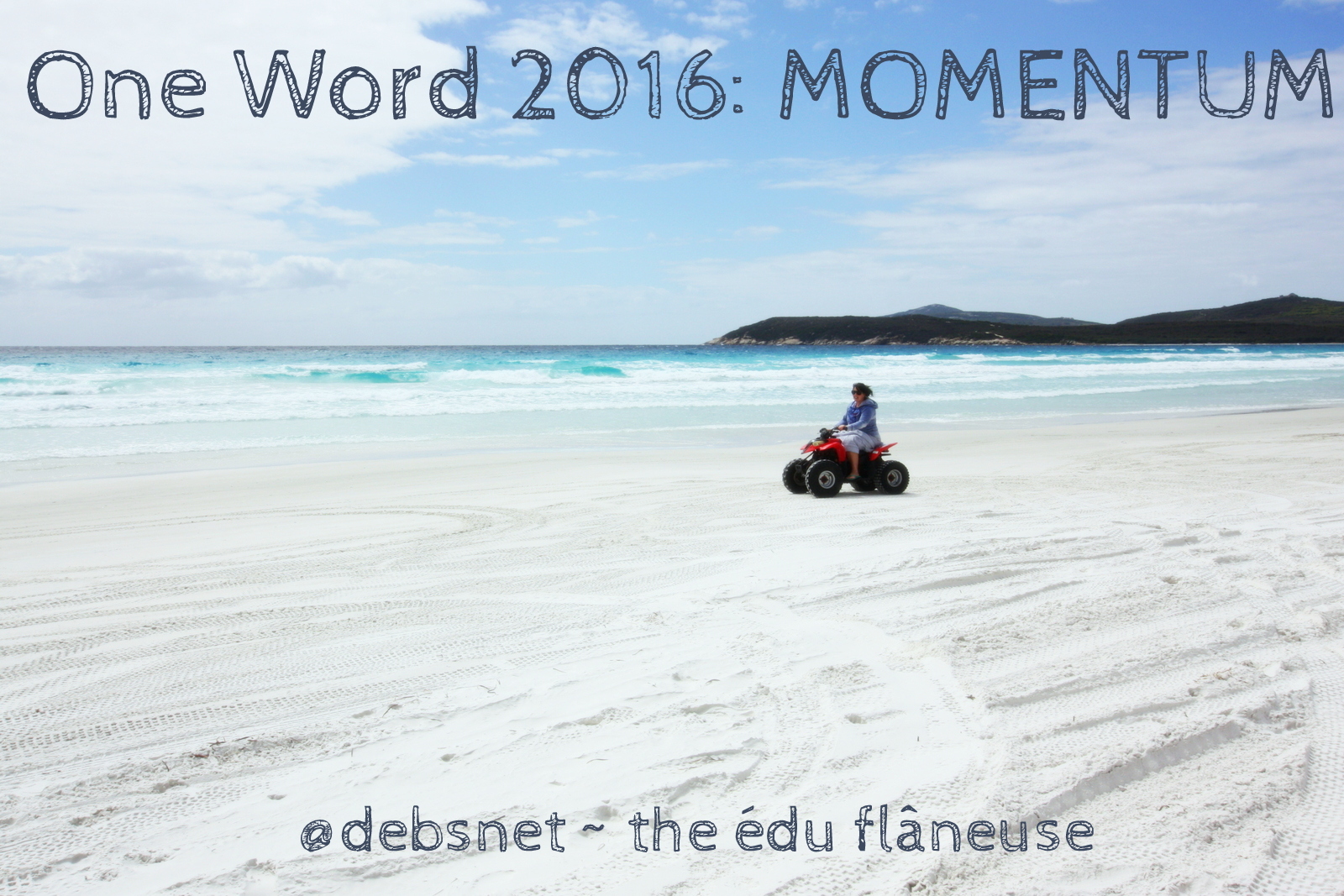
I spent the last day of 2015 in motion, quad biking along a beach.

I spent the last day of 2015 in motion, quad biking along a beach.

Last year, in the new year, I focused my attention on three words: presence, sharing and strength. I was focused on being present in each life aspect and relationship, sharing and storytelling, and building my strength in body, knowledge, connection and conviction. My 2015 ended up being focused around lots of writing, and on the one word we had written on our chalkboard at home: CONQUER. I was focused mainly on conquering my PhD thesis (and I got it submitted), but also conquering some academic papers and conferences, conquering fitness and strength goals. Seeing a daily reminder of that one word gave me a laser-like focus on finishing, completing, conquering. I pushed hard, remained motivated and hit milestones. But it also left me exhausted!

This year I was looking for a “one word” (sometimes called one little word or one word 365) which was more yin and less yang, more reflective and less explosive, more about regeneration than domination. While I was still attracted to active words like inspire, ignite and create, I considered gentler words like refine, renew and play. But none of these cover what I think my 2016 will be about. Maybe I’m not so ready for stillness or space or quiet just yet. I don’t want to be conquering in 2016, but one of my big lessons of 2015 was to put one foot in front of the other and just keep moving.

I spent my last day of 2015 quad biking with friends and family on a long pristine stretch of white beach. Snaking, quickening, turning, moving, the wind whipping around and against us. Speeding up. Slowing down. Driving away and towards and around. Playing with speed and direction, throttle and velocity, movement and pace. Feeling the terrain beneath the bike: sometimes flat, sometimes bumpy, sometimes hard, sometimes cushioned by peaks of white sand. Concentration. Adrenalin. Acceleration. The word I have come to for 2016 is MOMENTUM, from the Latin movere, meaning “to move”. This will be a year of being in motion or on the move.

my son, dressed as an angel, in motion

my son, dressed as an angel, in motion

I’m not starting 2016 from a stagnant place. I am already moving. My PhD is being examined, and will hopefully be done, dusted and doctored some time in 2016. I have some academic papers in the pipeline. The coaching professional learning model at my school is implemented and in an iterative refinement phase, and I’m in conversations about what my role might look like in 2017 and beyond. So what I want to do in 2016 is keep the momentum going, capitalise on what I’ve achieved so far and push ahead. Move.

The idea of momentum in the sense of a rolling snowball isn’t quite right for me, as that kind of momentum is quite linear. I’m thinking of something more fluid. Kayaking through rushing river water. The momentum of paintbrush over canvas. Skis slicing through snow. Music building to crescendo. Feet running off a mountain to begin a paraglide. Quad biking on a beach. This kind of momentum requires a combination of knowledge, precision, creativity and mastery. It can be messy and lead to the unexpected.

I’m not sure about the end point of my momentum. People have asked me what I’ll do after the PhD and the answer is, I don’t know. I have some ideas of what might be similar or different from what I’m doing now, but I’m not set on one course. I’m happy where I am, doing what I’m doing. But I’m open to alternative directions and possibilities. I figure if I set my intention for 2016 on being in motion – forward, diagonally, in, out, reflectively, critically, creatively – my path with open up before me. Or I’ll find that I’m already travelling along it.

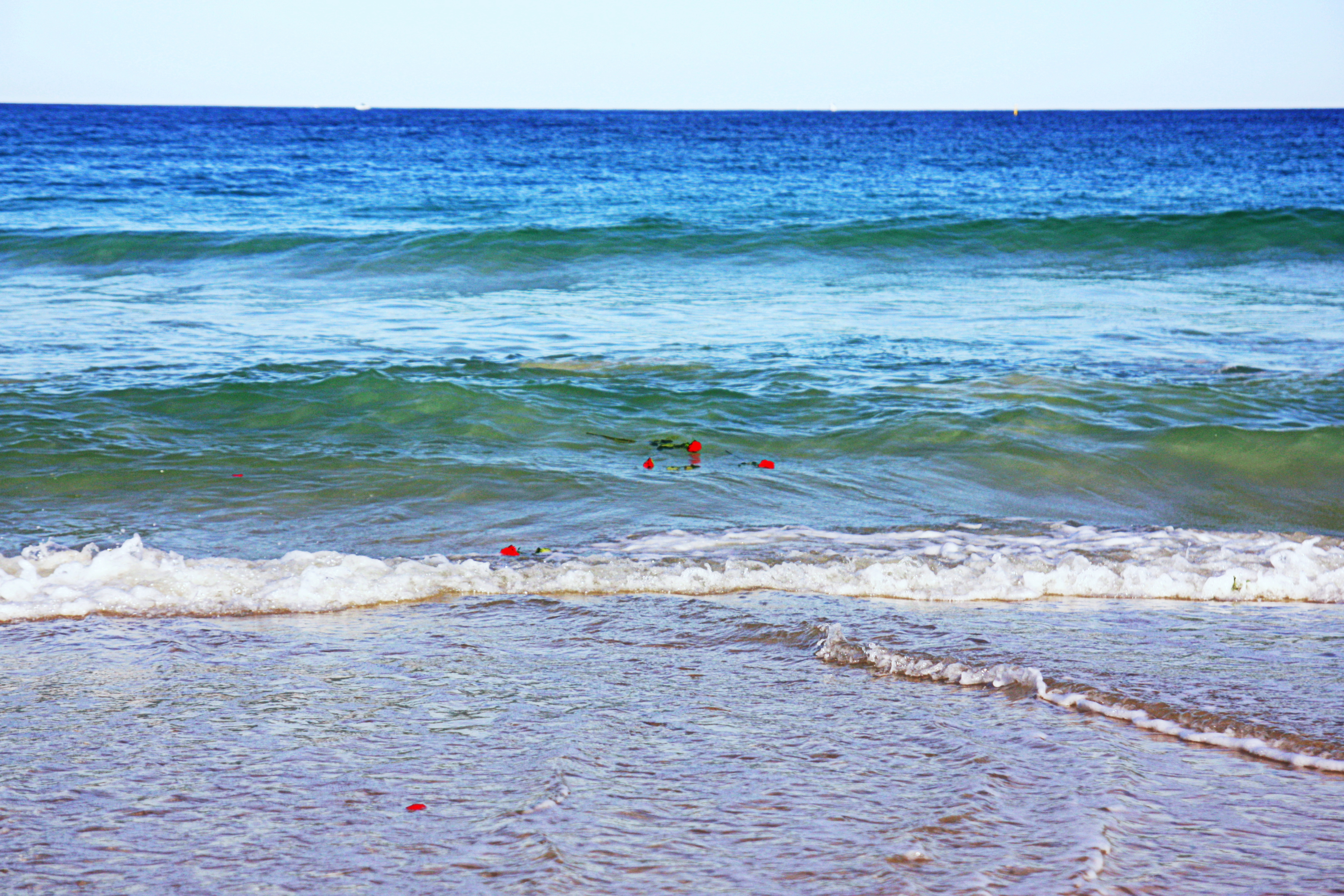
roses in the ocean, in motion carried by the waves

roses in the ocean, in motion carried by the waves

Light in the darkness & darkness in the light: Yin & yang in The Force Awakens

How many Star Wars blog posts is too many? This is my second about The Force Awakens. If you want my spoiler-free review it’s here, written the day the film was released. The following post does contain spoilers.

Woodblock print from WoodcutEmporium on Etsy. Source: https://www.etsy.com/listing/130958015/star-wars-yin-yang-woodblock-print

Woodblock print from WoodcutEmporium on Etsy.
Source: https://www.etsy.com/listing/130958015/star-wars-yin-yang-woodblock-print

I wrote in my previous post that Star Wars shows its audiences the complexity of people’s capacities for good and evil, kindness and cruelty, bravery and cowardice, zen calm and uncontrollable rage. Episode VII builds on the idea that there is both light and darkness within and around us all.

The stormtroopers are one example of how The Force Awakens teases out the complexity of our inner worlds. The First Order stormtroopers are, like their Galactic Empire predecessors, dressed in yin-yang colours of both black and white, with their white armour over black body-glove suits. I’ve always wondered why the characters who are the living arsenal of the Star Wars ‘bad guys’ wear white armour, when white is so often used in the franchise to symbolise goodness. Rather than being identical clones, the new stormtroopers are shown to have humanity and individuality, even though they are programmed henchmen of the dark organisation within the world of Star Wars.

There is ambiguity in the stormtroopers and the potential for alternate readings of them. A dominant reading might be: fascist ruling government = power-hungry murderous baddies / resistance = goodies fighting for peace and good (and power?). In a more resistant reading, within our current socio-political climate, we might ask what groups we consider to be well-armed governments with supreme power, who are hunting down groups of resistance and rebellion? What does Star Wars have to offer our world about the ways in which we view power and those who resist or challenge it, when the rebels and resistors are presented as the heroes?

In the Star Wars world presented to us in The Force Awakens, stormtroopers might be seen as victims of a dictatorship, loyal foot soldiers protecting order, or well-trained weapons of evil. The character of Finn, or FN-2187 (for fellow nerds, 2187 is the number of Leia’s cell on the Death Star in Episode IV), shows the most human side of the stormtrooper, by showing someone who, like the protagonists of the Bourne movies, despite his mental and physical programming to become a devoted warrior-soldier, rebels against conformity and embraces individuality. Is the message here that goodness can triumph? Or that the instinct for self-preservation trumps all? The first exchange between Finn and Poe is telling. When asked why he’s helping Poe, Finn replies: “Because it’s the right thing to do.” But Poe realises: “You need a pilot.” And Finn admits: “I need a pilot.” Finn wants to run, and to save himself, but, later reflects Han Solo’s reluctant heroism in the original episodes, when he returns and puts his life on the line to save his friend.

In another example of the entanglement of light and dark, in Episode VII we see Kylo Ren, while desperate to embrace his inner darkness, feeling “the pull of the light” and feeling “torn apart” by the struggle within him on his journey to villainhood. Adding to Kylo’s inner good, his real name, we discover, was ‘Ben’, the name that Obi-Wan Kenobi took on when he was in exile on Tatooine. Kylo’s choice to kill his father, to strengthen his dark powers, is reminiscent of Luke’s battle with his father and the Emperor, when the Emperor challenges Luke to strike him down, to give in to anger in order to become a servant to the dark side. In The Force Awakens, Kylo seems to struggle with his decision, but is committed to becoming like Darth Vader, his grandfather, who we know had his final moments as a good man-cyborg. Will Kylo’s fate be similar? (And will the next two movies in the trilogy be as derivative of the originals as The Force Awakens was of A New Hope? Or will there be narrative surprises along the way?)

In the lightsaber battle between Kylo and Rey, Luke’s blue lightsaber is like the sword Excalibur; it won’t budge for Kylo but flies violently past him to Rey. Kylo cannot control his anger (as we are also shown in his lightsaber slashing tantrums), while Rey, an untrained novice, closes her eyes mid-fight to “feel the Force” and strike Kylo. Here, the film sets up our main villain-hero pair, with a villain who has turned away from his family towards a powerful dark master, and a hero who is only beginning to know her own power. Kylo is set up as a baddie-in-training who might yet be saved, despite his murderous decision in Episode VII. The audience is left with the question: Is there enough yang in Kylo’s yin to bring him back to the light?

(An aside: What is Rey’s parentage? Is she Luke’s daughter? -“Rey, I am your father” – Is that why her power is so strong and why Luke’s lightsaber calls to her? Perhaps her mother was also a Jedi, which might explain why she is so intuitively powerful? Was she hidden on Jakku to protect her, as Luke was hidden on Tatooine? So is she related to Kylo? Are they cousins? Could they be brother and sister, somehow? What’s with the hug Leia gives Rey? It’s a familial kind of an embrace, complete with Skywalker family music.)

So the characters of Star Wars continue to show us the power of both the individual and the collective, and remind us that we all have choices to make about the paths we choose for ourselves. About whether we embrace darkness or light, but that both exist within us and around us. About whether, in times of stress and conflict, we choose to search for calm and goodness (the light side, the bright side, kindness, compassion, forgiveness), or we give in to negative feelings. Roll on Episode VIII.

The Force Awakens: What Star Wars tells us about humanity

This post doesn’t contain spoilers regarding what happens in Star Wars Episode VII. I promise!

I could have titled this post ‘Why I’m a big Star Wars nerd’, but it emerges from my reflections around the pro- and anti- Episode VII hype. As the film was released today, social and traditional media are filled with cries of ‘I can’t wait to see it’, ‘I’ve got no interest in seeing it’ or ‘I’d rather scratch out my eyeballs than see it’.

Why is Star Wars a franchise that people either love or dismiss? What is it about the series of films (especially Episodes IV, V and VI, and now VII) which drew so many of us in and continues to capture imaginations, 38 years after Episode IV was released? Why did I choose to go alone to the cinema (for the first time ever) to watch Episode VII today (apart from that my children were in school and I was on holidays, so I could)? Why did I watch the new episode with simultaneous anticipation, nostalgic joy, emotional investment and white-knuckle excitement?

One answer is that Star Wars films, like Shakespeare’s plays or Orwell’s novels, communicate the universality of humanity; the essence of what it is to be a person in the world. The films talk of the light and darkness within us all; our capacities for good and bad, kindness and cruelty, bravery and fear. In Star Wars, these struggles are internal and external; they happen within characters and across galaxies. Within the action-packed, emotion-charged fantasy world of Star Wars, we see the complexities of being human. We are shown the power of looking out for others, and of gaining self-control and self-awareness. We see people’s capacities for good and evil, quests for power, journeys of identity-becoming or identity-unravelling. The ethics of technology and the use and abuse of power are questioned.

Star Wars creates a universe in which heroes, male and female, ‘feel the Force’ and ‘search their feelings’. They are sensitive to the shared energies of the world around them, as well as a having a keen awareness of inner self and deeply felt emotion. It’s a world where heroes can be small, green creatures which speak in confused syntax, tall furry ones, or robots. Where mentorship and courage are found in unlikely places and anyone can save the galaxy, as long as they’re in touch with their senses and their feelings, and they have friends to support them on their journey.

At the beating heart of Star Wars is not the special effects, which have often been cutting edge for their time, but the relationships. We see the connections, compassion and conflict between friends, strangers, enemies, lovers and family, and combinations of these. These are underlined by the movies’ familiar scores, recognisable leitmotifs and iconic costumes which help to embed viewers in, and propel viewers along with, characters’ story arcs.

This time around, in Episode VII, The Force Awakens, battles for power re-emerge, but there is a little more 21st century diversity of gender and race. There is a female villain, a female heroine, a female general and a black hero, as well as the usual array of characters of various species, languages, sizes and levels of machination. While the film can be seen as an escape from reality, the universal themes of goodness, family, friendship and courage to do what is right or fight for those about whom you care, continue to resonate and have something to say about the world in which we live.

Fans of the original trilogy will be satisfied by Episode VII. It’s a fan’s film, a reawakening of the original spirit of the series, with plenty of recognisable hat-tip references. The movie brings together familiar Star Wars characters with new characters and modern special effects. It is funny and emotional. Fast paced and with enough unanswered questions to leave the audience intrigued for Episodes VIII and IX. The film doesn’t carve a new path for the Star Wars brand, but it does take its audience forward by embracing its past. My nerdy child-of-the-80s heart was bursting with old-school-meets-new-school Star Wars love.

Postscript: This post, written after a second viewing of the film, DOES contain spoilers.

5 things I learned in 2015

Beware the barrenness of a busy life. ~ Socrates

Epiphanies and moments of clarity can be simple and, on reflection, obvious. The following list of ‘5 things I learned in 2015’ may seem like statements of the bleeding obvious. They are nothing new, and yet this year I’ve seen new refractions from, and noticed more minute details of, these simple truths. They have been affirmed for me this year through my experiences of being and becoming. Of teaching, leading, parenting, coaching, being coached, researching and writing.

local café wisdom

local café wisdom

1. Doing many things at once can work, but it’s also important to take breaks.

In the last few years I’ve been working 0.8 of a teaching and leadership job at a school, parenting two pre-schoolers and working on my PhD (now submitted – woot!). While I always had a sense that this was working for me in its strange busy way, it wasn’t until my first writing retreat this year that I understood how much. On my retreat, I found it difficult to stay on my one task – editing the PhD thesis draft – for a full weekend. I realised that my routine of intense short bursts of PhD, in among the other many things in my life, worked for me. These short, regular, time-constrained bursts of energetic PhD work were intensive and focused. They felt like an indulgence, some intellectual ‘me-time’ in which I could luxuriate, a brain-bending haven from my other responsibilities. It helped me to love my PhD, while also appreciating the specialness of my teaching, leading and parenting roles.

Yet, as I discovered, relentless busyness is not sustainable. Breaks are required. Real, curl-your-toes-in-the-sand, unplug, breathe deeply and love abundantly kind of breaks. Nourishment for wellbeing. Care for self and others. Time to breathe.

2. Welcome resistance & engage in respectful disagreement.

On my blog, which is now 16 months old, as in Twitter and in my professional life, I have been becoming more comfortable with, and encouraging of, disagreement, although I prefer dissent to be served in a respectful, articulate and reasoned manner. And I prefer disruption which emerges from deep purpose, rather than trendy buzzwordification. Last year I completed the Adaptive Schools Foundation course, which champions graceful disagreement as a key element of high-performing groups. I’ve written a few blog posts which err on the side of controversial. I’ve engaged in Twitter debate. I’ve experienced my first peer review comments from academic journals, and attempted to take critique as an opportunity to strengthen my work. And in my role leading and implementing a school coaching initiative for teachers, I have welcomed the contributions of those who are resistant to the change.

I’ve found those individuals who might be dismissed as ‘resistors’ or negative voices, to be important ones worthy of close listening. I find myself asking those who disagree to take the time to explain their view to me. I listen intently, wondering, ‘What can I learn here? How might this help me to make what we’re doing better, stronger, and meaningful for a wider range of people?’

I am reminded of this line of Richard Bach’s from his novella Illusions:

There is no such thing as a problem without a gift for you in its hands. You seek problems because you need their gifts.

It is often in engaging with those who disagree with us, that we are taken to new places in our own thinking, helped to consider alternate perspectives, or are able to find solutions which we may otherwise not have reached.

3. Trust individuals. Believe in their capacity. Choose empowerment.

Punitive accountability measures which promote fear and compliance can only undermine teachers’ and school leaders’ professions, identities and practices. Through my experiences of coaching, my PhD research into school leadership and organisational change, and my observations of systems of teacher evaluation around the world, I have become increasingly convinced of the need to focus on empowerment and growth, through support and trust. It’s the belief upon which my school’s coaching model is based.

4. Connections with others are powerful.

We know that connecting with others is powerful. One of my ‘three words’ for 2015 was ‘sharing’ and another was ‘presence’, both words which speak of connecting with others and being present in relationships.

This year, not only have my personal and face-to-face professional relationships been impactful, but so have connections I have made online. For the first time this year, I began to meet ‘in real life’ individuals I’ve connected with on Twitter and through my blog. Catching up over drinks, breakfast or the conference room had been a seamless transition from tweet, blog post or Voxer message, to in-person banter, support and inspiration. I’ve engaged in wonderful blogging conversations. I’ve become bewitched with the potential of our interconnectedness and the ways in which technology might help us grow support networks and knowledge webs.

5. Teeny regular steps add up to a long journey.

My PhD was the thing that brought home this truth to me. Over three years I plugged away with little step after little step, finding stolen moments of doctoral time in the cracks in my days and nights. Regular, persistent effort. Sometimes forward; sometimes back; but maintaining forward momentum. And then I looked back along the path I’d walked and found that it added up to a thesis. So my big lesson was, just put one foot in front of the other. Keep going!

sunset, Gnarabup

sunset, Gnarabup

Blogging and learning are versions of reality inseparable from our emotional state

The world is your exercise book, the pages on which you do your sums. It is not reality, though you may express reality there if you wish. You are also free to write lies, or nonsense, or to tear the pages. ~ Richard Bach, Illusions

I'm grateful to be nominated in this category of the #Eddies15

I’m grateful to be nominated in this category of the #Eddies15

As I crawl over the finish line of the school year in Australia, I’ve had the lovely news that this blog has been nominated for the ‘Best Individual Blog’ edublog award in 2015. I am grateful for the nomination, and if you fancy voting for me or anyone else, you can vote here.

As I’ve reflected on this nomination, I’ve been wondering about my choices as a learner and blogger. This week, as part of our end-of-year staff planning and PD days, four hours was set aside for an activity, self-chosen from a list of options, in which we would experience being a novice learner. This was followed by reflections on that experience and its possibilities for learning and assessment in our classrooms. Options included Zumba, water skiing, life drawing, ukulele making, tennis, coding and stage combat.

It was interesting to see the criteria people used to make their choice. Some chose something they knew they were good at, based on personal criteria of having fun and achieving success, at a time of year when many are tired and emotionally vulnerable. Some chose something that would really challenge them and during which they would feel the discomfort of the novice learner, putting themselves in the position many of our students are in every day. I was somewhere in the middle. With a Fine Art degree, I’ve done my share of drawing, so I didn’t choose that, an activity in which I would feel quite at home. But I also didn’t choose something like stage combat, which I thought might be a really great challenge, but in which I had the equal possibility of being exhilarated by conquering the task, or feeling frustration, discomfort and disappointment (or both!). In making my decision, I considered the school’s intentions and instructions, as well as my own emotional wellbeing and what it was I wanted to achieve from the day. It reminded me that each of my students enters my class in a particular internal place, of which I might not be aware. 

my ukulele from kit to finished product

my ukulele from kit to finished product

I self-selected the ukulele making challenge. I figured this was both fun and something I hadn’t done before. Despite my comfort with discomfort as a place of learning and transformation, it was a safe choice. And I kind of wanted a ukulele, so I was seduced by the possibility of having a product at the end. There also seemed something lyrical about the uke itself, played as it is by Hawaiian musicians such as  Israel Kamakawiwo`ole (hear his beautiful rendition of ‘Over the Rainbow’ here).

As it turns out, this activity was an opportunity to work with people from across the school, many of whom I don’t often get the chance to work with or learn from. It was a wonderful chance to be ‘in flow’ in a workshop, gluing sanding, designing, decorating. I experienced firsthand why my students might want to stay in the woodwork workshop rather than packing away to come to my English class! It reminded me of our Year 10 English Term 4 unit, in which there are no marks or grades; both teacher and student were liberated from measuring success and failure. It was really up to the learners to decide how hard they wanted to work, how important the task was to them and what level of challenge was appropriate for them. Many, including our colleague who was our teacher for the day, worked through their lunchbreak. As well as intrinsic motivation, there was plenty of interdependence, as colleagues sought each other out for help and collaborative learning along the way. Barely any of us used the written instructions as our preferred way of learning.

What I loved was the way that, even though we all started with the same Wolfelele kit, the resultant products bore the marks and personalities of their makers. 

some of the range of ukuleles made during our activity

some of the range of ukuleles made during our activity

With this blog I also make choices about the marks I make, the stories I share, and the things I choose to leave off or leave out. While this blog isn’t quite my highlight reel, I do tend to privilege positive stories, rather than those times in which I am feeling stuck or vulnerable. The more uncomfortable posts tend to be around intellectual disequilibrirum (a word I’m borrowing from Costa and Garmston). There is interdepence, too, in the way many posts are inspired by, or in conversation with, others.

The #Eddies15 edublog nomination is affirming, in that it reflects that the writing I send out into the blogosphere touches someone somewhere. I’m also aware that, like any text, it presents versions of reality, time-frozen snapshots. It reflects my choices, my self as an author, my connections with others in the blogging community, and my state of self at ay given moment.

Postscript: This blog was voted fourth best individual blog in the 2015 edublog awards. You can see the winners list here.

Indra’s Net: We are all connected

There is an endless net of threads throughout the universe … At every crossing of the threads there is an individual. And every individual is a crystal bead. And every crystal bead reflects. Not only the light from every other crystal in the net but also every other reflection throughout the entire universe. ~ Anne Adams

This post itself is a tangling of threads. It is in part a reflection on the first day of the national Australian Association of Research for Education (AARE) conference, which I am attending and at which I am presenting a paper. It is also part of a wider conversation I’ve been having through blogging. It was incited today by Robyn Collard’s Welcome to Country in which she used the above Anne Adams quote which refers to Indra’s Net, a Hindu and Buddhist concept that articulates the interconnectedness of the universe. It imagines each individual as a dew drop, jewel or pearl: reflective and distinctive, but also interconnected with all the other dew drops via the threads of the web. Parts and whole. Dazzling individualism within collective network.

This quote and concept added a layer to an already-layered conversation I’ve been having in the blogonet with Helen Kara and Naomi Barnes. It started with Steve Wheeler’s #blimage (blog + image) challenge. When Helen shared a photograph of tangled dew-bejeweled spiders’ webs in her garden, both Naomi and I responded to the image. Naomi wrote about the messiness of research. I wrote about how technology connects people to one another. I’ve since also written about the web-weaving spider as a metaphor for the researcher. And today I was connecting at AARE, in person, with a web of academics who I know mostly through their work and through Twitter.

So here I am again. Contemplating the web. And the dew drop jewels. And their infinite reflections and refractions. Their beauty and fragility and separateness and togetherness.

I spent much of this first day of the AARE conference in a four hour symposium in which scholars brought diverse perspectives to the same general topic of leadership in education. They agreed and disputed. They converged and diverged. It was a great example of respectful, well-considered and articulate debate. Graceful disagreement. Elegant contestation. Research as conversation.

For instance, in conceptualising leadership as artistry, Fenwick English noted the webbed connections between research, art, leadership and creativity. Scott Eacott discussed the relational aspects of leadership and of research, asking scholars to consider how their work relates to that of others. Christina Gowlett approached school leadership from a perspective of challenge and critique, agitating against dominant approaches, norms and expectations by embracing alternate theories of uncertainty and transgression.

Additionally, Gabriele Lakomski and Colin Evers discussed thinking in schools as a wide cognitive net. They define cognition as a dynamic system, comprising reciprocal interactions between people, artefacts, resources and environments. They noted that thinking is not just computationally logical-deductive; it is interpretive, intuitive, behind consciousness and beyond awareness. They explored the notion of the extended or supersized mind which distributes cognition. Our tech is our selves. Our communities and social networks are change collectives. Gabriele and Colin noted that cognition occurs “beyond skin and skull”, challenging the myths of the stand alone thinker, the heroic leader and the change agent. Individuals influence and are influenced by each other. Thinking and being is connectivity. Web not hierarchy.

These ideas resonate with the perspective I will be presenting at the Heroism Science conference in 2016, which suggests a reimagining of heroism in school leadership. That is, that school leader ‘heroes’ can work subtly, fluidly and invisibly in the service of their school communities. In education there needs to be shared vision and individual purpose, collective and individual capacity. Strengthening the web while protecting and nurturing the dew drops.

Like Costa and Garmston’s (2006) notion of holonomy (which is based on Koestler’s 1972 conceptualisation of the ‘holon’), Indra’s Net shows the dual importance of the individual and the collective. The jewel and the net. All are simultaneously together and separate. A change in one is reflected in a change in all.

So as I reflect (like the dew drop), I imagine webs of learning, webs of emotion, webs of relationships, webs of identity. I wonder: What influences the symbiosis between individual and collective? In what ways might we shape others? In what ways might others shape us? These could be questions for families, friendships, organisations, communities, nations, the world. What about our selves can we control and what choices are we making about what our own self-jewel reflects onto those around us and onto the universal web? In what ways could we harness the global mind, the universal self and the interconnectedness of humanity?

Imagine a multidimensional spider’s web in the early morning, covered with dew drops. And every dew drop contains the reflection of all the other dew drops. And in each reflected dew drop, the reflections of all the other dew drops in that reflection. And so ad infinitum. ~ Alan Watts

‘WRITE ME’: Writing to be, writing to know, writing to connect

Round the keyboard was a paper label, with the words ‘WRITE ME’ beautifully printed on it in large letters. Alice ventured to touch the keys, and, finding the sensation to be addictive and quite wonderful in its staccato rhythm, very soon found she had written a page! Three pages! “What a curious feeling!” said Alice, “I must be becoming a writer.” And so it was indeed, for there were words on the screen and the pads of her fingers were singing with a kind of joy.

~ adapted from Lewis Carroll’s Alice’s Adventures in Wonderland

'WRITE ME'

‘WRITE ME’

It is coming to the end of #AcWriMo, ‘Academic Writing Month’, when, for the duration of November, academic writers take to social media with valiant goals of words written and writing tasks completed. I know how good it feels to watch the words grow. But writing is more than increasing words. It is reading. It is cutting out words. It is drafting words upon words that don’t work; words which are the evidence of problem-solving processes, etched onto white screens or into notebooks; for erasure or storage in shadowy places, not for publication.

In my PhD, and in this blog, I use writing as a medium of reflective and analytic thinking. ‘Writing aloud’ or ‘free writing’ is one way in which I sometimes see where the words take me and which surprising and non-linear burrows I might be catapulted through.

This post emerges out of a blog and Twitter conversation with three academics around writing and autoethnography: Helen Kara (who writes here about ‘showing her workings’ and revealing the personal), Naomi Barnes (who muses here about autoethnography as a vehicle between the personal and theoretical) and Katie Collins (who responds here with her thoughts about writing as thinking, as filter on reality and as power). Here, I offer my own thoughts to this conversation.

I was ushered into this conversation by Helen, but was already familiar with Katie’s work. Once Alice’s Adventures in Wonderland was enmeshed into the fibres of my PhD thesis, I went looking for someone else who had done something similar (because surely I couldn’t be the first), and came across Katie’s then-recently-published dissertation. We had done different things with Alice, but the novel clearly resonated for both of us.

While I didn’t use Deleuzian theory in my PhD, Deleuze’s 1990 Logic of Sense reflects some of my thinking of Alice as a novel of identity contestation, fluid becoming and un-becoming, through language. Carroll’s fantastical, imaginative world questions adult realities and plays with the power and (non)sense of words. Deleuze positions Alice at the borders. As a neophyte researcher who has made some non-traditional choices, I have felt that I have operated in some ways at the borders, questioning and pushing at the edge of where I am expected to be, what I’m expected to do and how I’m expected to do it. Being at once curious about, filled with wonder for, and at odds with, the world is an affinity I feel with Alice. (This week I will present on my use of the Alice metaphor in my PhD, at the Australian Association for Research in Education conference.)

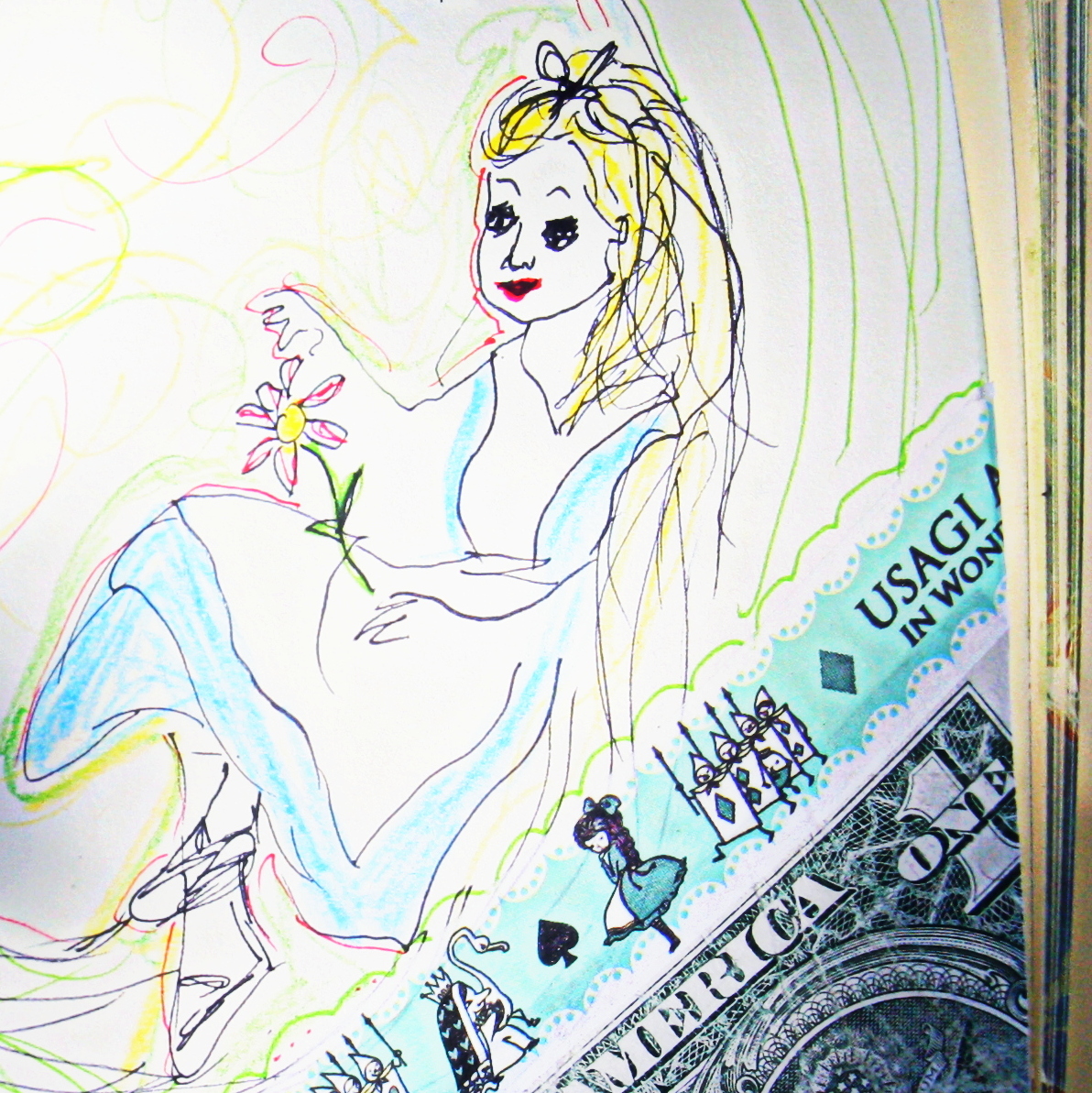
crudely sketching Alice

crudely sketching Alice in my notebook

While for my PhD I didn’t adopt autoethnography per se, I did use the autoethnographer’s lens as part of my conceptual bricolage. That is, I saw myself as research instrument, self-conscious participant and immersed, self-identified insider member of my study. Michael Schwalbe’s 1996 metaphor resonated: reflections on my self were both door and mirror; a way in to others and a way back to self.

My PhD thesis self-story (I was interviewed as one of my own participants; but that’s another tale) had the purpose of making transparent my own worldview (along the lines of Helen’s ‘showing my workings’), but it also had another function: to help me know myself. As I worked to find the words to explore and articulate my own lived experiences of the phenomena I was studying, I found, as others have, that I wrote my way into knowing, wrote my world into a version of its reality and constructed my own story in new ways, through the talk-aloud experience of the interviews and the process of forming and finding the words to frame my narrative.

I wrote at one point about writing a PhD as like freeing a sculpture from stone, but I wonder if the process of writing is one in which we free what already exists within, or if it is more than this. Creation? Collage? Weaving? Moulding? None of these seems to adequately embody the process of writing which seems to come simultaneously from within and without; from past, present and future; from materials tangible and intangible. It is deliberate and intuitive; visible and invisible.

And so, I continue to welcome opportunities to write my way into being, to write my way into understanding and to connect my words and thoughts with those of others.

I came across this 'Pour Me' cocktail the night of this Twitter conversation. Coincidence?

I came across this ‘Pour Me’ cocktail the night of this Twitter conversation. Coincidence?

What I now know about the doctorate: Illuminating the PhDarkness

I was delighted to be invited to present on my research (which is, in part, around coaching in a school context) at yesterday’s inaugural Australian Coaching in Education Research Seminar. My presentation – to a room of academics, educators, doctoral candidates and prospective doctoral candidates – looked at sharing both my own study and my post-submission understanding of doctoral research. In this post I use some of the slides from that presentation to look at the latter part: what I now know about the PhD.

the outline of my #EdCoachRES presentation

the outline of my #EdCoachRES presentation

I saw the PhD, some times and in some ways, as a long dark tunnel or rabbit burrow. That is, when we are standing at the mouth of the tunnel it is dark and unilluminated. And sometimes we have to dig. As I had never been a doctoral researcher, I didn’t know what doctoral research looked like. I didn’t know what a good PhD looked like. I didn’t know what the process looked like. These are things we can’t really know until the end.

That said, while my supervisors were not experts in my particular fields or methodology, they were experts in the doctoral process and in supervision. This is reminiscent of my work in coaching at my school. There, coaches aren’t experts in all pedagogy in all areas; they are teachers who are experts in being coaches, in having professional conversations in which the coachee’s thinking is teased out and shifted to different levels of abstraction, in ways to use the Danielson Framework for Teaching to refine teachers’ reflections on their practice. My supervisors were a lot like coaches, in that they facilitated my thinking about my research and writing, and helped me grow into a less-neophyte more-autonomous researcher. But they were also experts and mentors who sometimes chose to give me directive advice, or asked me to develop a clearer rationale for something I wanted to try (like using illustrations in the PhD thesis – who does that?). They helped me to keep focused, especially when I got excited about alternate pathways or theories.

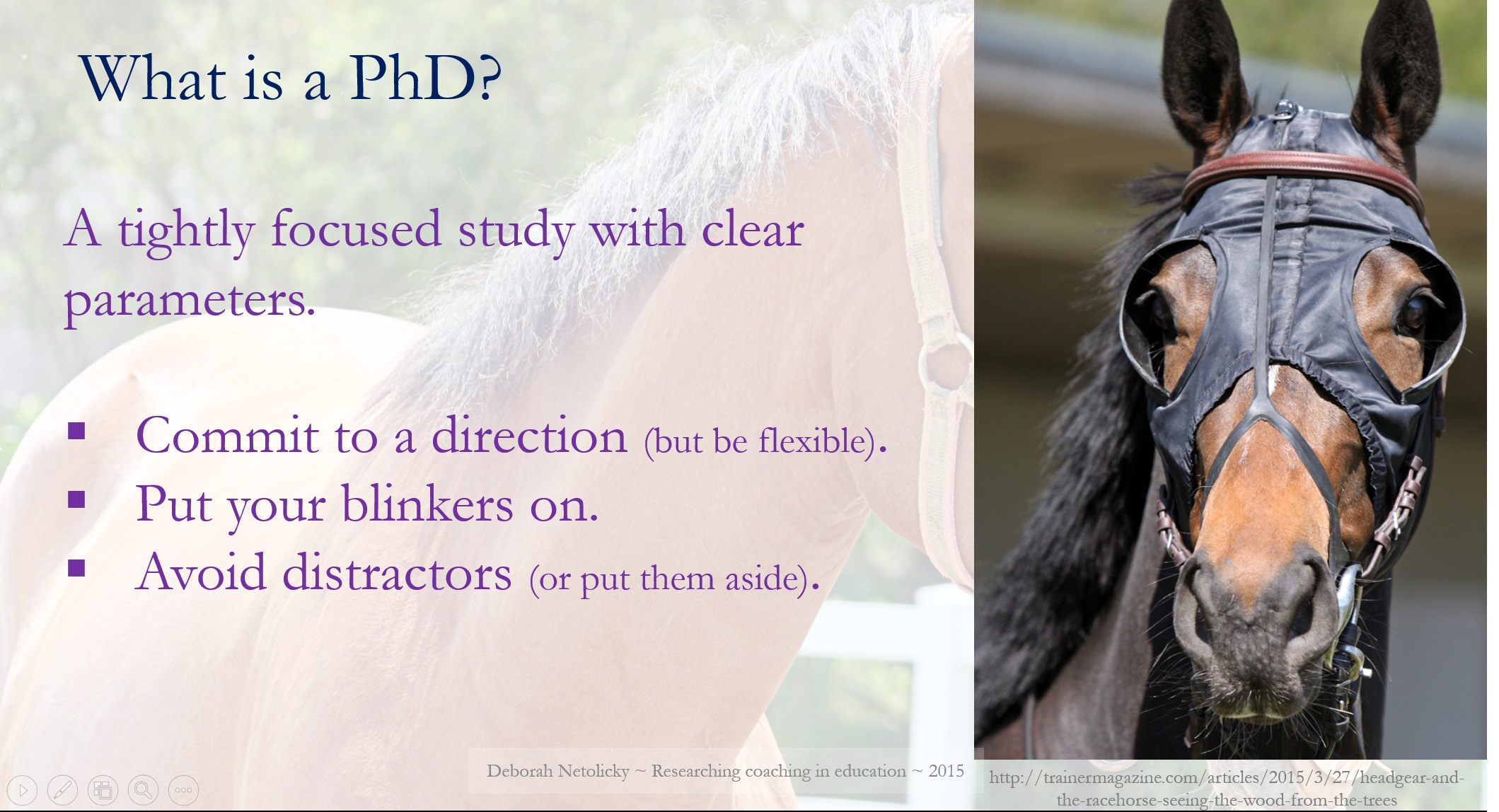
Put your PhD blinkers on

Put your PhD blinkers on

The PhD is a tightly focused study. No matter how curious or impassioned we are, a single three-year-equivalent study can’t be all encompassing. We can’t cover everything that interests us or explore every avenue which takes our fancy. Like the racehorse, we need to put our blinkers on in order to make it to the finish line. Those really intriguing tangential ideas and large chunks of deleted text (for instance, I axed 20,000 words between the first full draft and the final draft) can be put into a folder for another time, another project, another paper. Of course, research studies are iterative, so we need to be flexible and open to changing course, but as Tara Brabazon says in this 2010 Times article:

the best doctorates are small. They are tightly constituted and justify students’ choice of one community of scholars over others while demonstrating that they have read enough to make the decision on academic rather than time-management grounds.

by @debsnet

Bearing in mind that PhDs are tightly focused and that all research has limitations, these were the questions I thought were most important for any doctoral researcher to ask themselves:

  • How will my research add to scholarly conversations?
  • What question/s or problem/s of theory or practice might I hope to answer?
  • What will my method offer? What might it eclipse (limitations)?

That is, what can or will this research do? What can’t or won’t it do? We need to be ok with what a particular study, from a particular worldview, using a particular method, can do. And what it can’t. We need to own the limitations of our work.

my go-to online advisors

my go-to online advisors

I shared some of those academics-who-blog who have been particularly influential for me in my PhD writing and understanding. These are those whose generosity of knowledge helped me to understand the process of knowing the PhD, doing the PhD and being the PhD. Their work helped to illuminate the PhDarkness for me. An example was Pat Thomson’s help in the writing of my discussion chapter at a time when I was asking myself what a discussion chapter was, and trying to figure out how to best approach and develop mine. The academic bloggers named in this slide have reams of useful posts about endless aspects of the PhD, academic writing and getting published. Additionally, Helen Kara is writing short eBooks for doctoral students, while Pat Thomson and Babara Kamler have the super-useful book, Helping Doctoral Students Write: Pedagogies for Supervision.

I have found the reflections of others useful and so I share some of my own story on this blog because perhaps my words will shine a light into the shadows for someone else looking for help in a time of doctoral uncertainty. My working-through-writing-frustrations blog posts might help others when they come to that point in their journey, by which time I may have happily forgotten about how hard it was for me at the time!  As sometimes the curse of expertise – thank you, How to Survive Your PhD MOOC for pointing me towards Pamela Hinds’ 1999 work on this – means that once we have learned something, we cannot always remember what it was like to not know it, making it difficult to teach or help someone. By (b)logging my writing memories as they happen, perhaps I can archive my not-so-good-at-academic-writing self. Reflecting-on-writing by writing-about-writing – in a kind of meta-writing – helps me to document my academic writing journey. While I don’t think I’ve been in the game long enough to automate too much, blogging helps me to have a Hansel-and-Gretel breadcrumb trail back to my less capable self, before certain things become ‘black boxed’.

putting the PhD in perspective

putting the PhD in perspective

Finally, (my own version of) the PhD is only something I understand (sort of) now that I am at its end. It is unknowable before then. Each step of the way felt like a step into the darkness. Sometimes I felt like I had a flashlight to light the immediate way or a lightsaber to slice confidently into the tunnel. Sometimes I felt that I was fumbling around in the dark and feeling my way. Sometimes I went the wrong way and had to go back. But as Matt Might shows in his illustrated guide to the PhD, and as Mullins and Kiley (2002) show in their paper ‘It’s a PhD, not a Nobel Prize,’ the tightly-focused you-can’t-do-it-all parameters of a PhD mean that a PhD needs ‘only’ to add a miniscule aspect to the world’s knowledge; it’s a small blip in a larger conversation. Let yours be like a tiny jewel: small, intense, luminous.

Webs & chrysalises: Metaphors for learning & connection

Naomi Barnes, in her recent article in the digital journal, Hybrid Pedagogy, writes that “we need to start paying more attention to the random thoughts because when learning is conceptualised as a web, rather than a line, randomness becomes more meaningful.” She refers to the unanticipated blogging conversation, sparked by Steve Wheeler’s #blimage (blog+ image) challenge, that she, Helen Kara and I became involved in as we voluntarily responded to each other, layering our ideas and connecting our words.

My own experience of learning is non-linear and rhizomatic. The findings of my PhD were that this is an experience shared by individuals, groups and organisations; learning happens in surprising ways, in unexpected places. I agree with Naomi that embracing non-linear randomness might lead us to interesting places of knowledge collaboration, reimagining and production (although I do think we should acknowledge our sources of inspiration).

I mentioned in my blog post (part of the above-mentioned blogversation) on the spider-web connectivity of networked learning that metaphors, including of the spider’s web, emerged from my participants as ways to explain and explore their understanding of their professional selves, roles and relationships.

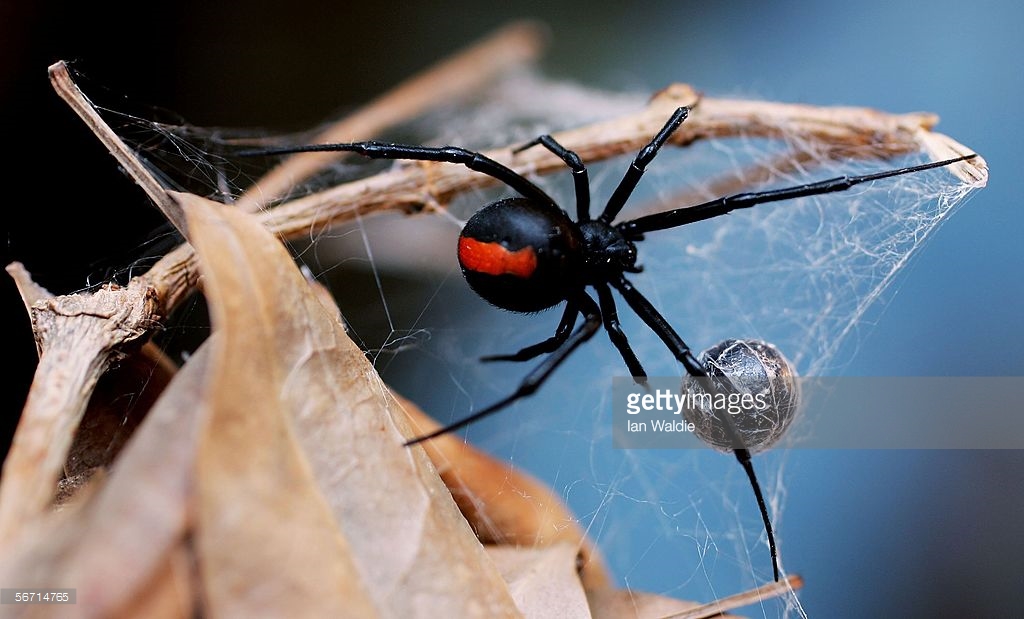
As it edges towards summer here in Australia, at home I recently found a redback spider (latrodectus hasseltii for the arachnid nerds), an Australian relative of the American black widow spider. The redback female is venomous, formidable and self-sufficient. Her web is messy. Males live on the periphery, eating her scraps. And after mating, she eats them, storing the sperm for later.

I’ve felt a little recently like a web-weaving spider. My PhD thesis is submitted, and suddenly, papers, journal articles and conference presentations are materialising. My PhD work has formed a web which widens and thickens, and in which these prey are being caught. The learning I’ve been doing from the network of scholars with whom I connect on Twitter and in the blogosphere has continued to take me to new thinking and into interesting conversations.

Now, I don’t see myself as a poisonous, man-eating widow spider, but I like that the redback is autonomous, a beacon of feminine power. I like that her web is messy and functional, not pretty and symmetrical. As well as the weaving of the physical web, the species itself has spread its tendrils out from Australia to reach New Zealand, Japan and Belgium. She has even made it into two DC comics as a supervillain who fights Robin. Unexpected places. Unpredictable influence.

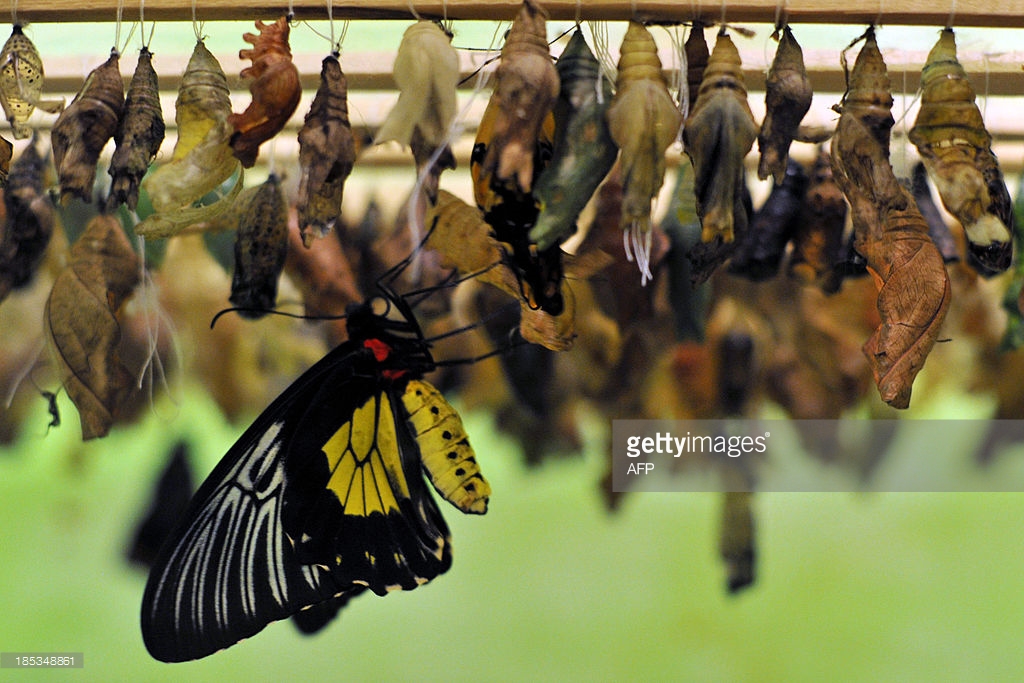
The other insect creature I’ve recently been reflecting upon is the chrysalised caterpillar-butterfly. After I submitted my thesis, I wrote the following title in a Word document and saved it: “Emerging from the chrysalis: PhD as transformative learning.” It was a blog idea for later, after proper completion, maybe. I was remembering a post I had read which argued that the PhD is not a transformative experience, but a thing to be done, a process to be completed, a means to an end. This wasn’t my experience so I thought it might be worth writing about.

And then I set the November #HDRblog15 challenge, and Kathryn Davies wrote this post about the life of a butterfly as a metaphor for the cycle of the PhD. Kathryn explores the chrysalis-PhD metaphor so thoroughly and thoughtfully, my own post idea seemed redundant. Yet my experience was affirmed by reading Kathryn’s. For me the PhD was transformative. I began my doctorate as someone who hadn’t written an academic paper or dissertation for 14 years. I was a vulnerable, soft-bellied slow-moving academic creature, my newness shiny and green. Over the course of the PhD, it has changed the way I think, the way I write and the way I read. It has changed how I perceive my identity, how I behave and how I respond. Some of these feelings I’ve written about, including a crisis of scholarly confidence, taking flight in the discussion chapter, and on being (or identifying as) a writer. And while I’ve recently said that I feel frozen in examination limbo, perhaps it’s more appropriate to say that I’m quietly growing, wriggling inside and pushing at the edges of my PhChrysalis, still a neophyte but transformed by my PhD journey.

So, I offer out to the blogoverse another post, another moment of my thinking suspended in time, another layer, another thread, another voice, another tendril reaching out to others. To be ignored, observed or grasped.