Textiles & academic writing: Material, process, product


This post, which could also be titled ‘remembering my 1990s feminist self’ is a re-emergence of some thinking I did a long time ago in my early years at university. After leaving school, I completed a Fine Art degree, followed by an Honours year. I’m writing this post as a way into self-inquiry, a way to write myself towards my hunch that my early days as a feminist-textile-artist-writer have underscored my more recent PhD work and academic writing. Big thanks to Katie Collins whose wonderful blog post on subversive material metaphors in academic writing sparked my thinking.
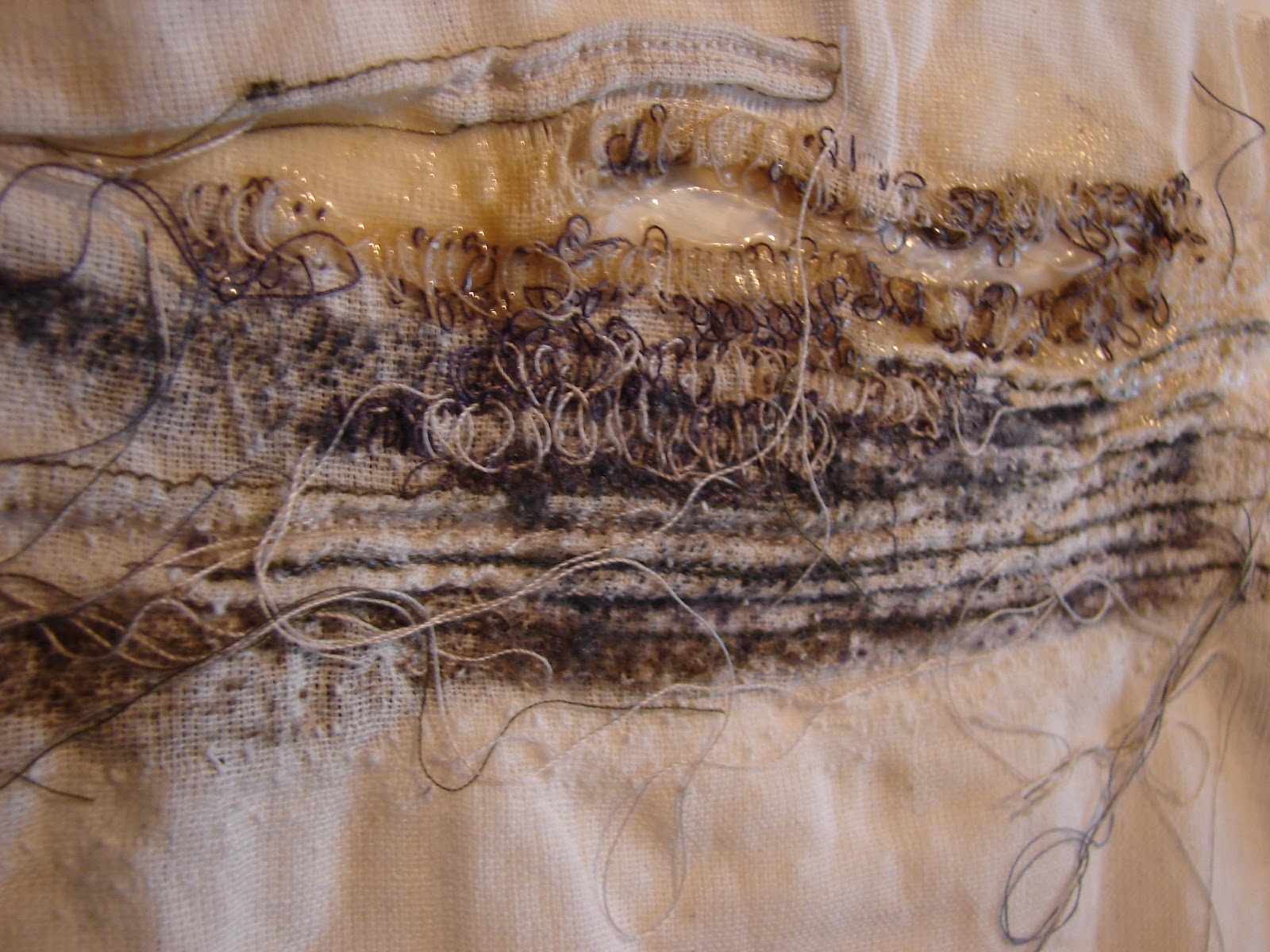
I was a painter from a young age, thanks to my artist mother, but I chose to study textiles as a major in my undergraduate Fine Art degree, rather than painting. This choice was due to the meanings inherent in textile materials, processes and products. A textile artist can weave in metal or print on latex. They can make work in the blacksmith forge or the sculpture studio. They can work with cardboard or furniture or paint or dye or thread or canvas or wire or plastic or found objects. The visceral and sensory experience of working with materials is central to the artistic process.

The materials a textile artist chooses, and the scale at which they magnify or miniaturise those materials, are deliberate meaning-making choices. The artist can choose needlework and hand-dying, or industrial Warhol-esque mass printing. They can applique or cut away. They can build or melt. They can assemble or destroy. They can stitch or slice. They can focus on the macro or the micro, staggering their viewer with enormous size or encouraging the viewer to come in, up close and personal.

Textiles is personal and political. It is also a subversive arena for artists, and often a feminist one. It pushes or rails against the stratification of ‘Art’, which has often meant the dichotomising of cerebral, thinking highbrow Art (upper-case ‘A’, often seen as done by men), and functional or decorative art (lower-case ‘a’, often associated with women and femininity). Historically, women were objects of art: she the body to be gazed at and sculpted. Or objects of art were personified as women: she the landscape to be scrutinised and painted.

The art historical devaluing of textiles pivots on its early treatment by critics, galleries and institutions. Aesthetic disciplines depend on recognised ‘powers that be’ to promote and uphold them. Early galleries and history books excluded textiles. Unlike painting and sculpture, textiles was historically seen as an unimportant discipline, undeserving of discussion, not worth deconstructing for message or meaning. The association of textiles with the devalued domestic space of the home, the opposite of the glorified public space of the art gallery, contributes to its dismissal.

So, why am I back here, thinking about textiles as feminist discourse or subversive act? Because Katie Collins’ post brought memories of my past self bubbling to the surface. And I am wondering to what extent my long-ago thinking and artistic practice, around the meanings inherent in working in and writing about textiles, has influenced my current and recent research and academic writing. On reflection, my PhD incorporated disruptive elements. While fitting largely within an accepted academic paradigm, it quietly challenged the ways that knowledge is traditionally written about. I used narrative method, literary metaphor and created three multimedia illustrations for the thesis, corporeal expressions of my thinking.

Now that I’m back in the eye of this needle, I need to think further about how textiles might provide a metaphor for research and academic writing.

In the meantime, below I will type an extract from a paper that won me the Allport Writing Award in 1998, and was published in Textile Fibre Forum. It was an analysis of Vivienne Binns’ artwork Mrs Cook’s Waistcoat. The piece gives a sense of where my thinking was around textiles as feminist activism in the late 1990s. I have deliberately omitted an image of the artwork as I’m wondering if the text itself can paint the picture for you.

(For non-Australian readers, Captain James Cook was a British explorer who claimed to ‘discover’ the south eastern coast of Australia in 1770.)

_________________________________________

Extract from ‘Mrs Cook’s Waistcoat: Rewriting history through cloth’

by Deborah M. Netolicky (1998), Textile Fibre Forum, Volume 53.

Mrs Cook’s Waistcoat may be read as one woman’s attempt to rewrite and reinterpret human history. Here Vivienne Binns contributes to the discourse on journey, adventure, and historical significance, telling the pain-filled woman’s story of discovery and adventure—the burden of waiting and worrying, as opposed to doing and dying. Through this work she questions platitudes of the day, such as “men work and women weep”. Binns demonstrates that women were not passive, but were actively working contributing, storytelling, and recording their own histories, written in needlework.

Binns uses journey as metaphor, identifying with Mrs Cook’s expedition as expressed through the waistcoat for Mr Cook. She challenges the value placed on women’s histories and women’s work by challenging the notion that Mrs Cook’s journey was insignificant in terms of human history. She has chosen to elevate its significance, giving it voice, implanting it in the discourse of high art.

… Captain Cook’s wife is the “Mrs Cook” referred to by the title of the work which tells the story of her laboring over a waistcoat for her husband while he is away on a long voyage. The waistcoat mapnel is larger-than-life, describing the legendary reputation of Captain Cook in Australian myth-making, and the amplified importance that Binns intends to give to the making of the waistcoat.

Binns connects the historical representation and exploration of Cook’s journey with issues of women’s value, women’s history, and the construction of gender. In her version of this story, the ocean water is a metaphor for a bewitching, intoxicating vacillating, unpredictable femininity and female identity … Cook, the white, middle-class male, is discovering, navigating, defining, and fixing the limits of the Pacific Ocean. He is writing the experiences, histories, and memories of and for the water, which has no voice. It is formless, restless, intuitive, irrational, and passive, in need of taming, subjugating, explaining and defining by the rational, scientific logic of male discourse.

Nature is tamed by culture. Binns places herself in the middle ground. She associates herself as water, as a woman employing subconscious, intuitive processes – her own emotions, remembrances, and ideas about certain colours, materials, and ways of working. On the other hand, she calmly calculates, selects, and constructs her images, associating herself with the heroic explorer, just as the artist does on a continuous intellectual journey to discover new meanings. This marriage of antithetical metaphors reflects Binns’ concerns with shaping perceptions of women’s ways of knowing, living, researching, remembering, experiencing, and making. By yoking the two ways of working, she gives equal value to each.

…The waistcoat can be seen as a woman’s way of writing and recording history. Women write history in fabric, men write history in text. Binns makes Mrs Cook’s journey of waiting, sewing, and weeping, as valid as Captain Cook’s journey. The labour and time involved in making this waistcoat explain the wife’s dedication and devotion to her far-away husband. Binns questions the trivialisation of women’s roles surrounding issues of the domestic and ‘crafty’. … She uses the processes, materials, and experiences of women—traditional metaphors of women’s work—to weave a myth about women’s forgotten places in history.

Penetrated openings are created by slicing, cutting, and scarring the fabric, fabric that represents flesh as well a material. … Rolled up papers (the stuff of men’s work) penetrate exposed fabric (the stuff of women’s work); paper penetrates fabric; men’s work penetrates women’s work; culture penetrates nature. The slits in the fabric are peeled back like open sores, mirroring the multiple stab wounds that were the cause of Cook’s death. The ultimate satire of the story is that while Mrs Cook is lovingly creating the waistcoat for her husband, he is already dead, his stab wounds mirrored in her handiwork. This is reflected in the typed and hand-written text, which permeates through a layer of white paint: “Mrs Cook embroidered… this time the Captain did not return and the waistcoat remains unfinished”. This irony elevates her personal anguish, and points to the difference in men’s discourses and women’s ways of speaking through needlework.

…Binns … uses traditionally female and domestic techniques of women’s work: embroidery, pattern-cutting, and sewing. There is a sense of Mrs Cook’s physical involvement in this garment, her time, effort, and care. It is stitched, cut, glued. Elements, images, textures, and metaphors are exposed, denied, revealed, concealed, constructed, deconstructed, veiled, disguised, patterned, decorated slashed, sliced, torn, ripped, reconstructed. The piece is layered with the corporeal stuff of memory.

… Binns does not create a new reality, but reflects and reinterprets the existing one in a way that gives it new meaning. She puts one moment in one woman’s life under the microscope until it boils, making her audience reconsider women’s lives, women’s history and women’s art.

Harvesting good work: Reap what you sow

I’m not a farmer, not even a green thumb really. While I quite enjoy gardening and have a composter, I’ve learned to populate my garden with plants that survive on a healthy dose of neglect. (Side note on the composter: there is something joyful about shredding old copies of my PhD thesis drafts and feeding them to the worms.) Despite my lack of horticultural know-how, I’ve recently been considering the farming—and biblical—metaphor that you reap what you sow.

I often see others I admire reaping the rewards of their work. These people aren’t slaves to the performative measures of a neoliberal system, or narcissists seeking the spotlight of social media celebrity. They are humans–professionals, thinkers, theorists and practitioners–dedicated to work they believe is important. To doing it, sharing it, making a difference.

Since the final throes of my PhD in March, things have been happening in seemingly organic ways. Of course the PhD got done-and-fairy-dusted, and the thesis published online. The first paper from my PhD has since been published: ‘Coaching for professional growth in one Australian school: “oil in water”’, in the International Journal of Mentoring and Coaching in Education. I have another paper in press, due out next month. Two more are sitting on editors’ or reviewers’ desks. Two drafts are on the desk of a co-author. I have been interviewed on the Teachers’ Education Review podcast and on 2SER Sydney community radio. I had a piece published in The Conversation this week, about the dangers of pursuing performance pay for teachers. I am in discussions about bookish things, too.

And I’ve been on some kind of accidental-on-purpose conference circuit. AERA in DC in April. researchED in Melbourne in May. The International Symposium for Coaching and Positive Psychology in Education in Sydney in June (this Thursday and Friday). Heroism Science in Perth in July. For (little old) me, alongside my work at my school, all this seems like armfuls of hand-picked produce.

I’m not sure why I’m surprised at the pace of my recent schedule of outside-of-work commitments (also known as the unpaid-but-rewarding work that is academic writing and presenting), and the fact that I’ve started to be approached, rather than doing the approaching myself. But I am quietly bemused that I seem to be in a harvesting part of a cycle, even though I know that this is actually the result of hard and persistent work. The seeds for the current abundance were selected, sown and tended a while ago. Papers were written and reviewed (and reviewed and reviewed). Abstracts were drafted and submitted. Relationships were formed and cultivated. Presentations were prepared. Work was done. A lot of it. In my evenings and on my weekends and in my down time, and in all the little nooks and crannies of my life where I could fit reading, writing, collaborating, learning and connecting. Thank goodness for the wonderful people who support me, from my family and friends, to my colleagues and professional learning network, the Twitterati and my Voxer Squad.

I believe in doing good work. For me this is enacted in ways that are without a linear frame. I’m never quite sure where I’ll end up, or even where exactly I’m intending to go. It’s about doing work that I’m passionate about and feel is important, whether in service of my students, my coachees, my school, or knowledge in the world. In my writing, too, I often try things out, head down trails unsure of where they lead, double back, try again.

So, for now I continue to sow seeds I think are worth sowing. Write and research those things I think are worth writing and researching. Say things I think are worth saying. Teach what I think is worth teaching, in ways I think are most worth doing. Seek to learn those things I think are most worth learning.

The fun thing about this kind of sowing is that it’s like planting mystery seeds. I never quite know what influences or impacts something I do now might have in the future. It’s why the reaping feels like Christmas morning.

The best bit is how rewarding all the persistent and consistent hard work is. I like the work itself. I love the struggle and the triumph. I love the connections and the relationships that bubble up and take form. I love the unexpected rhizomatic results. A failed planting. A teeny green seedling reaching up from damp dark earth. A basketful of glossy fruit. A knotted beanstalk reaching up to the clouds.

Reflections on researchED Melbourne #rEdMel

I’ve landed back in Perth after a whirlwind trip to Melbourne for this year’s researchED conference. This post is an attempt to unravel the tangled threads in my head, after what was a big day of thinking, listening and talking.

On coaching: Our panel

Being on a panel with Corinne Campbell, Chris Munro and Jon Andrews was the highlight of the day for me. That included not only the panel presentation but the opportunity to be in the same place, at the same time, able to flesh out our ideas about coaching together (as well as plenty of other educational issues).

Founder of researchED, Tom Bennett, saw the four of us working together early in the day and joked that it was like four Avengers coming together in one movie. That struck a chord with me, because we are four individuals deeply committed to making a difference in our own contexts, in four different Australian cities. But we’ve come together across social media time and space to collaborate on #educoachOC, a monthly Twitter chat on coaching in education, which aims to centralise, clarify and tease out the global conversation around coaching in schools. I met Corinne and Chris for the first time at last year’s researchED conference in Sydney, the first Australian iteration. I hadn’t met Jon until yesterday, yet we’ve been collaborating for months, and talking about practice, writing, leadership and coaching.

So getting together with my fellow Avengers was like landing in my nerd heartland for a day. We are, however, less about avenging and more about advocating for supporting teachers and trusting in their capacities for improvement. Coaching was revealed in the panel discussion as an enhancement and growth process, not a deficit model for fixing underperformers.

Our panel seemed well-received, and I learned from my fellow panellists as we covered what we mean by coaching, why each of our schools adopted coaching, what it looks like in each school, the impacts we’ve noticed, and the broader implications for coaching in schools. We explored issues of trust, implementation and mandation. We considered the conference theme: how coaching might fit with ‘working out what works’. On the one hand coaching does not prescribe ‘what works’ to coachees, and yet coaching has been shown to work. It is a researched but contested approach to learning and growth, with coaching models varying in intent and execution. Coaching is about practitioners being given the time and space to work out what works, for them, in their contexts.

On research ethics: My presentation

My individual presentation was on a topic I later described on Twitter as the unsexy undergarments of research: ethics. Necessary and crucial, but often viewed as unexciting. I looked at ethical considerations and decision making, for teachers researching their own schools, using my PhD study as an example.

I shared this quote from Helen Kara’s book Creative research methods in the social sciences:

Ethics should underpin every single step of research, from the first germ of an idea to the last act after dissemination. And ethical problems require ethical decision-making – which allows for creativity.

Here, Helen reminds researchers that ethics is creative problem solving. It does have to be well-considered, systematic, respectful and just (see the Australian National Statement on Ethical Conduct in Human Research), but it doesn’t need to be tedious.

I outlined the ethical challenges in my PhD, and the ways in which I grappled with those and made decisions. My operationalising of ethical solutions included writing information letters and consent forms; using an independent interviewer to interview teacher participants (and a rigorous approach to protecting teacher identities); designing deliberate interview protocols; drawing data together into composite stories; and utilising metaphor to protect participants while making interpretive meaning.

I discussed the benefits and limitations to being a researcher embedded in one’s own context. Below are the implications and questions I ended with.

Evidence-based practice in education

Among other presentations, I saw two on using evidence and research in schools, one by Gary Jones and another by Ray Swann. What I enjoyed about both approaches to evidence-based and research-informed practice in schools, is that they promoted valuing of not only the ‘best available evidence’, but also the wisdom of practice of teachers and school leaders. That is, they valued tacit knowledge and the expertise that comes with lived experience. They also acknowledged the value-laden and culturally-influenced nature of using evidence in schools. I think these are important layers to understanding what works in schools, and how schools can work towards finding what is shown to work in other contexts, and how they might therefore pursue what works in their own.

What I enjoy about Gary’s work is that he provides explicit frames for applying systematic approaches to evidence-based practice. He manages to make sense of the complexities of evidence-based practice, in order to communicate it with clarity, and in a way that educators can understand and apply. I recommend reading his blog and his handbook for evidence-based practice.

The researchED Avengers?

Thinking back to Tom’s analogy of the Avengers, the crowd at researchED is kind of like a room of fantastical superheroes. Here were close to 200 educators—teachers, school leaders, researchers and professors, each with their own individual gifts, talents, passions, stories and arenas of expertise—spending their Saturday dedicated to learning, connecting and talking about working out what works in education. There were some great questions from the audiences in the sessions I attended. Those that got me thinking included:

“Who decides what the ‘best available evidence’ is and how do they decide?”

“Where should coaching happen and how long should a coaching conversation be?”

“If you were start your research again, would you make the same decisions?”

There were also great comments, questions and provocations from those educators on Twitter who were engaging with the conference hashtag from afar, adding another level of richness to the online and offline conversations.

When Dylan Wiliam popped into the speakers’ dinner, it added a further layer to discussions. Here was another educator coming out to talk education on a Saturday night, after coming straight from presenting at a national conference, and before getting up the next day to present all day again. For me, it was great to be able to discuss his new book, Leadership for Teacher Learning, the use of the Danielson Framework for Teaching, and performance pay.

Tom describes researchED as built on and powered by (I’m paraphrasing and embellishing here) blood, sweat, volunteers and fairy dust. That is, those supporting this conference, around the world—including participants, presenters and schools—care deeply about education. These are people dedicated to making classrooms and schools better places for better learning.

It was a pleasure to be part of the conversation for the second year in a row. I’ve been left with plenty to think about.

_____________________

And some more reading …

You can see my reasons for attending researchED Melbourne 2016 here.

Jon Andrews has shared his reflections on Melbourne’s researchED here.

Pamela Snow has written this post about her presentation at yesterday’s researchED on justice re-investment.

Greg Ashman wrote this post about his day at researchED.

Gary Jones wrote this post reflecting on Melbourne’s researchED.

Susan Bradbeer has written this post about her experience of researchED from afar, as someone who followed the conversation on social media and the blogosphere.

Tom Bennett had some reflections after the Melbourne event, published here on the TES blog.

You can see my reflections on researchED Sydney 2015 here.

Professional identity & professional learning: Reflections on my TER podcast interview

identity is liquid (aka Little Lagoon, Shark Bay)

identity is liquid (aka Little Lagoon, Shark Bay)

Recently I was interviewed by Cameron Malcher for the TER podcast about my PhD. You can listen to the interview, which was released on Sunday (it kicks in at the 35 minute mark). My favourite part of the podcast was Cameron’s concluding thoughts that were sparked by the interview. Below is not a blow by blow account, but a reflection on what we discussed.

What is professional identity?

In my PhD I defined identity as “ongoing sense-making process of contextually-embedded perceived-selves-in-flux”. It is a process rather than a product, a constant state of becoming. It is fluid rather than fixed. It is constantly shifting, as suggested by Fred Dervin’s notion of identity as liquid. It is socially constructed and contextual; that is, identities are co-constructed with others, and we are different versions of ourselves in different situations, with different people.

Factors that make up our professional identities include our beliefs, values and assumptions. Our identities are created and rewritten through language, through the ways we tell the stories of ourselves, to ourselves.

On the blogosphere and the Twitterverse there have been arguments about the disconnect between who owns identity and labels, suggesting that some think that identity is superimposed on us by others’ perceptions, while some believe that we own and make our own identities. The socially constructed nature of identities suggests that both have merit. We write ourselves for ourselves, and our self-perceptions rely on how others perceive and interact with us (although this interactions can be rejection of others’ perceptions, as well as acceptance).

Why consider professional identity in education?

Teaching is deeply personal. Part of the reason I brought professional identity together with learning, leading, and school change is that I think they are inseparable. Looking at education reform through the lived experiences and identities of those in schools is key to understanding its impacts. Professional learning and the leading of schools need to take teachers’ and leaders’ senses of selves into account, and engage with them.

Focus of my research

I conducted research within my own school and examined the stories of 14 teachers and leaders, including myself. The background context was a school-based teacher growth initiative.

I used narrative research to explore how these educators’ professional identities interacted with their learning and with school change. I was interested in what it is that shapes and shifts educators’ professional identity perceptions and in what ways schools and systems might work with a greater understanding of educator identities when designing and implementing education reform.

My narrative approach involved interviewing participants in ways that encouraged storytelling, including using coaching protocols, and then storying those data. It required me to be reflexive as the researcher. The experience of my PhD was personally and professionally transformative for me. I loved it, and it was incredible professional learning. In particular, the luxury of listening to educators’ stories was a joy and a privilege. I presented at AARE last year on my creative, literary approach to storying data, and this Saturday I’m presenting on my ethical decision making at the researchED conference in Melbourne.

Research findings

My research found that:

  • We professionally learn throughout our lives. Our professional learning encompasses life moments that are professional and personal, formal and informal, in schools and out of schools, singular and collaborative. Professional are shaped by good and bad experiences, by role models and anti-models.
  • Learning which taps into who educators see and feel they are, has the most impact on their beliefs, thoughts, behaviours, and practices.
  • Coaching and being coached is identity shaping, shifting teachers’ and leaders’ beliefs about learning and teaching.
  • The Danielson Framework for Teaching can be a useful tool for teacher self-reflection when used by teachers for their own growth.
  • School reform and school cultures which trust the capacities of teachers to reflect and improve is empowering and capacity building.

Implications of my research

With the caveat that my PhD was highly contexualised (considering the nature of the school and individuals I studied) the findings have something to offer the education world.

Firstly, there is a need to broaden the definition of professional learning, to allow teachers and schools to think more broadly about what it is that transforms educators, and who drives the professional learning of teachers. In my own leadership practice I am wondering how professional learning might be more autonomous and individualised. About how professionals might choose and follow, with support and opportunity, their own growth trajectories. About how schools and systems might acknowledge and encourage heutagogical (self-determined) learning.

Secondly, schools and systems can work from their own contexts to design and slowly iterate models of professional learning, from the bottom up and the middle out. As many scholars point out, effective education reforms are contextual. They cannot be lifted from one school or nation and dropped on another. Change in schools should be at a slow evolution-not-revolution pace, and based in assessing available evidence and current context.

As a result of my reading and research, I advocate for distributed and empowering leadership in schools, and school systems that trust teachers. I am a card-carrying, flag-waving fan of the Flip the System movement, which champions the agency and voice of teachers within their own systems. Teachers and school leaders have the internal capacity for analysis, reflection and growth. The individual should be honoured, valued and supported, within the holistic collective of the organisation and the system.

Santa Claus Phenomenon: The hidden magic of coaching & leading

It’s not until you’re a grown up that you realise Christmas doesn’t just ‘happen’. That magical day was pulled together by the incredibly stressed adults in your family. ~ Rosie Waterland in this post about Christmas

Sometimes in adult life we engineer magic. With glee we secretly make the miraculous and enchanting happen for others.

As parents, we realise how engineered the magic of Christmas is. We kind of know it when we discover that our parents are really Santa, but it’s not until we create Santa for our own children that we appreciate the hard work that goes into it.

All the preamble, that constant constructing of stories of Santa and reindeer and the intricate goings-on of Christmas Eve. Answering questions about store Santas and how Santa gets into the house and where the reindeer park the sleigh. Stealthy gift shopping, gift assembling and gift wrapping. On Christmas Eve there’s waiting until the children are definitely asleep and then assembling the gifts, artfully nibbling a cookie, enthusiastically chomping a carrot, dusting snowy footprints to the tree (and then closing the pet out so they don’t ruin the footprints overnight). This is magic that requires long term planning and strategic operation. 

Then: Christmas morning! Children wake. Santa’s magic comes alive. The Santa narrative seems not only possible, but real and wonderful. The children shower gratitude on the mysterious and benevolent figure of Santa. There are joyous cries of, “Thank you, Santa!” and “Santa got me exactly what I wanted!” How they glow with appreciation for the jolly red fellow and his generosity. Somehow he knew exactly what they needed at this point in their lives.

Of course, I do all of this because I enjoy the looks of amazement on my children’s faces and the thought that they feel part of something fantastical. But sometimes, as a parent, I secretly think, ‘It was us! It’s us you should be thanking!’ In these moments, I want my children to realise that all that joy is down to my husband and I. We contrived and concocted this whole thing. Of course I don’t ruin the magic. I encourage their belief and enjoy their wonder (they are currently 4 and 5). But part of me still sometimes wants recognition for all the hard work of being Santa and providing the magic.

Christmas Eve vignette from our place

Christmas Eve vignette from our place

There are two professional roles where I think this Santa Claus Phenomenon (no, it’s not a thing; I just made it up) plays out in professional life: the coach and the leader. It’s not that these roles are magical, but both have a sense of hard work going on behind the scenes, potentially without recognition from the recipient. Like the parents acting as Santa, both roles require the person to provide others with what they most need in that moment.

Coaching is hard cognitive work. In this post, I used the metaphor of the duck to describe the coaching experience; the duck’s legs paddle manically below the surface while above the water, all seems serene. So the coach works hard, but in order to be effective, this work needs to be imperceptible to the coachee. In fact, in order to best serve the coachee, the work of the coach needs to draw out and draw on the coach’s inner resources, so that they shine brightly. The coach is the hidden passageway or the mirror to self.

Similarly, a leader who empowers their staff can sometimes feel like the unsung hero. This kind of leadership is the subtle and invisible kind. Stepping back so others can step forward. Subtly coaching and nudging and encouraging and scaffolding. This isn’t brave sword-wielding white-knight stuff, the celebrated charismatic leader on the public stage. It’s about believing in and nurturing others’ capacities, in sometimes imperceptible ways. It is hard work with plenty of setting up and engineering for successes, but it’s done quietly in the background and sometimes no one sees this leader’s careful preparation and toil.

How do coaches who want to build the internal resources of their coachees, and leaders who aim to build their organisations by developing their people, interact with the Santa Claus Phenomenon? How do coaches and leaders celebrate or measure their wins? One way in a coaching conversation is in the responses to the question at the end in which the coach asks something like “How has your thinking shifted from the beginning of the conversation to now?” Leaders can know their own impacts by tracking the progress of their teams and individuals. But perhaps in both cases, others won’t notice the impacts, or the careful steps the leader conducted to get there.

I’ve written a paper for the Heroism Science conference that explores the idea of the less-visible leader. The leader who empowers. The coach who helps develop the coachee’s self-efficacy through layered and complex, but barely visible, practice. I wonder how this kind of leadership plays out in reality. Is the knowledge of one’s own impact enough? What happens when others don’t recognise that a coach or leader is engineering the magic? What if, from outside, it seems like the coach or leader isn’t doing anything? Is that as it should be–the noble but unseen work of coaching and leadership–or is it problematic?

Art can be taught: On knowing, doing and thinking Art

Art is power. ~ Henry Wadsworth Longfellow

As someone with a Fine Art degree, who studied Art through high school and university, I often hear comments from others like “I’m not artistic,” “I’m not arty,” “I can’t do art,” or “I can’t even draw stick figures” (this last one from my dad). As the daughter of an artist-educator (my mum), perhaps people think that anything arty I produce is the result of some kind of genetic sorcery. That Art is in the genes and in the bones. You’ve got it or you don’t. And yet, we don’t view many other things this way.

My mum always said that learning to paint is like learning to play a musical instrument, something needing hours and years of careful instruction and diligent practice. Of course some people have more aptitude than others, but it seems accepted that anyone can learn a musical instrument, if they learn the knowledge and skills, and then practice, guided by a teacher.

Playing a sport also needs a coach and regular teaching, training and playing. My 5 year old son recently started ‘Auskick’ Australian Rules Football. Did they give him a ball and send him onto the field to play a game, only to send him off when he didn’t know what to do, with cries of, “You’re just not sporty!”? No. They’re starting with skills and drills, small groups of children with coaches who are guiding them through the basics, giving them opportunities to develop and setting them practice goals in between sessions. First the knowledge (how the game is played, rules, positions, teamwork) and the skills (handballs, kicks, marks, tackles, disposals) are learned and honed. Again, some will have more innate talent than others, but all can learn, engage and participate.

The same goes for Art. Learning artistic knowledge and skills leads to artistic capability.

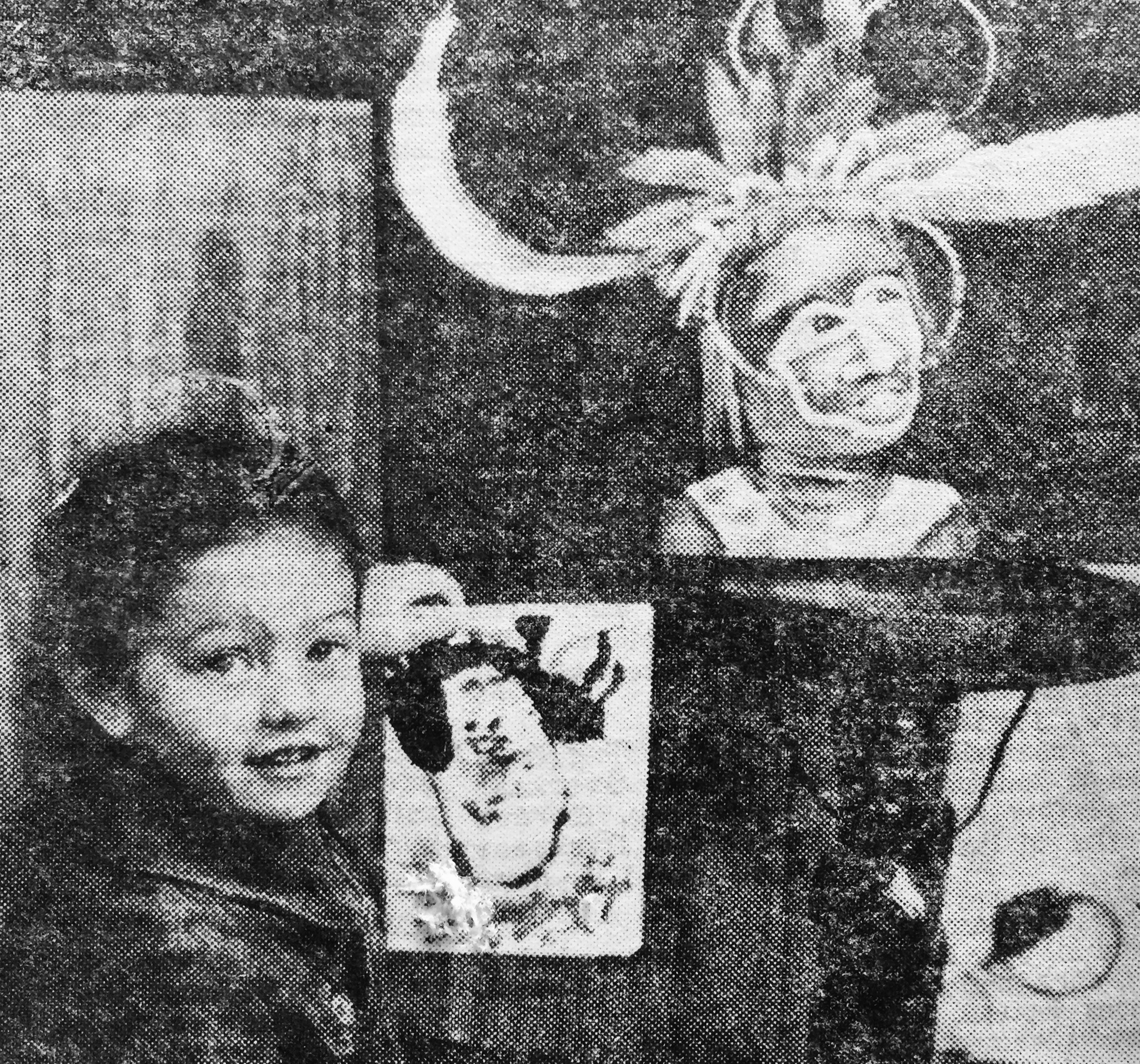
from a 1980s newspaper clipping; me & my painting beside my mum's painting

from a 1980s newspaper clipping; me & my painting beside my mum’s painting

My mum taught me age-appropriate artistic techniques from an early age. Her teaching meant that my attempts at Art looked good for my age, but these were carefully taught strategies. She ran Art classes out of our garage where she taught other kids the same tricks—learned, practiced on newspaper and then enacted on canvas. Parents were impressed. This wasn’t magical ability, but careful teaching by someone who was a knowledgeable, skilled practitioner and an experienced teacher. My mum now teaches my kids how to draw and paint, and they experience the same success. Is it genetics? No, it’s teaching.

And imitation and practice. As a teenager I would sit and draw. Copying posters, copying faces, copying landscapes. Over and over until I got it right, or at least better. My scribbling was informed by knowledge I had been taught about proportion, perspective, shading, the way colours work and techniques for using a variety of materials. I also copied the Old Masters, as many Art students do. Being able to replicate others’ work teaches how to follow the rules. Then an artist can think about and experiment with how they might be bent or broken.

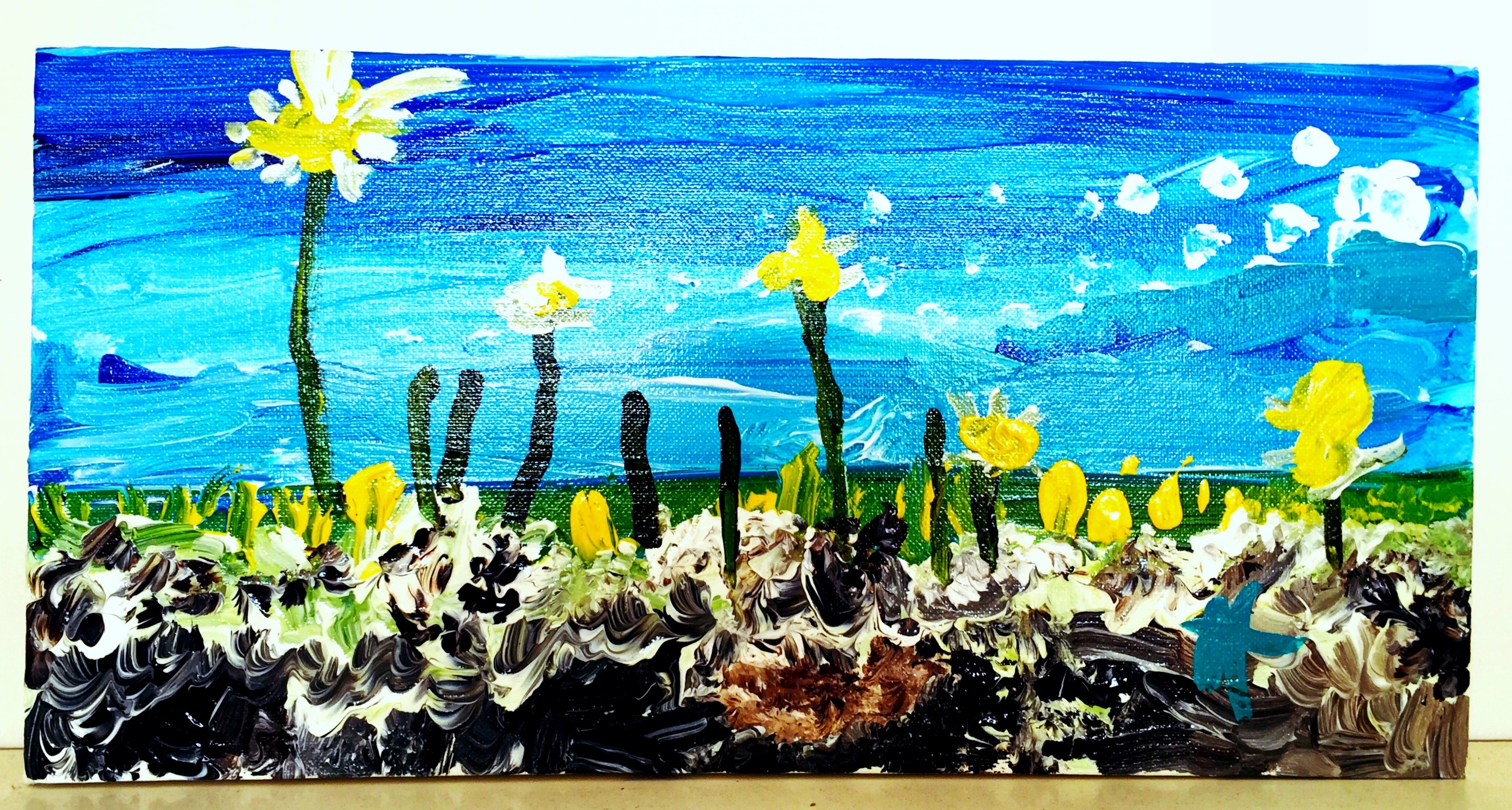
field of flowers painted by my 5yo, as taught by my mum

field of flowers painted by my 5yo, taught by my mum

But Art is also more than knowledge and technique. It is communication and conversation. As I discussed in this post, artists respond to the world and to other artists. Like bloggers, writers or commentators in other disciplines, artists use the language of Art to protest, to provoke or to celebrate. It’s why Manet’s Olympia was so scandalous in its time. It’s why Pop Art and Dada, and even Impressionism were, in their time, an ‘up yours’ to what had come before and a challenge about what could be. Art has always been about communication, storytelling and symbolism (just look at any cave paintings or religious Art), but especially since photography made copies of reality possible, artists challenge what Art is and what its purpose might be.

I paint objects as I think them, not as I see them. ~ Pablo Picasso

Today’s blog post is a response to this one by Greg Ashman, who reflected on his own experiences of Art. Also, tomorrow is Mother’s Day here in Australia, and my mum and grandma have both majorly influenced my love, appreciation and practice of Art. Like Greg, one of my parents is (among other things) an artist. She is currently in America for an exhibition. Like Greg, most of my high school Art classes began with an instruction like, “there’s something: draw/paint/sculpt it,” without much other direction.

Yet the totality of my experience is very different. My mum gave me the grounding in the knowledge, skills and thinking of Art. My grandma still explains artworks and their intricate meanings to me. At university I was taught skills from welding and glass pouring to printmaking and drawing. I was taught Art History, and have since taught this in London at A-Level. I wrote a 25,000 word Fine Art dissertation. Once, I won a national art criticism prize based on the description my grandma gave me of an artwork. The artwork was in the gallery basement and as she was a gallery guide she was able to recall it from memory and describe it to me. When I finally saw the work, I realised that my critique was more inspired because of the image she gave me through her description. The piece was published in a national journal. I’ve written about the PhD as sculpture. I painted illustrations for my thesis.

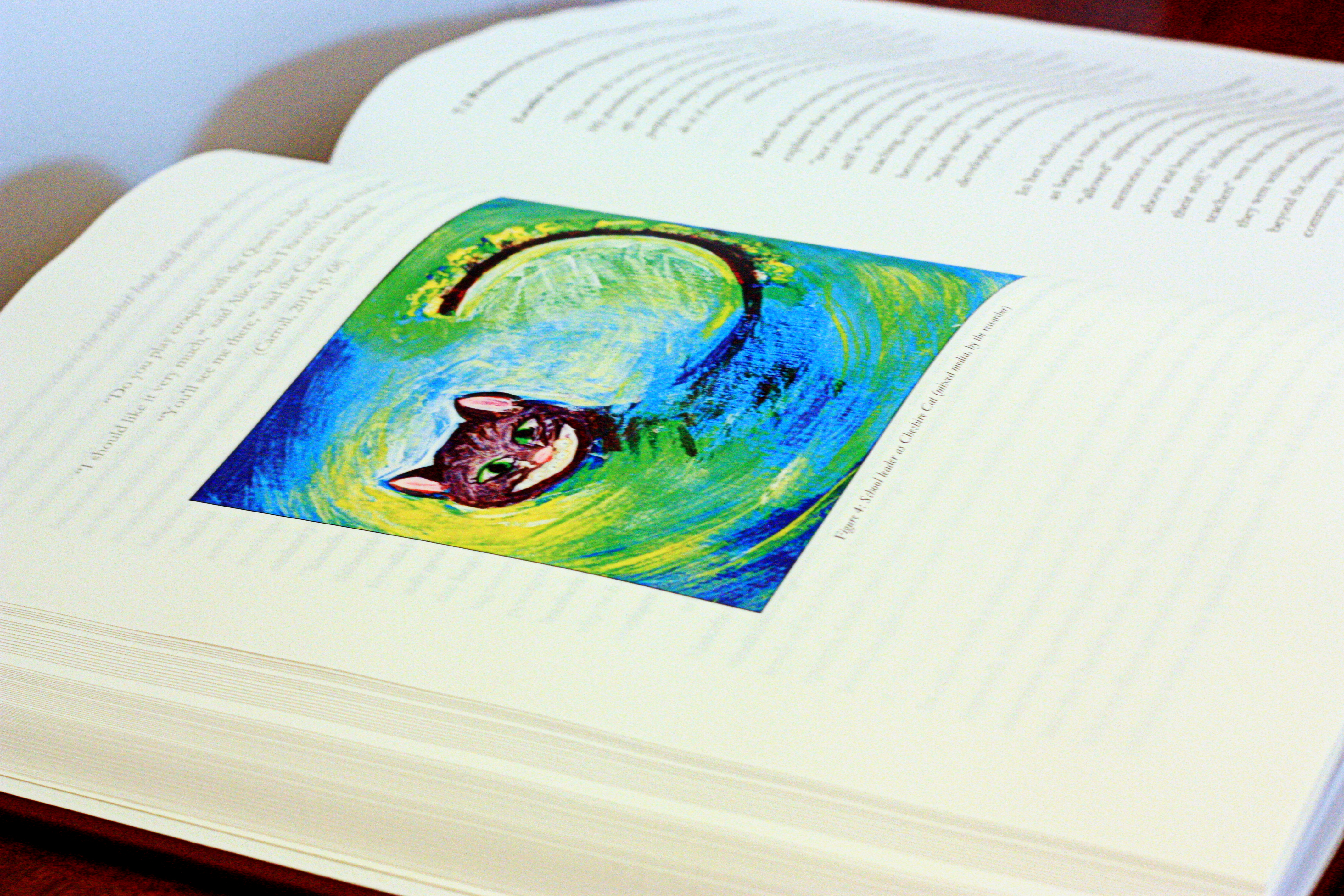
thesis illustration

thesis illustration

I take my kids each year to Sculptures by the Sea in Perth (here are my pics from 2015 and 2016) and we talk about what our favourites are, and why. I recently took my 5 year old to the State Art gallery and he looked at a large canvas painted dark purple and said, “That is NOT art!” Then we talked about what art was and what criteria made something Art. I didn’t tell him my own views, but was more interested in encouraging him to think about his own thinking and his own assumptions about what makes something Art.

If it’s in a gallery, is it Art? Is Damien Hirst’s Mother and Child Divided (a mother cow and her calf, cut in half and displayed in formaldehyde), or Andres Serrano’s Piss Christ (a photograph of a small plastic crucifix submerged in a glass of the artist’s urine), Art? What about Robert Rauschenberg’s Erased de Kooning, in which he took a drawing by another artist, and erased it? Or Marcel Duchamp’s signed urinal, Fountain?

For me, Art can be a way of seeing, a way of thinking and a way of doing. It’s not something people are inherently bad at, or good at, but a concept and process in which to be engaged. Its value is in that engagement. Can I teach someone to paint a landscape or draw a realistic figure? Sure. Can I teach someone to think more like an artist? That’s trickier, but, like learning to think using a mathematical, theoretical or scientific lens, it’s worth the effort.

All in all, the creative act is not performed by the artist alone.. the spectator brings the work in contact with the external world by deciphering and interpreting its inner qualifications and thus adds his contribution to the creative act. ~ Marcel Duchamp

Performance pay: Don’t do it, Australia

Today the Australian media has reported that the Federal government is going to spend an extra $1.2 billion on education between 2018-2020, but that part of this money will go towards linking teacher pay to performance.

I am writing to urge Australia not to spend precious education budget money on teacher performance pay.

Performance pay initiatives have been experimented with around the world, including in Nashville, New York City, Dallas, North Carolina, Michigan, Israel, England, Kenya and India. See Leigh’s (2013) “The economics and politics of teacher merit pay,” which argues that merit pay negatively impacts teacher collegiality. Hattie, in his 2015 papers on what works and what doesn’t work in education, says that performance pay results in teachers working fewer hours with more stress and less enthusiasm. I agree with his warnings against trying to fix people and systems, and his suggestions that instead that the focus be on growth and collaboration.

Performance pay alienates teachers and is unsupported by evidence. There are those such as Hargreaves and Fullan (in their 2012 Professional capital) who criticise performance pay as demeaning, commodifiying and oversimplifying teaching and education. Until now I have been relieved that Australia has not gone the route of many North American states with teacher evaluation models that score teachers and schools. (I voiced my despair at the New York APPR reforms when they were announced.) Fullan and Quinn (in their 2016 Coherence) note that a policy focus on punitive accountability measures is crude, demotivating and has no chance of working. Wiliam (in his 2014 paper “The formative evaluation of teaching performance”) sees measures of teacher effectiveness as unreliable, noting that when teacher performance measures are linked to job or financial decisions, teachers are unlikely to innovate, tending instead to performance-teach to the evaluation. Also importantly, as Kemmis notes (in his 2010 chapter “What is professional practice?”), the quality of teaching and of teachers is not measurable by tests. So performance pay pits teachers against each other around questionable metrics.

These views are consistent with work around motivation, such as that by Dan Pink, David Rock and Mihaly Csikszentmihalyi. Punishments and rewards don’t improve practice.

Negative drivers of change are ineffective in driving positive transformation. What Australia doesn’t need is to cultivate cultures of fear, competition and compliance in our schools. We need to invest in teachers and in education (a thousand times, yes!), but performance pay which alienates the profession and is ineffective in improving it, is not the way to go. We need collaboration, not compliance and competition. We need initiatives that trust and encourage teachers and principals to grow their practices and their schools. Australian educators need voice, agency and support to improve, not punitive sticks and accountability carrots.

Please, Australia, say ‘no’ to performance pay.

___________________________________

Update: Since publishing this blog post I have written this piece on performance pay for teachers for The Conversation. I was also interviewed on Sydney radio station 2SER about this issue. You can listen here.

On the day I wrote this post, other grass roots education commentators have also reacted to today’s education funding announcements. Here is a list …

Joel Alexander: Merit pay in primary school is about as bad as it gets

Jon Andrews: Cruel optimism – Pay, performance and promises

Greg Ashman: How should Labor respond to the Australian government’s education proposals?

TER podcast with Cameron Malcher and Corinne Campbell: School funding special

Why I’m going to researchED Melbourne #rEdMel

Research evidence is essential to the task of improving outcomes for young people, but research will never be able to tell teachers what to do, because the contexts in which teachers work are so variable. What research can do is identify which directions are likely to be the most profitable avenues for teachers to explore. ~ Dylan Wiliam, Leadership for Teacher Learning, 2016

Why would a Western Australian fly to Melbourne for a one day conference? Here’s why researchED is drawing me to the East this May: cognitive conflict and robust discussion around educational matters.

In drawing together academics and education practitioners working in schools, researchED conferences are less about transmission of information and more about provocations and conversations. researchED’s tagline is ‘working out what works’, and those that gather at its events around the globe are interested in working out what works in education, for the benefit of the world’s children. The website tells us researchED’s mission:

researchED is a grass-roots, teacher-led organisation aimed at improving research literacy in the educational communities, dismantling myths in education, getting the best research where it is needed most, and providing a platform for educators, academics, and all other parties to meet and discuss what does and doesn’t work in the great project of raising our children.

Whether individuals come from Australia, Europe or the USA (all locations where researchED events have been held) they share the goal of bridging the gap between research and classroom practice.

As Dylan Wiliam points out, research cannot tell teachers and schools what to do, but it can inform the decisions educators make, and help them follow trails most likely to be beneficial for their students. Tom Bennett, the founder and director of researchED, says that researchED’s mission is to “to make teachers research-literate and pseudo-science proof.” That is, teachers need to be critical consumers, curators and questioners of information and of evidence.

Gary Jones, who is coming from the UK to present at and attend researchED Melbourne, has written an excellent guide to evidence-based decision making in schools. He points out a number of popular ideas in education that are not backed by evidence and reminds educators of the need to be conscientious, judicious and explicit in their use of evidence to make decisions and shape practices.

I’ve made my view clear that teachers can and should be researchers. Taking research into account, enacting practitioner-research practices, and engaging with scholarly literatures, is important in an educational world focused increasingly on accountability, performativity and rapid change. Sometimes, the best thing for a teacher or school to do is to press ‘pause’ and ask some critical questions of the evidence they are accepting or the practices in which they are engaging.

As a teacher and school leader who has recently completed a PhD, I can see the benefits of research thinking to the school environment. It means applying carefully considered and thoughtfully designed methodologies to decision making and innovation. It means trusting in teachers to be a core part of school reforms. Research becomes, not an add-on, but a way of being which is embodied and enacted by educators as they go about their important work.

researchED is part of a global movement to give teachers voice and agency in their work, their schools and their systems, while ensuring that school leadership and classroom practice is informed by research and evidence. Conversation between academics, researchers, leaders, policy makers and teachers can help all involved in education to best serve the students at the heart of our education systems. A wonderful publishing example of this kind of movement is Jelmer Evers and René Kneyber’s book Flip the System, which brings together the voices of teachers, academics and education experts in order to reclaim the space of education discourse for those working as cogs in the neoliberal machine.

So I’ll see you at researchED Melbourne. There will be interesting research and practice shared. There will be classroom perspectives and scholary ones. There will be graceful disagreement. I’m looking forward to presenting among the diverse voices, and learning from them.

(Here is my post on last year’s researchED conference in Sydney, at which I also presented.)

Brighton Bathhouses

Words from the Bard #Shakespeare400

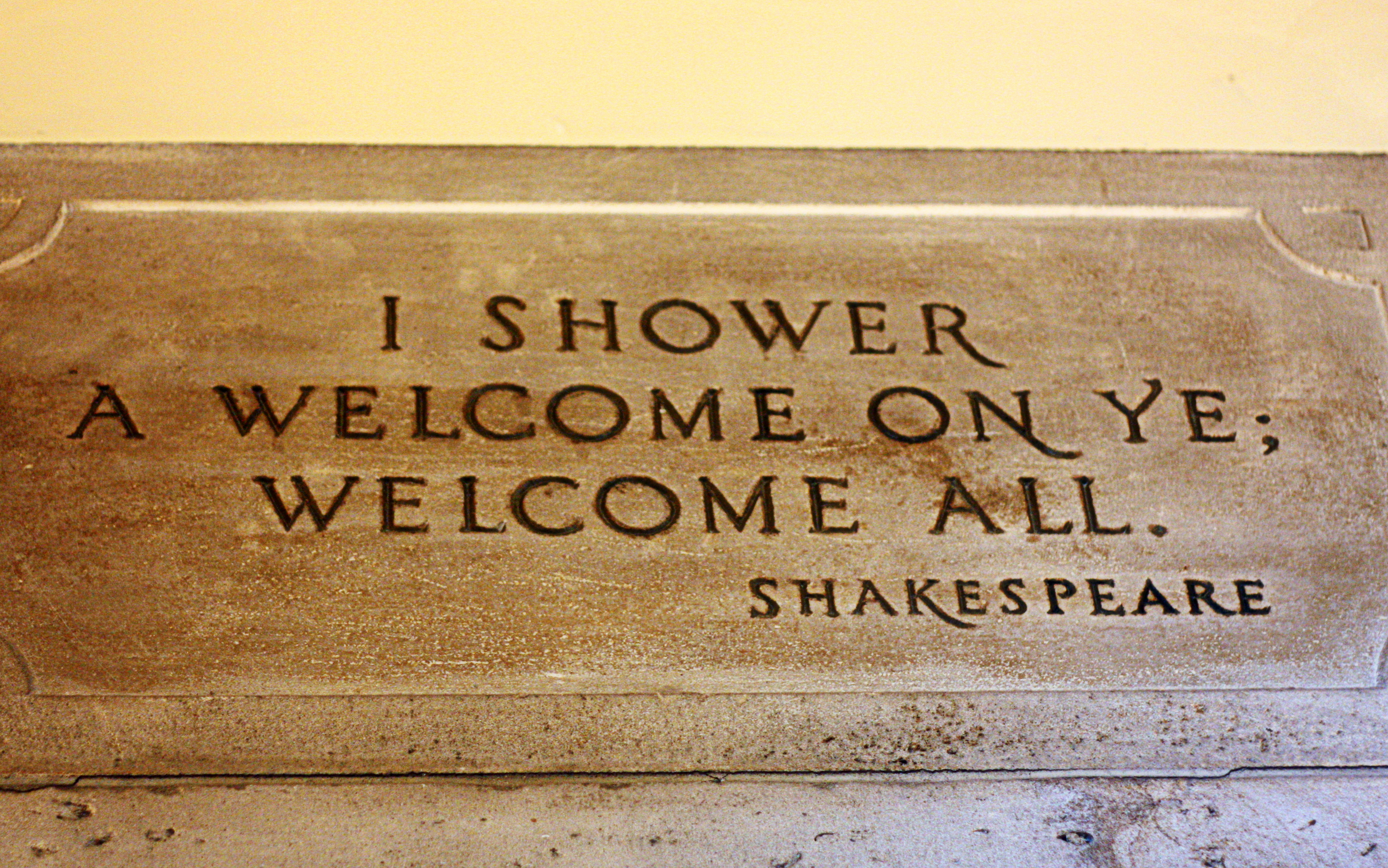
over-door plaque at the Folger Shakespeare Library

over-door plaque at the Folger Shakespeare Library

The 23rd of April–yesterday– was the 400th anniversary of Shakespeare’s death.  As an English and Literature teacher I’m a believer in the power of reading and writing. And I’m a Shakespeare nerd. I loved teaching Shakespeare for the three years I lived in London. There it all was! The Globe Theatre, Stratford-Upon-Avon, the streets and boards upon which Shakespeare lived and on which his work breathed. Two weeks ago I visited the Folger Shakespeare Library in Washington DC, which houses the world’s largest collection of Shakespeare’s works and artefacts, including 160,000 books, 60,000 manuscripts and 90,000 works of art. It’s Shakespeare nerd heaven.

Why are the Bard’s plays taught ubiquitously in English language and literature classrooms around the world, 400 years after his death? Because his work is considered to be universal and relevant across time and space. His plays and sonnets have influenced the very formation of the English language: the words we use and how we use them. He writes about things which resonate deep in the core of humanity: love, jealousy, history, ambition, rage, war, passion, flesh, and being a flawed person in the world.

So, today I thought I’d share a few of my favourite quotes from Shakespeare’s plays, along with some of my photos of the wonderful Folger Shakespeare Library.

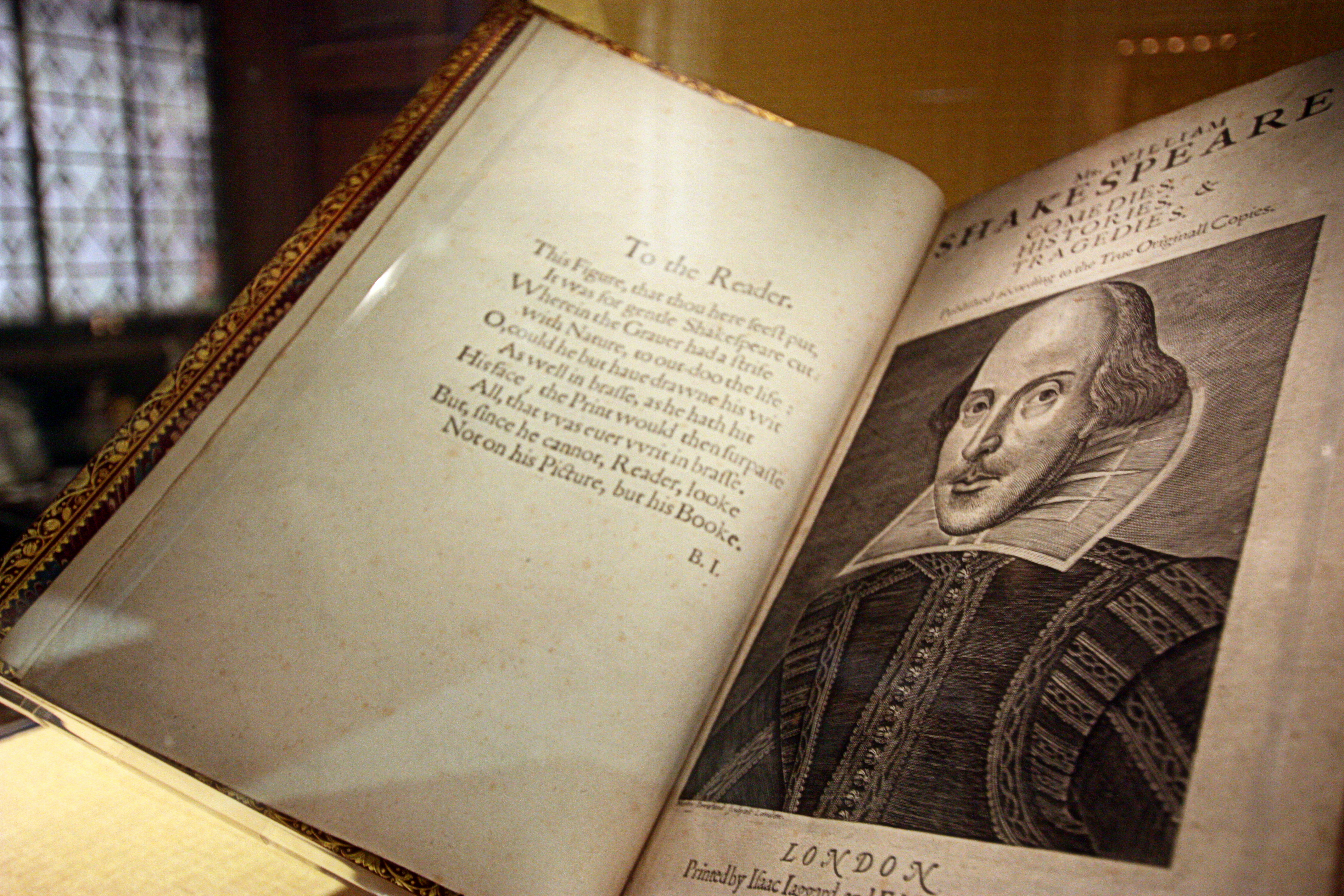
a 1623 Shakespeare First Folio, seen with my own eyeballs ("eyeball" - a word invented by the Bard)

a 1623 Shakespeare First Folio, seen with my own eyeballs (“eyeball” – a word invented by the Bard)

What’s in a name? ~ Juliet, Romeo and Juliet

Juliet’s famous line draws into question notions of identity. What does it matter what we’re called? Does a name or a title change who we are, or who we are perceived to be? I kept my maiden name when I got married, embedded as it was in my sense of who I am. Recently I got to change my title from ‘Ms’ to ‘Dr’ which has come with its own inner identity wrangling. This question is still relevant today, as the language we use to define and describe (ourselves, the world, anything, everything) shapes the meanings we make and the realities we create.

This above all: To thine own self be true. ~ Polonius, Hamlet

An oft-cited line, here’s a case of art speaking a universal truth: the importance of being true to oneself. Shakespeare reminds us to live authentically and purposefully.

If you prick us, do we not bleed? ~ Shylock, Merchant of Venice

While Shylock’s speech ends in vengeance, it begins with a powerful, emotive plea for social justice and equality. This plea can be seen (from a particular angle) to challenge the beliefs of Shakespeare’s time. It also challenges modern audiences to consider their own prejudices and kindnesses. Who in our contemporary world is treated with a lack of empathy or humanity? Who is voiceless or powerless? Who is willing to stand up for justice and fair treatment of all? What is fair?

Shylock’s character is complex and open to different interpretations. Is he villain, victim or man of integrity? He challenges viewers to reflect on themselves, the world in which they live, the way they treat others and the way they conduct themselves.

Screw your courage to the sticking place. ~ Lady Macbeth, Macbeth

Lady Macbeth is initially the backbone in her relationship with Macbeth, although she later goes mad. Here she is at the beginning of the play, strong, resolute and convincing. She calls on spirits to “unsex me” in her drive to take on the strong masculine role alongside her then-weak husband. The actions of Lady Macbeth and her husband are murderous, driven by ambition. The complexities of their relationship explore still-relevant themes of power, gender and love.

Macbeth, like Shylock, is a complex and flawed character open to interpretation. The play encourages us to reflect upon to the extent to which we are each responsible for our own actions and on our own “black and deep desires.”

What angel wakes me from my flowery bed? ~ Titania, A Midsummer Night’s Dream

I love this line. Titania is enchanted as she wakes, but who wouldn’t want to have these words sleepily uttered to them as soon as a lover opened their eyes?

The Folger Shakespeare Library, with the Capitol in the background

The Folger Shakespeare Library, with the Capitol in the background

Liquid becoming: Reflections on post-PhD identity and momentum

Reflections on how

things can change across a year.

Liquid becoming.


Identities like

ice floes. Shifting. Writing self

into being. Flux.


Mutable quicksand

liquefying, swallowing.

Consumed or dissolved.


What does it mean to

be doctor me? One foot in

front of the other.

cherry tree trunk, Tidal Basin, DC

cherry tree trunk, Tidal Basin, DC

I’m finding myself in a moment of reflection, hence the above haiku-ification of my thoughts.

If I look back one year ago, I was blogging about blogging anonymously. I was introducing myself to people at conferences who knew my Twitter profile but would not have recognised my avatar, or my online name. Recently I have been letting go of that anonymity and this month updated my avatar and my name on my social media accounts, making myself identifiable and searchable. Although I’m still not sure entirely how I feel about that.

A year ago I was in the throes of struggling with my PhD thesis discussion chapter. Since then, the PhD is done. I am doctored. But my ‘doctor’ identity has yet to catch up with me. In changing my Twitter name and the title on my frequent flyer account (in-flight medical emergencies, here I come!) I’m hoping that my doctor-ness might start to feel like a part of who I am.

one of my favourite PhD memes

one of my favourite PhD memes

In the last year, wonderful unexpected things have happened in rhizomatic ways. I have been invited to speak at events. This blog was nominated for the Edublog Awards, and came fourth in the Best Individual Blog category. It was recommended by the likes of Professor Tara Brabazon, in this keynote podcast. I have had two peer-reviewed papers accepted for publication. My paper submission to the AERA conference was accepted, and so I went to Washington DC to present it and attend the conference. In the last eight months I have been involved in founding and co-moderating the monthly #educoachOC Twitter chat. The Times Higher Education blog asked to publish one of my blog posts (interestingly, one I would never have put forward). I’ve developed collegial, thinkerly and writerly relationships with people on Twitter and WordPress, many of whom I haven’t met in person. I’m in discussions with scholars about writing book chapters and co-authoring papers. These unforeseeable delights have shaped my year into something rewarding, interesting and surprising.

I write these things down partly to marvel at their coming into being, and partly to wonder about how it is that they have happened while I have quietly (or perhaps not so quietly) gone about my life and work.

In January I focused on a personal ‘one word’ for this year: ‘momentum’. The word ‘momentum’ continues to resonate with me. While I’m sure things will continue to happen and evolve, I have no Grand Plan. I continue to work at my Australian school. I continue to write papers from my doctoral dissertation. I continue to think about possibilities for work, research, presenting and writing that might serve my students, colleagues, school and the education community, while fuelling my own passion and inner nerd heart. I’m hoping that this one-foot-in-front-of-the-other approach (the same approach I used to get through the PhD) will build momentum, and that rewarding partnerships and important work will continue to bubble up and come into being.

It is Fred Dervin who writes about identities as liquid. I imagine the liquid mirror in the film The Matrix, which I also talked about in this post on reflexivity. But that liquid mirror was one that consumed the person, rather than the person themselves being liquid, which is, I think, a more uncomfortable concept. To be always shifting, always fluid, always becoming and even unbecoming.

As I simultaneously feel myself unravelling and re-forming, attempting to take some shape, I’m waiting for more stable internal identity ground for myself, post-PhD. In the meantime, I guess I can surf the shifting ice floes or try to luxuriate in the quicksand instability of feeling more inner liquidity than usual?

cherry tree trunk, Tidal Basin, DC

cherry tree trunk, Tidal Basin, DC