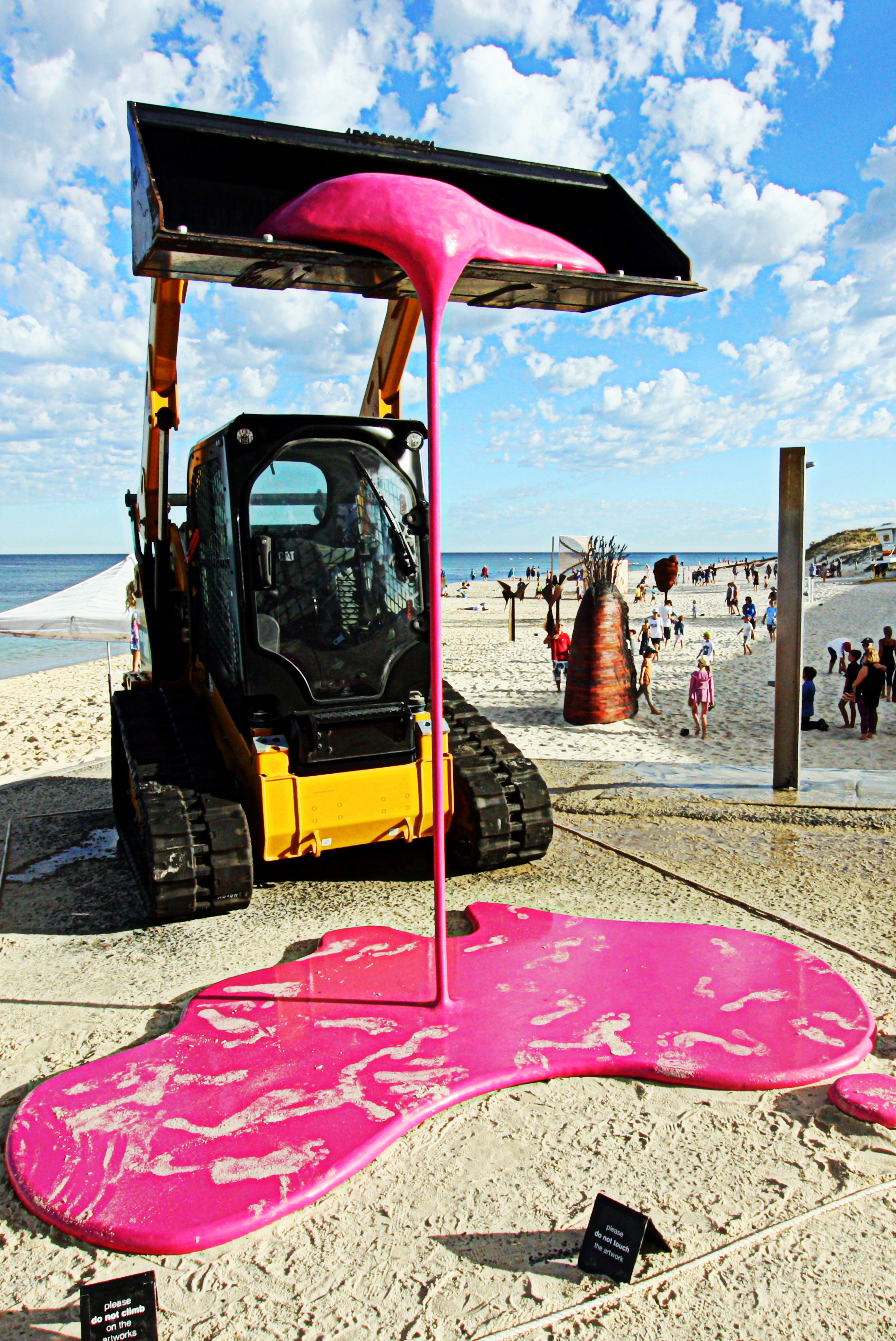
As I sit at Washington DC airport, having overnight been conferred my doctorate (I am now ‘doctor’!), I thought I’d upload a few pics of what has been a wonderful trip to DC for the AERA national conference. What a great week.


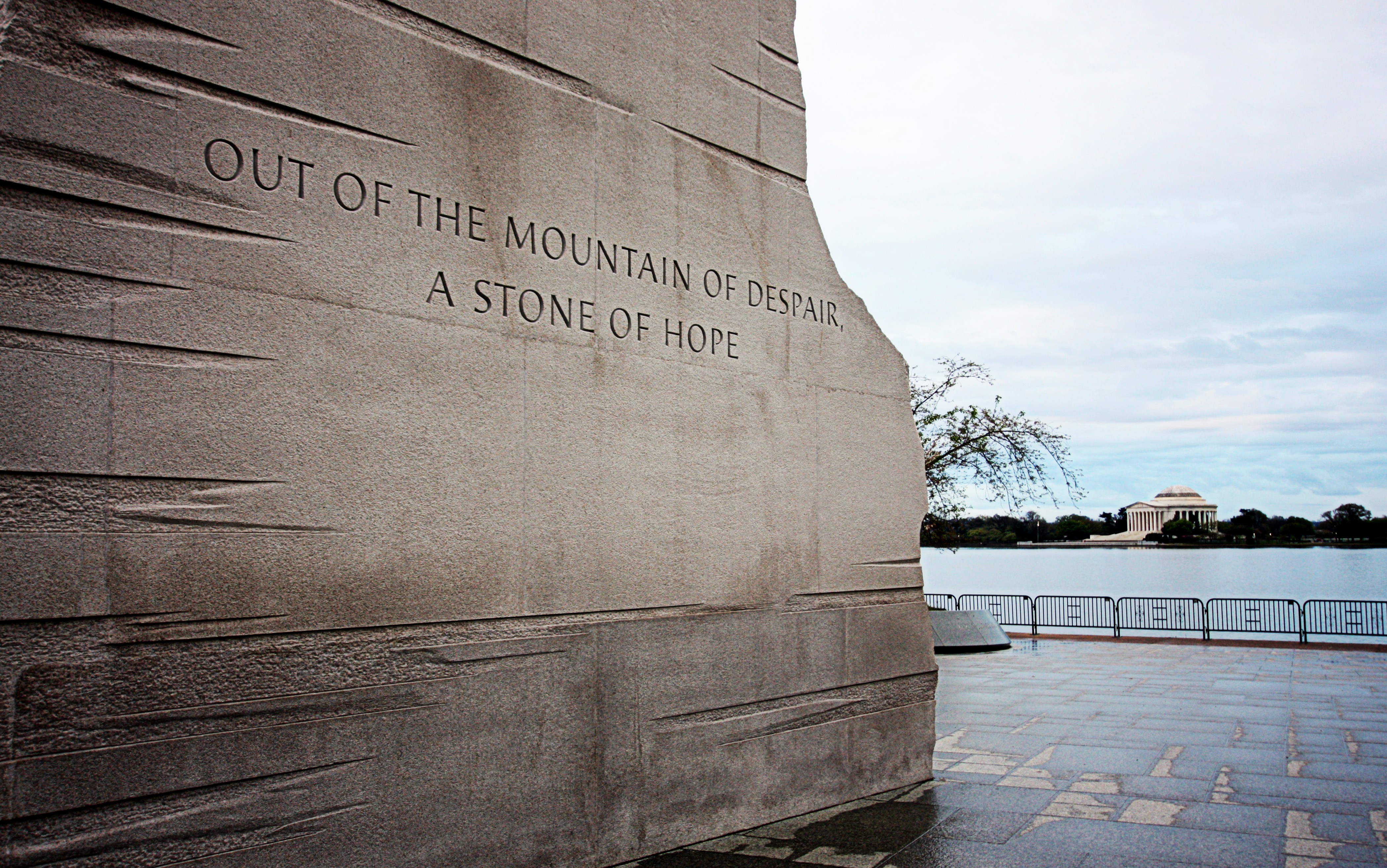


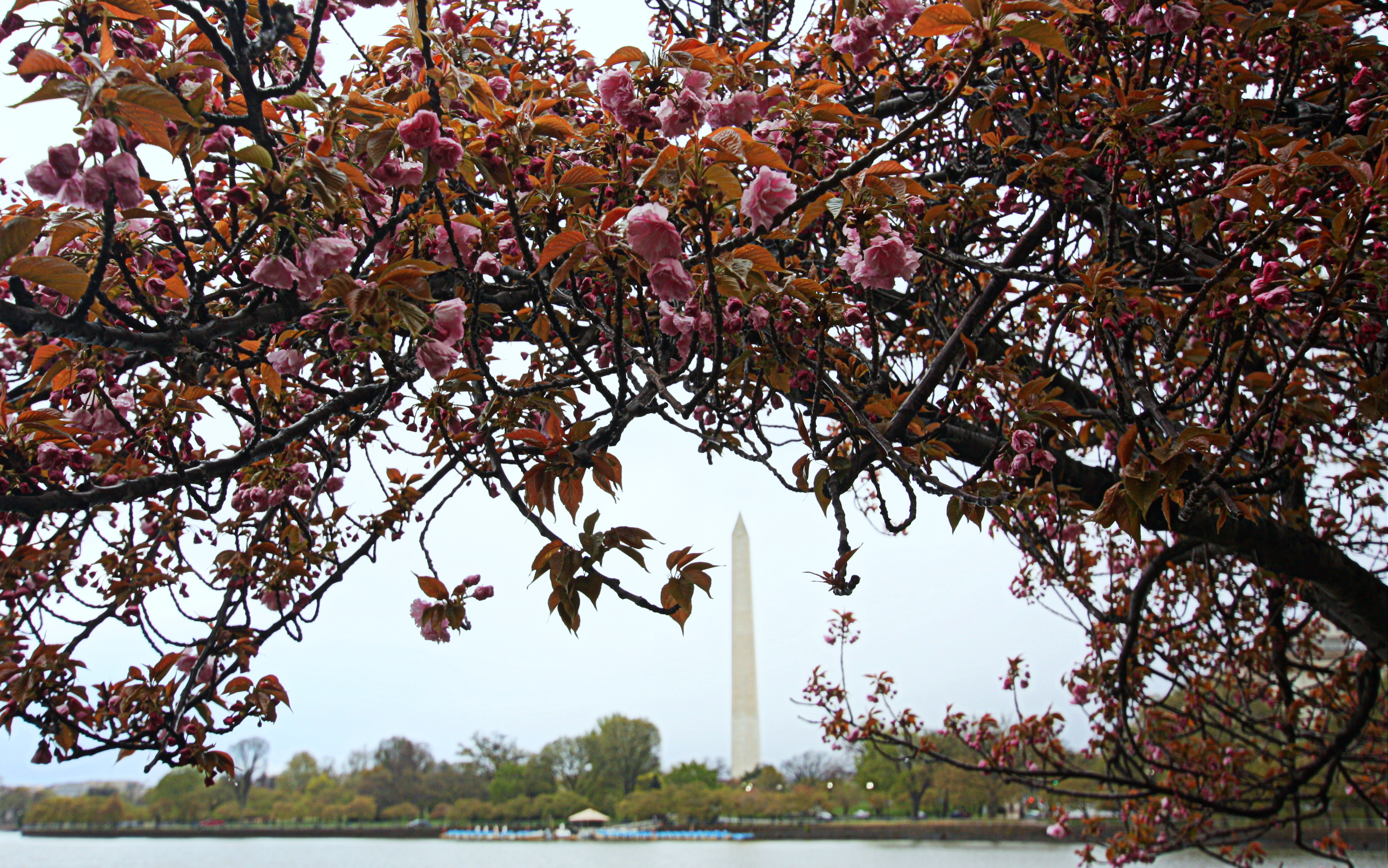






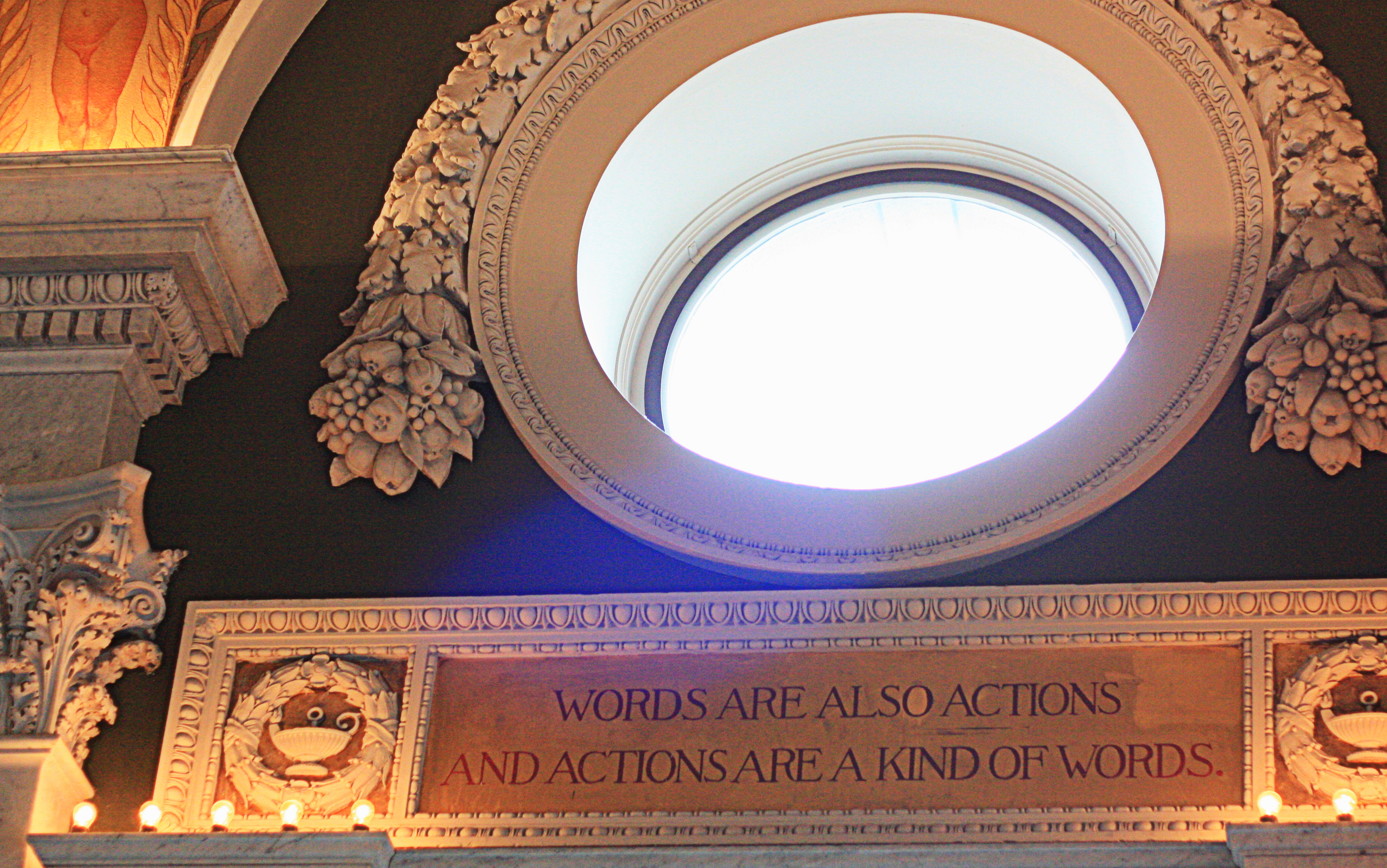

As I sit at Washington DC airport, having overnight been conferred my doctorate (I am now ‘doctor’!), I thought I’d upload a few pics of what has been a wonderful trip to DC for the AERA national conference. What a great week.

Iwo Jima at sunrise
In one roundtable session, a paper by Stefani Relles and Randy Clemens used the metaphor of punk rock for academics who use DIY scholarship in their quest for social justice. They theorized punk rock scholarship as grounded, activist and disruptive, using comparisons to skateboarders, graffiti artists and musicians of the punk movement. I reflected that a punk rock scholar might circumvent or disrupt traditional academic practices by self-publishing, using social media, blogging, or embracing open access and saying no to pay-walled publishing. But there was discussion at the roundtable about the extent to which an academic can be an outlaw. How disruptive can one be within the system, which places particular norms, pressures and metrics on those working within the academy? How might academics navigate the need for a pay check and tenure with their passion for social justice? Is it a case of corporate Bruce Wayne by day and vigilante Batman by night?
Similar issues emerged in a six-paper session about post-qualitative methodologies in which scholars were pushing at the boundaries of, dissolving, or letting go of, accepted Western ways of knowing and researching. Audience questions included those about how to exist within an academy while challenging or dismissing much of what it holds to be true or important.

Georgetown blossoms
Diane Ravitch’s story pointed to the need for persistence with moral purpose. She told the audience that her best-selling, award-winning book The Death and Life of the Great American School System: How Testing and Choice are Undermining Education was initially turned down by 15 publishers. At 77 years of age she is also an example of the power of social media and blogging. Her blog has more than 14,000 posts with more than 27 million page views. This speaks to the opportunities for scholars to leverage social media and the blogosphere to communicate their work and their messages to wide audiences. Tweeting and blogging can be scholarly writing practices.

Jefferson
The AERA conference itself is in some ways an exercise in homogeneity. While with about 18,000 in attendance, there is a wide range of topics being covered, most attending are dressed in variations of the same theme. Outwardly, there is an expectation of the academic, graduate student and educator. Do we wear our capes beneath our clothing? Is it our words and our work that are the heroes and the punk rockers?
Yesterday answered many of the questions I’ve been asking myself about what work to choose to do next. I think the answer might be simple. Do the work you believe at your core to be important. Say what needs to be said. Be guided by moral passion, social justice and fundamental purpose.

Folger Shakespeare Library
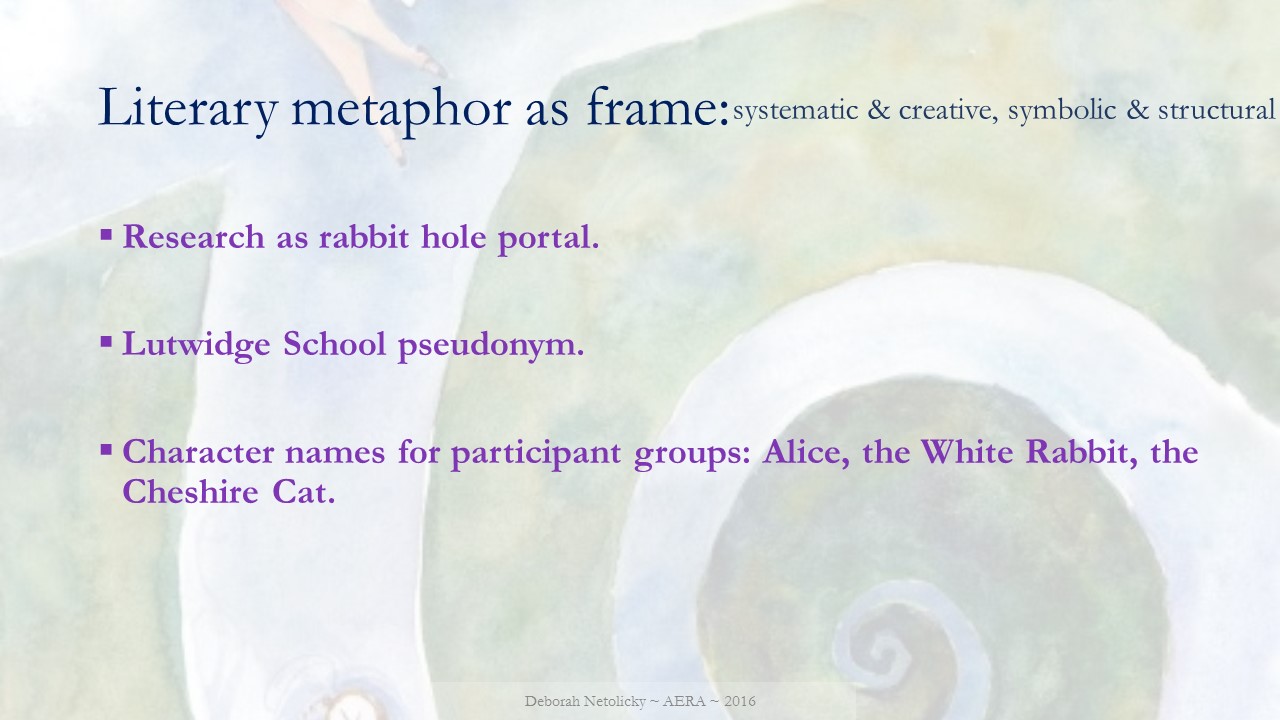
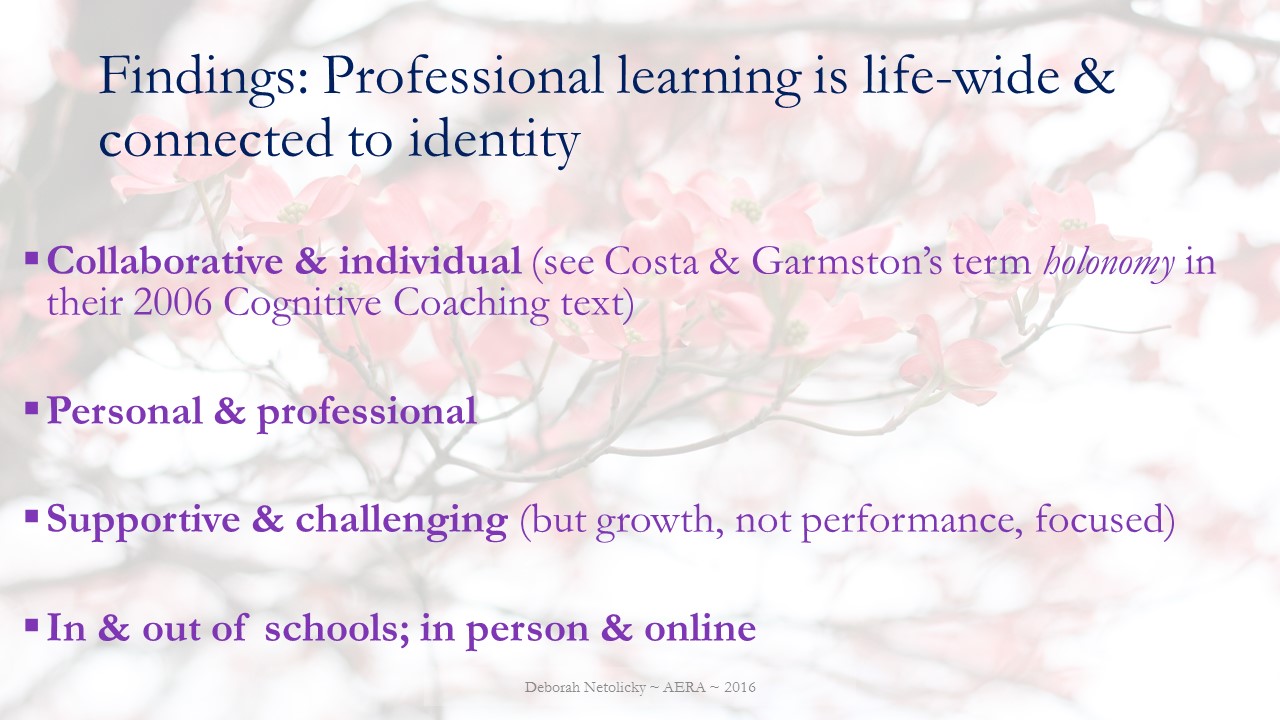
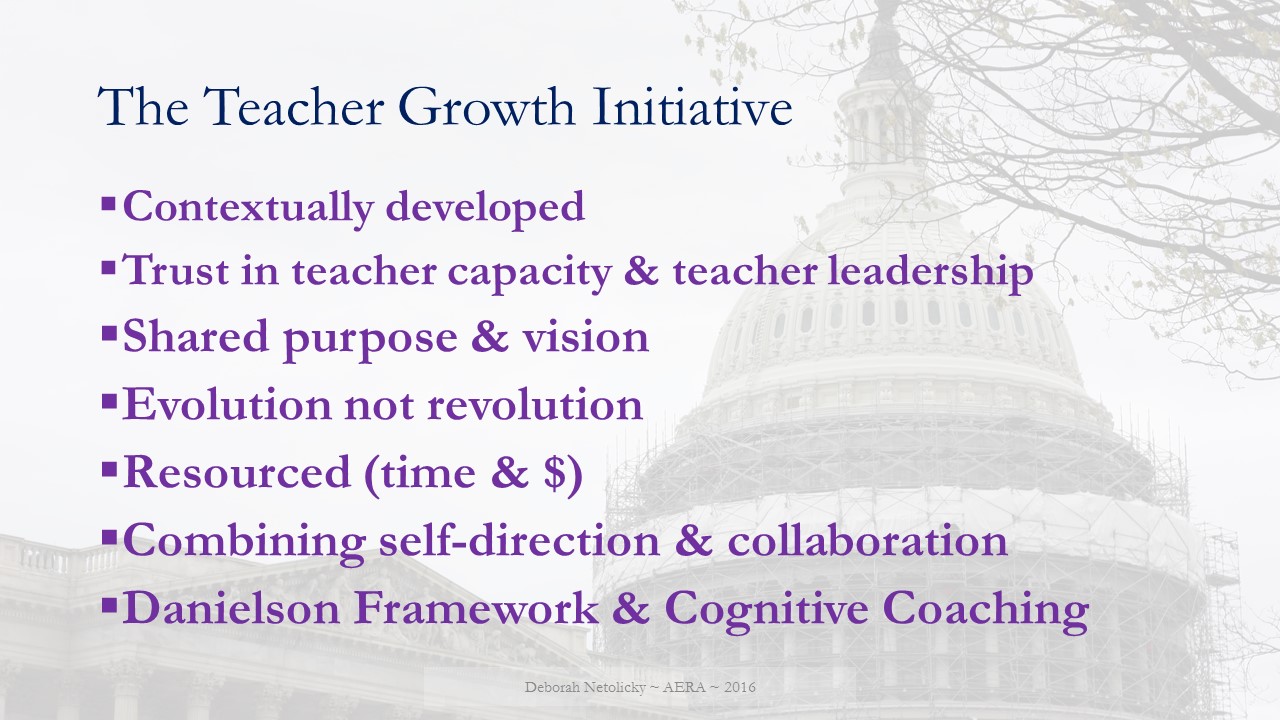
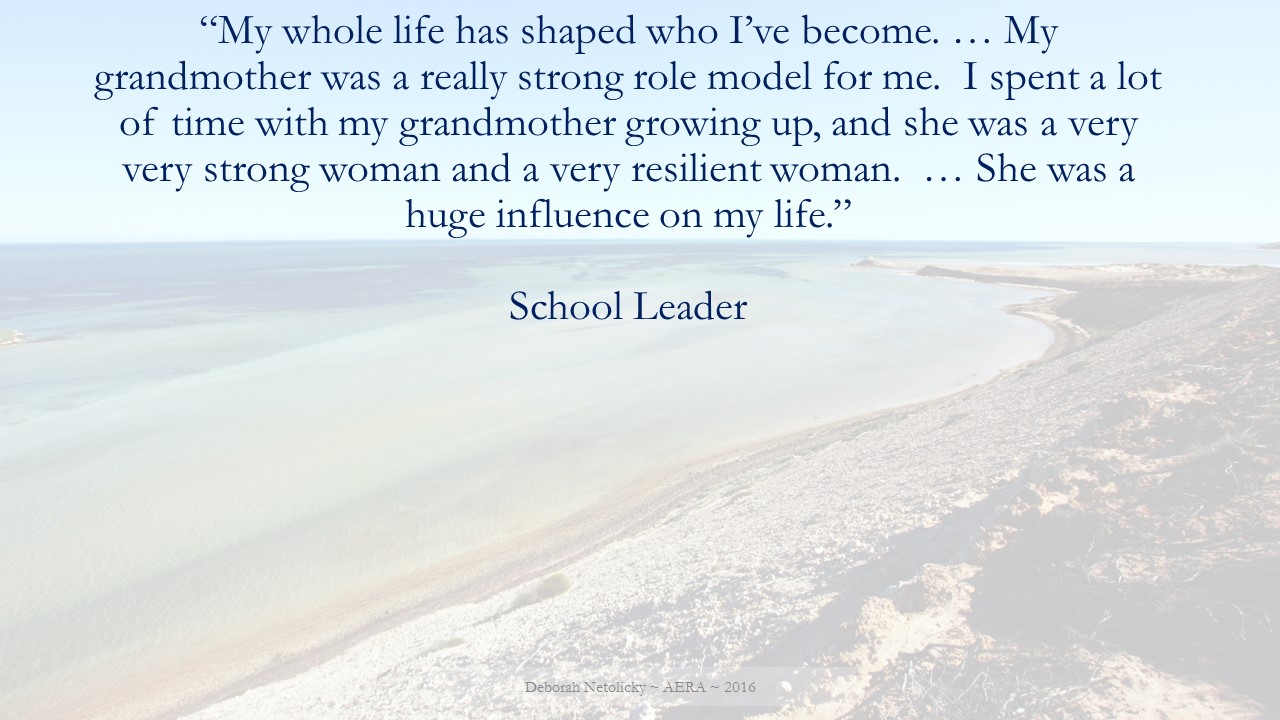
Yesterday I presented a paper in Washington DC at the American Educational Research Association national conference, in its 100th year. This particular paper outlines my PhD’s general findings around professional learning for teachers and school leaders. It was great that more than 50 people turned up to the session, in which four papers on professional learning, including mine, were presented. The papers were a complimentary combination that really spoke to each other; I learned a lot from my co-presenters. We had plenty of generous feedback and robust discussion which spilled out into the hallway for almost an hour after the session ended, and then beyond.
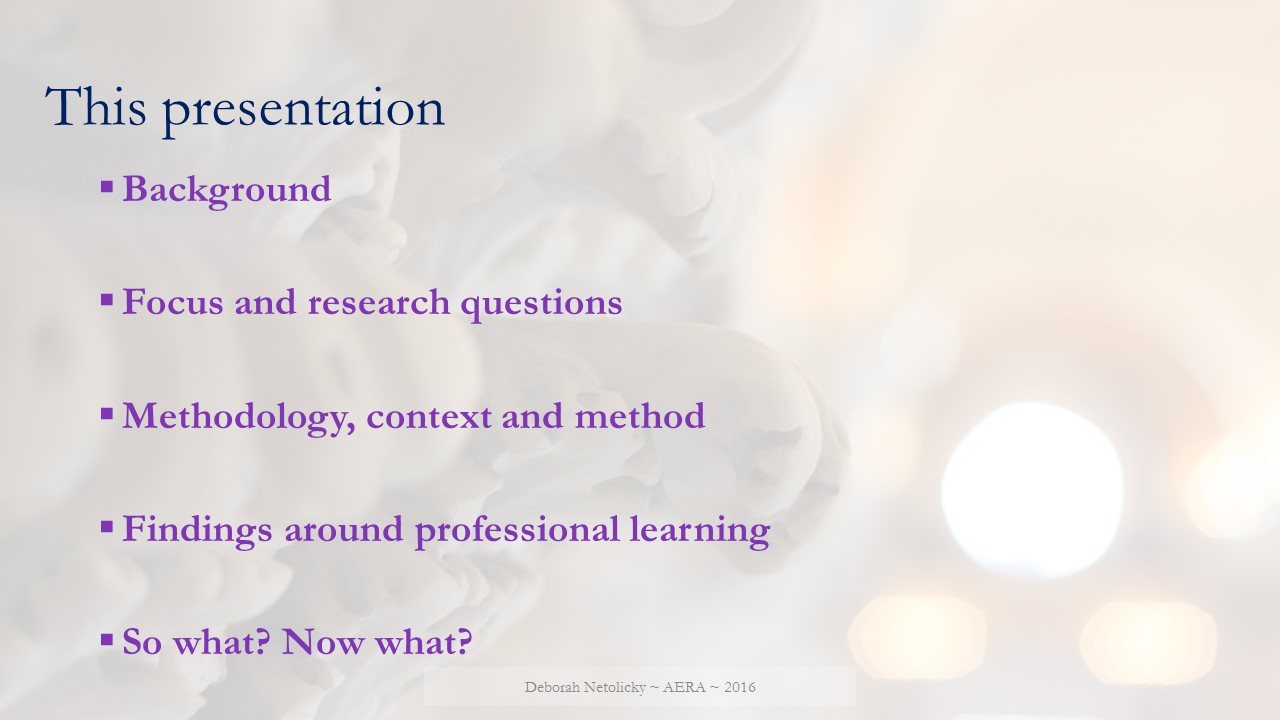
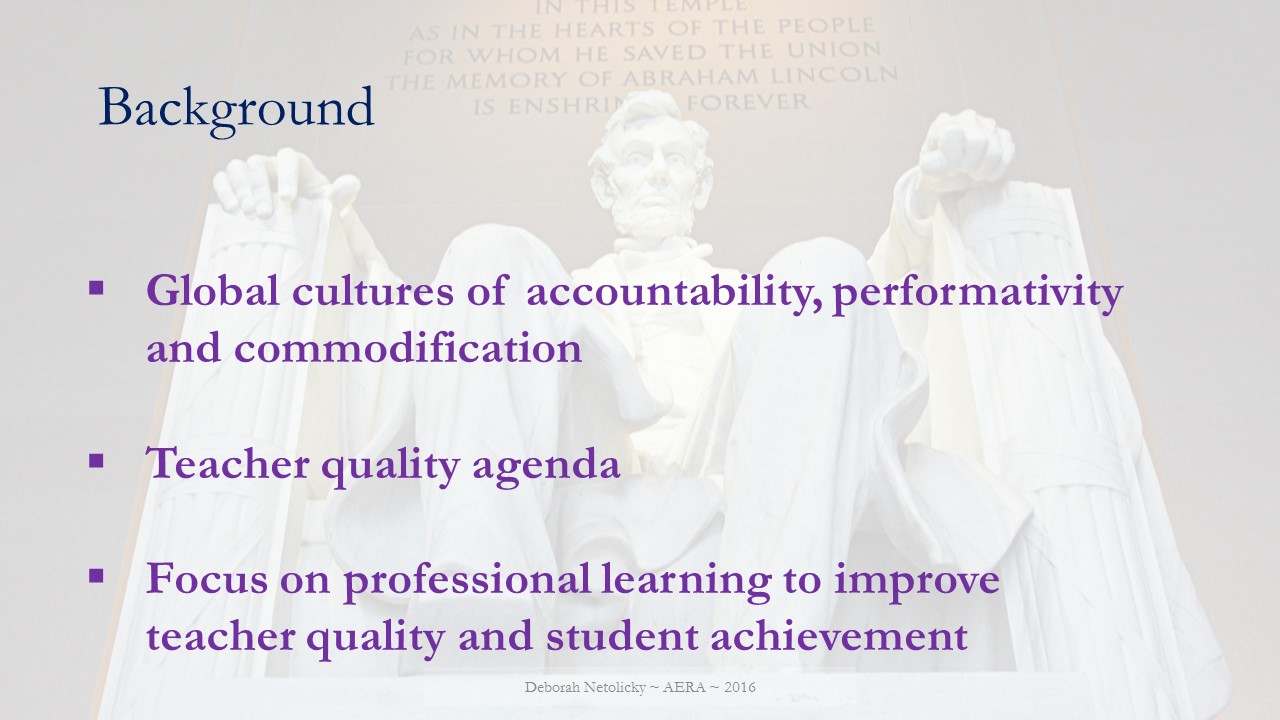
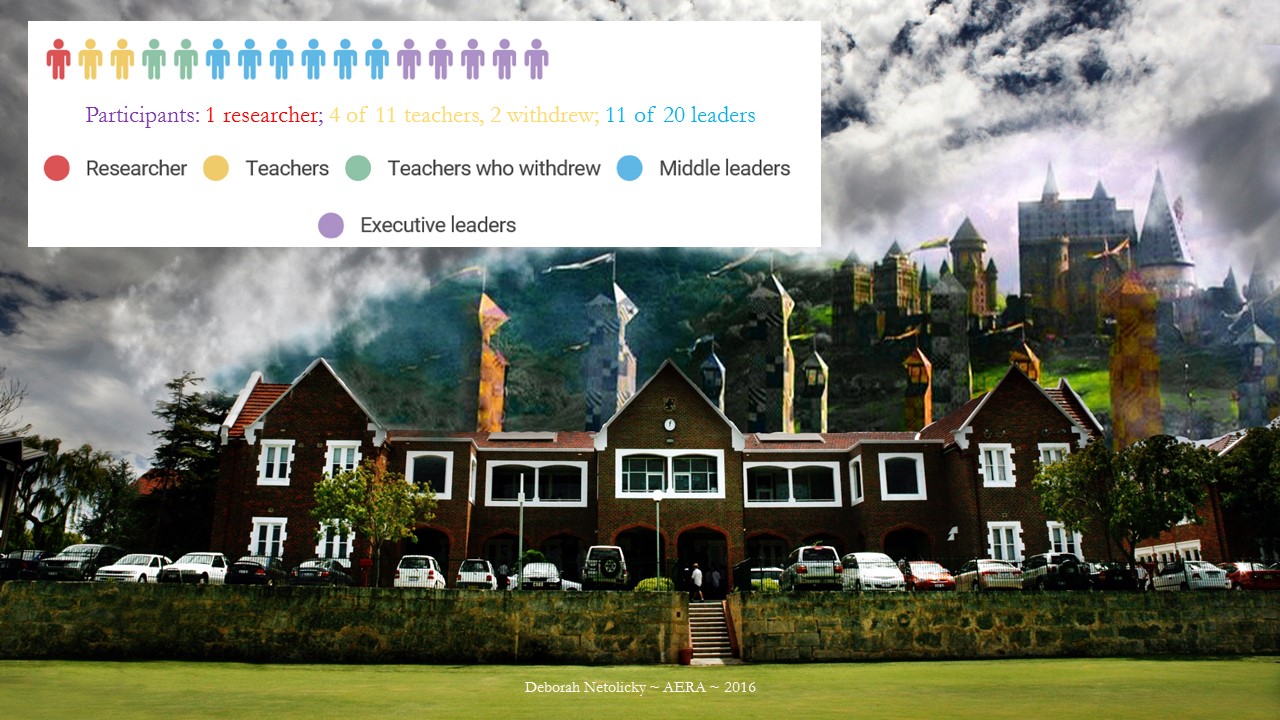
My full paper will be available in the online repository when the 2016 papers go live. In the meantime, here are copies of my presentation slides. The slides were designed for me to talk to, not read from, so much of the content is thin. That is, they’re light on text and light on references (see the paper for more depth), but you’ll get a sense of my main points. Of course I didn’t get through them all and ended up skipping over the participant quotes (19 slides in 12 minutes? What was I thinking? #overexcited #lessonlearned).
If you’re interested in more, my dissertation, which looks at professional learning in more depth, as well as its interactions with professional identity and school culture and change, can be downloaded here.
From my experience so far I can highly recommend the AERA national meeting. It’s a friendly conference with an impossibly wide range of interesting and important work being shared, and connections being made.






iconic Abe
This afternoon I spent 3 hours at two round table sessions at AERA in Washington DC, hearing about and talking about teacher leadership and agency. Then on the way home from drinks with Sarah Thomas, who I know through Twitter and Voxer, I stumbled across the #satchatOZ chat on Twitter which was talking about teacher leadership. So whilst I’m jetlagged and brain-exhausted from a day of conferencing, I want to get my raw thoughts down before they’re overrun with tomorrow’s thoughts (with some of my photos, because: DC).
Three terms that came up today in the two roundtable sessions I attended were: efficacy, agency and leadership. Self-efficacy is about how well someone thinks they can do something; a self-belief in their own capacity. Agency is the capacity to act as well as the acting itself; to be an agent is not just to have the internal capability to do, but to actually do the doing. I wonder, can someone be an active agent, capable of action and change, without the self-belief in their capacity to do so? Possibly. Can someone have a sense of self-efficacy, but without the agency to be effective? Probably.
Leadership, meanwhile, is a slippery word. People can be leaders by name or position, but this doesn’t guarantee that people are led by them. Leadership and agency are not just individual, but also collective. Can someone be a leader without a followership? A leader can be defined by their title, but more often they are defined by their influence on others, their organization or the system in which they operate. Teachers without official positions of responsibility can be, and are, leaders in their fields. They are active agents who effectively translate their beliefs and purpose into reality through deliberate and effective action.
In leadership and agency in schools, context is a key consideration. The holonomous* environment of a school is one in which the sum and the parts are inseparable. If schools want teachers to be reflective, growth-focused and agentic, they need to trust in their teachers and provide an environment in which risks and exposing one’s vulnerability are ok. In a culture of teacher-scoring and fear, teachers are less likely to be agents of positive growth and more likely to be compliant servants to a punitive system. Movements like #flipthesystem, which are explored in Jelmer Evers and René Kneyber’s book, advocate for further teacher voice and action in education reform. Localised reforms like my school’s teacher growth model are practice-based examples of in-school teacher leadership in action.
In the introduction to Linda Darling-Hammond’s presidential AERA address this afternoon, she was described as identifying as a teacher, but having become a researcher so that she could be a strong voice listened to by policy makers and powers that be. She saw research as a way enact and propel change.

DC daffodil cityscape
While I didn’t frame my PhD research through the lens of teacher leadership and agency, it could be seen through that lens. I explored teachers and school leaders’ perceptions of identity, learning and school change, within a particular context. That context was the coaching intervention I was leading at my school, a formative growth-based model of teacher growth and development.
What emerged from my study, when looked at in terms of teacher leadership and agency, was that teachers are deeply tied to their senses of self within their senses of their context. That is, teacher self-efficacy and agency develop when teachers feel an individual purpose, an alignment with context and that they are empowered with voice and influence in their own organization. In this case, the school empowered teachers to be active agents with a voice in school reform. Additionally, the formative aspect of the coaching model for growth was fiercely protected; teachers are not scored and judged, but are able to collect lesson data and participate in coaching conversations in order to grow themselves. This kind of trust requires some relinquishing of power from those at the traditional hierarchical apex.
As someone who connects with others on Twitter and writes on this blog, I think that technology and social media give us tools to develop our teacher voice and engage in conversations about education. I know of teachers who would be considered leaders both in their schools, and in the wider land of education, due to their public thinking, writing and advocacy. I also know those who are known more for their leadership in the social media or conference arenas, than in their own day-to-day school contexts.
As others have noted, Twitter flattens hierarchies and empowers users. Bonnie Stewart’s research into academic Twitter found that there are different spheres of, and criteria for, influence on Twitter than in higher education institutions. The same is true in other educational contexts. Government ministers are drawn into public conversation with teachers on the ground. Social media and blogging can be leveraged by teachers to allow them voice and agency, to advocate or agitate. As Greg Ashman and Rory Gribbell note in their recent blog posts, bloggers can and have been agents of political and educational change, a pluralistic chorus of voices to which people are listening.
Teachers can and should be advocates for their students and their schools. They can and should pursue research and opportunities to understand, revise and reimagine what is known in education. Those leading schools and systems in official roles can encourage teachers’ growth and leadership by questioning traditionally hierarchical power structures and considering more distributed and inclusive ones. In this way, teachers can be encouraged to lead within their contexts, instead of feeling as though they are fighting against the system or preserving their survival within it.
* Check out Costa & Garmston’s 2006 Cognitive Coaching text or my PhD dissertation for discussion of holonomy.

mural at the Library of Congress

How nice it would be if we could only get through into Looking-Glass House! I’m sure it’s got, oh! such beautiful things in it! Let’s pretend there’s a way of getting through into it, somehow, Kitty. Let’s pretend the glass has got all soft like gauze, so that we can get through. Why, it’s turning into a sort of mist now, I declare! It’ll be easy enough to get through—’ … And certainly the glass was beginning to melt away, just like a bright silvery mist. In another moment Alice was through the glass, and had jumped lightly down into the Looking-glass room. ~ Lewis Carroll, Through the Looking-Glass, and What Alice Found There
In qualitative inquiry the researcher is often trying to find systematic and ethical ways into their research, and once immersed in that world, they are working out and applying ways to navigate it. The interrelationships between self, participants, methods, data and field of study are messy, web-like and complex.
This blog post is a response to one by Naomi Barnes, in which she explored her thinking around diffraction as an alternative to reflection and reflexivity. Here I pour out my own stream-of-consciousness which was incited by that post, in an attempt to make meaning through writing, and in doing so maybe open up some possibilities or provocations about ways of thinking about how researchers interact with, and conceptualize their interactions with, their research.
Naomi (channeling Karen Barad) talks about reflection as being like looking into a mirror, and reflexivity about looking into a mirror of mirrors. She begins to frame diffraction as a more complex way of looking at the self. She writes:
The moment you pass to the other side of that yellow line your life could go in any direction because new people, materials and environments wait for you there. Those things will transform you as a person every step you take and you will transform those things.
This relates beautifully to Alice’s experience of passing through the Looking-Glass, into the world beyond the mirror, in which things are different, backwards or transformed. Diffraction, though, does not reflect, but provides a tiny hole for light to pass through.
In a related example, the film The Matrix directly references Alice and Wonderland in quotes such as “Follow the White Rabbit” and “see how deep the rabbit hole goes.” In the film, a mirror is Neo’s portal into his new consciousness about his reality. Rather than travel through the mirror, he finds the mirror overtaking his body, travelling over and into him. In this scene it seems the fluid mirror, which could represent a reflection of world and self, infects Neo. He becomes distressed as the reflective surface encroaches over his body and eventually into his mouth. Does this reflect how uncomfortable we can be with reflection? How reflection can be internalized?
 I’m not familiar with Barad’s work but this notion of how researchers might think differently about reflexivity got me thinking about Alice and the Fresnel lens as a metaphor for thinking about the ways we approach thinking about our positionality.
A Fresnel lens is one in which concentric circles etched onto the surface provide a multiplicity of refractive surfaces. This makes the profile of the lens look jagged, but from above the lens is symmetrical, with those hypnotic circular grooves. This means that the lens can be used to collect, gather, focus or change the direction of light. It can take non-uniform light and evenly distribute it. It can additionally magnify and project images. (Please take my understanding of the Fresnel lens with a bucket of salt. I’m not a physicist, and my introduction to the Fresnel lens was a hand drawn illustration on a napkin in a London pub. There is more information about it here and here.)

photo by Larry Keahey http://fineartamerica.com/featured/fresnel-lens-larry-keahey.html
Any lens, the Frensel included, has those things for which it is useful and those applications for which it is not. What are the limitations of ourselves, and the ontological, epistemological and methodological lenses we apply? What is eclipsed by the instruments we use? What is magnified, projected or gathered together?
Does the mirror or lens overtake and control us, or do we control it? If our realities and our research texts can only ever re-present or present partial accounts of reality, what might we gain (or lose) from moving through the mirror, instead of looking into it? Or through the lens? Which lens should we use? In which direction should we point it? How does our choice limit or expand the possibilities? How might this align with our purpose? Focusing vs. magnifying. Collecting vs. projecting. Diluting vs. intensifying.
Meanwhile, if our identities are contextual and fluid, what might we refract, reflect, consider or ignore at different times and in different places? As active instruments of inquiry, how do researchers channel their own selves through a particular lens and to what extent does this need to be explicit or teased out in detail?
Some might argue that the researcher’s positionality be explored and made transparent. Others may criticize this as navel-gazing work which takes away from the pursuit of scientific Truth through more objective methods. As someone who embraces truths as plural, subjective and shifting, the notions of reflexivity, diffraction or the Fresnel-lensification of the researcher self and context can be a key to teasing out both the limitations and benefits of research.
Being an insider participant in my PhD research context meant that my embeddedness gave me an inside-outside view. I stood on both sides of the Looking-Glass. If I was a Fresnel lens instrument, I could be seen as having pointed in a particular direction, or perhaps in simultaneously multiple directions, collecting particular light in particular ways, and refracting it in ways influenced by my multiplicitous, liquid and etched-across-time self.
To what extent are we even important in our research? To what extent does our metaphor for looking or self or data matter? Mirror? Mirror of mirrors? Diffractor? Fresnel lens? Telescope? Microscope? Looking-Glass? Muddy puddle? Hole in the wall?
Life, what is it but a dream? ~ Lewis Carroll, Through the Looking-Glass, and What Alice Found There
2008 Paris puddle, Jardin des Tuileries
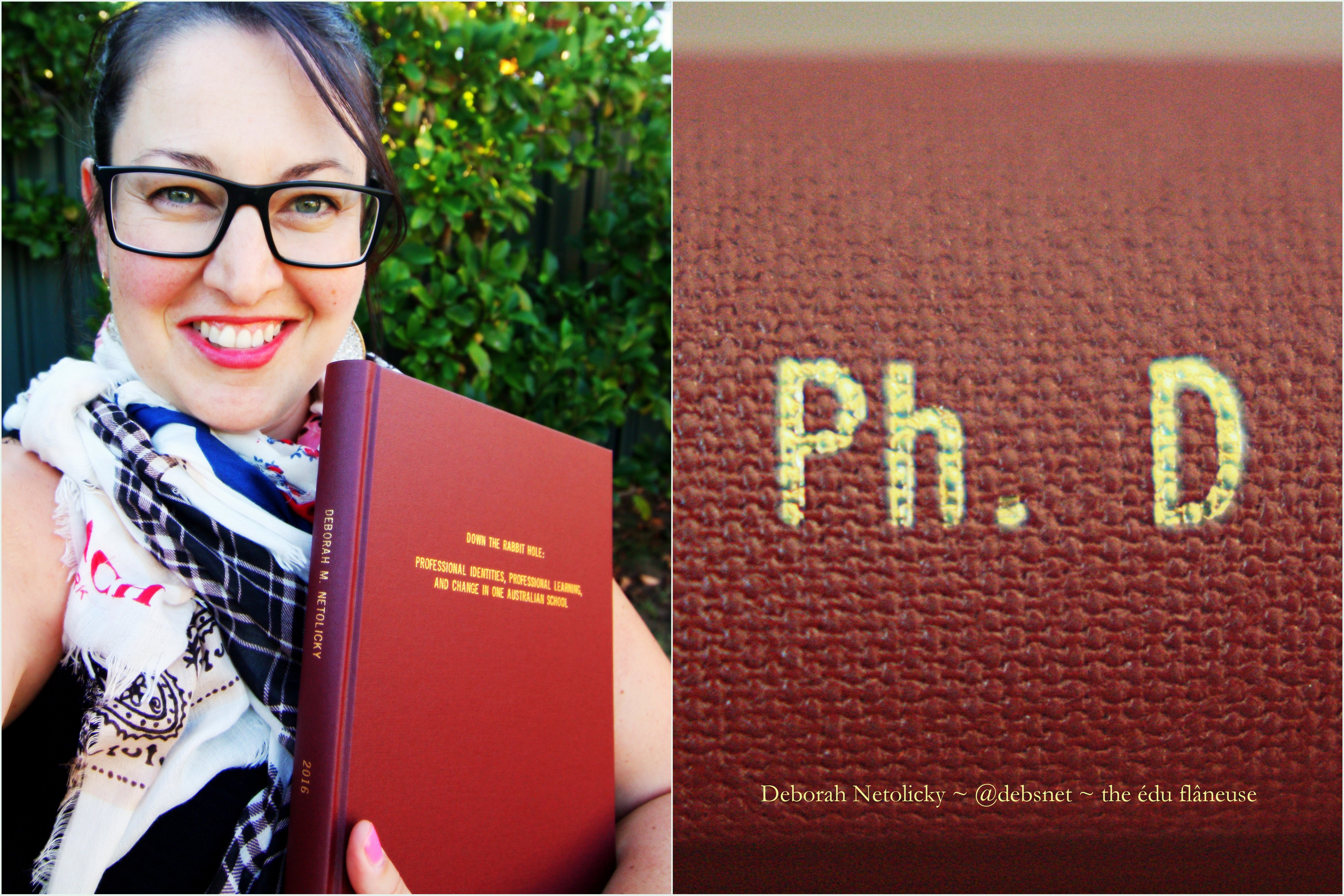
the shameless joy of the thesis selfie & those three little letters emblazoned in gold
Having books bound signifies respect for the book; it indicates that people not only love to read, but they view it an important occupation. ~ Fyodor Dostoyevsky, Demons
The chemical breakdown of the smell of books was the subject of a 2009 study (downloadable here and nicely summarised here), but those smells are about more than science. They are about emotions and memories. Libraries. Being read to snuggled in beds. Reading alone in beanbags, on sunny window ledges or in hidden cubbies or corners. Dragons and sleuths and science and fantasy. Escape into other worlds and other lives. Empathy, fear, disgust, happiness, tears. The pads of fingers on pages. The whoosh of the page turning. The thud of a closing book. The grief when a trilogy or series ends.
I’ve written before about the memories of my grandfather’s study, filled as it was with old books, including the two prized books he left to me. My grandfather wasn’t a Ron Burgundy kind of man, but he did have many leather bound books. He was an academic, a professor and a book binder. (He also made those little wooden ships and magically placed them inside bottles.) The smell of old books–which is described here by Deepak Mehta as bibliochor, inspired by the word petrichor–takes me back to sitting in the cushiony chair in that study, having books gingerly passed into my hands. Feeling their physical and symbolic weight. He didn’t live long enough to see me finish my PhD and share my own Big Book with him, but I was lucky enough to be able to share the first part of my PhD journey with him.
This week I was full of nerdy book-loving joy when I picked up the hard bound copies of my PhD thesis. I’m an English and Literature teacher, reader, bibliophagist, smeller of books, narrative researcher and writer of texts. So it stands to reason that I would be obsessively perfectionist about the physical thesis book (totally reasonable, right?). I agonised over font, paper and end papers.
What’s in a font? That which we write in Helvetica by any other font would read as sweetly.
I always envisaged my thesis volume as channelling the old storybooks and encyclopaedias (remember those?) of my childhood. My selection of the font Garamond acknowledges that serif fonts are more readable, while visually referencing the traditional old-style serif typefaces of literary fiction. Garamond is a sixteenth century French artisanal font based on the work of Claude Garamond, and it is lovely in italics. It was a more beautiful option that the conventional Times New Roman. Apparently TNR is mandated in some institutions but as its inception was to squeeze the most text into the columns of The Times, it’s a bit squishy and a bit ubiquitous.
If you are thinking about thesis fonts, check out Anitra Not’s wonderful Slideshare on how to make a beautiful thesis. There should be a word for ‘the joy brought by beautiful typeface’. I don’t think that thinking about the beauty and readability of your thesis is total phdcrastination; there’s some method in wanting to present your work in a way that resonates with its purpose.
O, feel of paper and smell of page!
While my university prints theses on heavier-than-usual copy paper, I ended up researching papers on which I might print the thesis. I eventually settled on an archival paper watermarked with the National Archives of Australia registered trademark. It was cream rather than white and a bit textural rather than super-smooth. I tested the paper for its ability to handle the illustrations in my thesis and printed double-sided, to keep the thickness down and save some paper, rather than for aesthetics (there was a bit of show-through).
I also bought some white Japanese Unryushi paper to act as endpapers after I discovered that getting marbled endpapers in Australia is prohibitively difficult (my granddad would have known where and how to get some).
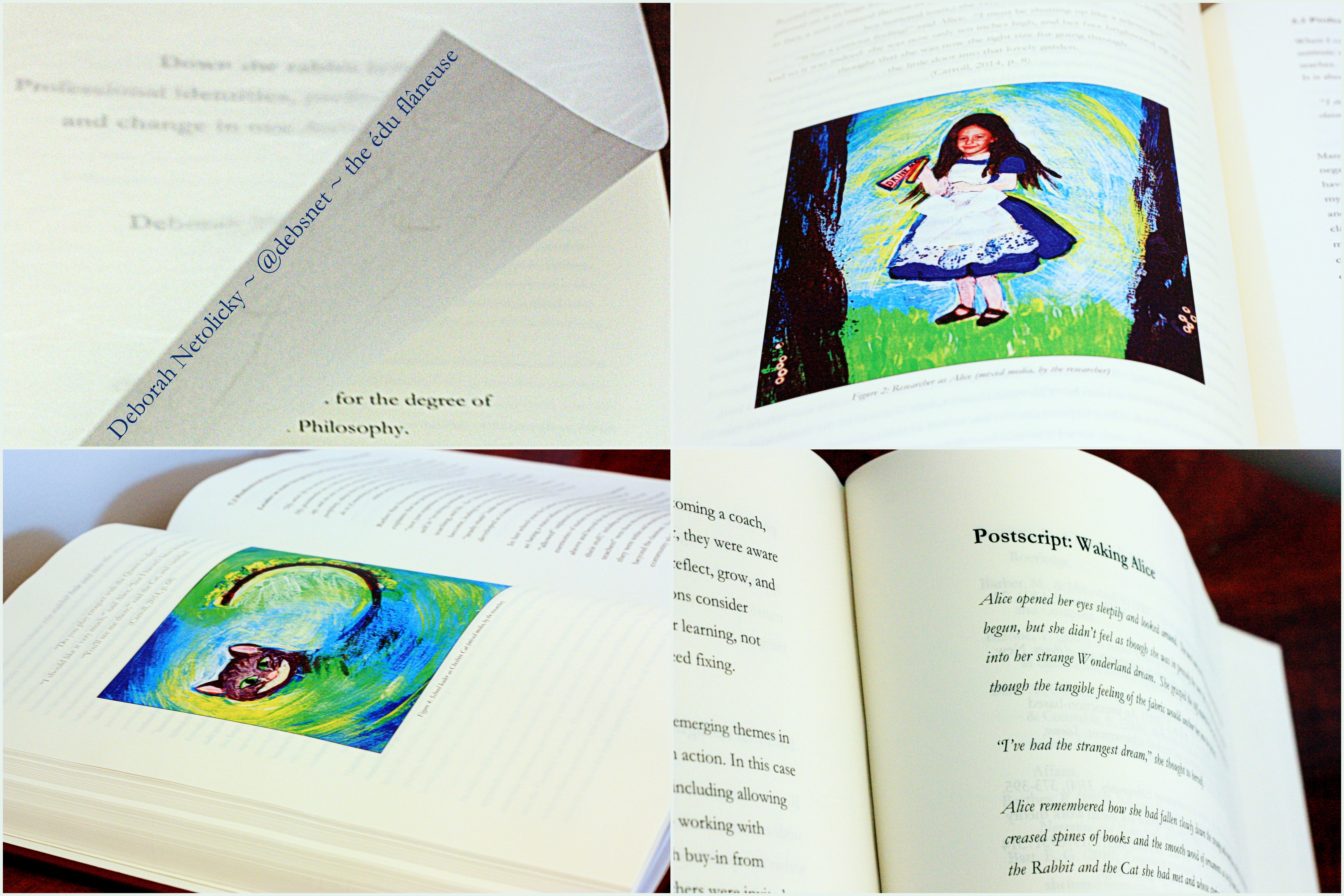
thesis pages
Bound pages nestled within the regal carapace
To bind a doctoral dissertation is not just to join pages prosaically together into a document. There are medieval bookbinding traditions and regal colours. In Australia there isn’t really a choice in the actual binding as each university tends to have theses bound by a particular book binder, to particular specifications. The traditional binding is in buckram cloth with gold lettering. Each university has different colours associated with each degree. At my university, the PhD thesis is bound in maroon, so maroon it was. The nice thing about that was that on the day I picked up my pile of five theses (one for the university library, one for each supervisor, one for the school at which I conducted my study and one for me) people congratulated me as I walked through the grounds. “Well done!” “Congratulations!”
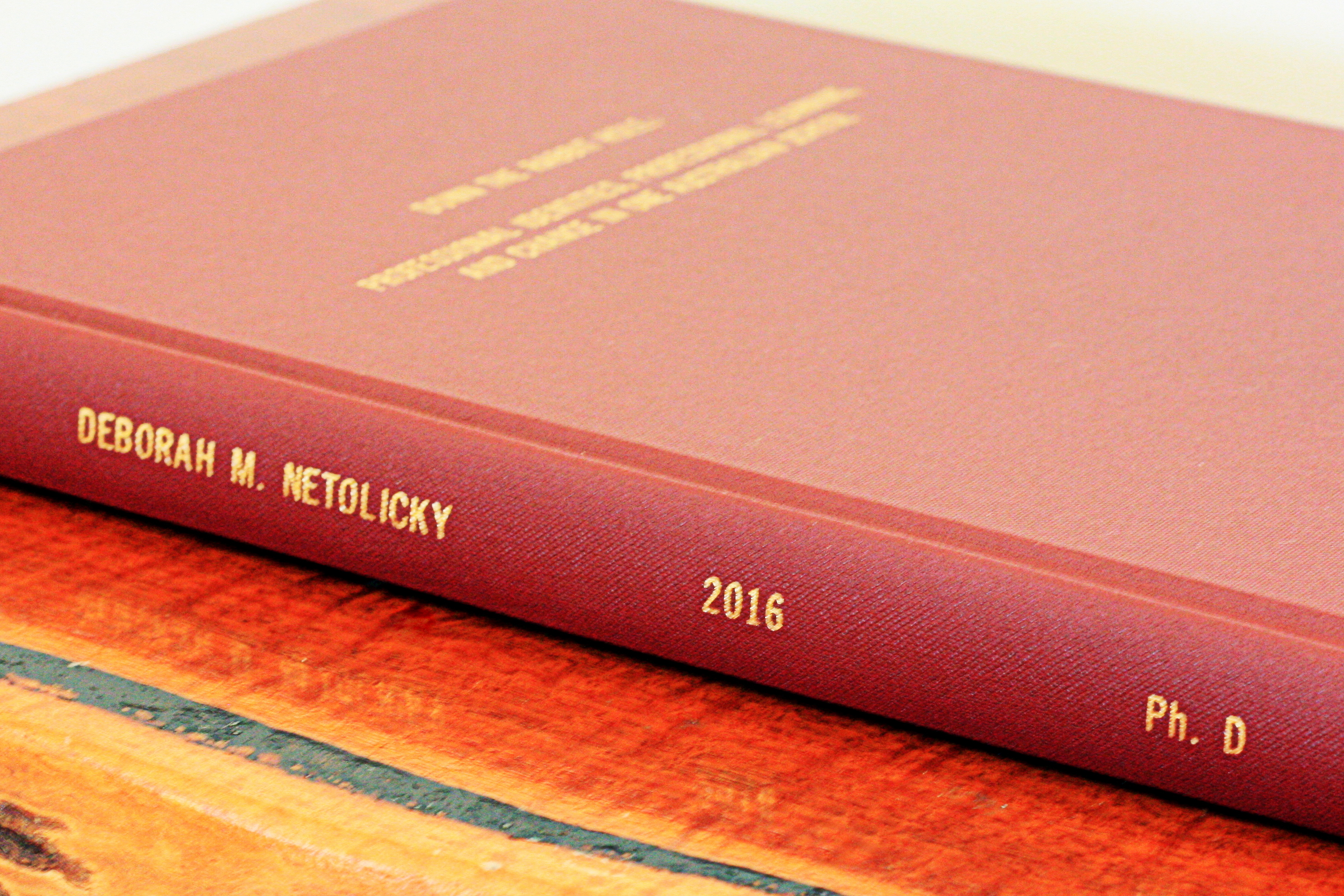
The Big Book
Of course, none of this matters in the big picture. A font does not make or break the substance of a thesis. A bound thesis needs to meet its university library’s specifications, but no more than that. I know that my thesis could have been printed in Arial or Times New Roman, on ordinary copy paper, and it would have been of the same written quality. Now that most theses will be read online, the archival quality of the thesis makes even less difference than in the past.
Yet, my own love of books and their tactile, olfactory and objet d’ art properties meant that I put a lot of cognitive and emotive energy into the physical book. And I took a lot of joy from experiencing the finished product. It might have been my favourite PhD moment so far. If you’re like me, go ahead and embrace your inner book nerd.
It’s ok to be a book-perfectionist. It’s ok to love your finished thesis, imperfect as it might be. Think of it as a handmade quilt, full of the humanness of your mark. For me the choice of font, slightly textural end papers and creamy archival paper were about valuing the text and helping my reader enter the narrative of my thesis, which uses Alice’s Adventures in Wonderland as a literary lens. The tactile experience of turning those first pages might help them down the rabbit hole of the text and into the world of story, into the study and back to their childhood memories of reading.

bookish gifts for my supervisors
Sources: https://www.pinterest.com/pin/293719206921791445/ and https://sites.google.com/site/ccccsorba/2013-julius-18
As a coach, and leader of a team of coaches, I spend a lot of time thinking and writing about the needs of the coachee. Coaching is all about the coachee. The context in which coaching happens must establish and maintain trust. In my school, this means that the coaching conversation, when it happens with one of our team of trained cognitive coaches, is confidential. The details of any observed lessons or coaching conversations are not passed on outside of the coach-coachee relationship. Line managers are still expected to be aware of the teaching, development and work of their staff. Managers might pop in to lessons and conduct their own conversations, but the person’s coach is not a place for others to glean information. We have been very deliberate about protecting the sanctity of the coach-coachee relationship as, without trust, the conversation is no longer a safeguarded space for formalised reflection. It would become tainted with hints of evaluation, accountability and fear that could hinder honesty and prevent vulnerability.
A coach uses their coaching toolbox of strategies and awarenesses to minister to the coachee. To reflect, facilitate, provoke and deepen the coachee’s thinking, by paraphrasing and asking questions, while applying a nuanced understanding of non-verbal language and of cognition. When coaches reflect, they do so to develop their craft in order to better help others to build internal capacity, to better create a non-judgmental space for coachees to freely explore their thoughts and experiences, to paraphrase with more precision or question with more sophistication, to more deeply internalize the many layers of coaching knowledge and practice.
But recently I’ve been wondering about the needs of the coach. I’ve been a coach in some coaching conversations which have been emotional or confronting for the coachee. I’ve found myself affected by the emotion of the conversation, deeply immersed as I am in rapport with that person. I have left these conversations wanting to debrief, but aware of the moral obligation to maintain confidentiality for my coachee. When confidentiality is promised to the coachee, so that the conversation can be a safe space for talk, where can the coach go to reflect on their own experiences? How does a coach refine their practice if they are unable to share their experience of the conversation?
Coaches require somewhere for the coach to go in order to refine their coaching practice through reflection and planning, and as a tool for self-care. Fit your own oxygen mask before helping others, and all that. What support do coaches need? Who coaches the coaches? Where and how might they access support in ways which are mindful of the trust put in the coach to be trusted fortress of coachee information? What responsibility do organisations have in providing support structures for their coaches?
I’m lucky to work with a team of coaches at my school. We have all been trained in Cognitive Coaching, in non-inferential lesson observations and in using the Danielson Framework for Teaching as a tool for teacher reflection. In our meetings and in our Voxer group, we are able to debrief with each other to some extent, or to throw out questions to the collective mind when we come up against coaching challenges. We never use coachees’ names in these discussions or divulge identifiable information, so we tend to talk cautiously around issues or questions we have. For example: How might we differentiate our coaching model for highly-reflective or highly experienced teachers? What questions might be useful for surfacing deeper or more abstract thinking? How might we respond in a coaching conversation which becomes highly emotional for the coachee? We might have textbook answers from our training, but talking about and around these sorts of questions helps us to tease out our beliefs about coaching, our coaching practices and the tensions within our specific context. It helps to develop our shared understandings and language of coaching, as a collaborative group of coaches.
Ideally, a coach would be provided the opportunity to be coached on their coaching. In my coaching team we sometimes participant in meta-coaching (coaching about coaching) with each other. While we don’t ask our coachees to permit us to collect data during conversations, we can do this when we coach each other. A video or audio recording, or a transcript of questions and paraphrases, can act as data on which the coach can be coached around their own practice. We tend to do this in training or within our own coach group, so as not to impact our conversations with coachees. There’s nothing more likely to shatter the sense of a trusting, safe space than setting an iPad or dictaphone on the table to record the conversation!
Of course a coach can debrief at home, to a partner or family member, which might allow an opportunity to download. But this won’t necessarily provide a high level of support in working through an issue or experience.
Another possibility is finding support from coach-educators outside one’s own school context. I’m grateful to have connected with other Australian educators who are using and leading coaching in their own schools. On Voxer, we are able to discuss the issues in our own contexts, again without divulging names or identities of others. I can ask a question of the group and receive thoughtful, informed feedback from those who share my view of coaching but have different tools and knowledge at their disposal. Sometimes a paraphrase from another coach is all I need to see my own issue more clearly. Coaches informally coaching coaches, at point of need. It’s brilliant DIY professional support. I’ve found this invaluable in allowing me to think aloud about, and be coached through, wonderings or experiences, while protecting the confidentiality of my coachees.
Learning through sharing with other coaches is one reason that a few of us—myself, Chris Munro, Corinne Campbell and Jon Andrews—started the monthly Twitter chat #educoachOC. This one hour chat, which we co-moderate on the first Monday of each month, is a vehicle for bringing together those involved in coaching in education. The discussions are often rich and allow coaches, and those leading coaching initiatives in schools and systems, to explore the commonalities and differences, privileges and challenges. I emerge from that hour feeling understood and invigorated.
Being a coach (like being a principal or CEO, I imagine) can be lonely work, because the coach is required to keep what’s said in the coaching conversation, in that coaching conversation. As coaches, it’s important that we find ways to develop our practice and support our own needs, while protecting the trust of the coaching relationship. We need to support coaches, so that coaches can best address the needs of those they coach.
This blog post (a kind of montage-pastiche of educational observations) was inspired by Jon Andrews’ wonderful post today, Trouble Brewing at Snake Mountain High, which used the characters of He-Man and Skeletor to make some very powerful comments about education.
______________________________
The following is a transcript of a podcast in which Dr Adora, school principal at Etheria College, speaks to Mr Hordak, head consultantpreneur at the Institute of Think Tankery and Toolkitisms.
Adora: Hello Mr Hordak. Thank you for joining me for this week’s Education Newsroom podcast.
Hordak: Thanks, Dr Adora. It’s great to be here. I’m looking forward to clearing up some common misconceptions about our work and sharing some of the great things we’re doing at the Institute.

Adora: Your work at the Institute has caused some backlash in the educational community …
Hordak: Well, we at the Institute of Think Tankery and Toolkitisms are getting a bit sick of being called ‘the Evil Horde’ in the media. We are doing excellent work. We have developed toolkits which really distil the business of teaching down to its essence. There’s no reason for teachers and schools to get caught up in worrying about research and innovation and such. We’ve done all the hard work for you! Our toolkits each provide a one-page summary which tells you all you need to know. About teaching literacy in the early years for instance. Or about instruction in the sciences. Or assessment. It’s index cards for the profession, if you like.
Adora: But Mr Hordak, you aren’t listening to the profession. Those working in schools want to engage in thinking about, reflecting on and interrogating our practices. We want to engage in research literatures and what insights these might offer to our own contexts. We enjoy engaging in robust debate that teases out our understandings or challenges us to think differently and act deliberately. As a principal, I don’t want a one-size-fits-all straightjacket or a one page simplification of the complex work my staff and I do. I want my teachers to consider the needs of their students, the idiosyncrasies of our school and the ways in which we might work together to serve our students.
Hordak: Let me interrupt you there, Dr Adora. We at the Institute make your work easier. We make sure your people are doing teaching right. We cut through the mumbo jumbo and the disputes between educational factions who are constantly warring and disagreeing about what should and shouldn’t be done. You can say goodbye to having to listen to experts and academics and teachers banging on about their apparent knowledge and expertise and, ahem, research studies. We’ve done the analyses and the diagrammatic representationising and the product researchervisation. We are experts in education thinkification and edu-preneurial-innovationism. You don’t need to do all that time consuming thrashing about with ideas, or unproductive action research in professional learning communities. For too long the concept of teaching has been spiralling out of control into some kind of overblown and meaningless discussion. We’ve given it meaning again. Clear, indisputable meaning.
Adora: But as you noted, Mr Hordak, those actually on the ground, teaching and leading in schools, don’t like the way you’ve distilled teaching down into atomised parts. Teaching and school leadership aren’t things you can streamline into wafer-thin pieces. School culture isn’t something you can cook up from a shake-and-bake packet. These things are contested for a reason. They are complex. They are nuanced. They are contextual.
Hordak: Types like you won’t ever come to understand what we at the Institute understand. Overthinking, egomaniacal principals like you will continue to ‘lead’ your schools into the ground. Why overwork your teachers when you have the short, sweet recipes for success at your fingertips? Even now my Think Tankery minions are finialising our brand management and commodification procedures. My Toolkitists are reassessing our pictorial illustrations for their effective cognitive impactiness and persuasivity.

Adora: To me your toolkits and pictures-of-practice sound like Orwell’s totalitarian Newspeak, in which the complexities of thought and action are deliberately limited through the distilling of language down to parts. This no longer allows the kinds of thinking we want teachers and leaders to be doing. You are attempting to control teaching in order to make money. In doing so, you are destroying the profession, not helping it.
Hordak: That’s where you’re wrong, Dr Adora, so very very wrong. We are purists. Our index-cardification of education allows not only the guidance of practice, but also its measurement. You can have all the data you’ll ever need. Our one page summaries aren’t just index cards, they’re score cards. Everyone from principals like yourself to education ministers can easily and quickly score teachers against our simple formulae in order to determine their effectiveness and punish or reward them as appropriate. Failing teachers and failing schools have never been easier to identify. This is the future of education! At this very moment we are in discussions with the Ministry of Education in order to distribute the work of the Institute throughout the country. We will influence every school and every teacher. Mwahahahahhh!
Adora: Well, that’s all we have time for today, Mr Hordak, but I’m sure there are many educators around the nation despairing at the thought that organisations like yours might have power over the important work that they do.

End of transcript.
______________________________
An afterword …
Since writing this post, the following blog posts have been written by other bloggers exploring satire and/or 80s icons as lenses into educational issues. They are well worth a read.
A pedagogy of Astro Boy, by Stewart Riddle
Know thyself.

my multiple selves reflected back at me
The field of identity is sometimes lamented as being confused, contested and slippery, with different definitions meaning different things in different contexts. Theorisation of the self has a long history, appearing as early as 1902. At times identity has been seen as fixed and singular, but now more often it is seen as shifting and plural.
My PhD thesis defined identity as the “ongoing sense-making process of contextually-embedded perceived-selves-in-flux”. I see identity as process rather than product, as shifting rather than fixed, and as constructed and operated by the individual. It is a constant process of being and becoming. We are never finished. We don’t foreclose on an identity, but fluidly negotiate a variety of self-perceptions in a variety of contexts. We imagine and enact our identities by looking at past, present and potential future selves.
Additionally, identities are individual and collaborative. We construct our versions of ourselves based, not only on our perceptions and imaginings of self, but on our relationships with others, organisations and contexts. Costa and Garmston’s concept of holonomy is based on Koestler’s ‘holon’ which describes something which is simultaneously part and whole. Holonomy can be used to conceptualise the symbiotic interrelationship between individual and group or organisation.
My PhD looked at professional identity, in conjunction with professional learning and school change, in order to explore what it is that shapes educators’ development of professional identity perceptions, what shifts those self-perceptions, and in what ways schools and systems might work with a greater understanding of educator identities when designing and implementing education reform. My doctoral study found that professional learning deeply involves senses of self. Learning which taps into who educators see and feel they are, has the most impact on beliefs, thoughts, behaviours, and practices.
I often write on this blog about identity (look! there’s a tab for that). Writerly identity, doctorly identity, teacherly identity, researcherly identity, experty identity, parenty identity, coachy identity. I create stuff. I teach stuff. I tell stories. I learn stuff. I write stuff. I coach people. I lead teams and projects. I read. I am coached. I am led. I am a learner, a parent, a teacher, a researcher, a coach, a flâneuse.
So, as we are selves in action and in motion, can we decide when someone starts or stops being or becoming a teacher? I wonder about what makes a teacher identity. Surely it’s not something that enters a person as they set foot in their first school classroom and leaves them the moment they step out of their last taught lesson at a school. If I left the classroom for academia, would I no longer be a teacher? Well, maybe not a ‘current school teacher’, but I wouldn’t shed my teacherly-ness or my years of identity-forming teacherly-experiences. What about teachers who teach for decades and then retire? I guess those wanting labels might call them former teachers or retired teachers, but might they still identify as teachers? Many school leaders in my PhD study saw themselves as teachers first and foremost, and leaders/teachers of teachers second; for all, serving the student was at the centre of their senses of self.
Who gets to tell us what roles we can and cannot identify with? Who is the keeper of the labels? I’d argue that we are the constructors, operators and refiners of our own identities. Who am I and who gets to decide? Me.
Sometimes we can get caught up in the details of our lives. The minutiae of tasks and to-dos, which for me this week has meant an explosion of Post-Its across my work space and yet another blog post on finishing the PhD. I’ve been existing very much in my head.
It’s nice to be reminded of the beauty, wonder, and creativity in the world. This morning I took my boys to Cottesloe for the Sculptures by the Sea exhibition which runs each March. We ran along the sand, splashed in the water, and admired the art. They played, laid on their backs to appreciate the sky and sculptures, and clambered over rocks. It was gloriously simple, and yet the art gave us much to talk about and to think about.
Below are some of my photos from this morning. You can find some of my pics from last year’s exhibition in this post.