The effects of AI on human cognition and connection

Source: djovan on pixabay

ChatGPT is one of the world’s 10 most-visited websites and people are increasingly turning to AI to think, write, summarise, plan, counsel and even connect in a social sense. This month the OECD released its Introducing the OECD AI Capability Indicators Report, mapping current AI capabilities against the human capabilities of: language; social interaction; problem solving; creativity; metacognition and critical thinking; robotic intelligence; knowledge, learning and memory; vision; manipulation; and robotic intelligence. The report notes that AI currently lacks advanced reasoning and ethical reasoning capabilities. It adds that AI has weak social perception and struggles to infer social interactions, adjust for the emotional weight of a situation, or wrestle with ambiguity.

Reflecting on the professional moments I experienced this week, those in which I felt most fulfilled were human moments of connection, often filled with emotion and ambiguity. Sitting with parents in conversation about what it means to support young people to flourish in adolescence, at our ‘Thriving in the Middle School’ parent event. Touring an old scholar through the school and hearing her stories of her 1970s education and what continues to resonate for her 50 years later. Announcing the school’s new student leaders and feeling the palpable nervousness and excitement in the auditorium, and the subsequent pride and joy of those elected to leadership positions. Collaboratively solving the newspaper crossword in the staff room with colleagues. Watching students shine in the drama production. These are human experiences that technology cannot replicate.

The increasing use of AI Large Language Models (LLMs) is influencing our capacity for lateral thought, problem solving, creativity and human connection.

During my PhD research I could access publications online, but I needed to read them, synthesise them and analyse them myself. I could get help transcribing interviews, but I needed to sit with my participants, immerse myself in the data, draw out themes over time, and write my way into knowledge and understanding.

As I write this blog post, I am integrating knowledge and exploring ideas. I am thinking and writing my perspective into being in an organic way that engages me in cognition, reflection and construction of argument. I am utilising and connecting my cognitive architecture. If I had produced this post using AI to write it, I would benefit from the outcome, but not the process. There may be less friction between reader and written piece, as LLMs apply consistency of tone, genre and word choice based on programmed patterns. The piece may well have been more logically structured, with sub-headings, bullet points and a predictable cadence of language. It may use a number of em dashes, a favourite punctuation mark of ChatGPT writing. (On a side note, I am disappointed that the em dash has become a ‘tell’ of AI writing as it is one of my favourite punctuation marks after the interrobang, and ChatGPT’s use of it emerges from the credible human authorship, including academic sources, on which the LLM is trained). My piece may have been affected by AI’s cultural and linguistic biases (largely US-centric and masculine), and ‘hallucinations’, in which it makes up information and references.

How does our relationship with reading, writing and thinking change when we can paste swathes of content into a LLM and ask it to provide a neat summary? Or to ‘write a X in the style of Y person’ or to ‘generate an academic report on X topic using Y resources’?

If we get someone else, or AI, to do our reading or writing, we do less thinking. This recent research by a team at MIT explores the ‘cognitive cost’ or ‘cognitive debt’ of using AI to outsource our thinking. While ChatGPT outperforms students on many writing tasks including essay writing, this study found that students who used ChatGPT produced essays similar to one another. Human assessors described the AI-assisted essays as lengthy, academic-sounding and accurate, but “soulless”. The standard ideas, formulaic approaches and reoccurring statements reflected an AI homogeneity of argument and ‘echo chamber’ of ideas that lacked individuality and uniqueness. The research found that AI assistance reduced cognitive load and reduced cognitive friction. This made the task easier, potentially freeing up cognitive resources to allow the brain to reallocate effort toward executive functions. However, this convenience came at a cognitive cost as users defaulted to the easy option of the task being finished with minimal effort, rather than critically evaluating the AI-generated output or value-adding their own content. Those who engaged the most brain connectivity and activation, around memory and creative thinking, were in the group who used their ‘brain only’ to write the essay .

We need to consider what we are willing to outsource to technology, and for what purpose. Is our desired result an outcome or a process? Producing or thinking? Output or connection? ‘Done’ or continuously improving? How might AI free us to do more that is human without narrowing our capacity for thought and connection?

As we continue to explore how AI and technologies might replicate human capabilities, we need to lean in to our humanity and into what relational human connection and critical thought can continue to offer us. Our shared humanity and our capacity for cognition, emotion, connection, and ethical engagement remains paramount.

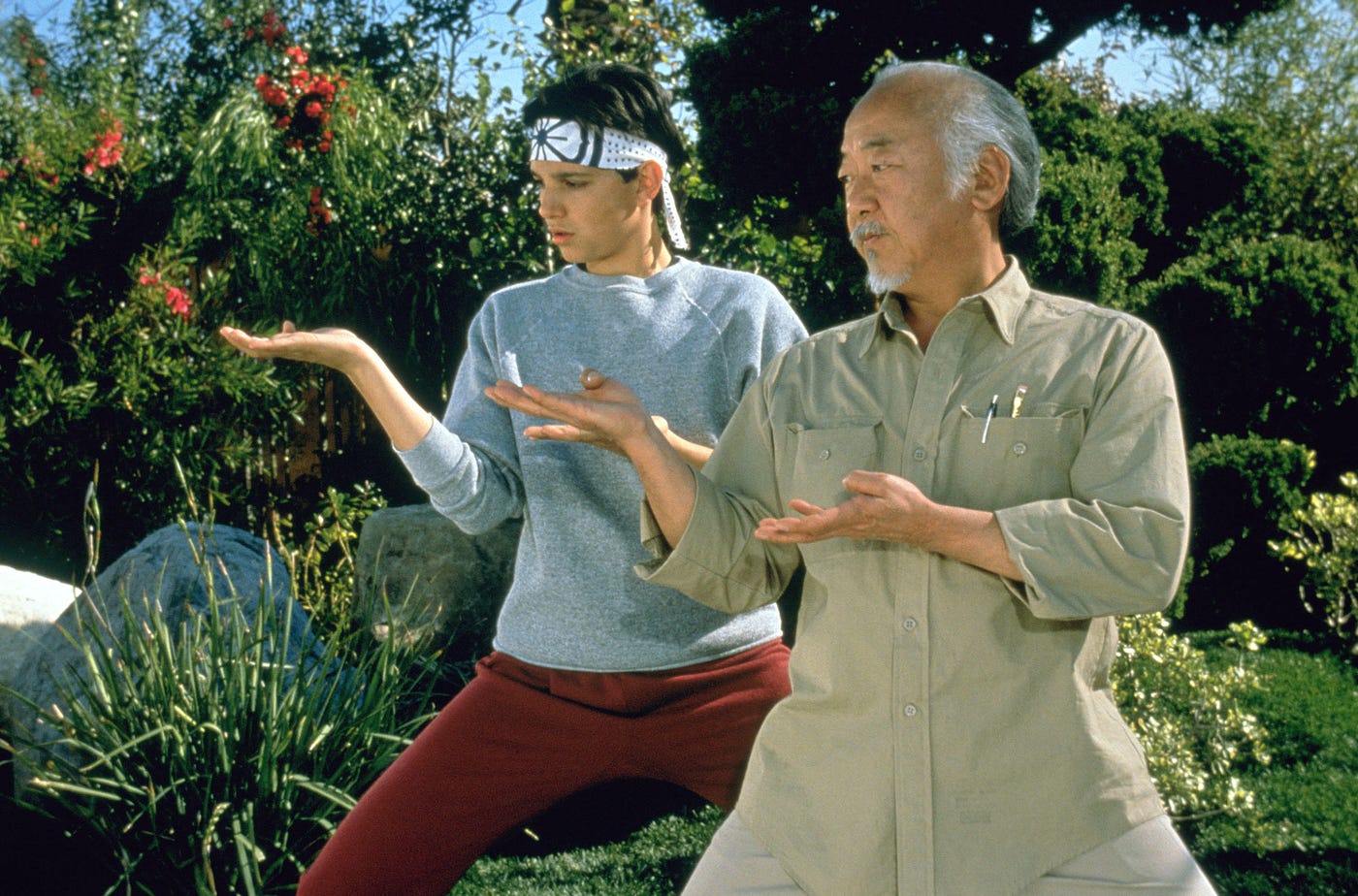
The magic of great teachers

Columbia Pictures

Amid ongoing concern about teacher shortages and teacher burnout, celebrating and trusting teachers is crucial. As education increasingly integrates trends such as generative and agentic artificial intelligence, the role of the teacher remains vital. Teachers and their classroom practice make a measurable difference to student learning and achievement. Teachers have been found by research to be the most influential school-based variable in improving student learning and achievement. 

I was recently asked to comment on what makes a great teacher, as part of News Corp’s ‘Australia’s Best Teachers’ campaign. It got me thinking about my early days of teaching, and my days as a student. Teachers are often pivotal figures in the lives of young people. We all remember a great teacher from our own schooling. For me, it was my Year 12 Literature teacher, Penny McLoughlin, or Miss Mac as we called her. Miss Mac would bound into our classroom, her eyes glittering with excitement about the day’s lesson. She exuded a love of literature, a passion for the power of language, and a deep care for all her students. We could tell that she loved her subject, that she planned lessons thoughtfully, and that she cared about us as learners and people. I didn’t know it then, sitting in that Year 12 class, but I would go on to teach high school English and Literature for more than 20 years, to undertake academic research into what it is that makes a great teacher, and to become a school principal who witnesses the daily dedication and profound impact of the teachers in my school.

So, what is it that makes a great teacher? Great teachers beautifully balance expertise, craft and care. They seamlessly blend curriculum mastery and rigorous academic standards with systematic teaching, compassionate understanding, and a curiosity about students’ interests, abilities, and lives outside the classroom. There is a well-known line, often attributed to Maya Angelou, that rings true in the classroom: “People will forget what you said, people will forget what you did, but people will never forget how you made them feel.” Great teachers recognise the interconnected nature of academic success and wellbeing. They create classroom environments of high expectations and high care in which students feel safe while also being challenged to do their best.

Great teachers are experts who have the student at the centre of their work. They are specialists in curriculum (what they teach), in pedagogy (how they teach) and in their own students (who they teach). They systematically and purposefully design learning opportunities that inspire critical thinking and meaningful engagement in learning. They judiciously apply a range of strategies to the students in front of them. They provide meaningful, precise and compassionate feedback to help each child improve. Clear feedback, given with genuine care, encourages students to see feedback as an opportunity to grow.

Great teachers differentiate and personalise learning for students, responding to student needs in ways that are adaptive, flexible, evidence-informed and grounded in knowledge of learning and teaching. Teachers constantly check on student understanding and assess student progress, often in subtle ways that a student or observer might not notice. Responsive practice enables teachers to tailor their approach according to the dynamic needs of each child, classroom, and cohort. Great teachers are themselves curious learners who engage in professional learning that enables them to reflect critically on their practice, refine their approaches, and grow professionally.

Teachers continue to show up with expertise, empathy and excellence in their classrooms every day. Recognising and championing great teachers for the excellent and important work they do, such as through a kind word or a thank you note, can make the world of difference in a teacher’s day. Teachers: your quiet impact is noticed and your work matters greatly.

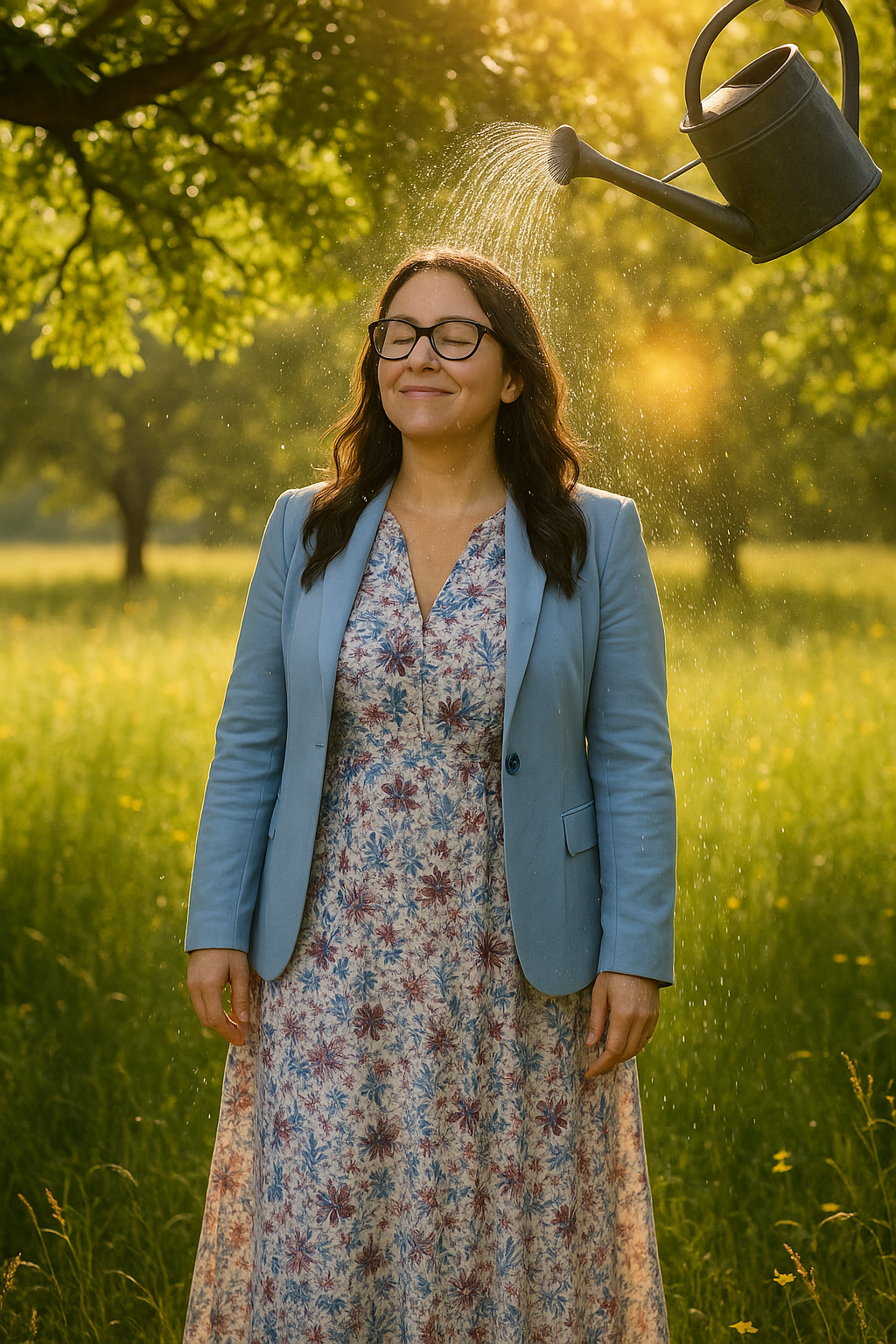
Reflections on professional nourishment

Image created with ChatGPT

The profound privilege and the weighty responsibility of serving as a school principal lies in the depth of the humanity of the role combined with the incredible sense of duty and the complexity of the role’s many moving parts. Independent school principals have been described as CEOs, responsible for strategic oversight and management of learning and teaching, daily operations, finances, risk, resources, communications, stakeholders and culture. A 2008 Australian report described principalship as “the best job in the world with some of the worst days imaginable,” encapsulating the intense reward and intense challenge of the role, which can be simultaneously fulfilling and depleting.

I have appreciated recent invitations to share my advice for aspirant school principals, and to speak about my experience in building contributions and networks beyond my immediate school environment. These opportunities for reflection, coupled with the regular release of research reports and media stories indicating the increasing ill-being of those working in schools, have led me to consider what might be described as ‘professional nourishment’. How do those of us leading in schools fill our cups to build buoyancy and resilience that sustain us as we serve the people in our communities, and navigate significant, serious and sometimes surprising complexities?

Like other people-facing roles in schools, principalship is inherently relational and involves the living of relationships throughout the extensive ecosystem of a school. Deb Dana’s concept of finding ‘glimmers’ in our day to uplift us reminds us to seek out sparks of joy and micro-moments of presence. Those of us working in schools can experience nourishment in our roles as we engage in the many and varied student experiences, community events and lives of students, families and staff. There is satisfaction and pride in witnessing the personal growth and achievements of students, sharing in the triumphs and challenges of families, and working alongside inspiring and dedicated colleagues. A ‘glimmer’ might be a conversation with a child in the yard, a thank you email from a parent, visiting a classroom to see a colleague teach, a conversation with an old scholar, attending a performing arts production or sports game, sharing dinner with the boarders, or witnessing a student or staff member overcome a challenge.

Professional nourishment can also come from deliberate reflection on and intellectual engagement in the work. This blog, for example, provides me with one way to share research, practice and thinking. It also engages me in writing as a practice of clarifying, synthesising and developing my thinking. Writing and podcasting provide unique opportunities to participate meaningfully in local, national and global dialogues around education and leadership. A range of platforms can immerse us in diverse perspectives and enable us to actively contribute to wider educational conversations. Ensuring there is time and space for thought, innovation and intellectual engagement, can help to reconnect us to the strategic direction of our schools and the ‘why’ of what we do.

One worry I have about artificial intelligence is that, while it is trained on human writing and coding, using it as a shortcut to exploring and communicating ideas might reduce our time and capacity to sit with, contemplate, and work through complex ideas. Formal or informal writing can be utilised, not just for its resultant output, but for its process of cognitive working out. When I begin writing, I do not know exactly where a piece will take me. The writing process is focused on internal growth and ‘thinking through’ or ‘thinking out loud’, rather than efficiency and end product. In a recent episode of The Edu Salon podcast I talked about the marination of ideas in the human brain as an important part of how we understand more deeply and move our thinking forward. Quiet reflective practice–in which we take the time to pause, interrogate our assumptions, tease out ideas, and carefully consider experiences–can provide an anchor for us to find clarity in the complexity of our work.

When I think of what is professionally nourishing, there is a special place for professional relationships and networks. I am incredibly grateful for those mentors, peers, colleagues and friends to whom I can reach out. Professional organisations and conferences (such as, in Australian education, AHISA, ACEL, AARE and ICSEI) can provide educators with inclusive communities of practice where ideas are shared, respectfully challenged, and refined in a safe and collegial space. Trusted relationships in which we share and talk through problems of practice, provide meaningful connection and mitigate the isolation of our role.

Those leading in schools can work to sustain ourselves by cultivating meaningful professional relationships, prioritising reflective practice, and actively participating in broader educational networks. Learning and connecting beyond our immediate environments can enhance our practice, enrich our schools, pay forward our expertise into the wider educational landscape, and help to sustain us in our roles.

Reflecting on 2023 as we move into 2024

2023 was a year of the increasing impact of generative Artificial Intelligence, devastating international conflicts, a global economic downturn, a King’s coronation, the Barbie movie, climate crises (with 2023 the hottest year on record), the Australian referendum on an Indigenous Voice to Parliament, the Matilda’s playing in the semi-final of the FIFA Women’s World Cup, and financial pressures for households due to rising interest rates and inflation. Educators engaged with AI, VR, AR, entrepreneurship, micro credentialling, evolving curriculum priorities, personalisation, complex wellbeing issues, youth mental health crises, workload pressures, workforce shortages, cybersecurity, sustainability, and equity. 2023 was the first year since 2020 when everything seemed ‘back’ and ‘on’. Many people I have spoken to have commented that to them the year felt full and fast.

For me, 2023 was a big year of growth and memory making. I moved with my family from Perth to Adelaide. This meant buying a new family home (and then renovating it while living in it), our two children beginning at their new school and in new sporting teams, and our family exploring our new city and state.

I began as Principal at Walford Anglican School for Girls, where this year we launched our 2023-2025 Strategic Plan, a new scholarship, a wellbeing dog program, staff learning communities, and a staff wellbeing committee. We refreshed the school’s values in consultation with students and introduced values awards. We engaged extensively in Reconciliation, service, enterprise learning, a glowing IB PYP evaluation, and designing bespoke senior secondary pathways for students. We undertook significant stakeholder consultation as part of a review and redesign of the uniform. We reviewed the shape of the school day and the café menu, and built new play spaces for our early and junior years. I have learned much about traffic safety and significant trees. We enjoyed community events and incredible showcases of student talent and hard work.

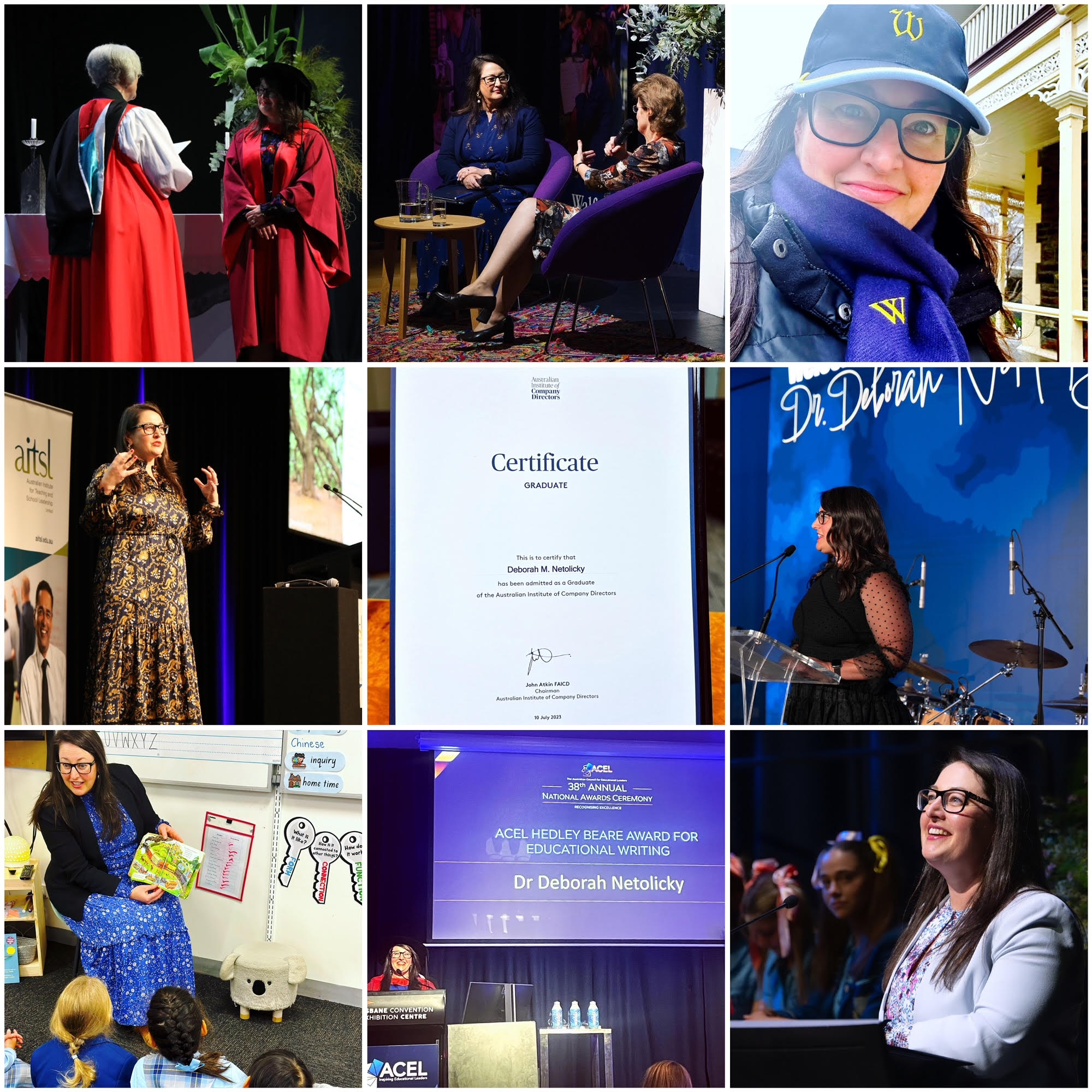
Additionally, this year I was appointed as Adjunct Senior Fellow at the University of Adelaide, and a Member of Editorial Advisory Board for the Journal of Professional Capital and Community. I completed and graduated from the AICD Company Directors Course. I recorded and released nine episodes of The Edu Salon. I co-authored the book chapter ‘Grappling with Pracademia in Education: Forms, Functions, and Futures’ with Paul Campbell and Trista Hollweck, published in the book Professional Development for Practitioners in Academia. I presented a keynote at the AITSL National Summit for Highly Accomplished and Lead Teachers. With Summer Howarth I presented to school leaders at an ACEL SA ‘Hot Topic’ event, and alongside Kevin Richardson at an AHISA SA event for aspirant principals. It was an honour to be awarded the ACEL Hedley Beare Award for Academic Writing, and to be listed on The Educator’s Most Influential Educator List and Hot List of innovative Australian educators. I travelled to Bali, Kangaroo Island, Rottnest Island, Cairns, Melbourne, Sydney, and Perth, and celebrated 20 years of marriage.

2024 is a new year, filled at this early stage with uncertainty, as well as hope and possibility. I wish all in my network a wonderful year ahead, and one in which you find joy, meaning, peace, and time to nourish, replenish and rejuvenate yourselves amongst the challenges the year will undoubtedly bring.

Why a girls’ school?

Source: justDIYteam, pixabay

Schools in Australia offer parents plenty of choice, and when choosing a school for their child there are many questions parents might ask about a school. Is the school culture one based in shared values? Are the teaching, academic opportunities and learning outcomes of high quality? Do pastoral structures and programs cater for the wellbeing of students? Is the school community one with which the family feels aligned and that promotes belonging? Are the sizes of the school and classes conducive to the level of care the child needs? Is the school committed to valuing and catering for each child?

With the Australian news currently publishing stories about some schools changing from single sex to co-education (mostly boys’ schools becoming co-ed), a question that is yet again in the limelight is: which is better, single sex education or co-education? I reflect below on the reasons that single sex education for girls and young women plays a vital role in serving the wellbeing and educational needs of our girls.

Schools are segments of society and the wider community, and, as pointed out by advocates of co-education, a mixed-gender environment does replicate our world. However, that means it can also replicate the inequities of the world into which our girls enter, post-school.

The 2023 United Nations’ Gender Snapshot points out some worrying figure for girls and women, including the following.

  • At the current rate of progress, the next generation of women will spend on average 2.3 more hours per day on unpaid care and domestic work than men.
  • Globally women hold 26.7% seats in parliament, 35.5% in local government and 28.2% of management positions in the workplace.
  • Women are twice as likely as men to report instances of discrimination based on sex and almost twice as likely as men to experience discrimination on the basis of marital status.

The 2023 Global Gender Gap Index places Australia as:

  • 29th for Political Empowerment;
  • 38th for Economic Participation and Opportunity;
  • 78th for Educational Attainment; and
  • 89th for Health and Survival.

Australia is ranked 71st in the world for women’s income as compared with men’s, and 53rd for wage equality for similar work. In Australia, the gender pay gap is 15%, and 34% of board positions are made up of women. The OurWatch website cites terrifying statistics about violence against women in Australia, including that 39% of women have experienced violence since the age of 15.

These sobering figures demonstrate that the gender gap in power, leadership, earnings, domestic labour, and violence remains entrenched. Bridge (2022) writes:

“We will not find gender justice by replicating the injustices and inequalities of society in our schools, and until we can reach equality our girls simply become collateral damage.”

There is a range of research demonstrating the benefits for girls of single sex education. A South Australian study by the Commissioner for Children and Young People (Connolly, 2022) found that girls reported that teachers use female students to moderate and monitor the behaviour of boys, including being asked to sit between boys to disrupt interactions between them, as well as taking boys to the principal’s office when they have ‘done something wrong’. The report found that school policies can promote the message to girls that boys can’t manage their own behaviour and that girls are responsible for the behaviour of their male peers. It additionally found that girls and young women in co-ed schools feel anxiety about playing sports at school. Sadker and Zittleman (2009) assert that in co-educational classes, boys have been found to get more of a teacher’s attention; and that boys are more likely to volunteer and to call out, while girls who know the answer are more likely to wait to be called on. When girls feel safe, Sadker and Zittleman say, girls are more likely to speak up in class and less likely to minimise themselves or ‘play dumb’. Bleidorn et al.’s (2015) study across 48 countries found significant gender gaps in self-esteem, with males consistently reporting higher self-esteem than females. Franklin and Rangel (2022) found that girls attending all-girls schools outperformed their peers at coeducational schools in mathematics and science.

As the principal of a girls’ school, I see first-hand every day the benefits of single-sex education for girls and young women. Earlier this year, I wrote about my observations, including that girls at my school tell me they can ‘come as they are’. Students say they feel they can be themselves, express themselves, and be accepted for themselves. Single sex education can disrupt gender norms, providing safe spaces for girls to grow and develop, and encouraging girls to take up space, to make space and to see spaces for themselves in those arenas not traditionally dominated by girls and women. Girls in single-sex education contexts are more likely to view the STEM domain as a female one, and to speak more positively about their STEM learning experiences (Robinson et al., 2021). Thompson’s (2003) research found that girls’ school environments led to girls selecting post-school pathways beyond those traditionally seen as ‘female’. She notes that:

“There appears to be something about the all-female high school environment that socialises women to more feminist gender role attitudes. Girls may be socialised differently in an all-female environment where girls are the top students and leaders, and where school  personnel  are  proactive in resisting  the traditional gender system. Perhaps the absence of boys encourages girls to focus more on careerist goals and less on romance and popularity.” (p.272)

Girls’ schools are designed intentionally for girls and young women. Gendered assumptions and pressures are deliberately disrupted, and female leadership, voice, ambition, and achievement are normalised. Leadership development is strongly tied to increasing self-confidence (Fitzgerald & Schutte, 2010). The Australian ‘Hands Up for Gender Equality’ study (Fitzsimmons et al., 2018) found that those activities that most develop confidence and efficacy in young people and 1) travel, 2) team sport, 3) leadership experience, and 4) leadership education. Girls in girls’ schools are the leaders, leadership is purposefully developed, wellbeing and curricular programs are tailored to girls, and participation in all arenas—including sports and STEM—is encouraged.

All schools are responsible for creating environments where young people feel safe from discrimination and violence, are accepted as and comfortable to be themselves, can focus on their education, and are supported to achieve their best. Each child is an individual with their own gifts and needs, and girls’ schools provide a safe, intentionally-designed environment in which our girls can and do flourish.

References

Bleidorn, W., Arslan, R. C., Denissen, J. J. A., Rentfrow, P. J., Gebauer, J. E., Potter, J., & Gosling, S. D. (2016). Age and gender differences in self-esteem—A cross-cultural window. Journal of Personality and Social Psychology, 111(3), 396–410.

Bridge, L. (2022). Girls should not be collateral damage in the push for co-ed schooling. EducationHQ online.https://educationhq.com/news/girls-should-not-be-collateral-damage-in-the-push-for-co-ed-schooling-125714/

Connolly, H. Commissioner for Children and Young People, South Australia (2022). Stereotypes and Sexism: the views  and experiences of SA school students.

Fitzsimmons, T. W., Yates, M. S., & Callan, V. (2018). Hands Up for Gender Equality: A Major Study into Confidence and Career Intentions of Adolescent Girls and Boys. The University of Queensland.

Franklin, D & Rangel, VS 2022, ‘Estimating the Effect of Single-Sex Education on Girls’ Mathematics and Science Achievement’, Leadership and Policy in Schools, vol. ahead-of-print, no. ahead-of-print, pp. 1–18.

Robinson, D. B., Mitton, J., Hadley, G., & Kettley, M. 2021. ‘Single-sex education in the 21st century: A 20-year scoping review of the literature’, Teaching and Teacher Education, vol. 106, pp. 103462-.

Sadker, D., & Zittleman, K. R. (2009). Still failing at fairness: How gender bias cheats girls and boys in school and what we can do about it. Simon and Schuster.

Thompson, J. S. (2003). The effect of single-sex secondary schooling on women’s choice of college major. Sociological Perspectives46(2), 257-278.

UN Women and United Nations Department of Economic and Social Affairs. (2023). Progress on the Sustainable Development Goals: The Gender Snapshot 2023.

World Economic Forum. (2023). Gender Gap Index Report.

Valuing growth

Source: @sannebaan via pixabay

At my school we recently undertook a review of our school values. Students and staff generated values, which were synthesised into themes, and then voted on by the students and staff. One of the values that emerged from this process was ‘Growth’. Despite recent years bringing the importance of wellbeing, and the connection between learning and wellbeing, into sharp focus, this value reminds us of the need to continue to strive and to grow. Being well is about more than comfort and ease of existence. It encompasses physical, emotional, social, cognitive and spiritual wellbeing. It includes purpose, belonging, sense of self, and and feelings of happiness, joy, hope and satisfaction. Being well means living well, and of living a life of positive contribution.

Valuing growth reminds us that those experiences that transform us are often those that require some struggle. My PhD research into professional learning, and my experience of the PhD journey, revealed the power of experiences of discomfort to create a shift within us, to change our beliefs and practices, to develop our resilience, and to see challenge as an opportunity to grow with grace and humility. Wellbeing can be built on a foundation of challenges faced and overcome. ‘I did it!’ realisations can lead to future thoughts of ‘I can’t do it yet, but I will persevere’. We learn over time that working through problems (cognitive, emotional, social, or physical) reaps rewards.

I recently attended a session by Adjunct Professor Erica McWilliam AM in which she quoted Michael Foley from his book The Age of Absurdity (2010):

“Difficulty has become repugnant because it denies entitlement, disenchants potential, limits mobility and flexibility, delays gratification, distracts from distraction and demands responsibility, commitment, attention and thought.” (p.113)

McWilliam observes that parents and teachers can, with good intentions, rush in and rescue young people too soon, and that doing so deprives them of the pleasure of rigour and the satisfaction of wrestling with complexity. Young people do not thrive when protected from difficulty. Rather, they benefit from being given the space and opportunity to be challenged. McWilliam asserts that our young people need to learn ‘strategic independence’, and she argues that schools and teachers should avoid the seduction of providing environments which are low challenge and low threat, with too many opportunities to retreat from what feels hard or uncomfortable.

The notion of a high challenge, high support environment, as optimal for learning and wellbeing, resonates with the concept from developmental psychology of a ‘holding environment’. Each individual benefits from being ‘well held’ in a nurturing and safe environment, and simultaneously supported to rise to challenges and to take risks.

Grit and a growth mindset appear in the recent World Economic Forum (WEF) white paper on ‘The Education 4.0 Taxonomy’, which outlines those abilities, skills attitudes, values, knowledge and information that students need for their futures. The WEF calls Education 4.0 an approach to reimagining education in a way that is inclusive, focuses on a broad range of skills to prepare learners for the Fourth Industrial Revolution, and leverages technological and pedagogical innovation to put learners at the centre of learning. This last part is key: learners at the centre of learning.

The Taxonomy identifies the following elements as essential for future life, learning and work: Creativity; Critical thinking; Digital skills and programming; Problem solving; Systems analysis; Collaboration; Communication; Negotiation; Socio-emotional awareness; Physical balance, coordination, positional awareness, strength; Adaptability; Conscientiousness; Curiosity; Grit; Growth mindset; Initiative; Civic responsibility; Environmental stewardship; Empathy and kindness; Global citizenship; and Discipline-specific knowledge. These elements bring together knowledge, skills, dispositions, and a focus on compassion, inclusion, citizenship, social justice, technology and the environment.

The WEF identifies four teaching and learning domains on which schools and education systems can focus to develop the above elements. These are:

  • personalised and self-paced learning that engages each individual student’s context and interests, elicits engagement, and promotes active learning;
  • accessible and inclusive learning that embraces multilingual and multicultural learning opportunities, teaches the values of cultural competence, and enables access to learners across abilities and backgrounds;
  • problem-based and collaborative learning including experiential learning and service-based learning, which connects students with their communities, fosters awareness of political issues and social needs, cultivates the attitudes and values pertaining to global citizenship and civic responsibility, and promotes an understanding of interdependence in a group setting and personal accountability to the group; and
  • lifelong and student-driven learning within, and beyond, the formal classroom setting.

Being a lifelong learner who values growth mans being open to, and excited about, continuous growth and incremental improvement. It can mean working hard, being curious, sitting with discomfort, seeking to enjoy working through complexity, and seeing mistakes as learning moments. Parents and teachers can set an example of what growth throughout our lives can look like. We can give the young people in our care the space and support to grow enough so that we are increasingly redundant, and they fly on their own as independent, self-authoring people committed to their own journeys of growth.

The Edu Salon podcast: 6 months since its launch

There are close to 3 million podcasts and 140 million podcast episodes in existence, with 440,000 education podcasts alone. It was into this landscape of a firehose of content and a cacophony of voices that I launched my podcast, The Edu Salon, at the beginning of 2022.

Why start a podcast, especially in such a saturated market? As a listener, I enjoy the long form nature of podcasts as an intimate speaking and listening medium. There is an authenticity to the unscripted spoken word that allows for free-ranging storytelling and immersion in topics. For me, launching a podcast was about providing a space, or holding the space, for meaningful connection and rich conversation around education. It was about sharing important voices and diverse perspectives, with a focus on education as a service to humanity, democracy, equity, and community. I have a long and exciting list of potential guests.

While there is an overwhelming amount of podcasts and podcast content out there, according to Listen Notes almost 100,000 podcasts officially ‘died’ in 2021. Some statistics indicate that about 75% of existing podcasts have ‘podfaded’, and are no longer publishing new episodes. Podcast experts say that of new podcasts, half don’t make it past Episode 7. Apparently a further 50% of that 50% don’t make it to Episode 14, and only 20% of podcasts make it beyond one year.

The Edu Salon has today published its 14th episode. Episodes are 40-45 minutes long, released fortnightly on a Sunday morning (Australian time) and each features a wide-ranging conversation with a guest from around the world. Guests so far hail from Australia, Ireland/Spain, the USA, Canada, England, Mexico and Scotland/Hong Kong. They range from professors and researchers to teachers, school leaders, advisors, and consultants.

Episodes to date are as follows.

My podcast set up is low-tech. I have a portable microphone and a decent set of headphones. I subscribe to a platform that allows me to record interviews with guests remotely. And I use the basic features of free audio-editing software to get episodes ready for release.

Conversations are unscripted, although I share with guests the final five questions I will ask, the first of which is fast becoming my favourite: What is something unexpected that many people might not know about you? I have discovered some fascinating things about people. Hosting these conversations reminds me a little of conducting the narrative interviews for my PhD. It isn’t often in our busy lives that we are deeply listened to by someone seeking to understand more about us and our thinking. Guests often comment that they appreciate the opportunity to talk and enjoy the conversation. One remarked that it was ‘like therapy’. As the host, I am energised and nourished by the opportunity to spend time in deep dive conversations with great minds and inspiring practitioners in the education space. I am incredibly grateful to my guests for their time, knowledge, and generosity in sharing their expertise and experience.

While The Edu Salon is focused on the field of education, I get fantastic feedback from listeners in a range of industries who tell me that the content (around topics such as leadership, learning, collaboration, diversity, equity, and culture) is transferrable to work and life outside of education.

The Edu Salon is hosted on Soundcloud, and is also available through Apple PodcastsSpotifyAmazon MusicGoogle Podcasts and Audible. You can join the conversation on Twitter and Instagram @theedusalon.

Learning and wellbeing: Two sides of the same coin

Source: @jplenio on pixabay

The crux of the purpose of any educational institution is helping our students to achieve their absolute best, to achieve their individual goals via appropriate pathways, and to be and become their best, healthiest and most fulfilled selves who contribute positively to the world.

One aspect of this is that schools aim to support students to be self-efficacious, empowered lifelong learners who have a nuanced toolkit of knowledge, skills and capabilities. What are the attributes of lifelong learners? In its Education 2030 report, the Organisation for Economic Co-operation and Development (OECD), notes the importance of student agency, personalised learning environments, physical health, mental wellbeing, and a solid foundation in literacy, numeracy, digital literacy and data literacy. The UK’s Effective Lifelong Learning Inventory comments that effective learners are those who are self-aware, resilient, curious to make sense of their worlds, know that learning is learnable, and able to learn both with others and independently. The University of Melbourne’s 2020 Future-proofing students report identifies capabilities for learning that include communication, collaboration, imagination, ethical behaviour, economic literacy, persistence, and the capacity to use feedback. The World Economic Forum’s 2015 New Vision for Education defines core competencies for today’s learners and future workers as including collaboration, communication, creativity, critical thinking, persistence, curiosity and adaptability.

So, schools need to support students to understand and hone discipline, organisation, attention to detail, independent work habits, self-awareness, communication, collaboration, creativity, critical thinking, the capacity to reflect, goal setting, persistence in the face of challenges, and how to productively act on feedback. Add to this citizenship, global competencies and cultural competence. Yet content knowledge, transferrable skills, competencies and capabilities are on their own not sufficient to prepare students to succeed in a future which is likely to be uncertain and complex. As Head of Teaching and Learning at my K-12 school, I am constantly considering not only what and how students and teachers learn, but also the optimal conditions for that learning—made up of environment, relationships, culture, values and wellbeing. (A focus on student wellbeing includes teacher wellbeing which, as Harding et al. found, is associated with student wellbeing and the quality of the teacher-student relationship.)

Wellbeing is about purpose, belonging, sense of self and hope, as well as physical wellness and feelings of happiness, joy, hope and satisfaction. It is physical, emotional, social, cognitive and spiritual. It is the feeling of living well, and of living a life of positive contribution. Martin Seligman’s PERMA theory of wellbeing outlines those things that allow each of us to live well: (P) Positive emotions, (E) Engagement in a task, (R) Relationships, (M) Meaning, and (A) Accomplishments.

In his paper ‘The right drivers for whole-system success’ Michael Fullan draws together learning and wellbeing and argues for their seamless integration. The OECD Education 2030 report identities learner wellbeing as key to today’s students being successful in their futures. Learning and wellbeing are reflected in two of the United Nations’ Sustainable Development Goals: Goal 3 (Good health and wellbeing), and Goal 4 (Quality education). Their integration comes into even sharper focus when we see the diminishing wellbeing among our students. The 2020 Headspace Youth Mental Health survey of over 4000 Australian young people revealed that in 2020 34% reported high or very high levels of psychological distress. The 2020 Mission Australia Youth Survey captured responses from over 25000 young Australians between the ages of 15 and 19. 42.6% felt stressed either all of the time or most of the time. Respondents identified their biggest personal concerns as coping with stress (42.5%), mental health (33.9%), body image (33%), and school or study problems (32.4%). COVID-19 was also much-mentioned as causing a raft of concerns including those around education, isolation, financial distress and mental health. Schools are addressing issues of student mental and physical health with intentional structures, supports, resources and programs.

If COVID-19 and remote learning have taught us anything, it is the relational, social and community value of schools and classrooms. As Michael Fullan and Mary Jean Gallagher explain in their 2020 book The Devil is in the Details, powerful learning is interconnected with wellness, resilience, and connection to the world. ‘Being well’ contributes not only to physical, mental, and emotional health, but also to learning, success and fulfilment. And learning well contributes to success and to feelings of curiosity, excitement, purpose, and satisfaction. Although we often talk about our children’s learning and wellbeing separately, they are two sides of the same coin.

On cognitive load

I’ve been thinking recently about cognitive load theory (CLT), a theory founded by John Sweller in the 1980s. Bear with me. I’m not intending to use seductive sounding terms like ‘cognitive architecture’; or to suggest that I am an expert on CLT; or to delve into discussions about intrinsic, extraneous and germane cognitive load; or to articulate the problems with self-ratings of perceived mental effort. This is more of a loose layperson’s pondering around the effects of the influence of new information on working memory.

CLT posits that human working memory cannot process many new elements at any one time. A couple of weeks ago I moved house and the resulting chaos had me realising the effects of putting a heavy load of novel information onto the working memory. Despite the mundanity of the challenges of moving into a new home (whitegoods don’t fit, furniture doesn’t work spatially, boxes crowd in threateningly, kids don’t sleep well, the house makes strange noises), in the first week at our new place I left my yoga clothes at home once and left my phone at home twice. I was constantly struggling to remember where I had to look to find plates, cling film, toiletries, members of my family. I had no sense of routine or stability.

For me, the mental work of existing somewhere new, without the automaticity that comes with entrenched habit (or, as cognitive load theorists might call it, cognitive schemata in my long term memory) was immense and intense. I felt that I was living in a fog, and existing at about 40% of my usual capacity. The simplest of tasks were arduous, time consuming, and took what seemed like excessive cognitive effort. My husband asked me what was wrong with me; I knew that the relocation had taken my working memory beyond its capacity to cope. I was moving as through wet concrete. I felt displaced.

Now, learning a new house isn’t the same as learning new, complex, domain-specific skills (although I could talk long and hard about the gurgling of the fishpond interrupting sleep, the mental effort required to drive in the right direction home from work, and the impossibility of finding a sensible place for everything in a new kitchen). No doubt there were aspects of my experience that were environmental and affective as well as cognitive. Yet, the disorder and discombobulation I felt in my first week in my new house were a stark reminder of what students might feel when confronted with new content in a classroom with which they are not yet familiar, or with a skill that they might approach without the appropriate embedded prior knowledge and automation required to succeed.

As Greg Thompson has recently blogged (channeling Derrida’s student Bernard Stiegler), writing (like this blog post) can construct a mental prosthesis, a kind of corporeal residue of an experience that, left to the memory, would fade in intensity over time. Unlike Greg in his story of being concussed in Banff, I will have no physical remnants of moving house, nor any of the entertainment value of the story. No doubt soon the uneasiness will fade into that vague unnoticed feeling of being at home in instinctive motion.

In this post on the doctorate I reflect that:

Once we have learned something, we cannot always remember what it was like to not know it, making it difficult to teach or help someone. By (b)logging my writing memories as they happen, perhaps I can archive my not-so-good-at-academic-writing self. Reflecting-on-writing by writing-about-writing – in a kind of meta-writing – helps me to document my academic writing journey. … blogging helps me to have a Hansel-and-Gretel breadcrumb trail back to my less capable self.

As someone becomes more expert, they often ‘black box’ their expertise, as Pamela Hinds explains in her 1999 paper ‘The Curse of Expertise’. Experts are unable to accurately predict the time and difficulty novices need to complete a task. Intermediate learners, Hinds finds, are more helpful for novices as they still remember and understand the problems of being a beginner. This is something I wonder about in terms of academia as well as teaching. Do doctoral supervisors ‘black box’ the PhD or EdD experience? Are they able to break down the steps of the doctorate for their students, or are veteran professors too far removed from the struggle and journey of the neophyte researcher? In a classroom, do teachers expert in their subjects have the capacities to break down the content and skills into accessible enough elements for struggling learners? Can an expert coach can break down the steps of coaching once they have internalised the philosophies, knowledge, and processes? Once the work of the mind is internalised and automated, much mindfulness and precision are needed if we are to teach others. Expertise may be a curse, but my house move has reminded me of the curse of the beginner. I yearn for repetitious automation.

So, as I use the daily practice of living in my new house as a way to build a long term memory schema, I am beginning to relax. Nothing yet feels automatic or fluid—and I still feel the newness and unfamiliarity of my surroundings—but I know that at some point I will forget the uneasy, cognitively prickly effort that came with moving house. I’ll happily float through the new place on auto-pilot, even in the dark of night or the first sleepy moments of the morning.

Blogging and learning are versions of reality inseparable from our emotional state

The world is your exercise book, the pages on which you do your sums. It is not reality, though you may express reality there if you wish. You are also free to write lies, or nonsense, or to tear the pages. ~ Richard Bach, Illusions

I'm grateful to be nominated in this category of the #Eddies15

I’m grateful to be nominated in this category of the #Eddies15

As I crawl over the finish line of the school year in Australia, I’ve had the lovely news that this blog has been nominated for the ‘Best Individual Blog’ edublog award in 2015. I am grateful for the nomination, and if you fancy voting for me or anyone else, you can vote here.

As I’ve reflected on this nomination, I’ve been wondering about my choices as a learner and blogger. This week, as part of our end-of-year staff planning and PD days, four hours was set aside for an activity, self-chosen from a list of options, in which we would experience being a novice learner. This was followed by reflections on that experience and its possibilities for learning and assessment in our classrooms. Options included Zumba, water skiing, life drawing, ukulele making, tennis, coding and stage combat.

It was interesting to see the criteria people used to make their choice. Some chose something they knew they were good at, based on personal criteria of having fun and achieving success, at a time of year when many are tired and emotionally vulnerable. Some chose something that would really challenge them and during which they would feel the discomfort of the novice learner, putting themselves in the position many of our students are in every day. I was somewhere in the middle. With a Fine Art degree, I’ve done my share of drawing, so I didn’t choose that, an activity in which I would feel quite at home. But I also didn’t choose something like stage combat, which I thought might be a really great challenge, but in which I had the equal possibility of being exhilarated by conquering the task, or feeling frustration, discomfort and disappointment (or both!). In making my decision, I considered the school’s intentions and instructions, as well as my own emotional wellbeing and what it was I wanted to achieve from the day. It reminded me that each of my students enters my class in a particular internal place, of which I might not be aware. 

my ukulele from kit to finished product

my ukulele from kit to finished product

I self-selected the ukulele making challenge. I figured this was both fun and something I hadn’t done before. Despite my comfort with discomfort as a place of learning and transformation, it was a safe choice. And I kind of wanted a ukulele, so I was seduced by the possibility of having a product at the end. There also seemed something lyrical about the uke itself, played as it is by Hawaiian musicians such as  Israel Kamakawiwo`ole (hear his beautiful rendition of ‘Over the Rainbow’ here).

As it turns out, this activity was an opportunity to work with people from across the school, many of whom I don’t often get the chance to work with or learn from. It was a wonderful chance to be ‘in flow’ in a workshop, gluing sanding, designing, decorating. I experienced firsthand why my students might want to stay in the woodwork workshop rather than packing away to come to my English class! It reminded me of our Year 10 English Term 4 unit, in which there are no marks or grades; both teacher and student were liberated from measuring success and failure. It was really up to the learners to decide how hard they wanted to work, how important the task was to them and what level of challenge was appropriate for them. Many, including our colleague who was our teacher for the day, worked through their lunchbreak. As well as intrinsic motivation, there was plenty of interdependence, as colleagues sought each other out for help and collaborative learning along the way. Barely any of us used the written instructions as our preferred way of learning.

What I loved was the way that, even though we all started with the same Wolfelele kit, the resultant products bore the marks and personalities of their makers. 

some of the range of ukuleles made during our activity

some of the range of ukuleles made during our activity

With this blog I also make choices about the marks I make, the stories I share, and the things I choose to leave off or leave out. While this blog isn’t quite my highlight reel, I do tend to privilege positive stories, rather than those times in which I am feeling stuck or vulnerable. The more uncomfortable posts tend to be around intellectual disequilibrirum (a word I’m borrowing from Costa and Garmston). There is interdepence, too, in the way many posts are inspired by, or in conversation with, others.

The #Eddies15 edublog nomination is affirming, in that it reflects that the writing I send out into the blogosphere touches someone somewhere. I’m also aware that, like any text, it presents versions of reality, time-frozen snapshots. It reflects my choices, my self as an author, my connections with others in the blogging community, and my state of self at ay given moment.

Postscript: This blog was voted fourth best individual blog in the 2015 edublog awards. You can see the winners list here.