Is your PhD a love affair or a war story?

I think I can. I think I can. I know I can. ~ The Little Engine that Could

Are you in a PhD romance or a PhD battle?

Are you in a PhD romance or a PhD battle?

What do we tell ourselves about our lives, work and research? In particular what is the private self talk and dominant public discourse around doctoral study?

Helen Kara points out this week that, while there are some positive stories about the doctoral experience, much of what is ‘out there,’ especially in the blogosphere, has a negative bent. She notes that her own experience was positive, and cause for celebration.

A quick scan of research also shows the doctoral experience as fraught with issues of identity uncertainty, imposter syndrome, dissatisfaction, and a mismatch between understandings of students and the actual experience.

The Thesis Whisperer’s – Inger Mewburn’s – upcoming MOOC on surviving the PhD will explore the emotions of the PhD, including confidence, frustration, fear, confusion, curiosity, loneliness, boredom and love. Helen Kara suggests that it’s possible not just to survive a PhD but to enjoy or even love your PhD.

Certainly, that’s been my experience. I’d go as far as to say that my PhD is a love and a privilege. Last year I wrote a guest post for the PhD Talk blog about how passion and purpose drive my PhD. In it, I wrote that ‘I love my thesis’ and that at times I found it joyful. It felt like ‘me time’ in which I could luxuriate in my intellectual passions and development. It was personalised professional learning.

I’ve wondered, is it ok to share my good PhD experience? Does it upset those who have had a hard time or come up against extra obstacles in the PhDverse? Below, I reflect on why my experience has been a positive one, a love affair rather than a war story. It seems to have been partly due to choices I’ve made, and partly due to luck. For me, reading others’ narratives has helped demystify the PhD, so while mine is only one story, it may useful to others. I encourage those with PhD experiences, good and bad, to share their stories, too.

My supervisory relationships, seemingly the subject of much PhD-candidate teeth gnashing, have been positive and without drama. Before enrolling in my research degree I went ‘supervisor shopping’ via email and phone. When considering the responses of university professors, I avoided those professors who seemed interested in controlling my research or ideas, and those who, while willing to take me on, seemed ambivalent about what I was thinking about doing. I found one supervisor who showed generosity, genuine interest in me and my research idea, and seemed to think I was potentially capable of what the degree entailed. Winner! My primary supervisor then helped me to find a complementary secondary supervisor.

So, I did make clear choices in how I went about finding a supervisor, but I have also been lucky that my supervisors have been consistently and equally involved in my PhD work, that they both always come to meetings unless one is away, and that they have been supportive of my ideas, even when those ideas seem a bit on the side of academic crazy. Rather than telling me I can’t do something, they challenge me to provide a rationale or supporting theory. Rather than criticising my work, they push me into a space of nurtured discomfort in which I can struggle into growth. There’s nothing better than the feeling of a PhD break down which turns into a PhD break through!

Choosing a local university rather than one at long distance has turned out to be a good choice for me. I wasn’t sure when I started my degree if I really needed to be in the same city as my supervisors. In fact, at the beginning we used technology such as Skype to hold some meetings, as at times I struggled to get time out from my very small children to get to uni. I remember at least one supervisory meeting at the university during which I had my two kids in a pram. It has turned out to be in face to face meetings where I have made the most progress and gained the most understanding, so I’m glad I chose a local university.

I’ve also chosen to take responsibility for my study and actively manage my PhD. While my supervisors are there to guide me, I figured out pretty quickly that I was the one who needed to not only do the work, but also suggest or set the deadlines, milestones, meeting times, chase up paperwork, and ask clearly for what I needed.

The other choice I made which seems to have worked for me is the topic of my thesis. I chose something do-able and something about which I was passionate. My sometimes obsessive passion for my topic has meant that I am happy to be immersed in it. The do-ability of my project has meant that it’s been a realistic project within the PhD time frame. I didn’t try to wrestle with too much. I have found interesting tangents and managed to put them to one side. For the most part. I had a clear idea for my project going in, which meant I was able to present my research proposal within two months of enrolling. My progress since then has been pretty linear, although I have had some times of particular personal difficulty across my candidature, and peaks and troughs of productivity.

I agree with Helen Kara that self care is a vital part of the PhD. Sometimes you need to give yourself permission to take a break. Sometimes you need a writing retreat. Sometimes you need to say no to study and yes to you.

I have signed up for the Thesis Whisperer’s EdX MOOC, not because I feel I need it to complete my PhD journey, as I’m looking to submit in October, about three years since I began. Rather, it’s because I see that being part of a MOOC community around the PhD experience is, like engaging on Twitter and social media, an antidote to PhD isolation. (Isolation is certainly something I’ve experienced, as a student who is also working almost full time and parenting two young kids. I’m lucky if I have time to get a takeaway coffee when I duck into uni for a supervisory meeting or a quick trip to the library. I haven’t connected with a single other student at my university due to my work schedule.) I also wonder if I might be able to help others at an earlier stage in their PhD journey by being involved in the MOOC.

While I have found the PhD to be hard work, it has been deliciously, brain-bendingly so. I think it has to be if it is to be something which transforms us and the way we think, read and write. Of course, no PhD is without tough times, difficult problems to solve and moments of being overwhelmed. I have had my identity crises, but I have loved my PhD experience thus far, and now I can taste the end! (If you are at the beginning and want to see my thoughts on what to consider when starting your doctoral journey, they are here.)

I wonder if we can associate the following quote with PhD study as well as travel. For me, the PhD has allowed me to both lose and find myself, to reimagine and reinvigorate my learning, and to contribute to global academic conversations. Is your PhD a love affair or a war story?

We travel [research?], initially, to lose ourselves; and we travel, next, to find ourselves. We travel to open our hearts and eyes and learn more about the world than our newspapers will accommodate. We travel to bring what little we can, in our ignorance and knowledge, to those parts of the world whose riches are differently dispersed. And we travel, in essence, to become young fools again – to slow time down and be taken in, and fall in love once more. ~ Pico Iyer

Thinking about doctoral study? How to get started.

The possession of knowledge does not kill the sense of wonder and mystery. There is always more mystery. ~ Anaïs Nin

thinking of opening the PhD door? ~ Oia, Santorini

thinking of opening the doctoral door? ~ Oia, Santorini

In response to a number of questions from friends and colleagues about how to get started on a doctorate, I’ve written this blog post. It deals with what to consider when starting on your doctoral journey, and a bit about my story and how I went about it.

Remember that each person who is doing or has done a doctorate (including your supervisors!) has only done one. We will each base our recommendations on our singular experience, although supervisors have the additional experiences of guiding and examining doctoral students. My experience is not your experience, but it has been positive, and I would wish that for anyone taking on the doctoral thesis beast.

PhD or EdD?

The boundaries between doctoral degrees seem blurry to me, but my understanding is that the PhD is seen as the more academic qualification and the EdD is seen as the more professional qualification. The EdD is apparently about knowledge for and in practice, of more relevance to practitioners in the world of schools, whereas the PhD is seen as focused on the theoretical, of more relevance to those in the academe.

It seems, though, in Education, that many PhDs are undertaken by practitioners, around their own practice, and with practical implications. And I can’t imagine a school leadership appointment being affected by the Ed/Ph difference. So I’m not entirely sure why the distinction is necessary (apart from that Harvard started the professional doctorate trend and everyone else got on board). Please, someone, enlighten me!

From a course-content viewpoint, in universities local to me, the EdD has both coursework and (smaller than PhD) dissertation, while the PhD is a pure research degree with no coursework components. This means that an EdD candidate is required to turn up at courses, intended to help them prepare for the scholarly work of the dissertation, while a PhD candidate is not. In this way, the EdD candidate is provided with more formal support, as their coursework is usually done in preparation for their research project/s.

When I enrolled in my degree, I had a 6 month old and a 2 year old, and shortly after enrolling I went back to work, so coursework for which I needed to be in a particular place at a particular time did not work for me. My circumstances were more suited to doing my research in flexi times, often late at night or while children slept. While I was an educator not thinking about a job in the academy, as a book-and-writing-loving nerd I happily committed to the Doctor of Philosophy.

From a financial perspective, Australian citizens or permanent residents studying their doctorate (professional or PhD) in Australia are currently not required to pay fees (except the usual university student fees). These higher degrees are subsidised by the Research Training Scheme (RTS), although this may change from 2016. A funded RTS place is granted for four years’ full-time study equivalent, so it doesn’t go on forever!

The Doctor of Philosophy / Doctor of Education choice is worth thinking about from your own perspective. Where are you coming from? What are your circumstances? Where do you want your study to take you? Would you benefit from some coursework to kick start your degree, and a smaller thesis to manage?

Talk to people who’ve done both options. Talk to academics and university offices. Talk to school leaders. Talk to potential supervisors. Ask the Twitterverse or the blogosphere. Figure out your best option.

PhD by ‘big book’ or ‘publication’

If undertaking a PhD, it is worth thinking from the outset about whether you want to prepare a ‘big book’ thesis, or take the option of ‘thesis by publication’ in which your thesis includes a series of papers, some of which are published and which can be co-authored. These papers would stand alone, but also be tied together in the thesis by an introduction and conclusion in which you explain how they work together for your research purposes.

While the ‘by paper’ option is increasingly popular, I chose the big book variety as I conceptualised my study as a whole narrative. While I have been writing conference papers and journal articles from my thesis material, I did not want my thesis to be a collection of papers, which felt disjointed to me. I envisaged (I had a dream!) my thesis as a holistic magnum opus which would bend my mind and test the limits of my researcherly readerly writerly thinkerly muscles. A little theatrical, but it was my choice, and it has suited me. I’m sure it would be some people’s idea of a nightmare!

To help you make your decision about the big book vs. the publications, you might find these blog posts useful:

How to get started? Local university or the perfect supervisor at a remote campus?

Apart from you, I think the most important thing to help you complete your doctorate is a good supervisory relationship. It’s worth thinking about who and where your supervisors might be. My university required me to have two supervisors before I enrolled so this was an early decision; you forge this relationship before you begin.

You might know some academics who can steer you towards appropriate supervisors. I didn’t, so performed a combination of cyber stalking and cold calling. I looked at academics’ profiles and publications at local universities, and sent emails to the Deans of Education and HDR officers, and/or to individual professors. My email included an introduction and a brief outline of my idea for my study, as well as an attached curriculum vitae.

After receiving a number of positive replies, I ended up going with the person who showed the most genuine interest and excitement in me and my project. That supervisor then helped to find a second supervisor who was complementary. These two individuals have been wonderful for me. I have no dramatic personal stories of supervisory angst or neglect. My supervisors have provided me with a thoughtful combination of encouragement and critique, comfort and discomfort. They have allowed me to walk my own path and shape my research into something in which I believe. When I have suggested left-of-field ideas they have provided challenge, but also the space for me to argue my case and provide a rationale that will stand up to the academy, and then cheered as I carved out my space as a researcher.

Amber Davis has recently penned some good tips for being supervised. I agree with her that supervisors are very busy academics, often under many pressures. As a PhD candidate I see the responsibility for managing my project as up to me. They help me through it as advisors, mentors and colleagues (there is a point in the PhD when supervision starts to feel more like a peer-to-peer process), but I need to have ownership and drive my own study as researcher.

My experience of supervision at a local university is that the face-to-face meetings have been an important aspect of my PhD experience and have often propelled me forward. While we have used Skype, Google Docs, Dropbox and email to supplement face to face interaction, I am glad I chose to be supervised at a university in my own city, as the person-to-person interaction has borne the most powerful feedback and progress.

Choose your path

So I chose to study a PhD via a big book thesis at a local university. Mine is one set of choices and experiences. I would love to hear other stories and other perspectives.

Good luck with your doctoral travels, however they may begin and wherever they may lead you!

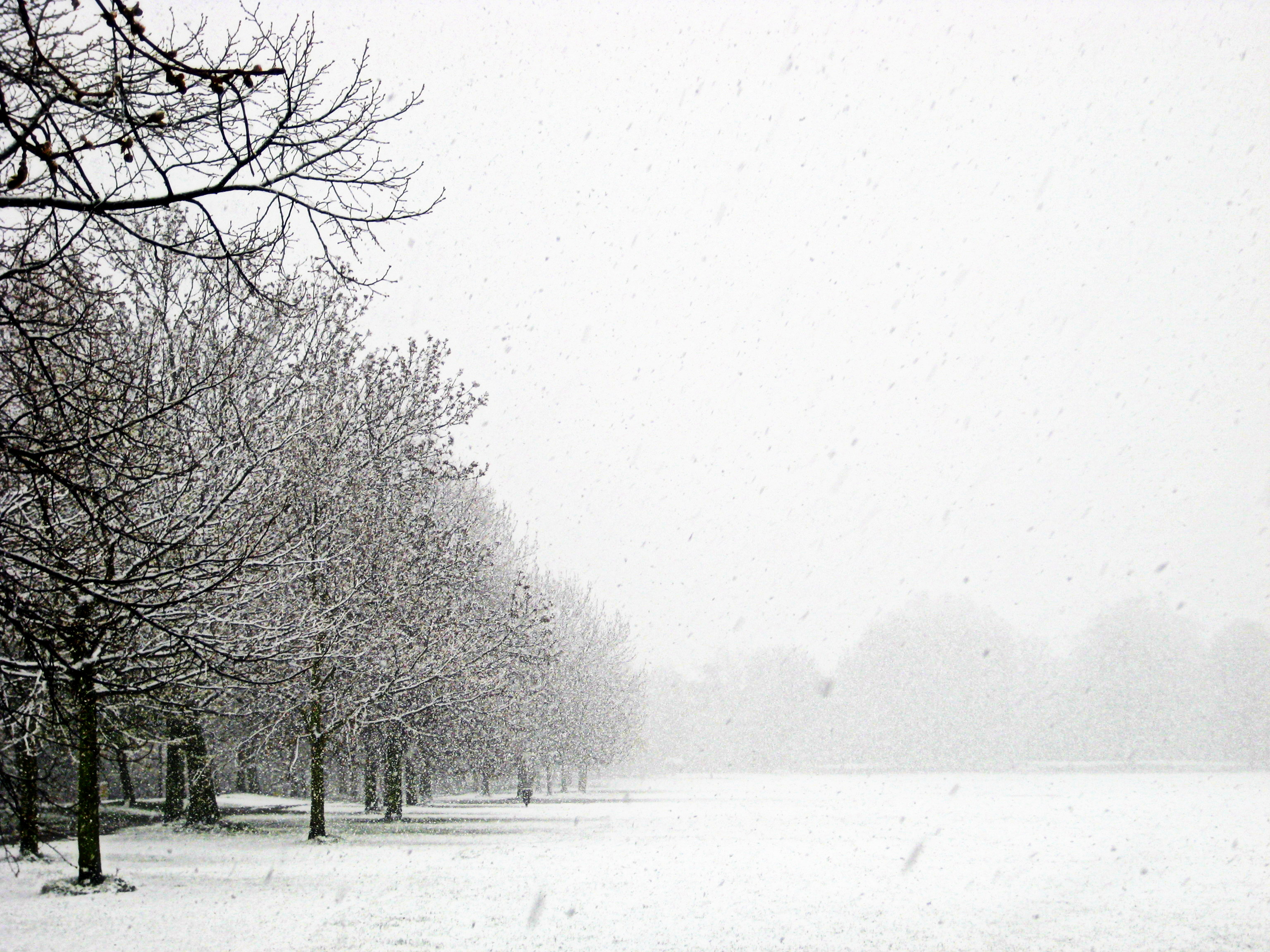
traversing the PhD road? ~ London in the snow

traversing the doctoral road? ~ London in the snow

Balance, not division. Compassion, not attack. Conversation, not war.

Compassion is not a relationship between the healer and the wounded. It’s a relationship between equals. Only when we know our own darkness well can we be present with the darkness of others. Compassion becomes real when we recognize our shared humanity. ~ Pema Chödrön

by @debsnet

Often I am struck by argumentative battles in traditional media, on social media and around the blogosphere. I appreciate those writers, commentators and educators who share their musings, experiences, readings, and perspectives, without using divisive loaded language or attack. I think the rantiest I have gotten was this post on the APPR reforms in New York and this one around whether teachers can be researchers, but I attempted to frame my criticism through making transparent my perspective and asking clarifying questions. Balance.

I have written a lot about my school’s coaching model, as it is kind of my baby and it’s something which I think is worth sharing; others might gain from hearing our story. Yet this coaching model is not stand alone. It is not as though teachers at my school are only coached by teacher-coaches in a non-evaluative, non-hierarchical model. In their first year at the school, teachers participate in a rigorous evaluative permanency process. Every year they have a conversation with their line manager, who touches base with them on their work, goals and classroom practice. Every third year, teachers have their coaching cycle with their manager. This is more evaluative and performative by its nature, and by the nature of the relationship. Teachers additionally work with instructional consultants. Leaders work with coaches. Professional learning community teams and action research projects work alongside. Growth and evaluation. Balance.

I have written about the creative things I trial in my classroom like a term without grades and genius hour for students and teachers. These are things at the experimental end of the spectrum of what happens in my lessons, so I share them as stories of experience and part of a conversation. I do these things to develop engagement of my often-reluctant high school English students, to build their self-efficacy and to help them learn to rely on themselves as drivers of learning, rather than entirely on me as Teacher with a capital T.

Does that mean I don’t use explicit instruction? Of course not! I explicitly teach concepts, skills and texts, although I temper this with encouraging students to do their own thinking and to trust their own thinking, rather than expecting that I can fill them, as vessels, with the answers. What are the ideas of the text? What interpretations might be drawn? Answers can come from me or from Spark Notes, but if I do my job properly, students will have the skills, understandings, language and cognitive capacity to draw their own interpretations, from their own contexts, and justify these using logic and evidence. The best student responses comprise original thinking, not regurgitated knowledge. The best teachers focus not just on effective learning (our core business, of course!) but developing learners and passion for consuming, curating and creating knowledge.

In my Head of English roles at three schools I have ensured a balance between explicit instruction and those strategies which propel love of reading, power in writing and deep intellectual engagement in ideas and discussion. Interestingly, Charlotte Danielson’s heavily-researched Framework for Teaching has its ‘proficient’ descriptors describing teaching which is expertly directed by the teacher, and its ‘distinguished’ teaching descriptors outlining lessons in which students are taking responsibility for their own learning and behaviour. Creative and explicit. Balance.

I have written about lyrical metaphors for PhD study, and only occasionally about the unsexy logistics of what the graft actually looks like. My conceptual framework draws in part from fictional literature. Does this mean my PhD is devoid of hard, critical, scientific work? No. My PhD is of course the result of the logical, systematic working through of literature, data and research problems. When writing the Limitations section in the conclusion of my thesis I was highly aware that all research has its limitations. Extensive quantitative data can show us patterns and effects, but these may be faceless. Qualitative data can drill down deep into the messy humanness of lived experience which may be unrepresentative of wider groups and therefore not generalizable. Yet each study adds its tiny piece of understanding to the layers of what is known. Research is conversation. Imaginative and systematic. Broad and deep. Balance.

I would love to use the line ‘I’m a lover not a fighter’ but I think I’m both. I believe in sharing and celebrating our stories, but I will advocate fiercely for my students, fight for what I believe is right and argue for my research. Balance.

From a history of my posts, it is probably clear that I am seduced by the lyrical, by storytelling, by creative approaches and by metaphor. Yet I am not one dimensional. Nor is my teaching, my thinking, my researching or my living. Balance.

I came across this excellent recent TED talk from Jon Ronson on the way social media has moved from giving voices to the voiceless, to an angry mob mentality of shaming and abuse, in which people seem to forget compassion and morality.

While I love robust discussions which take us out of the echo chamber of we-all-agree-high-fiving, I also think we need to approach these with compassion, thoughtfulness and a view of each other as human beings. We can disrupt with respect. We can disagree gracefully. We can advocate with civility. (And if you throw in a metaphor, you’ll totally have me!)

by @debsnet

Revising writing: Lessons from the PhD thesis

The more you leave out, the more you highlight what you leave in. ~ Henry Green

Musée d’Orsay clock - the neverending tick tick of the PhD

Musée d’Orsay clock – the neverending tick tick of the PhD

The PhD is a long journey which seemingly goes on infinitely. Just as the doctoral researcher reaches one summit or one horizon, another appears. It’s easy to feel like there is little time to stop at each point, take a breath, enjoy the view, and look at how far we’ve come. Usually the researcher straightens her shoulders beneath her rucksack and begins trudging up the next slope. (Or is it skipping up the slope? Storming the incline? I don’t want my language to be too negative. I love my PhD but its hard work is part of its transformativity.)

This weekend I hit a point in my PhD which I decided warranted celebration. 2 years and 9 months after enrolling, I sent my revised full thesis draft to my principal supervisor.

There are still revisions to go and work to do (of course) but making my way through the full text to the point where I felt it hung together as a whole, felt like a summit worth stopping at. Sitting on a rock, taking a peanut butter sandwich out of my pack and reflecting on the path I’ve traversed so far. (Ok, peanut butter sandwiches are not my culinary celebratory choice; I went out with friends for lychee martinis.)

Gullfoss waterfall ~ take time to pause, reflect & see how far you've come

Gullfoss waterfall after a blizzard ~ take time to pause, reflect & see how far you’ve come

So, how did the revisions go?

To give some context, my qualitative PhD has 10 chapters which roughly cover: 1) Introduction; 2) Literature Review; 3) Research Question; 4) Methodology; 5) Method; 6) Data/Story/Findings #1; 7) Data/Story/Findings #2; 8) Data/Story/Findings #3; 9) Discussion; and 10) Conclusion. The review of literature covers my three studied phenomena, plus a contextual issue. The narrative data chapters are split into three chapters, one story for each group of participants.

When I finished the first full unrevised draft, I sent my supervisors Chapters 9 and 10. After the consequent supervision meeting, I revised these. That way, I had the end in mind when I went back to the Introduction. I could see the beginning and end as matching book ends to be viewed together.

Revision from the start of the text began on my PhD writing (well, revision) retreat, which got me into a revision routine and mindset.

My revision system was: take a hard copy chapter and make annotated revisions -> go back to the Word document and make revisions, highlighting any sections of text that still felt rough, or that I hadn’t yet ‘solved’ -> go to next chapter. I worked through from chapters 1 to 10 like this. Then I revisited my highlighted sections. Then I went over the Introduction again, which needed the most work. I always tell my students that the introduction is your reader’s first impression, and your conclusion is what you leave your reader with. Spend time on them.

Other revision bits and pieces included checking references, checking for APA comma use, and the most desperate of phdcrastination techniques: changing the font! (I chose Garamond for its classic serif 16th century gorgeousness).

I found that the first half of the thesis needed more work than the second half. Luckily, as I got towards the end and felt like I was lumbering through wet cement, the text was better, the meaning was clearer, the writing was more assured.

One thing that helped me at the end of this full draft revision was the support of the Twitter community. Curled up on the couch with my Surface on my lap, I tweeted out an academic SOS and had a number of people reply. Not only that, but they followed up in the next days to see how I was travelling. I was so grateful to these doctoral candidates and scholars who took the time to make me feel as though I wasn’t isolated in my struggle deep in the shadows of the PhD cave. Solidarity. Inspiration. Advice. Thank you #phdchat community and others who responded to my despondence when I was fighting to my deadline!

So, what might be my advice for the full draft revision stage of the PhD?

1. Don’t underestimate the time it takes to revise your text. The first three chapters, about 40 pages, took me my entire writing retreat weekend. There are many layers of revision. Revision for continuity of argument, consistency of language use, for paragraph sequence and structure, for accuracy of language, consistency of referencing and compliance to style. The earlier your writing, the more work it is likely to need.

2. Be open to really changing your text. This revision stage isn’t as much for moving punctuation around as it is for thinking about the essence and elegance of argument. What is necessary? What is superlative? What belongs or doesn’t belong? How is the argument hanging together? Is it consistent from beginning to end? Am I dropping the flags for the reader to follow?

3. Don’t be afraid to chop chop chop. I cut 8000 words from my bloated thesis in this first round of revision. It was great to be at a stage where I didn’t feel sentimentally attached to my words, where I was able to consider their purpose and let them go if they weren’t strengthening the narrative. As the quote at the beginning of this post says, what we leave out serves to highlight what we leave in. I knew my argument would benefit from being strengthened through streamlining (and my readers would rejoice – less words!).

As I edited, I was thinking of this post by Pat Thomson in which she writes “Pat is in the lounge room reading a thesis. She is finding it hard going and wants to go back to bed.” This put me in the frame of mind to think about my reader. I don’t want reading my thesis to be hard going or painful or ‘when will she just get to the point?’ I want the reader to be propelled through the text, with enough detail and a sense of excitement of what is to come.

I’m excited to hear my supervisor’s feedback in a few weeks. My supervisors have seen the chapters bit by bit over time, but not the whole text together. And I’ve left a couple of flourishes as a surprise.

The draft is at a stage that has me feeling pleased and proud that my study has resulted in a thesis document which makes an exciting contribution to my area in a way that is systematic, creative, full of powerful authentic stories, and maybe slightly subversive in the realm of traditional academic writing.

While there is more work to go, it felt right to pause and celebrate a PhD moment.

Easy as pie? How a PhD, & other complex work, is like a cake

Metaphors have a way of holding the most truth in the least space. ~ Orson Scott Card

Number 3 racetrack cake by @debsnet

Number 3 racetrack cake, with handmade bunting & teeny cars

As an English and Literature teacher, I love a metaphor, especially an extended one. I have spoken about one of my PhD metaphors before: thesis as a stone sculpture. Metaphors even bubbled up unexpectedly in my PhD data as participants searched for meaningful language to explore their identities.

In some ways this post is a response to, or extension of, Anitra Nottingham’s Thesis Whisperer post ‘My thesis is a cupcake, not a dragon.’ In it, she talks about making novelty birthday cakes for her children. She goes on to use the metaphor of cupcake for her Masters thesis and cake for a PhD thesis.

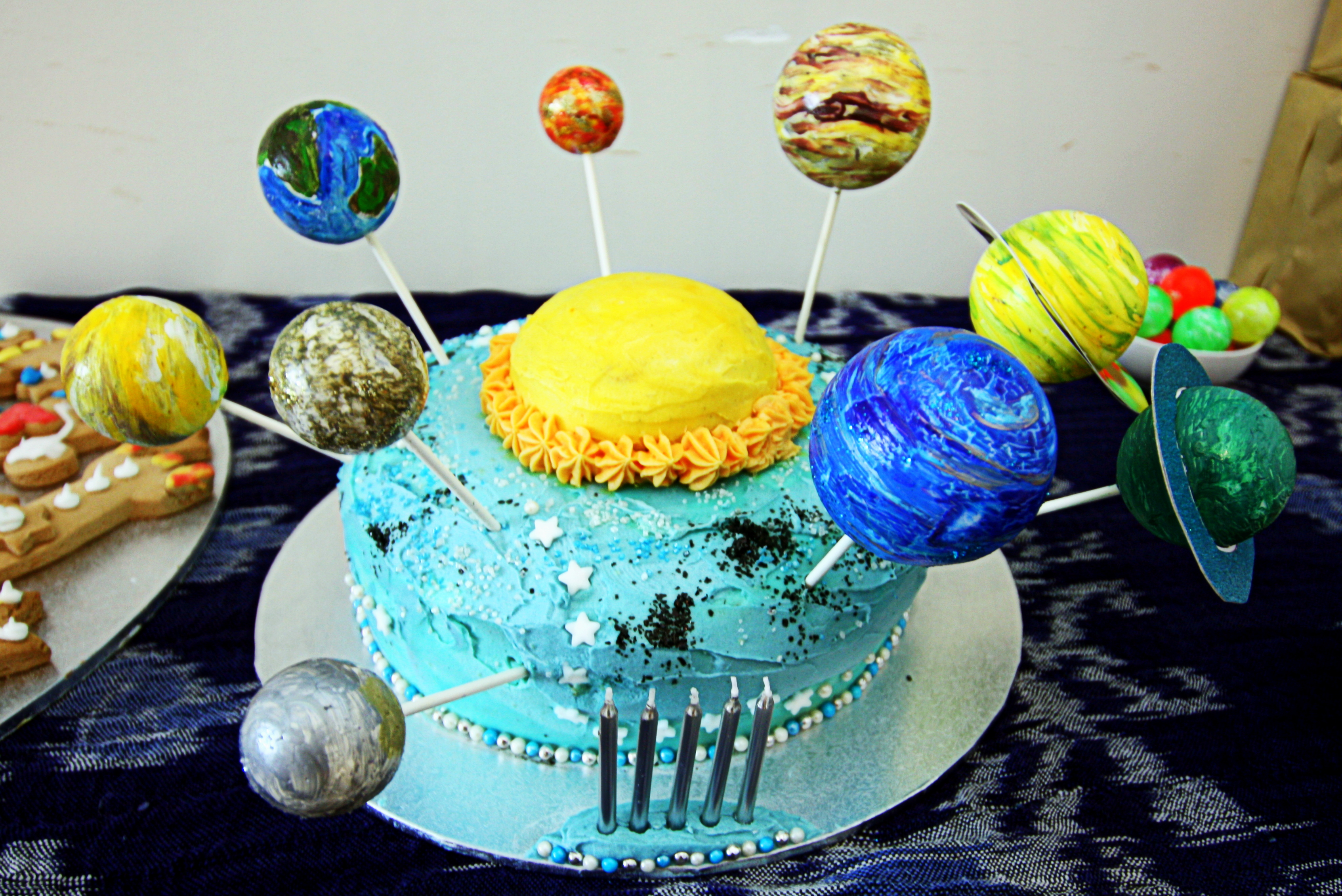
I was reminded of Anitra’s post over the weekend as I prepared for my eldest child’s 5th birthday. A novelty birthday cake is a lot like a thesis, I thought, as I pierced the galaxy outer-space solar-system cake with the planets I had hand-painted (cake decorating makes for great phdcrastinating).

the weekend's outer space solar system cake

the weekend’s outer space solar system cake; I am a child of the 80s so Pluto, beautiful dwarf planet, is there

I love to make my children’s birthday cakes from scratch, not that I find it easy or that I have an aptitude for it! I rarely bake; it’s not something I’m great at, and often my baking is asymmetrical and (goofily? lovingly?) imperfect. But I feel like a cake is more than the sum of its ingredients. I am convinced that my children and their guests can taste the love and trying-to-make-it-wonderful effort that goes into a homemade birthday cake.

Tootle cake, the Golden Book train who likes to play in meadows rather than stay on the rails

Tootle cake, the Golden Book train who likes to play in meadows rather than stay on the rails

A thesis, too, is more than the sum of its parts, more than the words on its pages. As I revise the full draft of my thesis, I am reading with the reader in mind (and trying to avoid boring or annoying them – see Pat Thomson’s post from an examiner perspective). I am hoping that examiners and other readers will ‘taste’ the passion, the challenges overcome, the obsessive dedication, and the satisfaction and enjoyment that comes with taking a PhD project to completion.

Both cake and thesis start with a problem. How am I going to embody the essence of this? Both cake and thesis require a balance of systematisation and creativity, recipe-following and individuality. What tools and ingredients will I need? What methodological processes will I follow to ensure a sturdy finished product which stands up? How might I make this original and my own interpretation?

Like a thesis, sometimes a cake doesn’t work at first and the creator needs to start again, or find creative solutions (usually involving using icing as glue or camouflage).

Octonauts cake

Octonauts cake, complete with sunken figurine (note to self: add heavy bits at the last minute)

It might seem trivial to compare the PhD thesis to making a cake (and of course there are many many differences between a thesis and a cake!), but I find that metaphors, in distilling meaning down to its simplest and yet most poetic form, help me to make sense of complex work. Their simplicity helps to keep me going.

The quote at the beginning of this post resonates: a metaphor can hold the most truth in the least space.

What are your metaphors for your complex work?

For wellbeing & productivity: breathe. pause. be.

Come forth into the light of things, let Nature be your teacher. ~ William Wordsworth

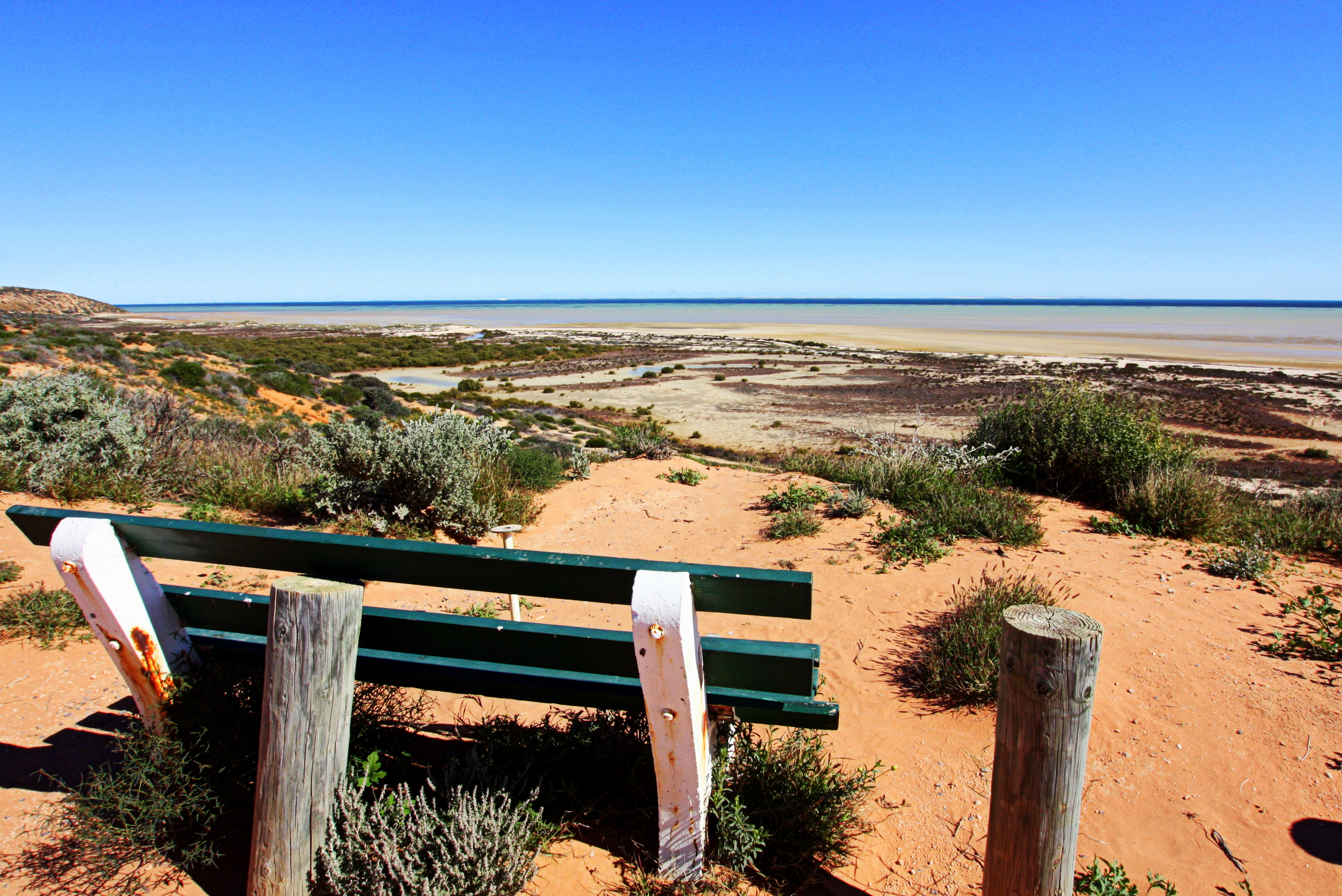
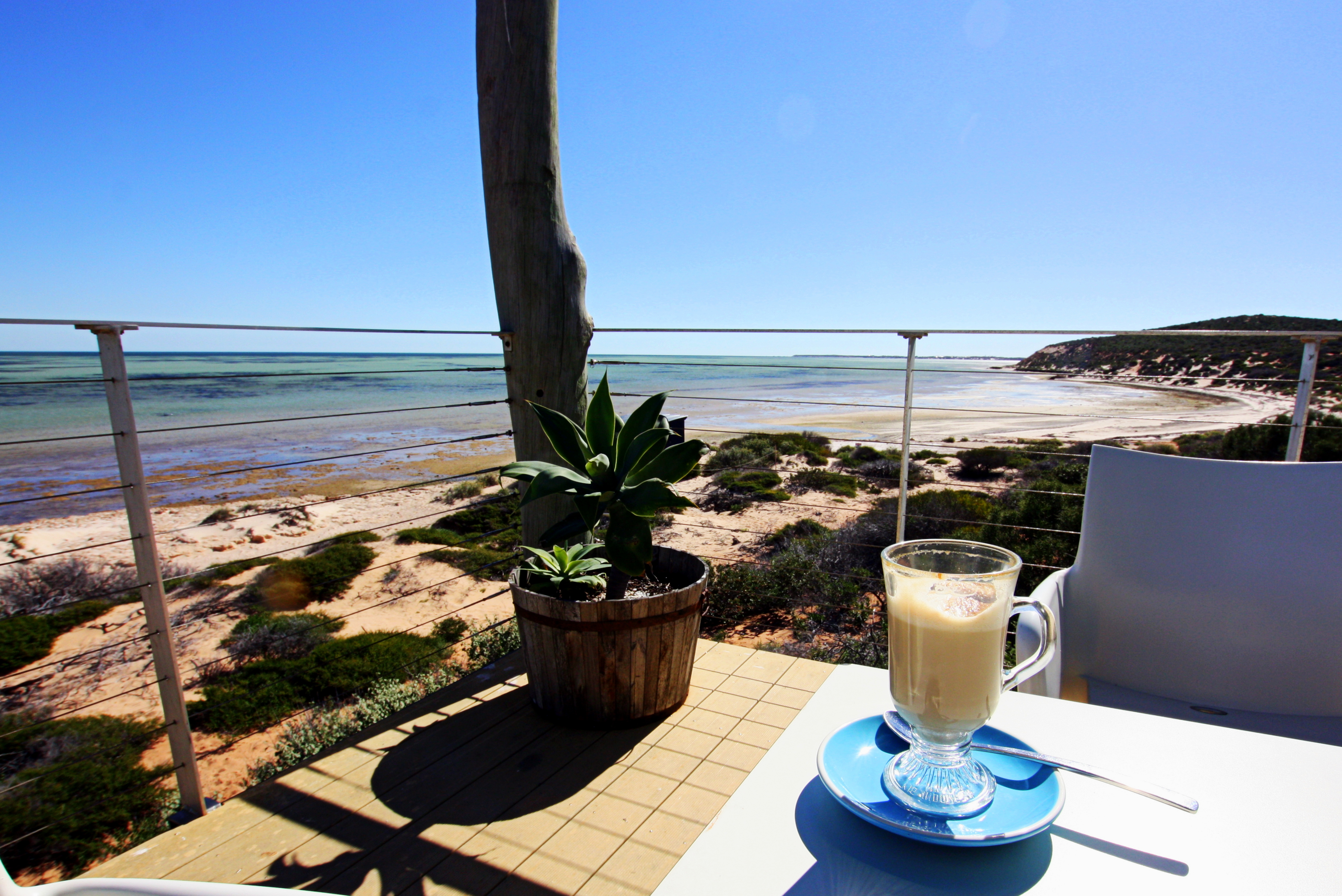
Shark Bay, by @debsnet

Like many educators, I love my work and I love to work. Not only that, as a PhD researcher I love my PhD, treating it like a luxury, a privilege and precious ‘me time’.

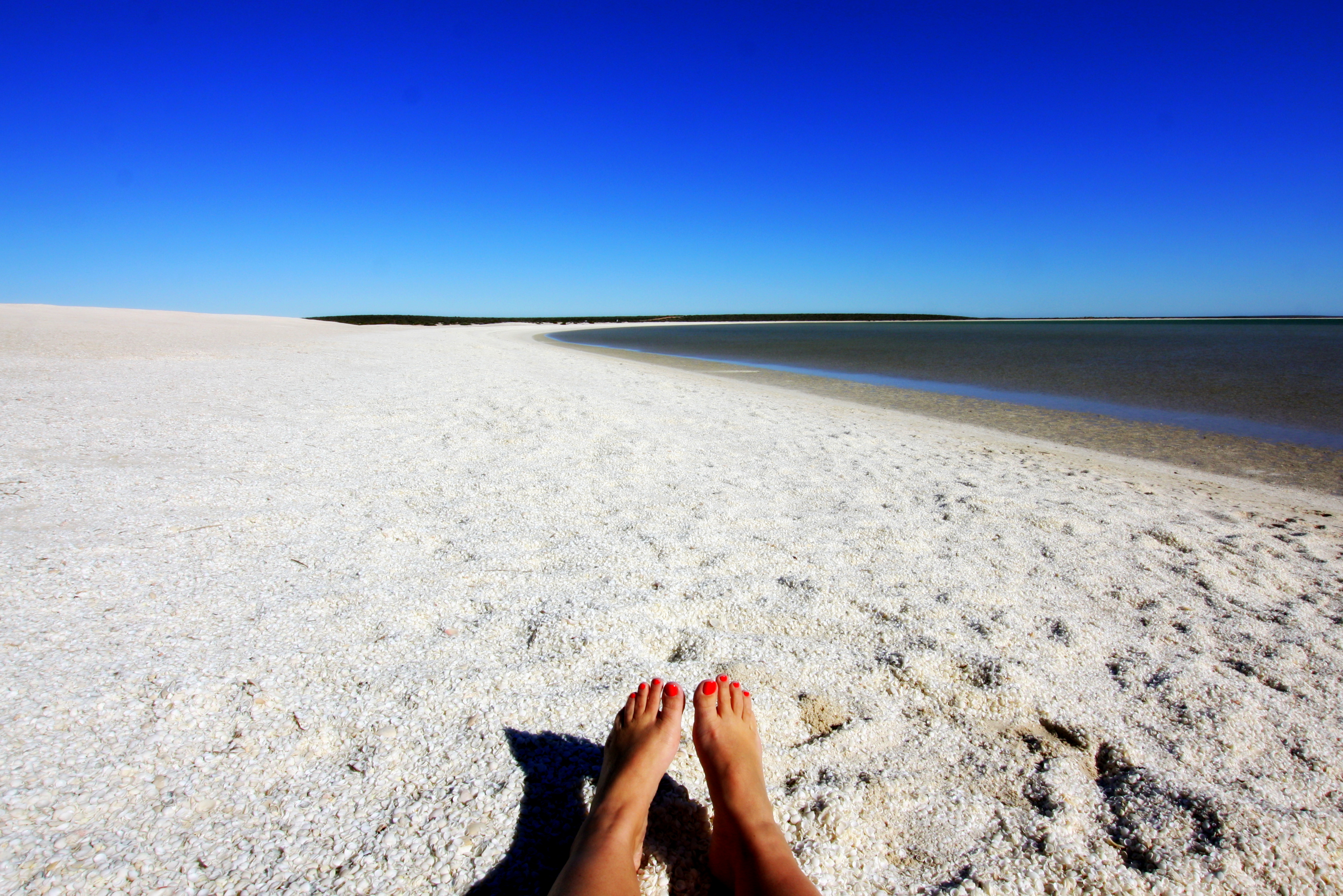
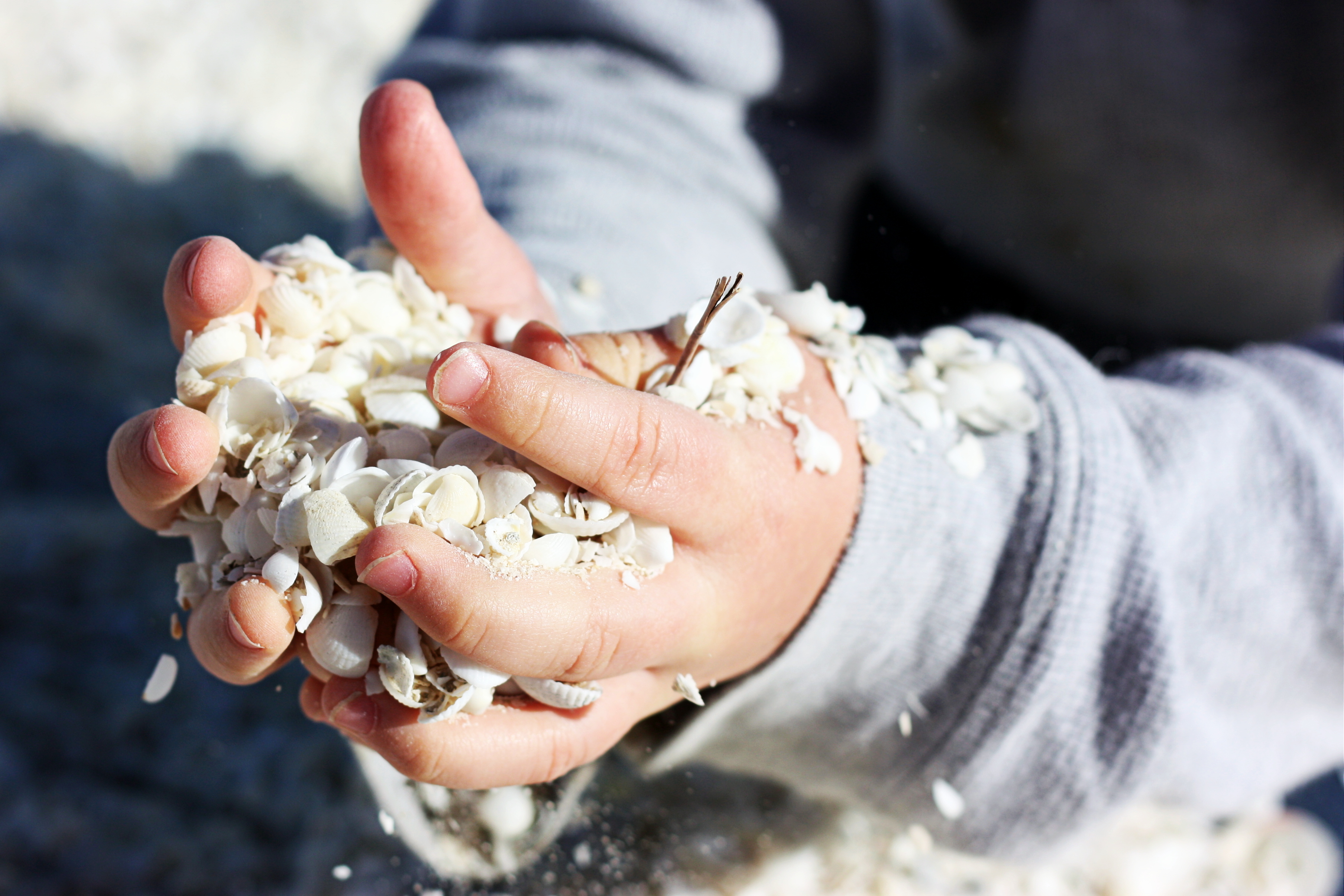
Shell Beach, by @debsnet

While I’ve acknowledged before that we need to give ourselves permission to take a break, I’m often not very good at it. Sometimes I have to force myself to take a break.

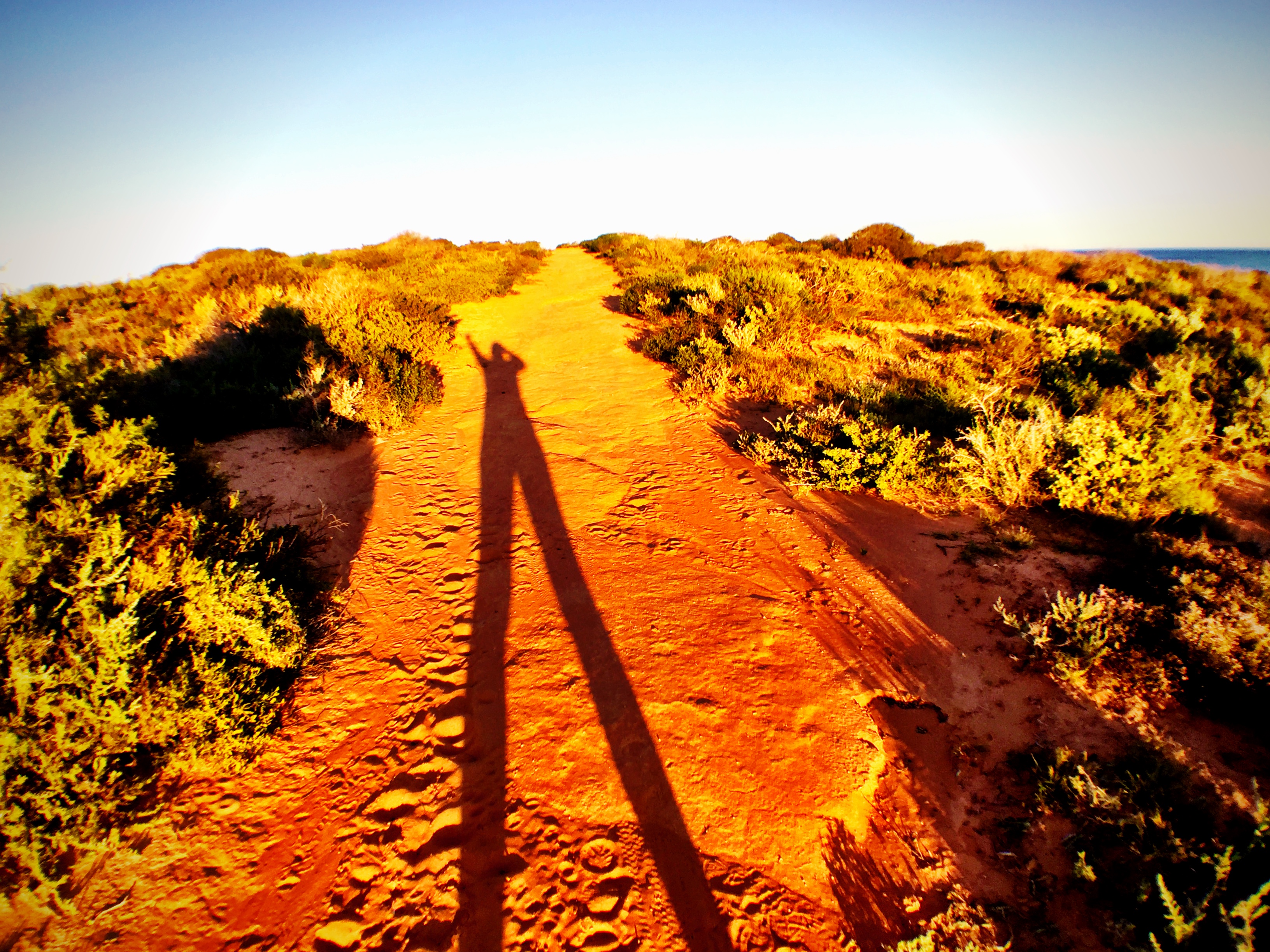
long shadows in red dirt, by @debsnet

After an eleven week term, at the end of which I spent an entire weekend slogging away at my thesis, I was obsessed. Obsessed because all my waking and teeth-grinding-sleeping moments were taken up with work or PhD. My thoughts about my doctoral research were permeating every crevice of my mind and each nook of my time.

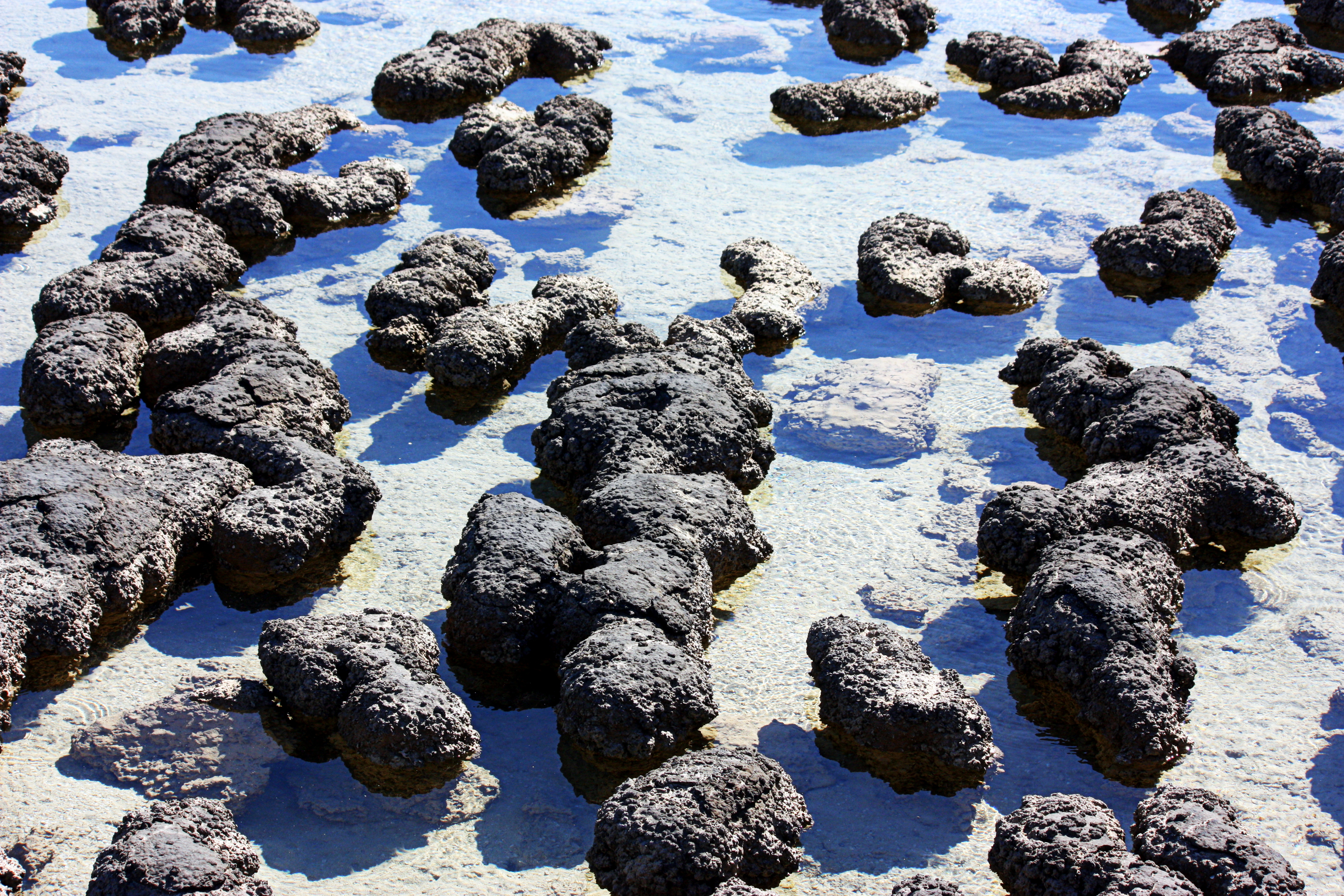
Hamelin Pool Stromatolites, by @debsnet

I was delighting in this immersion. I was happy to be thinking about the thesis on my walks, in the car, in the shower, in my sleep. I felt like it was a super-productive push-to-the-end mindset. My mind was on all the time. PhD-wise, I was excited about my findings, my conclusions, my writing. But I was also exhausted.

Monkey Mia, by @debsnet

And then school holidays were upon me, and with them a pre-planned outback road trip with my husband and my two-under-five. I considered taking my doctoral work with me. I have so much to do, I thought. A thesis to revise, a conference paper to write. Just imagine how much reading and editing I could get done in long car trips or at the campsite.

Shell Beach, by @debsnet

As someone who considers blogging or participating in education Twitter chats as ‘down time’ (I know – how relaxing!), how could I contemplate a complete break? How could I go from an escape dedicated to working on my PhD ~ my recent PhD writing and revision retreat ~ to a trip taking an enforced break from it?

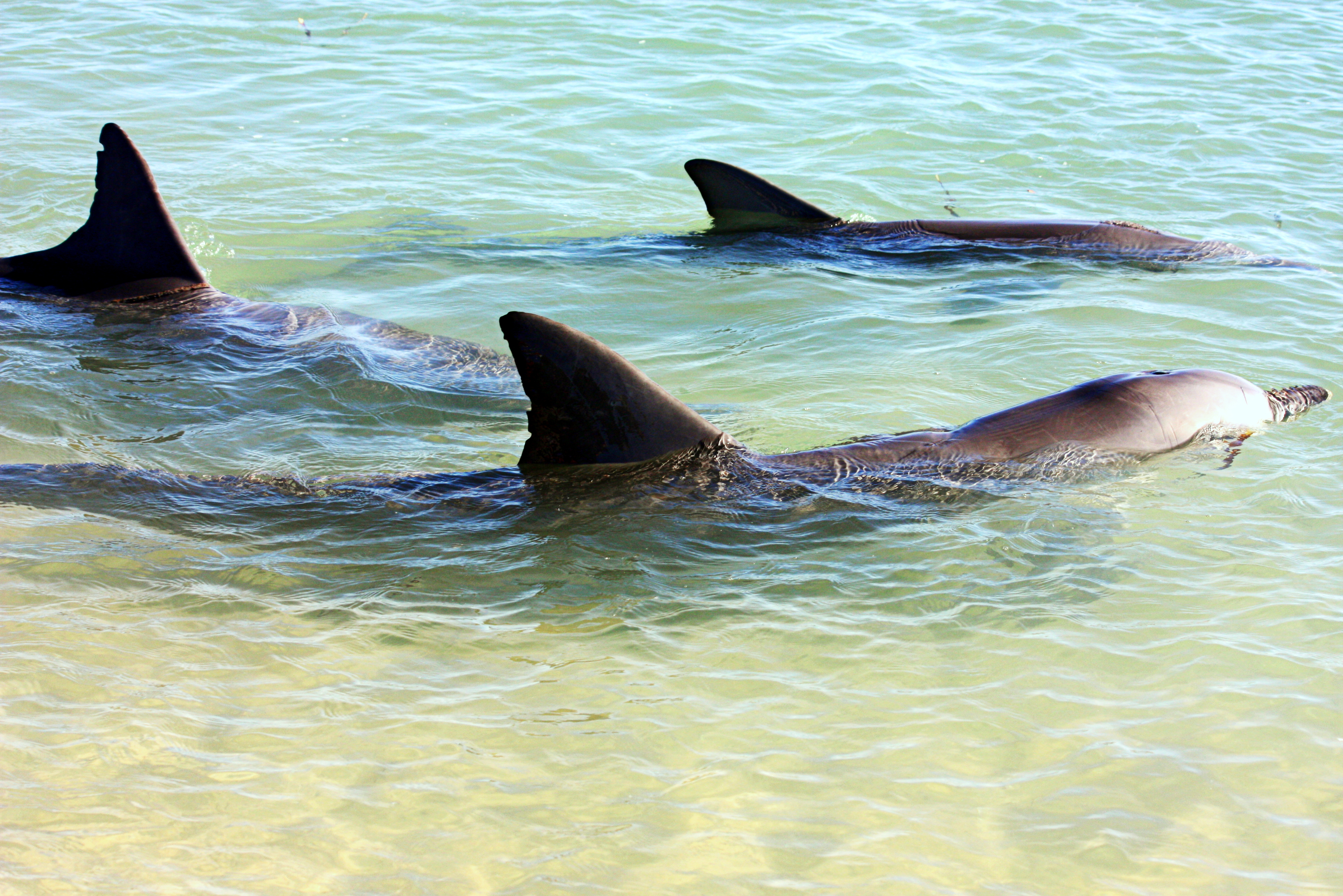
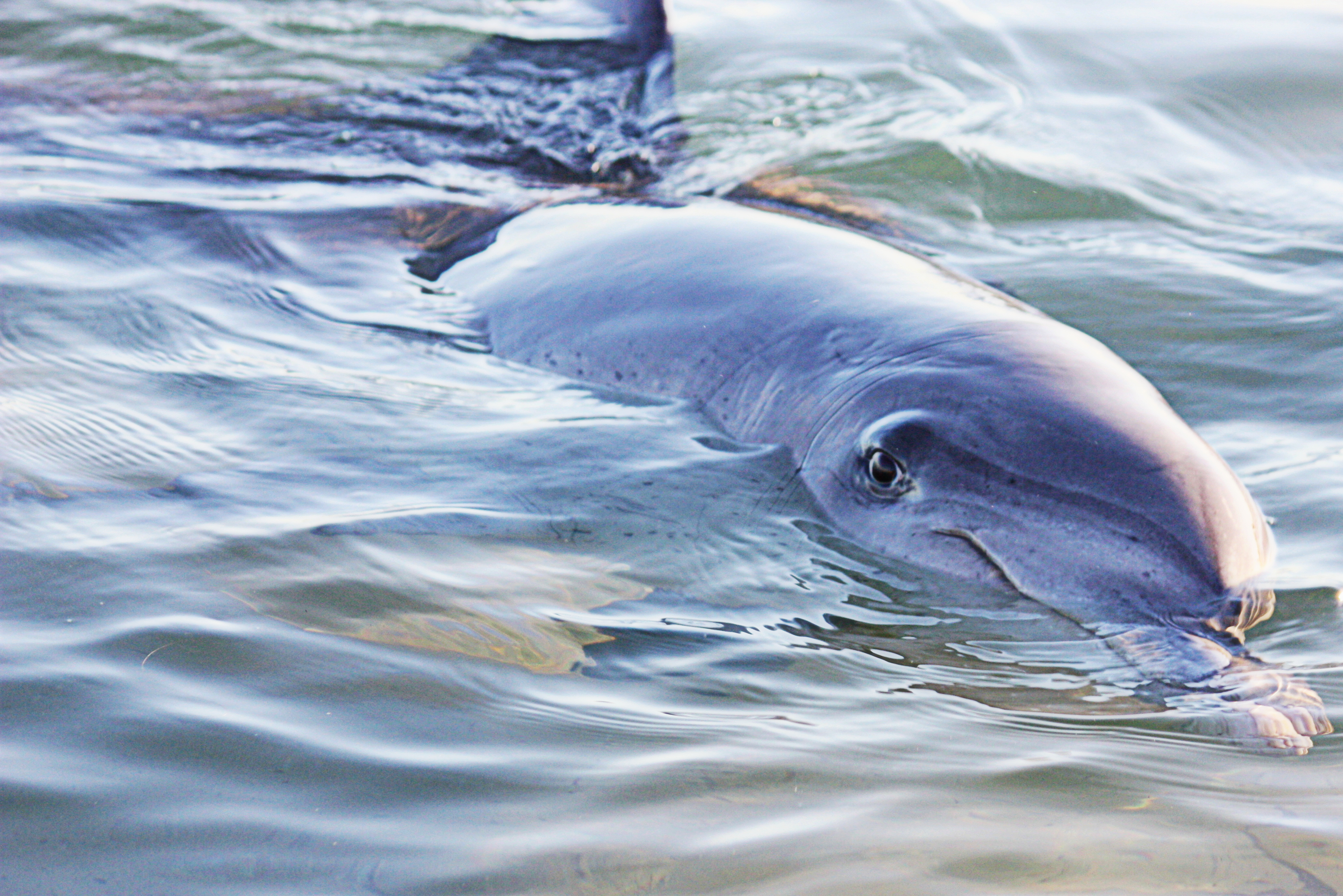
Monkey Mia dolphin, by @debsnet

I knew it was healthier to take a rest. Pause. Cut the cord for six days of just being, exploring and adventuring. Breathe.

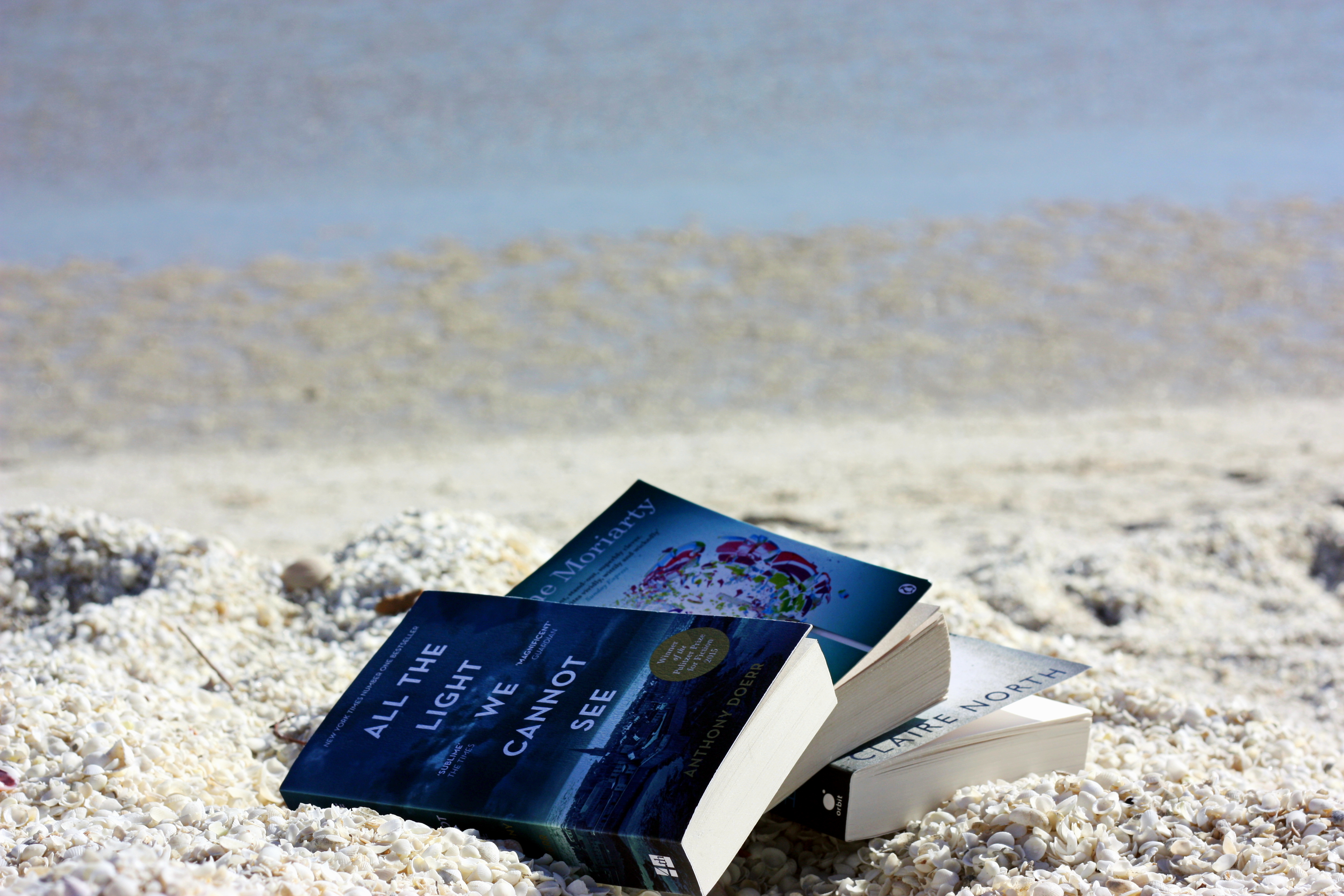
fiction pile on Shell Beach, by @debsnet

Thinking back to my 3 words which set my intentions for this year, taking an outdoor-family-faraway break fits best with presence. Embodying human being rather than human doing. It was about being with my husband and kids, and being in nature.

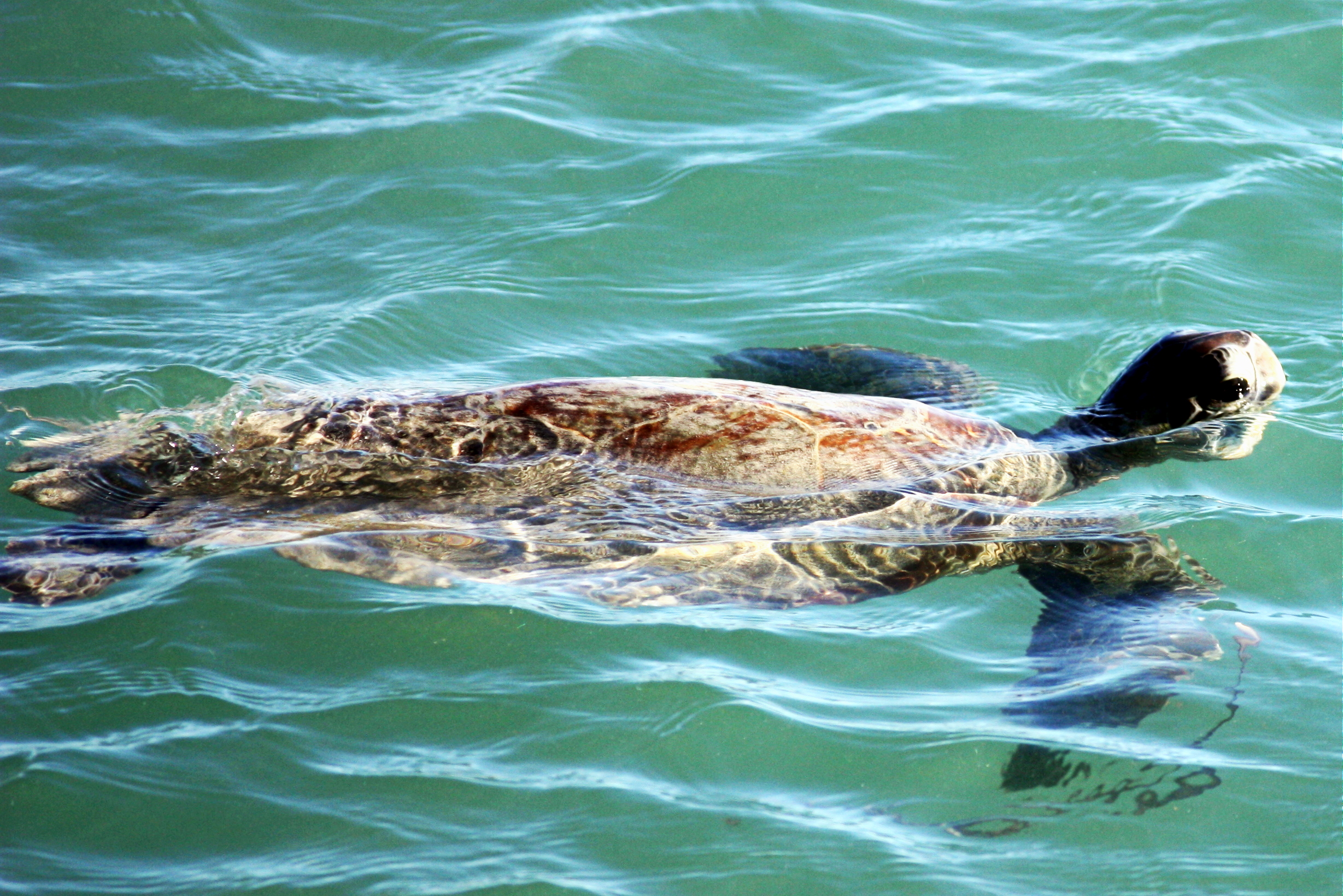
green turtle, Shark Bay, by @debsnet

There are some studies, like this and this, which explore how and why being in nature makes us feel better, improves wellbeing and enhances mental health. Anecdotally, most of us would attest to feeling ourselves melting into a more relaxed state when we spend time grounding ourselves outdoors. Curling our toes in soil, sand or snow.

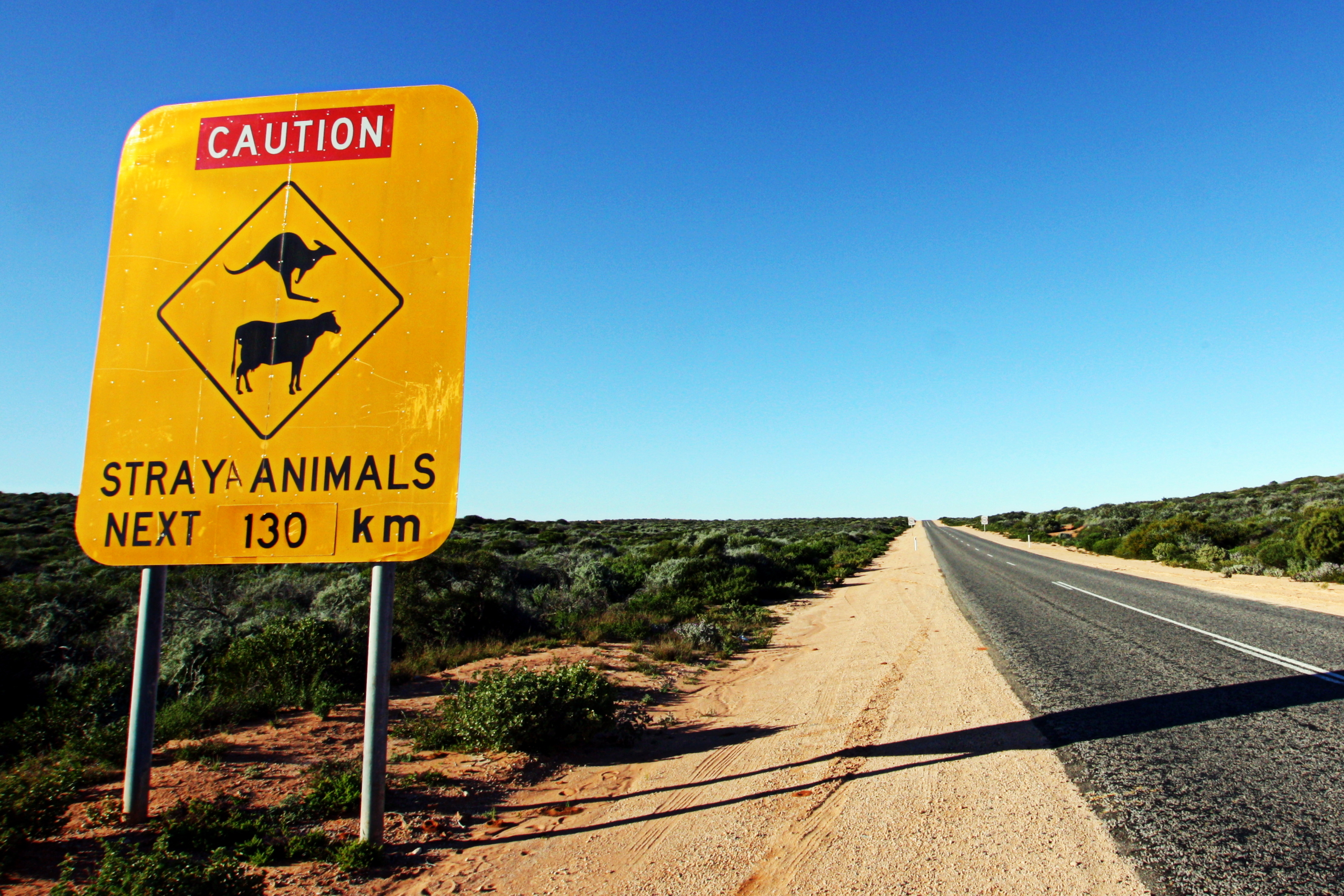
Straya animals, by @debsnet

I’ve written before about spaces and places that make me feel grounded, inspired or joyful, but this trip was to somewhere I hadn’t been before: Shark Bay, a UNESCO World-Heritage listed peninsula on the most westerly point of Australia.

iron corrugations, by @debsnet

I allowed myself to luxuriate in this time out and time away. I read fiction (not academic texts or student papers!). We hand fed dolphins, visited a beach covered in pristine white shells as far as the eye could see, stomped through red dirt, went star gazing, saw the world’s oldest living fossils. The pictures in this post give you a sense of what I experienced.

Ocean Park, Shark Bay, by @debsnet

And so I have returned feeling intellectually and physically invigorated. Ready for the next round of PhD and school work, including teaching and leading my school’s new coaching model. I’ve stepped out of my obsessive space for enough time to allow for some recovery, but I’m aware that I need to nestle back into a place of productivity.

wire against blue sky, by @debsnet

As when I returned from Bali earlier this year, I’m hoping I can hold onto my present feeling of increased clarity and renewed wellbeing, channelling this into self-care as well as productivity.

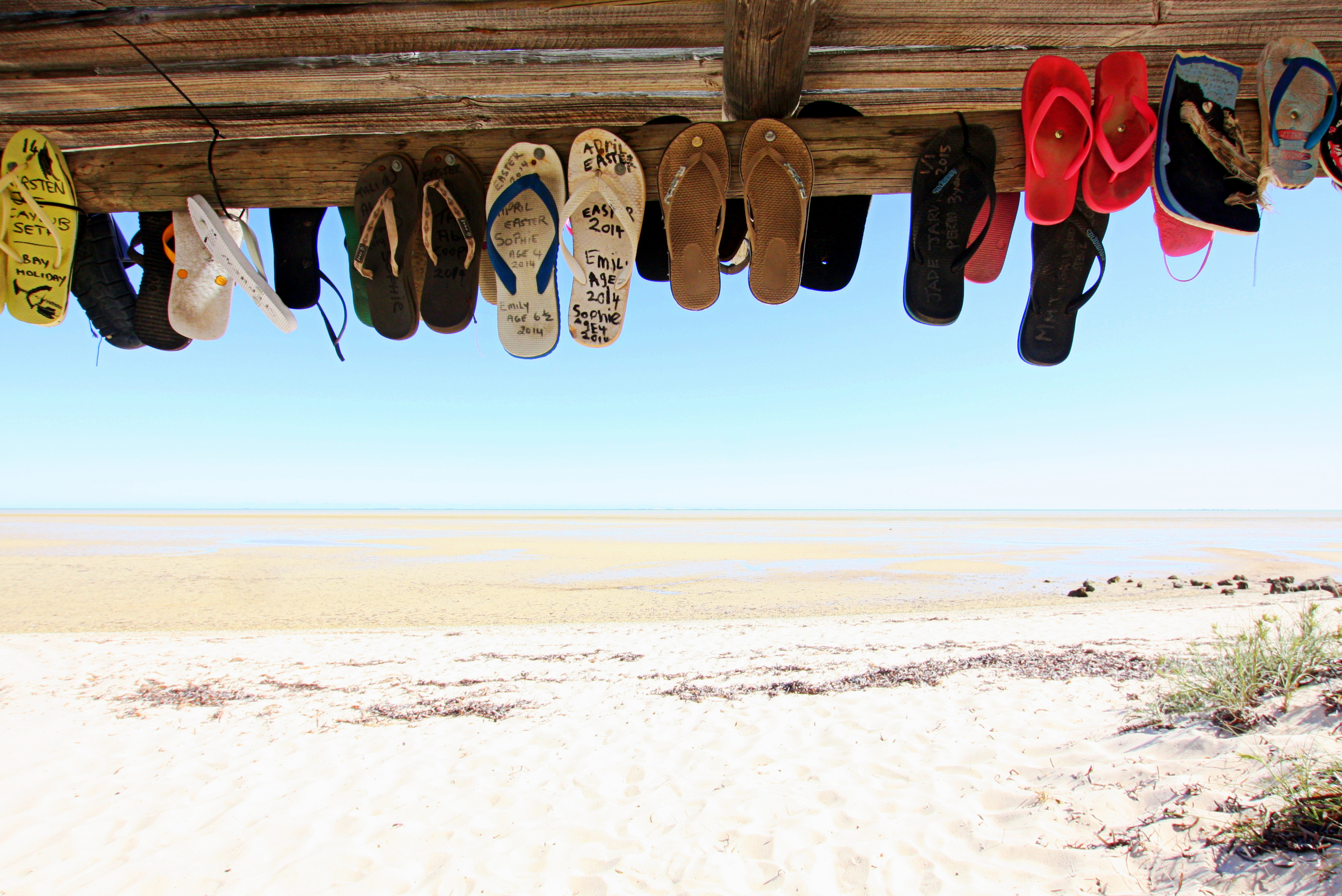
Thong Shack, Denham, by @debsnet

Writing retreat: Dedicated time away to write and revise

Writing is an escape from a world that crowds me. I like being alone in a room. It’s almost a form of meditation. ~ Neil Simon

Where I imagined my retreat would be (photos from previous trips)

Where I imagined my retreat would be (photos from previous trips).

The idea for a PhD writing retreat came to me in a dream. While I live in Australia, I dreamt that I wrote up my PhD thesis in Paris. I imagined myself pensively working at Café de Flore or Les Deux Magots in Saint-Germain-des-Prés. Or editing on a soft patch of grass at the foot of a sculpture in the gardens of Musée Rodin (Le Penseur?). Or typing away beneath the huge train station clock at the Musée d’Orsay. I would take breaks to stroll Parisian streets or to savour Ladurée macarons, foie gras from Fauchon, or ice-cream from Berthillon on the Île Saint-Louis.

This dream was no doubt influenced by the at-that-time steady stream of tweets coming from the ANU Thesis Boot Camp during which doctoral writers were given celebratory LEGO-style bricks as they hit various word-count milestones. The academic focus and collaboration zoomed through social media to my device. Oooh, I thought, how wonderful it would be to have some dedicated time to work on my thesis. But with work and two children under five, a long luxuriant Parisian getaway wasn’t on my list. And my university doesn’t offer a boot camp.

by @debsnet

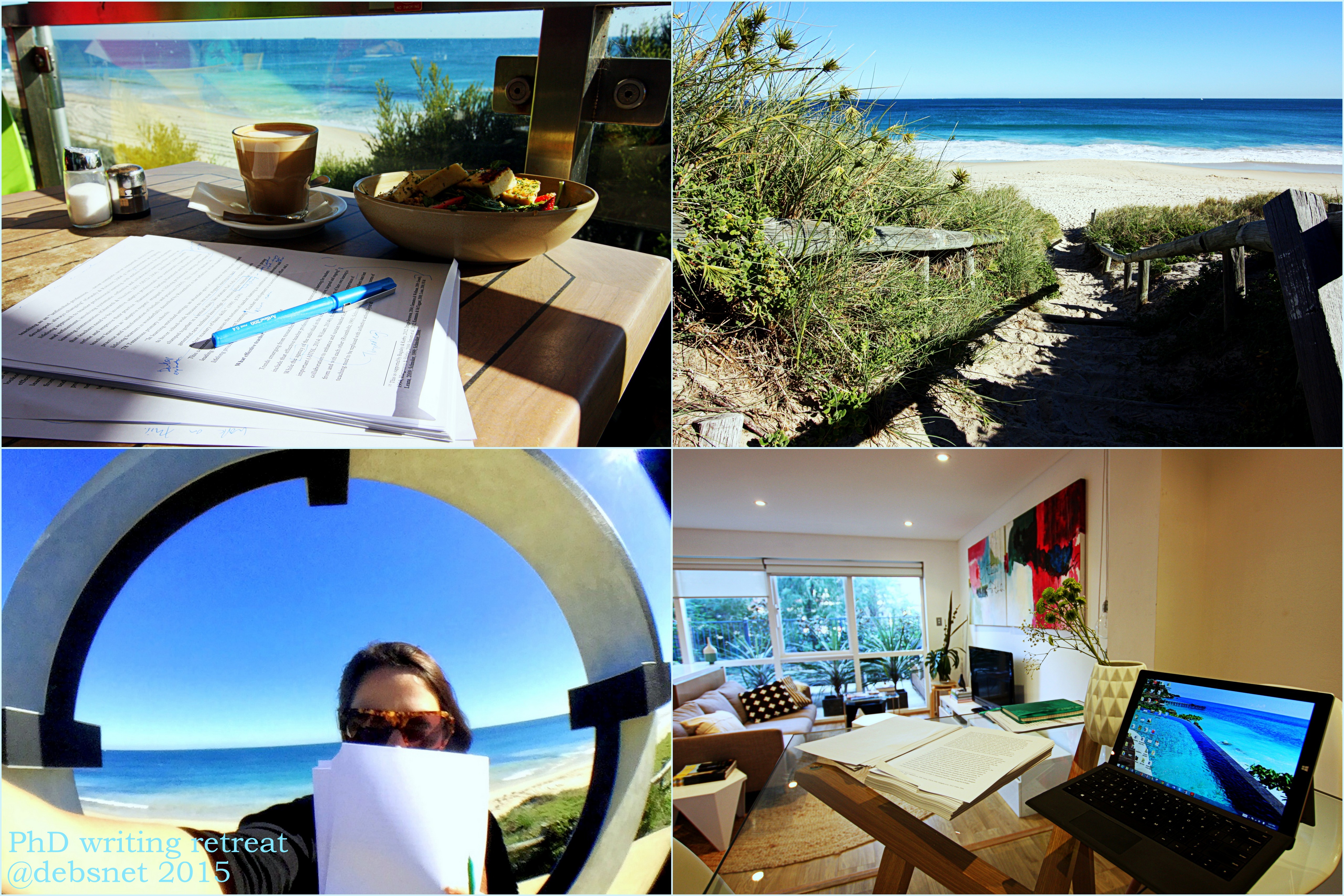
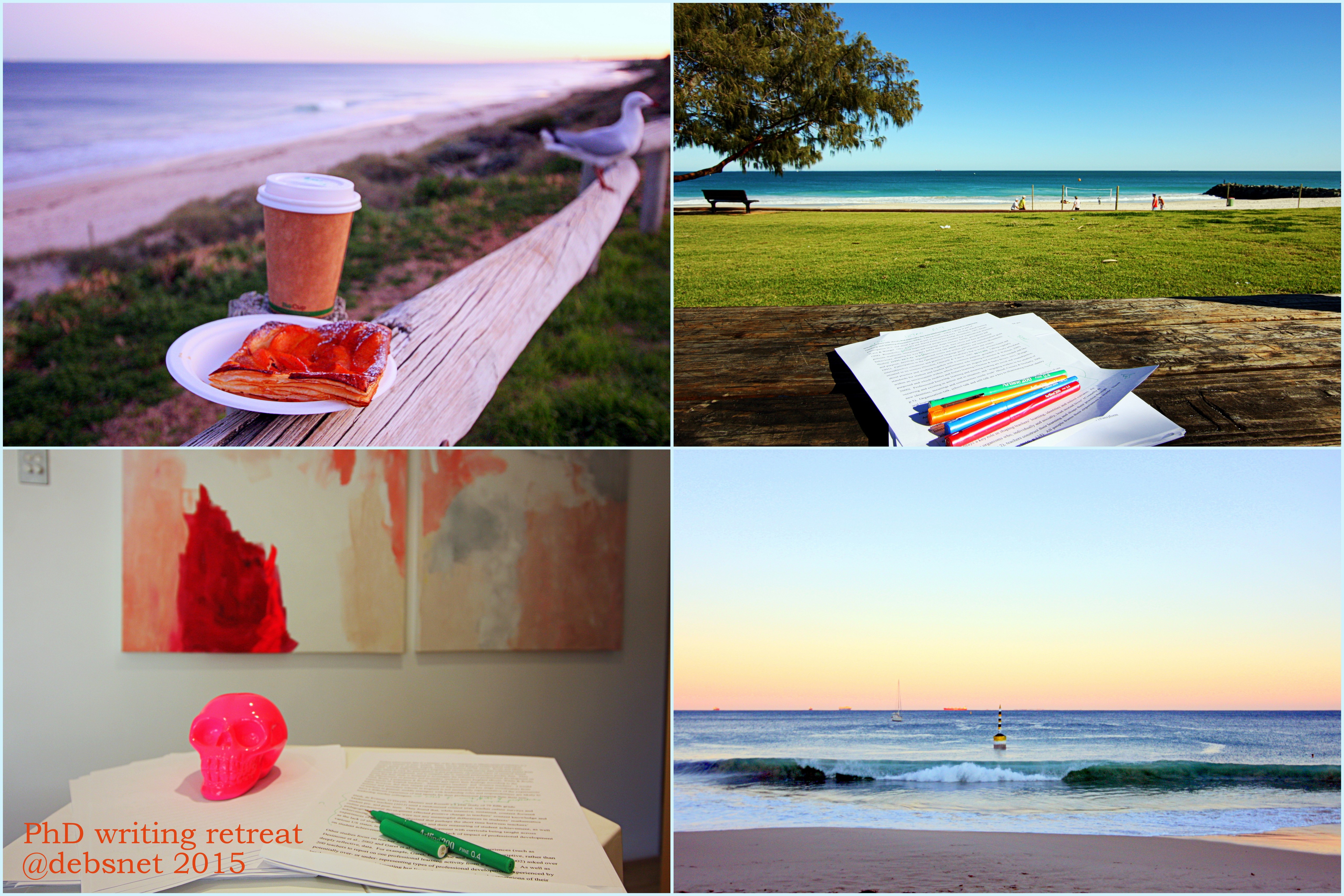
Where my writing retreat actually was.

Writing retreats have been called a ‘scholastic nirvana’ away from the walls-closing-in pressures of academia. Dr Helen Kara, blogging about her recent solo writing retreat, talks about the simultaneous self-indulgence and productivity that finding dedicated time and space for writing can bring. In Dr Kylie Budge’s post about her PhD writing retreat to NYC, she cites research which claims that physical and psychological distance from the norm can increase creativity and productivity.

Casey, Barron and Gordon (2013) note that writing retreats provide protected space for the practice of writing, allowing continuity as opposed to fragmentation. They emphasise the importance of carving out time away from normal activity, and finding space separate from usual settings. This certainly resonated with me, as much of my writing happens in fragmented, stolen, in-between moments.

cycles of revision: read, annotate, make changes, repeat

cycles of revision: read, annotate, make changes, repeat

While many boot camps, ‘shut up and write’ sessions and writing retreats are about producing words, this was to be more a revision retreat. Having recently finished the first draft of my conclusion, I had a first full draft of my thesis and wanted to use retreat time to look at my thesis as a whole document. In fact, my thesis is over its word limit, so this retreat was about streamlining and strengthening the content, not producing more. I’d reached a point where I needed to burrow down into my PhD cave’s subterranean depths and sit there for a while. Present. Focused. Submerged.

Like Helen and Kylie, this retreat would be solo: just me and my thesis having some quality time together. Romantic, right? When I floated the idea with my husband, he said, ‘Go for it.’

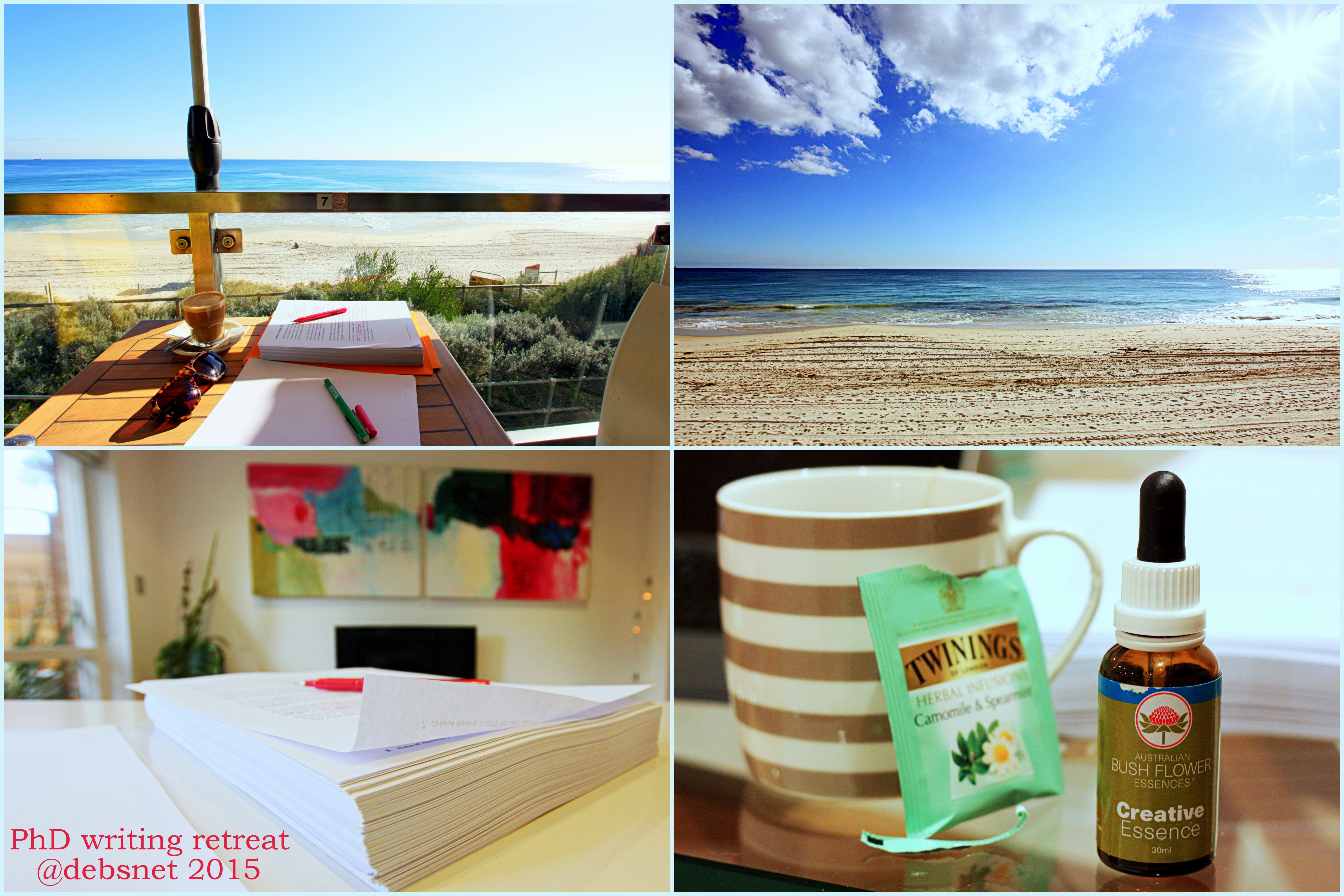
A bit of an expert at making my PhD feel like a holiday, I often choose writing spaces that feel more like luxe and less like work. So, for my retreat, I considered exotic, non-home places with varying degrees of faraway-ness. I was aware of the aforementioned research about productivity and creativity being heightened by the feeling of being away from home and somewhere new. But I didn’t need exoticism, or a vibrant distracting location. I was going for a weekend, so it needed to be close and affordable, just not home. In the end, I rented a studio apartment via airbnb only a few suburbs from home. I was hoping that being not-home would give me enough separation from my everyday world to provide the laser-like focus and conceptual creativity I was after.

Writing retreat Day 1

Writing retreat Day 1

While not as poetic as retreating to somewhere far from home, there were some great things about doing a retreat this way. In giving myself only two nights away, I had to be productive. I had a short time; I needed to use it. I didn’t waste time travelling to and from the retreat (it was a 20 minute drive); this was an escape in my own city. It turned out to feel just new enough to set my nerve filaments tingling with an awareness of difference of environment.

Going into the writing retreat I planned on using my most productive times of the day for writing, working in 2-3 hour blocks of time followed by breaks (walking, showering, eating, changing location, taking some photos). I wanted to be clear about my intention before I began. My main purpose was revising for coherence and story. Here was time to look at the document as a whole. I kept in mind Pat Thomson’s advice to attend to the underlying argument. I was looking for consistency of language and idea development across the thesis. Having just finished the Conclusion, it was important to go back to the Introduction and make these bookends work together.

Writing retreat Day 2

Writing retreat Day 2

During my retreat the first 30-40 pages took me the longest, because there was so much of what Pat in her post calls ‘where the writing is poor because we are struggling to express an idea, to put into words something that we can barely get our head around.’ The beginning of the document contained my earliest writing and earliest thinking. I needed to delete or rewrite much of it in a way I can only do now that I have reached the end.

What surprised me about the retreat was how challenging it was to maintain a consistent focus on one task. It made me realise how much my usual fragmented way of PhDing works for me, doing a little all the time in prized, highly-focused chunks. Fitting in PhD time in and around other commitments has meant that normally I am itching to get to my PhD work, not having to psych myself into doing it.

Writing retreat Day 3

Writing retreat Day 3

Yet, the time and space to dedicate a couple of days to my thesis, and giving it careful, continuous attention, allowed me to make substantial progress and identify those areas in need of further attention. While in this time I only got through the Introduction and Literature Review, these were the sections in need of the most serious revision (and they will need more). I also managed to cut 3000 words out of those two chapters, which, considering I was also adding words where required, is a good start to streamlining my argument.

The retreat embodied my 3 words for 2015: presence (in the moment), sharing (through writing and now blogging), and strength (of argument and academic voice). It helped to set up my approach to my thesis revision, kickstarting this push-to-the-end-process and propelling me forward into the rest of the document. It felt a bit like kicking off the swimming pool wall, getting some initial speed and feeling the water before settling into the lap ahead.

Local retreats: not so bad.

Local retreats: not so bad!

The low-tech PhD & whole-document thinking: How I use Microsoft Word to write my thesis

The real problem is not whether machines think but whether men do. ~ B. F. Skinner

What counts as writing the thesis 'old school'?

What counts as writing the thesis ‘old school’?

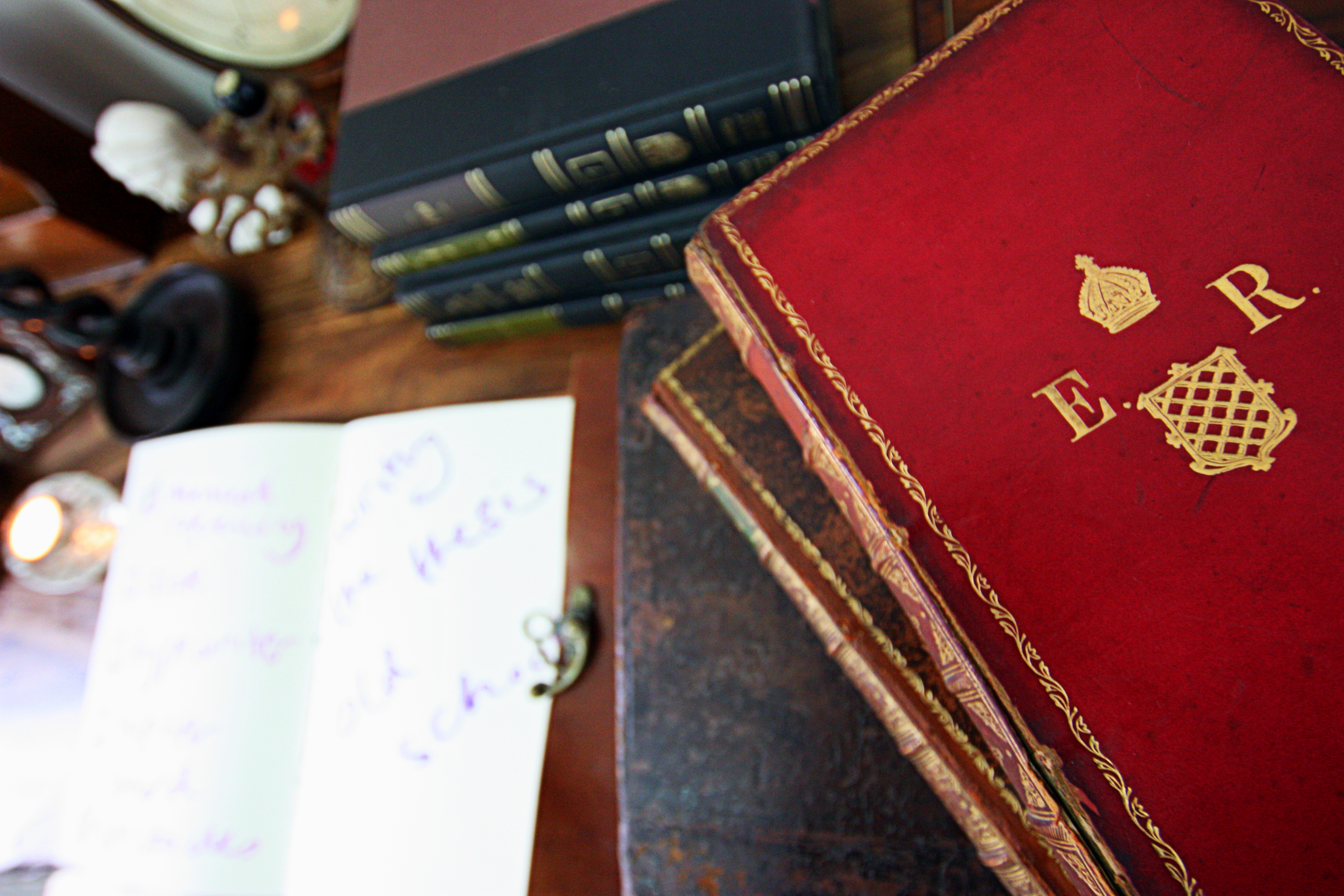
I have spoken before about my love of creative physical media as a way into thinking, and about some of my favourite retro tools (like *gasp* pencils!). My approach to writing my thesis would probably also be considered pretty old school. I haven’t been using a typewriter or writing into wet clay with a reed pen, but it’s been pretty straightforward and low tech. I recorded interviews on a dictaphone, not an iPad (although the usb attachment meant audio files were easily transferred to computer). I use Moleskine-esque Typo Shop buffalo journals to take notes during supervisor meetings. I manually record references into my word processed document (I know, I know, there are plenty of great referencing tools like EndNote and Mendeley). Sometimes I even take actual paper books out of an actual library, books that have that wonderful old-book-smell which e-readers have yet to provide (a scratch-n-sniff sticker would do!).

So, today when Inger Mewburn, Thesis Whisperer, shared this New Yorker article about our love of physical analog notebooking, and PhD researcher Samuel Dent tweeted advice to first year PhD students to create a thesis template document from Day 1 of the PhD, I have phdcrastinated my way into writing this post. Possibly the most pragmatic and least creative post I’ve written, it takes on the rather unsexy topic of how I’ve been using Microsoft Word to write my PhD thesis.

While not along my normal lyrical lines of thesis as sculpture or research as artistic conversation this post is partly motivated by hearing about PhD students who, shortly before submission, collate their chapters into the final document. This approach is very different to my own as I have written in one document from the start. Here I’ll explain a little about what I’ve been doing and what the effect has been for me.

Using Microsoft Word headings

After my research proposal was accepted, I opened a ‘PhD draft’ document, placed my title on the first page and entered my main headings. At the beginning of the process these were state-the-astonishingly-obvious headings like ‘Introduction’, ‘Literature Review’, ‘Methodology’, ‘Method’, ‘Data’, ‘Findings’ and ‘Conclusion’. Innovation and levels of sub-headings came later as my thinking developed, research threads emerged and the document formed and transformed.

So, my thesis title and my headings have evolved and changed over time. The structure of the thesis remains similar, but now the Table of Contents tells a story and acts as a kind of mini-outline of the structure, ideas and intricacies of the document. The biggest structural changes were in my data section as I grappled with how best to share participant perspectives while preserving their anonymity.

Using Word’s heading styles (and adjusting these to meet APA style specifications) means the Table of Contents changes as my thesis develops; it is easy to automatically update the Contents at the click of a mouse.

The other feature of headings that I use constantly as I write is navigation. I write with the left hand navigation pane open to ‘headings’ and as I need to move around my document, I can scroll and click into where I want to go, jumping around at will.

I had all these things lying around the house ... I really do love old school.

Setting up this shot was as simple as gathering together a few things from home. I really do love old school.

Saving regularly

My saving routine is that I save my thesis document as a new file at least once a month or any time before I do some big revisions. This means that I have a record of its growth over time and can dip back into previous documents if I have lost a reference in amongst some cutting and pasting. It also feels like a security blanket for revisions, in case I want to resurrect some deleted writing. Of course, the latter never happens, but it’s a reassurance that softens the psychological blow of deleting large chunks of text.

The nice thing about having this rolling record of thesis development is realising how far I’ve come. I have found that in the PhD it’s very easy to focus on all the things yet to do, all the heights still to scale. From time to time, to combat this looking-forward and focus on what has been accomplished, I open up a draft dated one year ago. It always surprises and delights me to see how far I’ve come. At times the whole structure has shifted, and at other times those chapters that were empty have been filled. I allow myself a moment of basking in the pleasure of realising what I have done, before catapulting myself back into the abyss of what I have yet to do.

When I send chapters or sections to my supervisors I copy the relevant text and paste it into a new document to send to them, so I have these separate documents saved, too.

Another useful feature is ‘Compare documents’ (go to Review -> Compare) which allows me to compare two drafts of the same text and see what has changed in the editing process.

Whole document thinking

Having my thesis as one evolving document has some practical uses such as checking where in the text I have cited a particular author or used a particular term. It makes it simple to ‘find-replace’ if I have to change a term throughout the text.

More importantly, though, it has facilitated my thinking about the thesis as a holistic story with threads running through it, rather than as a series of disparate chunks. Now that the almost-a-full-draft document sits at 111,000 words including abstract, acknowledgements and references (hopefully to be edited down), I can look back down the long tunnel of drafts and see how my research has grown from its first seed to its almost-full form.

photo by @debsnet

Tweet, blog or dissertate? On being a writer.

Good evening, ladies and gentleman. My name is Orson Welles. I am an actor. I am a writer. I am a producer. I am a director. I am a magician. I appear onstage and on the radio. Why are there so many of me and so few of you? ~ Orson Welles

book, by @debsnet

Our splintered, kaleidoscopic identities are wonderfully expressed by Orson Welles in the above quotation. Mine include writer, reader, researcher, teacher, leader, learner, mother, partner.

Do you feel like a writer? Does blogging make you a writer? Does micro-blogging? Does being a researcher automatically make you a writer? Professor Pat Thomson has written about ‘being writerly’ and practices which help you to see yourself as a writer. I tried to channel my writerly self in my 2015 – the year of writing dangerously post. I suppose this post is more about Pat’s idea of ‘being writerly‘ rather than ‘being a writer’. If you feel and behave like a writer does that make you one?

From micro to macro, this post focuses on how I use and interact with writing, including writing for purpose and audience. I wonder, are there different keystrokes (or pencil scribblings) that work for different folks? While I’m sure some people prefer tweeting or blogging, or article writing, or putting together a visual or numerical representations of their understanding (interpretative dance, anyone?), I think each platform and tool depends on our purpose for writing and audience to whom and for whom we are writing; each has its usefulness.

Below, I reflect on the platforms and tools I engage with, and what I get out of each.

Tweeting as a writing practice

I find that Tweeting, especially in a Twitter chat, is a kind of speed writing and speed thinking. Graham Wegner recently reflected that a busy Twitter chat can feel like a stampede of groupthinking sheep. Yet it is the torrential speed of Twitter chat tweets that sometimes helps me to clarify my ideas. Being pressured to aphoristically express an idea or viewpoint in a 140-character nutshell often forces me to distil and crystallise my thinking down into its essence, without agonising over it. I have previously called micro-blogging ‘therapy for the verbose’ as it is the antidote to my tendency to say things using too many words. Even my PhD thesis is over its word limit and will need trimming, streamlining and distilling. I have found Tweeting is a writing medium that helps me to most succinctly channel my thinking and keep tangents at bay.

That said, I also like the potentially tangential nature of Twitter chats. Rather than having a fear of missing what’s been said as the tweets roar by, I tend to engage with what I can, and with what peaks my interest. This often means that I spend much of a Twitter chat off to the side in a peripheral discussion, but I tend to prefer this kind of more extended conversation to the one-liner answers to a series of questions. That’s why I like the format of broader chats like #sunchat which work with one question for the hour and allow the conversation to take organic shape depending on the participants. Without the interruptions of regular questions, conversations can be deeper.

Blogging as a writing practice

As I discussed here, blogging has been personally transformative and about global collaboration. I am relatively new to blogging, having started this blog less than a year ago. In that I time I have published 55 posts on my blog, which has been viewed more than 10,000 times in more than 80 countries. Wow! I know that these numbers don’t compare with the superstar bloggers out there, but I am surprised and delighted to have a readership, and more than that, people to whom I’ve connected as a result of my writing, their reading, and our subsequent online, face to face, and voice to voice, conversations.

More than that, blogging has allowed me to take my thinking further than micro-blogging will allow, but more freely and conversationally than academic writing. For instance, I find Twitter a difficult platform to discuss issues of ethics, equity and social justice. Sometimes the subject seems too big for the platform. Some of my blog posts have emerged out of conversations on Twitter in which I have felt too restricted by space to say what I want to say; in these instances a blog can provide the complexity of thought, especially around tricky or contentious issues, which can be lost in the pithy-one-liner nature of tweeting.

PhDing and other academic writing

My PhD is a different writing beast all together, a 300 page monstrosity of a work which I am currently whittling, sculpting and (re)building into a cohesive document. The PhD can feel like a gigantic quilt which threatens to suffocate its maker; it is beautiful, creative, borrowing fabrics and threads from elsewhere while creating something new. The threads of reading and writing overlay and weave together in complex ways which have to come together in a holistic totality, while also working at the level of the small square, each vignette perfectly stitched, formed and embellished.

I recently popped my 110,000 word thesis draft into wordle.net, a website which takes text and distils it down to a visual representation of its most frequently used words. It looked like this:

my thesis wordle

my thesis wordle

I did this to see if my key themes emerged, but was subsequently more interested by words I did not expect to see there: “rather”, “just”, “really” and “something”. This led to an edit of my thesis looking for these words. I discovered that most of them were to be found in my participants’ language, but I did find that many of the “something”s belonged to me, and proceeded to weed them out of the document, replacing them with more precise or concise language. So, even turning words into a visual turned me back into my writing with a new understanding.

Academic writing such as abstracts, journals, conference papers and even the Three Minute Thesis, are others forms again. They require more laser-like focus than the big PhD book, and a clarity of structure and point. While trying to write smaller, more focused texts from the PhD can be a challenge, it is a good exercise in refining and clarifying thinking, while finding different ways to communicate important ideas.

Each of these writing platforms encourages different thinking and writing practices. Writing for different purposes and audiences allows us to layer, appliqué and augment our wordsmithery and our ways of communicating to others and to ourselves.

Every secret to a writer’s soul, every experience of his life, every quality of his mind is written large in his works. ~ Virginia Woolf

Writing, by @debsnet

Research as conversation: contemplating Wicked and the Mona Lisa

Something has changed within me. Something is not the same. I’m through with playing by the rules of someone else’s game. … It’s time to trust my instincts, close my eyes, and leap. ~ Elphaba, Wicked

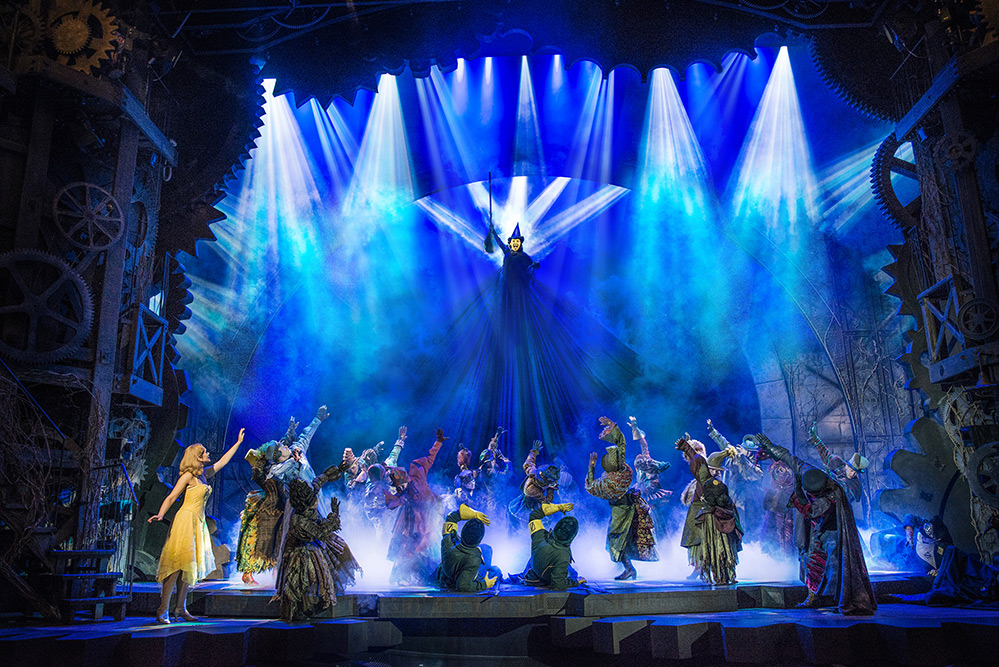
This week I took my mum to Wicked the musical. It was the third time I’ve seen it, the first being in London’s West End in 2007. I still remember the goose bumps that raced up my arms as Elphaba rose into the darkness singing that she was “defying gravity”. After seeing the show with my mum, our talk turned to art, research, and my thesis. Yep, that’s how my mum and I roll. So how did Wicked prompt talk about research?

Wicked is an example of a literary and artistic work which inserts itself into a discussion. It adds to a conversation started by the 1900 L. Frank Baum novel The Wonderful Wizard of Oz and the 1939 film The Wizard of Oz. Loosely based on the 1995 Gregory Maguire novel Wicked: The Life and Times of the Wicked Witch of the West, it refers to the original story, reinventing, reimagining and conferring new meaning. It takes the Oz-Dorothy-Witches narrative from one of the value of journey, the longing for home and good triumphing over evil. It transforms the well known children’s story into a tale of the Other, accepting difference, embracing our authentic selves and fighting for what is right in the face of corrupt political systems. It takes the imagery of the written story and the film interpretation and recreates these in fresh ways through music, set design, costume (the shoes! the millinery!) and dialogue. Clever references to Dorothy’s story are woven into this back story about witches Elphaba and Glinda. In this way Wicked is a creative product which adds layers of meaning and injects new insights and perspectives into an existing story.

Artists also ‘speak’ to each other through their work. The long history of reimaginings of the Mona Lisa, a few of which I have juxtaposed below, illustrates how artists comment on each other’s work through their creations, adding to a dialogue about what art might be, how art might be created and what art might have to say about the world it inhabits.

art is conversation

art is conversation

Commenting on Da Vinci’s 1517 painting, Mona Lisa, or La Gioconda, in 1919 Marcel Duchamp drew a moustache and goatee on a cheap postcard reproduction, labelled it L.H.O.O.Q. (a pun) and exhibited it in a gallery. Duchamp’s appropriation and reinterpretation of one of the world’s most famous paintings brought into question its value and challenged the then-definition of fine art. In 1954, Salvador Dali produced a work in which he added his own eyes, moustache and hands filled with coins in Self Portrait as Mona Lisa, in a kind of artistic high five to Duchamp. Pop artist Andy Warhol used the Mona Lisa image in his 60s screen prints, blurring lines between high art and popular culture. In Warhol’s work, Mona is reproduced through the then-controversial-in-the-art-context screen printing process. She is repeated in primary colours to reflect assembly-line mass production, questioning the place of art in an increasingly mass-produced consumerist world. These artworks show how artists use their processes and subjects to talk to each other across time. Each uses subject and method to add a new layer of meaning, present a critique or pose a challenge to what has come before.

Research, too, is part of a conversation. Like writers and artists, theorists communicate with each other through their work over time. A literature review places research within the historic conversation. Where and with whom does it fit? Whom or what might it challenge? Research methods draw from what has come before. The approaches of old masters and contemporary talent become models to emulate, springboards from which to adapt or materials with which to weave new forms. Discussions and conclusions are places in which researchers form reimaginings and state contributions to the greater conversation, to existing knowledge.

Research writing, too, is steeped in academic tradition, in a conversation of form and language. Some choose to adhere strictly to the expectations of academic or dissertation genres, and some choose to push and challenge those boundaries. My thesis, while not a creative work in the sense that an arts thesis with exegesis might be, draws on literary as well as academic traditions. It uses a literary work as a conceptual frame in order to draw metaphorical meaning.

Some might not agree with seeing research as creative-product-in-historic-conversation, perceiving it as a lyrical idea which undercuts the systematic science of research. Of course research is logical and systematic. It can be viewed as science but it can also be seen as story, as creative work and even as sculpture. A recent post by Lara Corr on the thesis whisperer blog talks about the creative elements of research. She plays with the ideas of being a master builder and colouring outside the lines. Pat Thomson’s post on discussion chapter as flight influenced my posts about starting the discussion chapter and building a researcher identity through it.

In Wicked, Elphaba comes to a place in which she chooses a new path and embraces a new identity. Have you found a place in your research or work where you were able to defy gravity and fly? To add your layer to the conversation in which you are engaging?

As somebody told me lately, everyone deserves the chance to fly! And if I’m flying solo, at least I’m flying free. To those who ground me, take a message back from me. Tell them how I am defying gravity! ~ Elphaba, Wicked