Choose your own Edventure: Letting genius blossom

Neither a lofty degree of intelligence nor imagination nor both together go to the making of genius. Love, love, love, that is the soul of genius. ~ Mozart

letting genius blossom

letting genius blossom

Yesterday, first semester ended at my Australian school (ah!). As I settle in for a break, my reflections keep bringing me back to the idea of immersive, meaningful and transformative learning for all: students, educators, academics. This is learning which privileges the intellectual freedom of the individual and trusts in each person’s capacity for self-directed growth.

In a school sense, I have been using variations of Genius Hour (a version of Google’s now-defunct 20% time) in my senior English classrooms. I found that in a high school context when I have four lessons per week, the idea of 20% time didn’t work as well as less-frequent, longer-lasting ‘genius’ projects. So instead I build ‘choose your own way to explore your understandings and inspirations’ time into units of work.

This time isn’t a total free-for-all but uses as its basis an essential question from a unit of work (like ‘Who is responsible for our actions?’ from a Macbeth unit) or a text we are studying. In this way, students use the course content as a springboard from which they can grow their ideas and design their works of genius. While this vies away from students choosing entirely their own passions, it reflects Google’s move to only focus on projects which align with its core mission and purpose. I have found that some focus helps as a starting point and that parameters can push creativity. And it means I can articulate its purpose in my English courses.
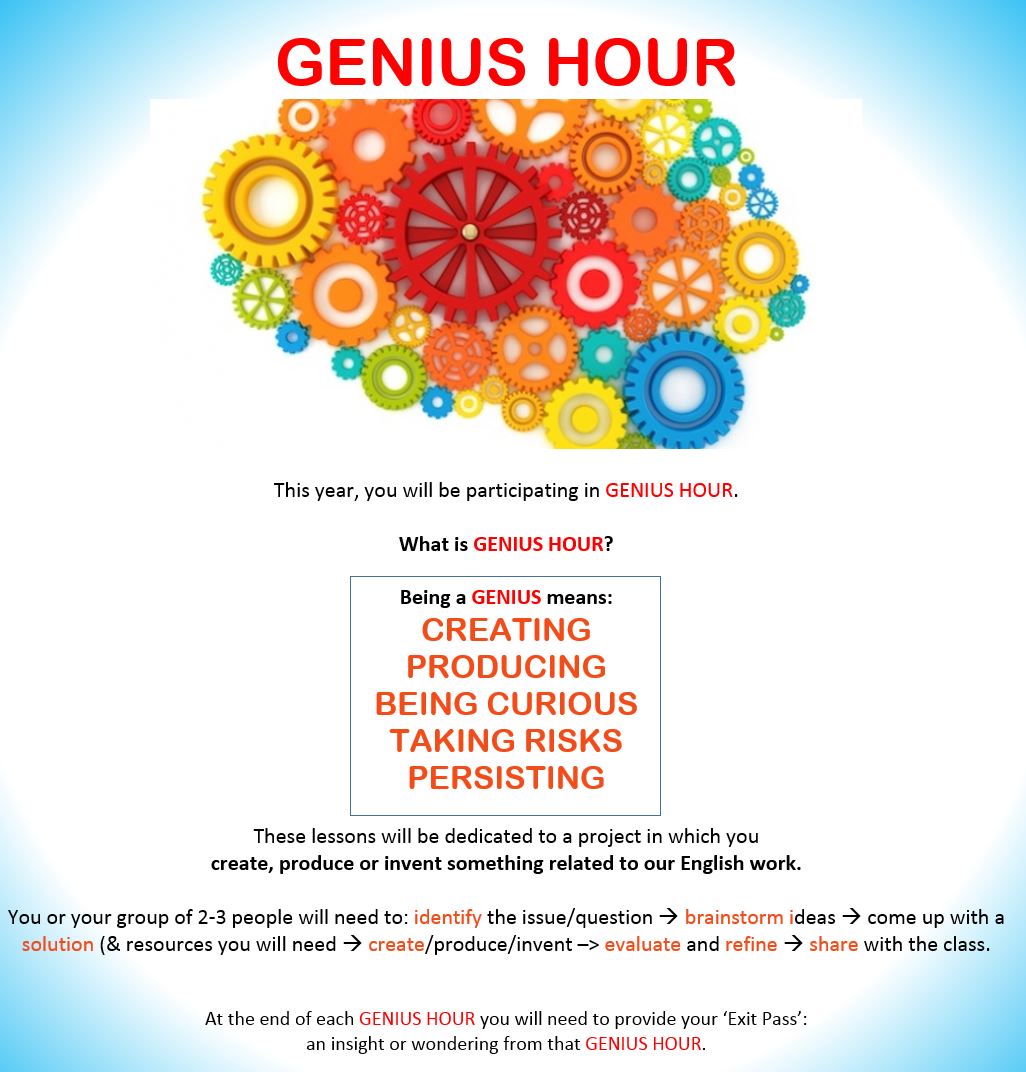
my Genius Hour poster

my Genius Hour poster

This Genius Hour work is much like things I’ve done before, with a new name attached. I like the name because it assumes that students are capable of ‘genius’. It says, “I believe you have the capacity for brilliance.” And in giving learners freedom, Genius Hour says, “I know you are capable of independence of learning, thought and creation.” It is this assumption of the awesomeness inside everyone which I like the most.

It reminds me of when I use BloomGard task options like the example below. This approach allows students to have ownership over their learning while encouraging creativity and creation (especially as I only offer the three highest levels of Blooms).

a BloomGard example

a BloomGard example

One of my favourite Genius Hour type moments was in 2004 when I was teaching the rigorous and relentless IB Diploma course. My class had spent three weeks smashing through the 800+ pages of Tolstoy’s Anna Karenina in analytic fury. At the end of it we had a two and a half hour class (which we always had each fortnight). I brought in paper, art materials, plus iconic Australian biscuits: Tim Tams and Mint Slices. I told my class they had that time to create a visual representation of the novel. What they produced was beyond amazing. A class of heavily science-maths-leaning students was abuzz with collaboration and coloured-pencil creativity. They chose key scenes from the novel and illustrated these in a series of train carriages, with Tolstoy driving the train. The artwork, which spanned the entire length of a classroom wall when it was done, started with a lit candle and ended with a snuffed out candle, symbolising Anna’s journey. The mood was electric and the class protected that work and talked about it for a long time afterwards as a defining moment in their year.

Monet's Nymphéas

Monet’s Nymphéas: painterly genius of floating blossoms

The other school-based experience propelling my reflections on immersive independent learning is my work in coaching some of the early learning teachers at my school. Watching a class of four or five year olds being given extensive reign to develop and interact with their learning environments, choose their own work (often play-based) and collaborate on self-chosen ideas, had me wondering: What does it say when the students at a school with the most ownership over their learning are the youngest ones? What happens as classrooms and curricula trust in students less and less?

I’ve also been thinking about adult learning. As adult learners, we should be following our own passions and directing our own learning. Some of my most transformative learning has been immersive and driven by me, especially my PhD study and the professional learning trip I took to New York last year.

Researching my PhD has allowed me to totally immerse myself in my educational passions, driving my own learning with the support of my supervisors, my school and others. It has thrown me into and through my discomfort zone in the most brain-bending and delicious ways. My trip to New York last year, in which I organised meetings with school leaders, professors and world-renowned edu-experts, allowed me the time and away-from-home-ness to really immerse myself in my learning. This blog was a way to track my experiences and reflections. Andrea Stringer is currently on her own self-directed professional gauntlet, and has been using her blog, Periscope and the Twitter hashtag #EdVentures to track her learning and share it with others. My recent PhD writing retreat was another example of immersive self-directed passion-driven learning, with a blog post reflection allowing me to think more deeply about my writing processes.

Surely our core business as educators is to nurture our students to be innovative, efficacious ever-learners who trust in their own capacities for growth and follow their own dreams? Surely it is the job of school leaders to provide the same opportunities for their staff? We want for students and educators to balance persistence with creativity. To pursue design thinking and moonshot-bluesky-rainbowunicorn thinking.

How else can we promote and enact immersive, choose-your-own-edventure learning? What might be more ways we can trust our students and ourselves to follow passions and drive own learning?

thrive, flourish, grow
thrive, flourish, grow

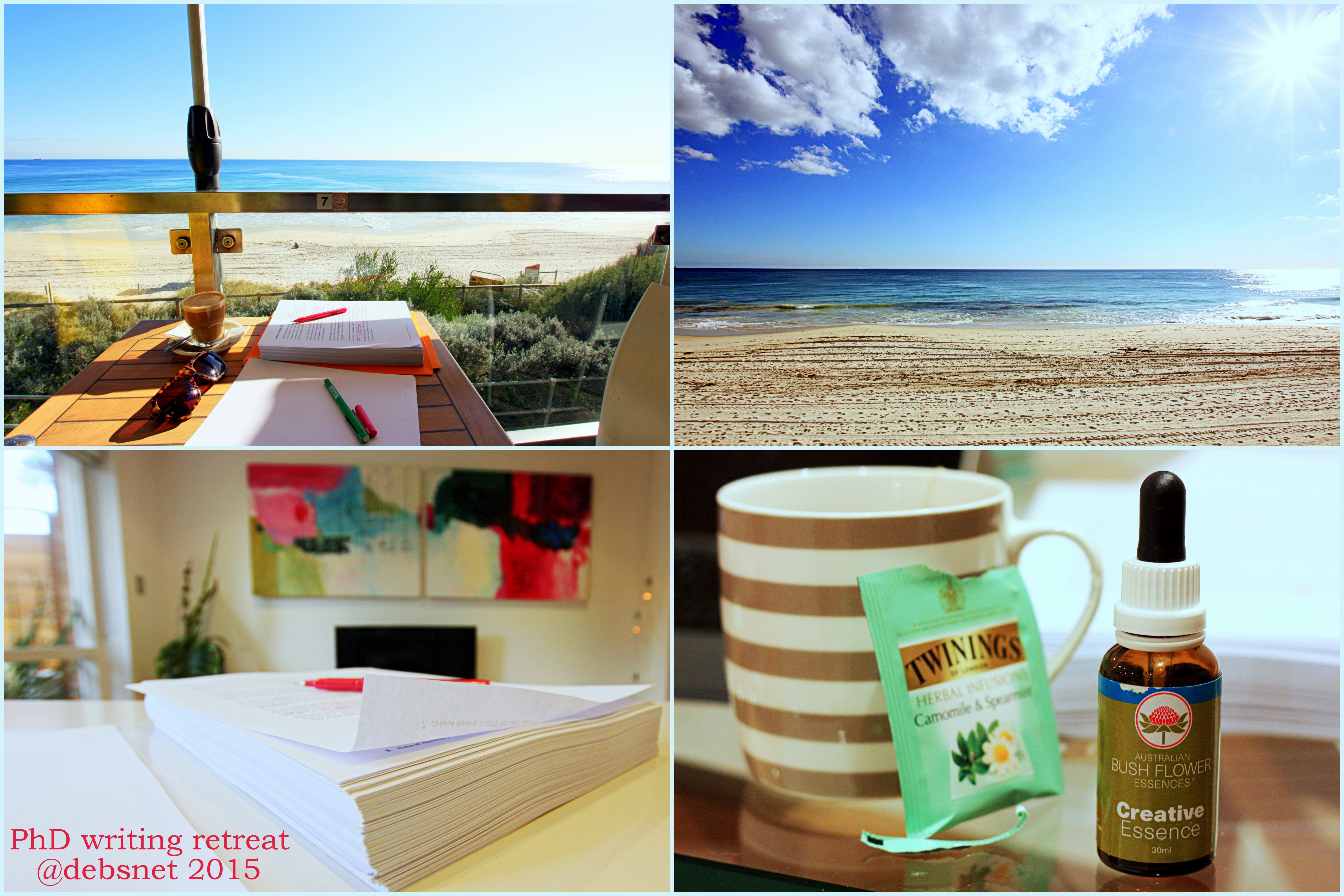
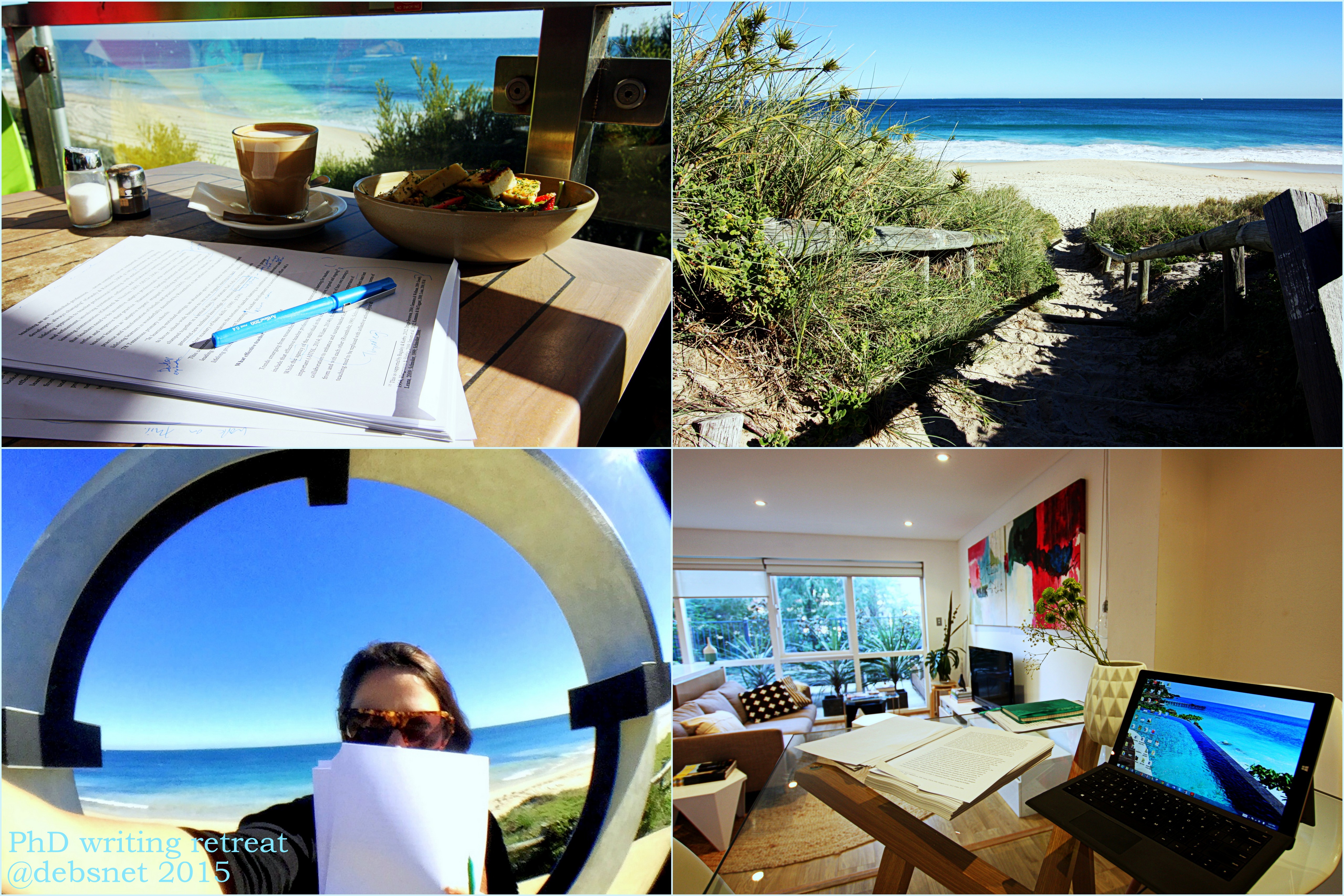
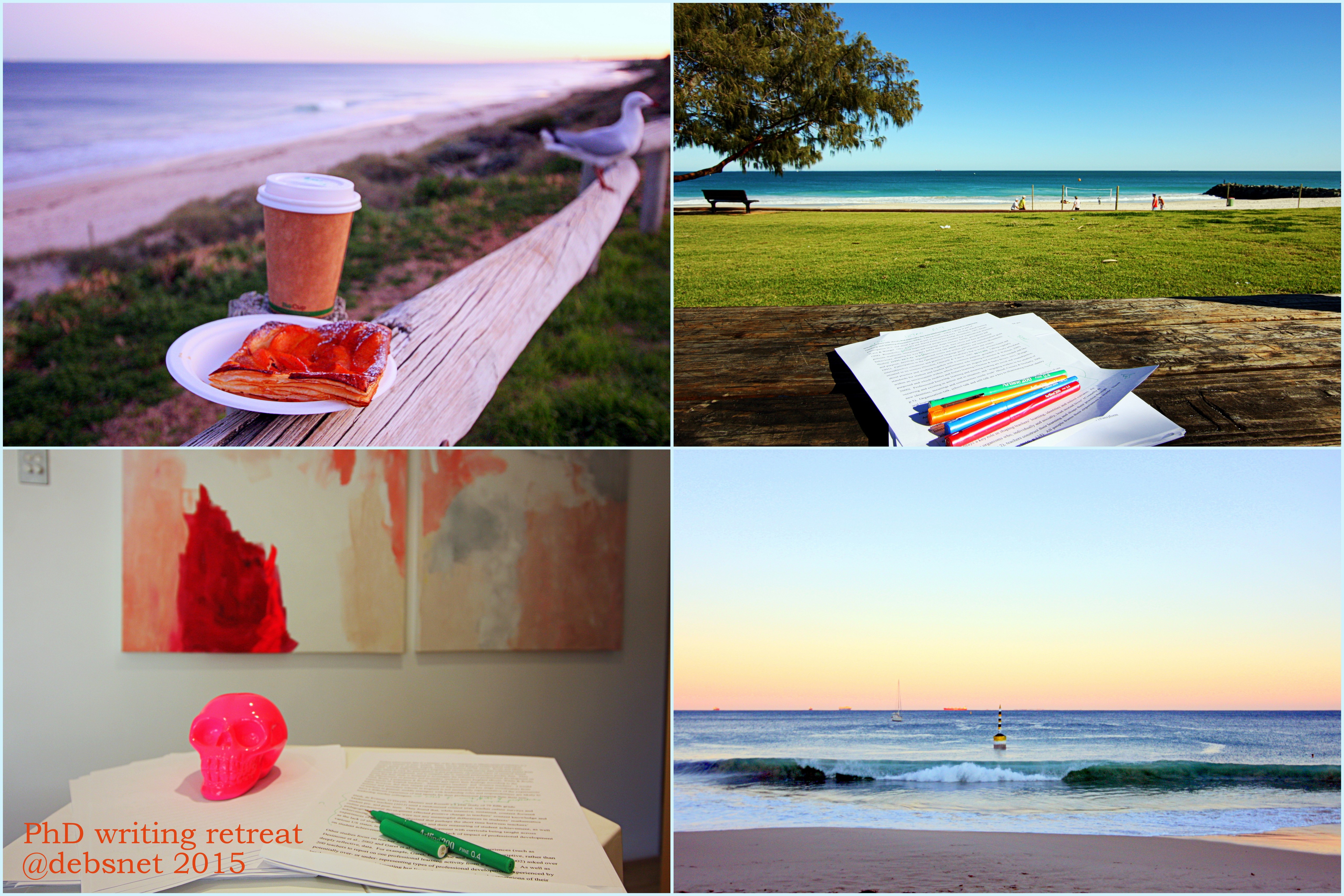
Writing retreat: Dedicated time away to write and revise

Writing is an escape from a world that crowds me. I like being alone in a room. It’s almost a form of meditation. ~ Neil Simon

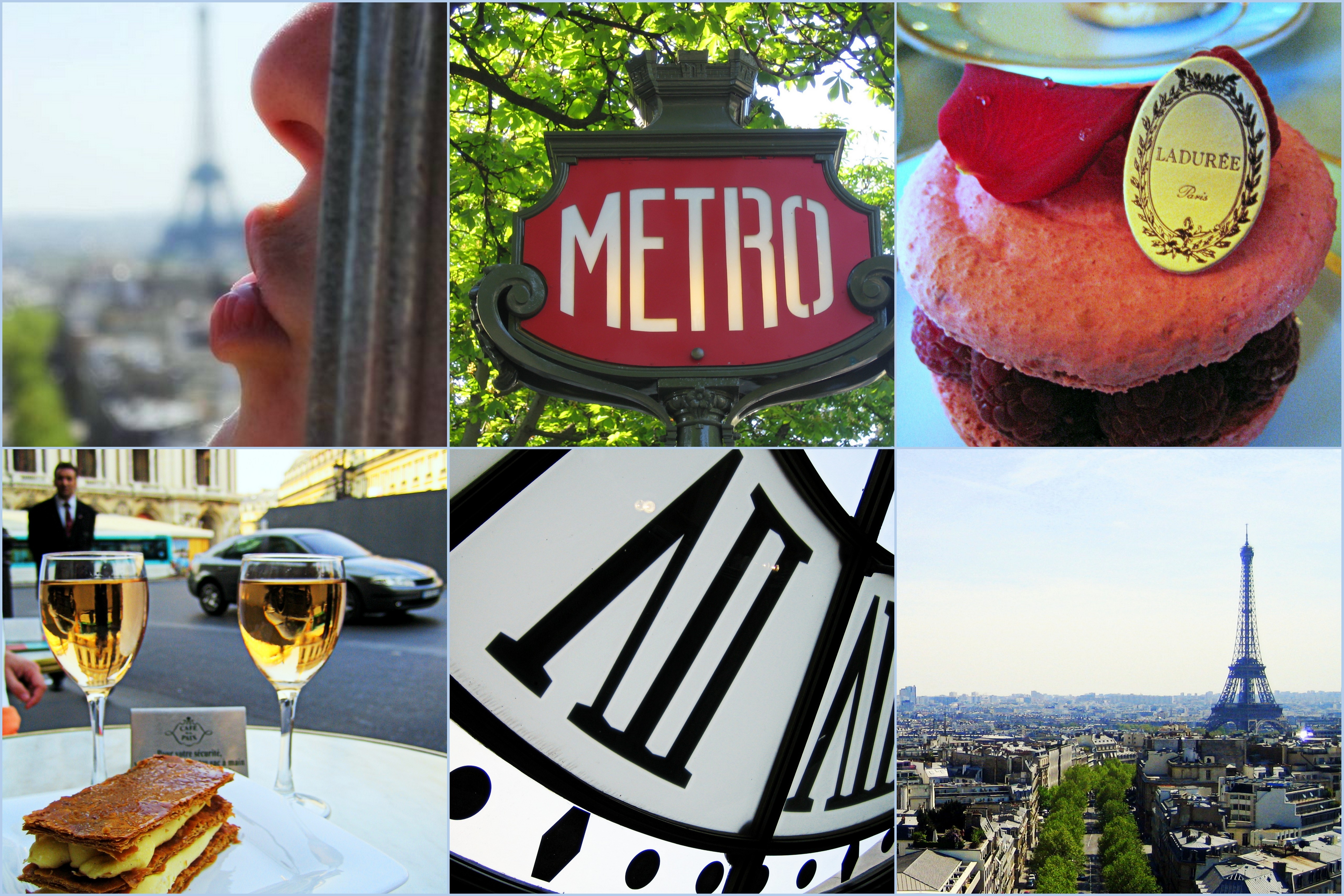
Where I imagined my retreat would be (photos from previous trips)

Where I imagined my retreat would be (photos from previous trips).

The idea for a PhD writing retreat came to me in a dream. While I live in Australia, I dreamt that I wrote up my PhD thesis in Paris. I imagined myself pensively working at Café de Flore or Les Deux Magots in Saint-Germain-des-Prés. Or editing on a soft patch of grass at the foot of a sculpture in the gardens of Musée Rodin (Le Penseur?). Or typing away beneath the huge train station clock at the Musée d’Orsay. I would take breaks to stroll Parisian streets or to savour Ladurée macarons, foie gras from Fauchon, or ice-cream from Berthillon on the Île Saint-Louis.

This dream was no doubt influenced by the at-that-time steady stream of tweets coming from the ANU Thesis Boot Camp during which doctoral writers were given celebratory LEGO-style bricks as they hit various word-count milestones. The academic focus and collaboration zoomed through social media to my device. Oooh, I thought, how wonderful it would be to have some dedicated time to work on my thesis. But with work and two children under five, a long luxuriant Parisian getaway wasn’t on my list. And my university doesn’t offer a boot camp.

by @debsnet

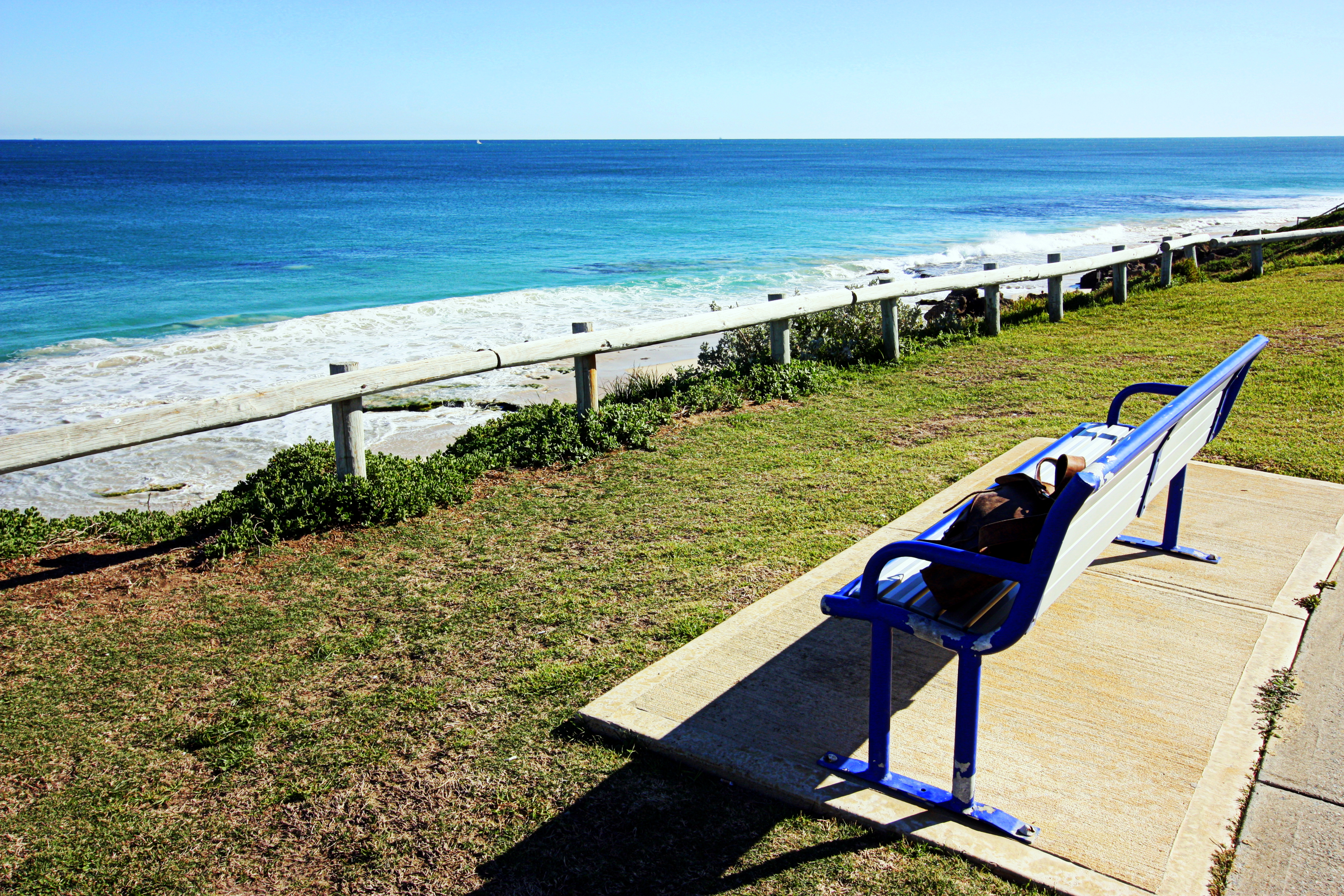
Where my writing retreat actually was.

Writing retreats have been called a ‘scholastic nirvana’ away from the walls-closing-in pressures of academia. Dr Helen Kara, blogging about her recent solo writing retreat, talks about the simultaneous self-indulgence and productivity that finding dedicated time and space for writing can bring. In Dr Kylie Budge’s post about her PhD writing retreat to NYC, she cites research which claims that physical and psychological distance from the norm can increase creativity and productivity.

Casey, Barron and Gordon (2013) note that writing retreats provide protected space for the practice of writing, allowing continuity as opposed to fragmentation. They emphasise the importance of carving out time away from normal activity, and finding space separate from usual settings. This certainly resonated with me, as much of my writing happens in fragmented, stolen, in-between moments.

cycles of revision: read, annotate, make changes, repeat

cycles of revision: read, annotate, make changes, repeat

While many boot camps, ‘shut up and write’ sessions and writing retreats are about producing words, this was to be more a revision retreat. Having recently finished the first draft of my conclusion, I had a first full draft of my thesis and wanted to use retreat time to look at my thesis as a whole document. In fact, my thesis is over its word limit, so this retreat was about streamlining and strengthening the content, not producing more. I’d reached a point where I needed to burrow down into my PhD cave’s subterranean depths and sit there for a while. Present. Focused. Submerged.

Like Helen and Kylie, this retreat would be solo: just me and my thesis having some quality time together. Romantic, right? When I floated the idea with my husband, he said, ‘Go for it.’

A bit of an expert at making my PhD feel like a holiday, I often choose writing spaces that feel more like luxe and less like work. So, for my retreat, I considered exotic, non-home places with varying degrees of faraway-ness. I was aware of the aforementioned research about productivity and creativity being heightened by the feeling of being away from home and somewhere new. But I didn’t need exoticism, or a vibrant distracting location. I was going for a weekend, so it needed to be close and affordable, just not home. In the end, I rented a studio apartment via airbnb only a few suburbs from home. I was hoping that being not-home would give me enough separation from my everyday world to provide the laser-like focus and conceptual creativity I was after.

Writing retreat Day 1

Writing retreat Day 1

While not as poetic as retreating to somewhere far from home, there were some great things about doing a retreat this way. In giving myself only two nights away, I had to be productive. I had a short time; I needed to use it. I didn’t waste time travelling to and from the retreat (it was a 20 minute drive); this was an escape in my own city. It turned out to feel just new enough to set my nerve filaments tingling with an awareness of difference of environment.

Going into the writing retreat I planned on using my most productive times of the day for writing, working in 2-3 hour blocks of time followed by breaks (walking, showering, eating, changing location, taking some photos). I wanted to be clear about my intention before I began. My main purpose was revising for coherence and story. Here was time to look at the document as a whole. I kept in mind Pat Thomson’s advice to attend to the underlying argument. I was looking for consistency of language and idea development across the thesis. Having just finished the Conclusion, it was important to go back to the Introduction and make these bookends work together.

Writing retreat Day 2

Writing retreat Day 2

During my retreat the first 30-40 pages took me the longest, because there was so much of what Pat in her post calls ‘where the writing is poor because we are struggling to express an idea, to put into words something that we can barely get our head around.’ The beginning of the document contained my earliest writing and earliest thinking. I needed to delete or rewrite much of it in a way I can only do now that I have reached the end.

What surprised me about the retreat was how challenging it was to maintain a consistent focus on one task. It made me realise how much my usual fragmented way of PhDing works for me, doing a little all the time in prized, highly-focused chunks. Fitting in PhD time in and around other commitments has meant that normally I am itching to get to my PhD work, not having to psych myself into doing it.
Writing retreat Day 3

Writing retreat Day 3

Yet, the time and space to dedicate a couple of days to my thesis, and giving it careful, continuous attention, allowed me to make substantial progress and identify those areas in need of further attention. While in this time I only got through the Introduction and Literature Review, these were the sections in need of the most serious revision (and they will need more). I also managed to cut 3000 words out of those two chapters, which, considering I was also adding words where required, is a good start to streamlining my argument.

The retreat embodied my 3 words for 2015: presence (in the moment), sharing (through writing and now blogging), and strength (of argument and academic voice). It helped to set up my approach to my thesis revision, kickstarting this push-to-the-end-process and propelling me forward into the rest of the document. It felt a bit like kicking off the swimming pool wall, getting some initial speed and feeling the water before settling into the lap ahead.

Local retreats: not so bad.

Local retreats: not so bad!

The low-tech PhD & whole-document thinking: How I use Microsoft Word to write my thesis

The real problem is not whether machines think but whether men do. ~ B. F. Skinner

What counts as writing the thesis 'old school'?

What counts as writing the thesis ‘old school’?

I have spoken before about my love of creative physical media as a way into thinking, and about some of my favourite retro tools (like *gasp* pencils!). My approach to writing my thesis would probably also be considered pretty old school. I haven’t been using a typewriter or writing into wet clay with a reed pen, but it’s been pretty straightforward and low tech. I recorded interviews on a dictaphone, not an iPad (although the usb attachment meant audio files were easily transferred to computer). I use Moleskine-esque Typo Shop buffalo journals to take notes during supervisor meetings. I manually record references into my word processed document (I know, I know, there are plenty of great referencing tools like EndNote and Mendeley). Sometimes I even take actual paper books out of an actual library, books that have that wonderful old-book-smell which e-readers have yet to provide (a scratch-n-sniff sticker would do!).

So, today when Inger Mewburn, Thesis Whisperer, shared this New Yorker article about our love of physical analog notebooking, and PhD researcher Samuel Dent tweeted advice to first year PhD students to create a thesis template document from Day 1 of the PhD, I have phdcrastinated my way into writing this post. Possibly the most pragmatic and least creative post I’ve written, it takes on the rather unsexy topic of how I’ve been using Microsoft Word to write my PhD thesis.

While not along my normal lyrical lines of thesis as sculpture or research as artistic conversation this post is partly motivated by hearing about PhD students who, shortly before submission, collate their chapters into the final document. This approach is very different to my own as I have written in one document from the start. Here I’ll explain a little about what I’ve been doing and what the effect has been for me.

Using Microsoft Word headings

After my research proposal was accepted, I opened a ‘PhD draft’ document, placed my title on the first page and entered my main headings. At the beginning of the process these were state-the-astonishingly-obvious headings like ‘Introduction’, ‘Literature Review’, ‘Methodology’, ‘Method’, ‘Data’, ‘Findings’ and ‘Conclusion’. Innovation and levels of sub-headings came later as my thinking developed, research threads emerged and the document formed and transformed.

So, my thesis title and my headings have evolved and changed over time. The structure of the thesis remains similar, but now the Table of Contents tells a story and acts as a kind of mini-outline of the structure, ideas and intricacies of the document. The biggest structural changes were in my data section as I grappled with how best to share participant perspectives while preserving their anonymity.

Using Word’s heading styles (and adjusting these to meet APA style specifications) means the Table of Contents changes as my thesis develops; it is easy to automatically update the Contents at the click of a mouse.

The other feature of headings that I use constantly as I write is navigation. I write with the left hand navigation pane open to ‘headings’ and as I need to move around my document, I can scroll and click into where I want to go, jumping around at will.

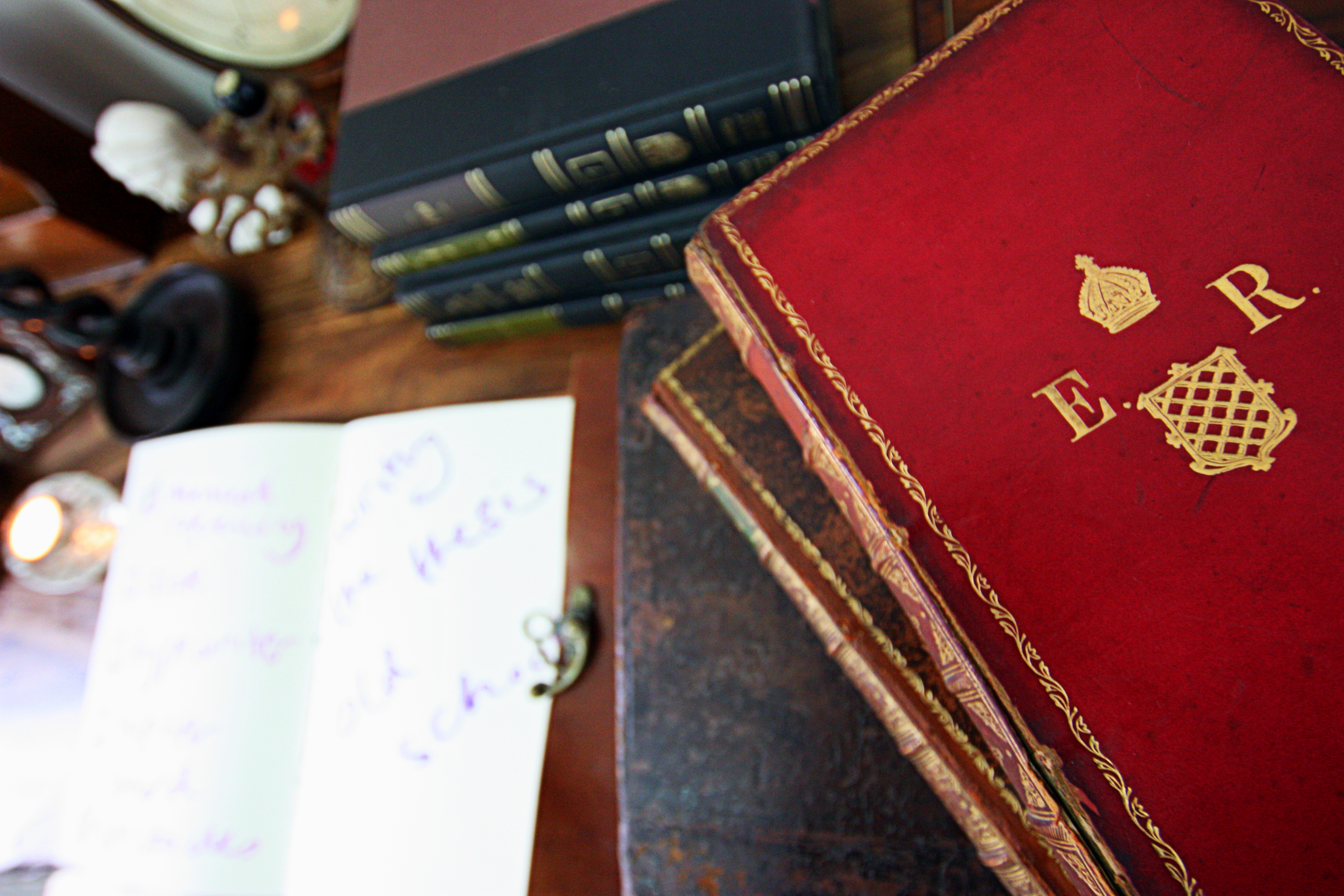
I had all these things lying around the house ... I really do love old school.

Setting up this shot was as simple as gathering together a few things from home. I really do love old school.

Saving regularly

My saving routine is that I save my thesis document as a new file at least once a month or any time before I do some big revisions. This means that I have a record of its growth over time and can dip back into previous documents if I have lost a reference in amongst some cutting and pasting. It also feels like a security blanket for revisions, in case I want to resurrect some deleted writing. Of course, the latter never happens, but it’s a reassurance that softens the psychological blow of deleting large chunks of text.

The nice thing about having this rolling record of thesis development is realising how far I’ve come. I have found that in the PhD it’s very easy to focus on all the things yet to do, all the heights still to scale. From time to time, to combat this looking-forward and focus on what has been accomplished, I open up a draft dated one year ago. It always surprises and delights me to see how far I’ve come. At times the whole structure has shifted, and at other times those chapters that were empty have been filled. I allow myself a moment of basking in the pleasure of realising what I have done, before catapulting myself back into the abyss of what I have yet to do.

When I send chapters or sections to my supervisors I copy the relevant text and paste it into a new document to send to them, so I have these separate documents saved, too.

Another useful feature is ‘Compare documents’ (go to Review -> Compare) which allows me to compare two drafts of the same text and see what has changed in the editing process.

Whole document thinking

Having my thesis as one evolving document has some practical uses such as checking where in the text I have cited a particular author or used a particular term. It makes it simple to ‘find-replace’ if I have to change a term throughout the text.

More importantly, though, it has facilitated my thinking about the thesis as a holistic story with threads running through it, rather than as a series of disparate chunks. Now that the almost-a-full-draft document sits at 111,000 words including abstract, acknowledgements and references (hopefully to be edited down), I can look back down the long tunnel of drafts and see how my research has grown from its first seed to its almost-full form.

photo by @debsnet

Research as conversation: contemplating Wicked and the Mona Lisa

Something has changed within me. Something is not the same. I’m through with playing by the rules of someone else’s game. … It’s time to trust my instincts, close my eyes, and leap. ~ Elphaba, Wicked

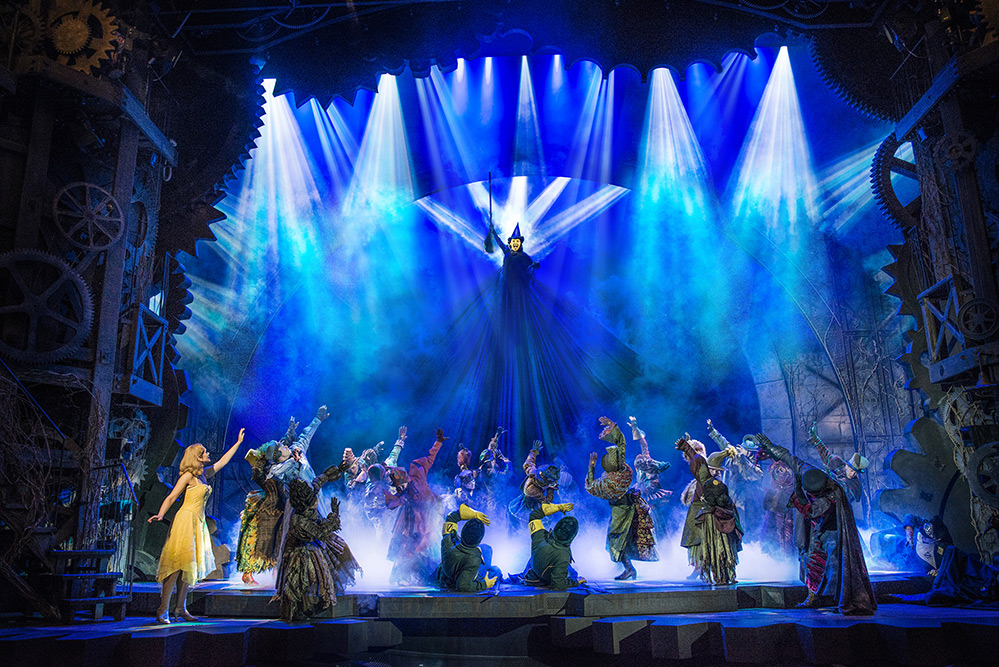
This week I took my mum to Wicked the musical. It was the third time I’ve seen it, the first being in London’s West End in 2007. I still remember the goose bumps that raced up my arms as Elphaba rose into the darkness singing that she was “defying gravity”. After seeing the show with my mum, our talk turned to art, research, and my thesis. Yep, that’s how my mum and I roll. So how did Wicked prompt talk about research?

Wicked is an example of a literary and artistic work which inserts itself into a discussion. It adds to a conversation started by the 1900 L. Frank Baum novel The Wonderful Wizard of Oz and the 1939 film The Wizard of Oz. Loosely based on the 1995 Gregory Maguire novel Wicked: The Life and Times of the Wicked Witch of the West, it refers to the original story, reinventing, reimagining and conferring new meaning. It takes the Oz-Dorothy-Witches narrative from one of the value of journey, the longing for home and good triumphing over evil. It transforms the well known children’s story into a tale of the Other, accepting difference, embracing our authentic selves and fighting for what is right in the face of corrupt political systems. It takes the imagery of the written story and the film interpretation and recreates these in fresh ways through music, set design, costume (the shoes! the millinery!) and dialogue. Clever references to Dorothy’s story are woven into this back story about witches Elphaba and Glinda. In this way Wicked is a creative product which adds layers of meaning and injects new insights and perspectives into an existing story.

Artists also ‘speak’ to each other through their work. The long history of reimaginings of the Mona Lisa, a few of which I have juxtaposed below, illustrates how artists comment on each other’s work through their creations, adding to a dialogue about what art might be, how art might be created and what art might have to say about the world it inhabits.

art is conversation

art is conversation

Commenting on Da Vinci’s 1517 painting, Mona Lisa, or La Gioconda, in 1919 Marcel Duchamp drew a moustache and goatee on a cheap postcard reproduction, labelled it L.H.O.O.Q. (a pun) and exhibited it in a gallery. Duchamp’s appropriation and reinterpretation of one of the world’s most famous paintings brought into question its value and challenged the then-definition of fine art. In 1954, Salvador Dali produced a work in which he added his own eyes, moustache and hands filled with coins in Self Portrait as Mona Lisa, in a kind of artistic high five to Duchamp. Pop artist Andy Warhol used the Mona Lisa image in his 60s screen prints, blurring lines between high art and popular culture. In Warhol’s work, Mona is reproduced through the then-controversial-in-the-art-context screen printing process. She is repeated in primary colours to reflect assembly-line mass production, questioning the place of art in an increasingly mass-produced consumerist world. These artworks show how artists use their processes and subjects to talk to each other across time. Each uses subject and method to add a new layer of meaning, present a critique or pose a challenge to what has come before.

Research, too, is part of a conversation. Like writers and artists, theorists communicate with each other through their work over time. A literature review places research within the historic conversation. Where and with whom does it fit? Whom or what might it challenge? Research methods draw from what has come before. The approaches of old masters and contemporary talent become models to emulate, springboards from which to adapt or materials with which to weave new forms. Discussions and conclusions are places in which researchers form reimaginings and state contributions to the greater conversation, to existing knowledge.

Research writing, too, is steeped in academic tradition, in a conversation of form and language. Some choose to adhere strictly to the expectations of academic or dissertation genres, and some choose to push and challenge those boundaries. My thesis, while not a creative work in the sense that an arts thesis with exegesis might be, draws on literary as well as academic traditions. It uses a literary work as a conceptual frame in order to draw metaphorical meaning.

Some might not agree with seeing research as creative-product-in-historic-conversation, perceiving it as a lyrical idea which undercuts the systematic science of research. Of course research is logical and systematic. It can be viewed as science but it can also be seen as story, as creative work and even as sculpture. A recent post by Lara Corr on the thesis whisperer blog talks about the creative elements of research. She plays with the ideas of being a master builder and colouring outside the lines. Pat Thomson’s post on discussion chapter as flight influenced my posts about starting the discussion chapter and building a researcher identity through it.

In Wicked, Elphaba comes to a place in which she chooses a new path and embraces a new identity. Have you found a place in your research or work where you were able to defy gravity and fly? To add your layer to the conversation in which you are engaging?

As somebody told me lately, everyone deserves the chance to fly! And if I’m flying solo, at least I’m flying free. To those who ground me, take a message back from me. Tell them how I am defying gravity! ~ Elphaba, Wicked

We are all storytellers: immersed in my narrative worlds

Humans are storytelling organisms who, individually and socially, lead storied lives. ~ Jean Clandinin & Michael Connelly 

our constructed stories connect us

our constructed stories connect us

Whether teaching, writing, conversing or considering our own lives and identities, we are all doing one thing: storytelling.

I have recently been quiet in the Twitterverse and blogosphere, partly because more than ever before I am immersed in micro and meta layers of story.

I have been tunnelling into my PhD narrative research in every spare moment, thinking obsessively and writing dangerously. I am sharing, constructing and analysing the stories of myself, teachers and schools leaders in order to reveal insights into professional identity, professional learning and school change. I am penning my first journal article about experimental ways of telling, utilising and analysing stories in research.

When I am not researching or thinking about my narrative research, I am teaching English to high school students. Reading stories, writing stories, analysing stories, watching stories, performing stories.

Or I am with my own children, reading stories, telling stories, making storyable memories, recounting favourite moments, role playing imagined scenes with make believe characters. Or talking to my husband about his work in media and content marketing, which is all about individuals and organisations telling their stories and constructing their storied identities, in order to communicate and connect. Or blogging vignettes from my own lived story. Or planning conference presentations of my research story or the story of my school’s teacher growth model.

We are indeed storytelling creatures. While I also try to be present in each moment and to live in wonder, stories embody the ways we construct our experiences, connect with each other and the world. I write my own stories, teach the telling and interpreting of stories, and engage in the theorising of stories. Have I used the word ‘story’ enough times in this post to indicate that it is currently both intoxicating and maddening to me? Story story story.

Obsessed and submerged, back into the subterranean story cave I go …

After nourishment, shelter and companionship, stories are the thing we need most in the world. ~ Philip Pullman

by @debsnet

When imagination & hard work collide: making something amazing

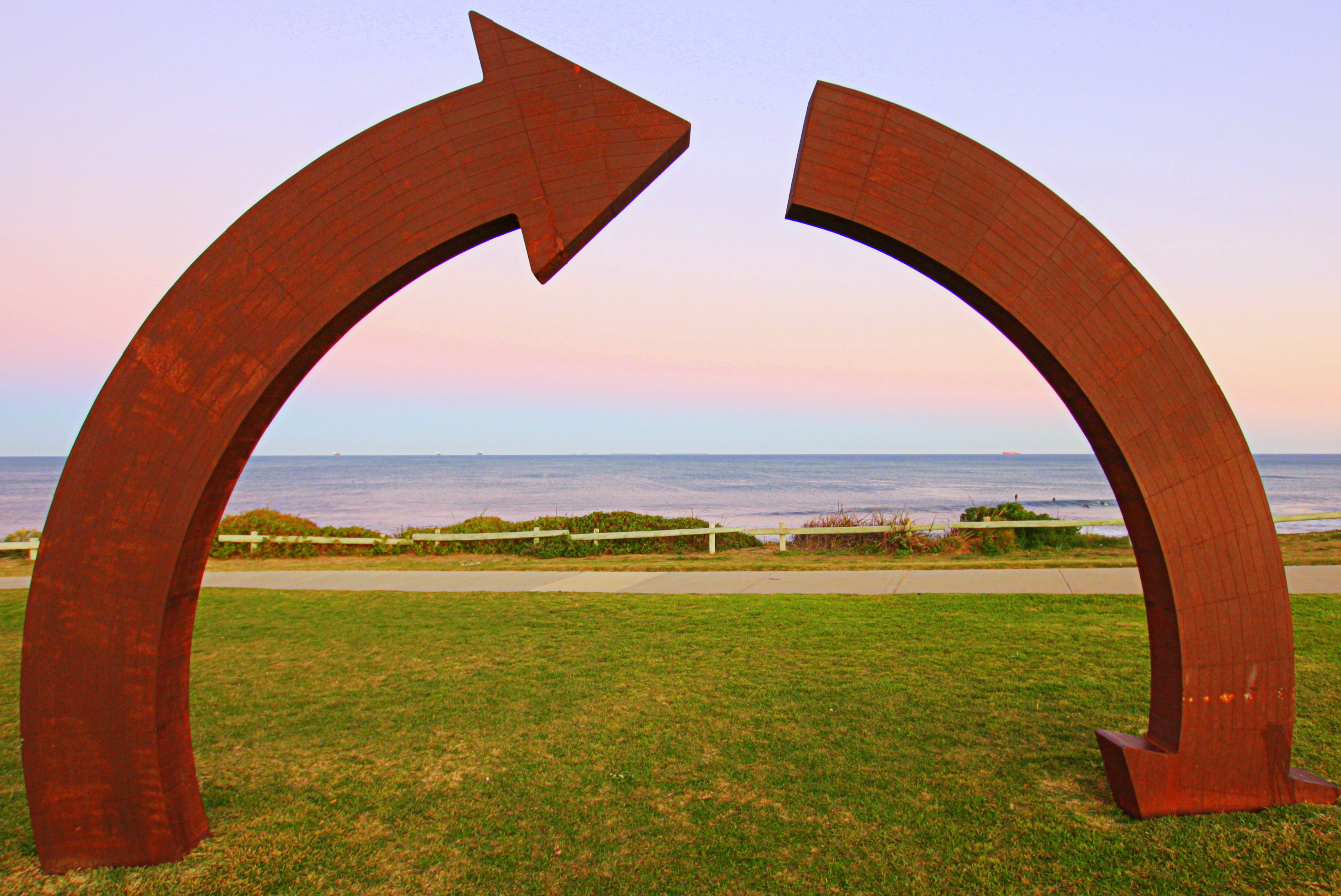
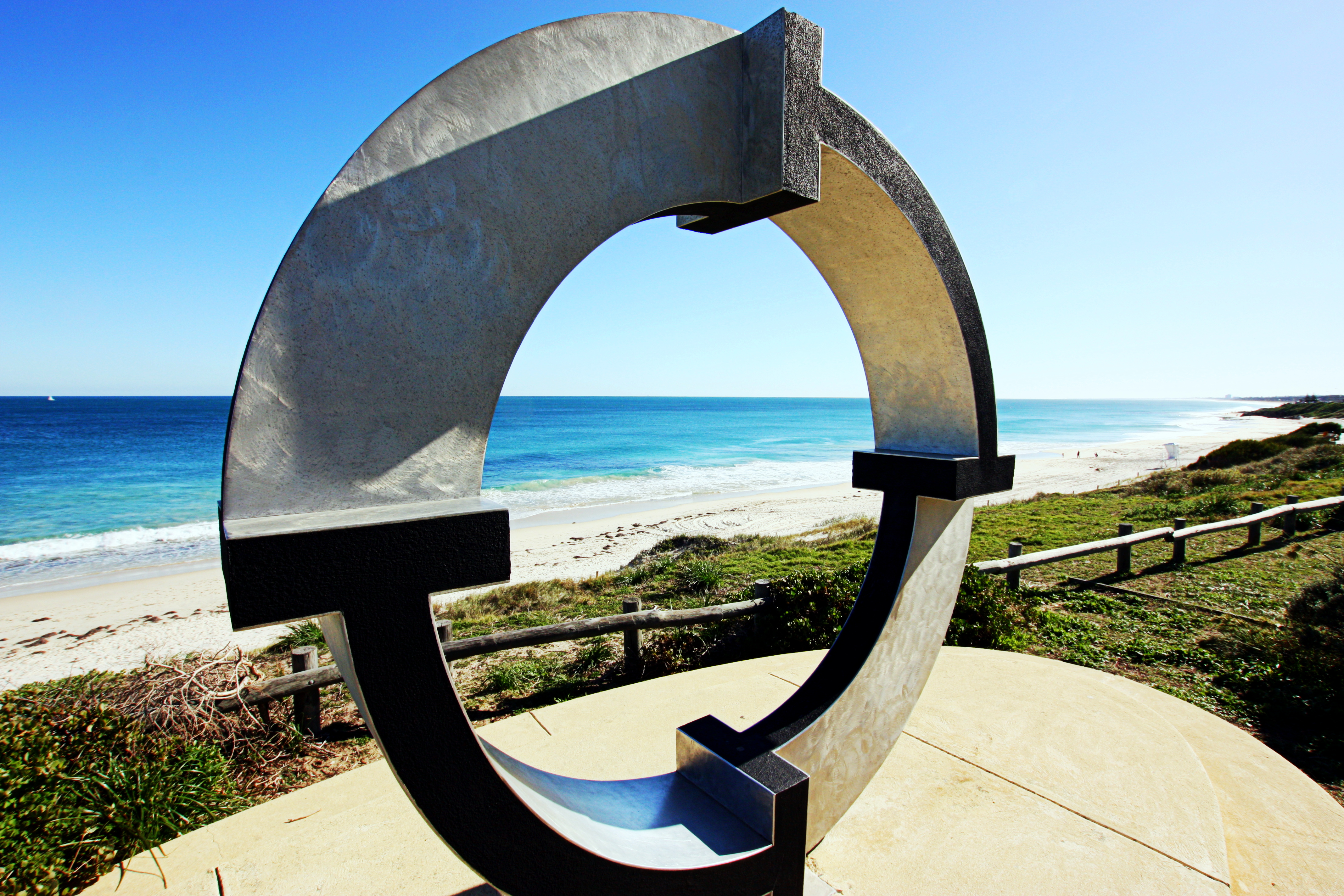
Sculpture by the Sea, Cottesloe, by @debsnet

If people knew how hard I had to work to gain my mastery, it would not seem so wonderful at all. ~ Michelangelo Buonarroti

Today is International Women’s Day and as a woman trying to balance parenting, working, PhD and being a person, I have recently felt overwhelmed. I don’t believe in men or women ‘having it all’ but I do want us all to have the freedom and power to make our own choices. Sometimes, though, the choices we make can feel like difficult paths to walk, especially when something surprising tips us off balance and throws our delicate ecosystem of relationships, roles and responsibilities out of its precarious equilibrium.

On top of the usual teaching, parenting and life stuff, my work at school is currently focused on school-wide implementation of a strategic project focused around teacher growth. My PhD is centred around pulling 300 references, reams of data and over 200 pages of words into a coherent thesis, in time to meet my own personal deadline for submission (of course, this deadline is four months ahead of the official deadline required by the university.) Along the way, I am trying to keep the magic, spark and creativity in my thesis. It is a bit weird, a bit whacky, and a lot me. Part of me is thrilled that I have been able to craft a research project and document which so authentically aligns with my own (lovably weird) identity, and part of me is anxious about the work still ahead. I need to ensure it resonates with what I value in research while also being acceptable (even significant?) in the world of academia.

So, much of what I am presently in the midst of working on requires daily commitment, laser-like focus and hard grafting work. Perhaps this, combined with piles of marking and lesson preparation, has contributed to me feeling drawn to the creative and the crazy. I have been seeking out connections with things which capture my imagination and buoy me with their colour and magic.

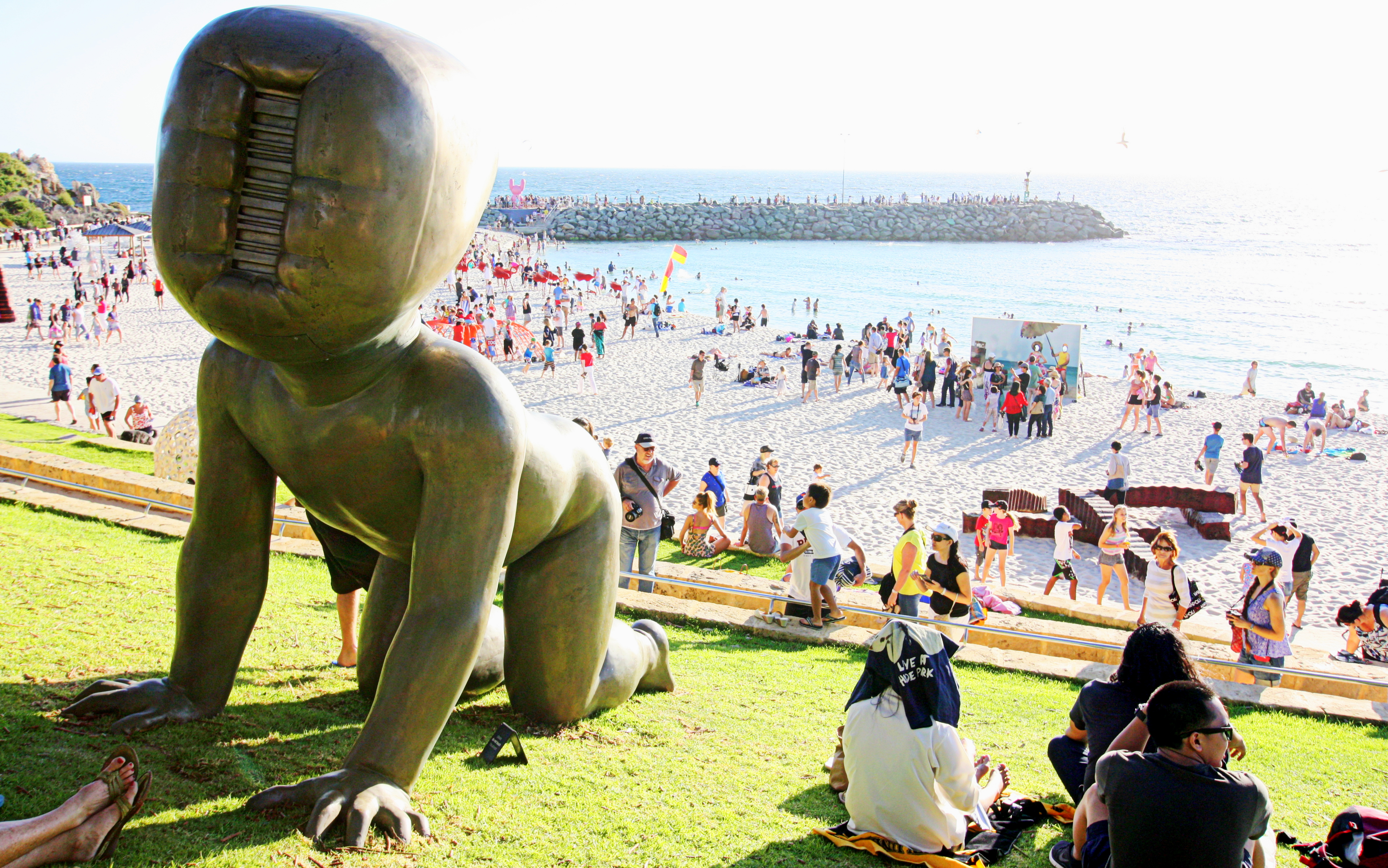
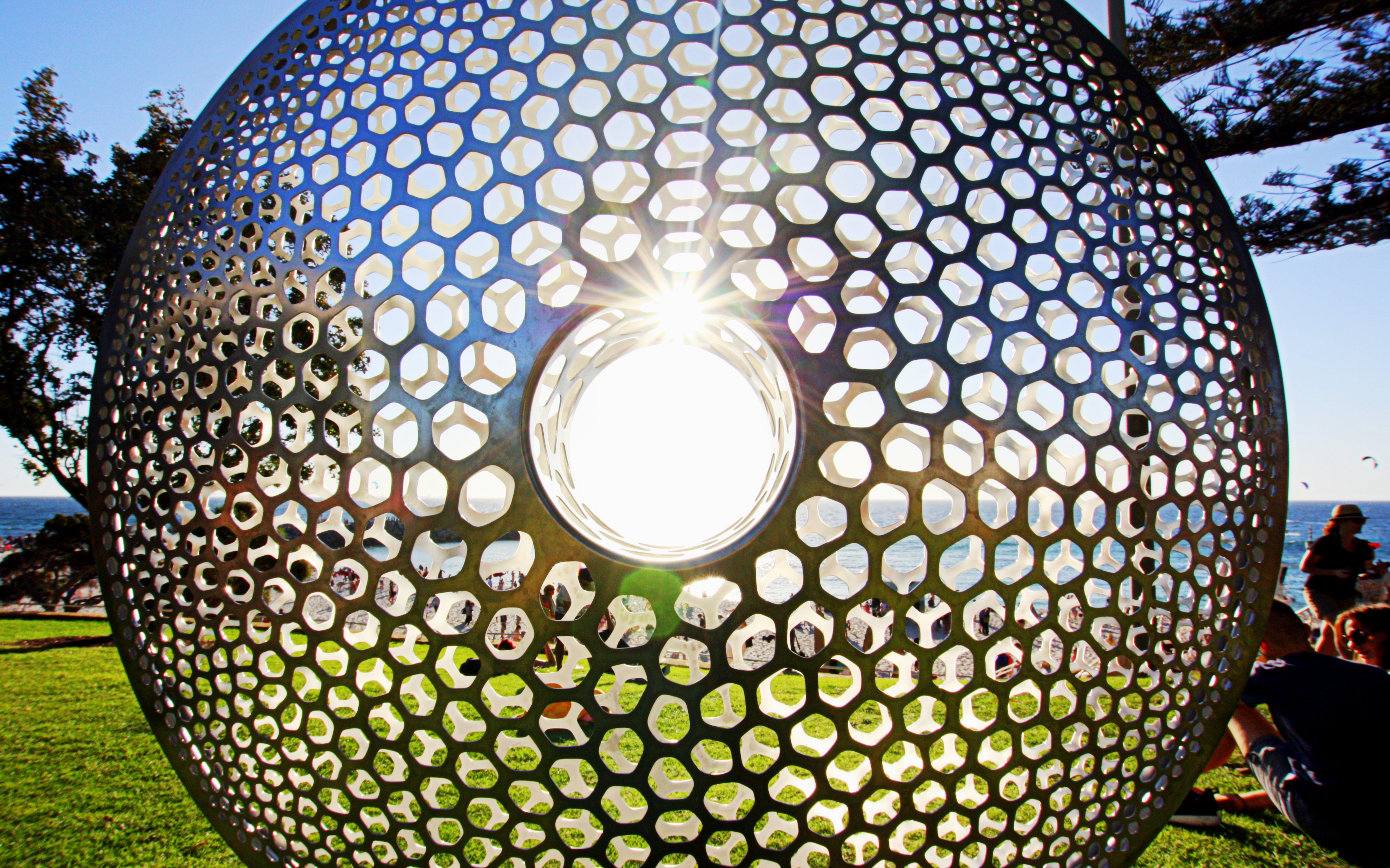
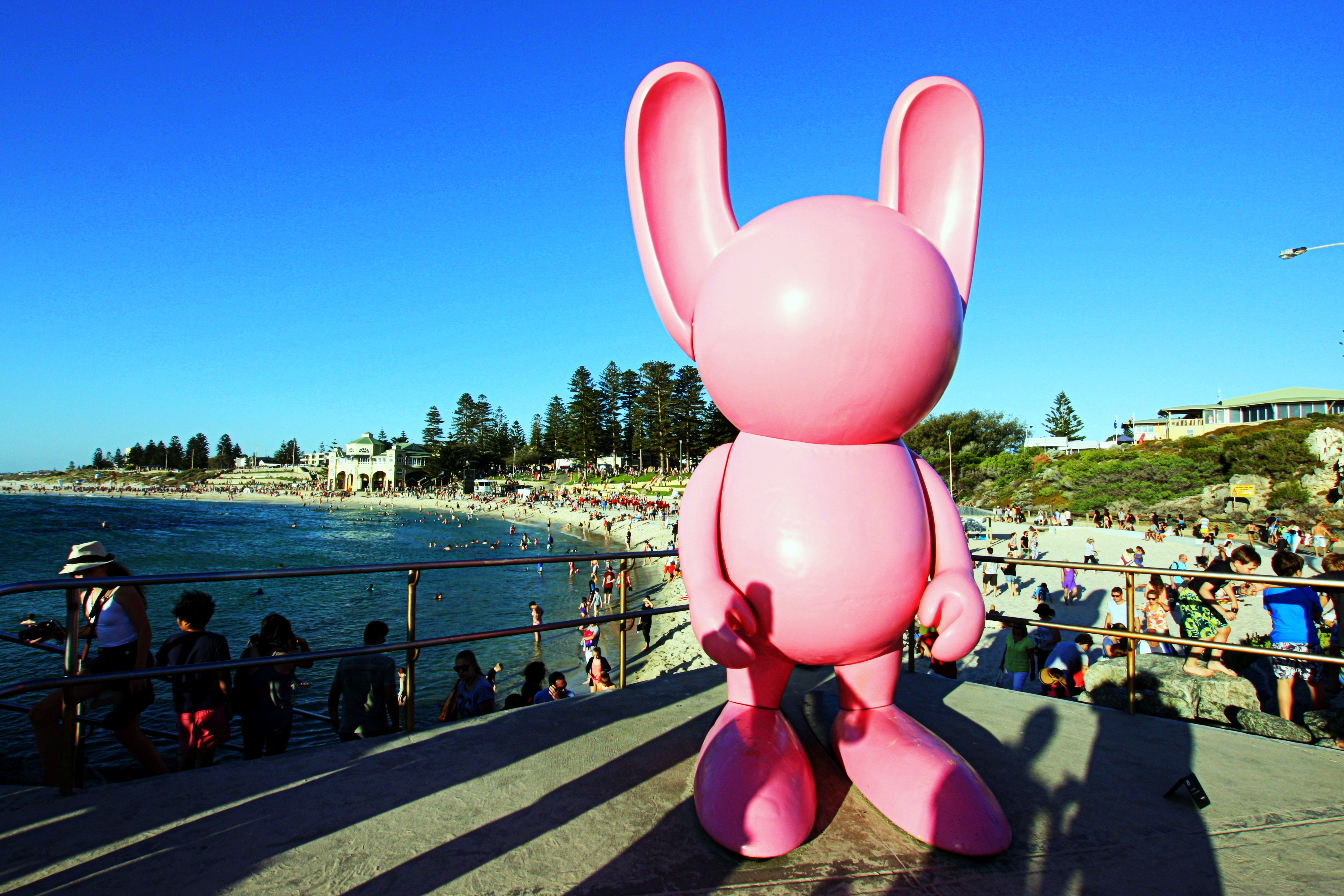
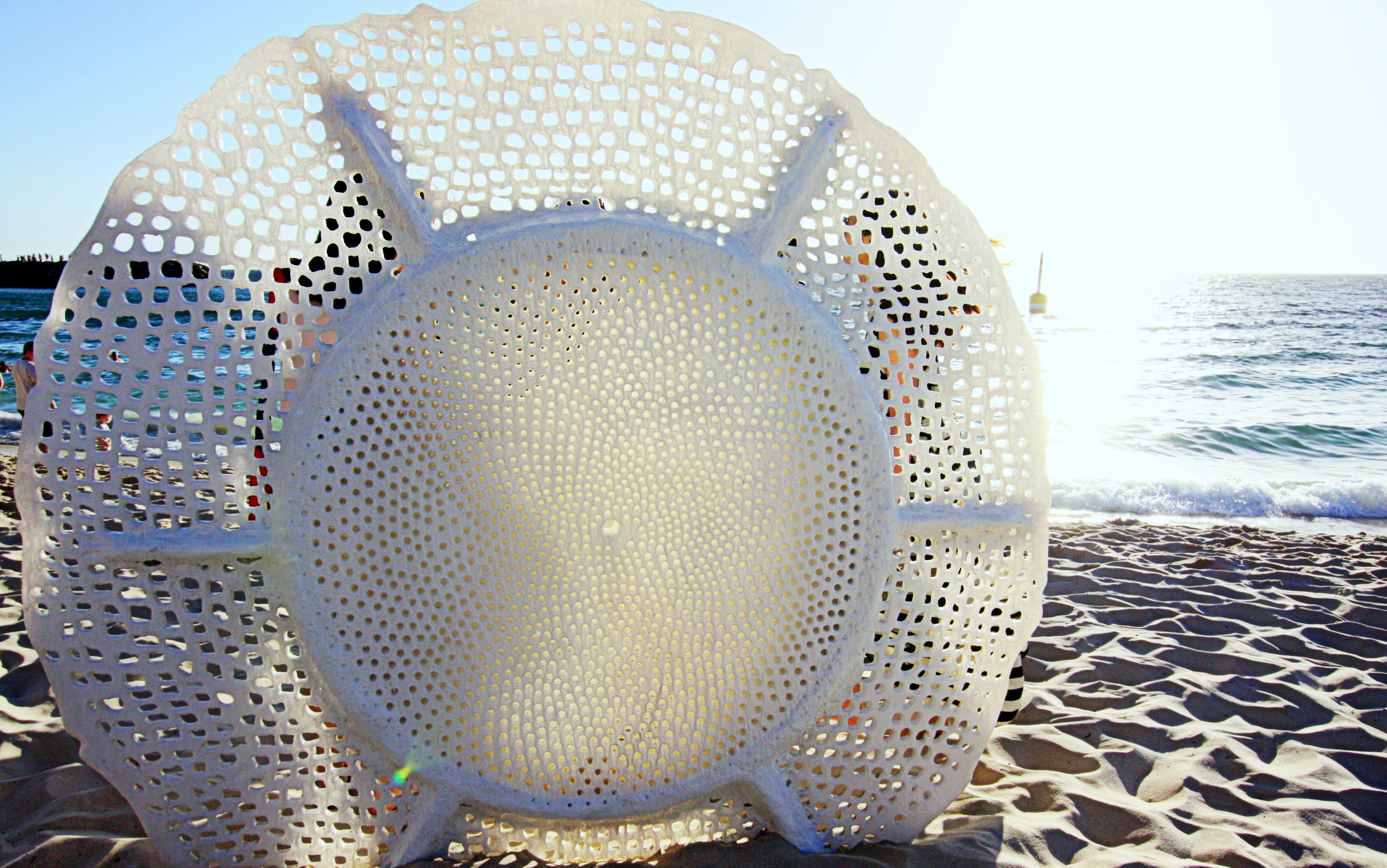
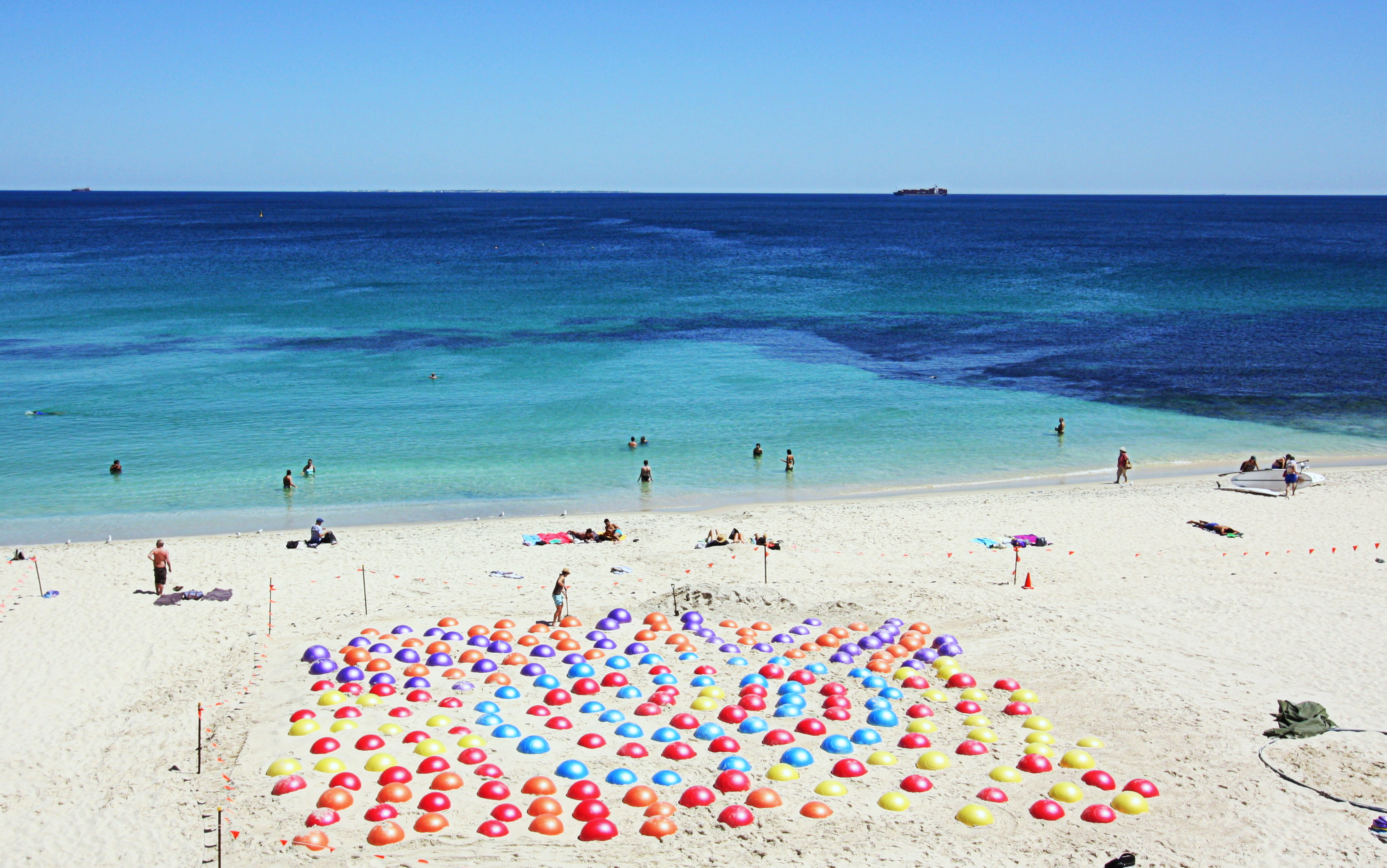
As a follow-up, then, to my experience of gigantic marionettes walking the streets and this post on my friends’ amazing interactive sculpture-on-the-beach, here are some more shots from this year’s Sculpture by the Sea exhibition.

Perhaps you will also find solace and escape in the wonder-full, the unexpected and the strangely beautiful. How is a PhD like a sculpture? These sculptures, while capturing imagination, are also the outcome of commitment, dogged determination and hard, systematic work.

Sculpture by the Sea, Cottesloe, by @debsnet Sculpture by the Sea, Cottesloe, by @debsnet Sculpture by the Sea, Cottesloe, by @debsnet Sculpture by the Sea, Cottesloe, by @debsnet Sculpture by the Sea, Cottesloe, by @debsnet Sculpture by the Sea, Cottesloe, by @debsnet

Dream Big, Do Big: an example of inspiration, imagination & perspiration

Creativity represents a miraculous coming together of the uninhibited energy of the child with its apparent opposite and enemy, the sense of order imposed on the disciplined adult intelligence. ~Norman Podhoretz

artists Nicole Bailey and Trisha Lee enjoy their interactive sculpture

artists Nicole Bailey and Trisha Lee enjoy their interactive installation

This week I have watched some friends bring a crazy-wonderful dream to life. I am so excited about it because their project was the perfect storm of imagination and perspiration, creativity and scientific thinking, dream and action, madness and wonder. For this year’s Sculpture by the Sea exhibition at Cottesloe beach, they have brought together Aboriginal art, sand, sea and colourful PVC fit balls to create an artwork. As it says on the Water Dreaming webpage, “Water Dreaming is an Aboriginal dot painting installation in which the dots are represented by 250 inflated PVC balls embedded in beach sand. From terraces overhead the viewer will see a Dreamtime dot painting. Up close it’s an interactive play space where art and fun collide and visitors can bounce on and around the dots.”

It had long since come to my attention that people of accomplishment rarely sat back and let things happen to them. They went out and happened to things. ~ Leonardo da Vinci

filling balls with sea water and air; work in progress

filling balls with sea water and air; work in progress

The artists Trisha Lee and Nicole Bailey collaborated with Indigenous artist Shorty Jangala Robertson, of the Warlukurlangu Artists Aboriginal Corporation, to design the concept of bringing a Dreamtime story to life on the beach. The beach is an apt location for a depiction of an artwork from a tribe whose artists traditionally make art on sand and appreciate its transience and changeability. As an interactive artwork, it may well change during the exhibition, which runs from the 6th to the 23rd of March.

balls at sunrise, ready for installation

balls at sunrise, ready for installation

Not only do art and fun collide in this installation, but so do art and community. The installation is crowd funded, crowd created and will be crowd enjoyed. People will be told the artist’s Indigenous Dreamtime story and be able to play between, around and on the bouncy balls (which are filled with sea water and air).

To create this interactive sculpture, one lone water pump pumped 17,500 litres of water from the sea, across a sandy beach, up a hill to water tanks and all the way back down, to fill 246 big colourful fit balls. A digger dug a trench perimeter and helped to shift 30 cubic metres of sand, covering 290 square metres. Over two days, an army of one hundred volunteers filled and laid 250 sandbags and filled, rolled, hauled and placed balls. You can see it being installed in these time lapse videos of Day 1 and Day 2 of installation.

Sometimes I’ve believed as many as six impossible things before breakfast. ~Lewis Carroll

installation involved a digger and 100 volunteers

installation involved a digger and 100 volunteers

This was an example of risk taking in full flight and dreams come to life. What sort of inspiration and perspiration does it take to create a painting on a huge scale amid moving sand and with balls able to be bounced on and interacted with? What sort of people, what kind of force, can make that happen through the power of people, nature, art and technology? This project required not only blue-sky imagination, but also systematic experimentation, trial and planning in order to make it work.

The finished work - a dot painting on the beach, against the backdrop of the Indian Ocean

the finished work – a dot painting on the beach, against the backdrop of the Indian Ocean

This artwork stands as an inspiration to me as an individual, parent and educator. Shouldn’t we all aspire to making improbable dreams possible, to bringing vision to life, to dare to do something others might think crazy? Here’s to being creative, wildly imaginative, joyful and experimental, but also systematic, pragmatic, scientific and dogged enough to make moonshot ideas tangible reality.

Think left and think right and think low and think high. Oh, the thinks you can think up if only you try! ~Dr. Seuss

weeks of interactive bouncy fun!

weeks of interactive bouncy fun!

Moved by Giants: a moment of wonder

Giant marionettes captivate a city

There is a sacredness in tears. They are not the mark of weakness, but of power. They speak more eloquently than ten thousand tongues. They are messengers of overwhelming grief…and unspeakable love. ~ Washington Irving

In education we often talk about innovation. How do we innovate as educators? How do we help students to be creators of boxless thinking and imaginative action? How do we preserve our childlike delight in the world?

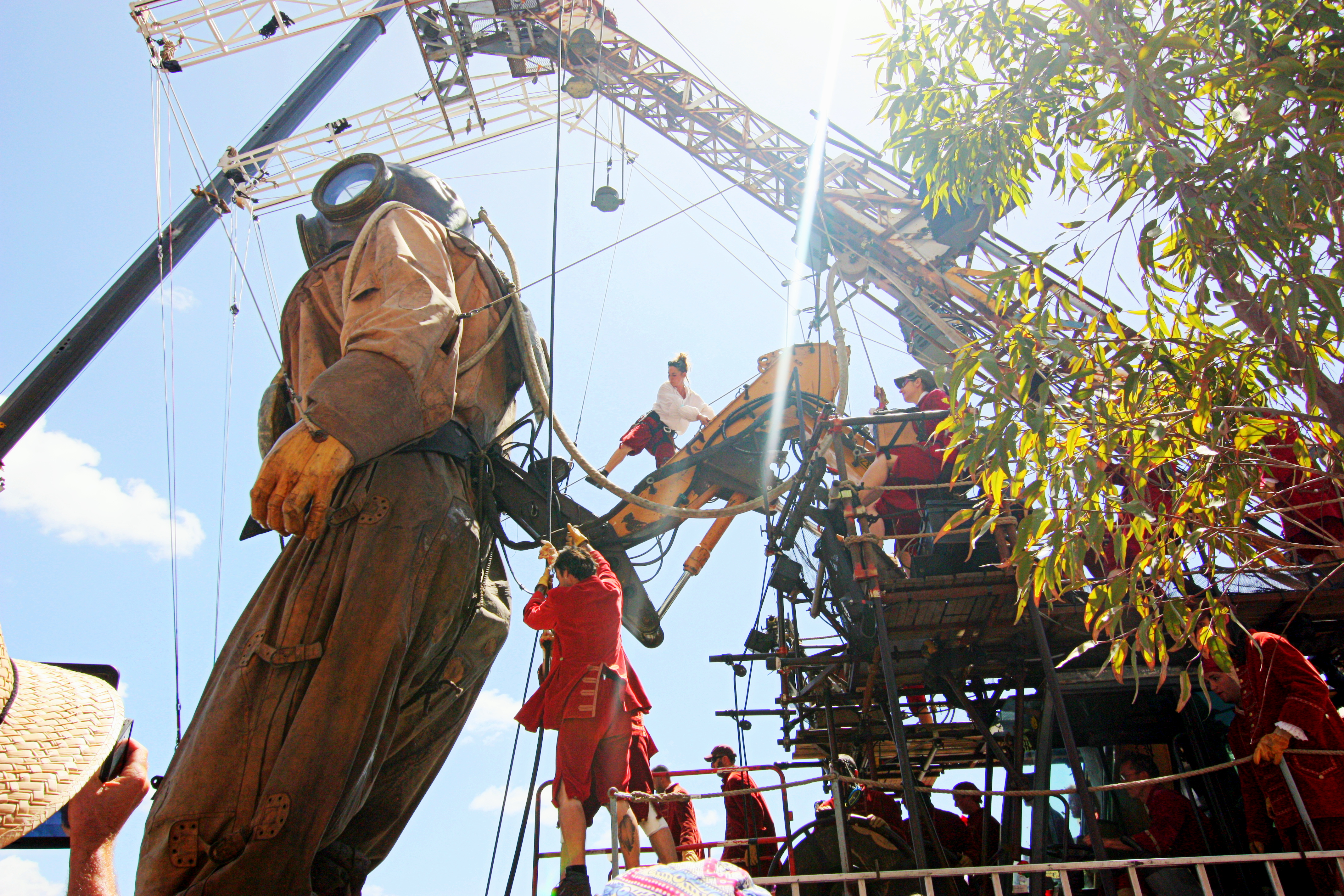
This weekend French artist, director and dreamer Jean-Luc Courcoult, and his group Royal de Luxe, brought their Giants to Australia for the first time, as part of the 2015 Perth International Arts Festival. These giant marionettes acted out a story over two and a half days through the city streets. They were innovation incarnate, creativity in action, dreams come to life.

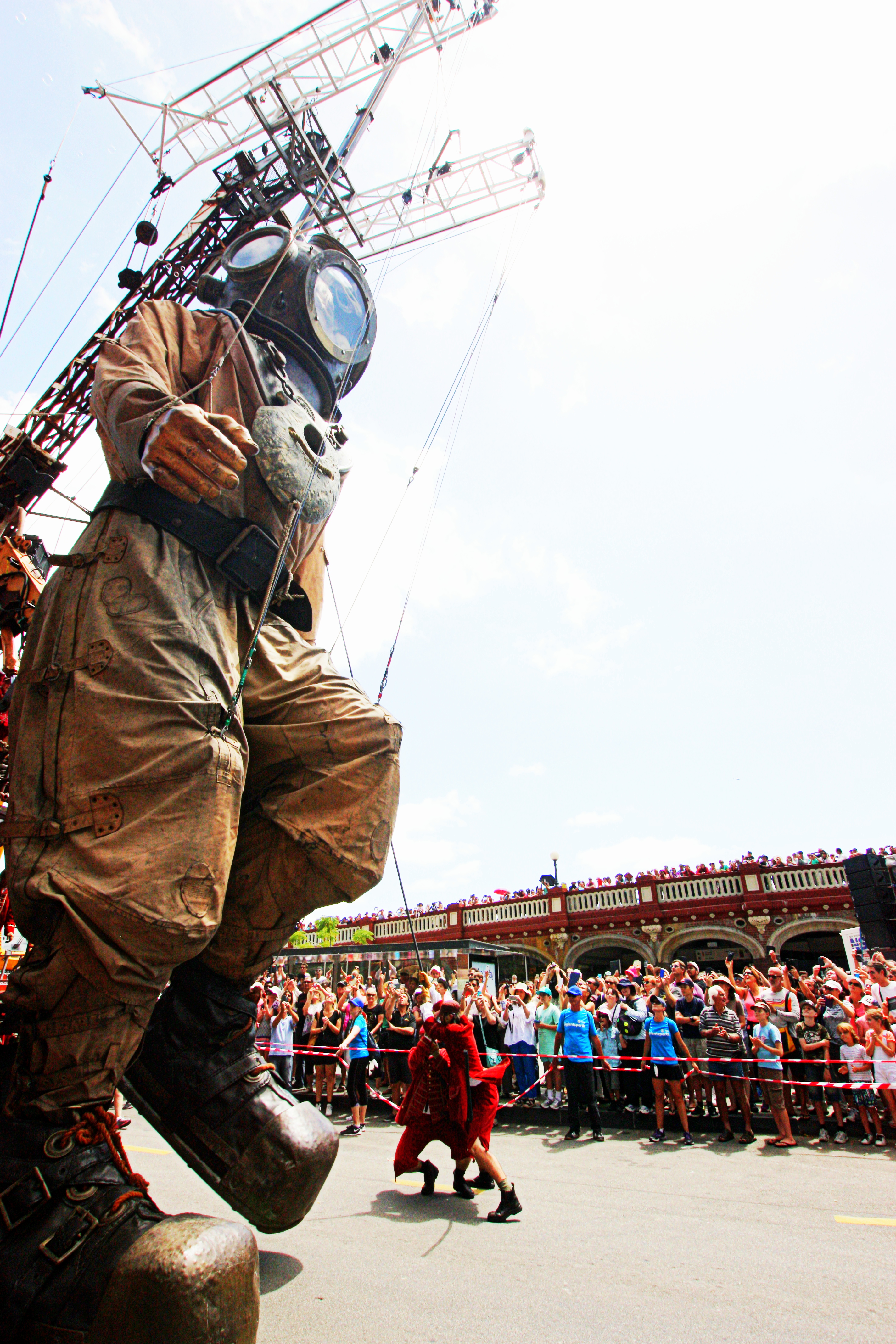
The city was captivated, with 1.4 million people – half the population – converging in the city centre to be a part of this experiential phenomenon.

My experience of the Giants was one which allowed me to be intensely in the moment, fully and bone-tinglingly present (beautifully aligned with one of my 3 words for 2015: ‘presence’).

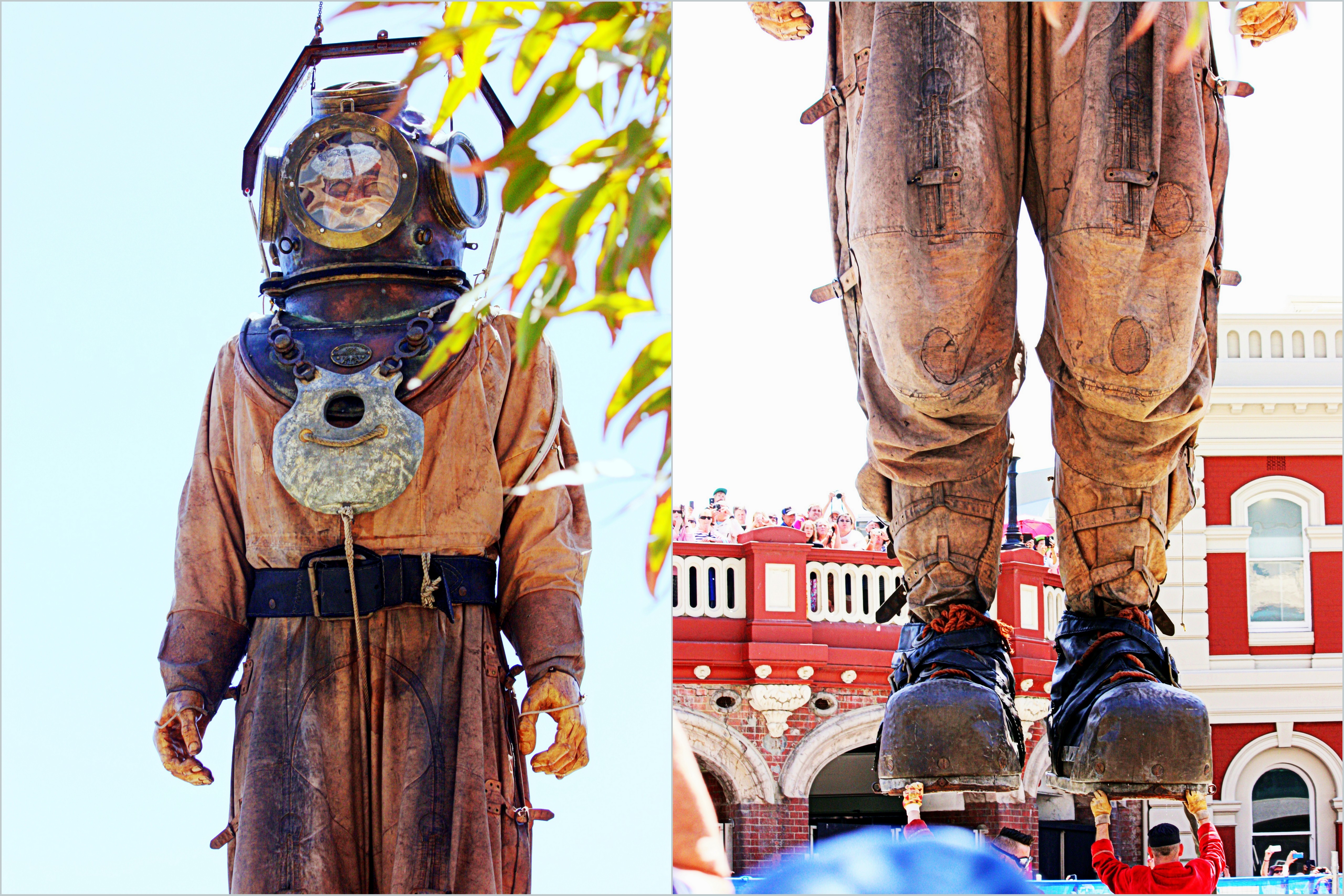
My pictures only capture one moment of many, and one marionette of two. You can read and see some coverage here, read the official Festival material and see the Giants’ adventures in other cities. I was grateful for the social media assault which allowed me to follow the journeys of both Giants throughout their time in Perth.

The Giant Diver awakens

The Giant Diver awakens

The Diver is lifted up before he begins his walk through the city streets

These images don’t do justice to being there amidst what was an awe-inspiring and magical spectacle. The sonar beeps, didgeridoo and haunting music playing from the band float. The gasps and emotional astonishment of the crowd. The beyond-amazed believing-in-magic faces of children and adults.

As I watched the 11m diver awaken from the footpath outside the train station, rise into the sky and then start walking in front of me, I was moved. There was something about the music, the scale, the movement, the crowds and community atmosphere which left me shaking and in tears, even as I held my son to my hip so that he could see.

That evening, when I asked my four year old what his favourite part of the day was, he turned to me with a look of absolute joy and wonderment and said in a loud whisper, “The giant looked at me!’

It is a rare and special thing to be unexpectedly and powerfully moved. To experience innovation, risk taking and a crazy idea taken to its limits. To be part of a meta narrative and a community tidal wave. I highly recommend it.

boots made for walking

boots made for walking

2015: The Year of Writing Boldly, Abundantly & Dangerously


Writing Dangerously by @debsnet

Get it down. Take chances. It may be bad, but it’s the only way you can do anything really good. ~ William Faulkner

For me, 2014 has been a year of writing thoughtfully, reflectively and introspectively.

As always I have been writing unit plans, assessments and resources for my students. I have been writing 140 character tweets, and participating more and more in education Twitter chats (such as #satchat #sunchat #aussieED #whatisschool and #BFC530). I have started a blog in which I have been experimenting with voice and purpose. I have been writing my PhD, which is currently at almost 80,000 words. As part of my PhD I have written a self-study chapter in which I reflect on myself as learner, educator and leader.

2015 will be my year of writing abundantly, boldly and dangerously.

Writing abundantly

In 2015 I will need to write abundantly. I will need to write words and words of thesis. I will need to pen some papers on my research. I will need to write applications and abstracts for education and research conference presentations. I will write blog posts. I will write tweets.

Each form of writing is a different kind of therapy. I am prone to over-wordiness (I love words!), to verbosity, to an inability to be concise. Thankfully, Twitter is therapy for the verbose. To distil thoughts into 140 character bites is to crystallise thinking down to its essence. I am never more concise than when I tweet. Blogging allows personal exploration of ideas in an informal space. My blog is where I can explore ideas in greater depth than a tweet, but in more informal ways than in academic writing. My thesis is the place where I get to burrow into challenging writing problems and thrash around, working hard until I break through and find a solution. The PhD is writing friend and nemesis, a beast I have to wrestle into its cave, clay I have to mould into its form (or is that stone I have to hack at until it takes shape?).

And the more I write, the more my writerly-self expands and transforms, like a shape shifter, always taking new forms in organic, non-linear ways. I am a hybrid writing being who writes as educator, school leader, researcher and bloggess. 2015 lays the challenge of balancing these overlapping writing selves.

Writing boldly

I will need to be bold in my writing in 2015.

I will need to be boldly honest, self-reflective, self-revealing and authentically-voiced in my blog posts, and in the conversations which bloom from those. I will need to be willing to disagree in Twitter conversations, in order to promote robust discussion instead of an inward-looking echo chamber of the same voices saying the same things.

In my third (and hopefully final) year of my PhD study I will need to be self-assured in discussing the contribution of my work. I will need to be confident in communicating in my own academic voice.

Yet in my boldness I will need to be sensitive to ethical issues such as how to tell others’ stories while protecting their anonymity and the authenticity of their words. Part of the reason I choose to blog and tweet under a pseudonomic identity is to protect my research participants. So boldness needs to be tempered with thoughtfulness.

Writing dangerously

Language is power. Words are tools. As a teacher of English and Literature part of my job is to help students to understand how language works (functionally, socially and globally), and help them to develop the capability to use its power to communicate, share, converse, discuss, disagree and disrupt.

Writing can be dangerous. It can be disruptive. It can be transformational for writer and reader. It can change individuals, groups, organisations and the world.

2015 is the year for all researchers, bloggers, tweeters and writers (or ‘those who write’, but don’t think of themselves as ‘writers’ as Pat Thomson explains in this post) to write fearlessly and compassionately, abundantly and concisely, reflectively and dangerously. I’m going to give it my best shot.

Happy writing!

A writer never has a vacation. For a writer life consists of either writing or thinking about writing. ~ Eugene Ionesco

write fearlessly by @debsnet

Art journal pages: scribbling as therapy, thinking & anticipation

An artist is a sketchbook with a person attached. Irwin Greenberg

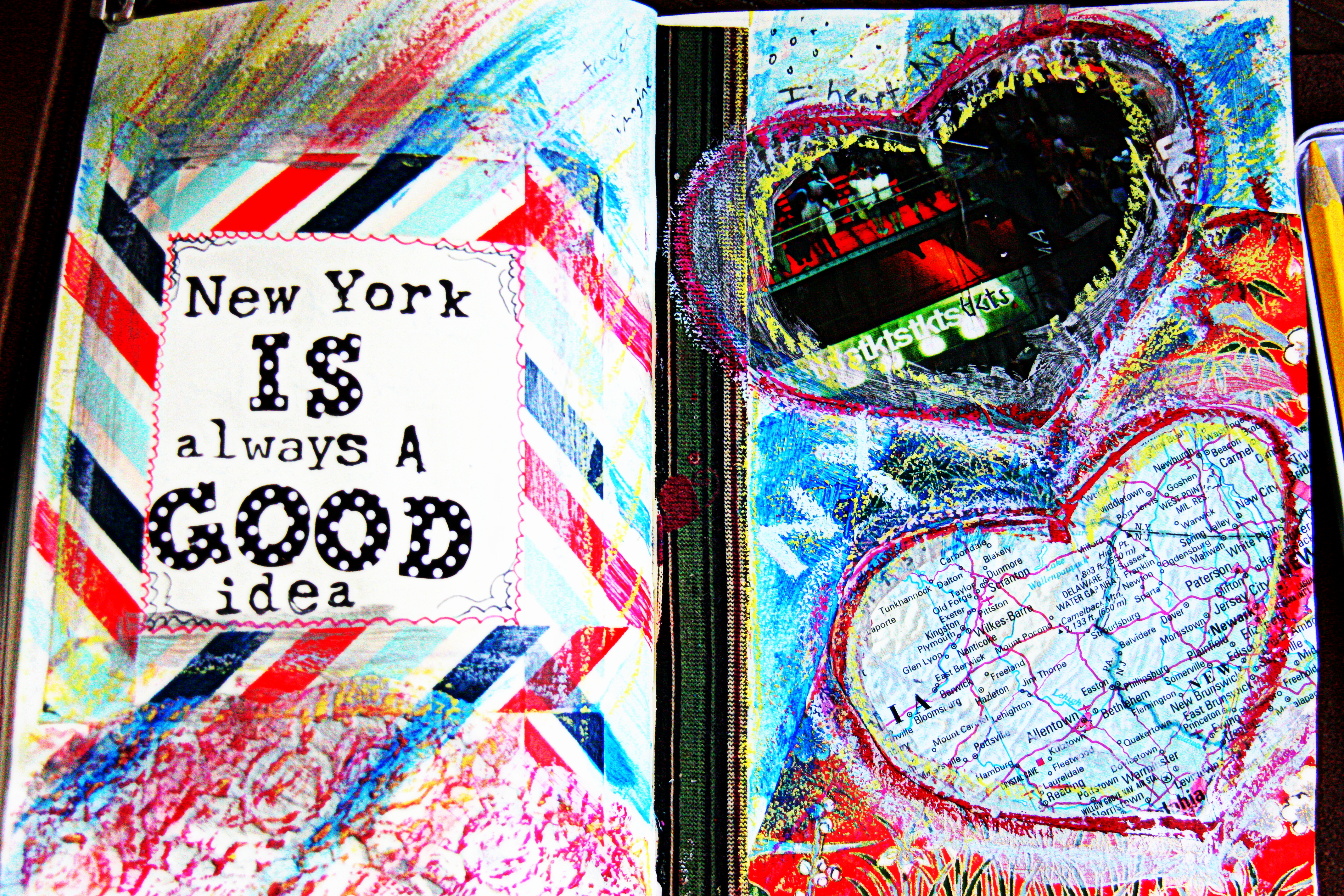
New York City is the subject of much art, literature and creativity. As I explained in this blog post and comments, for my upcoming professional trip I am using a range of traditional and new media to explore, express and develop my thinking. I find that keeping a visual and written record of my observations and thoughts helps to anchor me in the moment and focus on really seeing, hearing and experiencing what is around me. My creative packing list can be found here; it outlines the ways I am intending to flânerially experience and capture my trip.

So, inspired even before I take flight, here are my collagey art journal scribblings so far …

art journal page: curiouser and curiouser!

art journal page: curiouser and curiouser!

art journal page: I heart New York

art journal page: I heart New York

art journal page: New York is always a good idea

art journal page: New York is always a good idea

NYC art journal page by @debsnet https://theeduflaneuse.wordpress.com/

art journal page: don’t quit your daydream

art journal page: Perth to New York

art journal page: Perth to New York

Your walls, New York, hold up heaven, parapets of beauty stabbing into the stars! / Pillars of the universe. / Oh music in stone, poetry in sculpture, song in architectural marble, prayer in granite, an ecstasy in steel and iron and gold, singing city of the great heart, singing city, / You are Manhattan! Edwin Curran