Flashback Friday: The end of the PhD

The end of the PhD. I remember it well, or so my long line of PhD-finishing blog posts might seem to attest. These include (and this is just a selection) …

The end of a doctorate is a rollercoaster of emotion. One, it turns out, I had largely forgotten. While my blog posts act as bread crumbs back to those experiences, the feelings themselves have faded, softened and blunted over time.

Today, I was reminded.

I still connect with the ‘DocVox’ Voxer (voice-to-voice messaging app) group that helped support me through my PhD. This is a group of mostly doctoral (PhD and EdD) candidates from the USA, plus a couple of us from Australasia. I figure staying in the Voxer group despite having finished the PhD helps me to pay back by continuing to support those who are still on their journey. It was via this group that I was today reminded of the visceral nature of the last bit of the PhD.

This morning a candidate from the US was Voxing about the blind panic they were feeling as they near dissertation submission. As I Voxed a response, I tried to reassure the person that their experience was normal. I recalled how in the last months of my PhD I had brutal insomnia. I clenched my jaw in my sleep despite chomping magnesium before bed to try and calm myself down and slow the mania of my obsessive mind. When I did sleep, I had nightmares, a recurring one of which was that I died and my almost-but-not-yet-finished PhD never saw the light of day, but languished, unexamined and unpublished. As I spoke, tears sprang to my eyes and my voice cracked. Some of that emotion returned in an intense flash. Wow, I thought, I didn’t think I was very affected by my experience. I was reminded as I spoke of the isolation of those moments, ones I didn’t really talk about because despite being surrounded by family, friends and colleagues, it didn’t seem something they would understand.

There are times in the PhD when everyone thinks you must be finished by now but you know you have so far to go, and times when it seems you should feel happy but instead you feel strange and empty. It’s a weird, emotional and quite a lonely time.

*                                    *                                    *

It’s almost 13 months since I was doctored. That moment was a glorious one. I awoke in Washington DC, after attending and presenting at the American Education Research Association (AERA) Conference. I had met a number of my academic heroes, as well as colleagues I knew only through Twitter and those that I met at the conference at sessions or in the epically long queue at Starbucks. I had nailed the presentation about my research and spent an hour in the corridor afterwards fielding questions and discussion. One of these discussions carried over to lunch and an ongoing professional connection. I’d had a great conference and was in edu-nerd heaven. It was the perfect moment for doctoring.

So, the day after AERA closed, I awoke in my Dupont Circle Airbnb apartment and checked my email, to find a ‘Congratulations, Doctor Netolicky’ email confirming the conferment of my PhD. I whooped, I shrieked, I clapped. I cried. I fist pumped. I felt overwhelmed and triumphant.

It was my last day in DC and I floated on rainbow-fairy-floss-cloud-nine as I swanned around the city in the magnificent sunshine. I was on my own, so I took this selfie (below) to remind myself of that elation. The iPhone snap mightn’t look like much to anyone else, but whenever I see it, it catapults me back to that moment of pure joy. Unadulterated I-am-now-Dr-Me exhilaration.

Now I have the luxury of being a pracademic, part school leader-teacher-practitioner, part early-career-scholar-researcher. During the PhD, finishing the doctorate always felt like an ending, but as I look back I can see that it was a beginning. I am now able to luxuriate more serenely in the oasis of academic writing, and to enjoy the gentle challenge of scholarly collaboration and conversation. And to apply my doctoral experience to my daily work.

The emotions fade, but it turns out they’re still there, in memory and in deep in the bowels of the iPhone camera roll.

DC doctor selfie
Stitching the shadows: Writing & social media

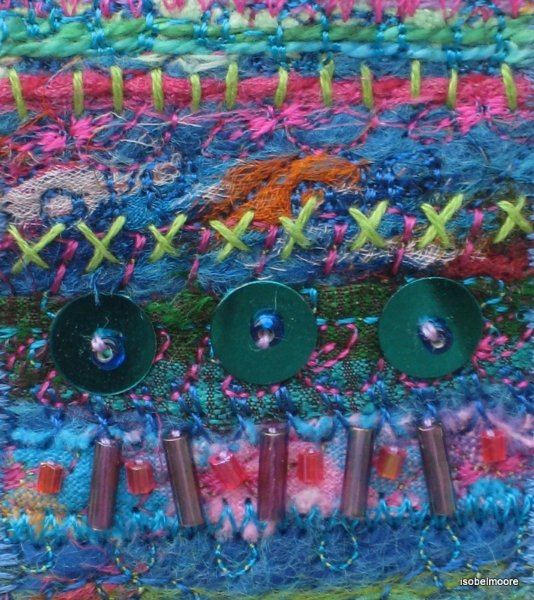
textile detail by Isobel Moore http://www.threadnoodle.co.uk/

textile detail by Isobel Moore http://www.threadnoodle.co.uk/

This blog post is part of a blogversation. It responds to two blogs, both of which came to my attention via my Twitter feed. This one on qualitative research methods by Naomi Barnes, and this one on tracing the social media interchange that followed, by Ian Guest. This is not the first time I have jumped into a blogversation unannounced and univited. The first time was when Helen Kara challenged Naomi Barnes to the #blimage challenge, after I had first challenged Helen to the same. The post I wrote, in response to Helen’s photograph of spider webs in her garden, echoes the themes of this post – the power and messiness of connectivity on social media. Another of Naomi’s posts had me thinking about diffraction.

The great thing about social media is that by engaging we situate ourselves within a public conversation. It’s when people jump in—to ask a question, make a comment, respectfully challenge, add their lived experience, share their perspective—that dialogue is enriched and we influence each other, across time, space and devices.

In Naomi’s recent post she articulates some ways of thinking that are close to my heart and my keyboard: blogging as inquiry and using metaphors as a method of sense-making. As many of you would know, I used Alice’s Adventures in Wonderland as a literary metaphor through which I viewed and re-constructed my PhD data. Metaphors, as any reader of this blog will recognise, are one way that I make sense of the world. Metaphors also emerged from the stories of the participants of my PhD as they worked to make sense of their selves and worlds.

As une édu flâneuse I was taken with Naomi’s notion of the ‘concept flâneur’. The flâneur, or its feminine alternative the flâneuse, is the attentive observer, the attuned wanderer, a scholar of the world and a chameleonic surveyor of the crowd. The ‘concept flâneur’ reminds me of my own use of bricolage in my PhD that I describe here as rethinking well-worn traditions and stitching them back together in new form. But flânerie is about more than stitching together. It is about rapt observation and devoted contemplation, about deep understanding and applying scholarly thinking. The theoretical flâneur is the insider-outsider, at once looking in and immersed within.

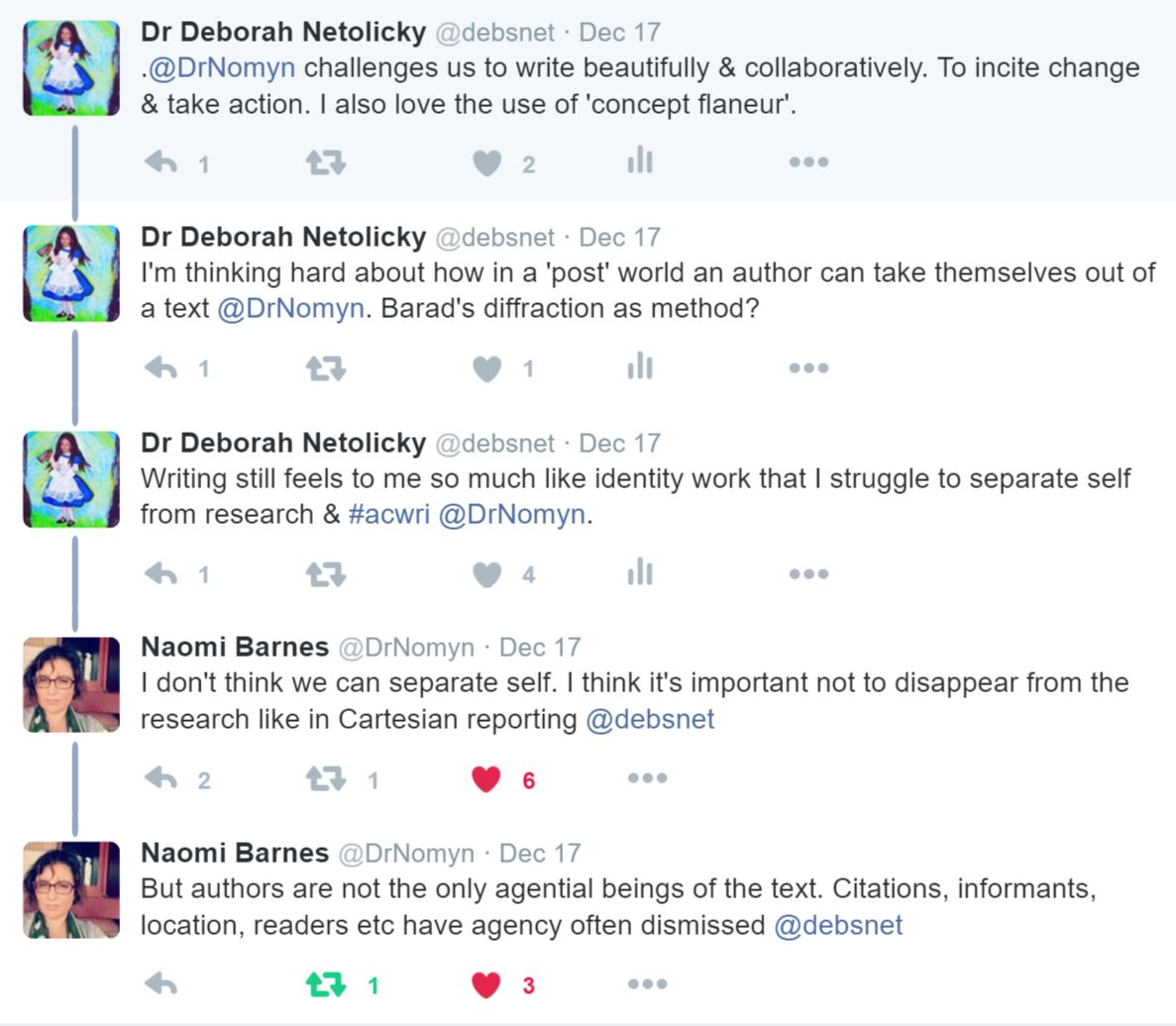
The part of Naomi’s post that challenged me the most was when she stated that qualitative research has stagnated as “the author has become central in the writing. It becomes about writing, rather than the research and the need for change.” It led me to a Twitter exchange in which I explored my own uncertainty around the self in research and the author’s place in writing.

a Twitter exchange resulting from Naomi Barnes' blog post

a Twitter exchange resulting from Naomi Barnes’ blog post

In keeping with Naomi’s metaphor of the sutured-together monster body, I see these kinds of social media interactions as textile. I have written before about textiles as a metaphor for subversion and political activism. We stitch onto shared fabric, adding perspectives, colour, texture, visual elements to a work. Our hands and minds shape the work (our thinking work, our writing work, our collaborative dialogue work), as it shapes us. Needles prick and rub callouses into fingers. We cramp. We struggle with the material. We can be proud of our contribution, working together like a quilting circle on the collaborative work of seeking to understand and to theorise.

Ian, in his post that responds to Naomi’s post, points out the non-linear, messy ways that exchanges happen on Twitter, despite their appearance in the feed as linear threads. I’ve written before about the butterfly effects of Twitter conversations, their serendipitous, surprising and subtly influential moments. Their powerful, unforeseen circumstances.

Ian wonders about the silences and the blurred boundaries between people and thoughts. I agree that it is in the silences, the shadows, the fissures, the dark cracks, of exchanges and of our own thinking, that we are most in a state of becoming and therefore potential change. It’s in the dark and vulnerable spaces that we learn. Blogging can be a bit like this: an exposure, a laying bare, a stripping down.

Ian mentions in his post that he shared a blog post via email despite sitting right next to his colleague; they collaborated via technology despite being in the same room. This reflects the evolving relationship that Naomi and I share. We have begun a co-authorly relationship, via digital tools. Word to word, screen to screen, device to device. When we met in person for the first time recently, we didn’t discuss our writing projects specifically. We saved our writerly collaborations for online spaces: email, Google docs, Twitter. In our fledgling collaboration, for me the digital sphere feels simultaneously a bit sacred and a draft-notebook-type place for working out. We show our workings to each other via our thinking-out-loud digital musings.

The wonderful thing about blogging, tweeting, emailing, writing and reading as inquiry is the acceptance, and even celebration, that it is all unformed. There are moments of awkwardness, uncertainty, openness, weakness, resistance, emotion. It’s all laid bare on screen, and open to tangled-threaded multi-webbed interchanges that have us emerging from the knotted labyrinthine tangles as from a chrysalis, declaring “here I am” so that we can be challenged and changed again.

Arguing on Education Twitter: BINGO

Today I had a draft blog post I was going to finish for publication today, but then I woke up to a tweet in which someone, with whom I’ve had no previous interaction, quoted a tweet of mine (a tweeted summary of an article to which I was sharing the link) and wrote above it the following:

God….. you really do have to laugh. Where do some get their PhDs??? # stupid

I’m still not sure of the reasoning for the tweeter’s ridiculing comment. Were they offended by or did they disagree with the content of the article I shared? It was a long article, at almost 3000 words. With what aspects of the article did they disagree? Did they read the article at all or did they just react to my teaser of its content? While they seemed to question my intelligence—with the #stupid hashtag, the triple question mark next to ‘Where do some people get their PhDs???’, and the suggestion that something about my tweet or my doctorate was laughable—the way in which they engaged with me did little to encourage debate or discussion, or to further either my or their understanding. Perhaps their intention was not to engage in dialogue, communicate their perspective to me, or interrogate my perspective.

This and some of the Twitter discussion that followed, got me thinking about the nature of some debates on edu Twitter, and of the social media tribalism Greg Thompson wrote about on his blog this week.

I’ve written before about the importance of graceful disagreement, such as in this post and in this one. I always learn from listening to the perspectives of those with alternate perspectives and counter arguments. On social media I (mostly) enjoy engaging in debates that help me to understand other viewpoints, see my own perspective from others’ points of view, and on occasion change my mind. If there is one thing my PhD taught me, it’s that there is much I don’t know or deeply understand, and that I have much to learn from others. In my leadership roles I look for ways to get honest feedback from all stakeholders, including and especially those who question, critique and resist. These are important voices to which we should listen.

But perhaps there are those who disagree, criticise or mock without the desire to talk further or understand more.

In anticipation of more enthusiastic debate and derision over the holiday period in the world of education Twitter, I’ve prepared this handy BINGO card for the festive season. It’s an attempt to see the lighter side of what can sometimes get heated as passionate educators fight for ideological corners. I may have thrown ‘Shakespearean insult’ in there as the odd ‘thine face is not worth sunburning’ or ‘thou cream faced loon’ might add interest to some debates.

You’re welcome.

My Edu Twitter BINGO: Watch your feed for these beauties

My Edu Twitter BINGO: Watch your feed for these beauties

Post script (11th December): I have begun to realise that there are aspects of EduTwitter arguing that I left off this BINGO card, like ‘false dichotomy, ‘Twitter poll’, ‘hyperbole’ and ‘subtweeting about someone’s lack of understanding or expertise’. I’d also like to clarify that my intention is not to judge any of these moves. They are used by people with a variety of profiles who argue on multiple sides of various debates. I think many of these moves transgress the debates themselves and reflect more of what brings education tweeters together, rather than what separates us. It’s also my attempt to reclaim my own experiences and to inject some fun into what can get intense or even nasty. I’ve especially enjoyed a few of the Shakespearean insults that have been thrown around since my post. Shakespeare really knew how to write a scathing and masterful take-down (although many of these would be classified as ad hominen or hyperbole in the context of Twitter debate).

I also love that someone made a GIF with my BINGO card.

Use at your leisure.

Use at your leisure.

Cartoons to communicate science? #scicomm

With the knowledge of science we can solve resource limitations, cure diseases, and make society work happily–but only if people can figure out what in the world scientists are talking about and why they should care. ~ Randy Olson, Don’t be such a scientist

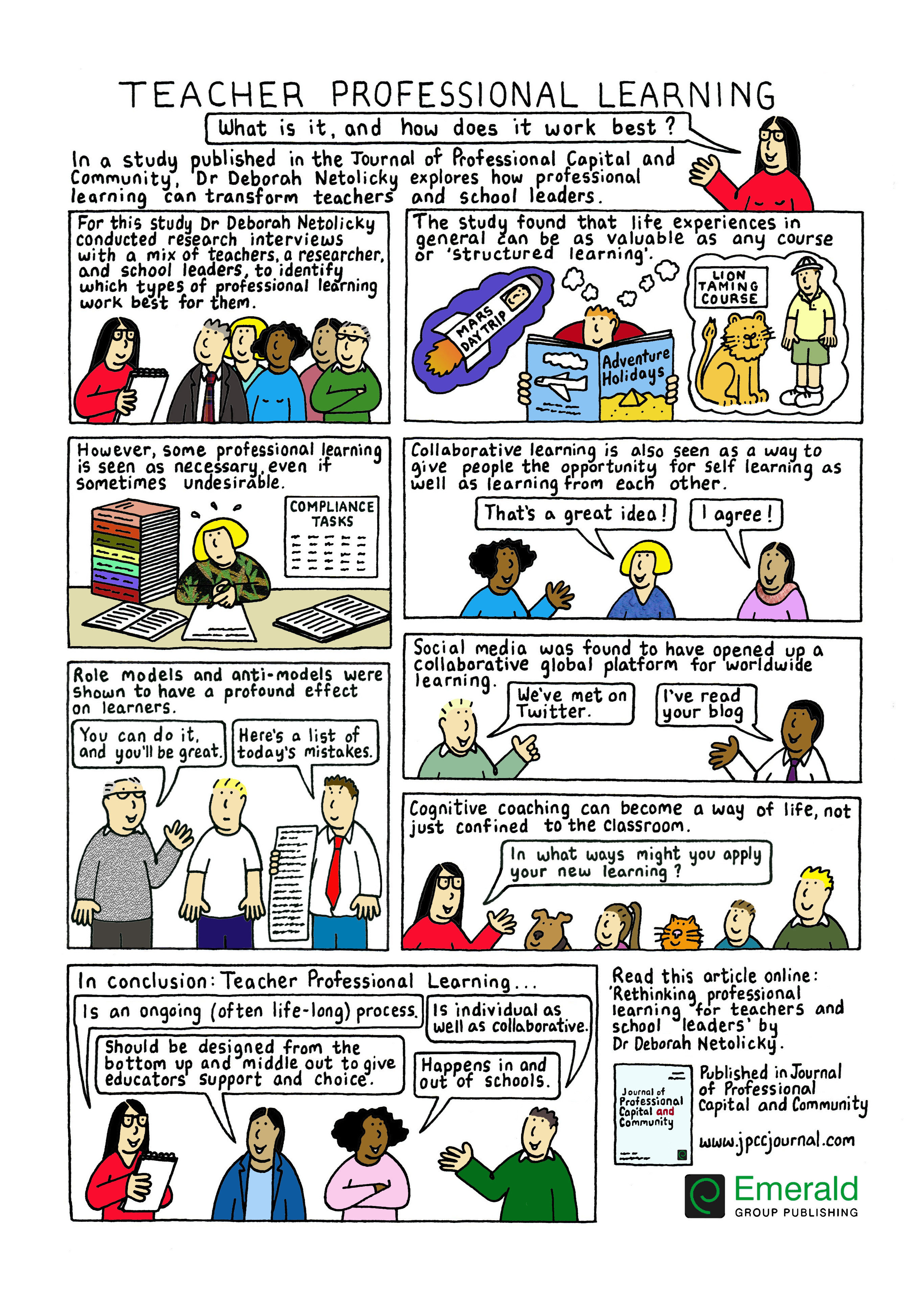
In 2015 the Oxford Dictionary word of the year was the ‘face with tears of joy’ emoji. This year I have seen PhD researchers communicate their theses via emoji on Twitter. Today Emerald Publishing and the Journal of Professional Capital and Community released the following cartoon abstract of my peer-reviewed paper ‘Rethinking professional learning for teachers and school leaders’. The paper itself, which has so far been downloaded over 4000 times, is open access, and I have also blogged about it.

What do you think of the notion of a cartoon or graphical abstract of a research paper? Is this a way forward for science communication? Can we use visual language to make research more accessible and more widely read? Could you or would you be open to designing a cartoon strip or graphic-novel-style summary of your research?

designed by Emerald and posted here on JPCC website: http://jpccjournal.com/teacher.htm

designed by Emerald and posted on the JPCC website

Managing a rotation curation Twitter account: My week hosting @EduTweetOz

source: gettyimages

source: gettyimages

This week I’m experiencing my first time in the host chair of a rotation curation, or #RoCur, account.

I have followed @EduTweetOz for some time and noticed how different educators seem to breeze through the host chair. I’d never considered the thought they may have had to put into hosting. But once I was invited and then appointed for a week, I felt a greater responsibility than just doing what I do with my personal account, @debsnet. Was what I did and said in my personal account appropriate in a shared account? Surely I couldn’t just dip in and out as I saw fit, jumping down rabbit holes and leaping off on tangents, as whims arose? I felt I needed to have some clarity for myself in terms of how I would approach an account that is not my own; I’m just slipping on the robes for a week.

I was also aware that I needed to manage my time and wellbeing during the week, while honouring the account administrators, the @EduTweetOz community and the commitment I made to hosting. This week I am doing my usual working (teaching! marking! reports! planning for 2017!) and parenting, plus copy editing a textbook, reviewing an academic paper for an international journal and co-authoring a book chapter. So for me, planning how I would approach the account was as much about protecting my mental and physical health in a busy week as it was trying to do a good job. I didn’t want to feel anxious and guilty for letting the account down.

The thing is, there isn’t a clear set of protocols or measures for what doing a good job of hosting @EduTweetOz might be. The host is given carte blanche to manage the account for a week as they see fit. How do the administrators or followers measure a host’s success? Number of new followers? Number of tweets per day? Amount of engagement from others? Tone? Humour? Enthusiasm? Availability? Responsiveness?

Know thy purpose

In the uncertainty that comes with the freedom to do as I saw fit, I set myself my own purpose for the week. I was hoping to engage educators in discussion, and also highlight some of those voices in social media that I rely on in my own personal learning network. What a great opportunity to share with others the value of educators, academics and thinkers who energise and buoy me.

I’ve also been happy to add some of my favourite educators to those followed by the @EduTweetOz account. These were people I think will bring a richness to the community and the account’s timeline.

Be prepared

I knew I wouldn’t manage this week well without a plan, especially considering my multiple commitments. So before my week on the account began, I sat down and scoped it out. To what topics might I draw attention? Which tweeters’ and bloggers’ thinking could I share? My plan was loose but it gave me a sense of direction and I knew I wouldn’t run out of steam or ideas as the week wore on.

I decided to ask a question per day and made up a (regrettably long) hashtag to trace the conversations: #EduTweetOzSlowChat. I pre-prepared slides for each question and scheduled the daily question to be tweeted out each day at 4am Perth time, which is 7am Melbourne/Sydney time.

Scheduling those questions for when I am sleeping allayed some of my worries about being unavailable during the East coast mornings when much of the country is up and ready to engage. Each morning this week, by the time I wake up on the West coast I already have tweets to respond to on the account.

Consider voice

In my own Twitter account I am comfortable with my voice, the way I ‘speak’ and communicate. While I was absolutely comfortable with being myself during my @EduTweetOz week, I also felt a different sense of obligation to the account administrators. Is my authentic social media voice appropriate in an account administrated by others and on which I am a guest? Can I say exactly what I want in precisely the way I want? To what extent do I need to be tactful or restrained?

On my second day I found myself in amongst a lot of humour and parody, and I was wondering if it was ok to indulge in that, or if it might be seen as flippant, and if that mattered, or to whom it mattered (oh, the overthinking!). I found myself, in the first couple of days, hyper aware of what others might think. I have found my groove, though, and settled into it.

Different educators have different styles: friendly, supportive, provocative, intellectual, colloquial, personal, academic. That’s the beauty of a #RoCur account. @EduTweetOz sets this diversity up nicely by posting an interview with the week’s host as a kind of introduction; here’s mine.

Engage with community             

I was aware of the opportunity and responsibility that comes with 10K+ followers, more than double the amount of followers I have on my personal account. I know that if I magnify voices, accounts or tweets across the week, they will have some reach. On what basis am I making decisions about what to project into the Twitterverse from this account to which I briefly have the keys?

I decided to retweet most responses to the account, in order to amplify the conversations being had in that space, and as a mark of respect and appreciation. Most people have been applying the @EduTweetOz Twitter handle to their own tweets for real dialogue rather than blatant self-promotion.

So far, I’ve been pleased with my daily chat questions as a way to begin conversation. Interestingly, my first daily question was the most positive, and has received the least response. The questions that have been around more controversial or complex issues have incited the most community engagement.

I also attempted my first Twitter poll, which is still open for voting at time of writing. I figured that with a large, diverse following, I could canvas a range of community opinion. The options I offered in the poll were crowd-sourced, emerging from the day’s responses to my question around what causes educators to feel skeptical or despairing about education.

………………………………………………..

I still have a couple of days left of hosting the @EduTweetOz account this week. I’m enjoying the foray into a different social media experience. In addition to my own reflections, I can recommend this post that Aaron Davis wrote after he hosted the account last month. Both of us reflect that a rotation curation account comes with ethical decision making and an opportunity to give back to the village.

Meanwhile, I’m here all week. Try the veal.

Power of a nerd herd: Ode to my people

Nerd Face Emoji

It seemed Liv had spent the last eighteen years in search of her people, and in one sudden explosion of fate, they’d all been brought together in this place in time. Her eyes filled with tears as a sudden awareness filled her. They were all nerds.” ~ Danika Stone, All the Feels

The word ‘nerd’ is often given a bad name, being associated with relational ineptitude and being socially outcast. But for me nerdiness is about finding joy in knowledge: attaining it, interrogating it, producing it. Immersion in it. Consuming, curating and creating.

I love it when a nerd is positioned as a central figure of a story. One example is astronaut and botanist Mark Watney, the protagonist in Andy Weir’s 2011 novel The Martian. At one point Watney, stranded on Mars alone, yells, “Hell yeah! I’m a botanist! Fear my botany powers!” Watney embraces his nerdiness, calling himself a “space pirate” and invoking the metaphor of Iron Man when he catapults himself into space near the novel’s end. The story arc of the novel, and the Ridley Scott film in which Matt Damon plays Watney, is carried by this nerd-hero and his melding of science knowledge and affable humour. Watney is the epitome of the lovable nerd.

Recently, I’ve been reflecting on those people in my professional and personal spheres who make me feel like I’m at home when I’m with them. Many of these are fellow nerds. That is, we connect over our mutual love of something geeky (reading, writing, teaching, research, literature, coaching, art, science, story). We have a shared joy in finding things out and in doing purposeful work.

These are family and friends who, while I was completing my PhD, asked me about my research and listened to my responses. They are colleagues who get excited about a project we’re working on. Who co-plan courses, lessons, cross-curricular opportunities and assessments with a fervent enthusiasm and a twinkle in their eye. Who understand, or at least watch with knowing amusement, when I get excited about a new academic text or education book arriving on my desk (O, Book Depository, my faithful friend!), or about a paper being published. Who smile patiently when I cyclone into their office full of ideas busting to get out of my head or words tumbling out of my mouth. They are the past or present principal who continues to show an interest in and support of my work. Who sometimes says ‘yes’ and sometimes challenges me to think and do more.

They are the mentor or coach who waits while I work through my messy thoughts and helps me to arrive at cleaner ones. They are the colleague and bloggers who trust me enough to listen to their unformed thoughts or read their still-emerging ideas.
They are the professional friend who coaches me on Voxer or takes a phone call to help me work through a professional problem or issue. They are my PhD supervisors who gave me the space to explore some off-the-wall ideas, while challenging me to construct airtight rationales for non-traditional approaches. They are the well-known academic who shares their expertise via social media, flattening hierarchies and transgressing time zones. They are the conference-goer who stops me in the corridor after my presentation to talk for an hour, before moving our conversation to the long lunch it deserves. They are the co-author I’ve never met face to face, or spoken to on the phone, but with whom I’ve collaborated, co-written, and whose thinking and writing has pushed mine into new crevices.

They are my kind PLN who engage thoughtfully with me on Twitter, respond to my blog posts and meet up with me in cities around the world. Twitter is full of generosity. In my PhD acknowledgements, I thanked family and friends who had shown an interest and those in the social media world who had provided an antidote to isolation when I felt alone in my own head in the PhD wilderness.

Those people who feel like my tribe provide a space that is at once safe and challenging, celebratory and questioning, inspiring and industrious. It’s a place I can be excited about an idea, a text or a possibility. I can geek out and nerd it up without risking an eye roll or a snigger. I can share narrow interests and pursue broad passions.

In a world in which we are more connected than ever, we can be buoyed, empowered and supported by our connections, our people, our herd, our tribe, our squad. We can pay forward and give back. We can support each other’s nerdy excitement. In the karmic circle of knowing, learning, doing, being, leading and caring, we can share our knowledge, contribute our time to help others on their journeys, listen to others’ stories and celebrate others’ milestones.

Thank you to my fellow nerds who give me a sense of belonging and allow me the luxury of knowing that my personal brand of nerd has plenty of places to call home.

Achievement unlocked: I think I am Nerd Face Emoji.

Achievement unlocked: I think I am Nerd Face Emoji.


Why I’m going to researchED Melbourne #rEdMel

Research evidence is essential to the task of improving outcomes for young people, but research will never be able to tell teachers what to do, because the contexts in which teachers work are so variable. What research can do is identify which directions are likely to be the most profitable avenues for teachers to explore. ~ Dylan Wiliam, Leadership for Teacher Learning, 2016

Why would a Western Australian fly to Melbourne for a one day conference? Here’s why researchED is drawing me to the East this May: cognitive conflict and robust discussion around educational matters.

In drawing together academics and education practitioners working in schools, researchED conferences are less about transmission of information and more about provocations and conversations. researchED’s tagline is ‘working out what works’, and those that gather at its events around the globe are interested in working out what works in education, for the benefit of the world’s children. The website tells us researchED’s mission:

researchED is a grass-roots, teacher-led organisation aimed at improving research literacy in the educational communities, dismantling myths in education, getting the best research where it is needed most, and providing a platform for educators, academics, and all other parties to meet and discuss what does and doesn’t work in the great project of raising our children.

Whether individuals come from Australia, Europe or the USA (all locations where researchED events have been held) they share the goal of bridging the gap between research and classroom practice.

As Dylan Wiliam points out, research cannot tell teachers and schools what to do, but it can inform the decisions educators make, and help them follow trails most likely to be beneficial for their students. Tom Bennett, the founder and director of researchED, says that researchED’s mission is to “to make teachers research-literate and pseudo-science proof.” That is, teachers need to be critical consumers, curators and questioners of information and of evidence.

Gary Jones, who is coming from the UK to present at and attend researchED Melbourne, has written an excellent guide to evidence-based decision making in schools. He points out a number of popular ideas in education that are not backed by evidence and reminds educators of the need to be conscientious, judicious and explicit in their use of evidence to make decisions and shape practices.

I’ve made my view clear that teachers can and should be researchers. Taking research into account, enacting practitioner-research practices, and engaging with scholarly literatures, is important in an educational world focused increasingly on accountability, performativity and rapid change. Sometimes, the best thing for a teacher or school to do is to press ‘pause’ and ask some critical questions of the evidence they are accepting or the practices in which they are engaging.

As a teacher and school leader who has recently completed a PhD, I can see the benefits of research thinking to the school environment. It means applying carefully considered and thoughtfully designed methodologies to decision making and innovation. It means trusting in teachers to be a core part of school reforms. Research becomes, not an add-on, but a way of being which is embodied and enacted by educators as they go about their important work.

researchED is part of a global movement to give teachers voice and agency in their work, their schools and their systems, while ensuring that school leadership and classroom practice is informed by research and evidence. Conversation between academics, researchers, leaders, policy makers and teachers can help all involved in education to best serve the students at the heart of our education systems. A wonderful publishing example of this kind of movement is Jelmer Evers and René Kneyber’s book Flip the System, which brings together the voices of teachers, academics and education experts in order to reclaim the space of education discourse for those working as cogs in the neoliberal machine.

So I’ll see you at researchED Melbourne. There will be interesting research and practice shared. There will be classroom perspectives and scholary ones. There will be graceful disagreement. I’m looking forward to presenting among the diverse voices, and learning from them.

(Here is my post on last year’s researchED conference in Sydney, at which I also presented.)

Brighton Bathhouses

Academic activism: Scholars, let your moral passion drive you #aera16

Iwo Jima at sunrise

Iwo Jima at sunrise

The theme of much of my day at the AERA conference yesterday was around scholarly activism. This post, which also shares a few of my photo snaps from DC, reflects on what yesterday’s sessions had to teach me about being a scholar. This comes at an important point in my journey. Now that the PhD is done, I’m thinking about what work I’ll do next in my school, my research and my academic writing.

In one roundtable session, a paper by Stefani Relles and Randy Clemens used the metaphor of punk rock for academics who use DIY scholarship in their quest for social justice. They theorized punk rock scholarship as grounded, activist and disruptive, using comparisons to skateboarders, graffiti artists and musicians of the punk movement. I reflected that a punk rock scholar might circumvent or disrupt traditional academic practices by self-publishing, using social media, blogging, or embracing open access and saying no to pay-walled publishing. But there was discussion at the roundtable about the extent to which an academic can be an outlaw. How disruptive can one be within the system, which places particular norms, pressures and metrics on those working within the academy? How might academics navigate the need for a pay check and tenure with their passion for social justice? Is it a case of corporate Bruce Wayne by day and vigilante Batman by night?

Similar issues emerged in a six-paper session about post-qualitative methodologies in which scholars were pushing at the boundaries of, dissolving, or letting go of, accepted Western ways of knowing and researching. Audience questions included those about how to exist within an academy while challenging or dismissing much of what it holds to be true or important.

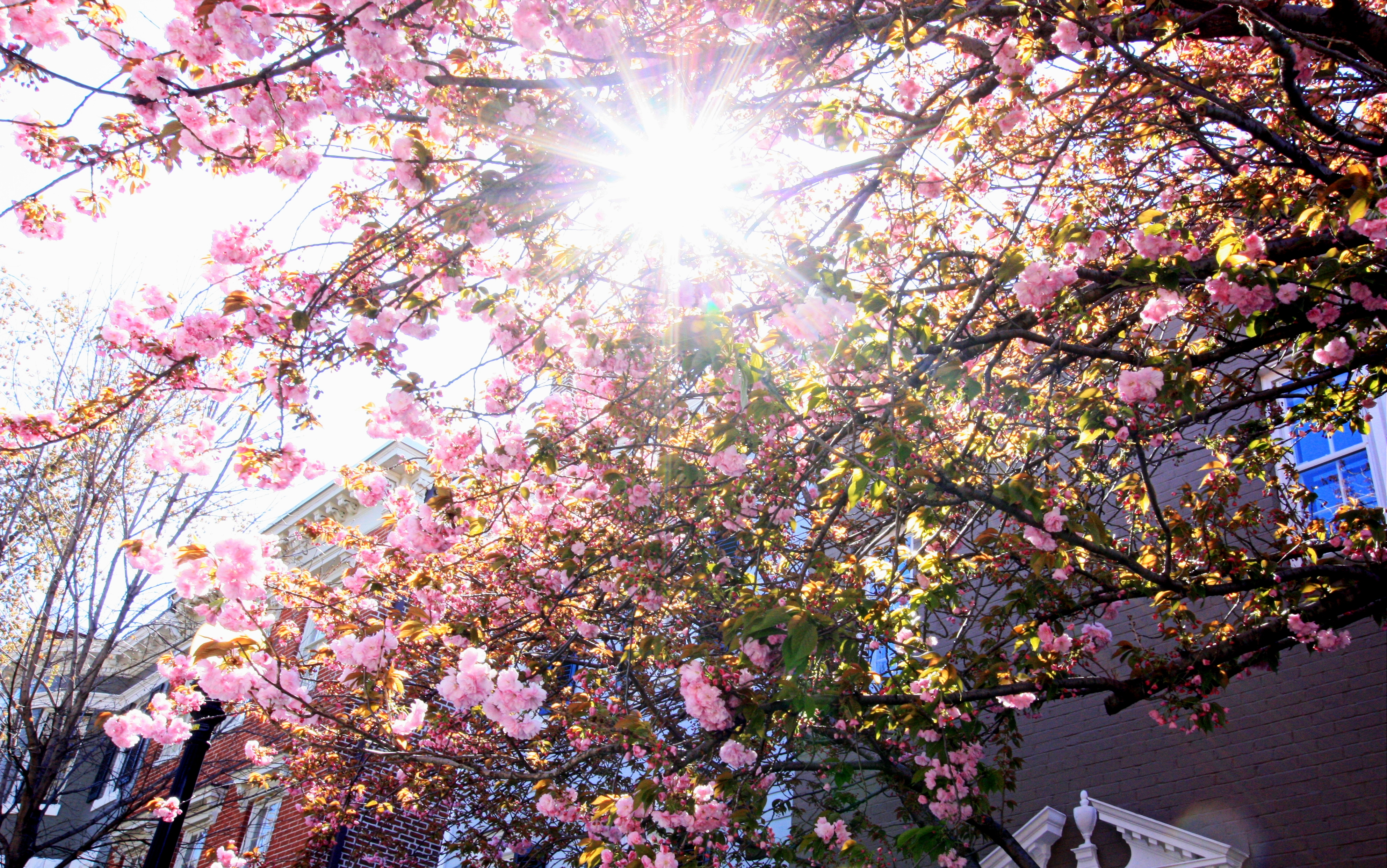
Georgetown blossoms

Georgetown blossoms

Yesterday the notion of scholarly activism also emerged in a panel of what some might call superstar or celebrity academics. A discussion between Michael Fullan, Andy Hargreaves, Linda Darling-Hammond and Diane Ravitch was moderated by Washington Post education reporter Valerie Strauss. One theme which emerged was the importance of researching and writing from a burning core of moral passion. In discussing their books, the authors talked about what had inspired and driven them to write. In each case it was a sense that a book needed to be written, an argument needed to be made, something had to be said, an idea or group needed to be mobilised. Their writing was framed as political activism and advocacy. It had an emotional and moral component. Andy Hargreaves noted that writing should be based on the nobility of an idea.

Diane Ravitch’s story pointed to the need for persistence with moral purpose. She told the audience that her best-selling, award-winning book The Death and Life of the Great American School System: How Testing and Choice are Undermining Education was initially turned down by 15 publishers. At 77 years of age she is also an example of the power of social media and blogging. Her blog has more than 14,000 posts with more than 27 million page views. This speaks to the opportunities for scholars to leverage social media and the blogosphere to communicate their work and their messages to wide audiences. Tweeting and blogging can be scholarly writing practices.

Jefferson

Jefferson

I wonder about how much career stage and level of influence make a difference to the extent to which it is possible to disrupt the status quo. As a PhD candidate, I pushed at the boundaries of the traditional in my thesis, but I was also keenly aware of the need for my dissertation to be recognizable (by the all-important examiners) as an acceptable academic text. I pushed and agitated, but within the limits of what I thought I could get away with while still passing the PhD. Are those earlier in their careers, or in universities on contracts, less able to agitate, disrupt and advocate? Or is it again a case of Diana Prince sometimes, Wonder Woman at others? Clark Kent and Superman? The acceptable academic versus the one fighting for what they believe at their core to be the most important work?

The AERA conference itself is in some ways an exercise in homogeneity. While with about 18,000 in attendance, there is a wide range of topics being covered, most attending are dressed in variations of the same theme. Outwardly, there is an expectation of the academic, graduate student and educator. Do we wear our capes beneath our clothing? Is it our words and our work that are the heroes and the punk rockers?

Yesterday answered many of the questions I’ve been asking myself about what work to choose to do next. I think the answer might be simple. Do the work you believe at your core to be important. Say what needs to be said. Be guided by moral passion, social justice and fundamental purpose.

Folger Shakespeare Library

Folger Shakespeare Library

Teacher efficacy, agency & leadership #aera16

iconic Abe

iconic Abe

This afternoon I spent 3 hours at two round table sessions at AERA in Washington DC, hearing about and talking about teacher leadership and agency. Then on the way home from drinks with Sarah Thomas, who I know through Twitter and Voxer, I stumbled across the #satchatOZ chat on Twitter which was talking about teacher leadership. So whilst I’m jetlagged and brain-exhausted from a day of conferencing, I want to get my raw thoughts down before they’re overrun with tomorrow’s thoughts (with some of my photos, because: DC).

Three terms that came up today in the two roundtable sessions I attended were: efficacy, agency and leadership. Self-efficacy is about how well someone thinks they can do something; a self-belief in their own capacity. Agency is the capacity to act as well as the acting itself; to be an agent is not just to have the internal capability to do, but to actually do the doing. I wonder, can someone be an active agent, capable of action and change, without the self-belief in their capacity to do so? Possibly. Can someone have a sense of self-efficacy, but without the agency to be effective? Probably.

Leadership, meanwhile, is a slippery word. People can be leaders by name or position, but this doesn’t guarantee that people are led by them. Leadership and agency are not just individual, but also collective. Can someone be a leader without a followership? A leader can be defined by their title, but more often they are defined by their influence on others, their organization or the system in which they operate. Teachers without official positions of responsibility can be, and are, leaders in their fields. They are active agents who effectively translate their beliefs and purpose into reality through deliberate and effective action.

In leadership and agency in schools, context is a key consideration. The holonomous* environment of a school is one in which the sum and the parts are inseparable. If schools want teachers to be reflective, growth-focused and agentic, they need to trust in their teachers and provide an environment in which risks and exposing one’s vulnerability are ok. In a culture of teacher-scoring and fear, teachers are less likely to be agents of positive growth and more likely to be compliant servants to a punitive system. Movements like #flipthesystem, which are explored in Jelmer Evers and René Kneyber’s book, advocate for further teacher voice and action in education reform. Localised reforms like my school’s teacher growth model are practice-based examples of in-school teacher leadership in action.

In the introduction to Linda Darling-Hammond’s presidential AERA address this afternoon, she was described as identifying as a teacher, but having become a researcher so that she could be a strong voice listened to by policy makers and powers that be. She saw research as a way enact and propel change.

DC daffodil cityscape

DC daffodil cityscape

While I didn’t frame my PhD research through the lens of teacher leadership and agency, it could be seen through that lens. I explored teachers and school leaders’ perceptions of identity, learning and school change, within a particular context. That context was the coaching intervention I was leading at my school, a formative growth-based model of teacher growth and development.

What emerged from my study, when looked at in terms of teacher leadership and agency, was that teachers are deeply tied to their senses of self within their senses of their context. That is, teacher self-efficacy and agency develop when teachers feel an individual purpose, an alignment with context and that they are empowered with voice and influence in their own organization. In this case, the school empowered teachers to be active agents with a voice in school reform. Additionally, the formative aspect of the coaching model for growth was fiercely protected; teachers are not scored and judged, but are able to collect lesson data and participate in coaching conversations in order to grow themselves. This kind of trust requires some relinquishing of power from those at the traditional hierarchical apex.

As someone who connects with others on Twitter and writes on this blog, I think that technology and social media give us tools to develop our teacher voice and engage in conversations about education. I know of teachers who would be considered leaders both in their schools, and in the wider land of education, due to their public thinking, writing and advocacy. I also know those who are known more for their leadership in the social media or conference arenas, than in their own day-to-day school contexts.

As others have noted, Twitter flattens hierarchies and empowers users. Bonnie Stewart’s research into academic Twitter found that there are different spheres of, and criteria for, influence on Twitter than in higher education institutions. The same is true in other educational contexts. Government ministers are drawn into public conversation with teachers on the ground. Social media and blogging can be leveraged by teachers to allow them voice and agency, to advocate or agitate. As Greg Ashman and Rory Gribbell note in their recent blog posts, bloggers can and have been agents of political and educational change, a pluralistic chorus of voices to which people are listening.

Teachers can and should be advocates for their students and their schools. They can and should pursue research and opportunities to understand, revise and reimagine what is known in education. Those leading schools and systems in official roles can encourage teachers’ growth and leadership by questioning traditionally hierarchical power structures and considering more distributed and inclusive ones. In this way, teachers can be encouraged to lead within their contexts, instead of feeling as though they are fighting against the system or preserving their survival within it.


* Check out Costa & Garmston’s 2006 Cognitive Coaching text or my PhD dissertation for discussion of holonomy.

mural at the Library of Congress

mural at the Library of Congress

Embrace mess and imperfection?

the gray Sunflower poised against the sunset, / crackly bleak and dusty with the smut and smog / and smoke of olden locomotives in its eye– / corolla of bleary spikes pushed down and broken like / a battered crown, seeds fallen out of its face, / soon-to-be-toothless mouth of sunny air, sunrays / obliterated on its hairy head like a dried wire spiderweb, / leaves stuck out like arms out of the stem, gestures / from the sawdust root, broke pieces of plaster / fallen out of the black twigs, a dead fly in its ear, / Unholy battered old thing you were, my sunflower O / my soul, I loved you then! … / A perfect beauty of a sunflower! a perfect excellent / lovely sunflower existence! ~ ‘Sunflower Sutra’, Allen Ginsberg

Allen Ginsberg’s poem ‘Sunflower Sutra’ celebrates beauty in decay. Ginsberg laments the way technology can destroy creativity and crush inner beauty. He reminds us, though, that “we are not our skin of grime”; “we’re all beautiful golden sunflowers inside.” Ginsberg suggests that if we stay true to ourselves, celebrate our humanity, our uniqueness, our creativity and our connection to the natural world, we can retain our souls and rediscover our glorious selves.

The poem, published in 1956, still resonates today, 60 years on. How many people in our current world feel like they are weighed down by the “grime” of pressure, technology, work, external expectations or life events? How many are influenced by the “soot” of the social media highlight reel, the constant always-on-ness of devices, the weight of online trolls? How many feel they aren’t accepted, let alone celebrated, for their authentic selves? How many make life choices out of freedom rather than fear?

This post has come about because today’s post by Naomi Barnes has me thinking about mess and imperfection, and the ways in which we impose structure on the magnificent chaos of human experience. I agree with Naomi that Twitter is an example of a wonderful, lovable mess. I like her notion of trusting the mess; that messiness is ok, even diffractively productive. It allows meaning to be made and connections to entangle and untangle. Her metaphor of tangled webs of yarn as webs of learning and connection resonates with me. It feels to me like an extension of our blogversation around the web-ness of learning, research and relationships (my webby musings are here, here and here). Naomi has reflected on webs of research as messy. While Pat Thomson talks here about why it can be good to follow intuition and live with mess in research.

I wonder what we dismiss or try to control, which, left alone, might be beautifully imperfect or gloriously creative. Or is it the job of teachers, writers, researchers, artists and scientists to work to make sense of the mess, for themselves and others?

I’ve chosen some of my own images, below, which explore the beauty of the messy or the broken.

Do we look closely enough, at people, situations, places and possibilities, in an effort to appreciate, accept and celebrate them for what they are? Do we see people, not for how we think they can be fixed, improved or developed, but what they offer and how they are their own wonderful selves doing their own authentic things? To what extent do people and organisations feel they need to conform, to organise, to fix or to judge?

Can we trust mess and idiosyncrasy? What happens when we do?

We’re not our skin of grime, we’re not our dread / bleak dusty imageless locomotive, we’re all / beautiful golden sunflowers inside. ~ ‘Sunflower Sutra’, Allen Ginsberg


broken or beautiful? rail at Gullfoss

broken or beautiful? rail at Gullfoss

irregular or extraordinary? Pinnacles at dawn

irregular or extraordinary? Pinnacles at dawn

imperfect or interesting? wire at Shark Bay

imperfect or interesting? wire at Shark Bay

misshapen or unique? NY Halloween pumpkin

misshapen or unique? NY Halloween pumpkin

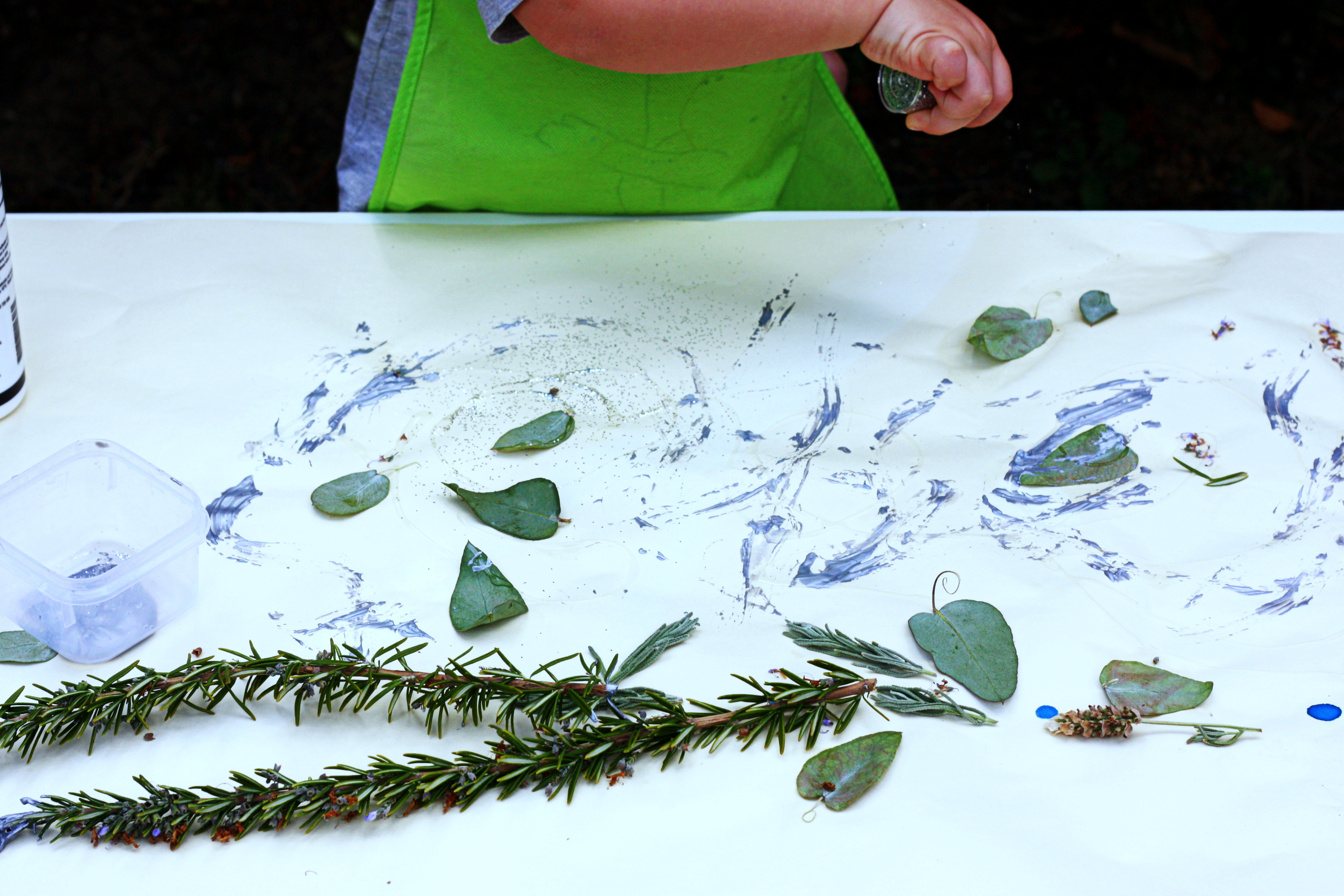
mess or creativity? painting with nature

mess or creativity? painting with nature