Giving ourselves permission for a break: time away as self-care and strategic productivity

“What day is it?” asked Winnie the Pooh. “It’s today,” squeaked Piglet. “My favorite day,” said Pooh” ~ A.A. Milne

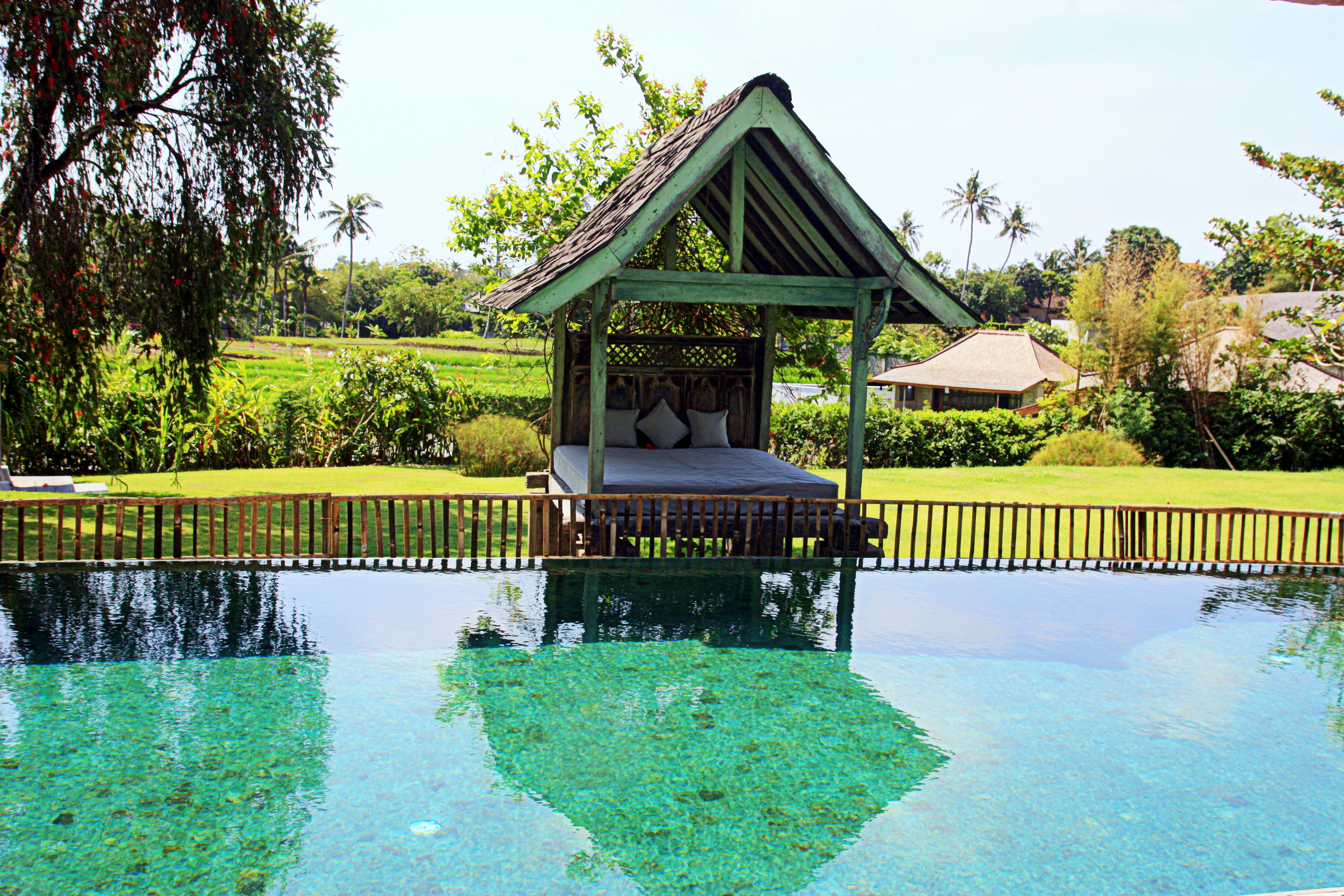
Villa Artis, Bali by @debsnet

Early tomorrow morning I will be on a plane to an island destination for a holiday with family and friends. I should be dreaming of silky cool pool water, fire-coloured sunsets over the ocean, meandering rice paddies reflecting blue skies, the sizzle of seafood on the beach and the clink of ice blocks in cocktail glasses.

Canggu beach, by @debsnet

And yet I have been thrashing around trying to decide whether or not to work or study or blog while I am away. Or whether I can leave it all behind and take a real break, despite ceaseless deadlines. I wonder if this is a common phenomenon in a world in which we are constantly connected to each other, constantly available to our workplaces and constantly curating, creating and sharing vignetted content of our lives and work. While flexible working hours can allow us to make adaptable life choices and social media can allow us to connect with others, do they also contribute to a cycle of relentlessness which we find difficult to break away from?

rice paddies, Umalas, by @debsnet

I have decided that I need to take a full thinking, writing, marking, everything break from my worlds of work, research and writing. One of my three words of 2015 is ‘presence’, so partly this break is about a commitment to being present with my children, husband and friends during our trip. But it is also about being ok with taking an actual break and with a commitment to self-care. I am someone who sees blogging as a break from PhD writing. Or PhD writing as a break from marking. So the idea of a break from all-of-the-things is foreign and has taken some self-convincing.

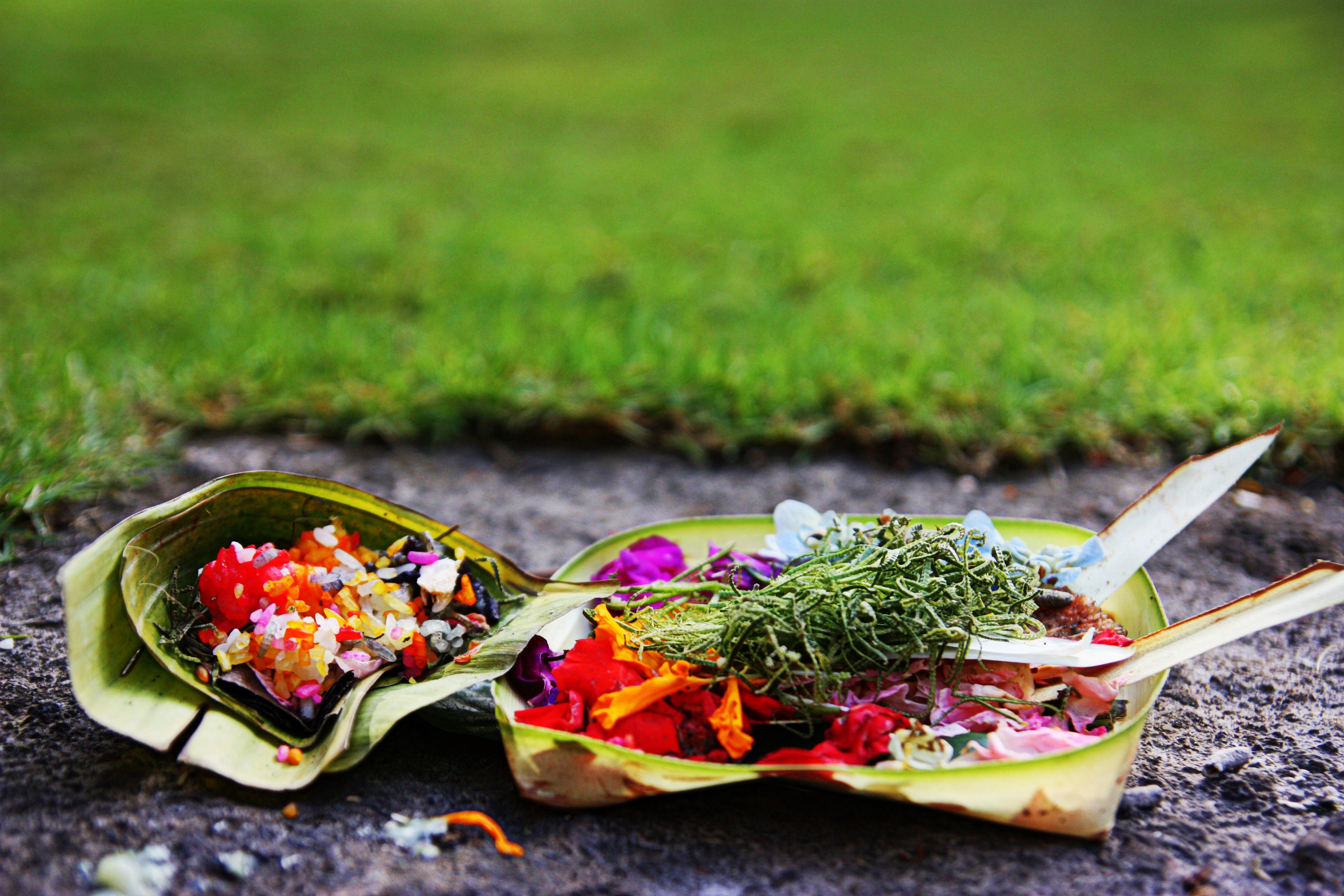
offerings, Bali, by @debsnet

There are others who have reflected on the importance of self-care, even as we catapult ourselves towards our goals. Raul Pacheco-Vega wrote on self-care in academia and the importance of privileging your own health and wellbeing. New Zealand author Celia Lashlie, who I’ve had the pleasure of hearing speak about her work, died in February after releasing a statement which read, “My wish is that others will learn to stop before I did, to take into account the limitations of their physical bodies and to take the time to listen to the yearnings of their soul. It is in the taking care of ourselves we learn the ability to take care of others.”

Seminyak sunset, by @debsnet

I love my work and my research, and most of the time I find a tenuous work-family balance. I wrote on the PhD Talk blog about the way that normally it works for me to have many things on the go, as doing any one of them feels like a holiday from the others. I also spoke there about the importance of quiet in-between times. That is, often I make the most cognitive or creative progress, on my PhD thesis or a strategic work problem, when I am walking, or driving, or taking time to be quiet and still. So luxuriating in a full, unadulterated, brazen break is also a strategy to vacation, to vacate the demands of everyday life, in order that I might return with some mental clarity and physical energy to tackle the rest of this year, which includes for me, finishing my PhD thesis and successfully implementing the professional learning and growth model at my school.

So give yourself permission for a break, small or large. To unplug from emails, tweeting, writing or planning. To take care of yourself, curl your toes in the earth and immerse yourself in somewhere, somehow or someone that gives you joy.

(Photos in this post are from a previous trip.)

(How did it go? The post-script to this post can be found here.)

Sea Circus, Bali, by @debsnet

We are all storytellers: immersed in my narrative worlds

Humans are storytelling organisms who, individually and socially, lead storied lives. ~ Jean Clandinin & Michael Connelly 

our constructed stories connect us

our constructed stories connect us

Whether teaching, writing, conversing or considering our own lives and identities, we are all doing one thing: storytelling.

I have recently been quiet in the Twitterverse and blogosphere, partly because more than ever before I am immersed in micro and meta layers of story.

I have been tunnelling into my PhD narrative research in every spare moment, thinking obsessively and writing dangerously. I am sharing, constructing and analysing the stories of myself, teachers and schools leaders in order to reveal insights into professional identity, professional learning and school change. I am penning my first journal article about experimental ways of telling, utilising and analysing stories in research.

When I am not researching or thinking about my narrative research, I am teaching English to high school students. Reading stories, writing stories, analysing stories, watching stories, performing stories.

Or I am with my own children, reading stories, telling stories, making storyable memories, recounting favourite moments, role playing imagined scenes with make believe characters. Or talking to my husband about his work in media and content marketing, which is all about individuals and organisations telling their stories and constructing their storied identities, in order to communicate and connect. Or blogging vignettes from my own lived story. Or planning conference presentations of my research story or the story of my school’s teacher growth model.

We are indeed storytelling creatures. While I also try to be present in each moment and to live in wonder, stories embody the ways we construct our experiences, connect with each other and the world. I write my own stories, teach the telling and interpreting of stories, and engage in the theorising of stories. Have I used the word ‘story’ enough times in this post to indicate that it is currently both intoxicating and maddening to me? Story story story.

Obsessed and submerged, back into the subterranean story cave I go …

After nourishment, shelter and companionship, stories are the thing we need most in the world. ~ Philip Pullman

by @debsnet

When imagination & hard work collide: making something amazing

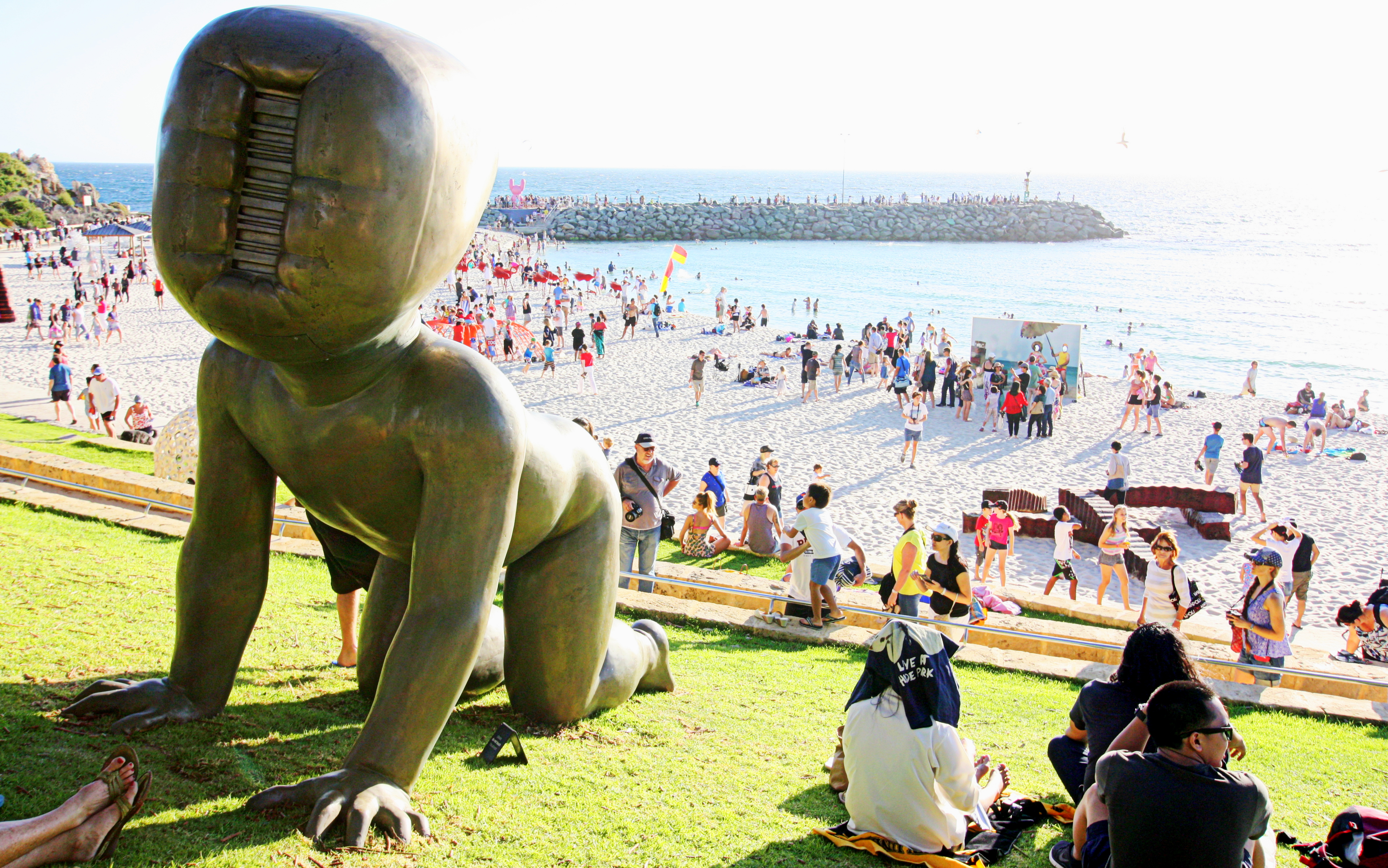
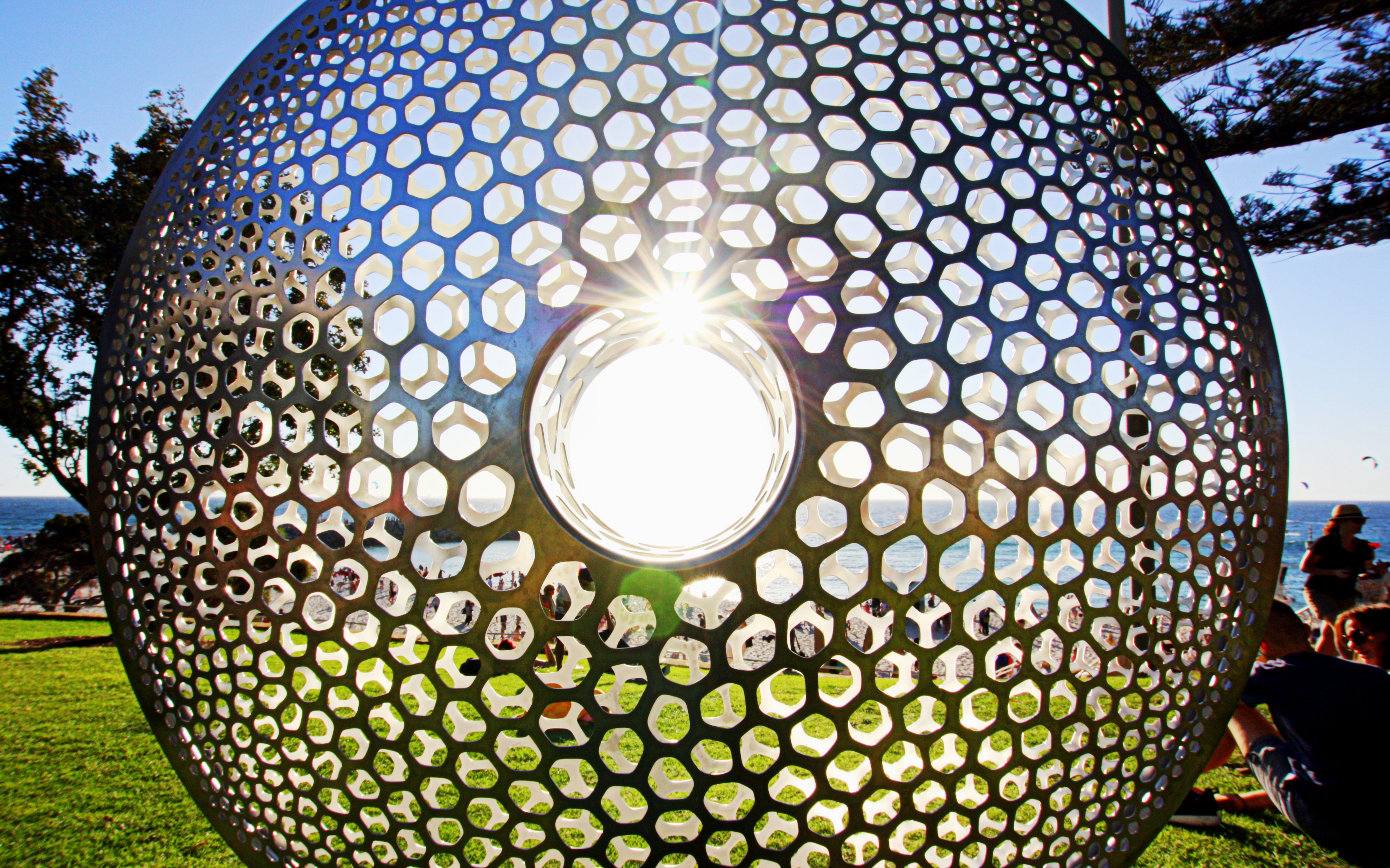
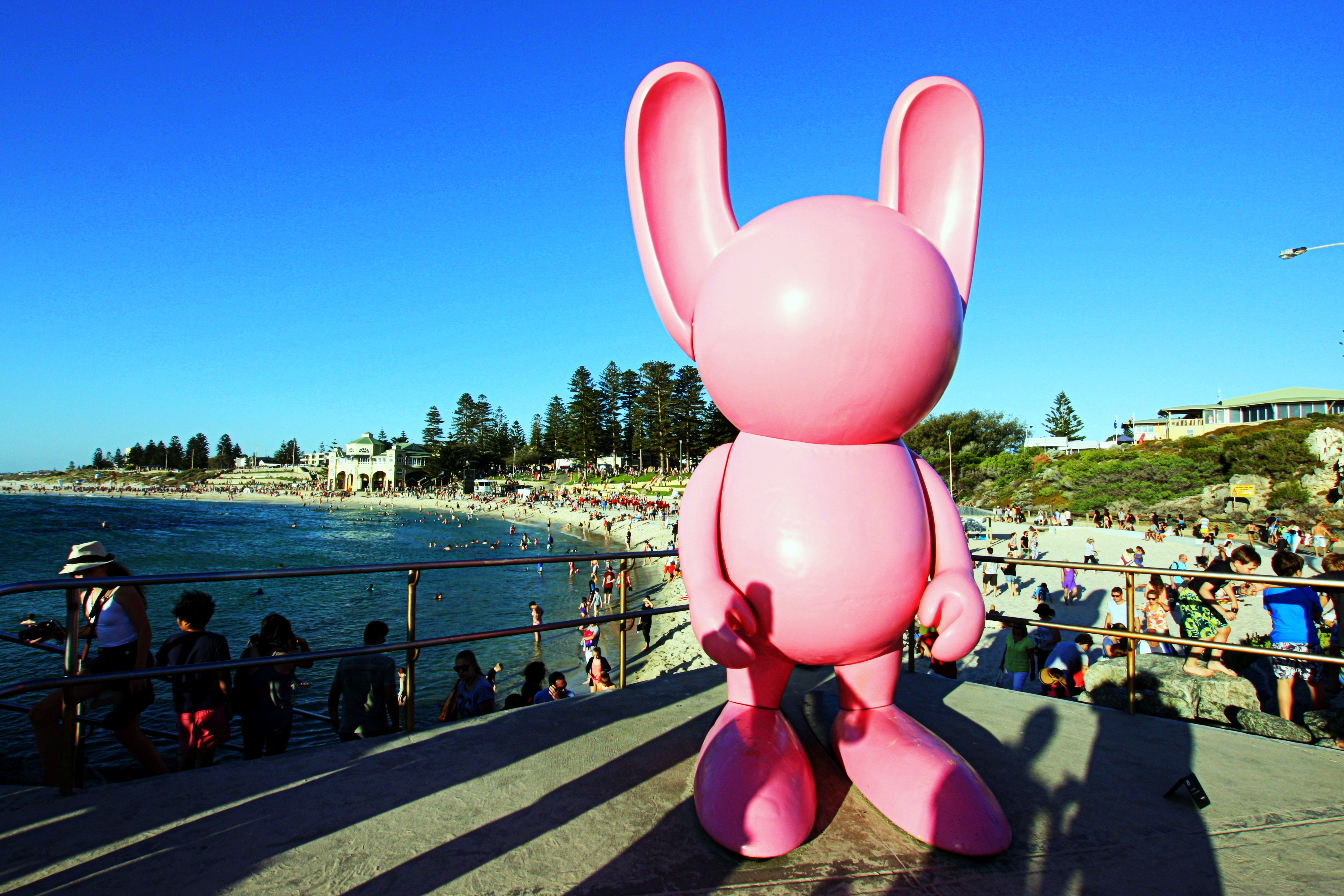
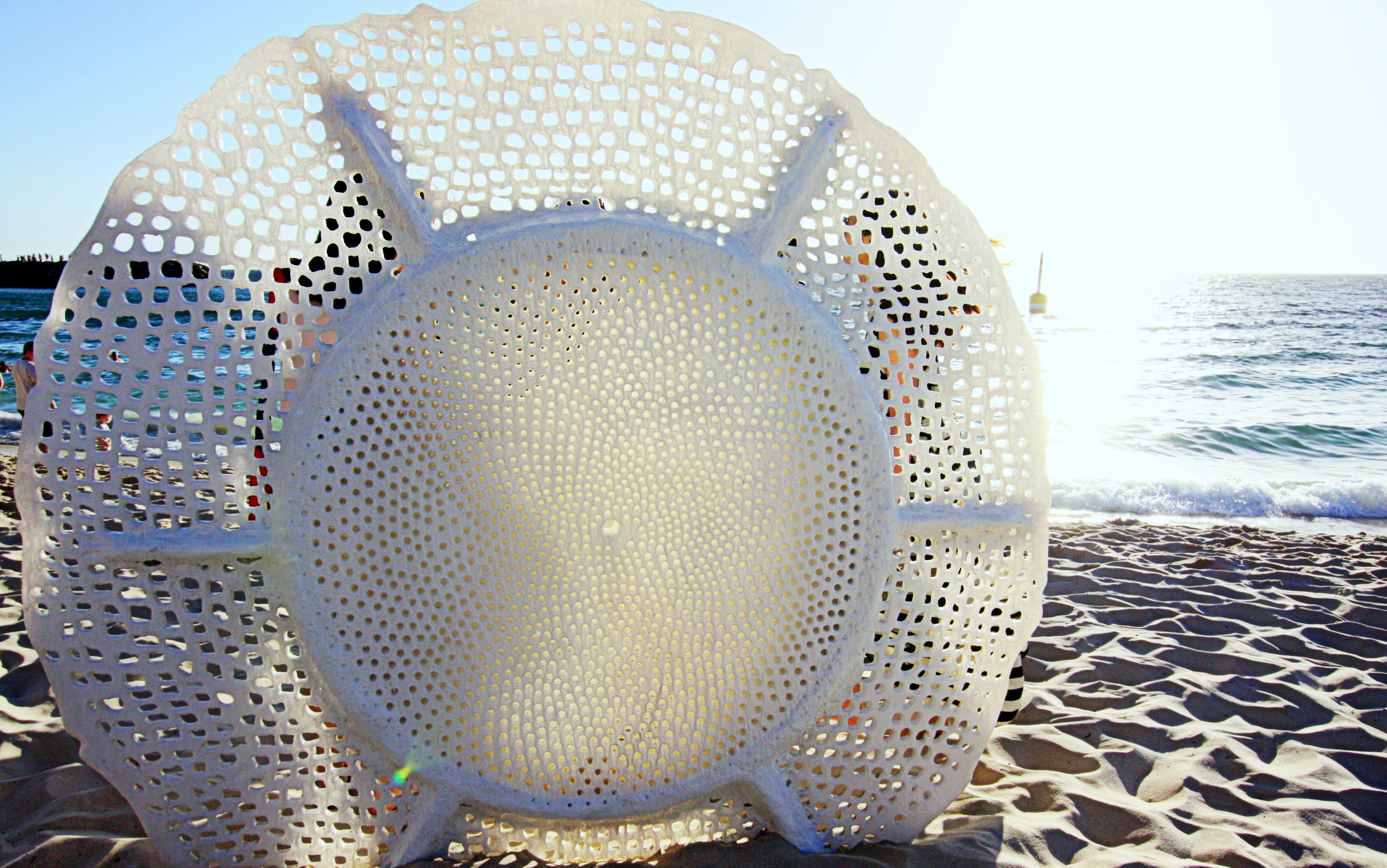
Sculpture by the Sea, Cottesloe, by @debsnet

If people knew how hard I had to work to gain my mastery, it would not seem so wonderful at all. ~ Michelangelo Buonarroti

Today is International Women’s Day and as a woman trying to balance parenting, working, PhD and being a person, I have recently felt overwhelmed. I don’t believe in men or women ‘having it all’ but I do want us all to have the freedom and power to make our own choices. Sometimes, though, the choices we make can feel like difficult paths to walk, especially when something surprising tips us off balance and throws our delicate ecosystem of relationships, roles and responsibilities out of its precarious equilibrium.

On top of the usual teaching, parenting and life stuff, my work at school is currently focused on school-wide implementation of a strategic project focused around teacher growth. My PhD is centred around pulling 300 references, reams of data and over 200 pages of words into a coherent thesis, in time to meet my own personal deadline for submission (of course, this deadline is four months ahead of the official deadline required by the university.) Along the way, I am trying to keep the magic, spark and creativity in my thesis. It is a bit weird, a bit whacky, and a lot me. Part of me is thrilled that I have been able to craft a research project and document which so authentically aligns with my own (lovably weird) identity, and part of me is anxious about the work still ahead. I need to ensure it resonates with what I value in research while also being acceptable (even significant?) in the world of academia.

So, much of what I am presently in the midst of working on requires daily commitment, laser-like focus and hard grafting work. Perhaps this, combined with piles of marking and lesson preparation, has contributed to me feeling drawn to the creative and the crazy. I have been seeking out connections with things which capture my imagination and buoy me with their colour and magic.

As a follow-up, then, to my experience of gigantic marionettes walking the streets and this post on my friends’ amazing interactive sculpture-on-the-beach, here are some more shots from this year’s Sculpture by the Sea exhibition.

Perhaps you will also find solace and escape in the wonder-full, the unexpected and the strangely beautiful. How is a PhD like a sculpture? These sculptures, while capturing imagination, are also the outcome of commitment, dogged determination and hard, systematic work.

Sculpture by the Sea, Cottesloe, by @debsnet Sculpture by the Sea, Cottesloe, by @debsnet Sculpture by the Sea, Cottesloe, by @debsnet Sculpture by the Sea, Cottesloe, by @debsnet Sculpture by the Sea, Cottesloe, by @debsnet Sculpture by the Sea, Cottesloe, by @debsnet

Dream Big, Do Big: an example of inspiration, imagination & perspiration

Creativity represents a miraculous coming together of the uninhibited energy of the child with its apparent opposite and enemy, the sense of order imposed on the disciplined adult intelligence. ~Norman Podhoretz

artists Nicole Bailey and Trisha Lee enjoy their interactive sculpture

artists Nicole Bailey and Trisha Lee enjoy their interactive installation

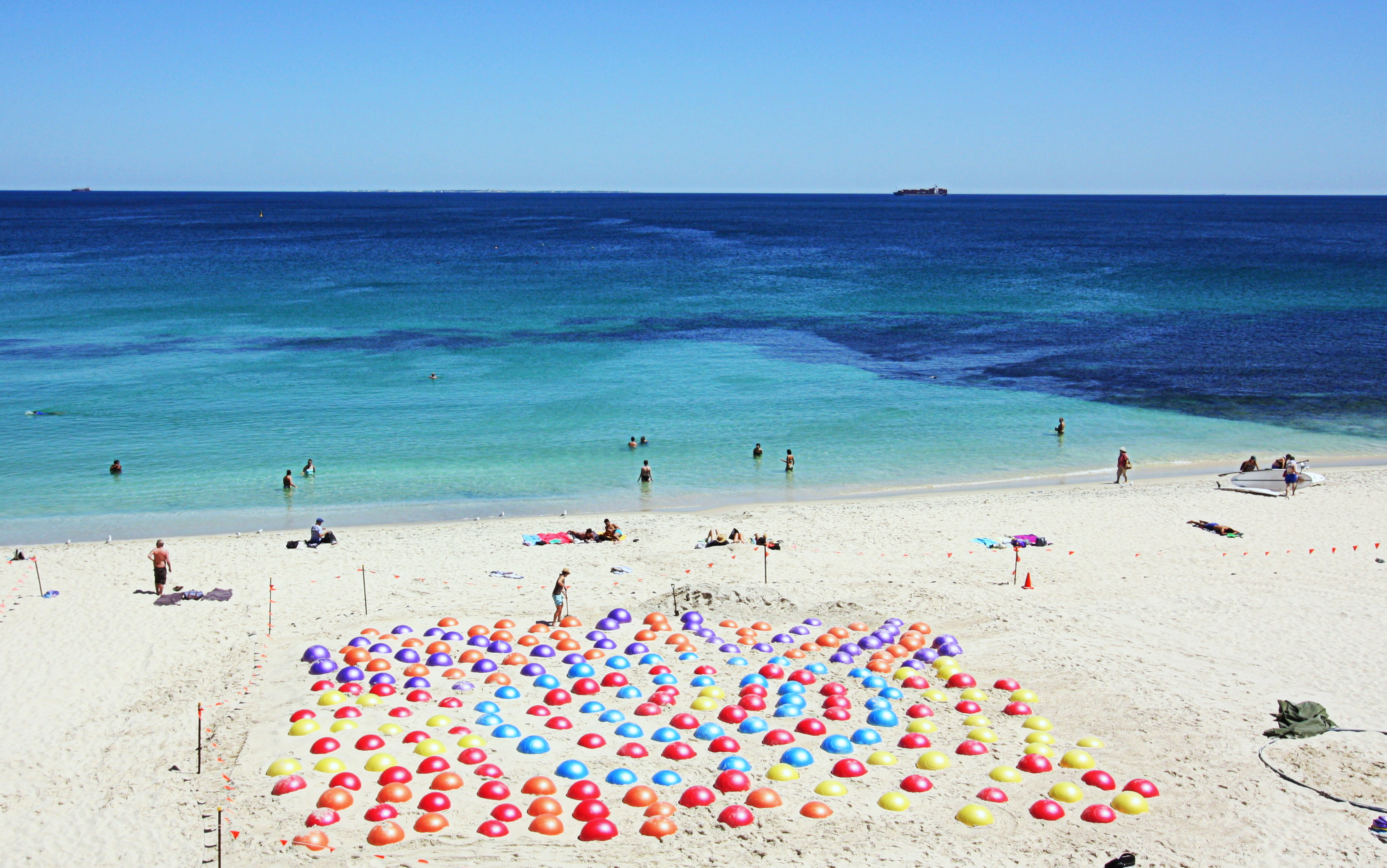
This week I have watched some friends bring a crazy-wonderful dream to life. I am so excited about it because their project was the perfect storm of imagination and perspiration, creativity and scientific thinking, dream and action, madness and wonder. For this year’s Sculpture by the Sea exhibition at Cottesloe beach, they have brought together Aboriginal art, sand, sea and colourful PVC fit balls to create an artwork. As it says on the Water Dreaming webpage, “Water Dreaming is an Aboriginal dot painting installation in which the dots are represented by 250 inflated PVC balls embedded in beach sand. From terraces overhead the viewer will see a Dreamtime dot painting. Up close it’s an interactive play space where art and fun collide and visitors can bounce on and around the dots.”

It had long since come to my attention that people of accomplishment rarely sat back and let things happen to them. They went out and happened to things. ~ Leonardo da Vinci

filling balls with sea water and air; work in progress

filling balls with sea water and air; work in progress

The artists Trisha Lee and Nicole Bailey collaborated with Indigenous artist Shorty Jangala Robertson, of the Warlukurlangu Artists Aboriginal Corporation, to design the concept of bringing a Dreamtime story to life on the beach. The beach is an apt location for a depiction of an artwork from a tribe whose artists traditionally make art on sand and appreciate its transience and changeability. As an interactive artwork, it may well change during the exhibition, which runs from the 6th to the 23rd of March.

balls at sunrise, ready for installation

balls at sunrise, ready for installation

Not only do art and fun collide in this installation, but so do art and community. The installation is crowd funded, crowd created and will be crowd enjoyed. People will be told the artist’s Indigenous Dreamtime story and be able to play between, around and on the bouncy balls (which are filled with sea water and air).

To create this interactive sculpture, one lone water pump pumped 17,500 litres of water from the sea, across a sandy beach, up a hill to water tanks and all the way back down, to fill 246 big colourful fit balls. A digger dug a trench perimeter and helped to shift 30 cubic metres of sand, covering 290 square metres. Over two days, an army of one hundred volunteers filled and laid 250 sandbags and filled, rolled, hauled and placed balls. You can see it being installed in these time lapse videos of Day 1 and Day 2 of installation.

Sometimes I’ve believed as many as six impossible things before breakfast. ~Lewis Carroll

installation involved a digger and 100 volunteers

installation involved a digger and 100 volunteers

This was an example of risk taking in full flight and dreams come to life. What sort of inspiration and perspiration does it take to create a painting on a huge scale amid moving sand and with balls able to be bounced on and interacted with? What sort of people, what kind of force, can make that happen through the power of people, nature, art and technology? This project required not only blue-sky imagination, but also systematic experimentation, trial and planning in order to make it work.

The finished work - a dot painting on the beach, against the backdrop of the Indian Ocean

the finished work – a dot painting on the beach, against the backdrop of the Indian Ocean

This artwork stands as an inspiration to me as an individual, parent and educator. Shouldn’t we all aspire to making improbable dreams possible, to bringing vision to life, to dare to do something others might think crazy? Here’s to being creative, wildly imaginative, joyful and experimental, but also systematic, pragmatic, scientific and dogged enough to make moonshot ideas tangible reality.

Think left and think right and think low and think high. Oh, the thinks you can think up if only you try! ~Dr. Seuss

weeks of interactive bouncy fun!

weeks of interactive bouncy fun!

Research and education: a match made in the conference room? #rEDSyd

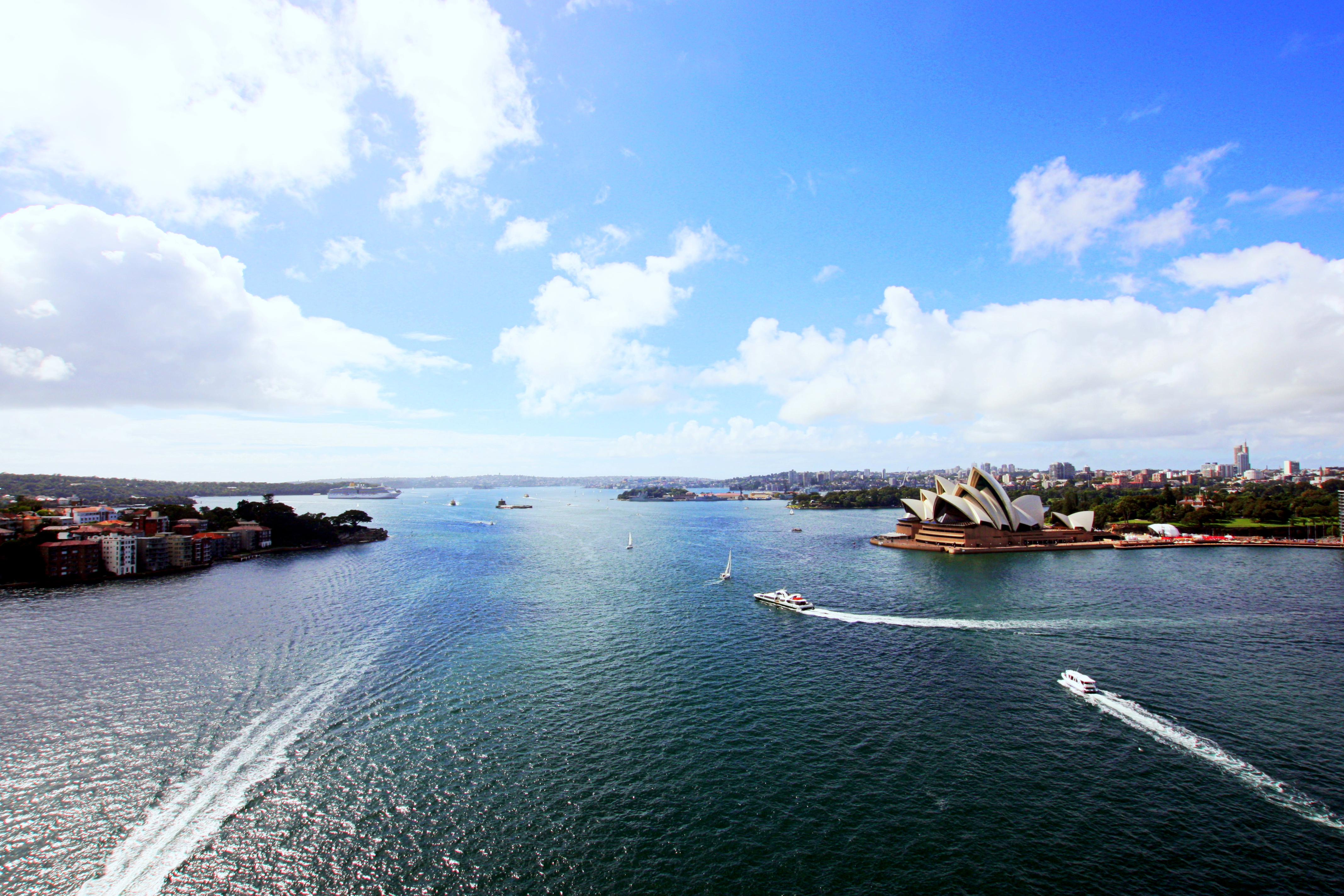
Luna Park, Opera House, Harbour Bridge

 If you want to go fast, go alone. If you want to go far, go together. African Proverb

I have just returned from presenting at the researchED conference in Sydney. As explained on its website, researchED, founded by Glaswegian Tom Bennett (you can read his reflection on the day here), is a “grass-roots, teacher-led organisation aimed at improving research literacy in the educational communities, dismantling myths in education, getting the best research where it is needed most, and providing a platform for educators, academics, and all other parties to meet and discuss what does and doesn’t work in the great project of raising our children.”

It is the first time this conference has come to Australia and I was pleased to, through attending and presenting, be part of a movement to close the gap between educational research and practice, between academic theorising and school reality.

view from Sydney Harbour Bridge

view from Sydney Harbour Bridge

As a hybrid teacher-leader-researcher I believe in consuming, curating and creating research in order to influence theory and shape practice. At the researchED Sydney conference, I presented with a colleague on our school’s emerging-from-research teacher-professional-learning-and-growth model. It was a current example of how a school might utilise research and a scientific-but-also-people-driven process to develop a strategically aligned, evidence-based, context-appropriate initiative.

Opera House

Opera House

Some of our key presentation messages about school change were:

  • Go slow to go fast. School change is an evolution not a revolution.
  • Start with context and vision. Align initiatives and interventions with it.
  • Believe in the capacity of all individuals to solve their own problems, do their own thinking and drive their own learning.

This next image reflects those things we hoped our model would achieve. We have data measures planned to measure, as much as we can and in a variety of ways, the impact of this model.

'Take one' (or take all!) for your school

‘Take one’ (or take all!) for your school

The researchED conference (or is it a movement?) was one example of a forum for real life, cross-continental, global sharing of research-influenced education practice. You can read some other blog reflections here and here. We need frames and contexts which facilitate conversations between school and academic worlds, in order to facilitate more considered and systematic approaches to education.

Luna Park

Luna Park

Moved by Giants: a moment of wonder

Giant marionettes captivate a city

There is a sacredness in tears. They are not the mark of weakness, but of power. They speak more eloquently than ten thousand tongues. They are messengers of overwhelming grief…and unspeakable love. ~ Washington Irving

In education we often talk about innovation. How do we innovate as educators? How do we help students to be creators of boxless thinking and imaginative action? How do we preserve our childlike delight in the world?

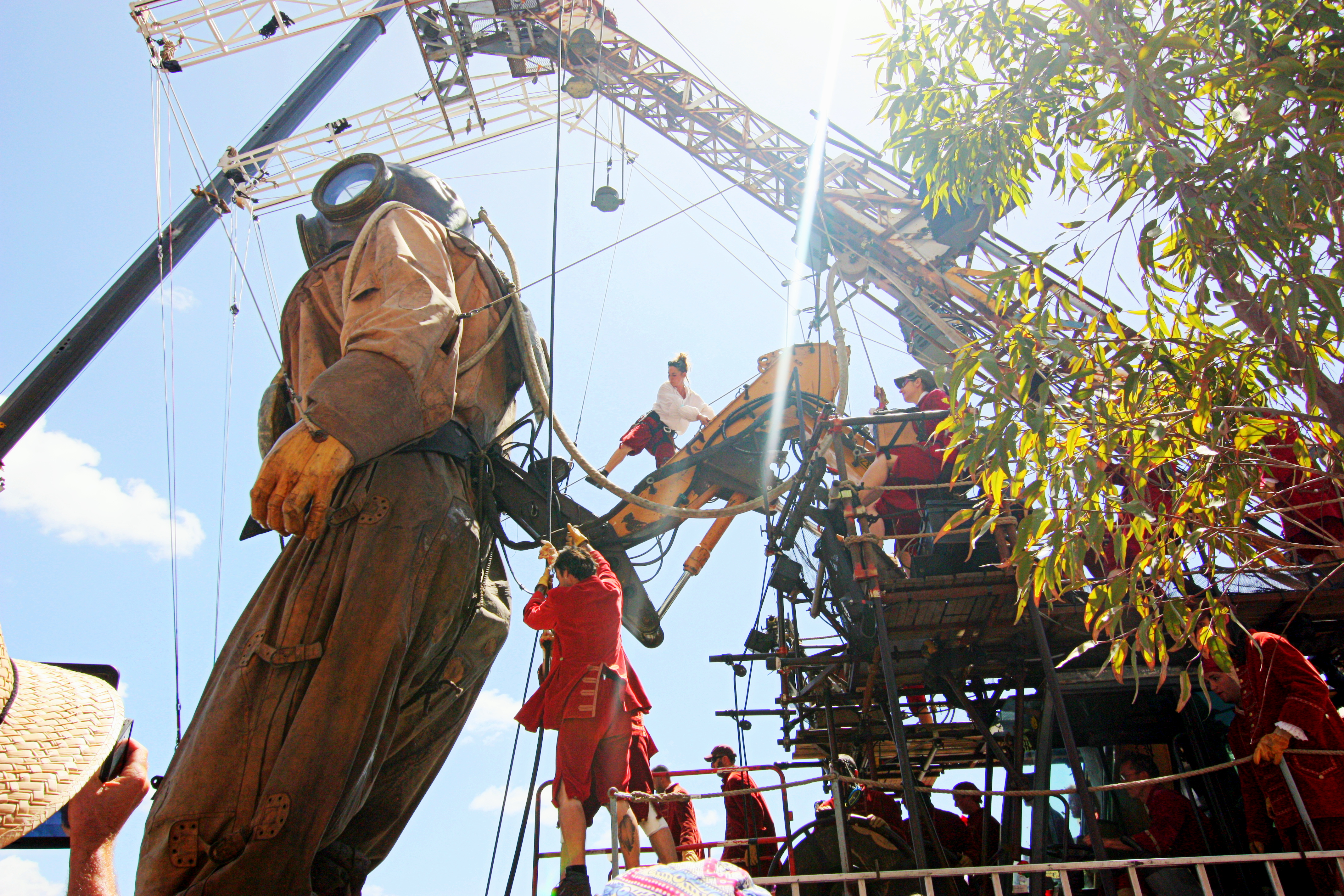
This weekend French artist, director and dreamer Jean-Luc Courcoult, and his group Royal de Luxe, brought their Giants to Australia for the first time, as part of the 2015 Perth International Arts Festival. These giant marionettes acted out a story over two and a half days through the city streets. They were innovation incarnate, creativity in action, dreams come to life.

The city was captivated, with 1.4 million people – half the population – converging in the city centre to be a part of this experiential phenomenon.

My experience of the Giants was one which allowed me to be intensely in the moment, fully and bone-tinglingly present (beautifully aligned with one of my 3 words for 2015: ‘presence’).

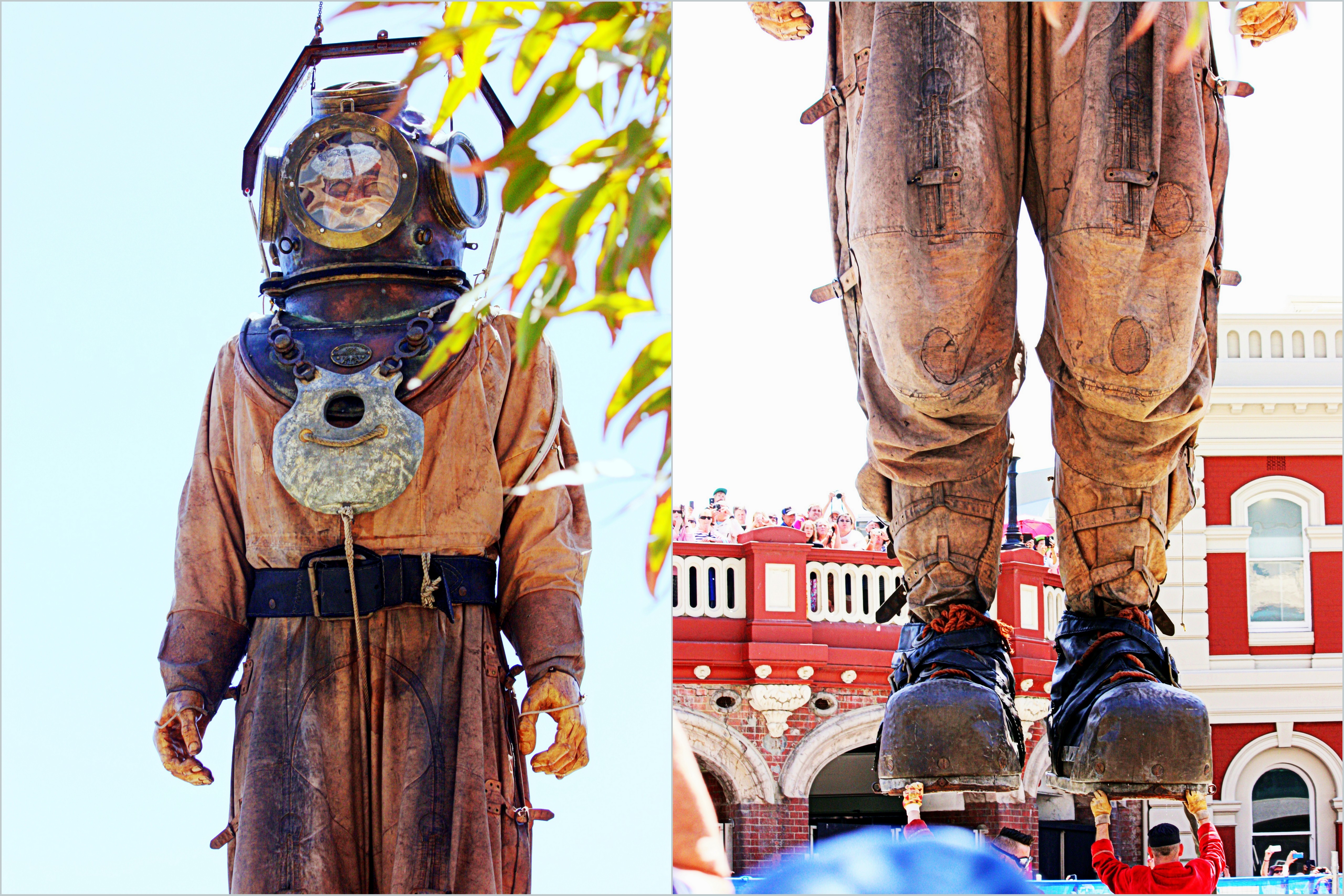
My pictures only capture one moment of many, and one marionette of two. You can read and see some coverage here, read the official Festival material and see the Giants’ adventures in other cities. I was grateful for the social media assault which allowed me to follow the journeys of both Giants throughout their time in Perth.

The Giant Diver awakens

The Giant Diver awakens

The Diver is lifted up before he begins his walk through the city streets

These images don’t do justice to being there amidst what was an awe-inspiring and magical spectacle. The sonar beeps, didgeridoo and haunting music playing from the band float. The gasps and emotional astonishment of the crowd. The beyond-amazed believing-in-magic faces of children and adults.

As I watched the 11m diver awaken from the footpath outside the train station, rise into the sky and then start walking in front of me, I was moved. There was something about the music, the scale, the movement, the crowds and community atmosphere which left me shaking and in tears, even as I held my son to my hip so that he could see.

That evening, when I asked my four year old what his favourite part of the day was, he turned to me with a look of absolute joy and wonderment and said in a loud whisper, “The giant looked at me!’

It is a rare and special thing to be unexpectedly and powerfully moved. To experience innovation, risk taking and a crazy idea taken to its limits. To be part of a meta narrative and a community tidal wave. I highly recommend it.

boots made for walking

boots made for walking

Build it and they will come: Creating spaces for learning and working

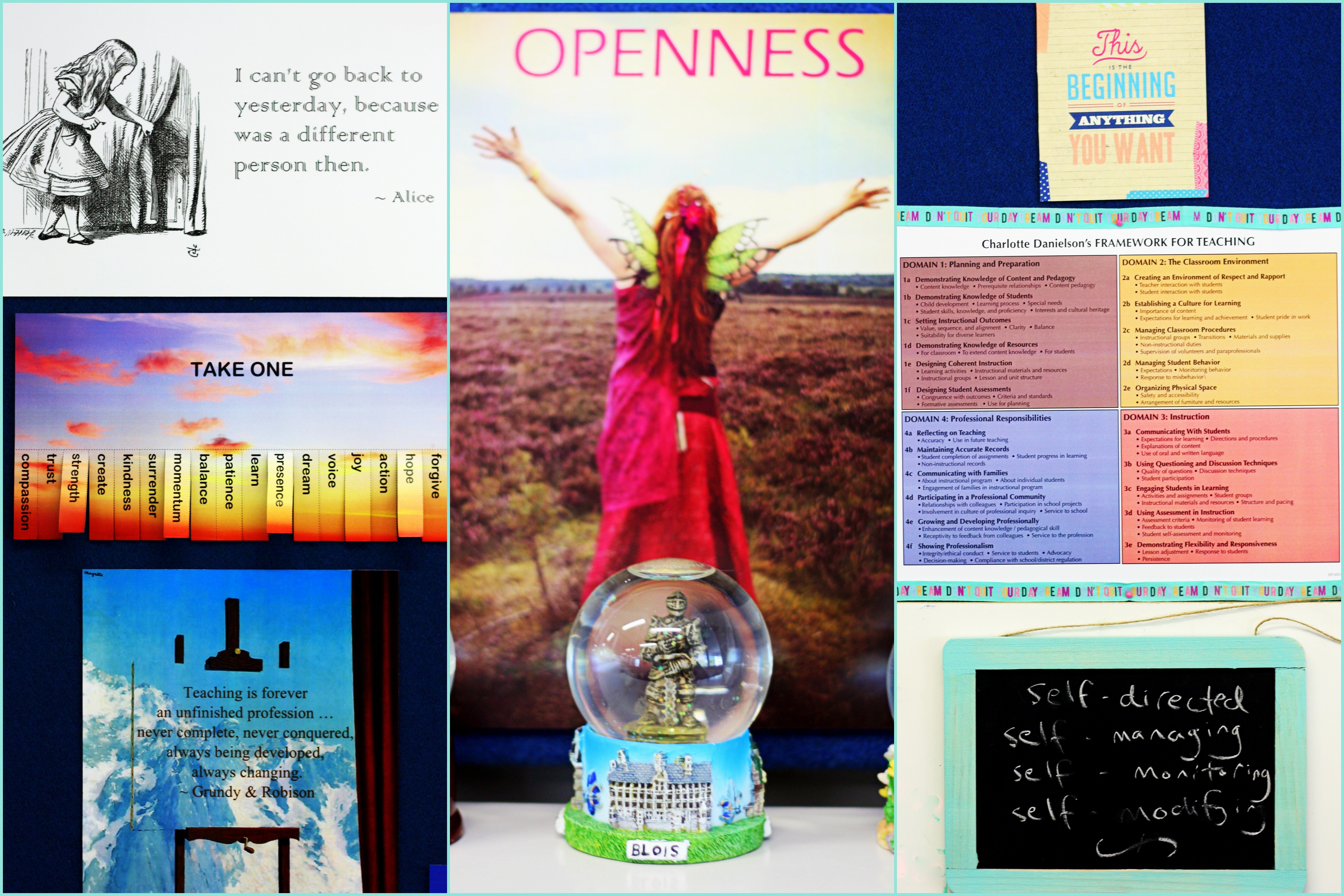
pin-up board montage

pin-up board montage

I had come to a place where I was meant to be. I don’t mean anything so prosaic as a sense of coming home. This was different, very different. It was like arriving at a place much safer than home. ~ Pat Conroy, The Lords of Discipline

At the start of this school year, I have been obsessed. Obsessed with learning and working environments. Over the summer I wrote about my own learning and writing places. Since school has started here in Australia I have been focusing on the spaces in which I work and teach: my classrooms and a new office space for my team of coaches (these are the teachers who will be coaching teachers in our school-based teacher growth model).

My thinking about working and learning spaces is based on a few personal principles:

  • Comfort. This is physical comfort (Is it comfy? Can each individual make themselves comfortable?) and emotional comfort (Does each person feel like they belong? Is the space welcoming and emotionally cosy?).
  • Flexibility. I am a great lover of flexible spaces. What I have found – in classrooms, working with colleagues, writing in cafes for my PhD thesis and watching my own children and husband interact with environments – is that we all have preferred ways of being in a space. When we are working at home, my husband stands at a tall bench while I recline on a couch. Given movable pieces like beanbags and floor cushions, children and young adults will take charge of a space and make it their own, changing groupings or even purposes of furniture. Each will find a nook in which, or stool on which, they feel they belong.
  • Appeal. While we don’t necessarily want our classrooms, offices or homes to look like something out of a Scandinavian design magazine, for me it is important to pay attention to bringing visual appeal to a space. This might be about colour, space, playfulness, details, natural materials or tactility.
  • Ownership. How can the space belong to the people who use it? This might include student-driven spaces and displays in classrooms, family-focused rooms at home, or offices which bear the mark of those who work there.
  • Purpose. The work of Prakash Nair and Randall Fielding (including their excellent publications) explains spaces in terms of purpose: campfire spaces for learning from someone else, watering hole spaces to learn collaboratively with others and quiet cave-like spaces for nestling into learning from and with yourself.

What follows are some examples of these principles in action. Get ready for a picture-fest.

Home spaces

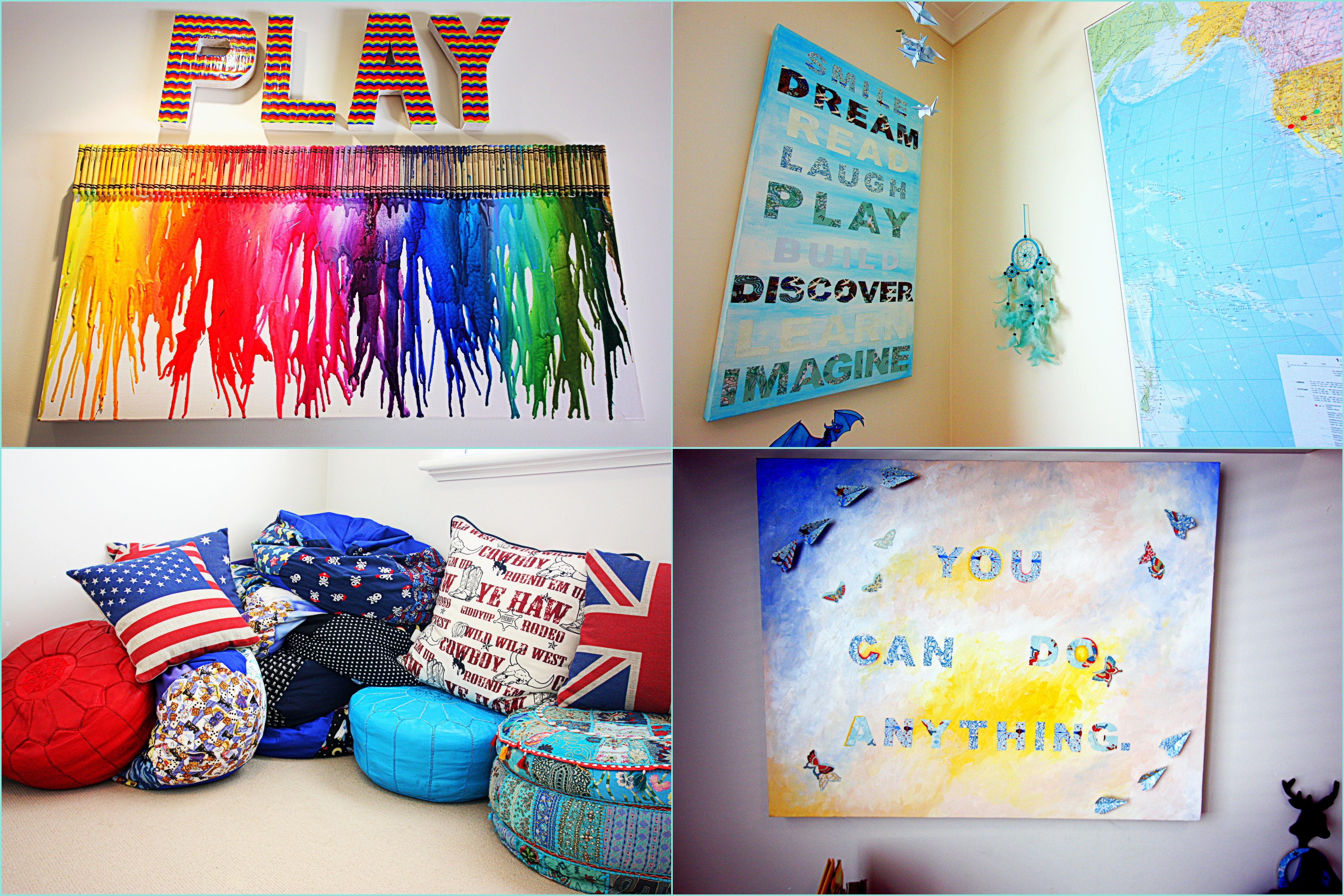
My space principles apply in my home, too. We have piles of beanbags, cushions and ottomans which get moved around the house depending on the space required or game at hand. I have DIYed artwork for the walls of my children’s play and sleeping places. (There is something about DIY that really appeals to me. Maybe it is the catharsis of creativity but I always feel that, if I make something, I instil that something with a piece of myself, my energy and my investment in the person or people for whom I am making it. This goes for my kids’ birthday cakes, the things I have made for their rooms, the artwork I create for friends and family, and the learning and office spaces I have had a hand in designing for students and colleagues.)
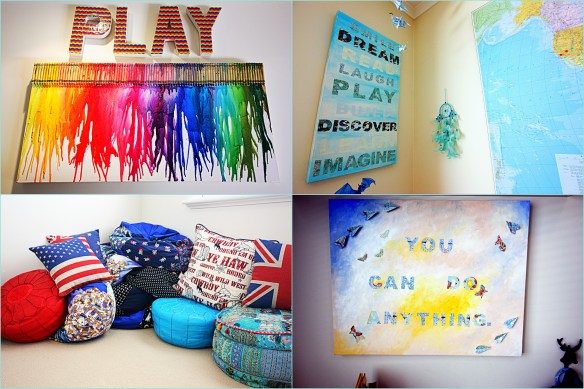
DIY artwork & soft furnishings

DIY artwork & soft furnishings in the ‘kids spaces’ in my home

Open learning spaces

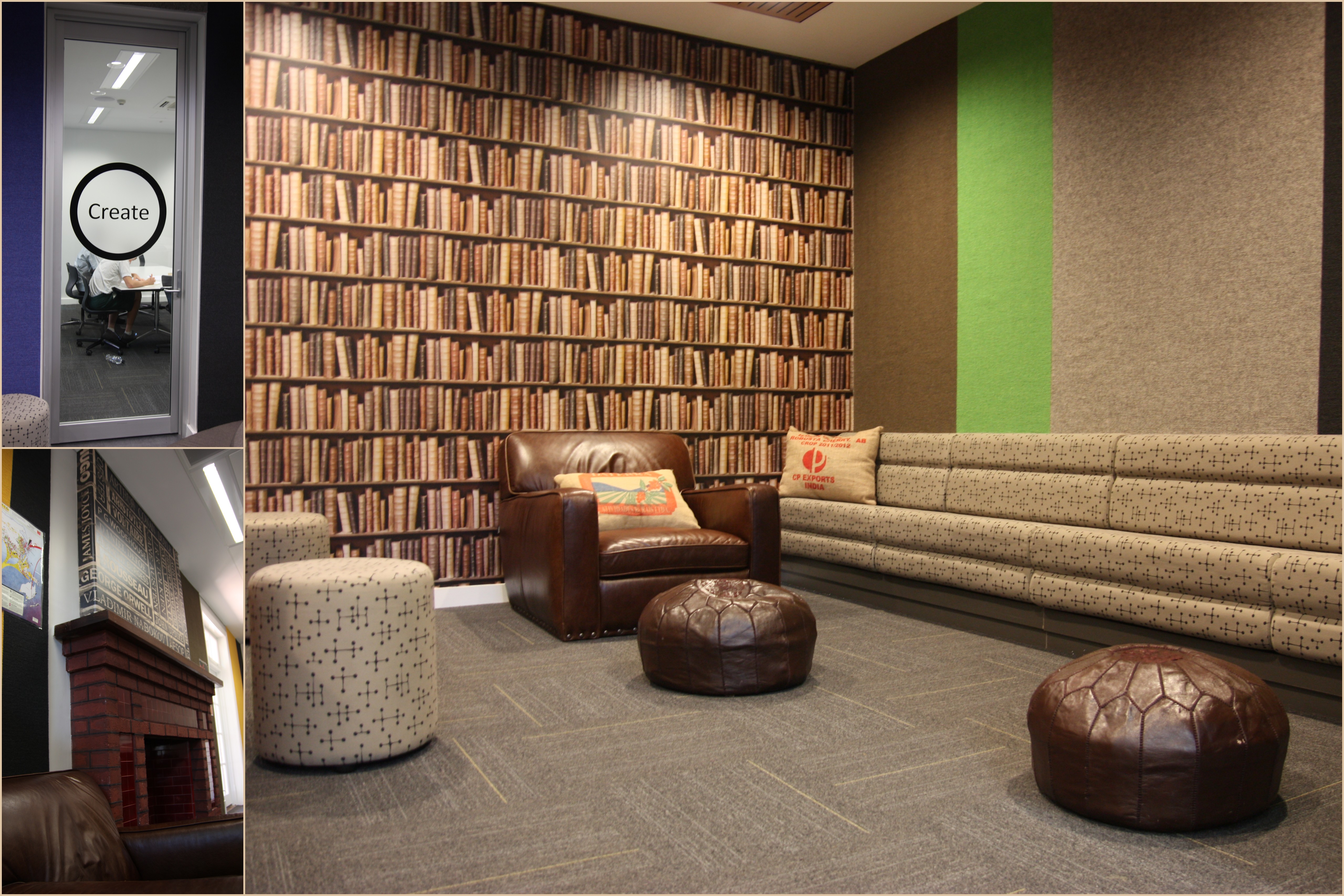
When I was Head of Faculty at my school, I had the opportunity to work with a team to design and furbish renovated classrooms. These two immersive spaces are my favourites.
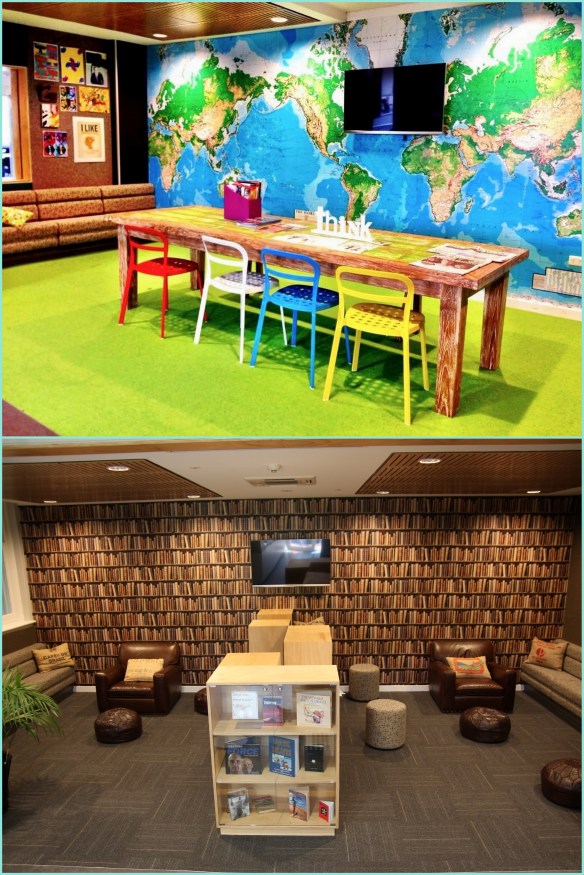
How would you feel learning here?

How would you feel learning here?

Classrooms

Early learning teachers seem to be great at creating environments for their students. In my (limited) experience, this is especially true of Reggio and IB inquiry classrooms. High school classrooms and school offices, however, tend (and I am generalising) to default to ‘seated at grey desks and chairs’ as the main way to learn and work.

This year in our high school English classrooms, we have removed teacher desks (that bastion of symbolic power) which means that teachers need to be flexible about where and how they work. It also encourages teachers to get in amongst their students rather than sitting apart from them or getting students to come to them.

Additionally, we have added more multi-level seating options. Rugs, beanbags, cushions, ottomans and tall benches not only add a homely comfy feel to a classroom environment, they importantly allow for flexibility of space and choice of how individuals work.

Extra whiteboards or walls painted with Idea Paint give the room multiple points of teaching and learning focus (as recommended by learning spaces and places guru, Professor Stephen Heppell).

I spent last Sunday afternoon at IKEA buying high pile rugs, partly for this sense of homey comfort, and partly to add some tactile awesomeness to the shoeless learning / barefoot teaching we are going to try. I haven’t scheduled any official ‘shoeless learning’ time yet, but since mentioning it to my classes, a number of my students have asked at the start of each class if they can work with their shoes off.

comfy classroom spaces

comfy classroom spaces

The best thing about doing this to a classroom is watching the students. They walk in. They look around slowly and with a mixture of confusion and delight. Most sit at their normal desks. Some hover around the new comfy corner. Someone asks, “Is this for us?” “Are we allowed to sit here?” And the next thing you know, they are making it their own and nestling in. They sit on the floor around low tables. They use cushions as tabletops and footstools as chairs. They lie on rugs. They stand around tall benches. They sink into couches. They feel valued and engaged. They find it easier to find their flow.

Offices

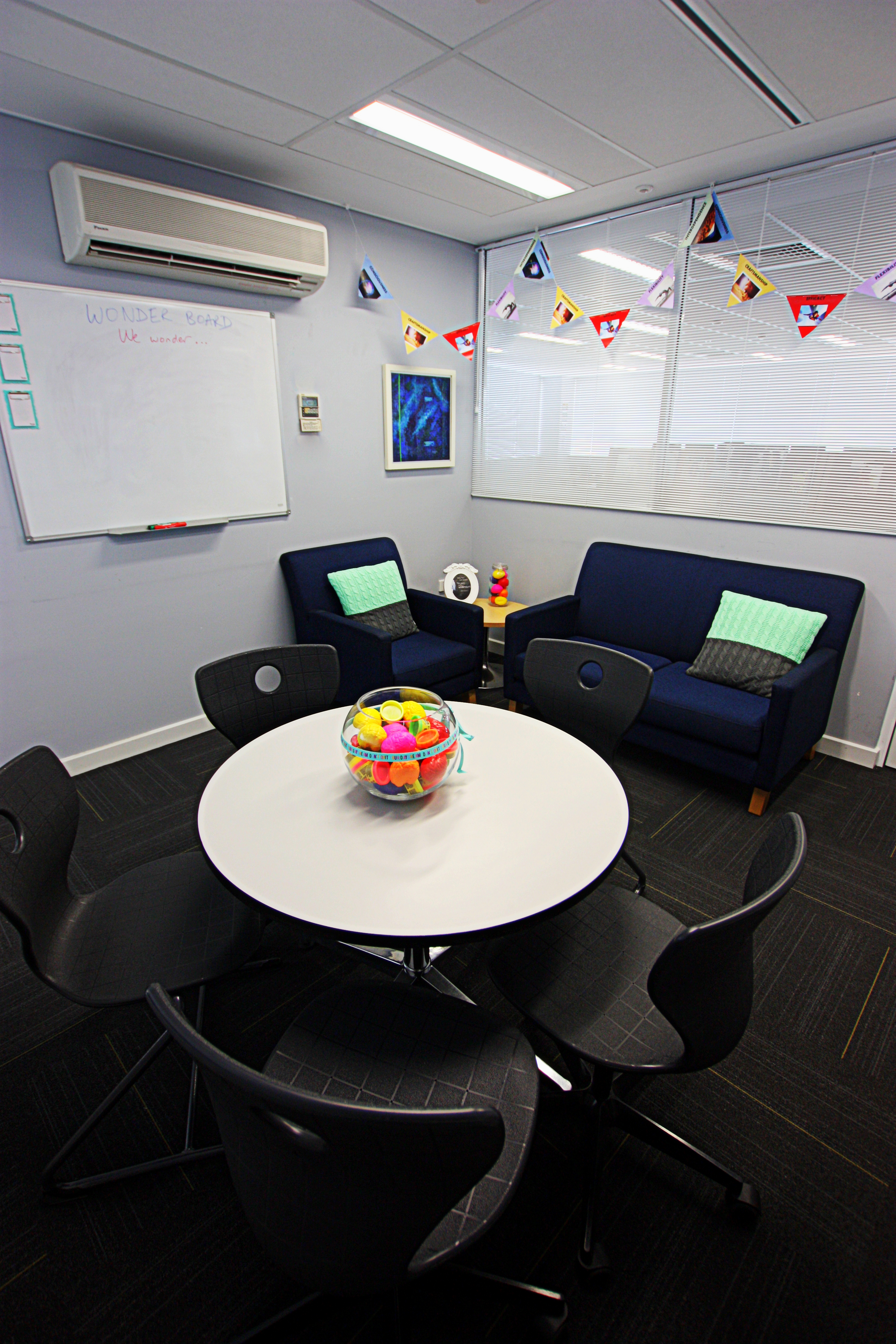
I was delighted to hear that my team of teacher coaches would have a war room in which to meet, explore ideas and have coaching conversations. When I inherited the space it had two big tables, a desktop computer and two chairs. I had those removed and got to work reimagining the space for our purpose.

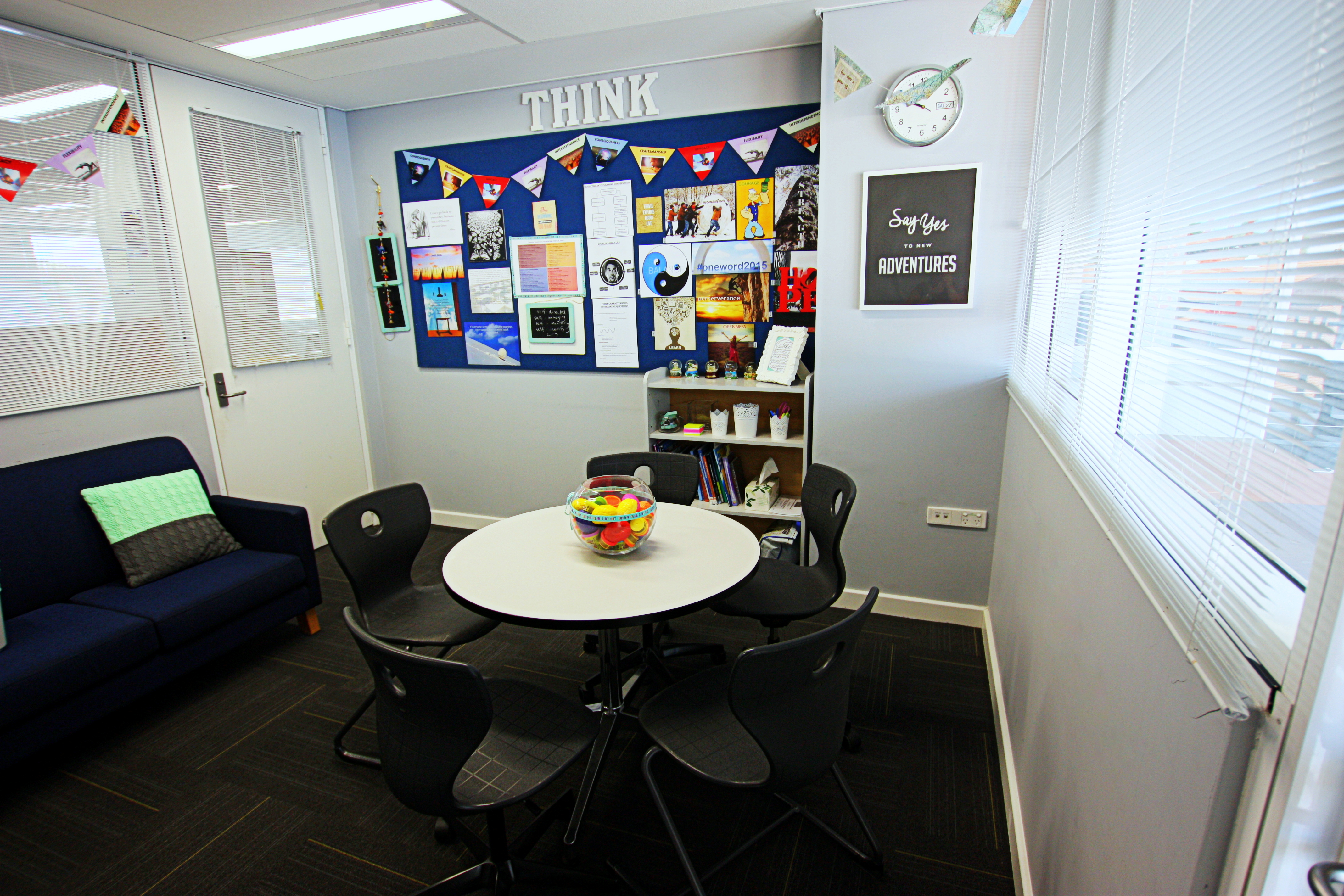
My dream for this space was of collaboration, conversation, co-learning and reflection, so from around the school and storeroom, I found a round table and some chairs, a couch, an armchair, a small bookshelf, a whiteboard and a little table. In they went. I also have two beanbags on order.
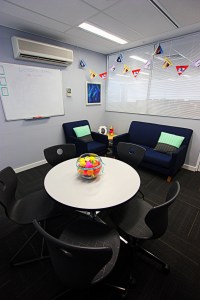
teacher office by @debsnet

be deliberate about office furniture

Then it was time to work on emotional comfort and visual appeal.
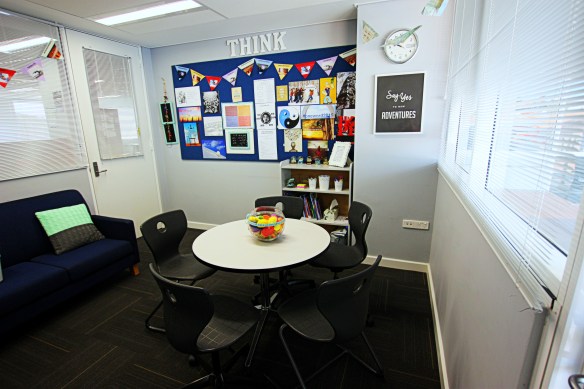
consider floor, wall, tabletop and ceiling spaces

consider floor, wall, tabletop and ceiling spaces

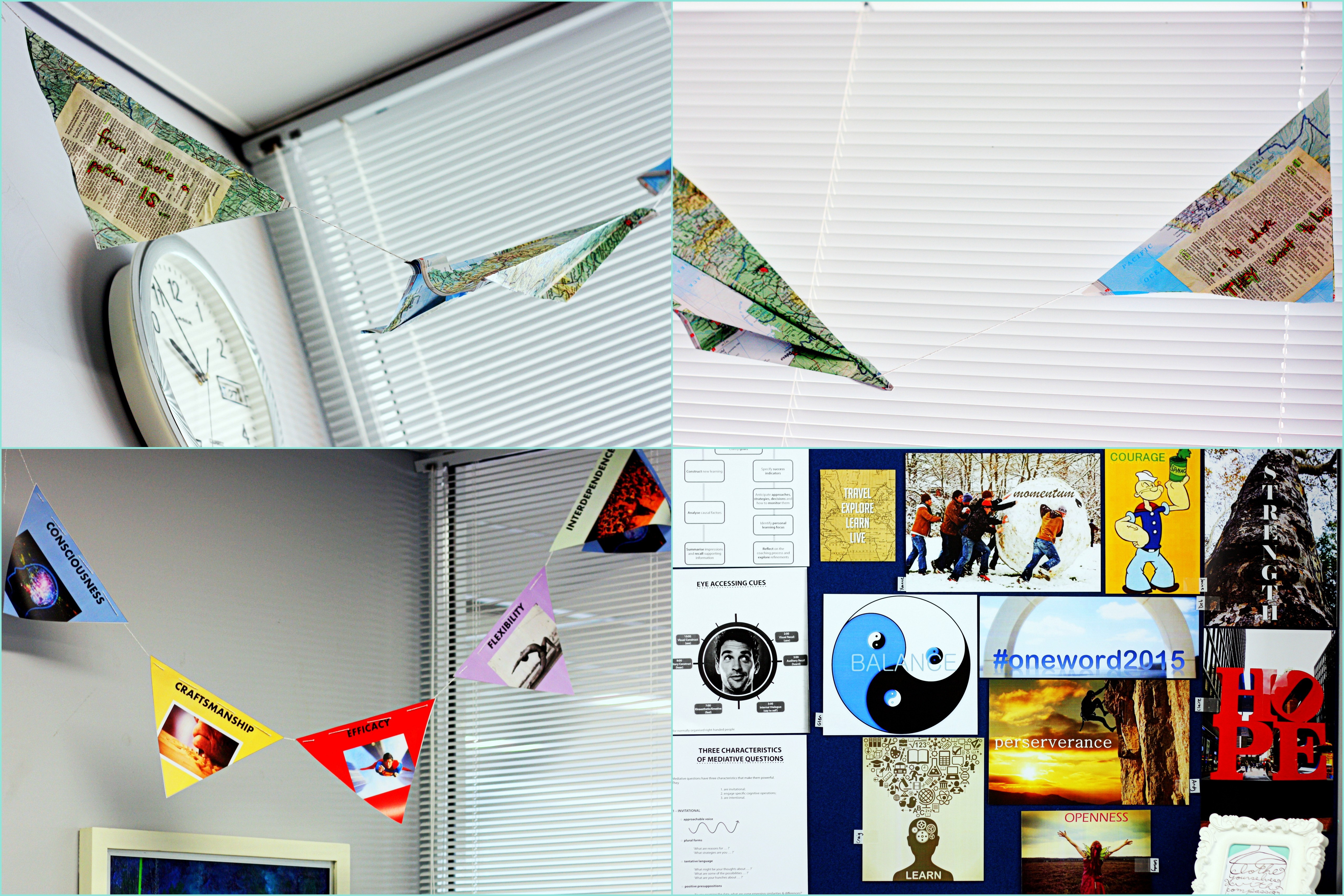
I DIYed some bespoke decorations like the ‘5 States of Mind’ bunting (a concept from Cognitive Coaching) and hanging paper planes. I added and repurposed some bits and pieces from my own house (including some snow domes and the blue painting which is one I painted years ago and has been gathering dust in my garage). A few touches from IKEA and Typo made the office look less officey.

I chose to frame posters rather than laminate them so the feel was more home and less classroom.

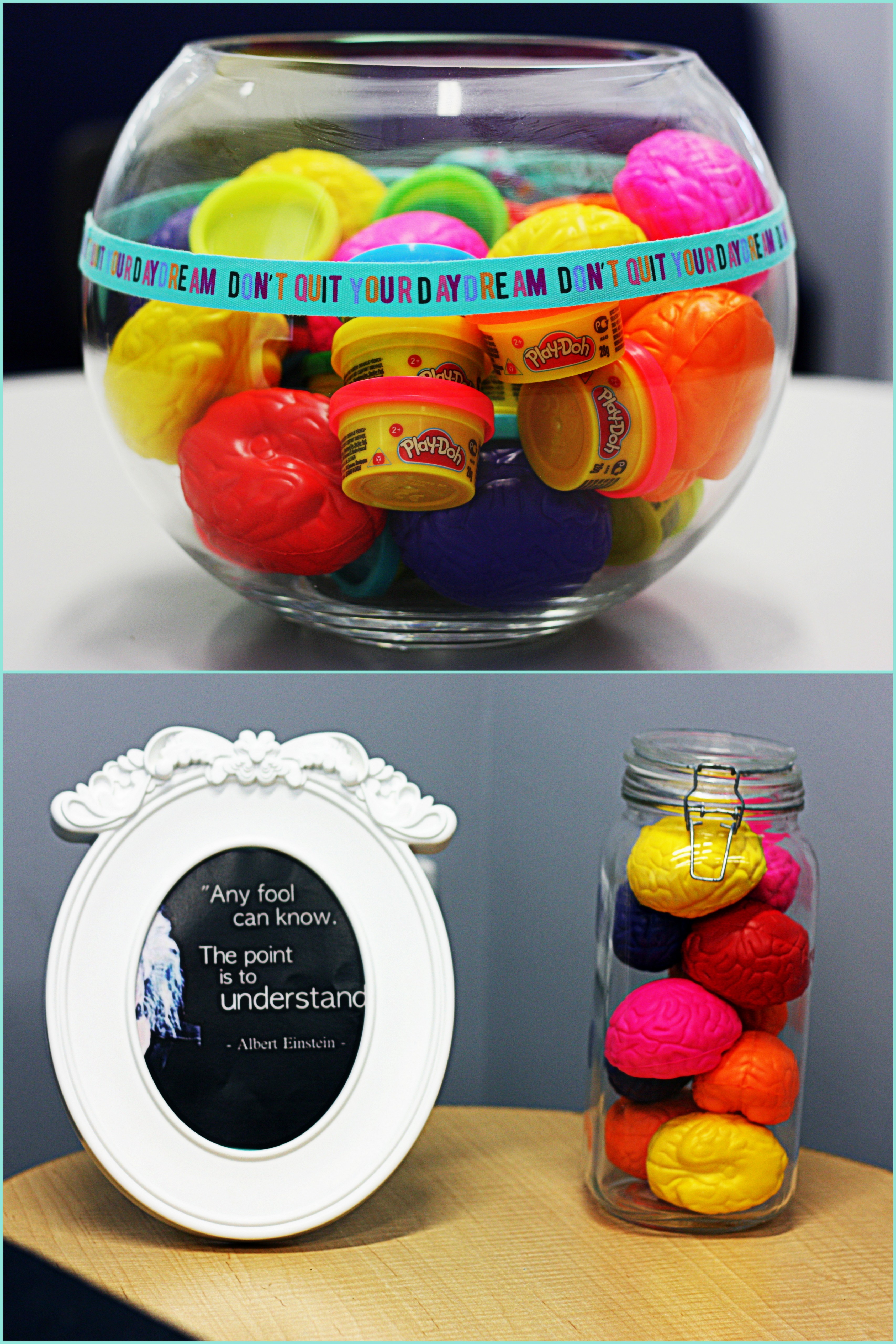
Initially, I wanted a plant for the table, but I knew it wouldn’t survive holidays unwatered, so I opted for a bowl full of Play-Doh and squeezy brains: tactile playthings for kinaesthetic thinkers.

details from my team office

details from my team office

Importantly, the quotes in frames and the ‘one words’ on the pin-up board are directly from members of the team. It is their goals, visions and inspirations which have come together in this space. I can feel the collaborative energy there. I hope they can, too.

TeacherCoachOffice5

What are your own principles for designing learning or working environments? Where are your favourite places to learn or work?
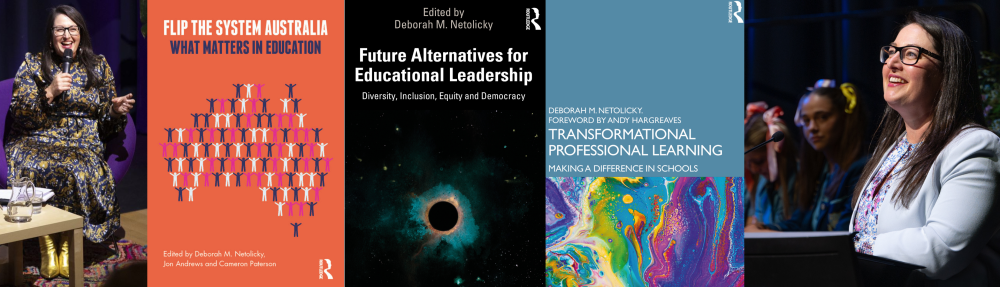
Teacher Growth: Helping teachers open their gates from the inside

This post on my Australian school’s teacher growth model was originally written as a guest post for Starr Sackstein, acclaimed educator, author and bloggess extraordinaire. It was inspired by a #sunchat Twitter chat moderated by Starr, which challenged me to talk more specifically about the professional learning and culture model I keep going on about …

~ ~ ~

No one can persuade another to change. Each of us guards a gate of change that can only be opened from the inside. We cannot open the gate of another, either by argument or emotional appeal. ~ Marilyn Ferguson

open your gate from the inside

How do you help someone open their gate from the inside?

The global education community tends to agree that better teaching equals better student achievement. Schools, districts and nations have taken this notion and used it in attempts to improve the quality of teachers through professional development and teacher evaluation systems.

There is a long continuum of possibilities for developing teachers and teaching, but it seems that many systems sit solidly at the teacher-evaluation-for-improvement end. When I visited the USA I was surprised at the quantitative, and at times punitive, approaches being used to score and evaluate teachers. Eric Saibel’s recent post questions whether all the work and time put into teacher evaluation has made a difference to teaching or student learning. In this thoughtful video conversation Eric talks with Starr Sackstein about ideas for meaningful teacher feedback and growth.

As a teacher, school leader, researcher and parent, teacher growth and evaluation are areas of immersion and passion for me. My own ideas are based on my:

  • Experiences as a classroom teacher in Australia and the UK;
  • Experiences as Head of Faculty in Australian schools;
  • Recent visits to New York schools, researchers and edu-experts;
  • Current PhD research on what makes transformative professional learning and leadership; and
  • In-school strategic work on researching, piloting and developing a teacher growth model for my Australian school. We are at full implementation phase this calendar year.

To develop my school’s teacher growth model we have used a Schooling by Design backwards design approach to planning and implementation. This has allowed us to align our vision, purpose, evidence and action. This has centred us around our own context and our goals of improving the learning of our students and developing the professional culture of our school.

Our change management philosophies of ‘go slow to go fast’ and ‘evolution not revolution’ have given us permission and time to tailor the model to our context and nurture teacher buy-in. Adaptive Schools, which I have written about here, has influenced our work by providing us with models of collaborative strategically-aligned change.

Our model itself is based in a belief that schools are relational places where trust is key to risk taking, growth, willingness to be vulnerable, deprivatising classrooms and learning from, with and alongside each other. It involves teachers-trained-as-coaches (and, every few years, administrators) who help teachers to use non-judgemental lesson data (written scripting, video, audio) as the basis for reflection against the Danielson Framework for Teaching and teachers’ own goals. The Danielson Framework was chosen for its research-basis and specificity. We like that ‘distinguished’ teaching is all about what the students are doing.

As well as meeting with Charlotte Danielson in Melbourne and Princeton (where we spoke about the nature of coaching and my school’s use of her Framework), I heard her speak at the 2014 Australian Council for Educational Leaders Conference in which she explained the importance of a trust environment of challenge and support for teachers, and teaching frameworks as conduits for the thinking of the teacher, rather than telling by the administrator. Ellie Drago-Severson agrees that adult learning needs an environment of support and challenge. Her work on ‘holding environments’ and adult learning is based in trusting the capacity of adult learners. I spoke with her in October about her work with schools and the importance of starting slow and building momentum. We are similarly focused on self-directed teacher growth with a belief in the capacity of teachers to reflect, learn and grow.

As the cornerstone of our conversations, Cognitive Coaching places our emphasis heavily on the coach as non-threatening facilitator of teacher thinking, rather than feedback-giver and scorer. The coach focuses on facilitating the teacher’s thinking, not giving advice or solving problems. This approach is partly based on research like this which shows that what actually gets our brains to be open and changeable is compassionate, positive conversation which sparks our own thinking.

The opening quote by Marilyn Ferguson reflects my thinking on teacher growth and evaluation: teachers need to be supported in opening their own gates from the inside. If, as David Rock and Dan Pink have explained, rewards and punishments don’t motivate, change behaviour or facilitate creativity, how can we encourage students and teachers to be intrinsically motivated, passion-driven, continuous learners who seek improvement through curiosity, reflection, collaboration and risk tasking?

Does your teacher growth or evaluation model encourage self-directed growth and a culture of professional learning? How might you build trust, apply a belief in the capacity of teachers, or develop collaboration in your own context?

it's all about the growth

it’s all about the growth

Powerful & unforseen consequences: our butterfly impacts

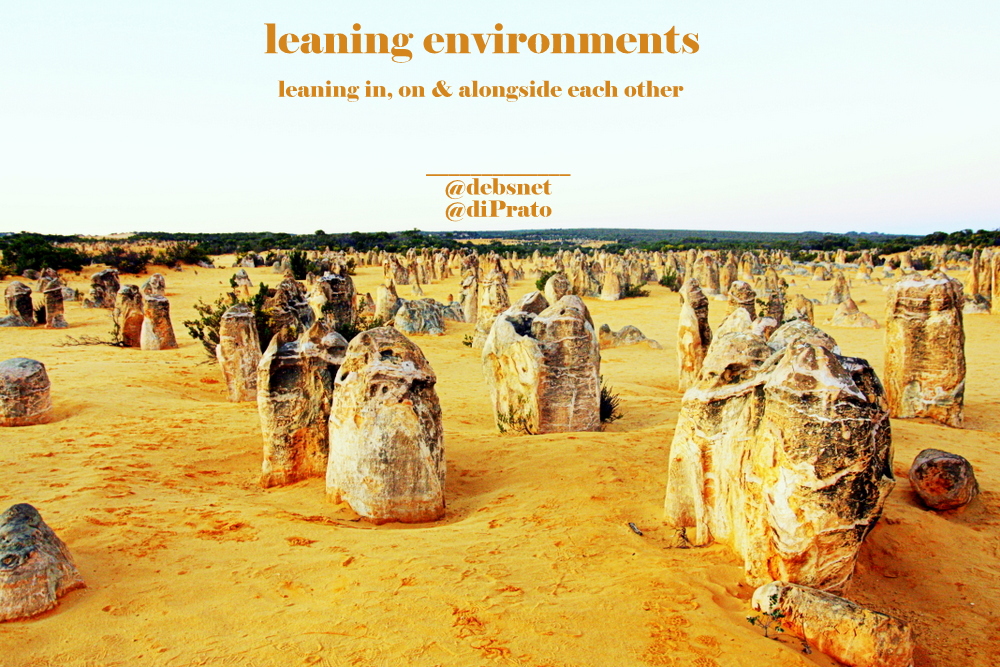
#leaningenvironments - evolution of a new edu-revolution?

#leaningenvironments – evolution of a new edu-revolution?

 A cloud from a minor volcanic eruption in Iceland—a small disturbance in the complex mechanism of life on the Earth—can bring to a standstill the aerial traffic over an entire continent. ~ Slavoj Žižek

With the start of the Australian school year almost here – a year in which I am working to implement the teacher-growth model on which I have been working for two and a half years – I have been thinking about what it is that makes a trusting, impassioned, vibrant community of continuous learners.

Ok, as both the subject of my work and of my PhD research, I have been doing more than thinking about this. I have read close to 300 references and written about 85,000 words around effective school change, what makes effective leadership and what kinds of learning teachers find transformational. I have blogged briefly about some key ideas to anchor school change, about the importance of embracing discomfort for growth and about my own learning environments.

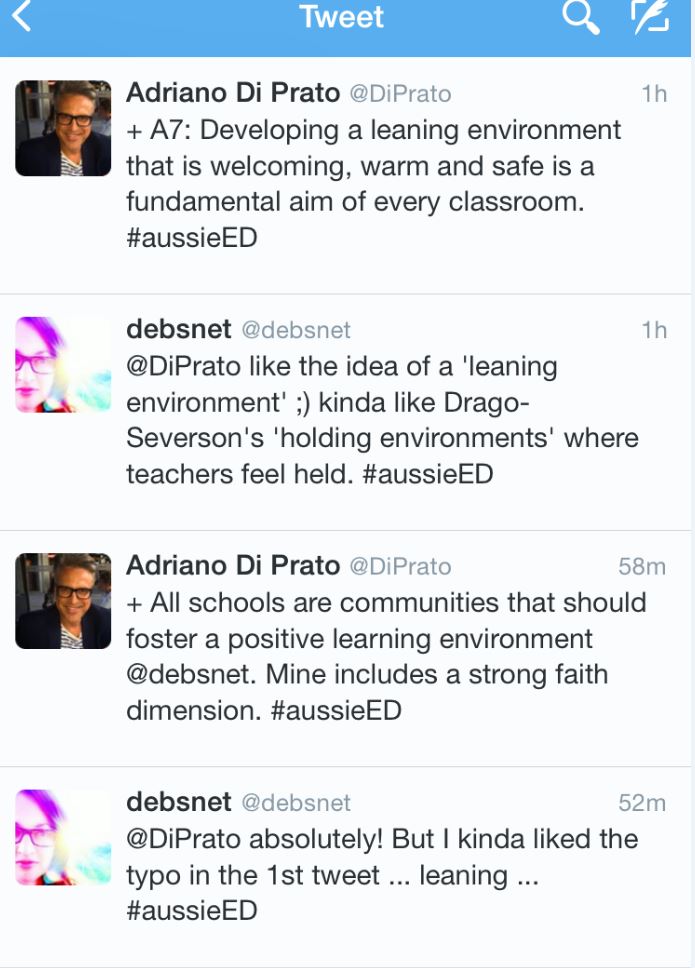
Tonight I was participating in the #aussieED Twitter chat when Australian educator Adriano Di Prato tweeted that ‘developing a leaning environment that is welcoming, warm and safe is a fundamental aim of every classroom.’ Now, I knew that Adriano meant ‘learning environment’ when he typed ‘leaning environment’ in a fast-paced Twitter chat, but it got me thinking: How are schools ‘leaning environments’?

It reminded me of psychologist and professor Ellie Drago-Severson’s notion of ‘holding environments’ (which I wrote a bit about here) in which she asserts the importance of teachers feeling ‘held’ by their learning and working environments, especially if positive change is to take place.

It reminded me of Costa and Garmston’s notion of ‘holonomy’ (explained in the Cognitive Coaching course material) in which the parts (individuals) and whole (organisation) are interdependent.

It reminded me of this great moment last year when a group of commuters on an Australian train platform used their leaning-together momentum to tilt a train and free a man trapped between the train and the platform.

So I tweeted back about ‘leaning environments’, and all of a sudden we were back-and-forthing about how the word ‘lean’ might apply to school environments. Would it be about individuals ‘leaning in’ to the community, to opportunities, towards each other? Could it be about students, teachers, parents and leaders ‘leaning on’ or ‘leaning alongside’ or ‘leaning with’ each other? Might it be ‘leaning out’, away from those things which should matter less but sometimes drive schooling (high stakes testing, grades, league tables)?

the power of a Tweeted typo

the power of a Tweeted typo

Fellow edu-Tweeter Melissa Daniels noticed the banter and asked whether this could be “the education revolution that started with a typo?” leading to another discussion about innovation, revolution and the evolution of ideas, all in 140 character bites.

Tweet @debsnet @DiPrato @PensiveM

This was an invigorating discussion for me, not because I thought it was to be the next big thing in education, but because of the thrill of the unsurprising serendipitous connections, conversations, ideas, thinking and challenges that come out of conversations and connections with like-minded like-passioned others. Here was a vibrant online environment of trusting, holding, leaning (in, out, on, with, alongside), impassioned, creative, continuous learners.

It also reminded me of our unforseen impacts. We never know the impact of a conversation, a word, a decision, or a typo.

I have noticed this in my self, in conversations or moments which stay with me until an idea bubbles to the surface. I have noticed it in my work with teachers and students, who often take some time to realise what moments or relationships have shaped them. I have noticed it in my PhD research participants, many of whom told me that the very act of being interviewed for my research changed something for them, opened something up, surfaced a reflection or became a moment of learning.

So, don’t ignore life’s typos. Even the seemingly tiniest things can have powerful & unforseen consequences.

You never know when you might uncover the next revolution.

Small shifts in your thinking, and small changes in your energy, can lead to massive alterations of your end result. ~ Kevin Michel

Montenegro by @debsnet

Find your space. Choose your place.

It’s important to create spaces that people like to be in, that are humanistic. ~ Frank Gehry

Once a colleague and I spent one working week taking a ‘holiday’ in our own workplace. Looking at our everyday space with fresh eyes, each day we found a place we could envisage as a vacation destination, and took a photo of ourselves there. At the end of the week we printed a collage of the photos on A4 postcards, signed off ‘wish you were here’ and gave them to our colleagues. We were looking for ways to experience the expected in unexpected ways, to find magic in our own backyard, to discover new ways of seeing our daily environment.

I was asked today at a barbeque how I ‘find the time’ for all the things I am doing: parenting, teaching, implementing a strategic school initiative, blogging, PhD thesis writing and all the life-and-relationships stuff. Partly, I think, doing-all-the-things works because I have found ways to feel like each of these bits is a little holiday from the other bits. And part of that is around choosing to be in places which make me feel grounded, inspired or joyful.

beach spaces - for grounding & play through learning

beach spaces – for grounding & play through learning

My favourite place to go with my two pre-school age kids is somewhere in nature. In winter that means muddy puddly bushwalky places, and now, in summer, it means the beach. Do I love parenting at the beach because it’s enjoyable, free, feels good and keeps the kids busy? Yes. But also because hippie ideas like ‘grounding’ resonate with me, as do educational theories of nature play, play-based learning and maker education (where creating and tinkering are central to learning and problem solving).

Watching my children experiment with sand and water is joyful for me. I see them building while figuring out the impacts of the environment and of themselves. They work together to develop systems for creation (and destruction). They discover critters and examine shells for their beauty and individuality. They clamber, climb and explore, being careful and daring, inquisitive, and sensitive. At the beach my children learn through play while being active and getting the vitamin D, fresh air, ocean salts, and the exhilaration and balance which comes from curling your toes in the sand, digging with your bare hands and feeling the silky ocean against your skin.

The beach provides a space for immersive learning and intentional be-ing, fitting perfectly with one of my 3 words for 2015: presence.

learning spaces at my school

learning spaces at my school

So how might all this beach frolicking relate to work or academic writing? It comes down to designing and finding spaces which work for individual and purpose. Schools are being inspired by incredible offices like those of Google’s Engineering Hub, Zurich; LEGO in Denmark; Skype, Palo Alto; Innocent ‘Fruit Towers, London; Capital One, Virginia; Saatchi & Saatchi, Bangkok; and Palotta Teamworks, Los Angeles. In contemporary work and school spaces, some of which I have had the pleasure of co-designing and furbishing, there are choices for individuals and flexible furniture arrangements (much of this based on the work of Prakash Nair and Randall Fielding). High benches for those who like to perch, low couches and beanbags for those who like to lounge, collaborative campfire spaces for working together, quiet nooks and cave-like spaces for nestling into lone thinking (Bianca Hewes explains this nicely from a teacher perspective; ‘match the physical space to the mental space’). The SCIL building at Northern Beaches Christian College in Sydney and the Green School in Bali are worth a look for interesting school spaces.

Personally, when I want to do my work or academic writing, I try to find my own inspiring, grounding or playful space.

I talked on the PhD Talk blog about my thesis as sacred ‘me time’, and one of the things I do to make it so is to write in places which feel like an indulgence. I have favourite cafés with the right amount of people-buzz, good tunes, quirky touches and sometimes a view. These make me feel like I’m sitting down to a treat in which to luxuriate, instead of an arduous slog which must be endured. I order a good coffee, find a comfy spot and start to work. Today was on a daybed in this outdoor courtyard with mellow lounge music, waterfalls, buddhas and frangipani trees:

today's academic writing space

today’s academic writing space

Other favourite writing café spots are pictured here (I do love a good coffee and a good view):

working spaces collage

working spaces collage

One of my favourite spots is a cushioned bench seat in a café housed in an old hardware store. Above the seat is painted: ‘Not the sharpest tool in the shed.’ Perfectly ironic for PhD writing, don’t you think?
So – where do you find the space for your intention? Where are your sacred, inspiring or playful places? How do you choose your physical place to transform your mental space?
'Not the sharpest tool in the shed.'

‘Not the sharpest tool in the shed.’