
Wayfinding as a frame for leadership

Source: Pexels on pixaby

“It’s not down in any map; true places never are.” Henry Melville

I’ve returned from the Association of Heads of Independent Schools of Australia, held in Aotearoa New Zealand, where the theme of the conference was the Māori proverb Ka mua, ka muri: Walking backwards into the future. This proverb reminds us that we move forward by knowing and facing what is behind us, by understanding and accepting our stories and histories, and by drawing on wisdom learned through challenge.

Dame Farah Palmer’s keynote invited leaders to think like wayfinders, being guided by a range of values and knowledges. I was reminded of the chapter I wrote with Claire Golledge, published in 2021 – ‘Wayfinding: Navigating complexity for sustainable school leadership‘. In the chapter, we explore wayfinding as a way to conceptualise the complex, nuanced work of the leader.

School leaders are faced with a role in which there is often no map for the complex challenges they face, as they tackle a multiplicity of factors and expectations within dynamic environments. School leaders lead their schools through constant flux, heightened accountabilities, curriculum change, harmful media narratives, and education policy reform, not to mention climate crises, economic disruption, political unrest, pandemics, and social inequity. Over time, leaders build a map of sorts, of tried-and-tested routes for the various circumstances they face. However, there are times when well-worn paths have not been trodden in the direction in which a leader needs to go.

The metaphor of wayfinding shifts attention from the singular leader hero to an ongoing practice of leading that is purposeful, relational, iterative, and anchored in context. Drawing on Indigenous oceanic navigation as a discipline of presence, discernment, and collective endeavour, in our chapter Claire and I explore how leaders might find their way amid uncertainty and complexity. Below, I provide a quick tour of our reflections.

Orienting ourselves

Wayfinding begins with orientation. A ‘you are here’ dot on a map provides us with a sense of where we are in the bigger picture, and of the various environs we need to be aware of as we navigate our way. Our orientation can be enriched by recognising the past. Leaders need both the bird’s-eye map and the ground view, holding the wider context and network of possible routes in mind while noticing the small markers that matter today (a parent’s email, a child’s expression, a teacher’s hesitation).

Simultaneous path-following and free-ranging

There are times in leadership that feel like route following: enacting policy, upholding procedures, attending to scheduled activities. But leadership constantly throws us into free-ranging navigation: emergent dilemmas, contradictory demands, storms that arrive unforecast. Wayfinding accepts this duality. We have our charts and our maps. We are steadied by our values. And we adapt to the unknown and unpredictable ethically and judiciously.

Knowing self, knowing context

Wayfinders learn the environment and themselves. Tuning into context and conditions is essential when we are leading and finding our way to the best decision. Knowing ourselves means knowing our values, understanding our non-negotiables, and reflecting on our past to lead with identity-awareness and vulnerability.

Navigating roadblocks

The best laid plans and the most detailed maps are no match for unexpected conditions. No Through Road. Wrong Way Go Back. Slippery Surface. Falling Rocks. Kangaroos Ahead. Navigating the unexpected means applying decisiveness when required alongside intuition and reponsiveness, in order to course correct as an when divergence is required.

Instruments fit for purpose

Like traditional navigators, school leaders need to carry and deploy a plurality of instruments fit for a range of possible purposes. In our chapter, Claire and I argue for both/and instruments: data and narratives; policy and ethics; consultation and clarity of decision; shared language and careful messaging. We need to be sense-led, evidence-informed, attuned to the limitation of our tools and alert to the human impacts.

Walking backwards into the future

Much of the work of the leader requires courage, creativity, a strong network of trusted colleagues, and a constant state of responding to circumstance, honouring the past while looking to the future, considering the needs of individual and of the collective, and overseeing structures and operations while being responsive to changing circumstance and human complexity.

A wayfinding approach to leading balances intuition with strategy, the human with the operational. If we consider ka mua, ka muri in our leadership, we remember to look back as we move forward. We hold the past gently while we step into the future, honing our judgement and allowing it to be informed by past, present and future time and place.

Reference:

Netolicky, D. M., & Golledge, C. (2021). Wayfinding: Navigating complexity for sustainable school leadership. In Future alternatives for educational leadership (pp. 38-53). Routledge.

Reflective school leadership for renewal

Image: by freephotocc on pixabay

Being in the busy

In Australia, we are deep in the kaleidoscope of Term 3, and the life of a school leader is filled with sports games, concerts, school and community events, teaching, meetings at every time of day and night, walks around the yard, crossing duty, yard duty, site visits, interviews to be conducted, speeches to be given, problems to be solved, projects to be managed, strategy to be implemented, situations to be responded to, and communications to be crafted. It is full. It is vibrant. It is deeply rewarding and rooted in community, purpose and service.

When the term is upon us and all around us, our boundaries and protective practices can slip away. Tasks multiply. Weekends are for catching up. Nights are for remembering the to-do list. Perhaps we skip the gym or pilates or our run or meals or time with our family or time with our self. Reflection shrinks. Creativity waits for its moment. Pondering is squeezed out. Strategic thinking is delayed until ‘later’.

School principals can feel unable to separate the personal from the professional and can be overwhelmed by the all-consuming, complex and ambiguous nature of the work (Drago-Severson, 2012). In Australia, the annual Principal Occupational Health, Safety & Wellbeing Survey consistently reports school leader experiences of high stress, burnout, sleep problems, anxiety and depression.

Prioritising renewal

Ellie Drago-Severson (2012) points out that for school leaders to sustain themselves in their work, they must find ways to replenish their inner resources. She proposes reflective practice as a potential ‘holding environment’ or ‘growing space’ for school leaders that can have a positive impact on teacher growth and school climate. That is, when leaders find time and space for reflection and renewal, for sharing their dilemmas, and for receiving and seeking support, everyone in the school benefits.

How and where might those times and spaces be found for school leaders?

Metaphors for reflective practice

Pat Thomson (2019) suggests that school leaders’ systematic engagement in reflective practice might benefit from borrowing from the arts, particularly the metaphor of ‘the studio’. Artists, too, can think about their work most of the time. For them, the studio provides a productive site for this immersive thinking – for experimental ideation, boundless reimagining and creative generating. The studio is a place of imagination and empathy where tensions can be explored, and where not knowing, unknowing and messiness are welcomed. It is a place of respite from certainty and accountabilities, and for integrating theory and practice. The studio provides permission and a protected space for the artist to be, become and inquire.

As a lifelong artist who has painted in oils and acrylics since I was 6 years old, and whose Bachelors and Masters degrees are in Fine Art, the metaphor of the studio resonates with me. There might be other metaphors that offer ways of thinking about how and where leaders can engage with reflective practice. The kitchen could be a site of creation, nourishment, simmering and slow craft. The garden is a place to plant seeds, tend to ideas and cultivate soil. The night sky provides a vast expanse of possibility for noticing, and embracing silence, darkness and seasonality. These metaphors might help school leaders to imagine their own sacred and safe space for reflective practice.

Carving out time and making space

I am working to more consistently engage in reflective practice that is deeper and wider than micro ‘third space’ moments between activities (Fraser, 2012). I have this year been experimenting with crafting small sanctuaries of thinking and being – journalling, a yoga class, reading, writing, podcast listening, podcast recording, and conversations with trusted colleagues and mentors. I wonder how and when to ensure longer periods of deep thinking beyond the day to day.

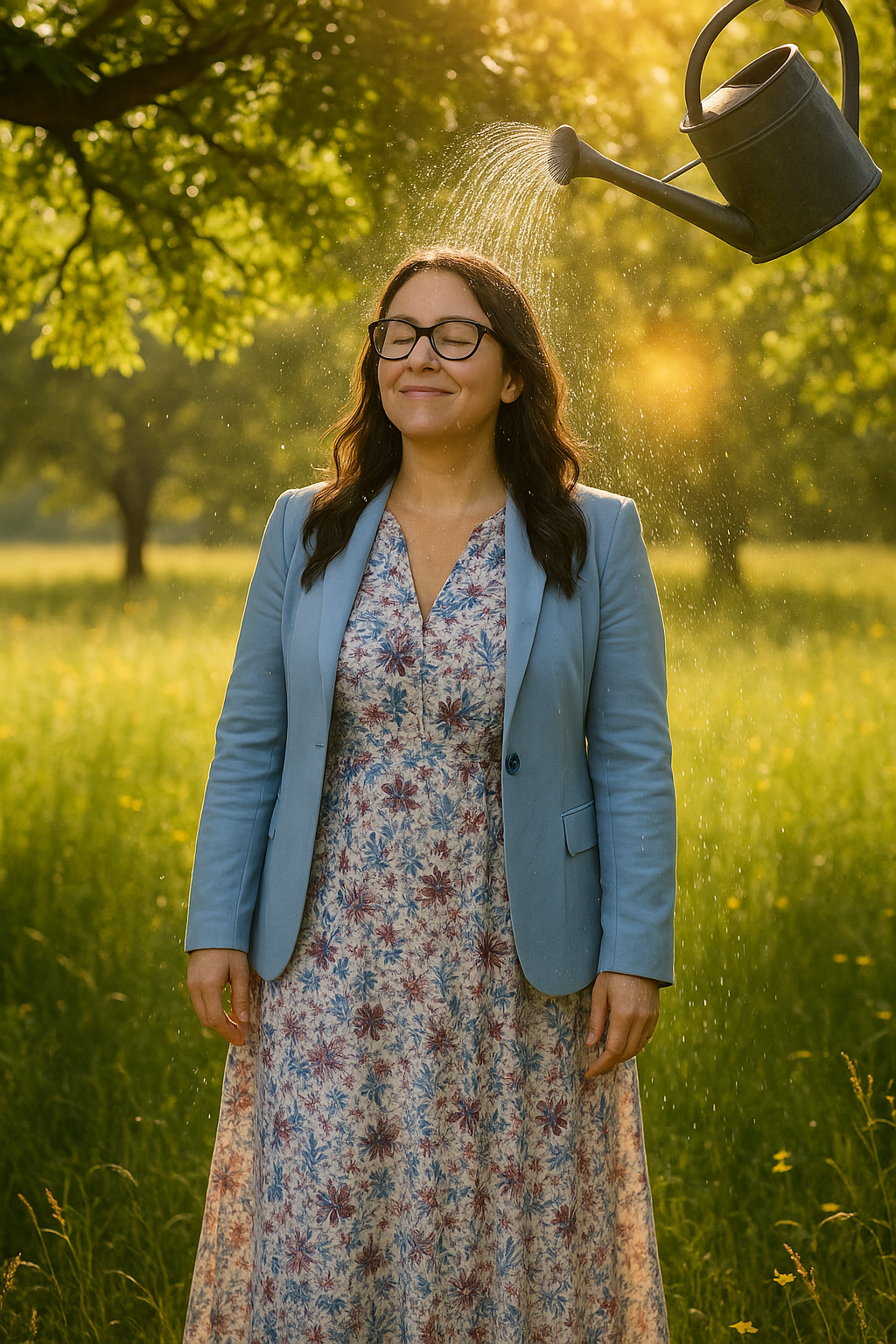
Renewal is not an indulgence and cannot be an afterthought. We all benefit from spaces that spark play, experimentation, creative thinking and idea generation. Our studio space is not an interruption to the work, but a key part of our work. Fostering reflective practice helps to support people whose energy is sustained, whose purpose is sharpened, and whose reserves are replenished, to allow them to serve their communities.

For more about reflective practice, listen to the latest episode of The Edu Salon podcast, featuring Kristen Douglas.

References

Drago-Severson, E. (2012). The Need for Principal Renewal: The Promise of Sustaining Principals through Principal-to-Principal Reflective Practice. Teachers College Record, 114(12), 1-56.

Fraser, A. (2012). The Third Space. Random House.

Thomson, P. (2019). Thinking about the school most of the time: studio as generative metaphor for critical reflection. Journal of Educational Administration and History, 51(2), 87-102.

Reflections on professional nourishment

Image created with ChatGPT

The profound privilege and the weighty responsibility of serving as a school principal lies in the depth of the humanity of the role combined with the incredible sense of duty and the complexity of the role’s many moving parts. Independent school principals have been described as CEOs, responsible for strategic oversight and management of learning and teaching, daily operations, finances, risk, resources, communications, stakeholders and culture. A 2008 Australian report described principalship as “the best job in the world with some of the worst days imaginable,” encapsulating the intense reward and intense challenge of the role, which can be simultaneously fulfilling and depleting.

I have appreciated recent invitations to share my advice for aspirant school principals, and to speak about my experience in building contributions and networks beyond my immediate school environment. These opportunities for reflection, coupled with the regular release of research reports and media stories indicating the increasing ill-being of those working in schools, have led me to consider what might be described as ‘professional nourishment’. How do those of us leading in schools fill our cups to build buoyancy and resilience that sustain us as we serve the people in our communities, and navigate significant, serious and sometimes surprising complexities?

Like other people-facing roles in schools, principalship is inherently relational and involves the living of relationships throughout the extensive ecosystem of a school. Deb Dana’s concept of finding ‘glimmers’ in our day to uplift us reminds us to seek out sparks of joy and micro-moments of presence. Those of us working in schools can experience nourishment in our roles as we engage in the many and varied student experiences, community events and lives of students, families and staff. There is satisfaction and pride in witnessing the personal growth and achievements of students, sharing in the triumphs and challenges of families, and working alongside inspiring and dedicated colleagues. A ‘glimmer’ might be a conversation with a child in the yard, a thank you email from a parent, visiting a classroom to see a colleague teach, a conversation with an old scholar, attending a performing arts production or sports game, sharing dinner with the boarders, or witnessing a student or staff member overcome a challenge.

Professional nourishment can also come from deliberate reflection on and intellectual engagement in the work. This blog, for example, provides me with one way to share research, practice and thinking. It also engages me in writing as a practice of clarifying, synthesising and developing my thinking. Writing and podcasting provide unique opportunities to participate meaningfully in local, national and global dialogues around education and leadership. A range of platforms can immerse us in diverse perspectives and enable us to actively contribute to wider educational conversations. Ensuring there is time and space for thought, innovation and intellectual engagement, can help to reconnect us to the strategic direction of our schools and the ‘why’ of what we do.

One worry I have about artificial intelligence is that, while it is trained on human writing and coding, using it as a shortcut to exploring and communicating ideas might reduce our time and capacity to sit with, contemplate, and work through complex ideas. Formal or informal writing can be utilised, not just for its resultant output, but for its process of cognitive working out. When I begin writing, I do not know exactly where a piece will take me. The writing process is focused on internal growth and ‘thinking through’ or ‘thinking out loud’, rather than efficiency and end product. In a recent episode of The Edu Salon podcast I talked about the marination of ideas in the human brain as an important part of how we understand more deeply and move our thinking forward. Quiet reflective practice–in which we take the time to pause, interrogate our assumptions, tease out ideas, and carefully consider experiences–can provide an anchor for us to find clarity in the complexity of our work.

When I think of what is professionally nourishing, there is a special place for professional relationships and networks. I am incredibly grateful for those mentors, peers, colleagues and friends to whom I can reach out. Professional organisations and conferences (such as, in Australian education, AHISA, ACEL, AARE and ICSEI) can provide educators with inclusive communities of practice where ideas are shared, respectfully challenged, and refined in a safe and collegial space. Trusted relationships in which we share and talk through problems of practice, provide meaningful connection and mitigate the isolation of our role.

Those leading in schools can work to sustain ourselves by cultivating meaningful professional relationships, prioritising reflective practice, and actively participating in broader educational networks. Learning and connecting beyond our immediate environments can enhance our practice, enrich our schools, pay forward our expertise into the wider educational landscape, and help to sustain us in our roles.

The global landscape of educational leadership

On 31 October, UNESCO launched the 2024/5 Global Education Monitoring (GEM) Report, Leadership in Education: Lead for Learning, which engages with Sustainable Development Goal 4 ‘Quality Education’. The report explores global research and practice in educational leadership, capturing the current landscape, possibilities, practices and challenges of leadership in education around the world.

Below, I briefly summarise some of my key takeaways from the GEM Report.

Impact: School leadership matters

The report notes that leadership in schools is second only to teaching in the classroom for its capacity to impact on student outcomes and experiences. If we are to improve outcomes for students, it is vital to understand the impacts, influence and ingredients of school leadership.

The report notes that those principals who have a significant positive impact on schools tend to set transformative directions, use policies and reforms to drive purposeful change, enable safe and positive environments, build relationships, develop people, provide feedback, manage resources strategically, and work to improve classroom teaching. It also notes that school principals in Australia have been reporting higher levels of stress, burnout and depression in recent years (with women reporting this more than men), with workload quantity, lack of time for engaging with important work, and the seeming impossibility of managing life outside of the job, being major reported causes.

Australia’s Professional Standards for Principals, developed by the Australian Institute for Teaching and School Leadership in 2014, define the principal’s role as focused on five areas: leading teaching and learning, developing self and others, leading improvement and change, managing the school, and working with the community. Based on the work of Ken Leithwood, the GEM Report identifies four key roles of the school leader as: setting expectations and vision, focusing on learning and leading instruction, fostering collaboration, and developing people to improve school outcomes.

Autonomy: There can be no leadership without the opportunity to make decisions

The context for leadership affects those things a leader does in setting expectations, such as sharing vision, holding high expectations, setting a personal example, representing the community, and staying abreast of trends, data and information to inform decision making. Standards and accountability mechanisms for schools and school leaders vary from system to system and school to school. The GEM Report found that in 20 high-income countries, the more principals had the primary responsibility for human and financial resource decisions, the more likely it was that a country would be among those ranked more highly in terms of average performance in mathematics.

School leaders have more chance to make a positive difference if they have autonomy, support and well-defined responsibilities. Education systems need to empower school principals with sufficient autonomy to manage financial and human resources and to make decisions related to teaching and learning. Autonomy must, however, come with adequate support, sufficient resourcing and appropriate accountability measures.

Collaboration: School leaders cannot and should not lead alone

School leaders are not solo heroes, but part of an enmeshed ecosystem of influence. As I often say, leading is an action and a way of being, not a role or a formal title. All can lead. In schools, this might mean senior leaders, middle leaders, teachers, school services staff, students, parents and community members.

Shared school leadership and collaboration among empowered stakeholders strengthens decision making, contributes to enacting a shared vision, and leads to lasting improvements in educational outcomes and school cultures. School leaders have a central role to play in developing school culture and climate; maintaining a safe, healthy school environment; raising resources strategically, building networks; managing risk; nurturing collaboration; enabling others to act; and consulting with families and community.

School leaders who build the capacity of others, ensure they are accessible, provide training and resources, foster a collaborative environment, involve others in decision making, are involved in collaborative structures and processes, and distribute leadership among and across the organisation, are more likely to see the school’s vision realised.

Schools can promote shared school leadership by establishing clear communication channels, ensuring transparent decision-making processes, implementing regular feedback mechanisms, ensuring clarity of roles, and recognising unique contributions. School leaders can keep track of staff professional development needs, provide individualised professional support and mentoring opportunities, ensure evaluation of practice, and reward good performance.

Collaborative relationships (such as those built through committees, teams and other collaborative structures) strengthen governance, improve decision making, enhance accountability, and foster inclusive and resilient environments. Fostering safe, inclusive and culturally responsive environments is key to ensuring a climate of care and challenge where collaboration can thrive, where shared vision can be realised, and where all students, staff and wider community can flourish.

Reflections on six months of principalship

I have worked in education for my whole career – from a graduate teacher, through middle and senior leadership in schools. Teachers know their impact and see it every day in the progress of their students, or when a student they used to teach tells them what a difference they made to the trajectory of the student’s life. Teaching and leading in schools is work full of purpose and meaning. One thing I have never had to wonder is, “What is the point of my work?” or “Why do I do what I do professionally?” From the direct influence on students in the classroom, to more diluted and broader influence through leading, working in schools is literally life-changing work.

Now as a school principal, the ‘why’ of my work is clear. According to the Australian Institute for Teaching and School Leadership (AITSL):

“The role of the principal in a school is one of the most exciting and significant undertaken by any person in our society. Principals help to create the future. Principals are responsible and accountable for the development of children and young people.”

AITSL describes the principal’s job as to raise student achievement, promote equity and excellence, cultivate conditions under which quality teaching and learning thrive, engage with community expectations, deliver on government policy, and contribute to the education system at local, national and international levels.

Through the Australian Professional Standards for Principals, AITSL outlines the scope of the work of principal. Firstly, to lead the vision and values of the school, serving the best interests of the community by upholding high standards and fostering respect. Secondly, principals know, understand and apply the theory and practice of leadership, teaching, curriculum, assessment, reporting, strategy, policy, legislation, and management of human and financial resources. According to the Standards, principals also have the emotional intelligence, empathy, resilience, decision making frameworks and conflict management skills to build trusting, collaborative and positive cultures across the school community. Additionally, AITSL outlines the nature of principals’ work as including: leading teaching and learning; developing self and others; leading improvement, innovation and change; leading the management of the school; and engaging and working with community.

When I think of the role of principal, I think of it as encompassing the roles of: custodian of the school’s history, identity, mission, values, traditions and stories; servant to the school community; chief ambassador, sense-maker, storyteller and advocate; relationship builder; stakeholder engager, seeking to understand multiple perspectives and engaging enthusiasts and dissenters; leader of strategy; ethical decision maker; coach, mentor and builder of others’ capacity; fosterer of high performing teams and a culture of trust; networker beyond the school gates to local and international contexts; and joy-finder, because it’s important to find celebration and wonder among what can be challenging times.

So, knowing all this, how does a principal new to a school begin her work? What have the first six months looked like for me?

In my first semester, importantly, I have been getting to know the people and the school’s specific context; these people and this place at this time. While there is never a dull moment in principalship, and much of a day or a week can be made up of the unexpected and the surprising, below I outline some of what my semester has encompassed as I have sought to get to know community.

I enjoyed visiting classrooms across the school from ELC to Year 12, and teaching my Year 10 class. I love to be in the classroom. It is students that make my heart sing and ground me in the ‘why’ of school. I met students as they got on, and then later off, buses from camp, full of new memories, challenges overcome and strengthened friendships. I hosted lunches with all Year 12 students, in groups of about five, and met regularly with various student leaders and committees. I have gotten to know students through House events and competitions, service opportunities, and attending sports events and arts performances. I am constantly humbled by the resilience and achievements of students in academics, arts, sports and other endeavours.

I connected with parents at coffee mornings, events, committee meetings, school tours and in one-on-one or family meetings. I have begun to understand the school’s rich history and community by meeting alumnae through old scholars’ committee meetings and events.

I partner with the school’s Council of Governors and Executive Leadership Team on actioning the business of the school and its strategic direction in ways that are sustainable, ethical, futures-focused and in the best interests of students. I have been involved in planning and opening new facilities, overseeing budgets, leading staffing decisions and processes, minimising risk, responding to critical incidents, and attending to complex student issues. I have led the refreshing of the school’s values, generated community responses to the school uniform and begun a uniform review, instigated a new scholarship, and launched a new strategic plan.

It was a joy to collaborate in the finalisation of the school’s strategic plan. While I came to the process mid-way, I was able to engage in shaping the threads and themes of consultation and synthesis to fruition. As the principal I need to live and breathe the school’s strategy. I need to feel it in my bones with a resonance that hums through everything from decision making to the way I show up each day. Clear strategic intent anchors all in our community to unite in important shared work around a collective purpose, so it is exciting to have a new plan to shape our decisions, initiatives, actions and opportunities.

My visits to classrooms, walks through the campus, yard duties and staff meetings, have all been opportunities to understand those who together contribute to the work of the school. It has been a pleasure to get to know their knowledge, skills and commitment to our students and families. At the outset of the year, I invited all staff to a one-on-one meeting with me to each share their story and to convey their views on what is great about the school, what might be improved, and how I might support them in their aspirations. These conversations revealed insights into individual staff from across the school as well as into the broader culture and history of the place.

Leadership is built one conversation, interaction and action at a time. As I reflect on my first semester as principal, the highlights have been many. Mother Teresa said, “Not all of us can do great things. But we can do small things with great love.” Our community is made up of students, staff, parents and wider community who are all doing small things with great care, and these kindnesses and micro-moments all add up to make the school the special place it is. In principalship, too, it is the daily actions—undertaken with care, intentionality and the desire to serve and do good—that make up the work.

Redefining school leadership

Job descriptions for school leaders often encompass a range of strategic, relational and operational work, but the work of school leaders also involves enacting policy and performing for school communities and for governing bodies. The performative aspects of school leadership are often driven by data, testing and league tables. In Australia at around this time of year, schools receive their NAPLAN results, and around December of each year, these results become public on the MySchool website. Schools often publish reports on their NAPLAN data, drawing conclusions and setting goals around it. This is one example of how public data and high stakes testing is part of a school leader’s job. Other examples are the league tables of schools published at the beginning of each year around Year 12 student performance in tertiary entrance subjects.

In a previous blog post on resisting performativity, I wrote:

In a world that values metrics over stories and test scores over empathy, it takes courage to hold the line on egalitarianism, advocating for individuals with difficult circumstances, or mining richer seams of data than the popular ones of NAPLAN, PISA, TIMSS, tertiary entrance examination scores, and an ever-increasing litany of tests. It can be daring and dangerous to advocate for an education that does more than pander to market perception, external measures and competitive league tables.

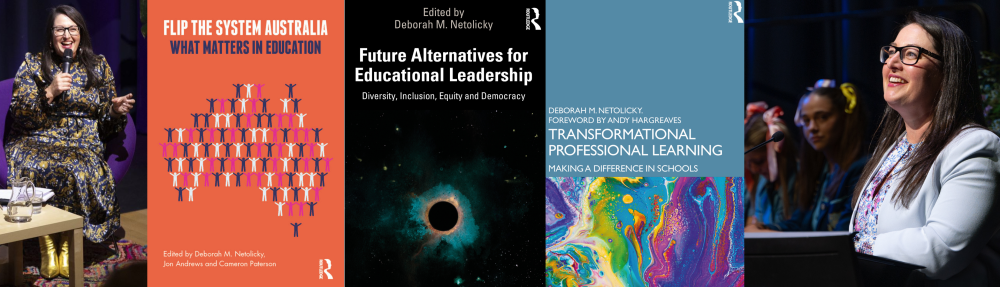
Leading is political. As Amanda Heffernan (2018a, 2018b) reveals, principals can deliberately choose to accept or resist policy. School leaders can navigate the conflicting demands of the audit and performance culture by exercising autonomy (Gobby, Keddie, & Blackmore, 2017). In an upcoming chapter in Flip the System Australia, principal Rebecca Cody (2019) calls this ‘riding two wild horses’. She argues that school leaders can and must simultaneously pursue academic excellence (including as measured by public metrics), and a holistic education for each child.

While the seductive cliché of the charismatic central hero persists—from recruitment to media to memes—the more I investigate the theory and practice of school leadership, the more I see it as a constant navigation of tensions. Accountability and autonomy. Individual and wider group or organisation. Bottom line and greater good. This is why it is so important that schools have a clear idea of who and why they are. Values, shared vision, and strong culture can anchor decision making.

I have written before, on this blog and in a book chapter (Netolicky, 2018b), about challenging leadership tropes. Last month, a new academic paper of mine was published in the Journal of Educational Administration and History. This paper is to form part of a special issue on metaphors for educational leadership. The special issue will explore metaphors for school leadership including the punk rock principal, the Robinson Crusoe colonist leader, middle leaders as spies, and head teacher as storyteller.

My article—‘Redefining leadership in schools: the Cheshire Cat as unconventional metaphor’—uses the (as the title suggests) unusual metaphor of the Cheshire Cat to explore school leadership. This metaphor emerged from interviews with 11 Western Australian school leaders.

The crazy subterranean world of Wonderland—with its non-sense and word games—is actually a pretty good mirror to hold up to the world of education. The Cheshire Cat is a complex and mutable character, but is also highly deliberate in controlling its visibility and invisibility. It is the only character in Alice’s Adventures in Wonderland that listens to Alice and helps her through a combination of listening, mentoring, travelling alongside her, a sense of humour, and sometimes stepping back to allow her to make her own decisions. It supports and trusts Alice. The use of this metaphor as emblematic of school leadership challenges traditional notions of leader as charismatic visionary hero leading the troops, or captain steering the ship. This leader is in control, but makes decisions from the perspective of what will have the best outcome or serve others (each student, staff, and the school community). The Cheshire Cat provides a creative reimagining of the school leader as someone who makes careful decisions about how to best serve their communities, how to foster trust, and how to distribute power and agency, including when to appear and disappear, when to step forward and step back, when to direct and when to empower.

The conclusion of my article reads:

It is important that … this article’s Cheshire Cat metaphor not become a new idealised version of leadership, a trope that perpetuates the dark shadow of leadership …. Rather, the Cheshire Cat can be a way into embracing and grappling with the complexities and nuances of leadership in schools. When the Cheshire Cat says to Alice, ‘we’re all mad here’ (Carroll [1865] 2014, 67), it reflects the nonsensical world of Wonderland. The notion of madness is resonant with the current topsy turvy land of education, in which the work of schools, school leaders, and teachers, is reduced to and driven by quantifiable data, measurable outcomes, and carefully monitored accountabilities (Ball 2016; Heffernan 2018b). When the Cat ‘explains the rules of the game, or rather the absence thereof’ (Nikolajeva 2009, 258) to Alice, it is akin to a Head of Department or senior leader helping their staff through the often absurd maze of judgement mechanisms operating in schools and education systems. The Cat can provide a frame for thinking about the slipperiness and complexity of the school leader’s work, the ways school leaders switch between ways of being and responding, and the tensions that school leaders constantly navigate.

… This article proposes a new way of thinking about the school leader through the unusual and lyrical metaphor of the Cheshire Cat. The inclusion of middle school leaders’ voices alongside executive school leader voices moves the conceptualisation of school leadership away from a focus on the principal and towards a more holistic view of leadership in schools. The stories of these leaders provide insights into school leaders’ perceptions of themselves as leaders, and their private processes of decision making. These leader stories, and the metaphor of the Cheshire Cat, challenge the notion of school leadership as an archetypal story of a central figure, showing that school leadership can instead be quiet, subtle, fluid, and even deliberately invisible. (Netolicky, 2018a, p.13)

References

Cody, R. (2019). Riding two wild horses: leading Australian schools in an era of
accountability. In D. M. Netolicky, J. Andrews, & C. Paterson (Eds.), Flip the System Australia: What Mattes in Education, 198- 203.

Gobby, B., Keddie, A., & Blackmore, J. (2018). Professionalism and competing responsibilities: moderating competitive performativity in school autonomy reform. Journal of Educational Administration and History50(3), 159-173.

Heffernan, A. (2018a). The influence of school context on school improvement policy enactment: An Australian case study. International Journal of Leadership in Education, 1-12.

Heffernan, A. (2018b). The principal and school improvement: Theorising discourse, policy, and practice. Singapore: Springer.

Netolicky, D. M. (2018a). Redefining leadership in schools: the Cheshire Cat as unconventional metaphor. Journal of Educational Administration and History, 1-16.

Netolicky, D. M. (2018b). The visible-invisible school leader: Redefining heroism and offering alternate metaphors for educational leadership. In O. Efthimiou, S. T. Allison & Z. E. Franco (Eds.), Heroism and wellbeing in the 21st century: Applied and emerging perspectives. New York: Routledge.

Middle leaders: The forgotten stratum

willow tree, Denmark, Western Australia

School leadership is full of tensions and complexities. As I discovered while reviewing literature for my PhD, middle leadership is the forgotten realm of research in education. There is plenty of research on pre-service teachers (no doubt these participants are easy for those working in universities to recruit), a lot on teachers, and loads on principals. There is much less on those in the middle. The principal, even when not touted as the charismatic hero, is the focus of much school leadership discourse, despite the popularising of distributed leadership and teacher leadership. Of course, the principal of any school is central. They set the tone, lead the vision, directly manage senior leaders, deal confidentially with sensitive issues, and much more. But a school’s leadership culture does not begin and end with the principal. Those in the middle manage up and down, in and out, and are often sandwiched between being advocates of the teams they lead and a cohesive voice of management. They are pressed upon from below and above.

If school vision is to be enacted or school culture is to be shifted, middle leaders who directly lead teams of teachers, are key. These middle voices are often ignored in scholarly literature and in media narratives. This gap was why it was important to me (having been myself a middle leader in schools for many years) to draw on the voices of middle leaders in my doctorate.

In my last post I outlined what my school is trialing for teachers in terms of development options within the organisation (complimentary to, but not to be confused with, professional learning offered within the school and also outside of school through courses and conferences). Below I outline the options we have available to middle leaders. That teacher and middle leaders have similar-but-different options acknowledges their varied needs. Even within the middle leadership stratum, there are a diverse range of needs and experiences, from early-career or new leaders, to very experienced veterans more suited to giving back to the profession. The options this year for our middle leaders are as follows.

  • Coaching with a coach who might be a peer, another leader from the within school, or possibly an external person. Unlike the teachers, who are coached around their teaching practice, leaders are likely to be coached around their leadership.
  • A reflection and feedback process with their line manager (which needs to happen every 3-4 years). For leaders, this occurs around their role description, and may dip into the AITSL Standards for Principals rather than only the Standards for Teachers, as appropriate.
  • Working with an expert teacher who acts as a kind of classroom consultant. This is likely to be most relevant for instructional leaders such as Heads of Faculty.
  • An internally-designed leadership development programfor aspirant or early career leaders; includes leadership profiles, senior and executive school leaders running sessions.
  • professional learning group, bringing staff together from across the school to engage in scholarly literature, reflection, and shared practice.
    • Teaching best practice
    • Pedagogies of learning spaces
    • ICT for teaching and learning
    • Post-graduate study

Additionally, leaders at my school attend coaching training and a once-a-term Leadership Forum (examples from last year include presentations from Dylan Wiliam and Pasi Sahlberg, a panel of local principals, and an internal session on goals and strategy). These initiatives are intended to develop leaders’ knowledge and skills, and also a shared culture of how we approach professional conversation, our own learning and collaboration with one another.

This approach to staff development, one that is bedded in the organisation but also flexible to individual needs, reminds me of a quote from one of my middle leader PhD participants. Theirs is a metaphor that sticks with me as I go about my work in staff development and professional learning.

“I see the vision as more like the trunk of the tree; it’s the main thing that we all sort of hang off, and we do.  But we’re all going to be branches that come out from that trunk, and we do have our own little sub-branches occasionally that we can then look at as well, but we still are connected to that trunk of that tree.”

The notion of a school as a tree is resonant with the concept of holonomy (see Costa and Garmston, Koestler, or other posts on this blog). Deep roots, a strong shared trunk, thick team branches, and spindlier individual branches diverging out in idiosyncratic directions. Individual and school are simultaneously together and apart, different and one, part and whole, connected and separate. It is my hope that in my work I can at once support the growth of individual and school, as well as their complex and symbiotic interrelationship.

Leadership lessons from school principals

source: pixabay.com by @ThinkTanks

Part of my role in overseeing professional learning at my school is building a variety of ways to develop the capacities of leaders. Our termly leadership forum, a new initiative this year, provides a place and space for all of our leaders – from coaches and pastoral leaders, to heads of faculty, senior leadership, and the Executive team. We meet each term for an evening of wine, cheese, provocation, and connection. In Term 1 I ran a session with the Director of Strategy on thinking about leadership in terms of research, organisation, team, and self. In Term 2 we welcomed Professor Dylan Wiliam to our forum.

This term we welcomed a panel of three independent school principals to present to our school’s leaders. These three panellists represented more than three decades of principalship between them. They had some clear messages about leadership for leaders at all levels, including the following.

……

Embrace opportunities

The panel encouraged everyone to embrace and pursue available opportunities, to take on challenges and pursue work and service that energise, inspire, and motivate us, and that align with our framework of personal beliefs and values. For me this is about aiming to do good work, without a clear vision of where this might take me.

Be yourself

All three principals said something that resonates with my own philosophy: in order to lead effectively, we need to be authentic. That is, rather than trying to perform the identity we think others are hoping for, each of us can be ourselves. Being ourselves means knowing ourselves. To be authentic leaders, we each need a clear sense of our own core values and beliefs, and a willingness to be transparent in our thinking.

Back yourself

The stories of these three principals showed that we need to be ‘in it to win it’; that is, to put our hat in the ring even when we might not be the obvious choice for a leadership position. Backing ourselves means having the courage and confidence to put our hands up to take on responsibility, and having the self-awareness to know what we bring (and don’t bring) to the work and leading we do. Part of this also means to be unafraid to challenge others or to call out injustice, and to have the capacity to be decisive even when faced with challenging issues.

Receive and give encouragement

All three principals had at some point received a ‘shoulder tap’ where a colleague or more senior leader had suggested they apply for a leadership position they had not considered. I have also had these experiences where someone has recognised for me an opportunity that I didn’t recognise for myself. These are moments that can help us to reimagine of what we are capable, and where our paths might take us. I am grateful to those who have taken the time or opportunity to challenge me on the limitations I have sometimes set for myself.

We can each listen to advice from others and be open to opportunities we may not have considered for ourselves. Each of us can also find opportunities to recognise, acknowledge, and encourage those around us; to let others know when we see leadership potential in them; and to pull others up with us, championing their work and helping them and others to see their possibilities.

……

The panel also had plenty to say about being a principal. Principalship is leadership as service that can have very real impacts on those in the role. As the results of the Australian Principal Health and Wellbeing survey show, Australian principals score lower than the general population on positive measures of wellbeing, quality of life, and mental health; but higher on negative measures such as stress, depression and sleeping trouble. Our panel discussed their own self-care strategies and the ways in which they look after themselves as they navigate what is complex, unrelenting, ethically-challenging, and often isolated work.

Our panel also noted that ‘principal’ is a leadership position that can be reached via a range of pathways. This encouragement comes at a time when Australia has a shortage of those aspiring to principalship, with a looming shortage as the majority of Australian principals reach or near retirement age.

The message from our panel was that being a principal is doable. Their stories brought a human side to the role and one panellist noted that the principalship is not a special place for an elite few but something to which many can aspire, and in which many can find success. The caveat here was that aspirant principals needed to be those with a strong values framework who is clearly aligned with the core values and mission of the school they are leading, and an ability to make decisions under pressure.

The lessons from this panel of principals are relevant for those aspiring to leadership and those already leading. Whether we have a leadership title, or are seeking opportunities to positively influence the world around us, we can be authentic and true to ourselves. We can be motivated by what energises us and by our desire to make a difference in the world. We can be courageous in our action and communication, make deliberate ethical decisions, and enact well-considered actions that are based on a solid foundation of self-awareness, self-efficacy, and self-belief.

Reflecting on the school leader

The bad leader is he who the people despise; the good leader is he who the people praise; the great leader is he who the people say, “We did it ourselves”. ~ Peter Senge, The Fifth Discipline

Part of my PhD literature review encompassed what makes effective school leadership, and effective leadership of change or reform in schools. If you don’t fancy savouring all 300 odd pages of my dissertation, the summary of my literature search determined that effective school leaders:

  • Develop shared vision;
  • Have high expectations and clear accountabilities;
  • Develop an environment of trust;
  • Empower others and allow them autonomy, space, and support to lead;
  • Solve complex problems;
  • Engage with the wider community; act as storyteller and sense-maker; and
  • Balance instructional and transformational leadership.

Many of these points are reflected in the Australian Professional Standards for Principals, which break school leadership down into the following components:

  • Leading teaching and learning;
  • Developing self and others;
  • Leading improvement, innovation, and change;
  • Leading the management of the school; and
  • Engaging and working with the community.

Both of these lists cross over one another, and each seems simple in its short-list nature (5 dot points! How hard can it be?), but looking closely at many of these aspects of school leadership quickly reveals the complexity of the mandate. On top of that, school leadership teams are under pressure from constant measures of their performance. Leadership itself becomes a quantified, evaluated performance. Meanwhile, on a daily basis leaders constantly code-switch as they move from the classroom, to the boardroom, to the parents’ committee, to the community event, to the performance management conversation, to the staff member or student who needs support.

My PhD study found that school leaders are constantly navigating internal, relational, and organisational identities. These complex and sometimes competing identities affect leaders’ experiences and decision making. The leaders in my study were moving, often deliberately and relentlessly, between leadership modes that were directive and empowering, hero and servant, visible and invisible.

Leading is a constant state of becoming and of identity work. Peter Gronn, in his 2003 book The new work of educational leaders: Changing leadership practice in an era of school reform, reminds us that leaders’ senses of who they are, and who they aspire to be, play a pivotal role in their engagement with their work. Having multiple leadership roles in my current school has meant that it is not only me who has had to shift my self-perceptions or identity enactments, but also my colleagues who have had to see me in new ways across my time at the school. Additionally, I have multiple, competing identities that exist simultaneously with my school identity; as parent, spouse, sibling, daughter, researcher. Boundary spanner and pracademic. Identities like plates precariously spinning atop spidery poles.

While Gronn suggests that individuals rework their perspectives in relation to their contexts, my PhD found that, while context does shape professional identity, individuals also choose their contexts to fit their own identities. My leader participants indicated that they stayed in schools that resonated with their senses of professional self, and left schools in which they did not feel aligned with organisational purpose and action. That is, school contexts shape leaders, and leaders shape their contexts. Leaders can and do choose schools with which they feel an identity fit, and leave schools in which they feel they do not fit.

Wellbeing is a real issue in school leadership, as reflected in the results of the longitudinal Riley study, which has found that Australian principals score lower than the general population on positive measures of wellbeing, quality of life, and mental health; but higher on negative measures such as stress, depression and sleeping trouble. Leaders need formal and informal support, as well as their own strategies for self-care and renewal. It might be that school leadership can be summarised in a series of dot points, but it is contextual, complex, and lonely. It is challenging and rewarding, exhausting and exhilarating.

School leadership and resisting performativity

Performativity is a technology, a culture and a mode of regulation that employs judgements, comparisons and displays as means of incentive, control, attrition and change based on rewards and sanctions (both material and symbolic). The performances (of individual subjects or organisations) serve as measures of productivity or output, or displays of ‘quality’, or ‘moments’ of promotion or inspection. As such they stand for, encapsulate or represent the worth, quality or value of an individual or organisation within a field of judgement. (Ball, 2003, p.216)

We live in an education world that is highly-metricised and focused on hyper-accountability. Students, teachers and school leaders exist in a world in which data and high-stakes testing rule with a policy-clad fist. Countries, schools and students are pitted against each other. The media creates polarising narratives – public vs. private schooling, parents vs. teachers, home vs. school, this country vs. Finland or China. Governments create policies like competitive performance pay for teachers and additional testing.

Sahlberg (2011) frames the Global Education Reform Movement (GERM) as a viral force of accountability, performativity, and commodification. Ball (2003) notes the panopticism of managing schools; all are watched and simultaneously scrambling to be visible in the ‘right’ ways. Zhao (2016) acknowledges the strong desire for measuring students, teachers, and schools, but argues for treating numbers with suspicion and expanding what is measured in education. Biesta (2015) notes that the view of education as encompassing only academic achievement in a small and selective number of domains and subject areas, is a limited one. He warns:

The problem with excellence is that it very quickly leads to a competitive mind-set, where some schools or some education systems are supposed to be more excellent than others. In my view, the duty of education is to ensure that there is good education for everyone everywhere.

This notion of democratisation rather than contestation or commodification is radical in our current edu-climate. Ball identifies institutional self-interest, pragmatics and performative worth as the new ethical systems of education. Heffernan (2016) points out that principals’ behaviour has changed as the focus of schools has shifted towards one led by performative numbers and specific sets of data; principals work to improve data. She cautions against “focusing on improving these specific data sets to the detriment of other, holistic, pursuits in education that are not so easily quantified and measured” (p.389). Keddie et al. (2011) express concern that the narrowing of priorities due to performative schooling cultures has pushed to the margins schools’ focus on social justice and equity. Ball suggests that ‘values schizophrenia’ is experienced by educators whereby they sacrifice their commitment, judgement and authenticity for impression and performance.

Leading in schools is complex at the best and easiest of times. Plenty of scholars have identified the qualities of effective school leaders. One example is Gurr and Day (2014), who in their reflections on 15 stories of successful school principals across 13 countries, identify successful principals as: having high expectations; being both heroic and empowering in their leadership; developing collective, shared vision; taking on the symbolic role of storyteller and sense-maker; embodying integrity, trust, and transparency; being people centred; and balancing instructional and transformational leadership. Navigating these multiple and complex roles is challenging even when everything is going well and there is plenty to celebrate. When things get tough and demanding, leaders are really tested.

In a world that values metrics over stories and test scores over empathy, it takes courage to hold the line on egalitarianism, advocating for individuals with difficult circumstances, or mining richer seams of data than the popular ones of NAPLAN, PISA, TIMSS, tertiary entrance examination scores, and an ever-increasing litany of tests. It can be daring and dangerous to advocate for an education that does more than pander to market perception, external measures and competitive league tables.

Sometimes, leaders have to make difficult but unpopular decisions for the greater good of the organisation, for the many, or for the principles of education. Leaders’ decisions can be objected to by those without the big picture context or an understanding of a situation’s complexities. Leaders can listen to others’ feedback and take it on board in decision-making, and they can be as transparent as possible in their communication. (Academic writing, especially the blind peer review process, has helped to shape my acceptance of and willingness to learn from dissenting voices, brutal criticism and those who disagree with me. I’ve applied this in my school context by finding ways to ask for honest, sometimes anonymous, feedback from others in order to inform my practice and the education reform initiatives in which I have been involved.)

Can we adopt Biesta’s call to pursue ‘good education for everyone everywhere’ while also pursuing excellence? Can leaders of schools help to create counter- or simultaneous narratives to those of high-stakes accountability around narrow foci?  I think leaders can buck against the push for compliance, performance and the enterprise mindset. We can choose resistance to performative pressures, although not without a price.

*           *           *

Post-script: Interested in democratising education? This Re-Imagining Education for Democracy Summit, in Queensland in November, could be a great place for presentation and discussion of ideas. It’s being spearheaded by Stewart Riddle, who wrote this 2014 Conversation piece Education is a public good, not a private commodity.

References

Ball, S. J. (2003). The teacher’s soul and the terrors of performativity. Journal of Education Policy, 18(2), 215-228

Biesta, G. (2015). What is education for? On good education, teacher judgement, and educational professionalism. Eurpoean Journal of Education Research, Development and Policy, 50(1), pp 75-87.

Gurr, D., & Day, C. (2014). Thinking about leading schools. In C. Day & D.Gurr (Eds.), Leading schools successfully: Stories from the field (pp. 194-208). Abingdon, OX: Routledge.

Heffernan, A. (2016). The emperor’s perfect map: Leadership by numbers. Australian Educational Researcher, 43(3), 377-391.

Keddie, A., Mills, M., & Pendergast, D. (2011). Fabricating an identity in neo-liberal times: Performaing schooling as ‘number one’. Oxford Review of Education 37(1), pp. 75-92.

Sahlberg, P. (2011). Finnish lessons. New York, NY. Teachers College.

Zhao, Y.  (2016). Numbers can lie: The meaning and limitations of test scores. In Y. Zhao (Ed.), Counting what counts: Reframing education outcomes (pp. 13-29). Bloomington, IN: Solution Tree.