The profound privilege and the weighty responsibility of serving as a school principal lies in the depth of the humanity of the role combined with the incredible sense of duty and the complexity of the role’s many moving parts. Independent school principals have been described as CEOs, responsible for strategic oversight and management of learning and teaching, daily operations, finances, risk, resources, communications, stakeholders and culture. A 2008 Australian report described principalship as “the best job in the world with some of the worst days imaginable,” encapsulating the intense reward and intense challenge of the role, which can be simultaneously fulfilling and depleting.
I have appreciated recent invitations to share my advice for aspirant school principals, and to speak about my experience in building contributions and networks beyond my immediate school environment. These opportunities for reflection, coupled with the regular release of research reports and media stories indicating the increasing ill-being of those working in schools, have led me to consider what might be described as ‘professional nourishment’. How do those of us leading in schools fill our cups to build buoyancy and resilience that sustain us as we serve the people in our communities, and navigate significant, serious and sometimes surprising complexities?
Like other people-facing roles in schools, principalship is inherently relational and involves the living of relationships throughout the extensive ecosystem of a school. Deb Dana’s concept of finding ‘glimmers’ in our day to uplift us reminds us to seek out sparks of joy and micro-moments of presence. Those of us working in schools can experience nourishment in our roles as we engage in the many and varied student experiences, community events and lives of students, families and staff. There is satisfaction and pride in witnessing the personal growth and achievements of students, sharing in the triumphs and challenges of families, and working alongside inspiring and dedicated colleagues. A ‘glimmer’ might be a conversation with a child in the yard, a thank you email from a parent, visiting a classroom to see a colleague teach, a conversation with an old scholar, attending a performing arts production or sports game, sharing dinner with the boarders, or witnessing a student or staff member overcome a challenge.
Professional nourishment can also come from deliberate reflection on and intellectual engagement in the work. This blog, for example, provides me with one way to share research, practice and thinking. It also engages me in writing as a practice of clarifying, synthesising and developing my thinking. Writing and podcasting provide unique opportunities to participate meaningfully in local, national and global dialogues around education and leadership. A range of platforms can immerse us in diverse perspectives and enable us to actively contribute to wider educational conversations. Ensuring there is time and space for thought, innovation and intellectual engagement, can help to reconnect us to the strategic direction of our schools and the ‘why’ of what we do.
One worry I have about artificial intelligence is that, while it is trained on human writing and coding, using it as a shortcut to exploring and communicating ideas might reduce our time and capacity to sit with, contemplate, and work through complex ideas. Formal or informal writing can be utilised, not just for its resultant output, but for its process of cognitive working out. When I begin writing, I do not know exactly where a piece will take me. The writing process is focused on internal growth and ‘thinking through’ or ‘thinking out loud’, rather than efficiency and end product. In a recent episode of The Edu Salon podcast I talked about the marination of ideas in the human brain as an important part of how we understand more deeply and move our thinking forward. Quiet reflective practice–in which we take the time to pause, interrogate our assumptions, tease out ideas, and carefully consider experiences–can provide an anchor for us to find clarity in the complexity of our work.
When I think of what is professionally nourishing, there is a special place for professional relationships and networks. I am incredibly grateful for those mentors, peers, colleagues and friends to whom I can reach out. Professional organisations and conferences (such as, in Australian education, AHISA, ACEL, AARE and ICSEI) can provide educators with inclusive communities of practice where ideas are shared, respectfully challenged, and refined in a safe and collegial space. Trusted relationships in which we share and talk through problems of practice, provide meaningful connection and mitigate the isolation of our role.
Those leading in schools can work to sustain ourselves by cultivating meaningful professional relationships, prioritising reflective practice, and actively participating in broader educational networks. Learning and connecting beyond our immediate environments can enhance our practice, enrich our schools, pay forward our expertise into the wider educational landscape, and help to sustain us in our roles.
When we reflect on happiness, we often think about big feelings like joy and excitement, quieter emotions like optimism and hope, or satisfying experiences. Social media feeds are full of apparent evidence that our lives can be a series of easy, enjoyable moments and positive emotions.
In the pursuit of what we deem to be ‘happiness’, we might focus on feeling good rather than on a deeper sense of contentment and fulfilment. We may avoid conflict because it requires us to face discomfort. Yet it is often through disagreement that we reach better decisions and more effective outcomes. We may look forward to vacations because being on holiday lends itself to feeling relaxed and unburdened by daily pressures. Yet it is often from coping with challenges, overcoming adversity, or moving through difficulty that we feel most proud. We felt nervous about doing something, but we did it anyway. We experienced setbacks, but we persisted. Our capacity to achieve something was questioned, but we prevailed. We worried about how it would go, but we grew from the experience.
Beyond feeling happy and seeking pleasure is an Aristotelian concept called ‘eudaimonia’ – the sense of meaning and purpose derived from living a well-lived life of growth, fulfillment and contribution. Focusing on happiness can make us feel less content, whereas focusing on connection and purpose can lead to feelings of happiness. The eudaimoniac notion of living a fulfilled and principled life of service is central to ways in which schools intentionally build communities where the many challenges of childhood and adolescence can be weathered, and through which young people and families can flourish through the complexities and adversities that life inevitably brings.
Last week, the 2025 World Happiness Reportwas published, ranking Australia 11th after countries such as Finland, Sweden and Mexico. The report unpacks what happiness might mean beyond feeling cheerful and enjoying ourselves. The report points to generosity, connection, kindness and community—or what it calls ‘caring and sharing’—as those things that can buffer us, and our children, from disconnection, loneliness and stress. These findings–including the positive impacts of shared living, shared meals, and social connections–reminded me of my takeaways from my immersion in Yolŋu culture in East Arnhem Land last year, where I experienced a community of relationality, acceptance, reciprocal support, and deep belonging in which members’ identities were enmeshed with people and place.
Communities are glued together by trust, which is built slowly over time. As the Dutch proverb says: ‘trust arrives on foot and leaves on horseback’. Schools are fundamentally communities, supporting the holistic development of young people. There is a focus on learning and cognitive development, as well as emotional, physical, social, moral, and spiritual development. Community is not peripheral to learning. Rather, community enables and strengthens students’ capacity to learn, connect and play. Students who feel connected to their school community (who feel accepted, valued, and part of the school) report higher life satisfaction and self-esteem. Schools, at their best, remind us daily of our shared humanity and of who we can be and what we can do, together.
Community is not an idea, but a practice lived daily through micro-interactions of genuine care, open-hearted acceptance, kindness and respect. It is each decision made by each person, in each conversation and each response. In this way, happiness is collective and fostered through shared experiences. It is the connections we make and communities we build that support all of us in moving through the world. Schools are tasked, not just with facilitating learning, but with supporting students to carry kindness, resilience and hope forward into the world as resilient, principled people who make their own positive contribution.
Community in schools are seen and felt every day in the interactions between students, parents and staff. I remember how gratefully students returned to the physical sites of schools after periods of lockdown during the pandemic (as much to see their friends as to learn in classrooms). In a world where much of a young person’s community can be experienced online, and influenced by social media, schools can provide opportunities for fostering resilience, modelling healthy relationships, and developing emotional self-awareness. The findings of the World Happiness Report suggest that schools can be protective ecosystems of happiness-building, where happiness is not about constant positivity or artificial cheerfulness, but about deep and authentic human connection.
In schools, every decision comes back to what is in the best interests of the student. The purpose of school might be described as to ensure academic success and secure post-school pathways for young people, or to prepare them for the world beyond school. Much of my career has been in the learning and teaching space, focused on academic results, effective teaching practices, developing learning cultures, and facilitating meaningful opportunities for collaboration and growth. While learning, teaching and academics are core business in schools, the purpose of schools is also to holistically support each student to thrive cognitively, emotionally, physically, socially, morally and spiritually. Further, schools aim to support young people to become good, principled people and savvy, responsible citizens with a keen sense of civic responsibility and the desire to make a positive contribution.
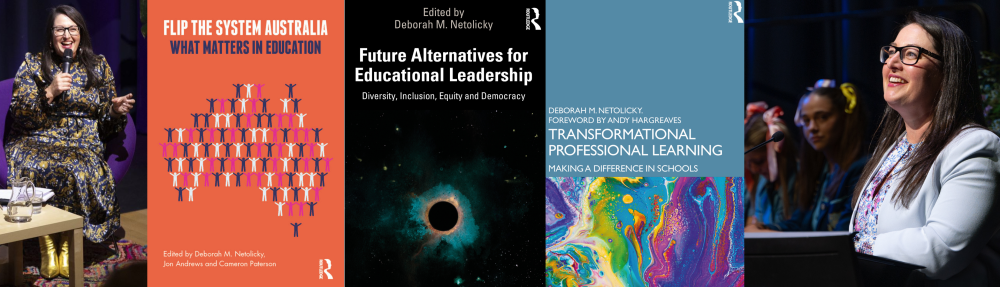
In the coming week I will be presenting at the International Congress for School Effectiveness and Improvement (ICSEI). In one session, I will be reflecting on a book I edited: Future Alternatives for Educational Leadership: Diversity, Inclusion, Equity and Democracy. In the conclusion of that book, as I reflected on the impacts of the COVID-19 pandemic, I wrote that during the pandemic, “schools have been revealed as socioeconomic enablers and vital points of connectedness, relationality, socialisation, community and socio-emotional-financial support for families” (2022, p.213). That sentiment continues to resonate. As well as being learning communities, schools are additionally communities of being, belonging, becoming, connecting, and buoying.
More than a group of individuals clumped in one environment, community is the act of collectively coming together. A community allows the group to share a sense of purpose and identity, and simultaneously for each individual to embody and explore their own unique purpose and identity. The very word community finds its roots in the Latin communis, meaning ‘shared by all’ or ‘common’. In fact the word munis means to be ready to serve. More than merely sharing a place, this etymology reminds us that community is about what values, experiences and lives we share, and that community is about service. Being intentional about community means deliberately focusing on what connects us rather than what divides us, and on how we can help others. As communities, schools focus on being environments of open dialogue and safe cultures of trust, with shared traditions, shared stories, and support networks that extend beyond classrooms, staff rooms and parent functions.
While students are at the heart of schools and their purpose, school communities include old scholars, families, staff, and wider community. School leaders work in fellowship with their school communities. As a school principal, I am often in the privileged position of sharing in the lives of those in my school community. It is in viscerally human and often private moments, such as when I am with someone who might be experiencing grief or difficulty, that I find myself reflecting on how to act with empathy and compassion while working to do the thing that will most serve and support the person or family in that moment. I focus on presence and service while accepting the discomfort and complexity of our shared humanity.
In my recent conversation with Karen Spiller OAM CF on my podcast, The Edu Salon, Karen expressed the need for principals to feel the hurt of their community, and to also be tough enough to sustain themselves in supporting those in their community through difficult times. There is a need for those leading in, with, and for community to reflect upon how we engage in a way that allows us to keep doing the work. As the sayings go, we need to fit our own oxygen masks before helping others, and we cannot pour from an empty cup. Serving and leading others is only possible when we ourselves are able to be resilient and well.
As communities, schools are people places. Each school offers members of its community more than academic courses, co-curricular opportunities, and wellbeing programs. I often say to students and staff that leading is an action and a way of being, and that leading is about others, not about self. Schools allow opportunities for us to wrap around and walk alongside people through life’s many experiences, in sadness and joy, challenge and achievement, despair and hope. That is an incredible privilege.
Looking back on any year reveals triumphs and celebrations as well as challenges and low points. 2024 has been a year that saw an uplifting Olympics and Paralympics in Paris, and leaps in space exploration, but also ongoing cost-of-living crises, worrying levels of mental health, cybercrime, geopolitical conflict, and extreme weather events. Personally, I experienced an incredible Aboriginal cultural immersion experience in North East Arnhem Land, published 11 episodes of The Edu Salon podcast, co-authored a lead article for Australian Educational Leader with Patrick Duignan on reimagining educational leadership, and received two awards: as an Excellence Awardee for Principal of the Year in the Australian Education Awards, and the Australian Council for Educational Leaders South Australia Media Award.
As I reflect on education across 2024, three key trends have risen to the surface in my work as principal, and in the work of schools: personalised learning, GenAI, and holistic wellbeing. None of these topics are new, but they are at the forefront of current educational thinking and practice. As we enter 2025 this week, these foci will continue to shape education.
Personalised Learning
Best practice, research-informed methods of instruction are key to how we design learning and teaching in schools. Schools continue to develop ways in which students’ diverse needs and identities are served, including through engaging student voice and choice, via quality differentiation, by using technologies to enhance and personalise learning, and by tailoring pathways to individuals where appropriate. Within the intentional frameworks of learning and teaching in schools, students are increasing positioned as agents of their own learning. They set goals, influence their own learning, and shape their own learning pathways. While in school, students are studying vocational courses, earning micro credentials, undertaking early university courses, and running their own businesses. At my school, in 2024 we introduced a seed fund and mentorship program to support students pursuing their own social enterprises.
The worlds of education and work will need to continue to develop personalised learning opportunities, with a focus on diversity, adaptiveness, a global mindset, and less hierarchical structures. Generation Alpha—born 2010-2024—have information not only at their fingertips but also digitally integrated into their lives. They experience emerging technologies, fast-paced change, global influences and remote learning. Their digital experiences are personalised by algorithms and so they are accustomed to digital experiences curated to them personally. They connect, collaborate, and create online. They are innovators, entrepreneurs, technology enthusiasts. They are concerned by ethical issues such as equity and sustainability. My own children are Gen Alpha and they are questioning the value of traditional work and life pathways. They hope for life, learning and work to be self-directed, flexible, inclusive and gratifying.
Learning will continue to be personalised, as well as gamified, ‘stacked’ through a range of microlearning opportunities, and lifelong. Schools will continue to reflect on the purpose of teachers as experts who broker learning experiences for students, and schools as hubs of learning opportunities that allow each learner to thrive.
Generative AI
2024 has been a year of the rise and rise of generative AI as collaborator in learning and teaching, with tools such as ChatGPT, Microsoft Copilot and Google Gemini becoming mainstream. Technologies such as artificial intelligence, and extended realities, continue to be tools with which educators develop awareness and intentional deployment.
AI can be a useful accelerant for research, thinking and writing, reducing the time it takes to complete tasks. Using AI as a collaborator and productivity booster can support the work of those in schools. AI can, for example, be used for generating quizzes, transcribing meeting minutes, writing sample test questions, analysing curriculum documents, summarising information, explaining key concepts, drafting communications and generating exemplar responses.
Students can use AI in a range of ways, ensuring that they reference and attribute it appropriately. They might use AI to conduct initial research on a topic, search for useful resources, create digestible summaries of complex information, brainstorm ideas for creative tasks, translate language, generate practice questions, or create study schedules.
Of course, any technology must be used responsibly, ethically, safely, and with a healthy level of scepticism. Critical questions include asking ourselves and our students about biases inherent in AI models, what is excluded by an AI model, assumptions embedded in an AI ‘voice’, and how we might verify the accuracy and validity of the information provided.
Generative AI will continue to shape education as we collaborate with it and develop our use of it as a tool to enhance learning, teaching and leading. Yet teaching and leading are not purely transactional processes that can be replaced by artificial intelligence. Technologies cannot replace authentic voice, teachers that see and know their students, compassionate leadership, or nuanced and context-embedded decision making.
Holistic Wellbeing
Schools are places of human connection and complexity. In my chapter for the 2019 book Flip the System Australia: What Matters in Education, I wrote that “education is not an algorithm but a human endeavour”, a line which seems more poignant now that our lives are increasingly shaped by algorithms, from the route we take to a destination, to the music to which we listen, to what we see on the internet or social media. In 2024, wellbeing has continued to emerge as something with which schools and education systems constantly grapple. Challenges include student absenteeism, student mental health, teacher recruitment and retention, and teacher and school leader wellbeing.
We need to feel safe and well if we are to learn, and so learning for students is about more than intentional teaching; it is facilitated by positive relationships and learning environments in which learning is valued, progress is expected, and mistakes are seen as opportunities to grow. For students, responsive pastoral care programs and robust pastoral structures provide a holding environment in which every child is known and noticed.
Schools need to continue to provide opportunities for meaningful human connection. We need to continue to see education as a human endeavour, about people, belonging and community. In 2024, there were people in my school community who faced hardship and sorrow. It is these moments—often quiet and unseen—that remind us that the greatest privilege of leading is not in celebrating accolades or public successes, but in walking alongside others in private moments of grief and sadness. It is in these moments that the school as community comes to the fore and we most lean in to our humanity in order to support one another.
It is vital that schools create cultures of high care, high challenge and high trust for all in our school communities, including students, staff and families. I would add that these environments need to be high observation, in which we see, hear, know and support each individual. Key parts of education work are noticing, listening, empathising, and offering care. One thing we can all focus on in 2025 is paying attention to our daily interactions and being truly present with those in our community.
On 31 October, UNESCO launched the 2024/5 Global Education Monitoring (GEM) Report, Leadership in Education: Lead for Learning, which engages with Sustainable Development Goal 4 ‘Quality Education’. The report explores global research and practice in educational leadership, capturing the current landscape, possibilities, practices and challenges of leadership in education around the world.
Below, I briefly summarise some of my key takeaways from the GEM Report.
Impact: School leadership matters
The report notes that leadership in schools is second only to teaching in the classroom for its capacity to impact on student outcomes and experiences. If we are to improve outcomes for students, it is vital to understand the impacts, influence and ingredients of school leadership.
The report notes that those principals who have a significant positive impact on schools tend to set transformative directions, use policies and reforms to drive purposeful change, enable safe and positive environments, build relationships, develop people, provide feedback, manage resources strategically, and work to improve classroom teaching. It also notes that school principals in Australia have been reporting higher levels of stress, burnout and depression in recent years (with women reporting this more than men), with workload quantity, lack of time for engaging with important work, and the seeming impossibility of managing life outside of the job, being major reported causes.
Australia’s Professional Standards for Principals, developed by the Australian Institute for Teaching and School Leadership in 2014, define the principal’s role as focused on five areas: leading teaching and learning, developing self and others, leading improvement and change, managing the school, and working with the community. Based on the work of Ken Leithwood, the GEM Report identifies four key roles of the school leader as: setting expectations and vision, focusing on learning and leading instruction, fostering collaboration, and developing people to improve school outcomes.
Autonomy: There can be no leadership without the opportunity to make decisions
The context for leadership affects those things a leader does in setting expectations, such as sharing vision, holding high expectations, setting a personal example, representing the community, and staying abreast of trends, data and information to inform decision making. Standards and accountability mechanisms for schools and school leaders vary from system to system and school to school. The GEM Report found that in 20 high-income countries, the more principals had the primary responsibility for human and financial resource decisions, the more likely it was that a country would be among those ranked more highly in terms of average performance in mathematics.
School leaders have more chance to make a positive difference if they have autonomy, support and well-defined responsibilities. Education systems need to empower school principals with sufficient autonomy to manage financial and human resources and to make decisions related to teaching and learning. Autonomy must, however, come with adequate support, sufficient resourcing and appropriate accountability measures.
Collaboration: School leaders cannot and should not lead alone
School leaders are not solo heroes, but part of an enmeshed ecosystem of influence. As I often say, leading is an action and a way of being, not a role or a formal title. All can lead. In schools, this might mean senior leaders, middle leaders, teachers, school services staff, students, parents and community members.
Shared school leadership and collaboration among empowered stakeholders strengthens decision making, contributes to enacting a shared vision, and leads to lasting improvements in educational outcomes and school cultures. School leaders have a central role to play in developing school culture and climate; maintaining a safe, healthy school environment; raising resources strategically, building networks; managing risk; nurturing collaboration; enabling others to act; and consulting with families and community.
School leaders who build the capacity of others, ensure they are accessible, provide training and resources, foster a collaborative environment, involve others in decision making, are involved in collaborative structures and processes, and distribute leadership among and across the organisation, are more likely to see the school’s vision realised.
Schools can promote shared school leadership by establishing clear communication channels, ensuring transparent decision-making processes, implementing regular feedback mechanisms, ensuring clarity of roles, and recognising unique contributions. School leaders can keep track of staff professional development needs, provide individualised professional support and mentoring opportunities, ensure evaluation of practice, and reward good performance.
Collaborative relationships (such as those built through committees, teams and other collaborative structures) strengthen governance, improve decision making, enhance accountability, and foster inclusive and resilient environments. Fostering safe, inclusive and culturally responsive environments is key to ensuring a climate of care and challenge where collaboration can thrive, where shared vision can be realised, and where all students, staff and wider community can flourish.
With over 5 billion people using social media worldwide, it is embedded in our everyday lives, bringing us connection, collaboration and opportunities for sharing our voice. Being connected online can have benefits such as facilitating social connections with others, reducing loneliness and providing easy access to helpful resources. Social media can help us to connect and to cope. As someone who has lived across different states of Australia and overseas, social media has been a way to remain connected to friends and family who live elsewhere. I have also enjoyed productive professional collaborations that have been borne of social media connections such as the early days of Twitter (now X) and LinkedIn. I have written academic articles about the ways in which digital and social media can offer collaborative platforms, identity testbeds, productive spheres and empowering spaces.
As a teenager in the early 1990s, I bought a corded push-button phone for my bedroom, so I could connect with my friends (spending hours talking on the landline, thereby preventing anyone else in the family from making or receiving phone calls). Now, however, phone calls are out, and social media and messaging apps are in. A recent Uswitch survey revealed that a quarter of people aged 18-34 never answer the phone and that young people are increasingly choosing to communicate via social media (48%) and voice messages (37%). 98% of Year 10 and 11 students in Australia reported regularly using at least one social media platform, with 18% actively posting or sharing on social media at least once a day.
For teenagers, who have grown up in a digitally connected world, social media is a seemingly non-negotiable and inescapable part of life. It is often through devices, including messaging and social media platforms, that young people connect and communicate. For marginalised young people, the digital world can be a place in which they feel in control of their identity, expand their social and cultural circles, and engage with others. Young people also use social media for creating and innovating. My teenage son, for instance, manages social media accounts for his local businesses.
Social media as a source of stress
The ‘always on’ world of social media and messaging means that there is no escape from social connection, comparison and communication, including that which can be negative in nature. There are growing concerns about the impacts of engaging with social media, especially for prolonged periods, on mental health and self-esteem.
Use of social media, especially high daily use, has been associated with negative mental health, including anxiety, depression and social media addiction. Social media induced stresses include approval anxiety, fear of missing out, availability stress (the demand to be permanently available), connection overload (the perception of not being able to process all information) and online vigilance (constant awareness of the online environment). Visiting social media sites has been found to create psychological stress from information overload, and to activate a physiological stress response that contributes to elevated anxiety symptoms and related impairment, especially in emerging adults.
Young people are worried about their online safety, including catfishing, fake accounts, contact from unknown people, the privacy of their personal information, cyberbullying, deepfakes, being exposed to inappropriate content, misinformation, fake news, receiving judgement from peers about their opinions online, and vulnerability of particular groups.
The highlight reel and social comparison
Through social media, we often present a highlight reel of our experience that leaves out more reality than it includes. Through their engagement with social media, teens are constantly bombarded with content that shows apparently aspirational ways of looking, being and living. This includes unrealistic, highly edited, retouched and AI-generated social media content from friends and influencers.
UNESCO’s Technology on Her Terms report warns that algorithm-driven, image-based content, especially on social media, exposes girls in particular to material that glorifies unhealthy behaviours and perpetuates unrealistic body standards, thereby having a detrimental impact on girls’ self-esteem, body image and mental health. The report points out that the TikTok algorithm targets teenagers with body image and mental health content every 39 seconds, and with content related to eating disorders every eight minutes.
Social media has been found to expediate social comparisons and negatively impact young people’s self-image when they compare themselves to what they see online. Recently-released data from Australian National University show that the use of social media platforms is associated with poorer life satisfaction for Australian young people, especially the use of TikTok use for girls and Discord for boys.
How can we support young people to manage social media?
So, if social media can lead to heightened body image concerns, materialism, addictive use, and mental health issues, how can we support young people to be responsible, safe and kind navigators of the online and digital world? Healthy boundaries, targeted education and open communication are key to supporting young people in this age of relentless connectivity, firehoses of carefully curated communication, and privacy concerns.
Healthy boundaries
The South Australian government recently released a proposed bill which sets out a legislative framework to ban social media for children under 14 and require social media companies to establish parental consent before allowing children aged 14 and 15 to use their platforms. Australian Prime Minister, Anthony Albanese, has outlined plans to introduce legislation to impose a minimum age for teenagers accessing social media and gaming platforms. Last Thursday, at the Social Media Summit in Sydney, Australia’s eSafety Commisssioner, Julie Inman Grant, indicated that for many parents and children “that horse has already bolted”. She revealed that approximately 1.34 million Australian children (out of roughly 1.6 million 8-12-year-old Australians) have used an app such as Snapchat, TikTok and WhatsApp since the beginning of 2024, noting that recent research has shown that 82% of Australian 10-year olds and 93% of Australian 12-year-olds are using apps before reaching the current official age of social media entry at 13. This indicates that bans and age limits may not have the desired impact of keeping young people from social media.
As parents and educators, we can help teens by removing mobile technologies from classrooms and bedrooms, and by using apps and programs that help us monitor and control when teenagers can access social media. We can help teens to set boundaries and regulate their technology use and engagement with social media by banning or limiting phone use at certain times (such as in school yards and overnight) and setting screen time limits, app time limits, and downtime schedules. At my school, mobile phones must be kept in lockers during school hours and notifications switched off on all devices (watches, iPads, laptops, phones) to allow the focus in classrooms to be on learning, and the focus at break times to be on in-person relationships.
We can sit alongside our teens, engage in their online worlds with them, and reflect together on their feeds. We can discuss with our children and students how to improve their digital experiences. This might include by muting and blocking accounts or turning off notifications. It might mean supporting them to remove apps for a time or permanently, and to reflect on how their experience, mental health and sense of self change when they take a break from social media.
We can and should additionally monitor our own social media and device use, and role model healthy boundaries and behaviours.
Targeted education
As parents and educators, we need to openly discuss and explicitly teach our children about the benefits, risks and potential consequences of engaging in the digital world, as well as strategies for keeping themselves safe online, and for seeking help.
In Australia, the Keeping Safe: Child Protection Curriculum explicitly teaches children about safety, respectful relationships, recognising and reporting abuse, and protective strategies. Additionally, schools develop and deliver tailored and responsive wellbeing curricula that teach knowledge, awareness and safe practices, and respond to the needs of the students as they arise. Schools partner with parents in focusing on responsible use of technologies, and working together to support teens.
Open communication
Open communication with trusted adults is crucial in protecting and supporting young people navigating the digital world. Teenagers with a clear and stable sense of self, high levels of emotional self-confidence, and open communication channels with their parents, are better able to cope with social media stressors on mental health.
It is in our ‘real lives’, in person, in the non-online world, that parents and educators can explore, build and co-design protective factors for and with young people. Australian research for the eSafety Commissioner indicates that young people prefer to seek help from trusted adults in the first instance, and that positive reinforcement, support and reassurance of confidentiality from family, friends and services are what encourages them to seek support. Young people may be discouraged from seeking help if they fear being punished, are concerned that adults may not have adequate information or experience to assist them, feel their personal boundaries are being invaded, or fear stigmatisation or victim-blaming. These fears indicate that the most essential thing adults can do for the young people in their lives is to create and hold a safe and non-judgemental space for them to raise and explore their concerns.
Building positive relationships with teens, maintaining open communication, discussing their worries and aspirations without fear of judgement, and workshopping potential strategies with them, helps us to help young people become savvy, self-aware users of social media and flourishing, resilient individuals.
References
Auf, A. I. A. A. I., Alblowi, Y. H., Alkhaldi, R. O., Thabet, S. A., Alabdali, A. A. H., Binshalhoub, F. H., … & Alzahrani, R. A. I. (2023). Social comparison and body image in teenage users of the TikTok app. Cureus, 15(11).
Barnes, N., & Netolicky, D. M. (2019). Cutting apart together: A diffracted spatial history of an online scholarly relationship. International Journal of Qualitative Studies in Education, 32(4), 380-393.
Constant, I., Tsibolane, P., Budree, A., & Oosterwyk, G. (2024). Analysing Coping Strategies of Teenage Girls Towards Instagram’s Algorithmic Bias. In International Conference on Human-Computer Interaction (pp. 146-160). Cham: Springer Nature Switzerland.
Doery, K. (2024, 10 September). Young People’s Social Media use-What impact does it have?
Ozimek, P., Brailovskaia, J., Bierhoff, H. W., & Rohmann, E. (2024). Materialism in social media–More social media addiction and stress symptoms, less satisfaction with life. Telematics and Informatics Reports, 13, 100117.
Maftei, A., & Pătrăușanu, A. M. (2024). Digital reflections: narcissism, stress, social media addiction, and nomophobia. The Journal of Psychology, 158(2), 147-160.
Moody, L., Marsden, L., Nguyen., B. & Third, A. .2021. Consultations with young people to inform the eSafety Commissioner’s Engagement Strategy for Young People, Young and Resilient Research Centre, Western Sydney University: Sydney
Netolicky, D. M., & Barnes, N. (2018). Scholarship of the cyborg: Productivities and undercurrents. In Education Research and the Media (pp. 165-179). Routledge.
Vannucci, A., Flannery, K. M., & Ohannessian, C. M. (2017). Social media use and anxiety in emerging adults. Journal of affective disorders, 207, 163-166.
Wolfers, L. N., & Utz, S. (2022). Social media use, stress, and coping. Current Opinion in Psychology, 45, 101305.
I have just returned from a week on Country in East Arnhem Land, being immersed in Yolŋu culture and community alongside 25 other educators from South Australia and New South Wales, as part of an Aboriginal Cultural Immersion Program run by Culture College.
As I begin to process my learnings, below I reflect on three of my takeaways from this experience. I do not aim to tell the stories of Yolŋu or to share the knowledge they so generously shared with me, but rather to reflect on my own story and experience.
Tune in – to self, others and Country.
The Yolŋu have a deep, ancient and ongoing connection with land, story and ancestry. It is the land from which Yolŋu law, knowledge and custom emerge. Across the week we were encouraged to ‘Let Country be the teacher’ and to listen to what the land and our surroundings tell us.
When we arrived at Gulkula, 31 kilometres from Nhulunbuy, we were welcomed with a purifying smoke ceremony and a bush medicine healing. At the Yirrkala Art Centre we experienced a sound healing through the playing of a yidaki and immersed ourselves in the histories of the Yolŋu, cross-hatched in ochres and clays from the land onto bark and trunks. The stories of the land were also woven into basket works made from pandanas leaves painstakingly harvested, stripped, dried, dyed and entwined.
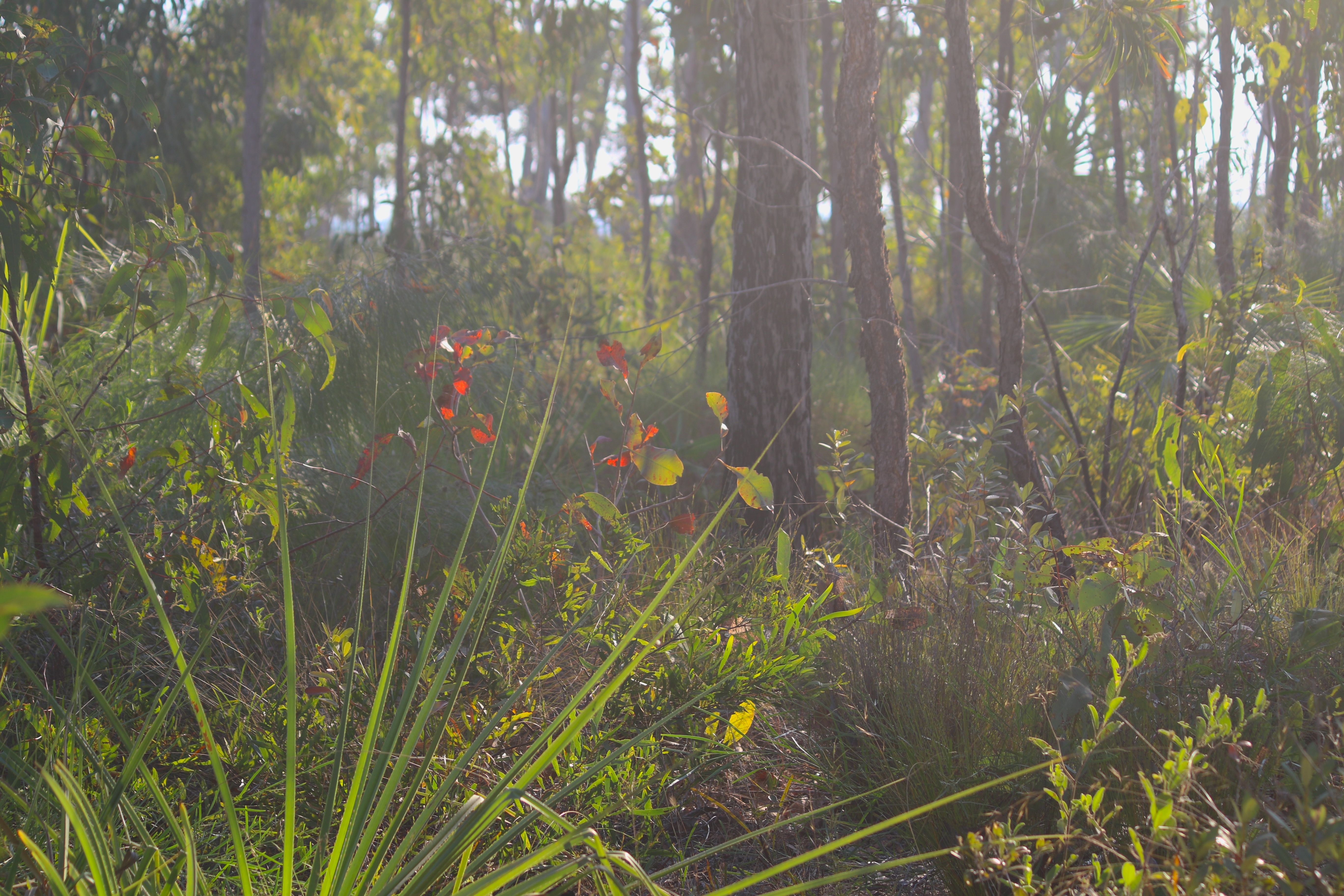
Between Gulkula and Nyinyikay we travelled winding rainbow-dirt roads in colours of rust red, burnt orange, buttery ochre, wattle yellow and cotton white. Landscapes of eucalypt-green leaves and bleached stringybark trunks were punctuated by mauve star-shaped flowers, architectural termite towers and smouldering charcoal husks soon to sprout new green shoots, representing the renewal and new beginnings that come from fire and smoke.
On arrival at Nyinyikay we were painted with clay from the land and welcomed with a traditional dance of the ancestral animal of the Country and of the people welcoming us. We walked on Country with Nyinyikay family to learn about food and medicine available from the bush.
On this journey we were helped to embrace a deep tuning in – to self, to Country, to others. As we sunk deeper into Yolŋu time, space opened up to breathe and be, to listen and learn.
Respect culture, wisdom and truth.
For Yolŋu, ancestors and the oldest members of family and community are shown the utmost love, kindness and respect. Age and wisdom are valued and revered, in stark contrast to the glorification of youth in Western cultures. For Yolŋu, grey hairs and deep facial lines are signs of a life well lived, of sacred knowledge known and shared, of legacy protected, and of challenges overcome.
We felt the honour of learning from Elder Djapirri Mununggirritj, and Nyinyikay martriarch Nancy Mutilnga Burarrwanga (fondly referred to as ‘Old Lady’ by her family). We were privileged to learn from the wider family of all ages and from its emerging leaders. We learned that in Yolŋu society, only those who know themselves and act with respect and integrity are taught ancient, sacred and powerful knowledges. One must demonstrate their capacity to bear the weight of the responsibility of carrying and passing on those knowledges. We witnessed the great power, privilege and responsibility that comes with leading, and the capacity of an individual to inspire.
We walked and worked, listened and yarned. We engaged in women’s business for the women and men’s business for the men – opportunities for knowledge telling, yarning, connecting and supporting one another. Together with our hosts, we shared stories and photos, jokes and laughs. We spent an evening under the stars dancing ceremonial dances together. Each evening, our group of educators gathered in a circle around the fire to reflect upon our day and our learnings.
Community is all.
In Yolŋu society, all is balanced and all are equal. We learned about the two moiety (groups) that make up the Yolŋu worldview, and keep the equilibrium in all things. Like the Kaurna concept of yara (reflecting reciprocity and ‘twoness’), the moiety are two complex halves that make up a harmonious whole. No matter someone’s age, race, background, needs or idiosyncrasies, all are welcome, all are included, and all are loved. All are family and family is all.
Each of we 26 visitors to these Aboriginal-owned lands were overwhelmed by the deep care and deep presence of our Yolŋu teachers. The compassionate welcome and safe space we received from Yolŋu was one of generosity, kinship and total acceptance. We were embraced as family and bestowed mälks (skin names) and Yolŋu names.
Reconciliation is represented in the Yolŋu metaphor of ‘the place where freshwater and saltwater meet’, and find balance as they come together and unite. In a symbolic act of reconciliation, of coming together, we visitors worked alongside the Nyinyikay family to help build the wall of their fish trap on the mangrove mudflat.
Djapirri reminded us that we are all “wired for love” and should “speak from the heart”. Abundant love, openness and trust were tangible to all of us in the way the people interacted with one another and with each of us. Walking with and learning from Yolŋu reinforced the need for us all to be active in moving towards a reconciled Australia. It brought to the fore the importance of belonging, identity and a relational community in which each member is seen, heard, held, respected, and welcomed with open hearts, open minds and open arms.
It seems that everywhere educators turn there is a news piece, recent study or professional learning opportunity about educator wellbeing.
Facilitating schools and education systems that support staff to sustain their care, energy and enthusiasm – and thrive as fulfilled, healthy professionals – is an ongoing and oft-discussed challenge for schools. There remain ongoing and increasing concerns around the wellbeing of teachers and school leaders, and system-wide attraction and retention challenges in teaching and school leadership. The International Baccalaureate’s Wellbeing for Schoolteachers report (Taylor et al., 2024) points out that teacher wellbeing has an unequivocal impact on both teachers’ professional performance and the wellbeing and academic success of students. Yet staff cannot flourish without sustainable workloads, appropriate support, and a safe environment of trust, care, open communication, growth, recognition and feedback.
I have had the pleasure of chatting with Helen Kelly and Amy Green on The Edu Salon podcast, who both provide useful insights to those considering staff wellbeing in their organisations. The OECD (2013) defines wellbeing as made up of the following elements.
Life evaluation – a reflective assessment on a person’s life or some specific aspect of it.
Affect – a person’s feelings or emotional states, typically measured with reference to a particular point in time.
Eudaimonia – a sense of meaning and purpose in life, or good psychological functioning.
Martin Seligman’s PERMAH model (Positive Emotion, Engagement, Relationships, Meaning, Accomplishments, Health) also provides a helpful framework for thinking about what contributes to human flourishing.
Patrick and colleagues (2024) highlight the importance of fostering positive relationships in schools, active wellbeing teams, leaders addressing their own wellbeing, building trust within staff, and ongoing initiatives rather than stand-alone wellbeing events. Karnovsky and Gobby (2024) criticise deficit approaches to educator wellbeing that encourage teachers to look after their own wellbeing without addressing systemic and workplace issues “that are complex, institutionalised, entrenched and unlikely to be readily remedied.” The longitudinal Australian Principal Occupational Health, Safety and Wellbeing Survey (Dicke et al., 2024) continues to show declining principal wellbeing; increasing physical, verbal and cyber attacks against principals; and increasing principal sentiment to leave the role altogether. A recent meeting of Australian Education Ministers focused, in part, on teacher and school leader workload and wellbeing.
Additionally, in Australia, the Closing Loopholes Act, or ‘right to disconnect’ law, now offers an opportunity to reshape workplaces and workplace boundaries. The Act means that an employee may refuse to monitor, read or respond to contact (or attempted contact) from their school or a third party (which could include parents or students) outside of their working hours, unless the refusal is unreasonable. The new right does not stop schools from sending emails to employees outside of work hours, but seeks to protect employees who choose to ignore attempts to be contactable from being disciplined or terminated as a result. Schools can review their communication and collaboration practices, and be clear about how staff are supported to disconnect from work after hours.
Despite the swirling mass of talk about staff wellbeing, context, as always, is Queen. Any attempts to address the wellbeing and flourishing of staff need to be embedded in the school and system context, and to include the voices and participation of staff in that school or system. Schools need to ask their staff what their preferences and concerns are, and work alongside staff to find practical ways to address these.
Taylor and colleagues (2024), point to school climate as key to teacher wellbeing, including staff voice in school decision making, work autonomy, good teacher-student relationships, feelings of belonging with the school, and sufficient resources to carry out duties. At my school, in response to a range of staff feedback and the work of our Staff Wellbeing Committee, we are undertaking a process of reviewing and refining our policies, practices and resourcing with a view to how these impact our staff, their workloads, their sense of purpose, their experience of joy, their professional satisfaction, and their emotions about work.
Our school is dedicated to creating a safe and nurturing environment that prioritises the safety and wellbeing of all individuals, treats staff as trusted professionals, and attempts to flexibly and compassionately address individual staff circumstance, and facilitate staff autonomy and growth. Open communication is key to individualising flexible work options that balance empathy, compassion and flexibility, with accountability, high standards and practicality.
We have released our first go at a ‘Staff Wellbeing and Flexible Working Guidelines’ document that makes explicit the school’s approach to supporting staff wellbeing, and outlines flexible work options, while acknowledging that each staff member’s personal circumstances is different, and there is no ‘one size fits all’. These guidelines are an iterative work in progress and will evolve alongside ongoing opportunities for staff to provide honest, respectful feedback to inform decision making.
When speaking about school culture, I have often referred to the words of Peter Drucker (‘Culture eats Strategy for breakfast’), Herb Kelleher (‘Culture is what people do when no one is looking’), and David Morrison (‘The standard you walk past is the standard you accept’). Recently I came across this from Bill Marklein: “Culture is how employees’ hearts and stomachs feel about Monday morning on Sunday night.”
In schools we need to be asking ourselves: How can we all contribute to cultivating an environment where everyone–students and staff–looks forward to coming in on Monday morning? How might we foster cultures and practices in which we celebrate our purpose, find the joy in our work, and think creatively about schools as places of learning, caring, leading and working?
References
Dicke, T., Kidson, P., & Marsh, H. W. (2024), Australian Principal Occupational Health, Safety and Wellbeing Survey: 2023 data, Institute for Positive Psychology and Education, Australian Catholic University
Karnovsky, S., & Gobby, B. (2024). ‘How teacher wellbeing can be cruel: refusing discourses of wellbeing in an online Reddit forum’. British Journal of Sociology of Education, 1-19.
OECD. (2013). OECD Guidelines on Measuring Subjective Wellbeing. OECD Publishing.
Patrick, P., Reupert, A., Berger, E., Morris, Z., Diamond, Z., Hammer, M., … & Fathers, C. (2024). ‘Initiatives for promoting educator wellbeing: a Delphi study’. BMC psychology, 12.
Taylor, L., Zhou, W., Boyle, L., Funk, S., & De Neve, J-E. (2024). Wellbeing for Schoolteachers (Report No. 2). International Baccalaureate Organisation.
Schools are human ecosystems full of all the complexities, uncertainties, wonder, pain and joy that comes with living a human life. As we begin a busy year ahead, it is worth remembering that education and leadership are deeply human, and that it is a privilege to be with people in conversation, and to sit with them and share in their human experience.
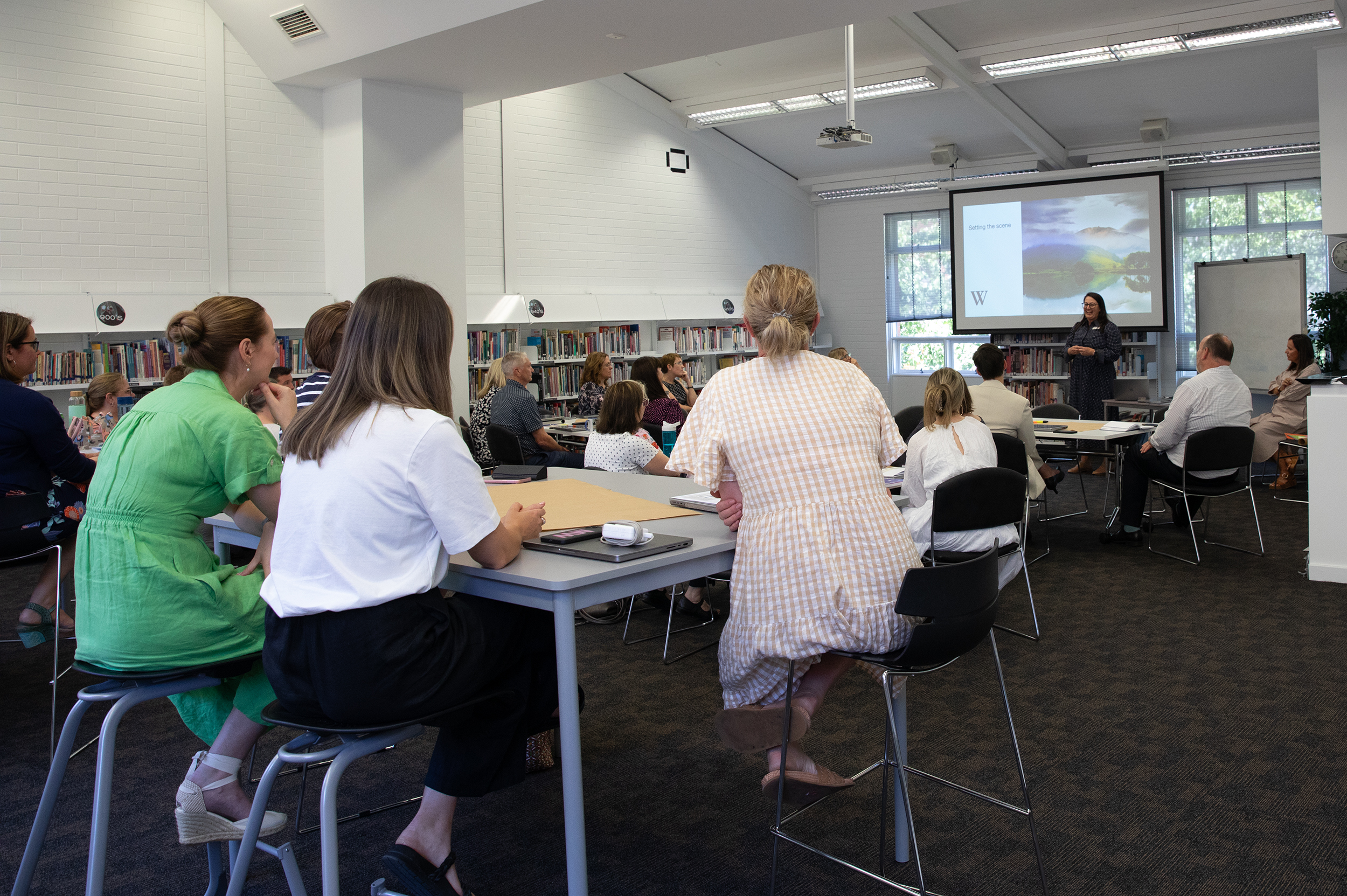
Today a colleague and I presented to leaders in roles across the school on leading teams through intentional conversations, including coaching and more direct ‘difficult’ conversations. While we focused on conversations with colleagues, much of the discussion was also relevant to all sorts of potential conversations in all sorts of contexts. Below are some reflections on what was presented and discussed.
Leading teams is more than administration and organisation. It involves working alongside people and seeking to understand the needs of each person in the team: their goals, aspirations, challenges, and areas of growth. It means regular, meaningful check ins with each member of the team, creating a safe and non-judgmental space for team members, and balancing this with clear expectations and accountabilities.
High performing teams take shared responsibility for their shared purpose. They think of the work as ‘our work’ that can be collaboratively achieved, focusing on ‘together we can’, rather than ‘that’s not my job’ or what Jan Robertson calls ‘climates of dependency’ in which staff wait for leaders to tell them what to do.. High performing teams embody positive cultures of collaboration. They focus their energies on supporting and growing people, not on setting up internal competition or a deficit view in which people need surveilling and ‘fixing’. In high performing teams, it is understood that everyone deserves the opportunity to learn and improve, supported by clear expectations, shared vision, open communication, and effective feedback practices. Members are able to gracefully disagree and engage in robust, respectful discussion. They are additionally able to leave any discussion as a united team, even when a decision has not gone the way of an individual or small group.
Robert Kegan and Lisa Lahey refer to the concept of ‘semantic space’; the language-rich environment embedded in organisations. The semantic space of a workplace is ‘how we talk around here’: what we talk about, how we speak to one another, what kinds of language we use, what kinds of questions we ask, and how we respond when approached for a conversation.
It is always worth asking: How DO we talk around here? And then, how COULD we talk around here that might have more positive, productive outcomes for those in our care and community? How might we engage in professional conversations that are both compassionate and rigorous? In which we seek to listen and understand before telling or judging? In which we balance support and accountability, administration and leadership?
People are at their best when they have autonomy, feel their work has meaning, feel they have impact and influence, and have the efficacy to do their job. We can develop our teams by being intentional about the kinds of conversations we have to support and develop team members. Candi McKay describes schools as places where reflection on practice and collegial conversations should be viewed as opportunities to grow and learn, and where staff should expect to be engaging in thoughtful conversations and relying on their leaders to listen and ask questions that push at the margins of their capacity.
Considering the semantic space of our organisations includes considering organisational trust, and how we might foster a psychologically safe space for staff, in which it is ok to take risks, be vulnerable and reflect honestly. This includes inviting and listening to a range of feedback and providing confidential, non-judgmental spaces for staff to reflect on practice and generate ways to approach problems.
There is a place for coaching as a vehicle for staff to develop autonomy and self-directedness. John Whitmore famously defined coaching as “unlocking people’s potential to maximise their own performance. It is helping them to learn rather than teaching them.” In my book, Transformational Professional Learning, I define coaching as a collaborative process by which a coach acts as mediator, mirror, and conduit for the coachee’s own thinking, in order to develop self-directedness and self-efficacy, and to move the coachee towards an improvement or solution that is owned by them.
Coaching takes an investment in time and involves really listening to the other person, being in their service in the conversation, being present, and seeking to listen to understand. The tools of coaching include pausing to allow the other person to continue their train of thought. In Cognitive Coaching we are asked to ‘set aside’ our own conversational needs by refraining from autobiographical (‘me, too!’), inquisitive (‘tell me more about’), and solutions-giving (‘I’ve got an answer for you’) talk. Paraphrasing allows the coach to check in with the person to help them clarify their thought, problem, goal or solution. Questions begin with ‘what’ or ‘how’ and use plural forms and tentative language. What strategies could you implement? What options might be available to you? Taking a coaching approach to a conversation assumes that the coachee knows more about their own situation than the coach does, that everyone has the capacity to learn and grow, and that we all have the capacity to solve their own problems.
Of course, there are times for mentoring conversations, or performance-based conversations, or direct conversations in which an issue must be addressed. Once we know what kinds of conversation are available to us, we are empowered to ask for what we need. For example, we might say, “I am not sure what to do in this situation, and I would really appreciate you listening to help me talk through it,” or “I am stuck and am looking for some advice and wise counsel to help me move forward.” When someone comes to a leader for a conversation, they can ask, “How can I be of support to you in this conversation?”
We talked in today’s session about the need for compassion in conversation, of pre-supposing the best of people, of rehearsing tricky conversations with a trusted colleague, and of being fully present in our professional interactions.
Rather than seeing conversations or pop-ins as an interruption to our to-do list, we can remind ourselves that, as Rachel Lofthouse has said: ‘The talk is the work’. To support others through intentional conversation is a gift.
2023 was a year of the increasing impact of generative Artificial Intelligence, devastating international conflicts, a global economic downturn, a King’s coronation, the Barbie movie, climate crises (with 2023 the hottest year on record), the Australian referendum on an Indigenous Voice to Parliament, the Matilda’s playing in the semi-final of the FIFA Women’s World Cup, and financial pressures for households due to rising interest rates and inflation. Educators engaged with AI, VR, AR, entrepreneurship, micro credentialling, evolving curriculum priorities, personalisation, complex wellbeing issues, youth mental health crises, workload pressures, workforce shortages, cybersecurity, sustainability, and equity. 2023 was the first year since 2020 when everything seemed ‘back’ and ‘on’. Many people I have spoken to have commented that to them the year felt full and fast.
For me, 2023 was a big year of growth and memory making. I moved with my family from Perth to Adelaide. This meant buying a new family home (and then renovating it while living in it), our two children beginning at their new school and in new sporting teams, and our family exploring our new city and state.
I began as Principal at Walford Anglican School for Girls, where this year we launched our 2023-2025 Strategic Plan, a new scholarship, a wellbeing dog program, staff learning communities, and a staff wellbeing committee. We refreshed the school’s values in consultation with students and introduced values awards. We engaged extensively in Reconciliation, service, enterprise learning, a glowing IB PYP evaluation, and designing bespoke senior secondary pathways for students. We undertook significant stakeholder consultation as part of a review and redesign of the uniform. We reviewed the shape of the school day and the café menu, and built new play spaces for our early and junior years. I have learned much about traffic safety and significant trees. We enjoyed community events and incredible showcases of student talent and hard work.
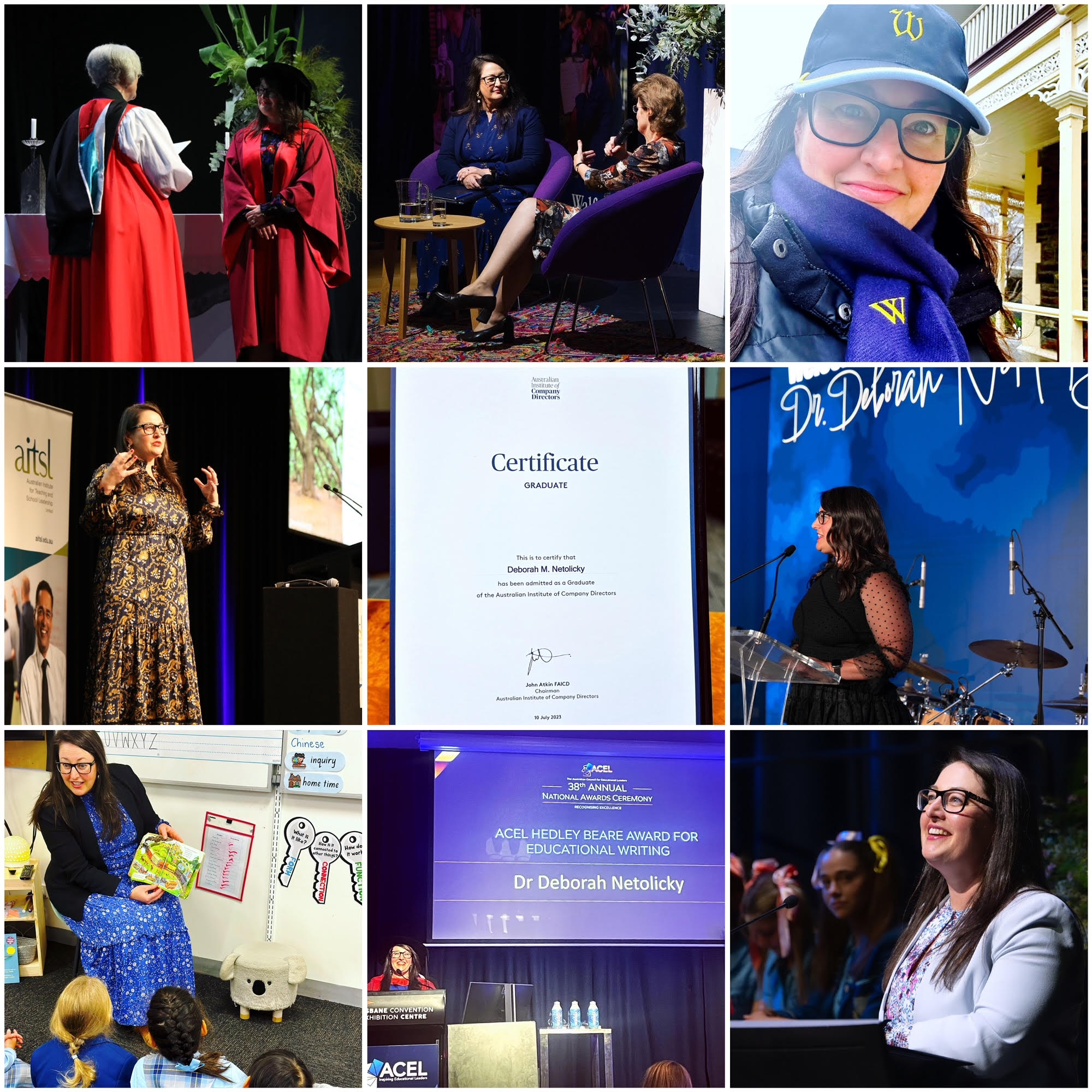
Additionally, this year I was appointed as Adjunct Senior Fellow at the University of Adelaide, and a Member of Editorial Advisory Board for the Journal of Professional Capital and Community. I completed and graduated from the AICD Company Directors Course. I recorded and released nine episodes of The Edu Salon. I co-authored the book chapter ‘Grappling with Pracademia in Education: Forms, Functions, and Futures’ with Paul Campbell and Trista Hollweck, published in the book Professional Development for Practitioners in Academia. I presented a keynote at the AITSL National Summit for Highly Accomplished and Lead Teachers. With Summer Howarth I presented to school leaders at an ACEL SA ‘Hot Topic’ event, and alongside Kevin Richardson at an AHISA SA event for aspirant principals. It was an honour to be awarded the ACEL Hedley Beare Award for Academic Writing, and to be listed on The Educator’s Most Influential Educator List and Hot List of innovative Australian educators. I travelled to Bali, Kangaroo Island, Rottnest Island, Cairns, Melbourne, Sydney, and Perth, and celebrated 20 years of marriage.
2024 is a new year, filled at this early stage with uncertainty, as well as hope and possibility. I wish all in my network a wonderful year ahead, and one in which you find joy, meaning, peace, and time to nourish, replenish and rejuvenate yourselves amongst the challenges the year will undoubtedly bring.








 the édu flâneuse